
Nutritional Supplements Market Report 2026
Global Outlook – By Type (Vegan Sport Nutrition, Meal Replacement Shakes, Food Supplements, Other Types), By Formulation (Tablets, Capsules, Powder, Soft gels, Liquid, Other Formulations), By Ingredient (Botanicals, Vitamins, Minerals, Proteins & Amino Acids, Fish Oils, Fibers & Specialty Carbohydrates, Enzymes, Other Ingredients), By Distribution Channel (Supermarket/Hypermarket, Retail Pharmacies, Direct Selling, Drug Stores, E-Commerce), By End User (Infant, Children, Adults, Pregnant Women, Elderly) – Market Size, Trends, Strategies, and Forecast to 2030
Nutritional Supplements Market Overview
• Nutritional Supplements market size has reached to $446.99 billion in 2025 • Expected to grow to $635.59 billion in 2030 at a compound annual growth rate (CAGR) of 7.2% • Growth Driver: Elevated Health And Fitness Awareness Propels Growth In The Nutritional Supplement Market • Market Trend: New Innovative Supplement Drive Nutritional Supplement Market • Asia-Pacific was the largest region in 2025 and Latin America is the fastest growing region.Market Gains By 2030 – Top Opportunities By Segment
Market Gain identifies the most promising market opportunities by highlighting the segments or products expected to generate the highest incremental revenue growth over the next five years.
What Is Covered Under Nutritional Supplements Market?
Nutritional supplements are any vitamin or mineral added to foods or diet that improves the nutritive content of the meal and occasionally supplies only those nutrients that customers are lacking. They are used to enhance diets and usually include vitamins, minerals, herbs, or amino acids. The main types of nutritional supplements are vegan sports nutrition, meal replacement shakes, food supplements, and others. Vegan sports nutrition is consumed by athletes and comes in the form of energy bars, capsules, powders, gummies, and liquids. Vegan sports nutrition is used to assist in training and enhance recovery by athletes. The different types of formulations used are tablets, capsules, powder, soft gels, liquid, and others, that uses ingredients such as botanicals, vitamins, minerals, proteins, amino acids, fish oils, fibers, specialty carbohydrates, enzymes, and others. It is sold through supermarket/hypermarket, retail pharmacies, direct selling, drug stores, and e-commerce, which is used by infants, children, adults, pregnant women, and elderly people.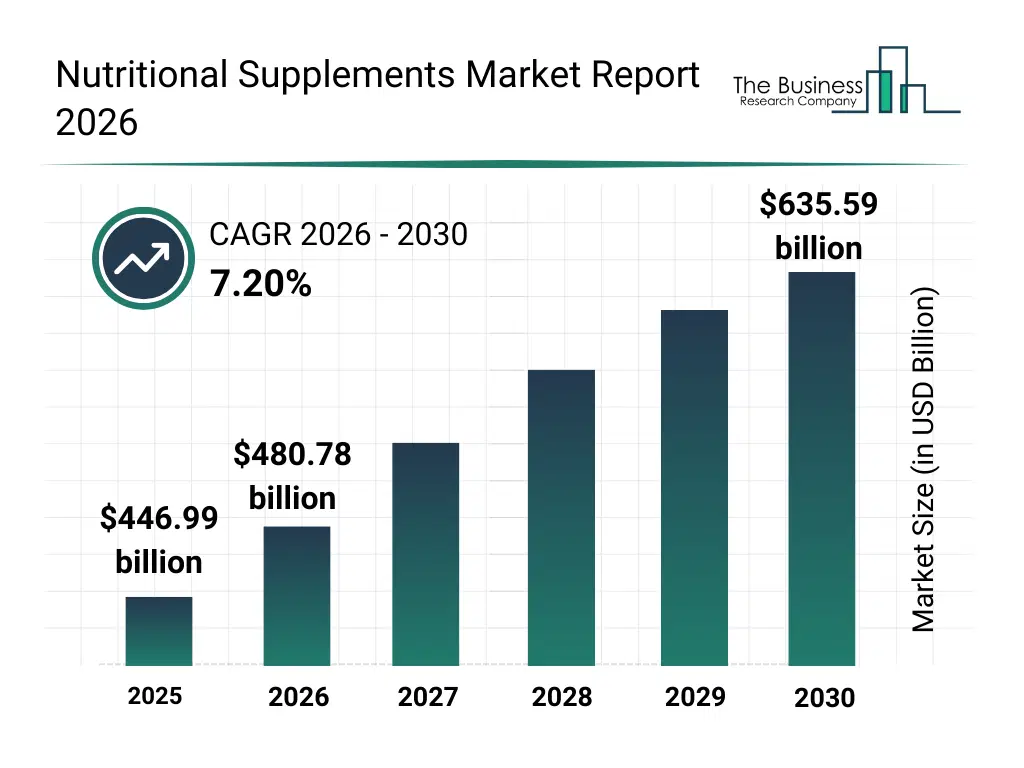
What Is The Nutritional Supplements Market Size and Share 2026?
The nutritional supplements market size has grown strongly in recent years. It will grow from $446.99 billion in 2025 to $480.78 billion in 2026 at a compound annual growth rate (CAGR) of 7.6%. The growth in the historic period can be attributed to rising health awareness among consumers, increasing prevalence of nutrient deficiencies, growth of retail pharmacy networks, expansion of e-commerce platforms, rising disposable income in emerging markets.What Is The Nutritional Supplements Market Growth Forecast?
The nutritional supplements market size is expected to see strong growth in the next few years. It will grow to $635.59 billion in 2030 at a compound annual growth rate (CAGR) of 7.2%. The growth in the forecast period can be attributed to demand for personalized nutrition, growth in plant-based diets, technological advancements in supplement formulations, increased focus on preventive healthcare, adoption of direct-to-consumer subscription models. Major trends in the forecast period include personalized nutrition solutions, plant-based & natural supplements, functional foods integration, preventive healthcare focus, enhanced bioavailability formulations.
Global Nutritional Supplements Market Segmentation
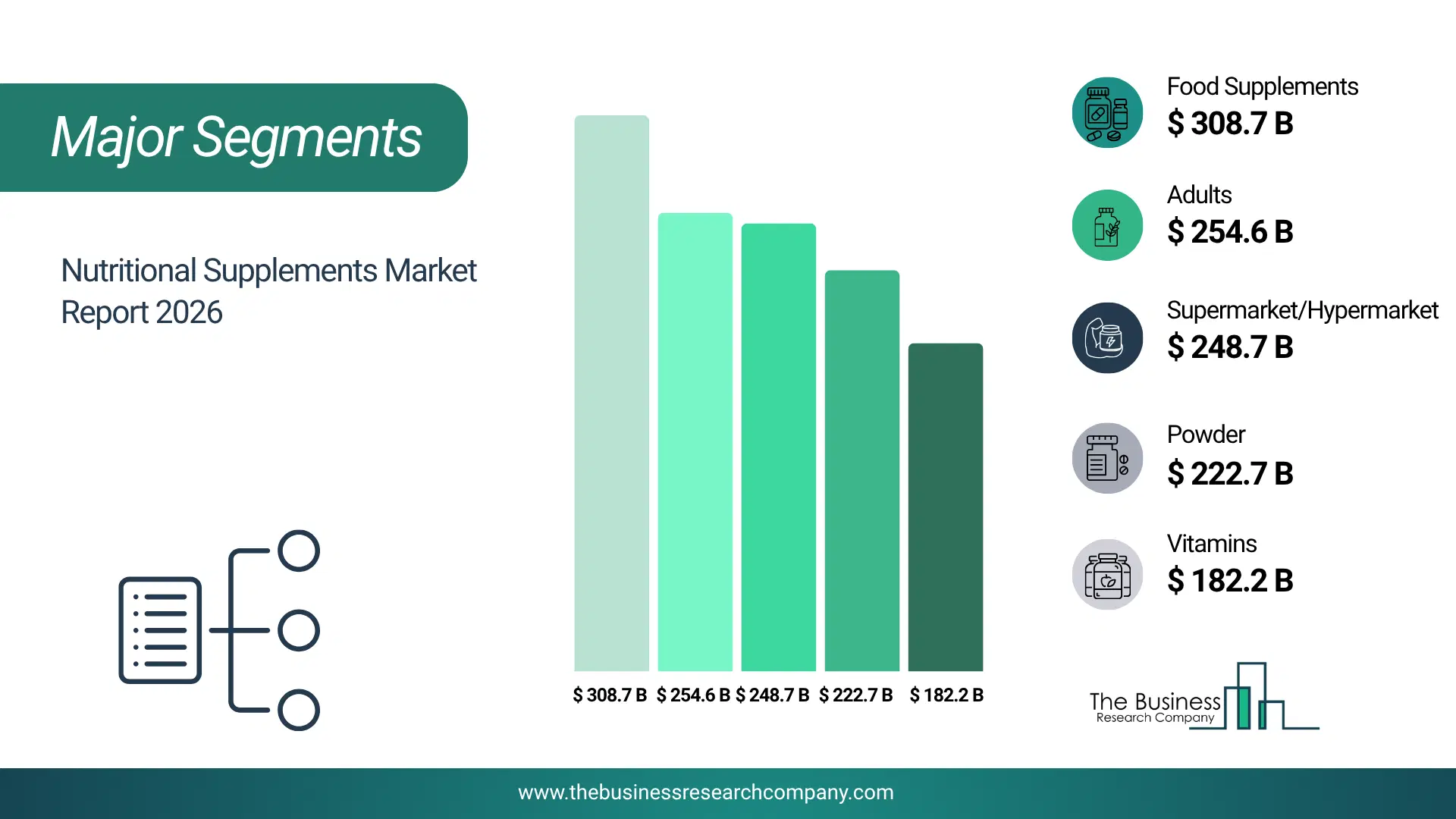
1) By Type: Vegan Sport Nutrition, Meal Replacement Shakes, Food Supplements, Other Types 2) By Formulation: Tablets, Capsules, Powder, Soft gels, Liquid, Other Formulations 3) By Ingredient: Botanicals, Vitamins, Minerals, Proteins & Amino Acids, Fish Oils, Fibers & Specialty Carbohydrates, Enzymes, Other Ingredients 4) By Distribution Channel: Supermarket/Hypermarket, Retail Pharmacies, Direct Selling, Drug Stores, E-Commerce 5) By End User: Infant, Children, Adults, Pregnant Women, Elderly Subsegments: 1) By Vegan Sport Nutrition: Plant-Based Protein Powders, Vegan Pre-Workout Supplements, Vegan Recovery Supplements, BCAAs (Branched-Chain Amino Acids) For Vegans 2) By Meal Replacement Shakes: Protein Meal Replacement Shakes, Low-Calorie Meal Replacement Shakes, Nutrient-Dense Meal Replacement Shakes, Vegan Meal Replacement Shakes 3) By Food Supplements: Vitamins And Minerals, Herbal Supplements, Omega-3 And Fatty Acid Supplements, Probiotics And Digestive Aids 4) By Other Types: Performance Enhancers, Weight Management Supplements, Specialty Supplements, Dietary Fiber Supplements The top segments in the nutritional supplements market will be: • Food Supplements will reach $308775.27 Million by 2030. • Supermarket/Hypermarket will reach $248730.69 Million by 2030. • Adults will reach $254671.59 Million by 2030. • Powder will reach $222727.91 Million by 2030. • Vitamins will reach $182260.78 Million by 2030.What Is The Driver Of The Nutritional Supplements Market?
The increasing health and fitness awareness is expected to boost the growth of the nutritional supplement market going forward. Health and fitness collectively refer to a state of overall well-being, encompassing physical, mental, and social aspects. Nutritional supplements are widely used in the pursuit of health and fitness to enhance performance by increasing muscle strength, power, and endurance. For instance, in 2024, according to the International Food Information Council, a US-based nonprofit organization, the share of consumers seeking to increase their protein intake has steadily grown, from 59% in 2022 to 67% in 2023 and 71% in 2024. Therefore, increasing health and fitness awareness is driving the growth of the nutritional supplement industry.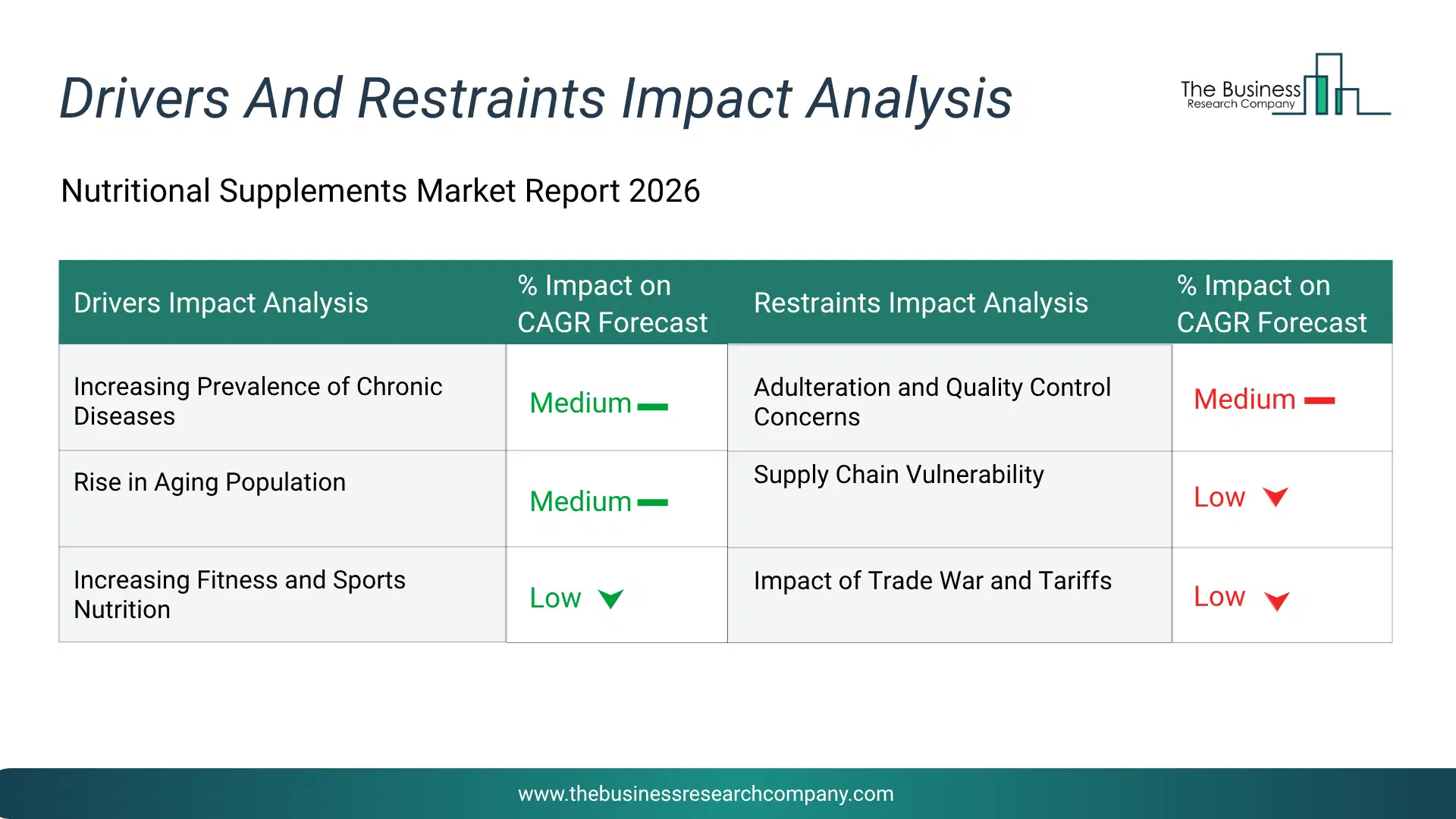
Infographic Chart Showing Key Market Drivers Analysis And Restraints For Nutritional Supplements Market
The chart presents an impact analysis of key drivers and restraints, quantifying their relative influence on the market's growth rate and helping assess the balance between growth enablers and limiting factors. This chart offers a high-level perspective; the full report contains more detailed insights.
How Will The Drivers Impact Growth In The Global Nutritional Supplements Market?
• Increasing Prevalence of Chronic Diseases (Medium) – During the forecast period, the increasing prevalence of chronic diseases will become a key driver of growth in the nutritional supplements market by 2030. nutritional supplements play an important role in chronic disease management by helping address nutrient deficiencies that can worsen conditions such as diabetes, cardiovascular disorders, and osteoporosis. they aid in supporting immune health, reducing inflammation, and maintaining metabolic balance, which can enhance quality of life and potentially slow disease progression. as a result, the increasing burden of chronic diseases is expected to fuel demand for nutritional supplements. as a result, the increasing prevalence of chronic diseases is anticipated to contributing to a 1.5% annual growth in the market. • Rise in Aging Population (Medium) – During the forecast period, the rise in aging population will emerge as a major factor driving the expansion of the nutritional supplements market by 2030. nutritional supplements are especially beneficial for older adults as they help address age-related nutrient deficiencies, support immune health, and maintain bone and muscle strength. with advancing age, the body’s ability to absorb nutrients from food declines, making supplements an important aid in promoting overall well-being and reducing the risk of chronic diseases. consequently, the rise in aging population is projected to contributing to a 1.0% annual growth in the market. • Increasing Fitness and Sports Nutrition (Low) – During the forecast period, the increasing fitness and sports nutrition will serve as a key growth catalyst for the nutritional supplements market by 2030. nutritional supplements play a crucial role in improving athletic and fitness performance by aiding muscle recovery, enhancing energy levels, and increasing endurance. they help athletes and fitness enthusiasts meet elevated nutritional requirements, particularly during intensive training that demands higher intake of proteins, vitamins, and minerals. consequently, the increasing emphasis on fitness and sports nutrition will drive the growth of the nutritional supplements market. therefore, this increasing fitness and sports nutrition is projected to supporting to a 0.8% annual growth in the market. • Boom in Gym Memberships (Low) – During the forecast period, the surge in gym memberships is expected to drive the growth of the nutritional supplements market in the coming years. rising participation in fitness activities has increased demand for supplements that support muscle development, recovery, and overall performance. products such as protein powders, amino acids, and pre-workout formulations have become integral for individuals seeking to optimize workout outcomes and sustain active lifestyles. as a result, the boom in gym memberships will propel the growth of the nutritional supplements market. the boom in gym memberships growth contribution during the forecast period in 2025 is 0.5%.How Will The Restraints Impact Growth In The Global Nutritional Supplements Market?
• Adulteration and Quality Control Concerns (Medium) – During the forecast period, adulteration and quality control concerns are expected to restrain the growth of the nutritional supplements market. such issues undermine product safety, efficacy, and consumer confidence by introducing risks associated with undisclosed ingredients, contaminants, or inconsistent dosages. these challenges can result in adverse health outcomes, increased regulatory scrutiny, and product recalls, which negatively impact brand reputation and consumer adoption. consequently, adulteration and quality control concerns may hinder the overall growth of the nutritional supplements market. growth affected by adulteration and quality control concerns during the forecast period in 2025 is -1.5% • Supply Chain Vulnerability (Medium) – During the forecast period, supply chain vulnerability across regions is expected to hinder the growth of the nutritional supplements market. these vulnerabilities disrupt the sourcing of critical ingredients such as botanicals, vitamins, and specialty compounds, which often rely on specific geographies or seasonal harvest cycles. variability in raw material availability results in irregular production schedules, longer lead times, and increased input costs. consequently, manufacturers may be forced to scale back production or reformulate products, impacting product consistency and portfolio breadth. in addition, logistics delays, geopolitical uncertainties, and quality-control challenges further restrict timely distribution and regulatory compliance, reducing operational efficiency and increasing the risk of stockouts, thereby weakening overall market stability. growth affected by supply chain vulnerability during the forecast period in 2025 is -1.0%. • Impact of Trade War and Tariffs (Low) – During the forecast period, trade wars and higher tariffs are expected to restrain the growth of the nutritional supplements market. increased tariffs raise the cost of imported raw materials such as vitamins, minerals, and botanical extracts, pushing up production expenses. manufacturers are often compelled to pass these costs on to consumers through higher prices, which can dampen demand, particularly in price-sensitive markets. moreover, tariff uncertainty disrupts global supply chains, causing delays and inconsistent access to essential ingredients, while prolonged trade tensions discourage cross-border collaborations and investments, ultimately slowing innovation and market expansion. growth affected by trade war and tariffs across regions during the forecast period in 2025 is -0.2%.Key Players In The Global Nutritional Supplements Market
Major companies operating in the nutritional supplements market are Bayer AG, Abbott Laboratories, GlaxoSmithKline plc, Otsuka Pharmaceutical Co Ltd., Amway Corporation, Nutrilite Products Inc., Nestlé Health Science SA, Glanbia plc, Herbalife Nutrition Ltd., GNC Holdings Inc., Nu Skin Enterprises Inc., USANA Health Sciences Inc., Arkopharma Laboratories Company Limited, Iovate Health Sciences International Inc., Now Health Group Inc., Xango LLC, Garden of Life LLC, Pharmavite LLC, Nature's Bounty Co, Herb Pharm LLC, American Health Formulations Inc., Ayanda GmbH, BioTech USA, Himalaya Global Holdings, MegaFoods Products Madras Private Limited, MusclePharm Corporation, SmartyPants Vitamins Inc., Thorne Research Inc., Vitabiotics Ltd., Vitacost.com Inc.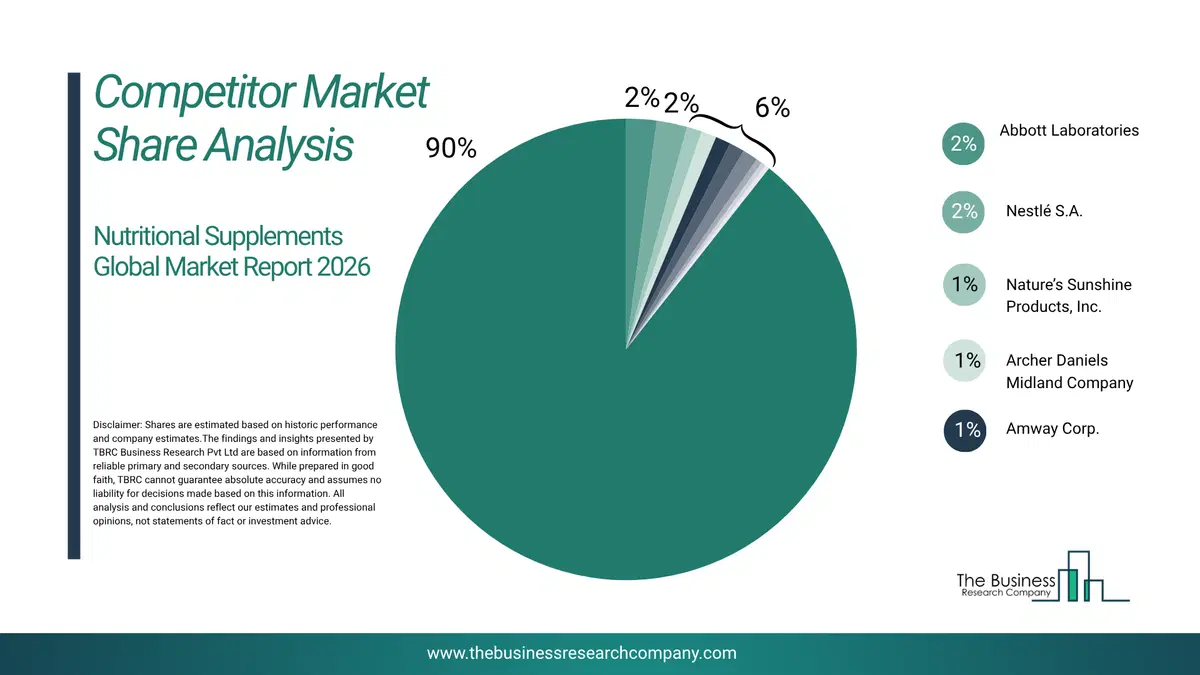
This chart is for illustrative purposes; the full report includes a detailed competitor analysis and comprehensive overview of the top 10 companies in the market.
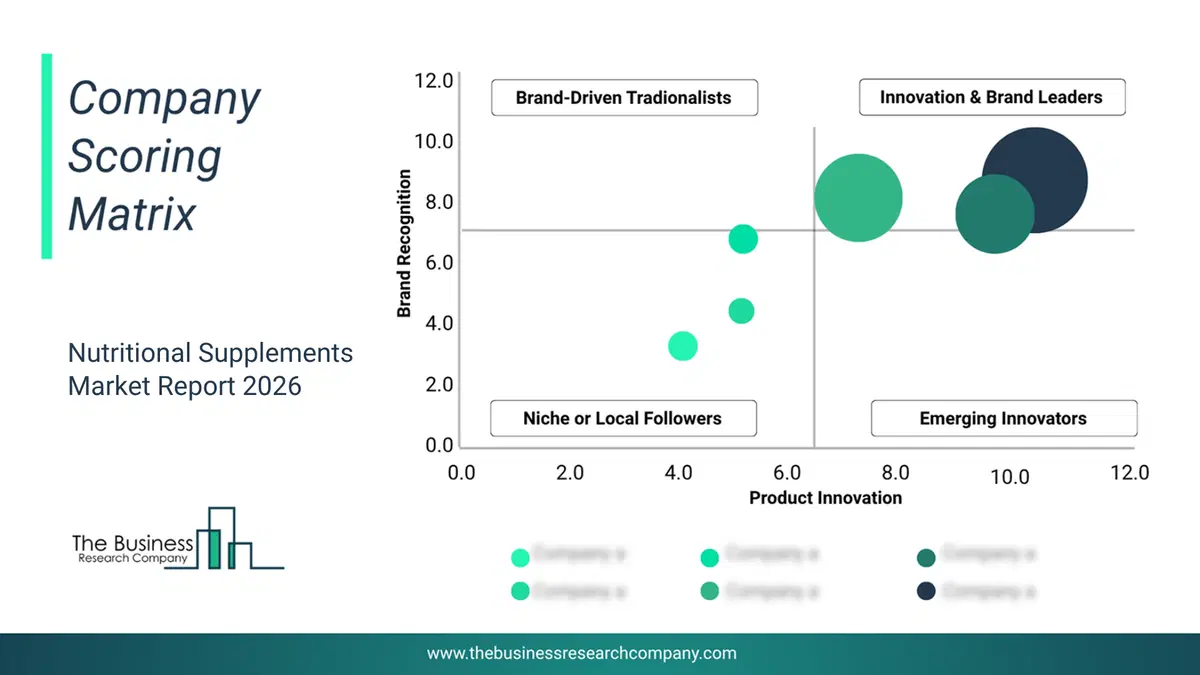
This chart maps companies by product innovation and brand strength, with bubble size indicating relative revenue, helping identify market leaders, challengers, and niche players. This is an illustrative chart; the full report provides a complete and accurate competitive analysis.
Global Nutritional Supplements Market Trends and Insights
Major companies operating in the nutritional supplements market are focusing on developing innovative formulations that target specific health concerns such as gut health, skin wellness, and immune support. These next-generation supplements leverage science-backed ingredients to enhance bioavailability, efficacy, and overall consumer experience. For instance, in November 2025, AxisBiotix, an India-based nutraceutical company, launched Skin Clear, a next-generation gut-skin supplement for acne and blemishes. The product combines gut-friendly probiotics with skin-supporting nutrients, promoting healthy skin by addressing underlying gut imbalances. This launch reflects the growing consumer demand for holistic, science-driven solutions that link internal wellness to visible skin benefits.What Are Latest Mergers And Acquisitions In The Nutritional Supplements Market?
In November 2025, Anjac Health & Beauty, a France-based health and wellness company, acquired PharmaLinea for an undisclosed amount. With this acquisition, Anjac Health & Beauty aims to strengthen its food supplements portfolio, expand its product offerings in the nutraceutical segment, enhance market reach, and drive long-term growth. PharmaLinea is a Slovenia-based manufacturing company that offers nutritional supplements.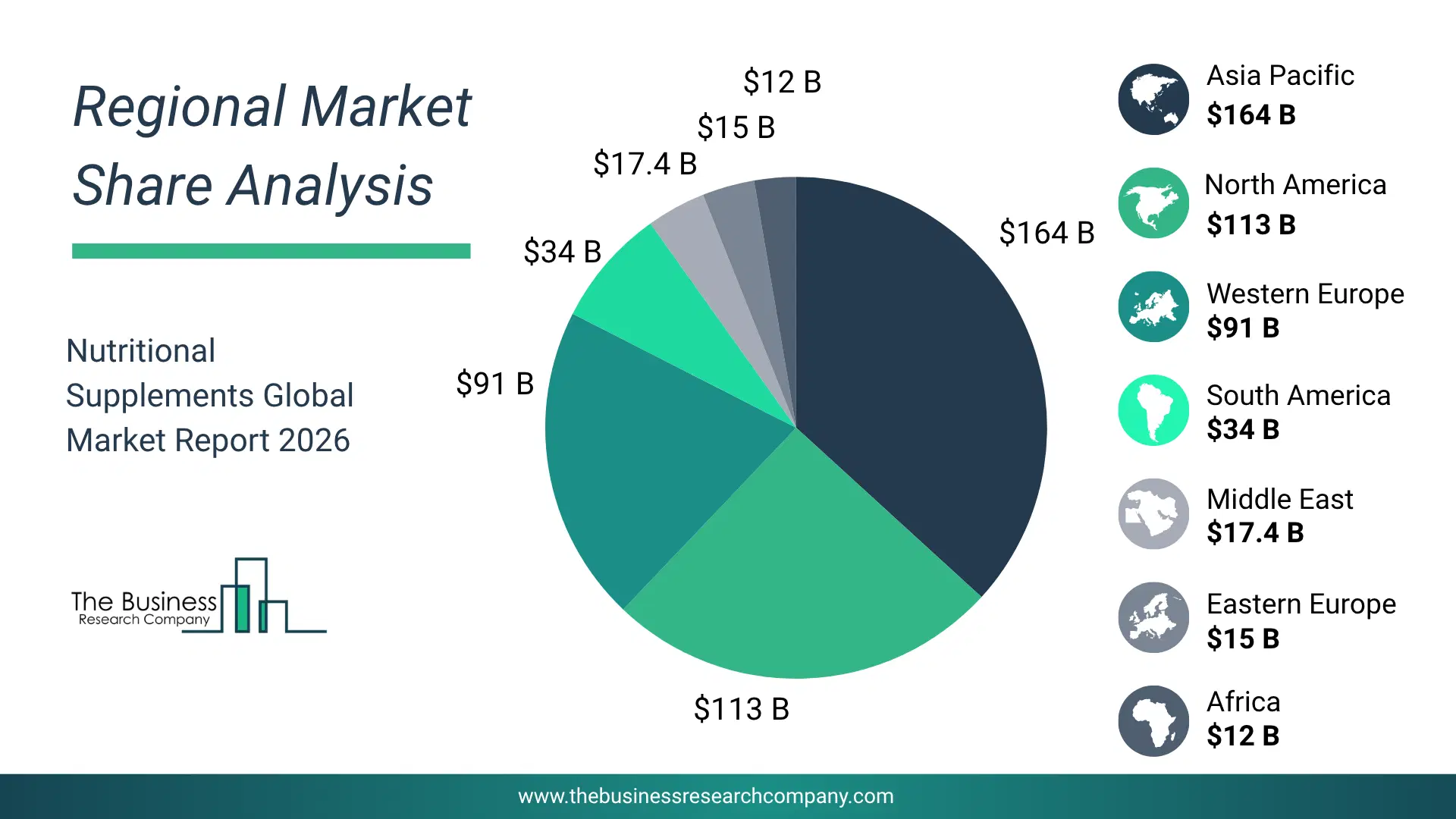
Regional Insights
Asia-Pacific was the largest region in the nutritional supplements market in 2025. Latin America is expected to be the fastest-growing region in the forecast period. The regions covered in this market report are Asia-Pacific, South East Asia, Western Europe, Eastern Europe, North America, South America, Middle East, Africa. The countries covered in this market report are Australia, Brazil, China, France, Germany, India, Indonesia, Japan, Taiwan, Russia, South Korea, UK, USA, Canada, Italy, Spain.What Defines the Nutritional Supplements Market?
The nutritional supplement market consists of sales of iron nutrition pills, fat burner powder, dietary supplements, functional foods, and whey proteins. Values in this market are ‘factory gate’ values, that is the value of goods sold by the manufacturers or creators of the goods, whether to other entities (including downstream manufacturers, wholesalers, distributors, and retailers) or directly to end customers. The value of goods in this market includes related services sold by the creators of the goods.How is Market Value Defined and Measured?
The market value is defined as the revenues that enterprises gain from the sale of goods and/or services within the specified market and geography through sales, grants, or donations in terms of the currency (in USD unless otherwise specified). The revenues for a specified geography are consumption values that are revenues generated by organizations in the specified geography within the market, irrespective of where they are produced. It does not include revenues from resales along the supply chain, either further along the supply chain or as part of other products.
This chart presents market attractiveness based on a quantitative evaluation of growth, competition, strategic alignment, and risk, offering a clear view of opportunity areas for decision-making. This chart is for illustrative purposes; the full report contains the complete analysis.

This chart highlights the Total Addressable Market (TAM) by estimating the maximum revenue opportunity using an assumption-driven approach, supporting strategic planning and opportunity sizing across markets. The chart is illustrative; the full report provides a more comprehensive analysis.
What Key Data and Analysis Are Included in the Nutritional Supplements Market Report 2026?
The nutritional supplements market research report is one of a series of new reports from The Business Research Company that provides market statistics, including industry global market size, regional shares, competitors with the market share, detailed market segments, market trends and opportunities, and any further data you may need to thrive in the nutritional supplements industry. The market research report delivers a complete perspective of everything you need, with an in-depth analysis of the current and future state of the industry.Nutritional Supplements Market Report Forecast Analysis
| Report Attribute | Details |
|---|---|
| Market Size Value In 2026 | $480.78 billion |
| Revenue Forecast In 2030 | $635.59 billion |
| Growth Rate | CAGR of 7.6% from 2026 to 2030 |
| Base Year For Estimation | 2025 |
| Actual Estimates/Historical Data | 2020-2025 |
| Forecast Period | 2026 - 2030 - 2035 |
| Market Representation | Revenue in USD Billion and CAGR from 2026 to 2030 |
| Segments Covered | Type, Formulation, Ingredient, Distribution Channel, End User |
| Regional Scope | Asia-Pacific, Western Europe, Eastern Europe, North America, South America, Middle East, Africa |
| Country Scope | The countries covered in the report are Australia, Brazil, China, France, Germany, India, Indonesia, Japan, Taiwan, Russia, South Korea, UK, USA, Canada, Italy, Spain. |
| Key Companies Profiled | Bayer AG, Abbott Laboratories, GlaxoSmithKline plc, Otsuka Pharmaceutical Co Ltd., Amway Corporation, Nutrilite Products Inc., Nestlé Health Science SA, Glanbia plc, Herbalife Nutrition Ltd., GNC Holdings Inc., Nu Skin Enterprises Inc., USANA Health Sciences Inc., Arkopharma Laboratories Company Limited, Iovate Health Sciences International Inc., Now Health Group Inc., Xango LLC, Garden of Life LLC, Pharmavite LLC, Nature's Bounty Co, Herb Pharm LLC, American Health Formulations Inc., Ayanda GmbH, BioTech USA, Himalaya Global Holdings, MegaFoods Products Madras Private Limited, MusclePharm Corporation, SmartyPants Vitamins Inc., Thorne Research Inc., Vitabiotics Ltd., Vitacost.com Inc. |
| Customization Scope | Request for Customization |
| Pricing And Purchase Options | Explore Purchase Options |