
Protein Supplements Market Report 2026
Global Outlook – By Type (Protein Powder, Protein Bar, Ready to Drink), By Source (Plant-based, Animal-based), By Raw Material (Casein Protein Supplements, Whey Protein Supplements, Egg Protein Supplements, MPC Protein Supplements, Soy Protein Supplements), By Distribution Channel (Supermarkets & Hypermarkets, Online Stores, Drug Stores) – Market Size, Trends, Strategies, and Forecast to 2030
Protein Supplements Market Overview
• Protein Supplements market size has reached to $24.1 billion in 2025 • Expected to grow to $41.21 billion in 2030 at a compound annual growth rate (CAGR) of 11.5% • Growth Driver: Surge In Consumer Adoption Of Food Supplements Fueling The Growth Of The Market Due To Rising Health, Fitness, And Preventive Nutrition Awareness • Market Trend: Innovative Protein Solutions Aligning With Health-Conscious And Eco-Friendly Lifestyles • North America was the largest region in 2025 and Asia-Pacific is the fastest growing region.What Is Covered Under Protein Supplements Market?
Protein supplements refer to a nutritional supplement that contains protein and is intended to supplement the diet. A protein supplement helps in building muscle, repairing tissue, and producing enzymes and hormones. It also aids in weight loss and assists in toning of muscles for athletes. The main types of protein supplements include protein powder, protein bars, and ready-to-drink products. Protein powder refers to powdered forms of protein that are derived from plants (soybeans, peas, rice, potatoes, or hemp), eggs, or milk (casein or whey protein). Other components, such as extra sugar, artificial flavors, thickeners, vitamins, and minerals, are added to enhance the flavor and functionality of the powder. Based on raw material, the protein supplements are differentiated by casein protein supplements, whey protein supplements, egg protein supplements, MPC protein supplements, and soy protein supplements. The animal-derived and plant-derived protein supplements are sold through supermarkets, hypermarkets, online stores, and drug stores.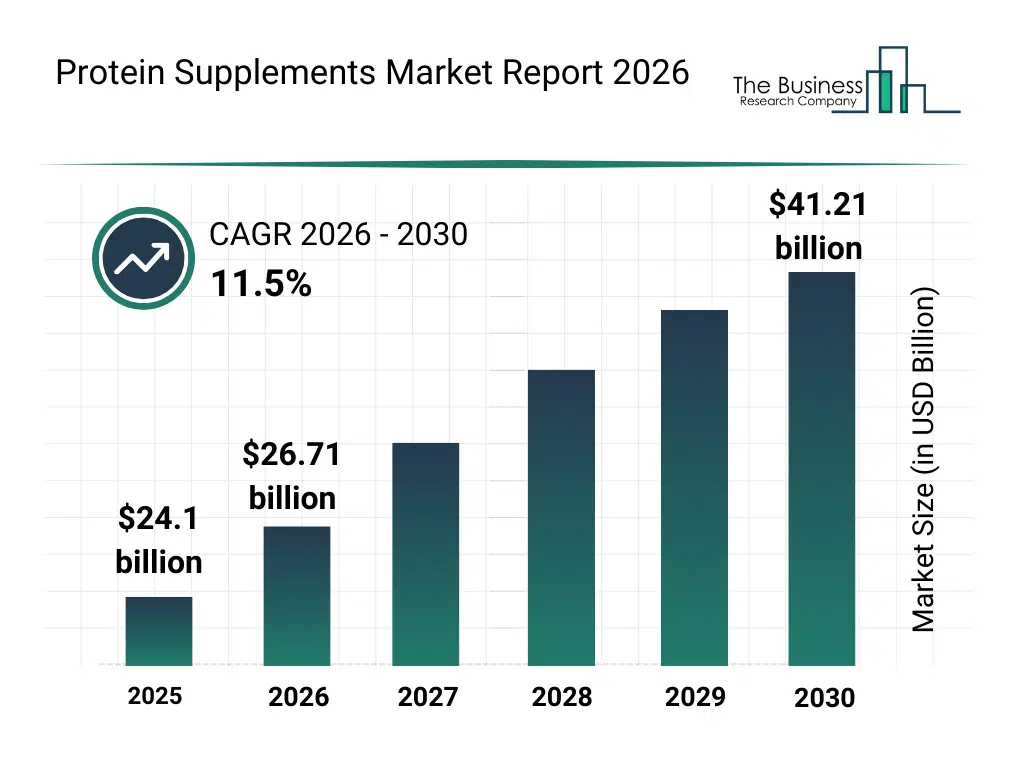
What Is The Protein Supplements Market Size and Share 2026?
The protein supplements market size has grown rapidly in recent years. It will grow from $24.1 billion in 2025 to $26.71 billion in 2026 at a compound annual growth rate (CAGR) of 10.8%. The growth in the historic period can be attributed to rising participation in fitness and sports activities, growing awareness of protein intake benefits, expansion of gym and wellness culture, increased availability of diverse protein formats, growth of organized retail channels.What Is The Protein Supplements Market Growth Forecast?
The protein supplements market size is expected to see rapid growth in the next few years. It will grow to $41.21 billion in 2030 at a compound annual growth rate (CAGR) of 11.5%. The growth in the forecast period can be attributed to increasing adoption of personalized nutrition plans, rising demand for vegan and allergen-free proteins, expansion of e-commerce nutrition sales, growing focus on weight management products, innovation in protein ingredient sourcing. Major trends in the forecast period include increasing demand for plant-based protein supplements, rising preference for clean-label and natural formulations, growing adoption of ready-to-drink protein products, expansion of personalized nutrition solutions, enhanced focus on functional and performance nutrition.
Global Protein Supplements Market Segmentation
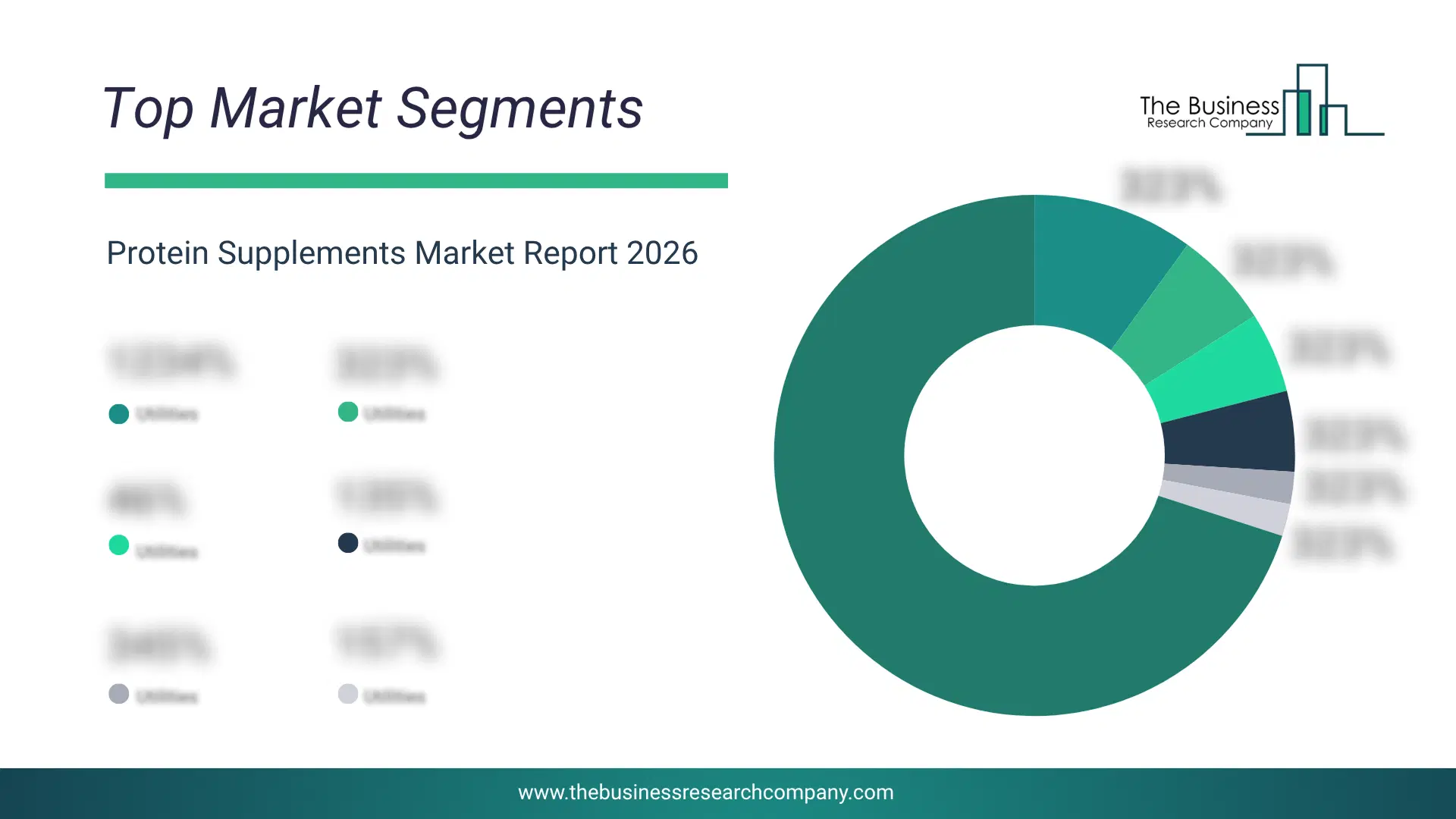
1) By Type: Protein Powder, Protein Bar, Ready to Drink 2) By Source: Plant-based, Animal-based 3) By Raw Material: Casein Protein Supplements, Whey Protein Supplements, Egg Protein Supplements, MPC Protein Supplements, Soy Protein Supplements 4) By Distribution Channel: Supermarkets & Hypermarkets, Online Stores, Drug Stores Subsegments: 1) By Protein Powder: Whey Protein Powder, Casein Protein Powder, Plant-Based Protein Powder, Egg White Protein Powder, Blended Protein Powder 2) By Protein Bar: Meal Replacement Bars, Snack Bars, Low-Sugar Protein Bars, Vegan Protein Bars, High-Protein Energy Bars 3) By Ready to Drink: Protein Shakes, Protein Smoothies, Protein Water, Meal Replacement Drinks, Dairy-Based Protein DrinksWhat Is The Driver Of The Protein Supplements Market?
The rise in customer preference for food supplements is expected to propel the growth of the protein supplements market going forward. Food supplements are products intended to supplement the normal diet by providing concentrated sources of nutrients such as proteins, vitamins, minerals, and other bioactive substances that support overall health and physical performance. The increasing focus on preventive healthcare, fitness-oriented lifestyles, and nutritional adequacy has encouraged consumers to incorporate food supplements into their daily routines. Protein supplements, in particular, play a key role in supporting muscle development, recovery, and metabolic health. For instance, in October 2023, according to the Council for Responsible Nutrition (CRN), a US-based trade association, 74% of U.S. adults reported using dietary supplements, with 55% of the total population identified as regular users, and 92% of supplement users agreeing that supplements are essential for maintaining health. Therefore, the rising customer preference for food supplements is driving the growth of the protein supplements industry.Key Players In The Global Protein Supplements Market
Major companies operating in the protein supplements market are Nestlé S.A., Abbott Laboratories, Glanbia plc, Herbalife International of America Inc., Amway Corporation, Meiji Holdings Company Ltd., Kerry Group plc, The Nature’s Bounty Co., NOW Health Group Inc., MusclePharm Corporation, Universal Nutrition, Weider Global Nutrition LLC, Scitec Nutrition Ltd., BPI Sports LLC, Redcon1 LLC, Rule One Proteins LLC, RSP Nutrition, Naked Nutrition, Amazing Grass LLC, Vega Industries Private Limited, Optimum Nutrition Holdings, Dymatize Enterprises Holdings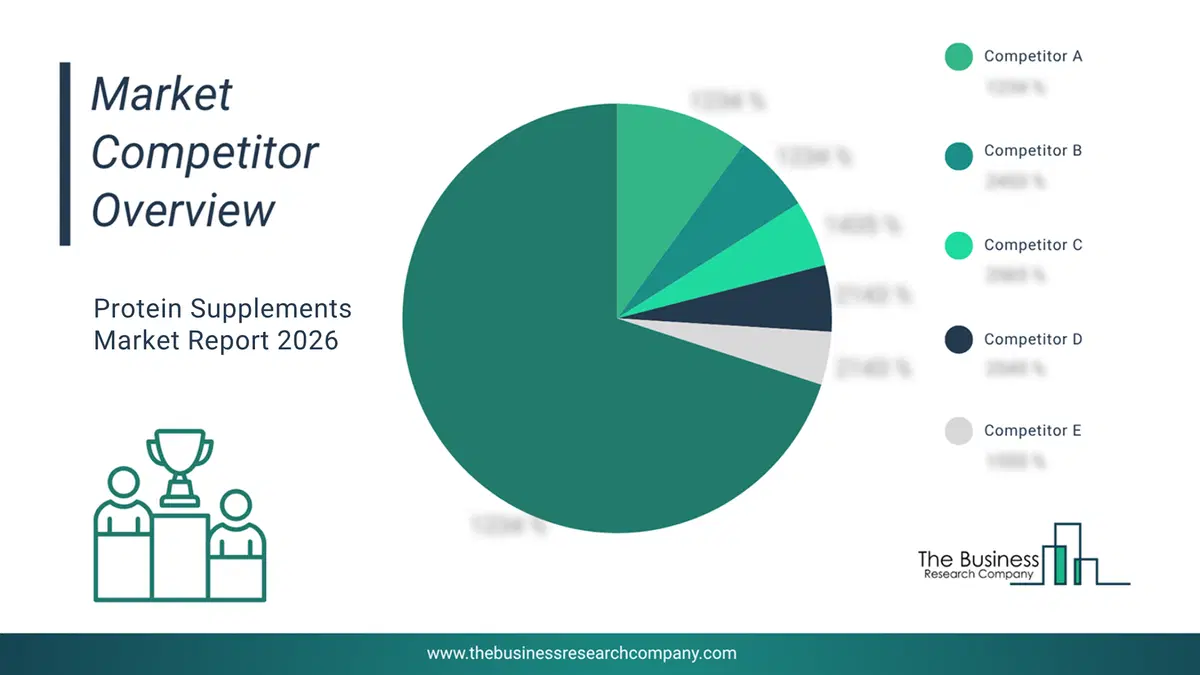
This chart is for illustrative purposes; the full report includes a detailed competitor analysis and comprehensive overview of the top 10 companies in the market.
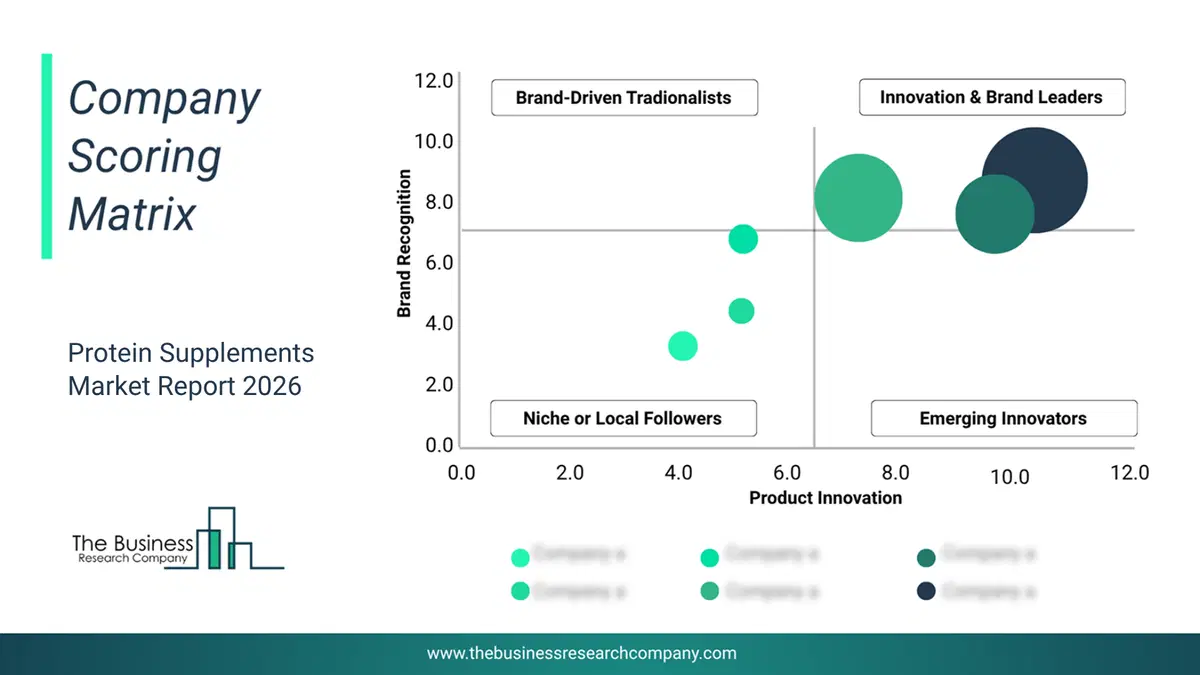
This chart maps companies by product innovation and brand strength, with bubble size indicating relative revenue, helping identify market leaders, challengers, and niche players. This is an illustrative chart; the full report provides a complete and accurate competitive analysis.
Global Protein Supplements Market Trends and Insights
Major companies operating in the protein supplements market are focusing on developing flexible and sustainable protein solutions, such as plant-based and hybrid protein powders, to align with shifts in consumer preferences toward environmentally responsible and versatile nutrition formats. Plant-based and hybrid protein powders are formulations that replace or complement traditional animal-derived proteins with proteins sourced from plants (e.g., pea, rice) or fermentation-derived sources, offering comparable nutritional value while catering to vegans, lactose-intolerant consumers, or those seeking environmentally sustainable options. For instance, in March 2023, Premier Protein, a US-based nutrition company, launched Premier Protein Plant Protein Powder, a product delivering 25 g of protein entirely from pea and rice proteins. It features a creamy texture, lower calorie content compared with traditional whey powders, and supports dietary flexibility for consumers seeking plant-based nutrition while maintaining protein intake goals.What Are Latest Mergers And Acquisitions In The Protein Supplements Market?
In November 2024, Paine Schwartz Partners, a US-based private equity firm, acquired Promix LLC for an undisclosed amount. Through this acquisition, Paine Schwartz aims to strengthen its health and wellness portfolio by leveraging Promix’s high-quality, clean-ingredient protein mixes, nutritional supplements, vitamins, and better-for-you snacks. Promix LLC is a US-based company that develops and markets science-backed, functional nutrition products, including protein powders, bars, prebiotic and probiotic supplements, electrolytes, collagen, and creatine, all produced in-house and free from artificial additives, GMOs, gluten, soy, hormones, and antibiotics.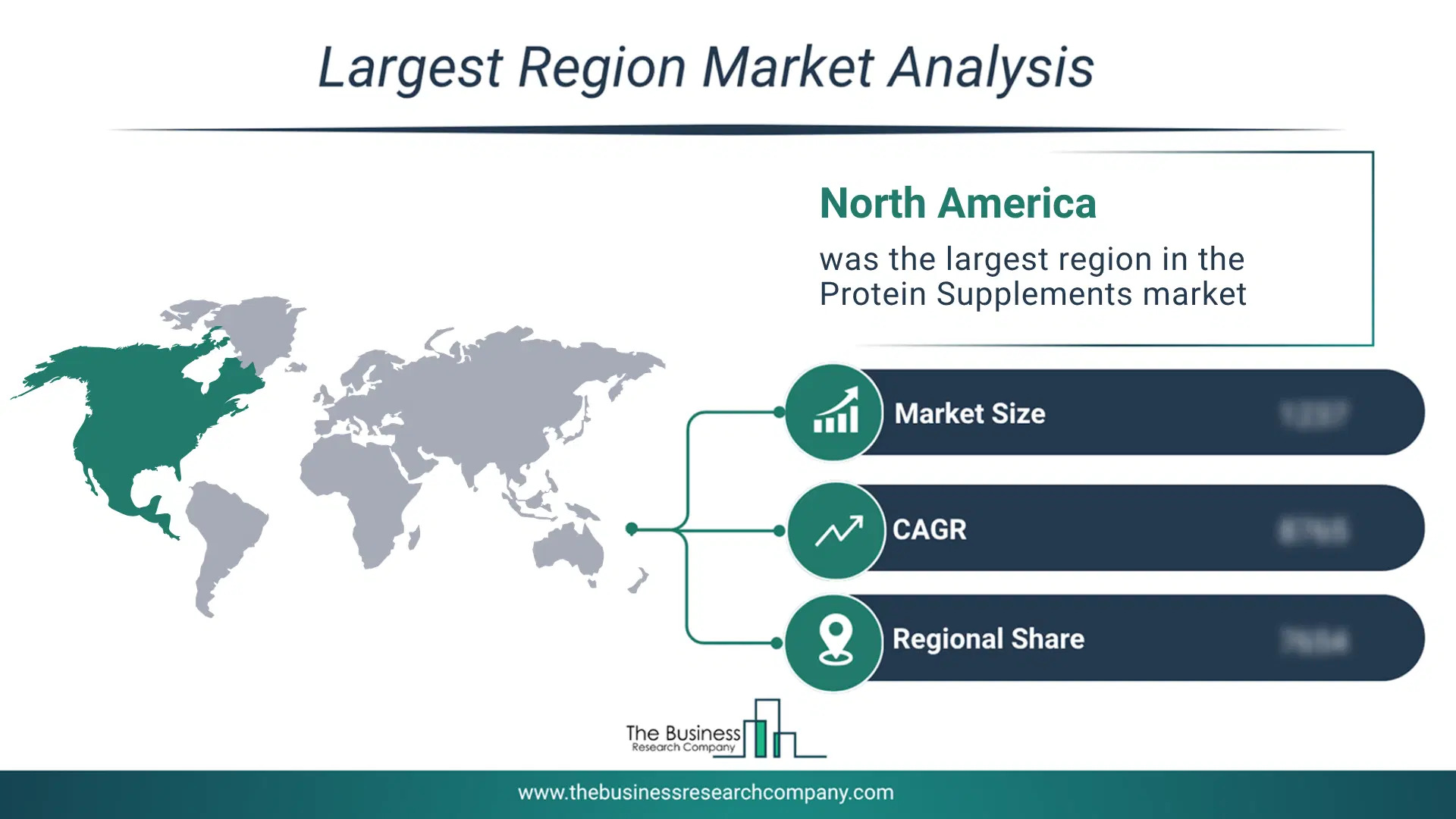
Regional Outlook
North America was the largest region in the protein supplements market in 2025. Asia-Pacific is expected to be the fastest-growing region in the protein supplements market share during the forecast period. The regions covered in this market report are Asia-Pacific, South East Asia, Western Europe, Eastern Europe, North America, South America, Middle East and Africa. The countries covered in this market report are Australia, Brazil, China, France, Germany, India, Indonesia, Japan, Taiwan, Russia, South Korea, UK, USA, Italy, Spain, CanadaWhat Defines the Protein Supplements Market?
The protein supplements market consists of sales of soybean meal, essential amino acid, protein intake, proteins, amino acids, whey protein. Values in this market are ‘factory gate’ values, that is the value of goods sold by the manufacturers or creators of the goods, whether to other entities (including downstream manufacturers, wholesalers, distributors and retailers) or directly to end customers. The value of goods in this market includes related services sold by the creators of the goods.How is Market Value Defined and Measured?
The market value is defined as the revenues that enterprises gain from the sale of goods and/or services within the specified market and geography through sales, grants, or donations in terms of the currency (in USD unless otherwise specified). The revenues for a specified geography are consumption values that are revenues generated by organizations in the specified geography within the market, irrespective of where they are produced. It does not include revenues from resales along the supply chain, either further along the supply chain or as part of other products.
This chart presents market attractiveness based on a quantitative evaluation of growth, competition, strategic alignment, and risk, offering a clear view of opportunity areas for decision-making. This chart is for illustrative purposes; the full report contains the complete analysis.

This chart highlights the Total Addressable Market (TAM) by estimating the maximum revenue opportunity using an assumption-driven approach, supporting strategic planning and opportunity sizing across markets. The chart is illustrative; the full report provides a more comprehensive analysis.
What Key Data and Analysis Are Included in the Protein Supplements Market Report 2026?
The protein supplements market research report is one of a series of new reports from The Business Research Company that provides market statistics, including industry global market size, regional shares, competitors with the market share, detailed market segments, market trends and opportunities, and any further data you may need to thrive in the protein supplements industry. The market research report delivers a complete perspective of everything you need, with an in-depth analysis of the current and future state of the industry.Protein Supplements Market Report Forecast Analysis
| Report Attribute | Details |
|---|---|
| Market Size Value In 2026 | $26.71 billion |
| Revenue Forecast In 2030 | $41.21 billion |
| Growth Rate | CAGR of 10.8% from 2026 to 2030 |
| Base Year For Estimation | 2025 |
| Actual Estimates/Historical Data | 2020-2025 |
| Forecast Period | 2026 - 2030 |
| Market Representation | Revenue in USD Billion and CAGR from 2026 to 2030 |
| Segments Covered | Type, Source, Raw Material, Distribution Channel |
| Regional Scope | Asia-Pacific, Western Europe, Eastern Europe, North America, South America, Middle East, Africa |
| Country Scope | The countries covered in the report are Australia, Brazil, China, France, Germany, India, Indonesia, Japan, Taiwan, Russia, South Korea, UK, USA, Canada, Italy, Spain. |
| Key Companies Profiled | Nestlé S.A., Abbott Laboratories, Glanbia plc, Herbalife International of America Inc., Amway Corporation, Meiji Holdings Company Ltd., Kerry Group plc, The Nature’s Bounty Co., NOW Health Group Inc., MusclePharm Corporation, Universal Nutrition, Weider Global Nutrition LLC, Scitec Nutrition Ltd., BPI Sports LLC, Redcon1 LLC, Rule One Proteins LLC, RSP Nutrition, Naked Nutrition, Amazing Grass LLC, Vega Industries Private Limited, Optimum Nutrition Holdings, Dymatize Enterprises Holdings |
| Customization Scope | Request for Customization |
| Pricing And Purchase Options | Explore Purchase Options |