
Protein Powder Market Report 2026
Global Outlook – By Type (Casein Protein, Whey Protein, Egg Protein, Soy Protein), By Flavor (Chocolate, Cookies And Cream, Vanilla, Strawberry, Other Flavors), By Sources (Plant Sources, Animal Sources), By Distribution Channel (Nutrition Stores, Supermarkets, Chemists, Online, Other Channels), By End Use (Sports And Fitness Consumers, Lifestyle And Wellness Consumers, Clinical And Medical Nutrition Users, Vegan And Plant-Based Consumers, Other End Users) – Market Size, Trends, Strategies, and Forecast to 2030
Protein Powder Market Overview
• Protein Powder market size has reached to $28.59 billion in 2025 • Expected to grow to $42.26 billion in 2030 at a compound annual growth rate (CAGR) of 8.2% • Growth Driver: E-Commerce Surge Propels Protein Powder Market Growth • Market Trend: Advancements In Whey Protein For Muscle And Fat Management • North America was the largest region in 2025 and Asia-Pacific is the fastest growing region.What Is Covered Under Protein Powder Market?
Protein powder refers to dietary supplements that contain a high percentage of protein that is made from animal foods like milk and eggs or plant sources. They are used to build muscle and repair tissue. The major types of protein powder are casein protein, whey protein, egg protein, and soy protein. Casein protein refers to a protein that is precipitated from skim milk by either acidifying it to make acid casein or by adding rennet to the milk to produce rennet casein. The major flavors include chocolate, cookies and cream, vanilla, strawberry, and others. The major sources include plant sources and animal sources. These are sold through several distribution channels, such as nutrition stores, supermarkets, chemists, online, and others, and are used for various end uses, such as dietary supplements, food and beverages, pharmaceuticals, and others.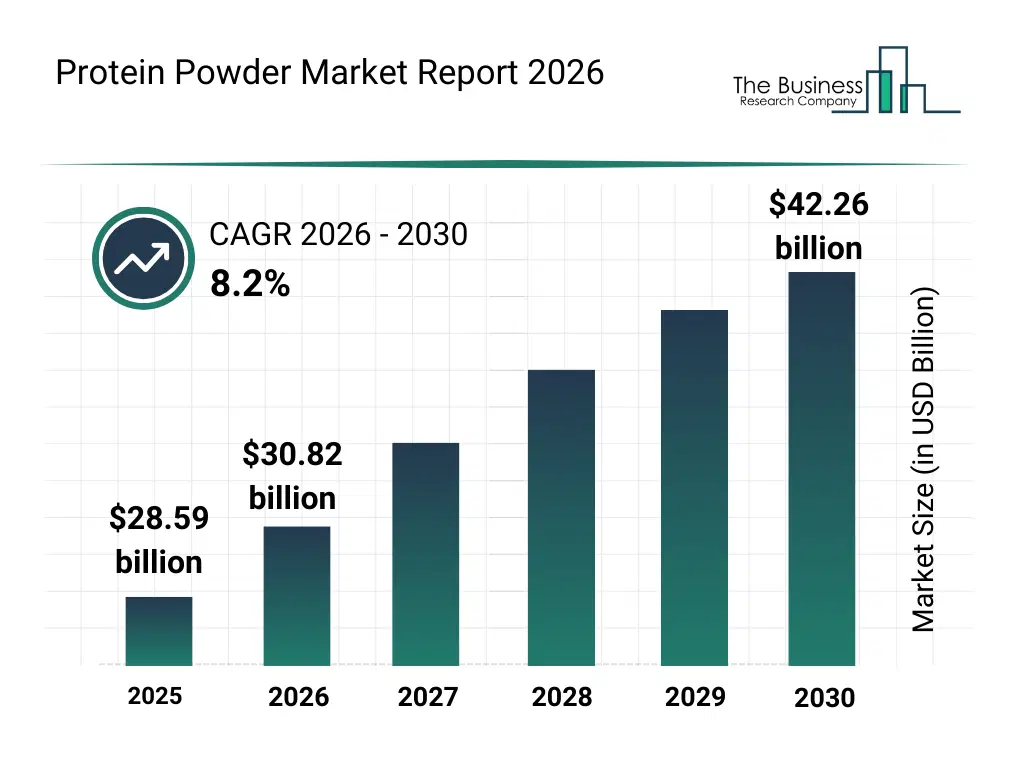
What Is The Protein Powder Market Size and Share 2026?
The protein powder market size has grown strongly in recent years. It will grow from $28.59 billion in 2025 to $30.82 billion in 2026 at a compound annual growth rate (CAGR) of 7.8%. The growth in the historic period can be attributed to growth in sports and fitness culture, rising consumer focus on health and wellness, expansion of dietary supplement retail channels, increasing protein intake awareness, availability of diverse protein sources.What Is The Protein Powder Market Growth Forecast?
The protein powder market size is expected to see strong growth in the next few years. It will grow to $42.26 billion in 2030 at a compound annual growth rate (CAGR) of 8.2%. The growth in the forecast period can be attributed to increasing demand for personalized nutrition solutions, rising adoption of plant-based diets, expansion of online supplement sales, growing use of protein in functional foods, increasing innovation in protein processing technologies. Major trends in the forecast period include increasing demand for clean-label protein powders, rising popularity of plant-based protein sources, expansion of functional and fortified protein products, growing focus on flavor innovation and mixability, enhanced quality control and traceability.
Global Protein Powder Market Segmentation
1) By Type: Casein Protein, Whey Protein, Egg Protein, Soy Protein 2) By Flavor: Chocolate, Cookies And Cream, Vanilla, Strawberry, Other Flavors 3) By Sources: Plant Sources, Animal Sources 4) By Distribution Channel: Nutrition Stores, Supermarkets, Chemists, Online, Other Channels 5) By End Use: Sports And Fitness Consumers, Lifestyle And Wellness Consumers, Clinical And Medical Nutrition Users, Vegan And Plant-Based Consumers, Other End Users Subsegments: 1) By Casein Protein: Micellar Casein, Casein Hydrolysate 2) By Whey Protein: Whey Protein Concentrate, Whey Protein Isolate, Hydrolyzed Whey Protein 3) By Egg Protein: Whole Egg Protein, Egg White Protein 4) By Soy Protein: Soy Protein Isolate, Soy Protein ConcentrateWhat Is The Driver Of The Protein Powder Market?
The rapid expansion of e-commerce is expected to propel the growth of the protein powder market in the coming years. E-commerce, which stands for electronic commerce, is the purchasing and selling of products and services over the Internet that entails online transactions between companies and customers, or between businesses and consumers. In the protein powder sector, e-commerce provides a dynamic and adaptable platform for businesses to engage with their intended customer base and for consumers to make educated and easy purchasing decisions. For instance, in November 2023, according to the United States Census Bureau, a US-based institution of the Federal Statistical System of the United States in charge of generating data about the nation's citizens and economy, the e-commerce projection for the third quarter of 2023 climbed 7.6 percent (1.2%) from the third quarter of 2022, while overall retail sales climbed 2.3 percent (0.4%) at the same time. In the third quarter of 2023, e-commerce sales amounted to 15.6 percent of total revenues. Therefore, the rapid expansion of e-commerce is driving the protein powder industry.Key Players In The Global Protein Powder Market
Major companies operating in the protein powder market are Optimum Nutrition, Dymatize Nutrition, MusclePharm Corporation, BPI Sports LLC, CytoSport Inc., NutraBio, Herbalife International of America Inc., Abbott Laboratories, Amway Corp., Vega, NOW Foods, Isopure, Garden of Life, Orgain, MuscleTech, Myprotein, BSN, Rule One Proteins, Kaged, Ascent Protein
This chart is for illustrative purposes; the full report includes a detailed competitor analysis and comprehensive overview of the top 10 companies in the market.
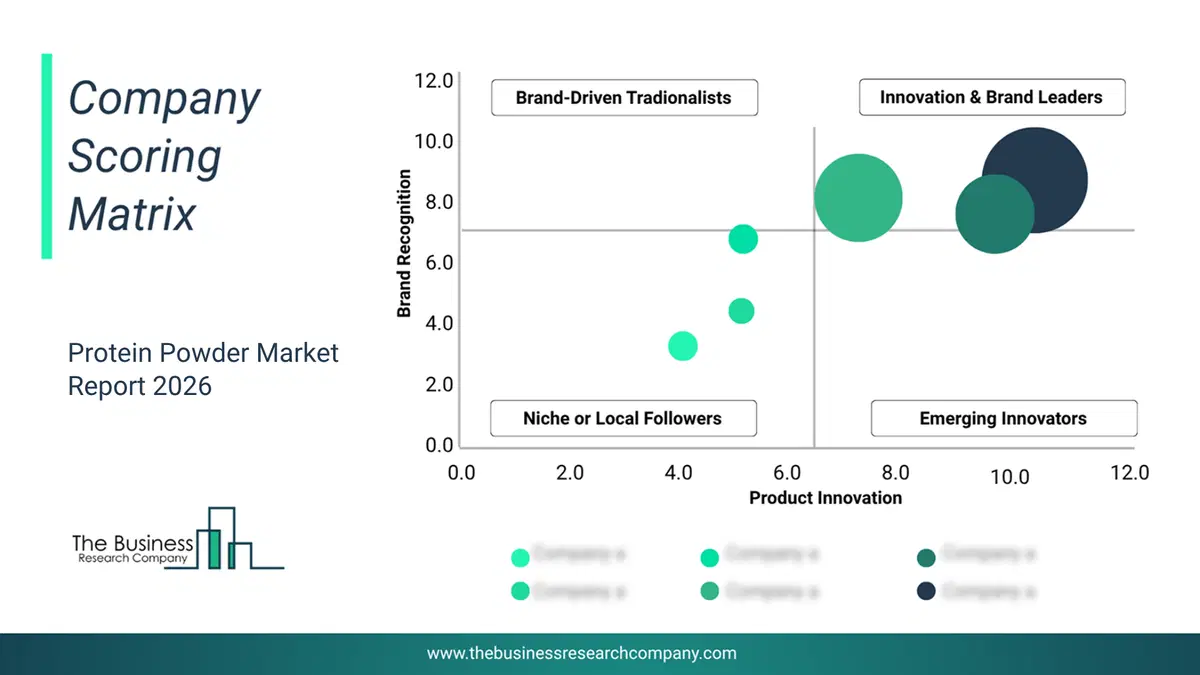
This chart maps companies by product innovation and brand strength, with bubble size indicating relative revenue, helping identify market leaders, challengers, and niche players. This is an illustrative chart; the full report provides a complete and accurate competitive analysis.
Global Protein Powder Market Trends and Insights
Major companies operating in the protein-powder market are focusing on developing innovative products such as dual-action fat-burning whey supplements to meet rising consumer demand for solutions that support both muscle building and effective weight management. Dual-action fat-burning whey supplements are protein powders that combine high-quality whey with fat-metabolism ingredients such as L-Carnitine, CLA, and Garcinia Cambogia to help users build lean muscle while simultaneously boosting fat burning, improving energy use, and supporting appetite control. For instance, in May 2025, GNC India, a US-origin global nutrition-supplement company operating in India via its master franchisee, launched GNC Pro Performance 100% Whey + Keto Surge, a dual-action protein supplement designed to support muscle growth while enhancing fat metabolism. The formulation provides 24 g of premium-quality whey protein per serving along with a blend of L-Carnitine, CLA, Garcinia Cambogia, and digestive enzymes (Digezyme) to support fat utilization, appetite control, digestion, and nutrient absorption.What Are Latest Mergers And Acquisitions In The Protein Powder Market?
In September 2025, Ronnie Coleman Signature Series (RCSS), a US-based fitness nutrition brand, partnered with HealthKart to expand the distribution of its sports nutrition portfolio in India. Through this partnership, RCSS aims to expand its presence in the Indian Subcontinent by leveraging HealthKart’s manufacturing, distribution, and retail capabilities. HealthKart is an India-based company specializing in health and fitness products and e-commerce solutions.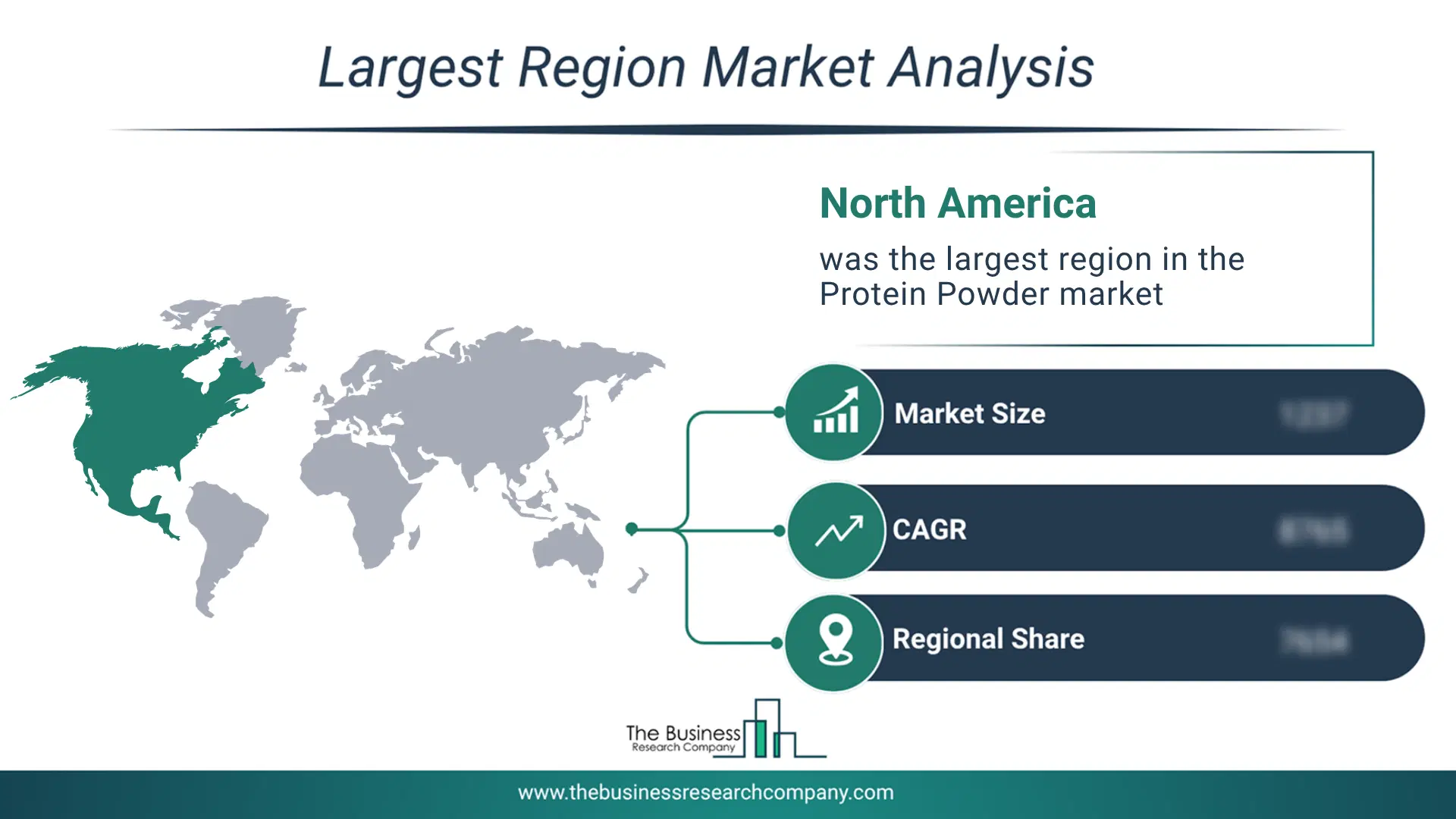
Regional Outlook
North America was the largest region in the protein powder market in 2025. Asia-Pacific is expected to be the fastest-growing region in the protein powder market report during the forecast period. The regions covered in this market report are Asia-Pacific, South East Asia, Western Europe, Eastern Europe, North America, South America, Middle East and Africa. The countries covered in this market report are Australia, Brazil, China, France, Germany, India, Indonesia, Japan, Taiwan, Russia, South Korea, UK, USA, Italy, Spain, CanadaWhat Defines the Protein Powder Market?
The protein powder market consists of sales of collagen protein powder and whey hydrolysates. Values in this market are ‘factory gate’ values, that is the value of goods sold by the manufacturers or creators of the goods, whether to other entities (including downstream manufacturers, wholesalers, distributors and retailers) or directly to end customers. The value of goods in this market includes related services sold by the creators of the goods.How is Market Value Defined and Measured?
The market value is defined as the revenues that enterprises gain from the sale of goods and/or services within the specified market and geography through sales, grants, or donations in terms of the currency (in USD unless otherwise specified). The revenues for a specified geography are consumption values that are revenues generated by organizations in the specified geography within the market, irrespective of where they are produced. It does not include revenues from resales along the supply chain, either further along the supply chain or as part of other products.
This chart presents market attractiveness based on a quantitative evaluation of growth, competition, strategic alignment, and risk, offering a clear view of opportunity areas for decision-making. This chart is for illustrative purposes; the full report contains the complete analysis.

This chart highlights the Total Addressable Market (TAM) by estimating the maximum revenue opportunity using an assumption-driven approach, supporting strategic planning and opportunity sizing across markets. The chart is illustrative; the full report provides a more comprehensive analysis.
What Key Data and Analysis Are Included in the Protein Powder Market Report 2026?
The protein powder market research report is one of a series of new reports from The Business Research Company that provides market statistics, including industry global market size, regional shares, competitors with the market share, detailed market segments, market trends and opportunities, and any further data you may need to thrive in the protein powder industry. The market research report delivers a complete perspective of everything you need, with an in-depth analysis of the current and future state of the industry.Protein Powder Market Report Forecast Analysis
| Report Attribute | Details |
|---|---|
| Market Size Value In 2026 | $30.82 billion |
| Revenue Forecast In 2030 | $42.26 billion |
| Growth Rate | CAGR of 7.8% from 2026 to 2030 |
| Base Year For Estimation | 2025 |
| Actual Estimates/Historical Data | 2020-2025 |
| Forecast Period | 2026 - 2030 |
| Market Representation | Revenue in USD Billion and CAGR from 2026 to 2030 |
| Segments Covered | Type, Flavor, Sources, Distribution Channel, End Use |
| Regional Scope | Asia-Pacific, Western Europe, Eastern Europe, North America, South America, Middle East, Africa |
| Country Scope | The countries covered in the report are Australia, Brazil, China, France, Germany, India, Indonesia, Japan, Taiwan, Russia, South Korea, UK, USA, Canada, Italy, Spain. |
| Key Companies Profiled | Optimum Nutrition, Dymatize Nutrition, MusclePharm Corporation, BPI Sports LLC, CytoSport Inc., NutraBio, Herbalife International of America Inc., Abbott Laboratories, Amway Corp., Vega, NOW Foods, Isopure, Garden of Life, Orgain, MuscleTech, Myprotein, BSN, Rule One Proteins, Kaged, Ascent Protein |
| Customization Scope | Request for Customization |
| Pricing And Purchase Options | Explore Purchase Options |