
Vegan Protein Powder Market Report 2026
Global Outlook – By Type (Soy Protein, Spirulina Protein, Wheat Protein, Pumpkin Seed Protein, Hemp Protein, Pea Protein, Rice Protein, Other Types), By Age Group (Millennials, Generation X, Baby Boomers), By Nature (Organic, Conventional), By Distribution Channel (Modern Groceries, Online Retail Or E-Commerce, Natural And Specialty Retail, Pharmacies And Drug Stores, Health Food Stores, Convenience Stores, Other Distribution Channels), By Application (Sports Nutrition, Additional Nutrition) – Market Size, Trends, Strategies, and Forecast to 2030
Vegan Protein Powder Market Overview
• Vegan Protein Powder market size has reached to $5.2 billion in 2025 • Expected to grow to $8.01 billion in 2030 at a compound annual growth rate (CAGR) of 9.2% • Growth Driver: Growing Fitness Industry Is Anticipated To Fuel The Vegan Protein Powders Market • Market Trend: Rising Demand For Non-GMO Vegan Protein Powders A Shift Towards Clean Label Products • North America was the largest region in 2025 and Asia-Pacific is the fastest growing region.What Is Covered Under Vegan Protein Powder Market?
Vegan protein powders refer to plant dietary supplements that support hormone and enzyme production, muscular growth, and tissue repair. Vegan protein powder is a dairy-free option that provides essential amino acids to promote weight loss and muscle building. The main types of vegan protein powder are soy protein, spirulina protein, and wheat protein. pumpkin seed protein, hemp protein, pea protein, rice protein, and others. Soy protein refers to the main protein present in soy products, such as dairy alternatives and meat substitutes made from soy, which satisfies all necessary needs for essential amino acids to promote newborns' and children's appropriate growth and development. The various age groups are millennials, generation X, and baby boomers available in organic and conventional form. The various distribution channels are modern groceries, online retail or e-commerce, natural and specialty retail, pharmacies and drug stores, health food stores, convenience stores, and others applied in sports nutrition, and additional nutrition.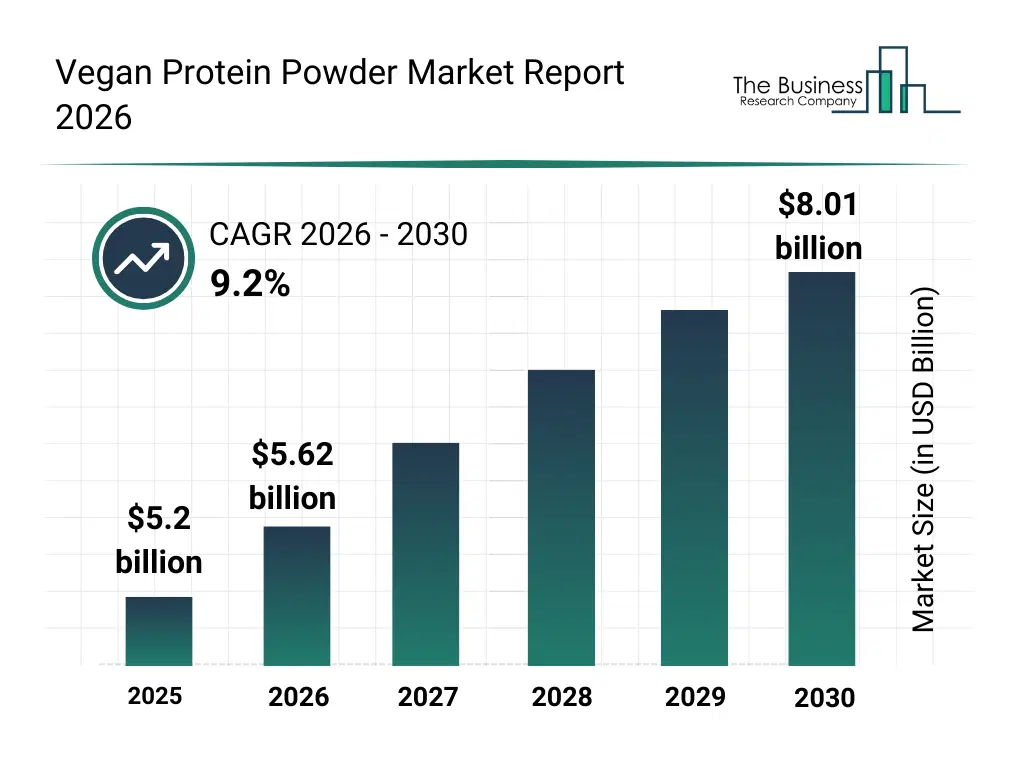
What Is The Vegan Protein Powder Market Size and Share 2026?
The vegan protein powder market size has grown strongly in recent years. It will grow from $5.2 billion in 2025 to $5.62 billion in 2026 at a compound annual growth rate (CAGR) of 8.1%. The growth in the historic period can be attributed to rising vegan and vegetarian population, increasing awareness of plant-based nutrition, growth in fitness and bodybuilding culture, expansion of health food retail outlets, availability of diverse plant protein sources.What Is The Vegan Protein Powder Market Growth Forecast?
The vegan protein powder market size is expected to see strong growth in the next few years. It will grow to $8.01 billion in 2030 at a compound annual growth rate (CAGR) of 9.2%. The growth in the forecast period can be attributed to growing demand for sustainable protein alternatives, rising focus on personalized nutrition, expansion of online nutrition platforms, increasing adoption of organic dietary supplements, product innovation in blended plant proteins. Major trends in the forecast period include increasing demand for plant-based sports nutrition, rising preference for clean-label protein powders, growing adoption of organic vegan proteins, expansion of e-commerce protein sales channels, enhanced focus on amino acid profile optimization.
Global Vegan Protein Powder Market Segmentation
1) By Type: Soy Protein, Spirulina Protein, Wheat Protein, Pumpkin Seed Protein, Hemp Protein, Pea Protein, Rice Protein, Other Types 2) By Age Group: Millennials, Generation X, Baby Boomers 3) By Nature: Organic, Conventional 4) By Distribution Channel: Modern Groceries, Online Retail Or E-Commerce, Natural And Specialty Retail, Pharmacies And Drug Stores, Health Food Stores, Convenience Stores, Other Distribution Channels 5) By Application: Sports Nutrition, Additional Nutrition Subsegments: 1) By Soy Protein: Isolate, Concentrate, Textured Soy Protein 2) By Spirulina Protein: Powder, Tablets Or Capsules 3) By Wheat Protein: Gluten, Wheat Protein Isolate 4) By Pumpkin Seed Protein: Pumpkin Seed Protein Powder, Pumpkin Seed Protein Concentrate, Organic Pumpkin Seed Protein 5) By Hemp Protein: Hemp Protein Powder, Hemp Protein Concentrate, Organic Hemp Protein 6) By Pea Protein: Pea Protein Isolate, Pea Protein Concentrate 7) By Rice Protein: Brown Rice Protein, White Rice Protein 8) By Other Types: Sunflower Seed Protein, Chia Seed Protein, Quinoa ProteinWhat Is The Driver Of The Vegan Protein Powder Market?
The growing fitness industry is expected to propel the growth of the vegan protein powder market going forward. The fitness industry is made up of businesses and activities related to physical exercise, health, and wellness. Vegan protein powders are widely utilized in the fitness industry as plant-based supplements to support muscle building, recovery, and overall nutritional needs among individuals following vegan or vegetarian lifestyles. For instance, in December 2023, according to Made in CA, a Canada-based provider that compiles a list of Canadian products in one place, it was estimated that the Canadian gym, health, and fitness industry would be worth $6.2 billion in 2022. The fitness industry in Canada is expected to grow by 171% by 2028. Therefore, the growing fitness industry is driving the vegan protein powder industry.Key Players In The Global Vegan Protein Powder Market
Major companies operating in the vegan protein powder market are Cargill Incorporated, Archer-Daniels-Midland Company, Abbott Laboratories Ltd., Kerry Group plc, Amway Corporation, Ingredion Incorporated, Glanbia plc, GNC Holdings LLC, Now Health Group Inc., Farbest-Tallman Foods Corp, MusclePharm Corp, Nutiva Inc., Nutrivo LLC, True Nutrition, Transparent Labs LLC, Nutrex Research Inc., Optimum Nutrition Inc., Sunwarrior LLC, Garden of Life LLC, Supplement Manufacturing Partners (SMP Nutra), Archon Vitamin LLC, A&B Ingredients Inc., The Green Lab LLC, Naked Nutrition International, Orgain Inc., AGT Food and Ingredients Inc., Zywie Ventures Private Limited, Nuzest IP Pty Limited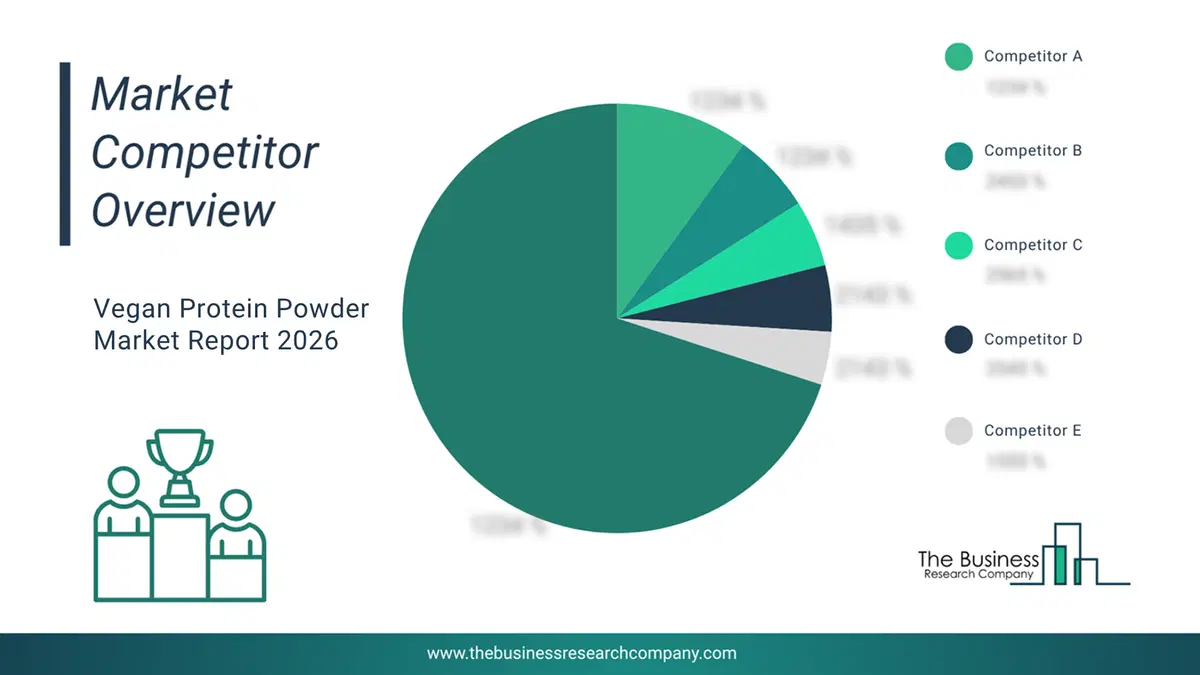
This chart is for illustrative purposes; the full report includes a detailed competitor analysis and comprehensive overview of the top 10 companies in the market.
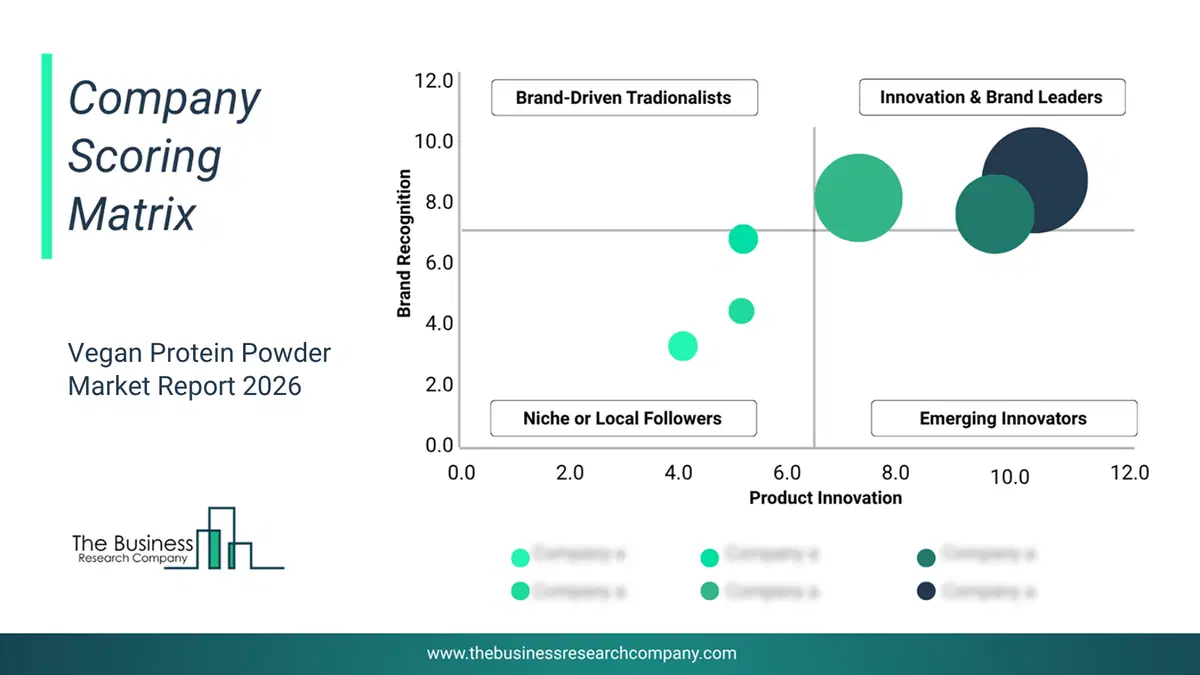
This chart maps companies by product innovation and brand strength, with bubble size indicating relative revenue, helping identify market leaders, challengers, and niche players. This is an illustrative chart; the full report provides a complete and accurate competitive analysis.
Global Vegan Protein Powder Market Trends and Insights
Major companies in the vegan protein powders market are focused on developing non-GMO-based products to cater to the rising consumer demand for clean-label, health-conscious options. Non-GMO vegan protein powders offer better nutritional profiles, as they typically avoid synthetic additives and preservatives associated with some genetically modified foods. For instance, in August 2024, PoLoPo, an Israel-based food company launched a new protein called 'Patatin,' sourced from potatoes. This molecular-farmed protein is anticipated to be non-GMO due to its extraction method, despite being derived from genetically engineered potatoes. The launch represents a cost-effective alternative to traditional egg proteins and aligns with growing demands for affordable plant-based ingredients. PoLoPo emphasizes scalability and cost-efficiency in this new product, as it seeks USDA regulatory approval to bring Patatin to a broader market.What Are Latest Mergers And Acquisitions In The Vegan Protein Powder Market?
In February 2024, Nestlé Limited, a US-based food company acquired Garden of Life Inc., for an undisclosed amount. This acquisition aims to bolster Nestlé's presence in the health and wellness sector, particularly in plant-based nutrition. Garden of Life Inc. is a US-basedcompany that offers various food products including vegan protein powder.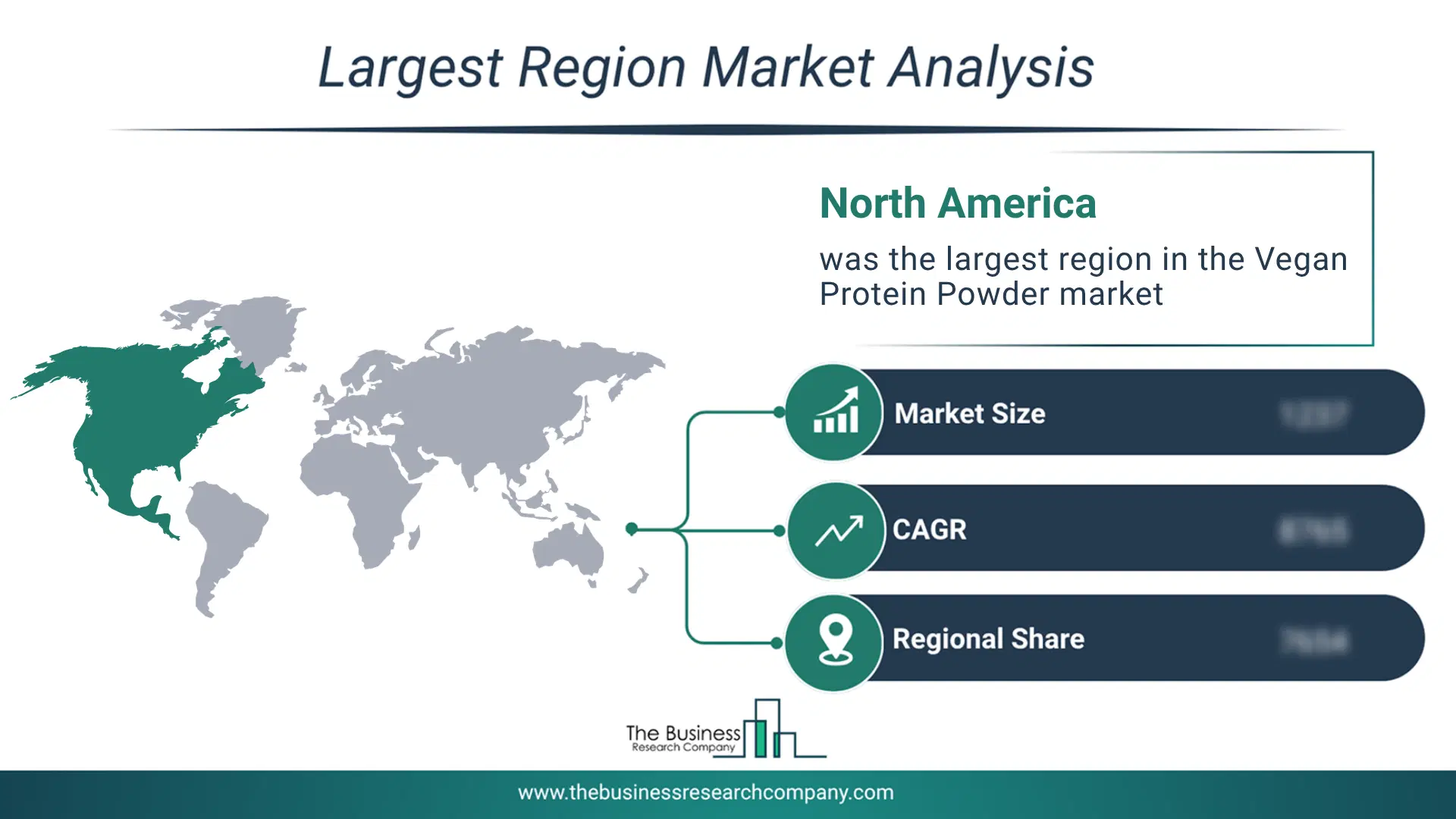
Regional Outlook
North America was the largest region in the vegan protein powder market in 2025. Asia-Pacific is expected to be the fastest-growing region in the forecast period. The regions covered in this market report are Asia-Pacific, South East Asia, Western Europe, Eastern Europe, North America, South America, Middle East and Africa. The countries covered in this market report are Australia, Brazil, China, France, Germany, India, Indonesia, Japan, Taiwan, Russia, South Korea, UK, USA, Italy, Spain, CanadaWhat Defines the Vegan Protein Powder Market?
The vegan protein powder market consists of sales of no cow chocolate protein powder, ghost vegan protein, and sprout living epic protein. Values in this market are ‘factory gate’ values, that is, the value of goods sold by the manufacturers or creators of the goods, whether to other entities (including downstream manufacturers, wholesalers, distributors, and retailers) or directly to end customers. The value of goods in this market includes related services sold by the creators of the goods.How is Market Value Defined and Measured?
The market value is defined as the revenues that enterprises gain from the sale of goods and/or services within the specified market and geography through sales, grants, or donations in terms of the currency (in USD unless otherwise specified). The revenues for a specified geography are consumption values that are revenues generated by organizations in the specified geography within the market, irrespective of where they are produced. It does not include revenues from resales along the supply chain, either further along the supply chain or as part of other products.
This chart presents market attractiveness based on a quantitative evaluation of growth, competition, strategic alignment, and risk, offering a clear view of opportunity areas for decision-making. This chart is for illustrative purposes; the full report contains the complete analysis.

This chart highlights the Total Addressable Market (TAM) by estimating the maximum revenue opportunity using an assumption-driven approach, supporting strategic planning and opportunity sizing across markets. The chart is illustrative; the full report provides a more comprehensive analysis.
What Key Data and Analysis Are Included in the Vegan Protein Powder Market Report 2026?
The vegan protein powder market research report is one of a series of new reports from The Business Research Company that provides market statistics, including industry global market size, regional shares, competitors with the market share, detailed market segments, market trends and opportunities, and any further data you may need to thrive in the vegan protein powder industry. The market research report delivers a complete perspective of everything you need, with an in-depth analysis of the current and future state of the industry.Vegan Protein Powder Market Report Forecast Analysis
| Report Attribute | Details |
|---|---|
| Market Size Value In 2026 | $5.62 billion |
| Revenue Forecast In 2030 | $8.01 billion |
| Growth Rate | CAGR of 8.1% from 2026 to 2030 |
| Base Year For Estimation | 2025 |
| Actual Estimates/Historical Data | 2020-2025 |
| Forecast Period | 2026 - 2030 |
| Market Representation | Revenue in USD Billion and CAGR from 2026 to 2030 |
| Segments Covered | Type, Age Group, Nature, Distribution Channel, Application |
| Regional Scope | Asia-Pacific, Western Europe, Eastern Europe, North America, South America, Middle East, Africa |
| Country Scope | The countries covered in the report are Australia, Brazil, China, France, Germany, India, Indonesia, Japan, Taiwan, Russia, South Korea, UK, USA, Canada, Italy, Spain. |
| Key Companies Profiled | Cargill Incorporated, Archer-Daniels-Midland Company, Abbott Laboratories Ltd., Kerry Group plc, Amway Corporation, Ingredion Incorporated, Glanbia plc, GNC Holdings LLC, Now Health Group Inc., Farbest-Tallman Foods Corp, MusclePharm Corp, Nutiva Inc., Nutrivo LLC, True Nutrition, Transparent Labs LLC, Nutrex Research Inc., Optimum Nutrition Inc., Sunwarrior LLC, Garden of Life LLC, Supplement Manufacturing Partners (SMP Nutra), Archon Vitamin LLC, A&B Ingredients Inc., The Green Lab LLC, Naked Nutrition International, Orgain Inc., AGT Food and Ingredients Inc., Zywie Ventures Private Limited, Nuzest IP Pty Limited |
| Customization Scope | Request for Customization |
| Pricing And Purchase Options | Explore Purchase Options |