

Heavy Duty Telehandler Market Report 2026
Global Outlook – By Type (Capacity 3-4 Metric Ton (MT), Capacity 4-22 Metric Ton (MT)), By Power Source (Diesel, Electric, Hybrid), By End-User (Construction, Agriculture, Mining, Oil And Gas, Power, Other End-Users) – Market Size, Trends, Strategies, and Forecast to 2030
Heavy Duty Telehandler Market Overview
• Heavy Duty Telehandler market size has reached to $4.43 billion in 2025 • Expected to grow to $5.78 billion in 2030 at a compound annual growth rate (CAGR) of 5.4% • Growth Driver: Increasing Construction Activities Fueling The Growth Of The Market Due To Rising Urbanization And Infrastructure Demand • Market Trend: Advanced Load-Sensing Systems Enhance Safety And Efficiency • North America was the largest region in 2025 and Asia-Pacific is the fastest growing region.What Is Covered Under Heavy Duty Telehandler Market?
A heavy-duty telehandler is a robust lifting machine designed to handle extremely heavy loads in construction, agriculture, mining, and industrial applications. It combines the functions of a forklift and a crane, featuring a telescopic boom that allows it to lift, move, and place materials at various heights and distances. The heavy-duty telehandler safely lifts and transports heavy materials over uneven terrain and to elevated positions. The main types of heavy duty telehandlers are capacity 1.25-2.5 metric ton (mt), capacity 3-4 metric ton (mt), and capacity 4-22 metric ton (mt). Telehandlers in the 1.25–2.5 metric ton (mt) capacity range are compact, lightweight machines designed to lift and move relatively smaller loads. It includes power sources such as diesel, electric, and hybrid, catering to diverse end users, including construction, agriculture, mining, manufacturing, oil and gas, transportation and logistics, power, and others.
What Is The Heavy Duty Telehandler Market Size and Share 2026?
The heavy duty telehandler market size has grown strongly in recent years. It will grow from $4.43 billion in 2025 to $4.68 billion in 2026 at a compound annual growth rate (CAGR) of 5.7%. The growth in the historic period can be attributed to infrastructure development growth, mining activity expansion, agricultural mechanization, industrial material handling needs, logistics sector growth.What Is The Heavy Duty Telehandler Market Growth Forecast?
The heavy duty telehandler market size is expected to see strong growth in the next few years. It will grow to $5.78 billion in 2030 at a compound annual growth rate (CAGR) of 5.4%. The growth in the forecast period can be attributed to smart construction site adoption, demand for low emission machinery, growth in large scale infrastructure, automation in material handling, expansion of mining operations. Major trends in the forecast period include rising demand for high capacity lifting equipment, integration of telematics and safety systems, growth in infrastructure construction projects, shift toward electric and hybrid telehandlers, expansion of rental equipment services.Tariff Impact On Heavy Duty Telehandler Market
Tariffs have affected the heavy duty telehandler market by increasing costs of imported engines, hydraulic systems, and steel components. The impact is strongest in North America and Europe where equipment supply chains are globalized. These pressures raise equipment prices and rental rates. However, tariffs also promote regional manufacturing and supplier diversification.
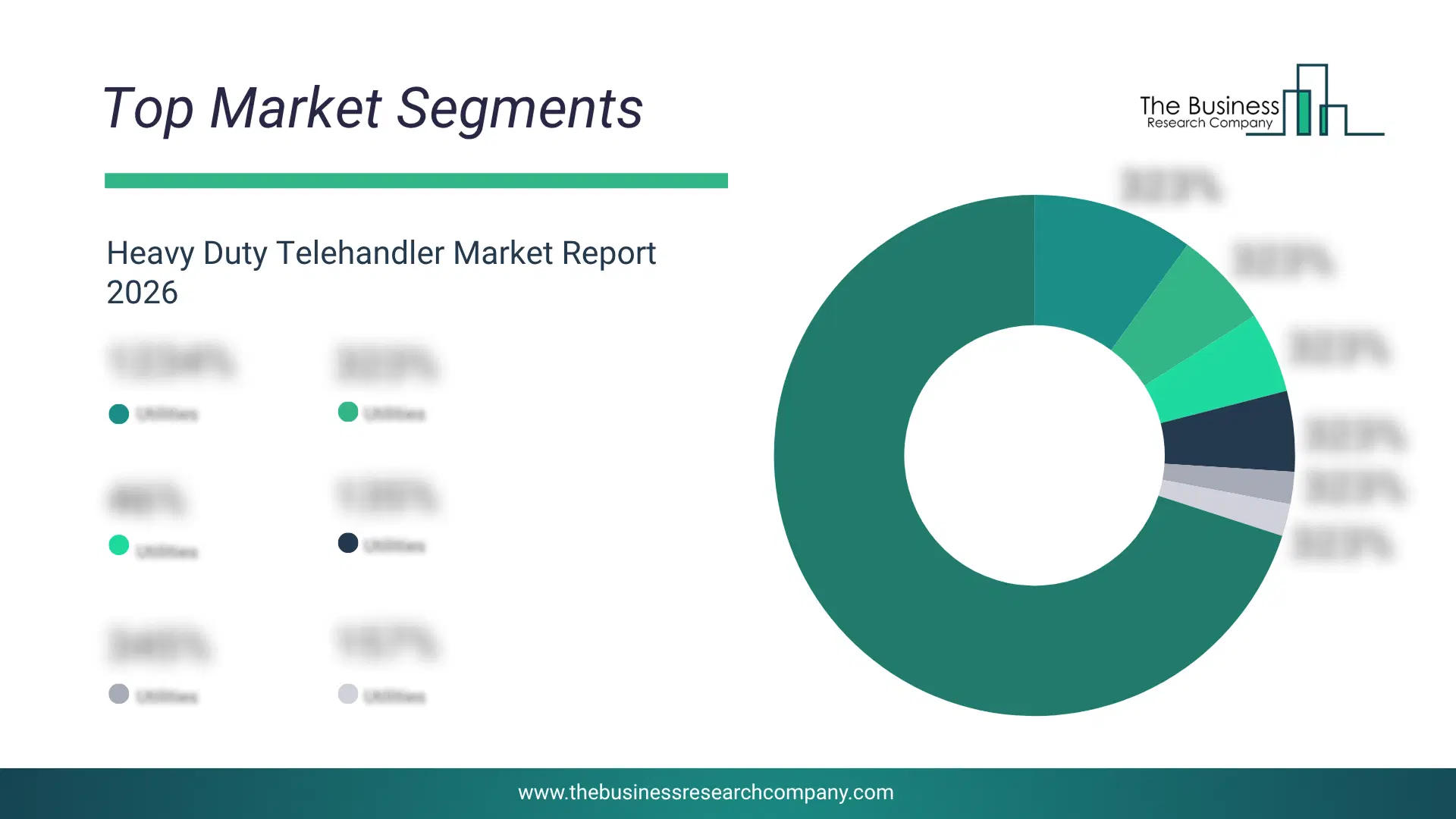
Global Heavy Duty Telehandler Market Segmentation
1) By Type: Capacity 3-4 Metric Ton (MT), Capacity 4-22 Metric Ton (MT) 2) By Power Source: Diesel, Electric, Hybrid 3) By End-User: Construction, Agriculture, Mining, Oil And Gas, Power, Other End-Users Subsegments: 1) By Capacity 3-4 Metric Ton (MT): Mid-Range Telehandlers, Heavy-Duty Telehandlers 2) By Capacity 4-22 Metric Ton (MT): High-Capacity Telehandlers, Ultra Heavy-Duty TelehandlersWhat Are The Drivers Of The Heavy Duty Telehandler Market?
The increasing construction activities are expected to propel the growth of the heavy duty telehandler market going forward. Construction activities refer to the processes involved in building, repairing, or altering structures such as buildings, roads, bridges, and other infrastructure. The rising construction activities are due to urbanization, as increasing population concentration in cities creates a higher demand for residential, commercial, and infrastructure development. Heavy duty telehandlers aid in construction activities by offering high lifting capacities and extended reach, making them essential for handling heavy materials on job sites. They improve efficiency by enabling precise material placement and reducing manual labor, thereby accelerating project timelines. For instance, in April 2025, according to the United States Census Bureau, a US-based government agency, construction spending reached $2,156,495 million in 2024, an increase from $2,023,662 million in 2023. Therefore, the increasing construction activities are driving the growth of the heavy duty telehandler industry. The rising investments in infrastructure development are expected to propel the growth of the heavy duty telehandler market going forward. Infrastructure investments refer to funding spent on building and maintaining essential systems such as roads, bridges, power, water, and communication networks to support economic and social development. The increasing infrastructure investments are due to urbanization and population growth, as growing populations in urban areas strain existing infrastructure, necessitating new development and upgrades. Investments in infrastructure development boost the demand for heavy duty telehandlers by increasing the need for efficient material handling on large-scale construction sites. They support productivity by enabling the safe lifting and placement of heavy loads, streamlining operations across complex infrastructure projects. For instance, in July 2024, according to the Office for National Statistics, a UK-based government department, total general government investment in infrastructure reached $17.25 billion (£13.8 billion) in 2023, marking a 3.9% increase from 2022. Therefore, the rising investments in infrastructure development are driving the growth of the heavy duty telehandler industry.Key Players In The Global Heavy Duty Telehandler Market
Major companies operating in the heavy duty telehandler market are J.C. Bamford Excavators Limited (JCB), Manitou BF S.A., Merlo S.p.A., Dieci S.r.l., CNH Industrial N.V. (CASE Construction Equipment & New Holland), Xuzhou Construction Machinery Group Co., Ltd. (XCMG), Liebherr-International AG, Sany Heavy Industry Co., Ltd., Terex Corporation, Caterpillar Inc., Komatsu Ltd., Volvo Construction Equipment AB, Hyundai Construction Equipment Co., Ltd., HD Hyundai Infracore Co., Ltd. (Doosan), Bobcat Company, Wacker Neuson SE, Kramer-Werke GmbH, JLG Industries, Inc., Skyjack Inc., Haulotte Group, Magni Telescopic Handlers S.r.l., Sennebogen Maschinenfabrik GmbH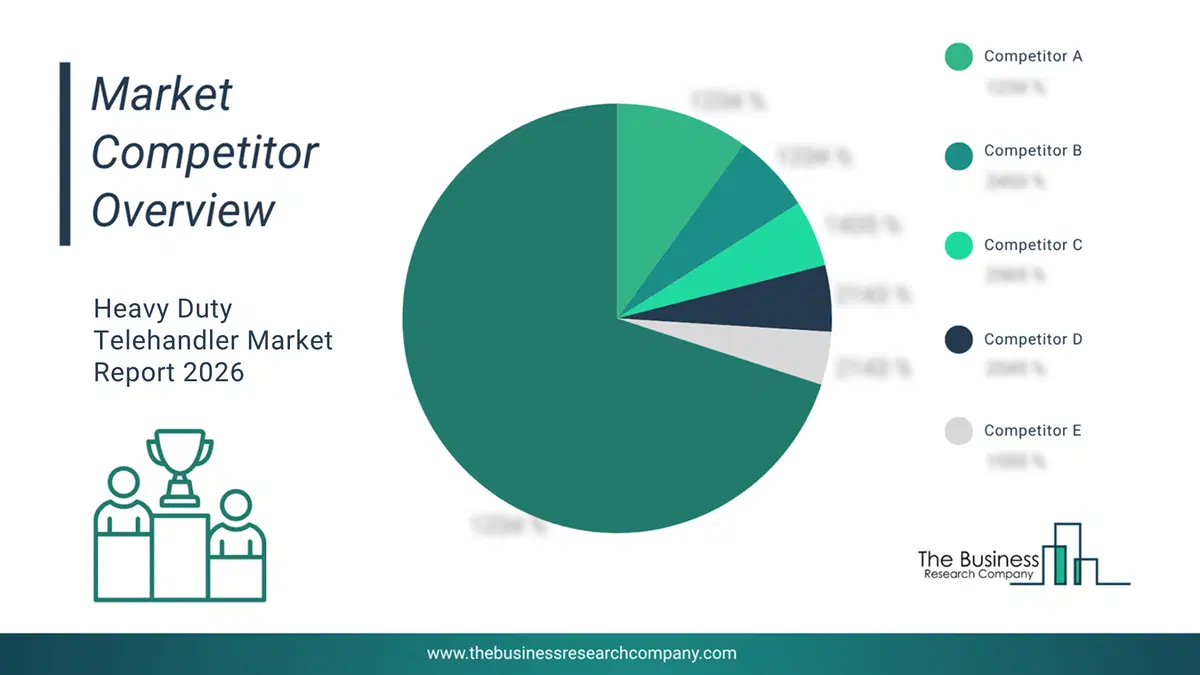
This chart is for illustrative purposes; the full report includes a detailed competitor analysis and comprehensive overview of the top 10 companies in the market.
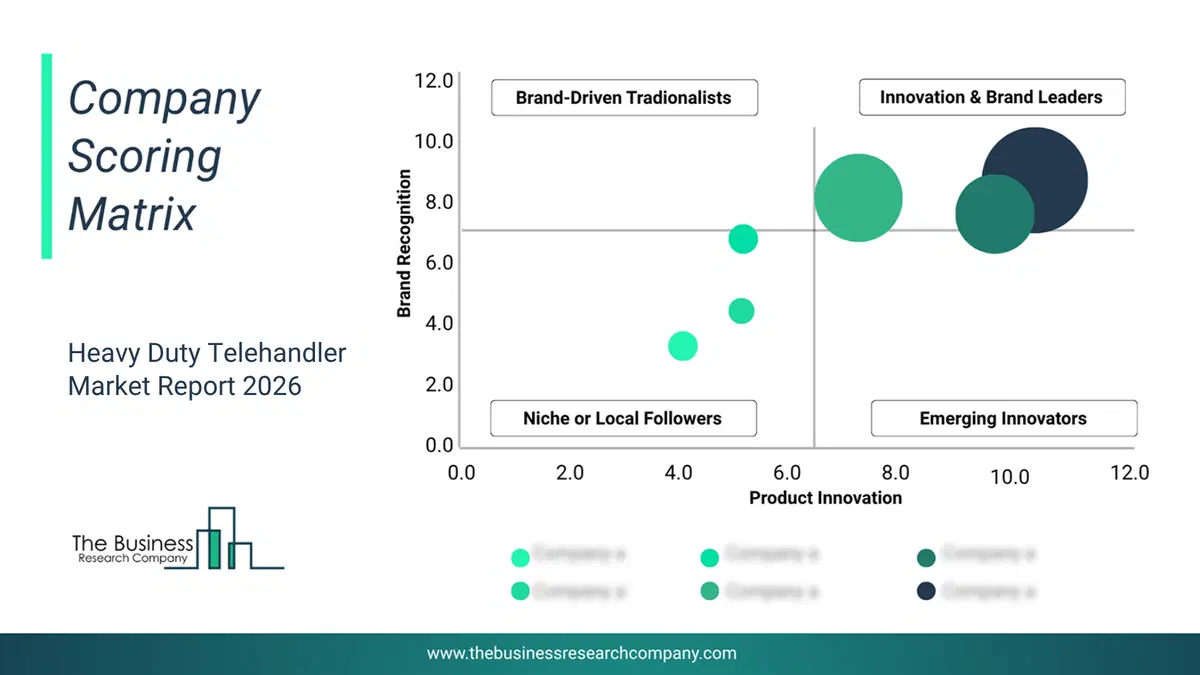
This chart maps companies by product innovation and brand strength, with bubble size indicating relative revenue, helping identify market leaders, challengers, and niche players. This is an illustrative chart; the full report provides a complete and accurate competitive analysis.
Global Heavy Duty Telehandler Market Trends and Insights
Major companies operating in the heavy-duty telehandler market are focusing on developing advanced products, such as enhanced load-sensing systems, to boost efficiency, enhance safety, and reduce operator fatigue. Enhanced load-sensing systems refer to intelligent technologies in telehandlers that automatically adjust hydraulic pressure and stability based on load weight and lifting conditions. For instance, in February 2025, Manitou Group, a France-based heavy equipment manufacturer, launched two new MTA telehandler models, the MTA 1242 MAX and MTA 1242 MAX E74, designed to deliver increased power, stability, and efficiency for construction and rental markets. The MTA 1242 MAX is equipped with a 127-horsepower engine, while the MAX E74 features a more fuel-efficient 74-horsepower engine that reduces long-term maintenance costs without sacrificing performance. It also includes automatic leveling and intelligent load management, ensuring safer lifting operations even on uneven terrain. Additionally, the telehandlers come with improved visibility and ergonomic controls, reducing operator strain and increasing productivity.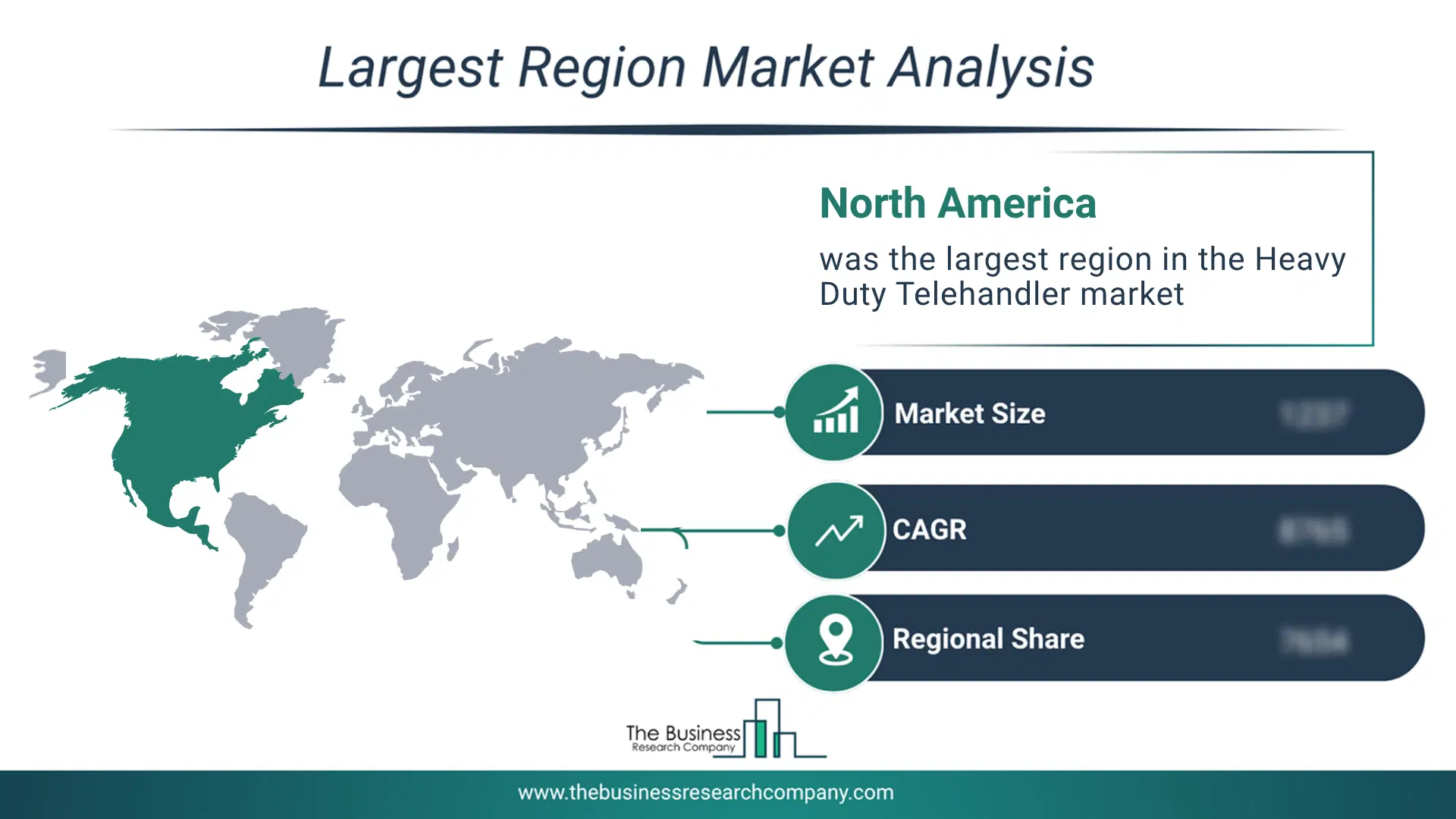
Regional Outlook
North America was the largest region in the heavy duty telehandler market in 2025. Asia-Pacific is expected to be the fastest-growing region in the forecast period. The regions covered in this market report are Asia-Pacific, South East Asia, Western Europe, Eastern Europe, North America, South America, Middle East, Africa The countries covered in this market report are Australia, Brazil, China, France, Germany, India, Indonesia, Japan, Taiwan, Russia, South Korea, UK, USA, Canada, Italy, Spain.What Defines the Heavy Duty Telehandler Market?
The heavy duty telehandler market consists of sales of pallet forks, general-purpose buckets, grapple buckets, truss booms, high-capacity telehandlers, telescopic handlers, and material handling arms. Values in this market are ‘factory gate’ values, that is, the value of goods sold by the manufacturers or creators of the goods, whether to other entities (including downstream manufacturers, wholesalers, distributors, and retailers) or directly to end customers. The value of goods in this market includes related services sold by the creators of the goods.How is Market Value Defined and Measured?
The market value is defined as the revenues that enterprises gain from the sale of goods and/or services within the specified market and geography through sales, grants, or donations in terms of the currency (in USD unless otherwise specified). The revenues for a specified geography are consumption values that are revenues generated by organizations in the specified geography within the market, irrespective of where they are produced. It does not include revenues from resales along the supply chain, either further along the supply chain or as part of other products.
This chart presents market attractiveness based on a quantitative evaluation of growth, competition, strategic alignment, and risk, offering a clear view of opportunity areas for decision-making. This chart is for illustrative purposes; the full report contains the complete analysis.

This chart highlights the Total Addressable Market (TAM) by estimating the maximum revenue opportunity using an assumption-driven approach, supporting strategic planning and opportunity sizing across markets. The chart is illustrative; the full report provides a more comprehensive analysis.
What Key Data and Analysis Are Included in the Heavy Duty Telehandler Market Report 2026?
The heavy duty telehandler market research report is one of a series of new reports from The Business Research Company that provides market statistics, including industry global market size, regional shares, competitors with the market share, detailed market segments, market trends and opportunities, and any further data you may need to thrive in the heavy duty telehandler industry. The market research report delivers a complete perspective of everything you need, with an in-depth analysis of the current and future state of the industry.Heavy Duty Telehandler Market Report Forecast Analysis
| Report Attribute | Details |
|---|---|
| Market Size Value In 2026 | $4.68 billion |
| Revenue Forecast In 2030 | $5.78 billion |
| Growth Rate | CAGR of 5.4% from 2026 to 2030 |
| Base Year For Estimation | 2025 |
| Actual Estimates/Historical Data | 2020-2025 |
| Forecast Period | 2026 - 2030 |
| Market Representation | Revenue in USD Billion and CAGR from 2026 to 2030 |
| Segments Covered | Type, Power Source, End-User |
| Regional Scope | Asia-Pacific, Western Europe, Eastern Europe, North America, South America, Middle East, Africa |
| Key Companies Profiled | J.C. Bamford Excavators Limited (JCB), Manitou BF S.A., Merlo S.p.A., Dieci S.r.l., CNH Industrial N.V. (CASE Construction Equipment & New Holland), Xuzhou Construction Machinery Group Co., Ltd. (XCMG), Liebherr-International AG, Sany Heavy Industry Co., Ltd., Terex Corporation, Caterpillar Inc., Komatsu Ltd., Volvo Construction Equipment AB, Hyundai Construction Equipment Co., Ltd., HD Hyundai Infracore Co., Ltd. (Doosan), Bobcat Company, Wacker Neuson SE, Kramer-Werke GmbH, JLG Industries, Inc., Skyjack Inc., Haulotte Group, Magni Telescopic Handlers S.r.l., Sennebogen Maschinenfabrik GmbH |
| Customization Scope | Request for Customization |
| Pricing And Purchase Options | Explore Purchase Options |