
Hygroscopic Building Material Market Report 2026
Global Outlook – By Type (Natural Hygroscopic Materials, Synthetic Hygroscopic Materials), By Functionality (Moisture Control, Temperature Regulation, Sound Insulation), By Material Form (Solid Hygroscopic Materials, Foam-Based Hygroscopic Materials, Composite Hygroscopic Materials), By Application (Residential Buildings, Commercial Buildings, Industrial Buildings), By End-Use (Construction, Renovation, Restoration) – Market Size, Trends, Strategies, and Forecast to 2030
Hygroscopic Building Material Market Overview
• Hygroscopic Building Material market size has reached to $9.17 billion in 2025 • Expected to grow to $12.49 billion in 2030 at a compound annual growth rate (CAGR) of 6.3% • Growth Driver: Surge In Green Building Practices Fueling The Growth Of The Market Due To Rising Demand For Energy Efficiency And Eco-Friendly Construction • Market Trend: Eco-Friendly Flex Contact Panels To Advance Sustainable Building Practices • North America was the largest region and fastest growing region.What Is Covered Under Hygroscopic Building Material Market?
A hygroscopic building material is a material that has the ability to absorb and release moisture from the surrounding air. These materials naturally regulate indoor humidity levels by taking in moisture when the air is humid and releasing it when it is dry. This property helps improve indoor air quality and comfort and reduces the risk of condensation, mold growth, and material degradation. The main types of hygroscopic building materials are natural hygroscopic materials and synthetic hygroscopic materials. Natural hygroscopic materials, such as wood, wool, clay, and hemp, have the ability to naturally absorb and release moisture from the air, helping to regulate indoor humidity. Their key functionalities include moisture control, temperature regulation, and sound insulation, and they are available in various forms, including solid hygroscopic materials, foam-based hygroscopic materials, and composite hygroscopic materials. They are used in a wide range of applications, including residential buildings, commercial buildings, and industrial buildings, and the primary end-uses of these materials are in construction, renovation, and restoration projects.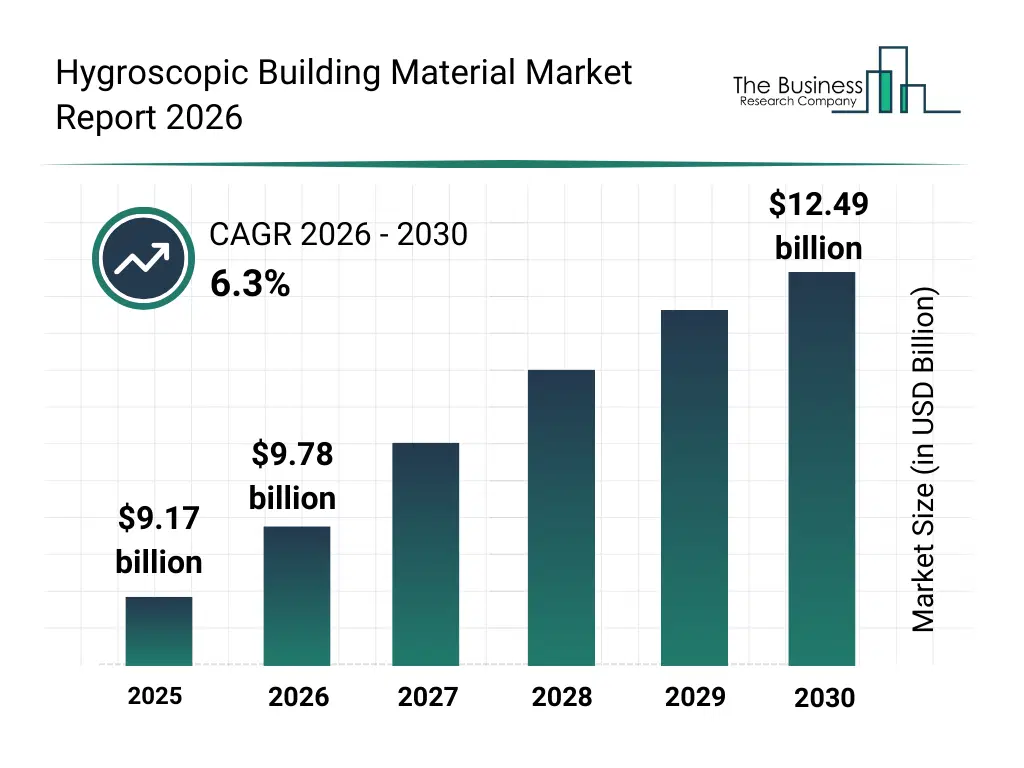
What Is The Hygroscopic Building Material Market Size and Share 2026?
The hygroscopic building material market size has grown strongly in recent years. It will grow from $9.17 billion in 2025 to $9.78 billion in 2026 at a compound annual growth rate (CAGR) of 6.6%. The growth in the historic period can be attributed to increasing use of natural hygroscopic materials, growing renovation and restoration projects, rising demand for indoor air quality improvement, expansion of bio-sourced material adoption, reliance on moisture-regulating panels.What Is The Hygroscopic Building Material Market Growth Forecast?
The hygroscopic building material market size is expected to see strong growth in the next few years. It will grow to $12.49 billion in 2030 at a compound annual growth rate (CAGR) of 6.3%. The growth in the forecast period can be attributed to increasing development of synthetic hygroscopic materials, rising adoption of automated manufacturing processes, growth in sustainable building projects, expansion of smart indoor climate solutions, increasing use of composite hygroscopic panels. Major trends in the forecast period include integration of AI-powered humidity control systems, adoption of sustainable bio-sourced building materials, expansion of automated manufacturing processes, development of connected indoor climate monitoring platforms, use of smart materials for moisture regulation.
Global Hygroscopic Building Material Market Segmentation
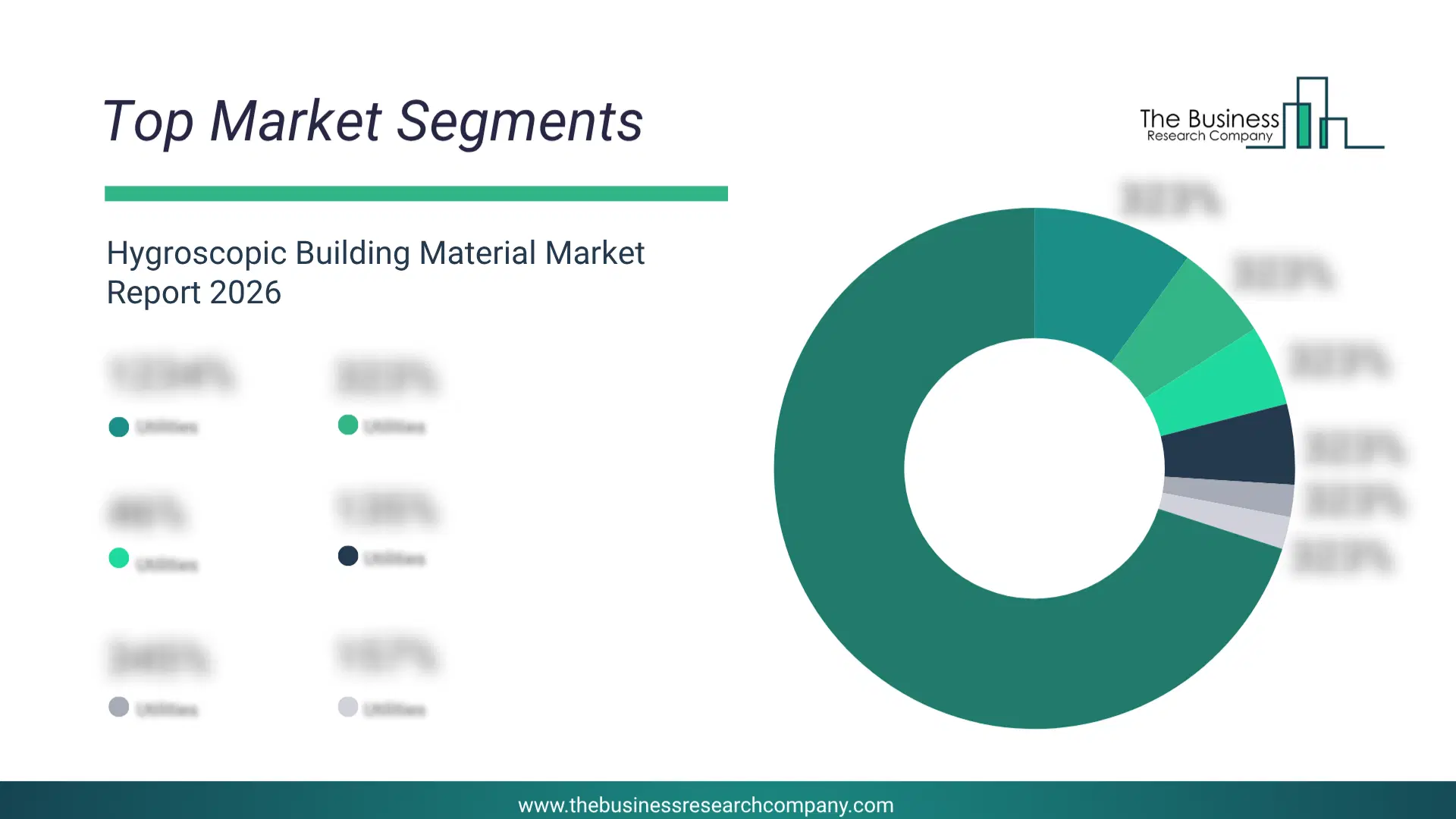
1) By Type: Natural Hygroscopic Materials, Synthetic Hygroscopic Materials 2) By Functionality: Moisture Control, Temperature Regulation, Sound Insulation 3) By Material Form: Solid Hygroscopic Materials, Foam-Based Hygroscopic Materials, Composite Hygroscopic Materials 4) By Application: Residential Buildings, Commercial Buildings, Industrial Buildings 5) By End-Use: Construction, Renovation, Restoration Subsegments: 1) By Natural Hygroscopic Materials: Wood, Wool, Clay, Hemp, Cork 2) By Synthetic Hygroscopic Materials: Polymer-based Foams, Modified Cellulose Materials, Synthetic Fiber Insulations, Composite Panels, AerogelsWhat Is The Driver Of The Hygroscopic Building Material Market?
The increasing adoption of green building practices is expected to propel the growth of the hygroscopic building material market going forward. Green building practices are ways of designing and constructing buildings that are safe for people to live in, use less energy and water, and are kind to the environment. The rise in green building practices is driven by the need to reduce energy costs, as it helps people and businesses save money on electricity and heating over time. Hygroscopic building material supports green building practices by naturally regulating indoor humidity, reducing reliance on mechanical ventilation and air conditioning, and improving energy efficiency while enhancing indoor air quality and occupant comfort. For instance, in February 2024, according to the US Green Building Council, a US-based non-profit organization, there was a 9% increase in leadership in energy and environmental design (LEED) certifications in 2023 over the previous year, along with 21 more certifications granted to single-family homes. Additionally, the number of newly registered LEED projects rose sharply, climbing by 51%, indicating substantial growth. Therefore, the increasing adoption of green building practices drives the growth of the hygroscopic building material industry.Key Players In The Global Hygroscopic Building Material Market
Major companies operating in the hygroscopic building material market are BASF SE, Compagnie de Saint-Gobain S.A., Arkema S.A., Owens Corning Inc., Clariant AG, Johns Manville Corporation, Soprema S.A.S., W. R. Grace & Co., Steico SE, ParexGroup S.A., Porocel Industries LLC, Knauf Gips KG, Fuji Silysia Chemical Ltd., Hengye Inc., Havelock Wool LLC, Claytec GmbH & Co. KG, IsoHemp S.A., Dessica S.A.S., Zibo Jalon New Materials Co. Ltd., Baubiologie Dämmstoffe Naturbau GmbH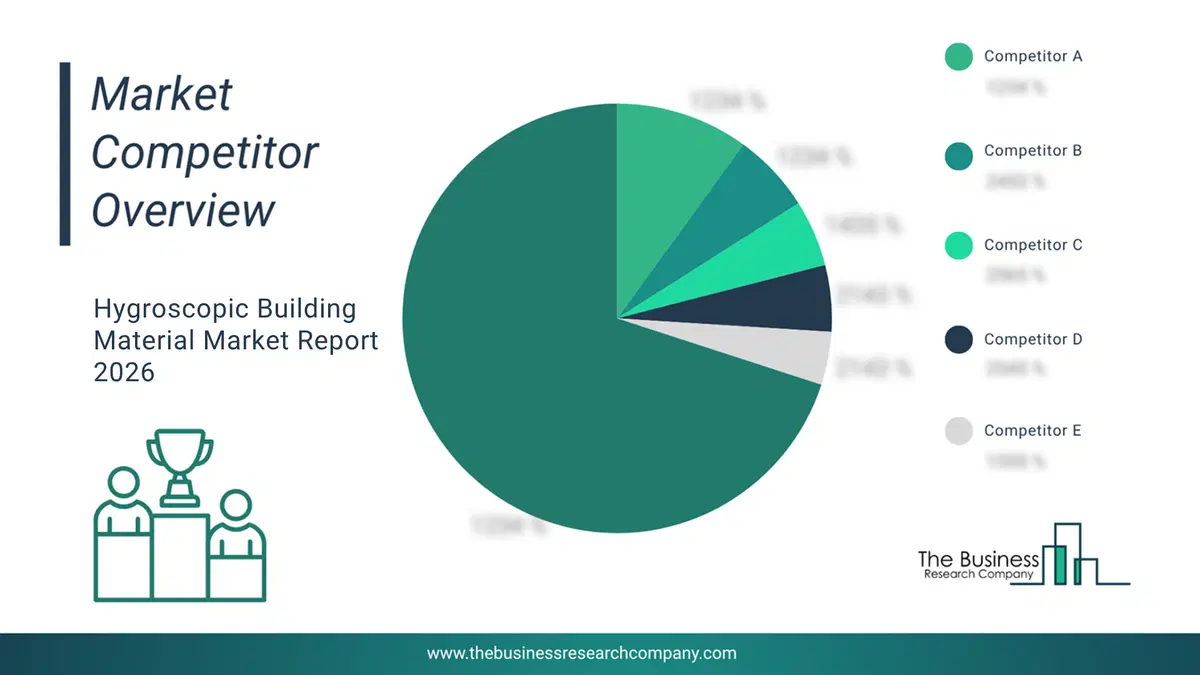
This chart is for illustrative purposes; the full report includes a detailed competitor analysis and comprehensive overview of the top 10 companies in the market.
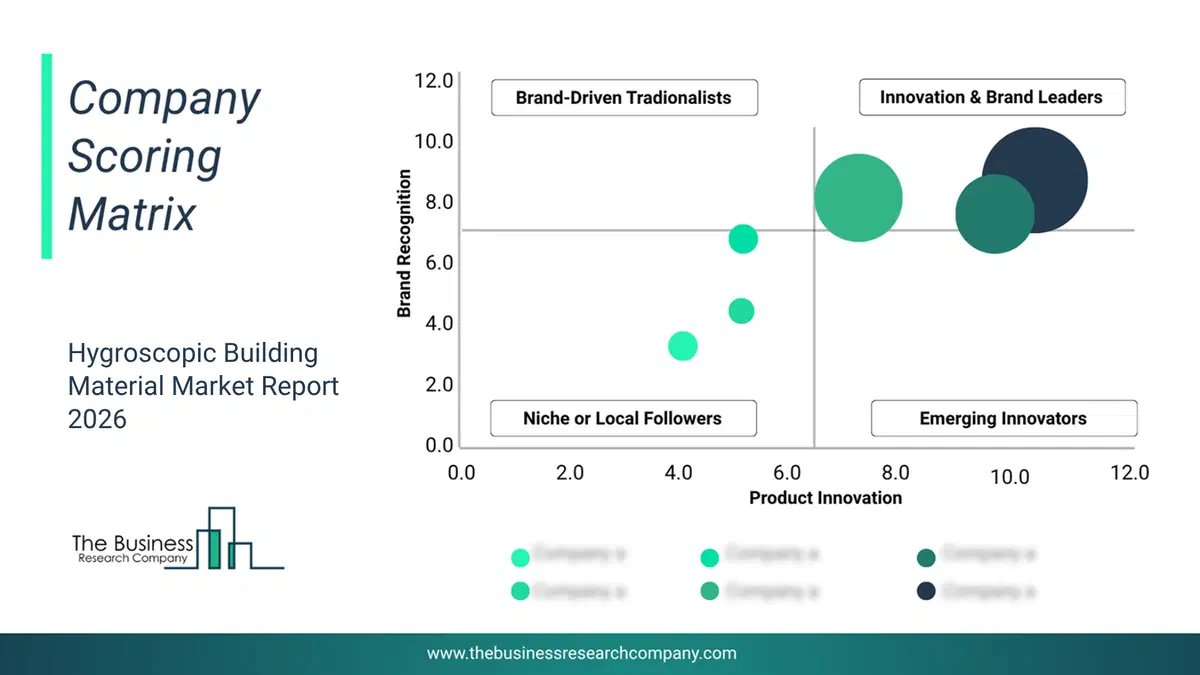
This chart maps companies by product innovation and brand strength, with bubble size indicating relative revenue, helping identify market leaders, challengers, and niche players. This is an illustrative chart; the full report provides a complete and accurate competitive analysis.
Global Hygroscopic Building Material Market Trends and Insights
Major companies operating in the hygroscopic building material market are focusing on developing advanced solutions, such as bio-sourced wood-fiber insulation panels, to improve indoor air quality and regulate moisture. Bio-sourced wood-fiber insulation panels are natural building materials made from renewable wood fibers that passively absorb and release indoor moisture, helping to balance humidity levels while providing thermal and acoustic insulation. For instance, in February 2023, Isonat, a France-based building materials manufacturing company, launched the Flex Contact range, the bio-sourced wood-fiber insulation panels. The Flex Contact panels are flexible, eco-friendly insulation boards made from natural wood fibers, offering excellent moisture regulation, breathability, and easy installation. They improve indoor comfort by maintaining stable humidity, support green building certifications, and reduce energy use in heating and cooling systems.What Are Latest Mergers And Acquisitions In The Hygroscopic Building Material Market?
In May 2024, Saint-Gobain, a France-based manufacturing and materials company, partnered with TimberHP to offer advanced insulation materials. Through this partnership, Saint-Gobain aimed to expand its presence in the sustainable insulation market by distributing TimberHP’s natural wood-fiber insulation products across North America, promoting environmentally friendly building solutions that support energy efficiency, indoor comfort, and the broader adoption of natural hygroscopic materials in green construction. TimberHP is a US-based building materials manufacturing company specializing in making eco-friendly wood-fiber insulation products for buildings.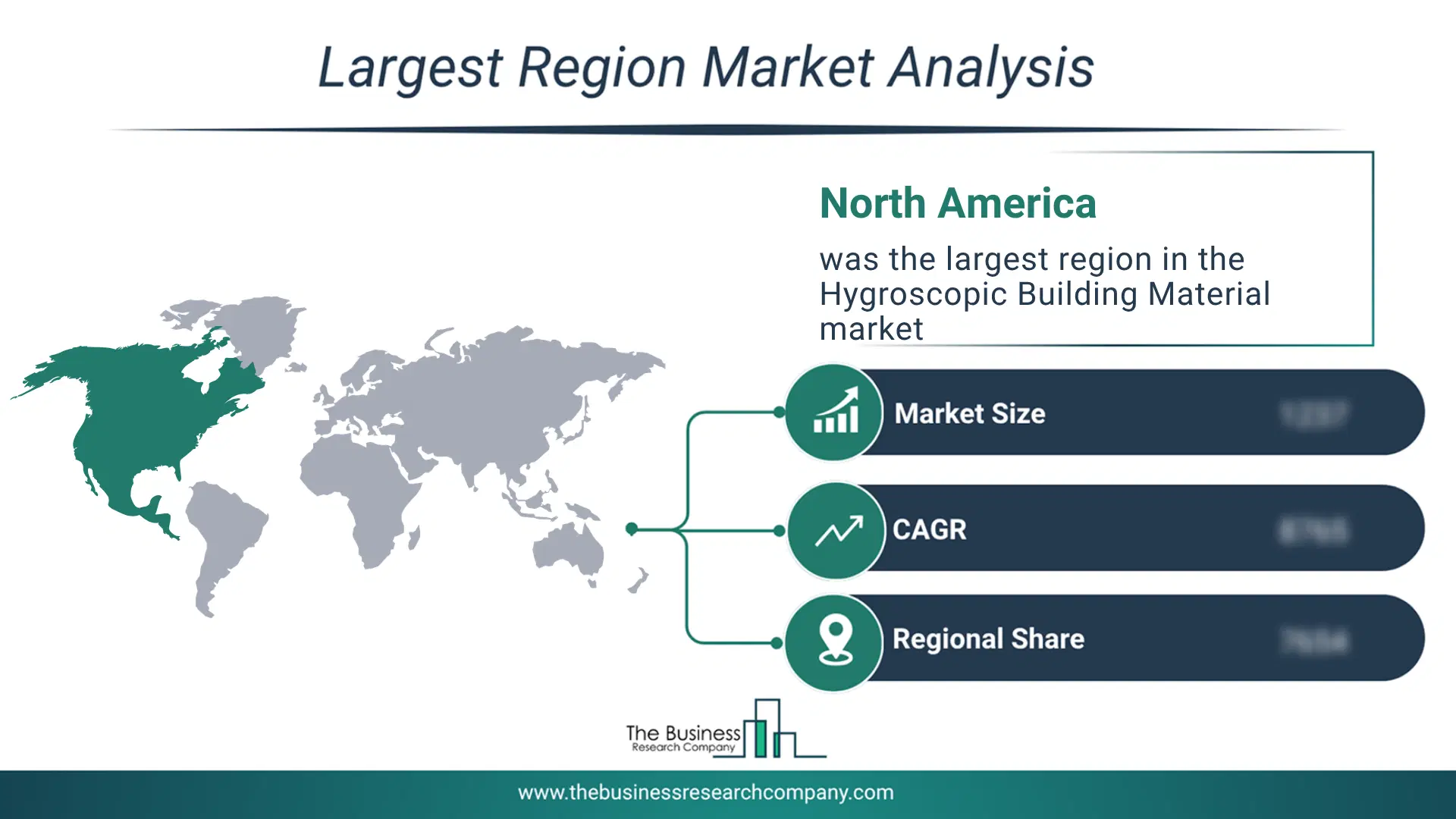
Regional Insights
North America was the largest region in the hygroscopic building material market in 2025. Asia-Pacific is expected to be the fastest-growing region in the forecast period. The regions covered in this market report are Asia-Pacific, South East Asia, Western Europe, Eastern Europe, North America, South America, Middle East, Africa. The countries covered in this market report are Australia, Brazil, China, France, Germany, India, Indonesia, Japan, Taiwan, Russia, South Korea, UK, USA, Canada, Italy, Spain.What Defines the Hygroscopic Building Material Market?
The hygroscopic building material market consists of sales of wood-fiber insulation panels, clay-based wall plasters, natural fiber boards, and bio-sourced composite panels. Values in this market are ‘factory gate’ values, that is, the value of goods sold by the manufacturers or creators of the goods, whether to other entities (including downstream manufacturers, wholesalers, distributors, and retailers) or directly to end customers. The value of goods in this market includes related services sold by the creators of the goods.How is Market Value Defined and Measured?
The market value is defined as the revenues that enterprises gain from the sale of goods and/or services within the specified market and geography through sales, grants, or donations in terms of the currency (in USD unless otherwise specified). The revenues for a specified geography are consumption values that are revenues generated by organizations in the specified geography within the market, irrespective of where they are produced. It does not include revenues from resales along the supply chain, either further along the supply chain or as part of other products.
This chart presents market attractiveness based on a quantitative evaluation of growth, competition, strategic alignment, and risk, offering a clear view of opportunity areas for decision-making. This chart is for illustrative purposes; the full report contains the complete analysis.

This chart highlights the Total Addressable Market (TAM) by estimating the maximum revenue opportunity using an assumption-driven approach, supporting strategic planning and opportunity sizing across markets. The chart is illustrative; the full report provides a more comprehensive analysis.
What Key Data and Analysis Are Included in theHygroscopic Building Material Market Report 2026?
The hygroscopic building material market research report is one of a series of new reports from The Business Research Company that provides market statistics, including industry global market size, regional shares, competitors with the market share, detailed market segments, market trends and opportunities, and any further data you may need to thrive in the hygroscopic building material industry. The market research report delivers a complete perspective of everything you need, with an in-depth analysis of the current and future state of the industry.Hygroscopic Building Material Market Report Forecast Analysis
| Report Attribute | Details |
|---|---|
| Market Size Value In 2026 | $9.78 billion |
| Revenue Forecast In 2030 | $12.49 billion |
| Growth Rate | CAGR of 6.6% from 2026 to 2030 |
| Base Year For Estimation | 2025 |
| Actual Estimates/Historical Data | 2020-2025 |
| Forecast Period | 2026 - 2030 |
| Market Representation | Revenue in USD Billion and CAGR from 2026 to 2030 |
| Segments Covered | Type, Functionality, Material Form, Application, End-Use |
| Regional Scope | Asia-Pacific, Western Europe, Eastern Europe, North America, South America, Middle East, Africa |
| Country Scope | The countries covered in this market report are Australia, Brazil, China, France, Germany, India, Indonesia, Japan, Taiwan, Russia, South Korea, UK, USA, Canada, Italy, Spain |
| Key Companies Profiled | BASF SE, Compagnie de Saint-Gobain S.A., Arkema S.A., Owens Corning Inc., Clariant AG, Johns Manville Corporation, Soprema S.A.S., W. R. Grace & Co., Steico SE, ParexGroup S.A., Porocel Industries LLC, Knauf Gips KG, Fuji Silysia Chemical Ltd., Hengye Inc., Havelock Wool LLC, Claytec GmbH & Co. KG, IsoHemp S.A., Dessica S.A.S., Zibo Jalon New Materials Co. Ltd., Baubiologie Dämmstoffe Naturbau GmbH |
| Customization Scope | Request for Customization |
| Pricing And Purchase Options | Explore Purchase Options |