

Inspection Robots Market Report 2026
Global Outlook – By Type (Non-Autonomous, Semi-Autonomous, Fully Autonomous), By Technology (Aerial, Surface, Submersible), By Application (Visual Inspection, Ultrasonic Inspection, Photogrammetry, Laser Scanning, Thermal Inspection, Radiography Inspection, Alternating Current Field Measurement, Tangential Eddy Current Array, Other Applications), By End User (Automotive, Construction, Food And Beverages, Manufacturing, Oil And Gas, Power) – Market Size, Trends, Strategies, and Forecast to 2030
Inspection Robots Market Overview
• Inspection Robots market size has reached to $2.47 billion in 2025 • Expected to grow to $8.53 billion in 2030 at a compound annual growth rate (CAGR) of 28% • Growth Driver: Industry 4.0 Adoption Fuels Growth In The Inspection Robot Market • Market Trend: Advancing Inspection Robot Market With AI Models • North America was the largest region in 2025 and Asia-Pacific is the fastest growing region.What Is Covered Under Inspection Robots Market?
Inspection robots are automated or semi-automated machines designed to inspect, monitor, and assess the condition of equipment, infrastructure, or environments that are typically difficult, dangerous, or time-consuming for humans to access. These robots are equipped with sensors, cameras, and other tools to gather data, detect anomalies, or ensure that structures function correctly and safely. The main types of inspection robots include non-autonomous, semi-autonomous, and fully autonomous. Non-autonomous inspection robots require human operators to control their movements and functions for tasks that need direct human oversight or intricate maneuvering. The technology types include aerial, surface, and submersible for applications such as visual inspection, ultrasonic inspection, photogrammetry, laser scanning, thermal inspection, radiography inspection, alternating current field measurement, tangential eddy current array, and others, and end users include automotive, construction, food and beverages, manufacturing, oil and gas, and power.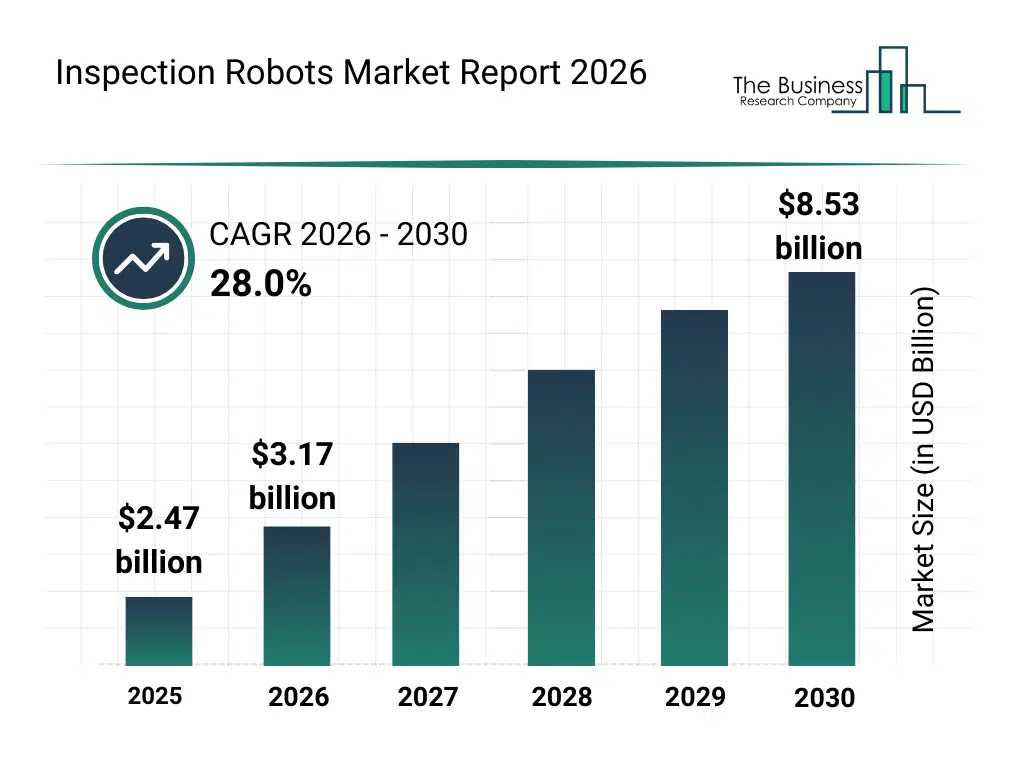
What Is The Inspection Robots Market Size and Share 2026?
The inspection robots market size has grown exponentially in recent years. It will grow from $2.47 billion in 2025 to $3.17 billion in 2026 at a compound annual growth rate (CAGR) of 28.4%. The growth in the historic period can be attributed to infrastructure safety inspections, demand for preventive maintenance, reliance on manual inspection, growth of oil and gas assets, industrial safety requirements.What Is The Inspection Robots Market Growth Forecast?
The inspection robots market size is expected to see exponential growth in the next few years. It will grow to $8.53 billion in 2030 at a compound annual growth rate (CAGR) of 28.0%. The growth in the forecast period can be attributed to predictive maintenance adoption, aging infrastructure monitoring, digital twin integration, ai-powered analytics, expansion of smart infrastructure. Major trends in the forecast period include growth of autonomous inspection systems, adoption of ai-based defect detection, expansion of remote inspection applications, integration of multi-sensor platforms, rising use in hazardous environments.Tariff Impact On Inspection Robots Market
Tariffs are impacting the inspection robots market by increasing the cost of imported sensors, cameras, lidar systems, control electronics, and precision actuators. Oil and gas, power, and manufacturing sectors in North America and Europe are most affected due to dependence on imported robotic platforms, while Asia-Pacific suppliers face export pricing challenges. These tariffs are increasing deployment costs and slowing adoption. However, they are also supporting local assembly, regional innovation ecosystems, and development of modular and application-specific inspection robots.
Global Inspection Robots Market Segmentation
1) By Type: Non-Autonomous, Semi-Autonomous, Fully Autonomous 2) By Technology: Aerial, Surface, Submersible 3) By Application: Visual Inspection, Ultrasonic Inspection, Photogrammetry, Laser Scanning, Thermal Inspection, Radiography Inspection, Alternating Current Field Measurement, Tangential Eddy Current Array, Other Applications 4) By End User: Automotive, Construction, Food And Beverages, Manufacturing, Oil And Gas, Power Subsegments: 1) By Non-Autonomous: Manual-Controlled Inspection Robots, Remotely Operated Inspection Robots, Tethered Non-Autonomous Robots 2) By Semi-Autonomous: Semi-Autonomous Inspection Drones, Semi-Autonomous Ground Inspection Robots, Semi-Autonomous Underwater Inspection Robots 3) By Fully Autonomous: Fully Autonomous Inspection Drones, Fully Autonomous Ground Inspection Robots, Fully Autonomous Underwater Inspection Robots, Fully Autonomous Aerial Inspection RobotsWhat Is The Driver Of The Inspection Robots Market?
The growing adoption of Industry 4.0 is expected to propel the growth of the inspection robots market going forward. Industry 4.0 refers to the fourth industrial revolution, characterized by integrating advanced technologies such as automation, data analytics, and artificial intelligence into manufacturing processes. The growing adoption of Industry 4.0 is attributed to the demand for increased efficiency and productivity, customization and flexibility, cost reduction and resource efficiency, enhanced product quality and safety, and global competition and digital transformation pressure. Inspection robots are pivotal in Industry 4.0 for enhancing predictive maintenance, real-time monitoring, safety in hazardous environments, and overall efficiency by integrating advanced technologies such as IoT, AI, and machine learning into industrial processes. For instance, in June 2025, according to the Department of Industry, Science and Resources, an Australia-based national government department responsible for industry, science, and resource policy, 40% of SMEs are now using AI, reflecting a 5-percentage-point increase from the previous quarter. Therefore, the growing adoption of Industry 4.0 drives the growth of the inspection robots industry.Key Players In The Global Inspection Robots Market
Major companies operating in the inspection robots market are Denso Corporation, Mitsubishi Electric Corporation, ABB Ltd., Omron Corporation, Teledyne FLIR LLC, KUKA AG, QinetiQ Group plc, Cognex Corporation, MISTRAS Group Inc., AeroVironment Inc., FARO Technologies Inc., Eddyfi Technologies Inc., Blue Ocean Robotics A/S, Hangzhou Shenhao Technology Co. Ltd., Honeybee Robotics LLC, Boston Dynamics Inc., ANYbotics AG, Cyberdyne Inc., Invert Robotics Limited, Gridbots Technologies Private Limited, JH Robotics Inc., Robotnik Automation S.L., PetroBot Technologies Private Limited, International Climbing Machines Ltd., Metrologic Group S.A.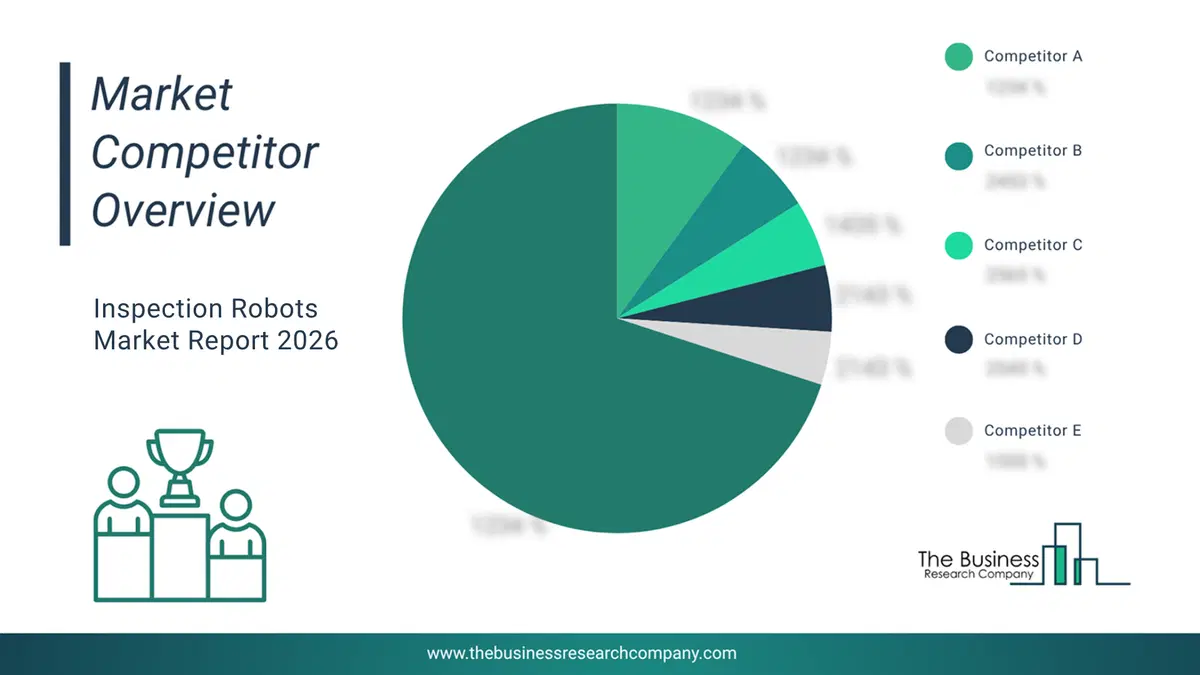
This chart is for illustrative purposes; the full report includes a detailed competitor analysis and comprehensive overview of the top 10 companies in the market.
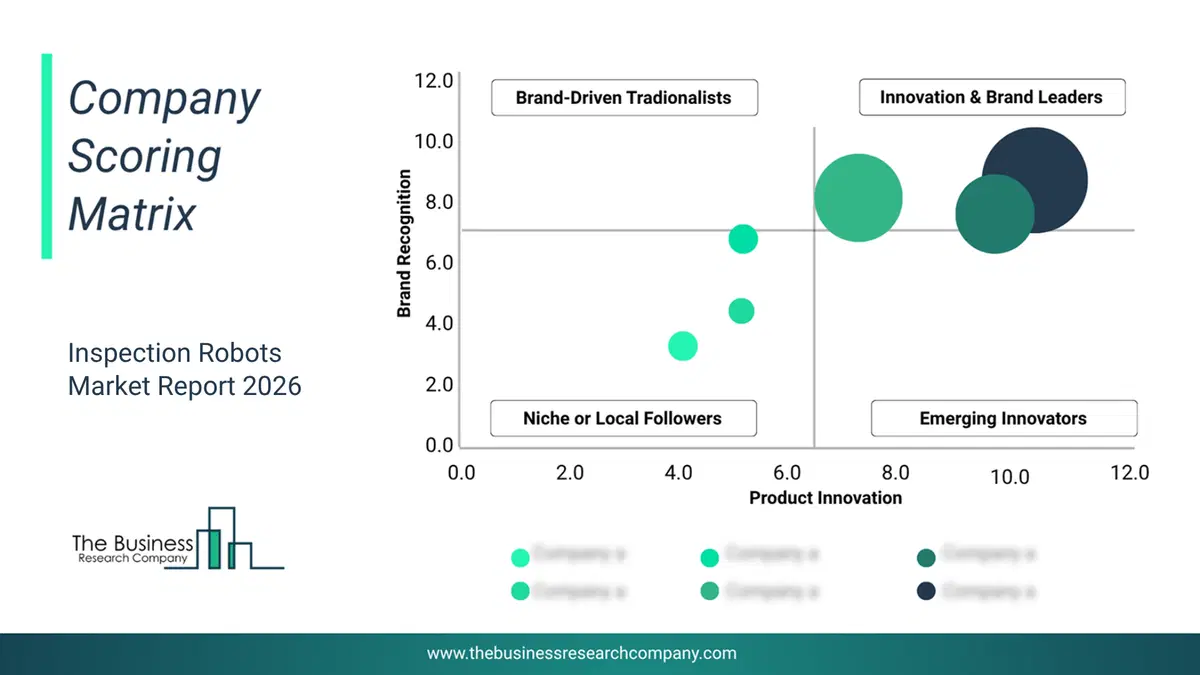
This chart maps companies by product innovation and brand strength, with bubble size indicating relative revenue, helping identify market leaders, challengers, and niche players. This is an illustrative chart; the full report provides a complete and accurate competitive analysis.
Global Inspection Robots Market Trends and Insights
Major companies in the inspection robots market are focusing on developing remote and autonomous operation capabilities, such as AI-driven insights, to improve overall system reliability and reduce downtime. AI-driven insights in inspection robots enable precise anomaly detection and predictive maintenance by analyzing complex data from sensors and imagery. For instance, in February 2024, Avangrid Inc., a US-based energy services and utility company, launched a pilot project to test the use of robotics and AI for substation inspections. The projection involves the deployment of a robot named Spot to perform visual and thermal inspections at two substations in Connecticut. Spot, equipped with high optical zoom and thermal cameras, will assess equipment and detect potential issues. The project partnering with Levatas and Boston Dynamics aims to enhance efficiency, reliability, and investment targeting, with initial testing focusing on gauging reading speed and inspection proficiency and exploring remote operation capabilities for the robot.What Are Latest Mergers And Acquisitions In The Inspection Robots Market?
In January 2023, United Robotics Group (URG), a Germany-based service robotics company, acquired a majority stake in Robotnik Automation for an undisclosed amount. This acquisition plans to utilize Robotnik's advanced mobile manipulator technology and modular software to enhance its product offerings. This includes exploring new mobility applications and strengthening verticals such as inspection and maintenance. Robotnik Automation SLL is a Spain-based company that offers a variety of inspection robots that can perform tasks autonomously or remotely.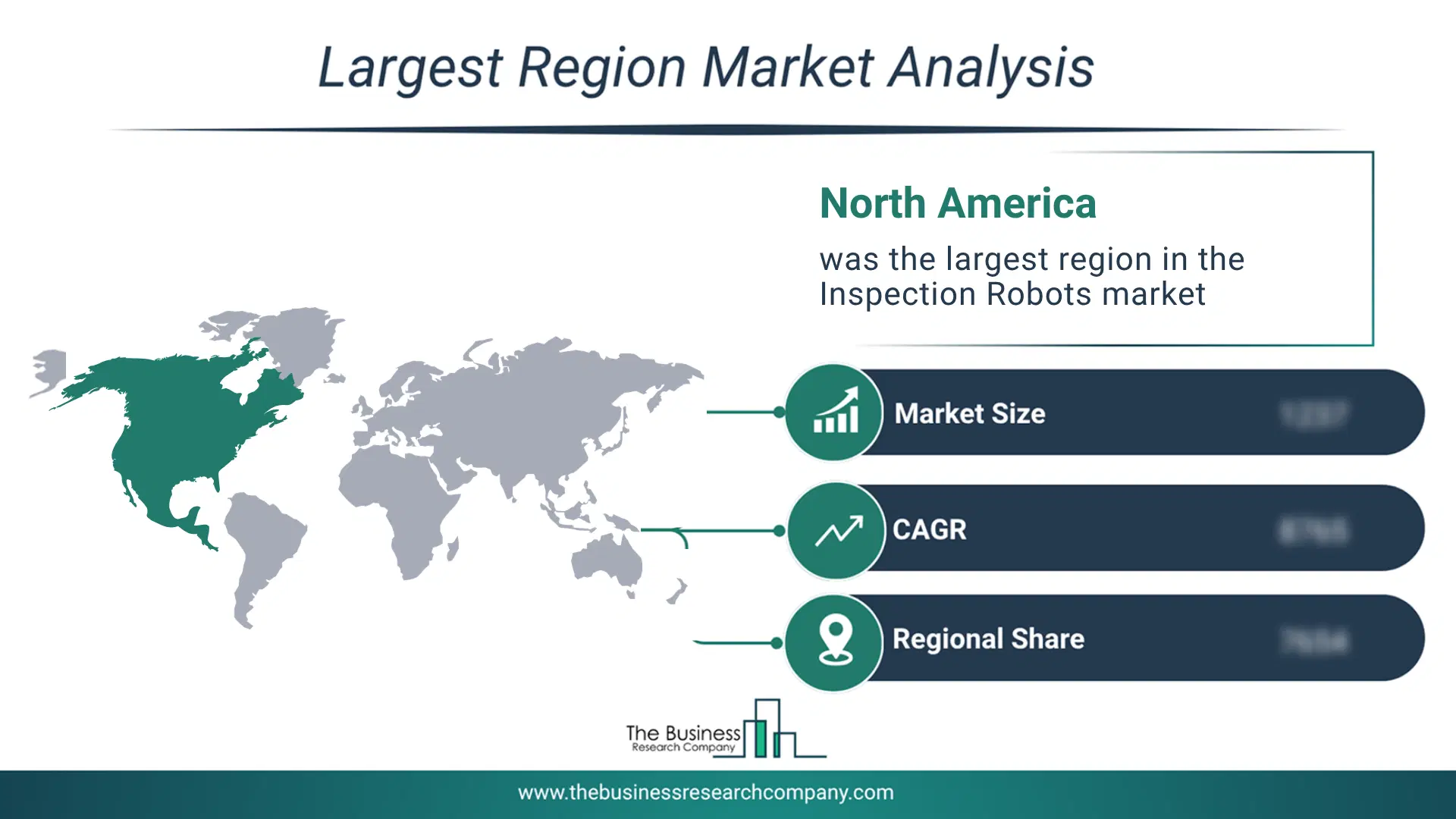
Regional Outlook
North America was the largest region in the inspection robots market in 2025. Asia-Pacific is expected to be the fastest-growing region in the forecast period. The regions covered in this market report are Asia-Pacific, South East Asia, Western Europe, Eastern Europe, North America, South America, Middle East, Africa The countries covered in this market report are Australia, Brazil, China, France, Germany, India, Indonesia, Japan, Taiwan, Russia, South Korea, UK, USA, Canada, Italy, Spain.What Defines the Inspection Robots Market?
The inspection robots market consists of revenues earned by entities by providing services such as routine and preventive maintenance inspections, condition monitoring, quality control assessments, safety inspections, and data collection and analysis. The market value includes the value of related goods sold by the service provider or included within the service offering. The inspection robots market also includes sales of hardware components, software solutions for data analysis, robotic systems, and platforms. Values in this market are ‘factory gate’ values, that is, the value of goods sold by the manufacturers or creators of the goods, whether to other entities (including downstream manufacturers, wholesalers, distributors, and retailers) or directly to end customers. The value of goods in this market includes related services sold by the creators of the goods.How is Market Value Defined and Measured?
The market value is defined as the revenues that enterprises gain from the sale of goods and/or services within the specified market and geography through sales, grants, or donations in terms of the currency (in USD unless otherwise specified). The revenues for a specified geography are consumption values that are revenues generated by organizations in the specified geography within the market, irrespective of where they are produced. It does not include revenues from resales along the supply chain, either further along the supply chain or as part of other products.
This chart presents market attractiveness based on a quantitative evaluation of growth, competition, strategic alignment, and risk, offering a clear view of opportunity areas for decision-making. This chart is for illustrative purposes; the full report contains the complete analysis.

This chart highlights the Total Addressable Market (TAM) by estimating the maximum revenue opportunity using an assumption-driven approach, supporting strategic planning and opportunity sizing across markets. The chart is illustrative; the full report provides a more comprehensive analysis.
What Key Data and Analysis Are Included in the Inspection Robots Market Report 2026?
The inspection robots market research report is one of a series of new reports from The Business Research Company that provides market statistics, including industry global market size, regional shares, competitors with the market share, detailed market segments, market trends and opportunities, and any further data you may need to thrive in the inspection robots industry. The market research report delivers a complete perspective of everything you need, with an in-depth analysis of the current and future state of the industry.Inspection Robots Market Report Forecast Analysis
| Report Attribute | Details |
|---|---|
| Market Size Value In 2026 | $3.17 billion |
| Revenue Forecast In 2030 | $8.53 billion |
| Growth Rate | CAGR of 28% from 2026 to 2030 |
| Base Year For Estimation | 2025 |
| Actual Estimates/Historical Data | 2020-2025 |
| Forecast Period | 2026 - 2030 |
| Market Representation | Revenue in USD Billion and CAGR from 2026 to 2030 |
| Segments Covered | Type, Technology, Application, End User |
| Regional Scope | Asia-Pacific, Western Europe, Eastern Europe, North America, South America, Middle East, Africa |
| Key Companies Profiled | Denso Corporation, Mitsubishi Electric Corporation, ABB Ltd., Omron Corporation, Teledyne FLIR LLC, KUKA AG, QinetiQ Group plc, Cognex Corporation, MISTRAS Group Inc., AeroVironment Inc., FARO Technologies Inc., Eddyfi Technologies Inc., Blue Ocean Robotics A/S, Hangzhou Shenhao Technology Co. Ltd., Honeybee Robotics LLC, Boston Dynamics Inc., ANYbotics AG, Cyberdyne Inc., Invert Robotics Limited, Gridbots Technologies Private Limited, JH Robotics Inc., Robotnik Automation S.L., PetroBot Technologies Private Limited, International Climbing Machines Ltd., Metrologic Group S.A. |
| Customization Scope | Request for Customization |
| Pricing And Purchase Options | Explore Purchase Options |