

Loader Market Report 2026
Global Outlook – By Product Type (Backhoe, Skid Steer, Crawler, Wheeled), By Engine Type (Upto 250 HP, 250-500 HP, More Than 500 HP), By Payload Capacity (3-5 Tons, 6-10 Tons, 11-15 Tons, 15 Tons And Above), By Application (Mining, Construction, Waste Management, Other Applications) – Market Size, Trends, Strategies, and Forecast to 2030
Loader Market Overview
• Loader market size has reached to $36.22 billion in 2025 • Expected to grow to $45.71 billion in 2030 at a compound annual growth rate (CAGR) of 4.8% • Growth Driver: Green Building Surge Propels Loader Market • Market Trend: Product Innovation Drives Growth In The Loaders Market • Asia-Pacific was the largest region in 2025.Market Gains By 2030 – Top Opportunities By Segment
Market Gain identifies the most promising market opportunities by highlighting the segments or products expected to generate the highest incremental revenue growth over the next five years.
What Is Covered Under Loader Market?
The loader refers to machines or equipment used for the movement and lifting of various materials such as soil, sand, rocks, and other materials in various industries. Loaders are used to lay pipes, clear rubble, move construction material and other waste, and carry and transport rocks and clay in agriculture and landscaping. The main types of loaders are backhoe, skid steer, crawler, and wheeled. Backhoe loaders are used for the movement of heavy debris, digging, landscaping, and the transportation of heavy materials from one place to another in construction and agriculture. A backhoe refers to a machine consisting of a two-part articulated arm mounted on a tractor used for agricultural work. The engine types of loaders are up to 250 hp, 250–500 hp, and more than 500 hp, with a payload capacity of 3-5 tons, 6–10 tons, 11–15 tons, and 15 tons and above. The several applications include mining, construction, waste management, and others.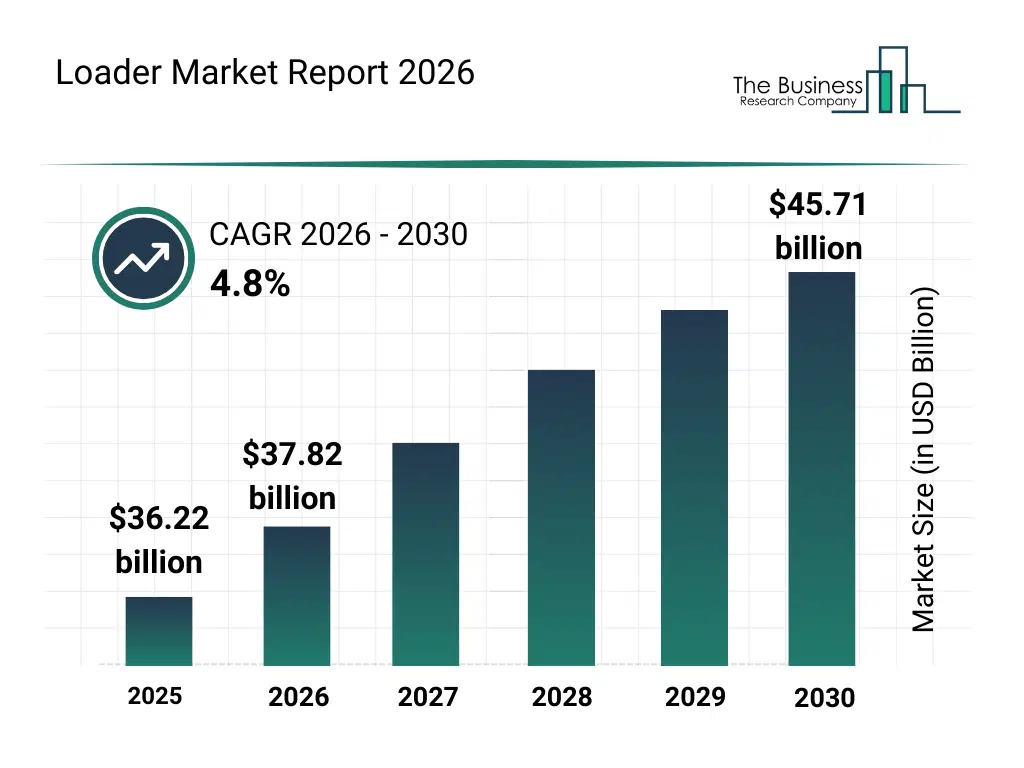
What Is The Loader Market Size and Share 2026?
The loader market size has grown steadily in recent years. It will grow from $36.22 billion in 2025 to $37.82 billion in 2026 at a compound annual growth rate (CAGR) of 4.4%. The growth in the historic period can be attributed to infrastructure development, mining sector expansion, growth in urban construction, mechanization of material handling, availability of diesel-powered loaders.What Is The Loader Market Growth Forecast?
The loader market size is expected to see steady growth in the next few years. It will grow to $45.71 billion in 2030 at a compound annual growth rate (CAGR) of 4.8%. The growth in the forecast period can be attributed to electrification of construction equipment, smart loader integration, growth in large-scale infrastructure projects, demand for fuel-efficient machines, adoption of automation in construction. Major trends in the forecast period include growth of compact and multi-function loaders, rising demand for high-payload machines, expansion of rental equipment usage, adoption of telematics in loaders, demand from infrastructure projects.
Global Loader Market Segmentation
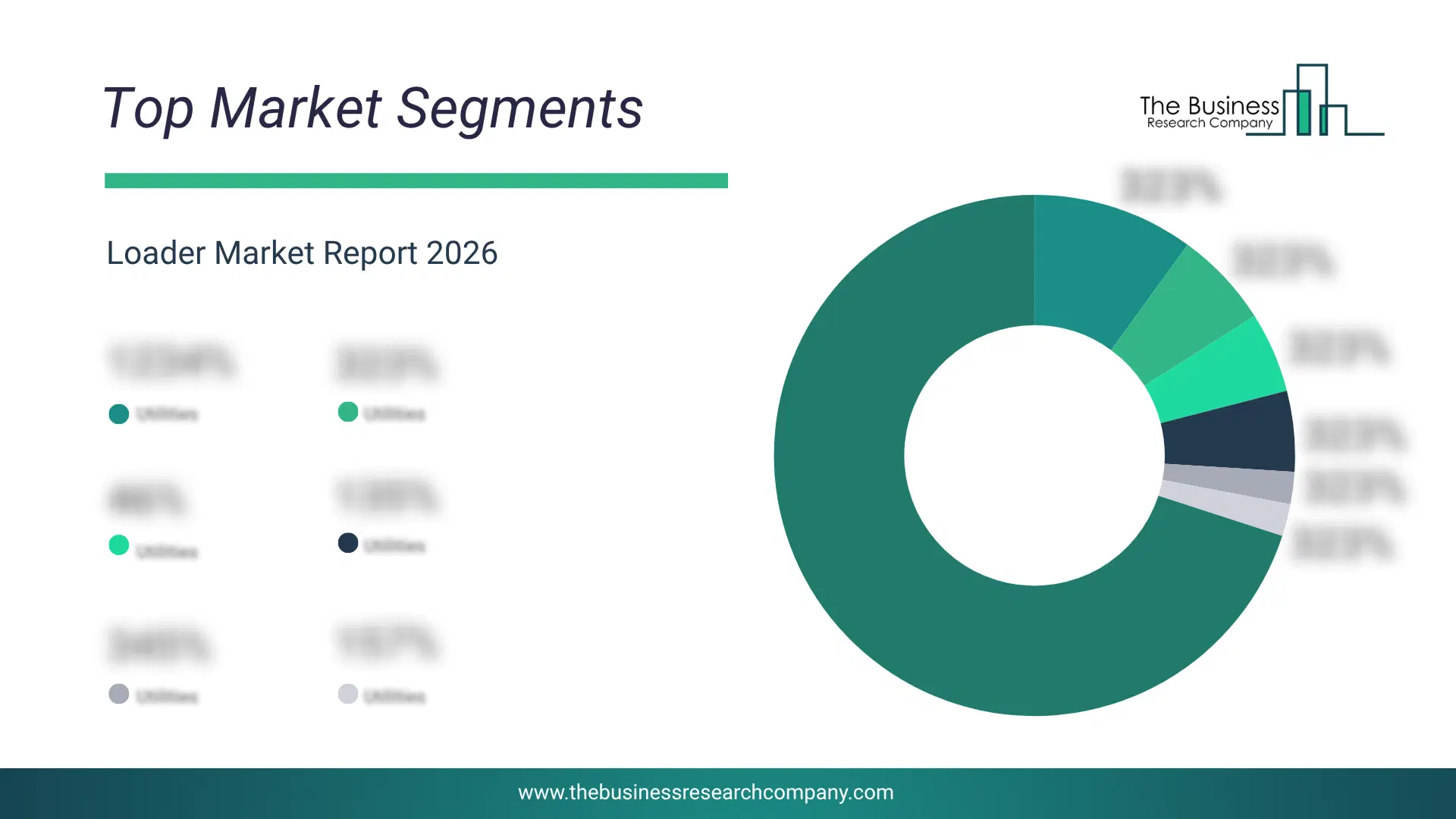
1) By Product Type: Backhoe, Skid Steer, Crawler, Wheeled 2) By Engine Type: Upto 250 HP, 250-500 HP, More Than 500 HP 3) By Payload Capacity: 3-5 Tons, 6-10 Tons, 11-15 Tons, 15 Tons And Above 4) By Application: Mining, Construction, Waste Management, Other Applications Subsegments: 1) By Backhoe: Standard Backhoe Loaders, Compact Backhoe Loaders 2) By Skid Steer: Wheeled Skid Steer Loaders, Compact Track Loaders 3) By Crawler: Standard Crawler Loaders, Compact Crawler Loaders 4) By Wheeled: Small Wheeled Loaders, Large Wheeled Loaders The top segments in the loader market will be: • Backhoe will reach $17.61 Billion by 2030. • Skid Steer will reach $11.52 Billion by 2030. • Wheeled will reach $9.73 Billion by 2030. • Crawler will reach $8.53 Billion by 2030.What Is The Driver Of The Loader Market?
The rising concept of green building is expected to drive the growth of the loader market during the forecasting period. Green building involves designing, constructing, and operating buildings to minimize environmental impact and maximize resource efficiency throughout their lifecycle. Green building construction requires loaders to lift and move materials, enabling speedy construction. For instance, in November 2024, according to the Green Building Law, a US-based web blog arm of a law firm or legal practice, there were more than 195,000 LEED certified buildings in over 186 countries, covering a total of 29 billion square feet of certified space. Therefore, the rising green building concept is anticipated to bolster loader industry growth in the upcoming years.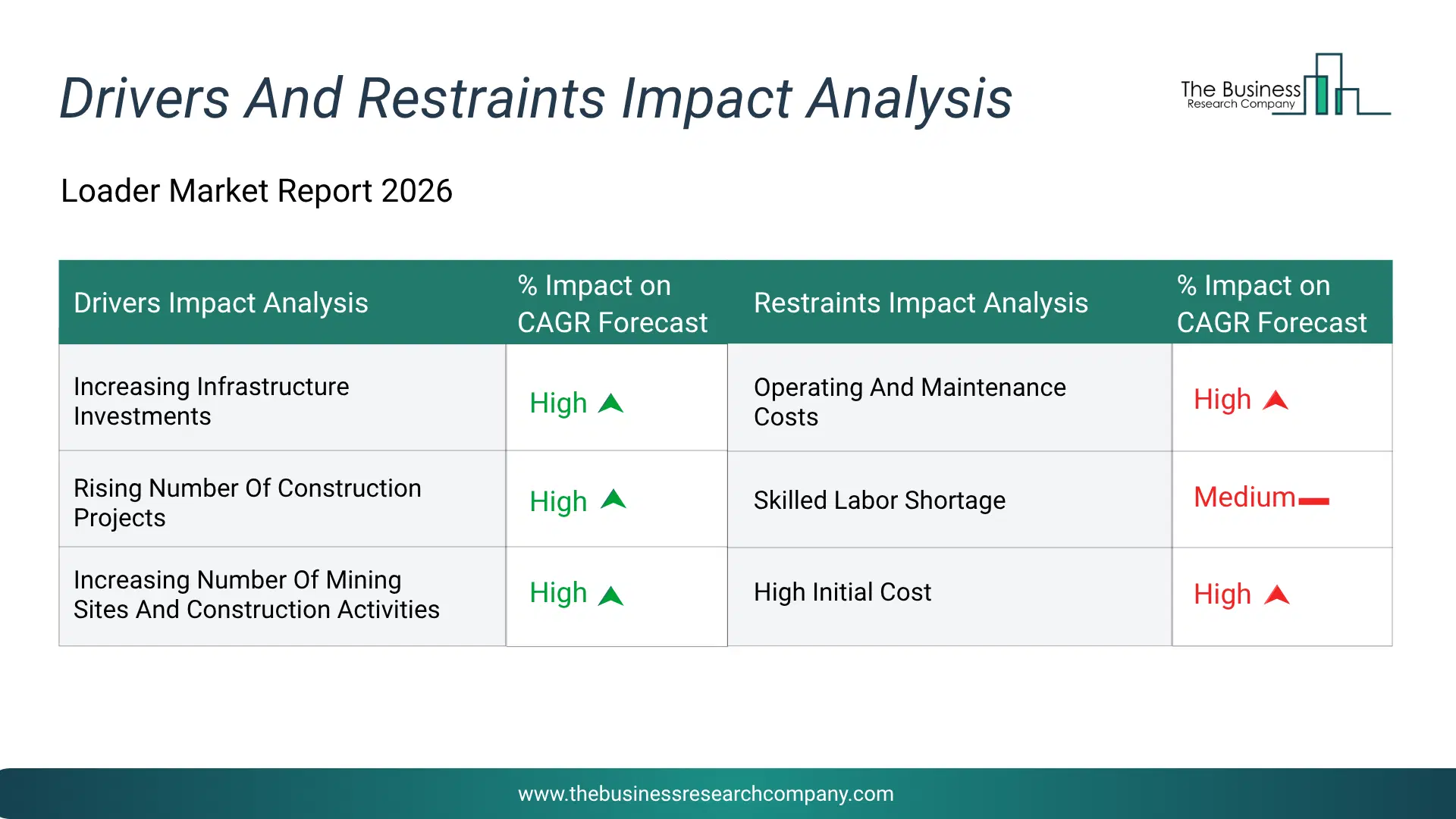
Infographic Chart Showing Key Market Drivers Analysis And Restraints For Loader Market
The chart presents an impact analysis of key drivers and restraints, quantifying their relative influence on the market's growth rate and helping assess the balance between growth enablers and limiting factors. This chart offers a high-level perspective; the full report contains more detailed insights.
How Will The Drivers Impact Growth In The Global Loader Market?
• Increasing Infrastructure Investments (High) – During the forecast period, the increasing infrastructure investments are expected to become a key growth driver for the loader market by 2030. Governments and private sector organizations are allocating substantial capital toward the development of transportation networks, industrial facilities, energy projects, and urban infrastructure. Loaders play a critical role in material handling, excavation support, and site preparation activities associated with these developments. The growing requirement for efficient earthmoving equipment is encouraging contractors to expand and modernize their machinery fleets. This sustained investment environment is strengthening demand for loaders across both developed and emerging economies. • Rising Number Of Construction Projects (High) – During the forecast period, the rising number of construction projects is expected to emerge as a major factor driving the expansion of the loader market by 2030. Growth in residential, commercial, and industrial construction activities is generating significant demand for equipment capable of performing loading, lifting, and material transportation tasks. Contractors are increasingly adopting versatile machinery to improve project timelines, optimize labor utilization, and enhance operational efficiency. The expansion of smart city developments and large-scale urban construction programs is further supporting equipment deployment across job sites. • Increasing Number Of Mining Sites And Construction Activities (High) – During the forecast period, the increasing number of mining sites and construction activities is expected to act as a key growth catalyst for the loader market by 2030. Expanding mineral extraction operations and resource development projects are creating sustained demand for high-capacity equipment capable of operating in challenging environments. Loaders are extensively utilized for ore handling, overburden removal, stockpile management, and transportation support functions. In addition, the growing scale and complexity of construction activities are encouraging greater equipment utilization across multiple applications. As mining and construction operations continue to expand globally, equipment procurement and replacement demand are expected to rise.How Will The Restraints Impact Growth In The Global Loader Market?
• Operating And Maintenance Costs (High) – During the forecast period, the operating and maintenance costs act as a major restraint for the loader market because loaders require regular servicing, fuel, lubrication, and replacement of components to maintain efficient performance. Frequent usage in harsh construction and mining environments increases wear and tear, leading to higher repair and maintenance expenses. Small and medium-sized contractors often face financial pressure due to rising operational costs associated with heavy equipment ownership. In addition, fuel price fluctuations further increase the overall cost of operating loaders for long working hours. Maintenance downtime can also reduce productivity and delay project completion timelines. Advanced loaders equipped with modern technologies may require specialized servicing, which further adds to expenses. These high operational and maintenance costs can discourage businesses from investing in new loaders, thereby limiting market growth. • Skilled Labor Shortage (High) – During the forecast period, the skilled labor shortage restrains the loader market as operating advanced loaders requires trained and experienced machine operators. Modern loaders are increasingly integrated with automation, digital monitoring systems, and advanced hydraulic technologies that demand technical expertise for efficient handling. Many developing regions face a shortage of qualified operators and maintenance professionals, which creates operational challenges for construction and mining companies. Improper handling of loaders can lead to accidents, equipment damage, and reduced productivity, increasing operational risks for businesses. Companies also need to invest additional resources in employee training and safety programs, raising labor-related costs. The lack of skilled labor can slow down project execution and reduce the effective utilization of construction equipment. As a result, workforce limitations can negatively impact the adoption and expansion of loaders across various industries. • High Initial Cost (High) – During the forecast period, the high initial cost acts as a significant restraint for the loader market because purchasing loaders requires substantial capital investment, especially for technologically advanced or heavy-duty models. Small contractors and emerging construction companies may find it difficult to afford new equipment due to limited financial resources and budget constraints. The additional costs associated with financing, insurance, transportation, and installation further increase the total ownership expense. Businesses operating in price-sensitive markets often prefer renting equipment instead of purchasing loaders, which can limit new equipment sales. High acquisition costs may also delay fleet expansion plans for construction and mining companies. Furthermore, economic uncertainties and fluctuating project investments can make companies hesitant to invest heavily in expensive machinery. This financial burden can restrict the widespread adoption of loaders, particularly among small and medium-sized enterprises.Key Players In The Global Loader Market
Major companies operating in the loader market are Terex Corporation, Kobelco Construction Machinery Company Limited, Bauer AG, Sany Heavy Industry Co. Ltd., Zoomlion Heavy Industries Science And Technology Company Limited, Liebherr Group, Xuzhou Construction Machinery Group Co. Ltd., Sumitomo Heavy Industries Limited, Cargotec Corporation, LiuGong Machinery Company Limited, Caterpillar Inc., Komatsu Ltd., Volvo Construction Equipment, Hitachi Construction Machinery Co. Ltd., Doosan Infracore Co. Ltd., JCB Corporation, CNH Industrial N.V., Hyundai Heavy Industries Co. Ltd., Wacker Neuson SE, Kawasaki Heavy Industries Ltd., Bobcat Company, Yanmar Co. Ltd., Kubota Corporation, Atlas Copco AB, Bell Equipment Co. SA, Deere And Company, Hidromek Inc., Takeuchi Manufacturing Co. Ltd., Mecalac Group, Gehl Company, Mustang Manufacturing Company Inc.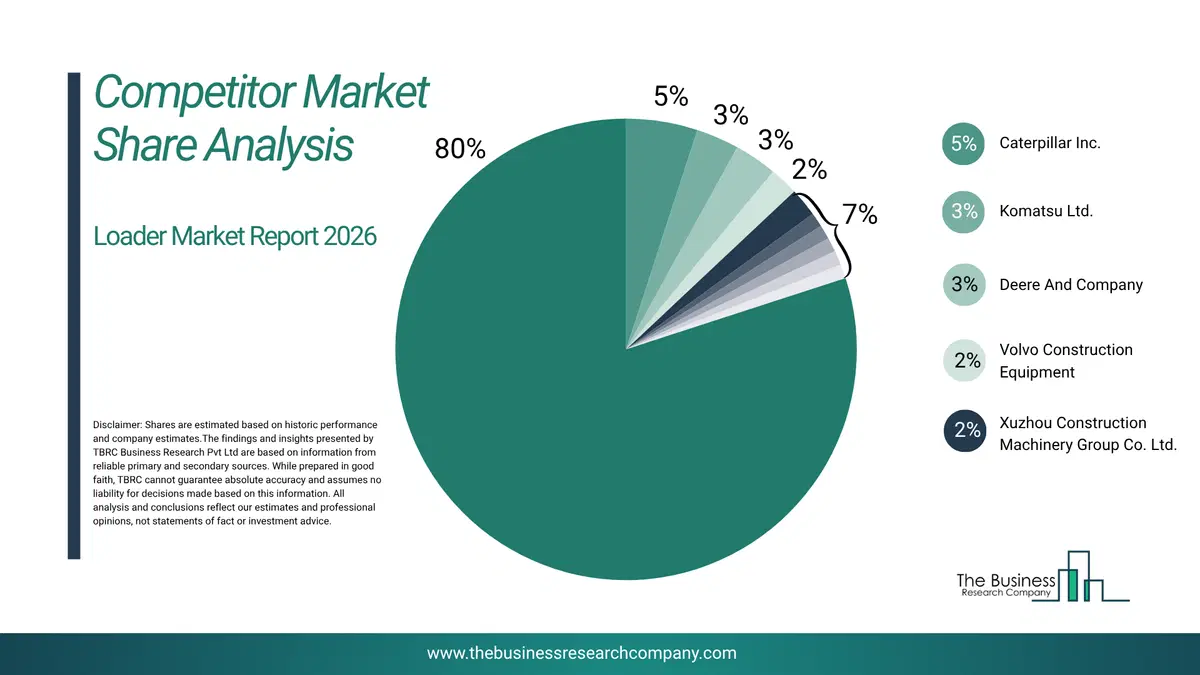
This chart is for illustrative purposes; the full report includes a detailed competitor analysis and comprehensive overview of the top 10 companies in the market.
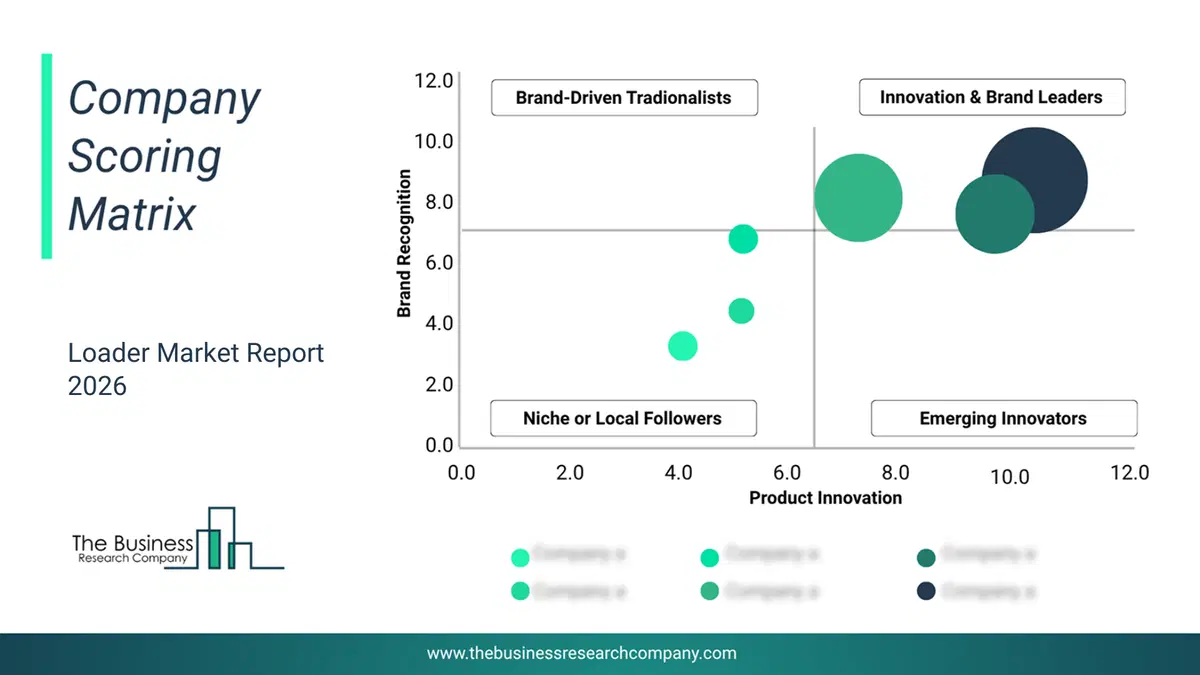
This chart maps companies by product innovation and brand strength, with bubble size indicating relative revenue, helping identify market leaders, challengers, and niche players. This is an illustrative chart; the full report provides a complete and accurate competitive analysis.
Global Loader Market Trends and Insights
Major companies operating in the loaders market are focused on developing innovative products such as track loaders to meet larger customer bases, more sales, and increase revenue. Track loaders refer to heavy construction equipment characterized by a tracked undercarriage system, similar to that of a crawler tractor, and a front-mounted bucket or other attachment. For instance, in March 2023, New Holland Construction, an Italy-based machinery company, launched the C330 vertical lift compact track loader. Distinguished by its innovative design, the C330 vertical lift compact track loader boasts a 68-inch working width and a powerful 67-horsepower engine. Notably, it incorporates New Holland Construction's Super Boom lift with a low shoulder positioning and compact towers, enhancing both operator visibility and on-site worker safety. The loader's exceptional load-carrying capacity enables efficient movement of substantial quantities of rocks, stones, timber, and other materials. With electro-hydraulic controls (E-H), this machine demonstrates remarkable agility, allowing it to navigate seamlessly through confined residential spaces, such as backyard gates and narrow spaces between houses or buildings.What Are Latest Mergers And Acquisitions In The Loader Market?
In June 2023, Chadwick BaRoss Ontario Ltd. (CBRO), a Canada-based heavy equipment industry acquired Amaco Construction Equipment Inc. for an undisclosed amount. This acquisition enables CBRO to broaden its product range and market presence in the construction equipment sector. Amaco Construction Equipment Inc. is a Canada-based company, manufactures heavy construction equipment including loaders and excavators.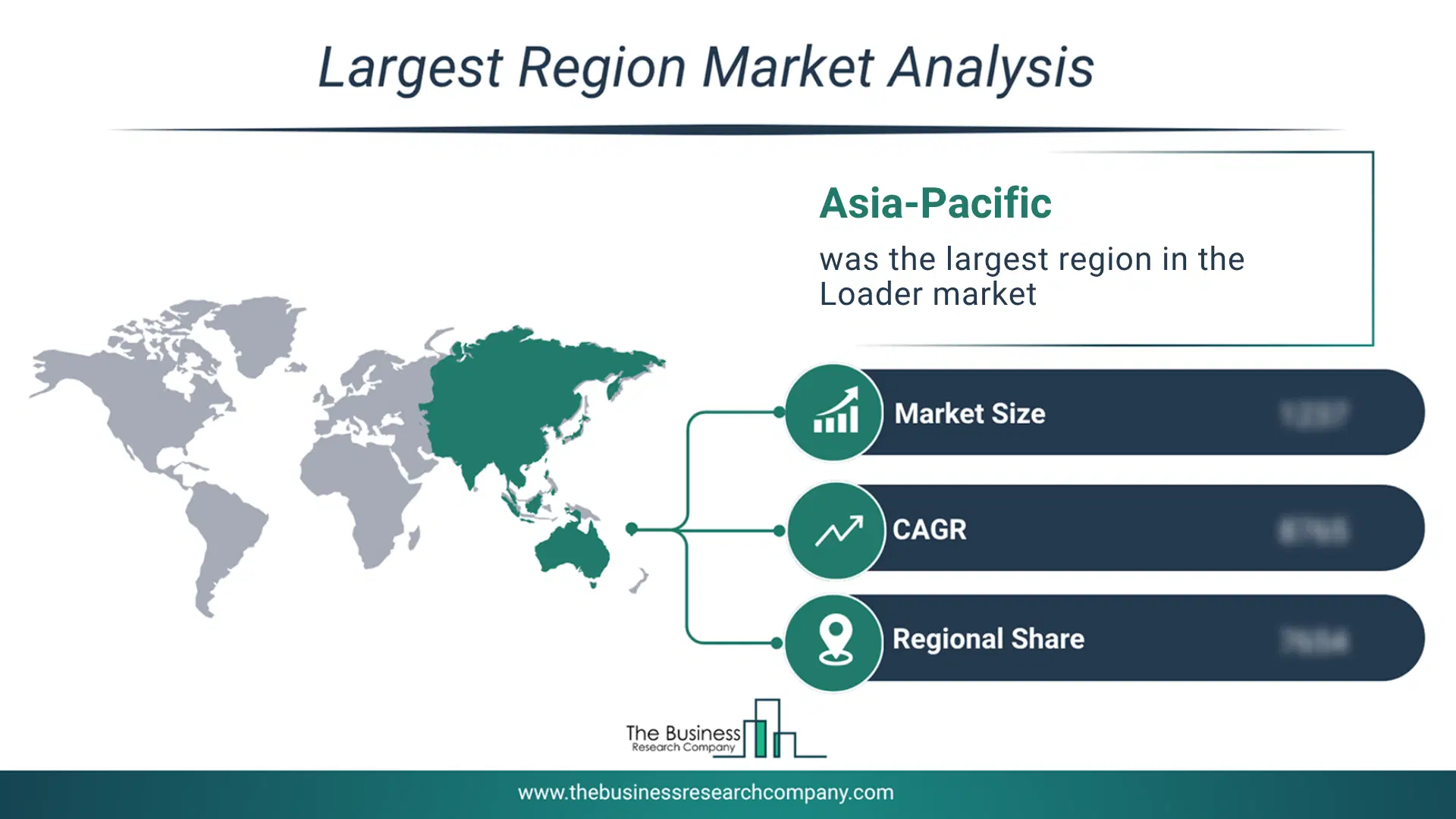
Regional Outlook
Asia-Pacific was the largest region in the loader market in 2025. The regions covered in this market report are Asia-Pacific, South East Asia, Western Europe, Eastern Europe, North America, South America, Middle East, Africa The countries covered in this market report are Australia, Brazil, China, France, Germany, India, Indonesia, Japan, Taiwan, Russia, South Korea, UK, USA, Canada, Italy, Spain.What Defines the Loader Market?
The loader market consists of sales of mini loaders. Values in this market are ‘factory gate’ values, that is, the value of goods sold by the manufacturers or creators of the goods, whether to other entities (including downstream manufacturers, wholesalers, distributors, and retailers) or directly to end customers. The value of goods in this market includes related services sold by the creators of the goods.How is Market Value Defined and Measured?
The market value is defined as the revenues that enterprises gain from the sale of goods and/or services within the specified market and geography through sales, grants, or donations in terms of the currency (in USD unless otherwise specified). The revenues for a specified geography are consumption values that are revenues generated by organizations in the specified geography within the market, irrespective of where they are produced. It does not include revenues from resales along the supply chain, either further along the supply chain or as part of other products.
This chart presents market attractiveness based on a quantitative evaluation of growth, competition, strategic alignment, and risk, offering a clear view of opportunity areas for decision-making. This chart is for illustrative purposes; the full report contains the complete analysis.

This chart highlights the Total Addressable Market (TAM) by estimating the maximum revenue opportunity using an assumption-driven approach, supporting strategic planning and opportunity sizing across markets. The chart is illustrative; the full report provides a more comprehensive analysis.
What Key Data and Analysis Are Included in the Loader Market Report 2026?
The loader market research report is one of a series of new reports from The Business Research Company that provides market statistics, including industry global market size, regional shares, competitors with the market share, detailed market segments, market trends and opportunities, and any further data you may need to thrive in the loader industry. The market research report delivers a complete perspective of everything you need, with an in-depth analysis of the current and future state of the industry.Loader Market Report Forecast Analysis
| Report Attribute | Details |
|---|---|
| Market Size Value In 2026 | $37.82 billion |
| Revenue Forecast In 2030 | $45.71 billion |
| Growth Rate | CAGR of 4.4% from 2026 to 2030 |
| Base Year For Estimation | 2025 |
| Actual Estimates/Historical Data | 2020-2025 |
| Forecast Period | 2026 - 2030 |
| Market Representation | Revenue in USD Billion and CAGR from 2026 to 2030 |
| Segments Covered | Product Type, Engine Type, Payload Capacity, Application |
| Regional Scope | Asia-Pacific, Western Europe, Eastern Europe, North America, South America, Middle East, Africa |
| Country Scope | The countries covered in the report are Australia, Brazil, China, France, Germany, India, Indonesia, Japan, Taiwan, Russia, South Korea, UK, USA, Canada, Italy, Spain. |
| Key Companies Profiled | Terex Corporation, Kobelco Construction Machinery Company Limited, Bauer AG, Sany Heavy Industry Co. Ltd., Zoomlion Heavy Industries Science And Technology Company Limited, Liebherr Group, Xuzhou Construction Machinery Group Co. Ltd., Sumitomo Heavy Industries Limited, Cargotec Corporation, LiuGong Machinery Company Limited, Caterpillar Inc., Komatsu Ltd., Volvo Construction Equipment, Hitachi Construction Machinery Co. Ltd., Doosan Infracore Co. Ltd., JCB Corporation, CNH Industrial N.V., Hyundai Heavy Industries Co. Ltd., Wacker Neuson SE, Kawasaki Heavy Industries Ltd., Bobcat Company, Yanmar Co. Ltd., Kubota Corporation, Atlas Copco AB, Bell Equipment Co. SA, Deere And Company, Hidromek Inc., Takeuchi Manufacturing Co. Ltd., Mecalac Group, Gehl Company, Mustang Manufacturing Company Inc. |
| Customization Scope | Request for Customization |
| Pricing And Purchase Options | Explore Purchase Options |