
Low Alcohol Beverages Market Report 2026
Global Outlook – By Type (Low Alcohol Beer, Low Alcohol Wine, Low-Alcohol RTD, Low Alcohol Ciders), By Packaging (Bottles, Cans, Tetra Packs Or Cartons, Other Packaging Types), By Distribution Channel (Store-Based, Non-Store Based) – Market Size, Trends, Strategies, and Forecast to 2030
Low Alcohol Beverages Market Overview
• Low Alcohol Beverages market size has reached to $1.41 billion in 2025 • Expected to grow to $1.87 billion in 2030 at a compound annual growth rate (CAGR) of 6% • Growth Driver: Rising Health Consciousness Propels Growth In Low-Alcohol Beverages Market • Market Trend: Increasing Focus On Product Innovations To Provide Reliable Services To Their Customers • North America was the largest region in 2025.Market Gains By 2030 – Top Opportunities By Segment
Market Gain identifies the most promising market opportunities by highlighting the segments or products expected to generate the highest incremental revenue growth over the next five years.
What Is Covered Under Low Alcohol Beverages Market?
Low-alcohol beverages refer to drinks having a lower ABV (alcohol strength by volume) of 0.5% to 1.2%. The low-alcohol beverages do not include diuretics, which do not cause any dehydration and assist the body in keeping hydrated. Low-alcohol beverages offer a flavorful, social drinking experience for consumers seeking a healthier, lower-calorie alternative with moderate alcohol content. The main types of low-alcohol beverages are low-alcohol beer, low-alcohol spirits, low-alcohol wine, low-alcohol RTDs, and low-alcohol ciders. Low-alcohol beer refers to a type of beer with alcohol content (ABV) of less than 2.5%. They are sold through several distribution channels, including store-based and non-store-based, and are used for various applications such as supermarkets, hypermarkets, and retailers.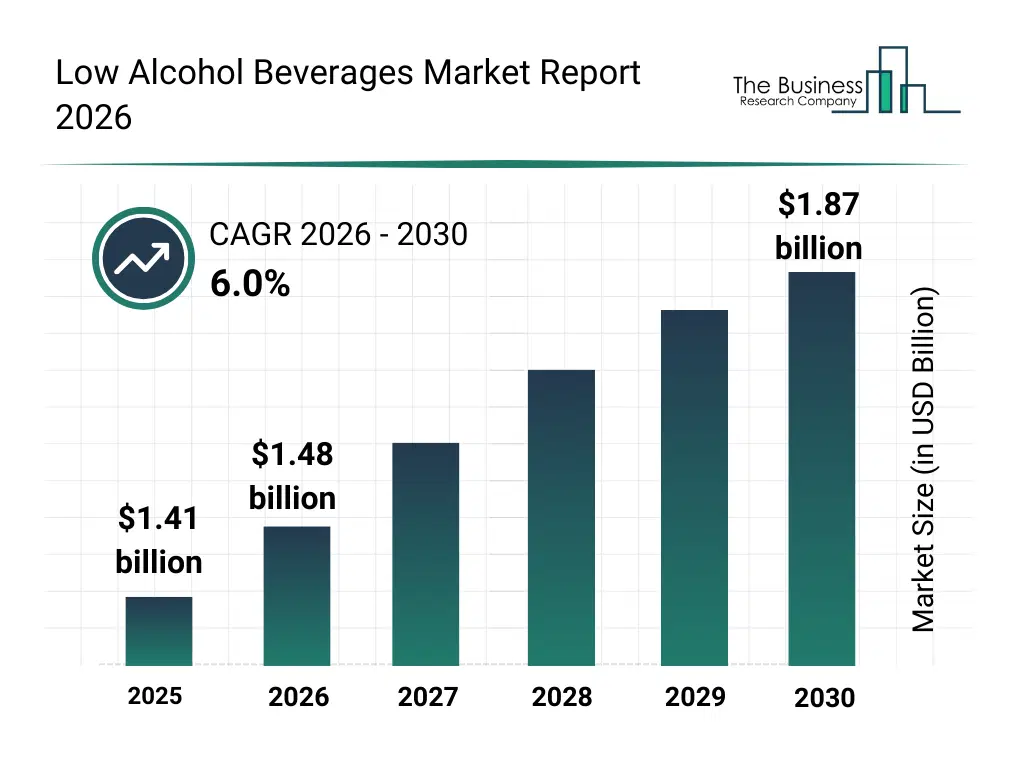
What Is The Low Alcohol Beverages Market Size and Share 2026?
The low alcohol beverages market size has grown strongly in recent years. It will grow from $1.41 billion in 2025 to $1.48 billion in 2026 at a compound annual growth rate (CAGR) of 5.2%. The growth in the historic period can be attributed to changing consumer drinking habits, rising health and wellness awareness, expansion of modern beverage processing facilities, increasing social acceptance of low-alcohol drinks, growth of ready-to-drink beverages.What Is The Low Alcohol Beverages Market Growth Forecast?
The low alcohol beverages market size is expected to see strong growth in the next few years. It will grow to $1.87 billion in 2030 at a compound annual growth rate (CAGR) of 6.0%. The growth in the forecast period can be attributed to increasing demand for mindful drinking options, rising innovation in fermentation control technologies, expansion of functional low-alcohol beverages, growing retail shelf space allocation, increasing marketing focus on lifestyle branding. Major trends in the forecast period include expansion of low-abv beverage portfolios, rising innovation in flavor retention techniques, growing demand for health-oriented alcohol alternatives, increased focus on premium low-alcohol offerings, wider distribution through retail channels.
Global Low Alcohol Beverages Market Segmentation
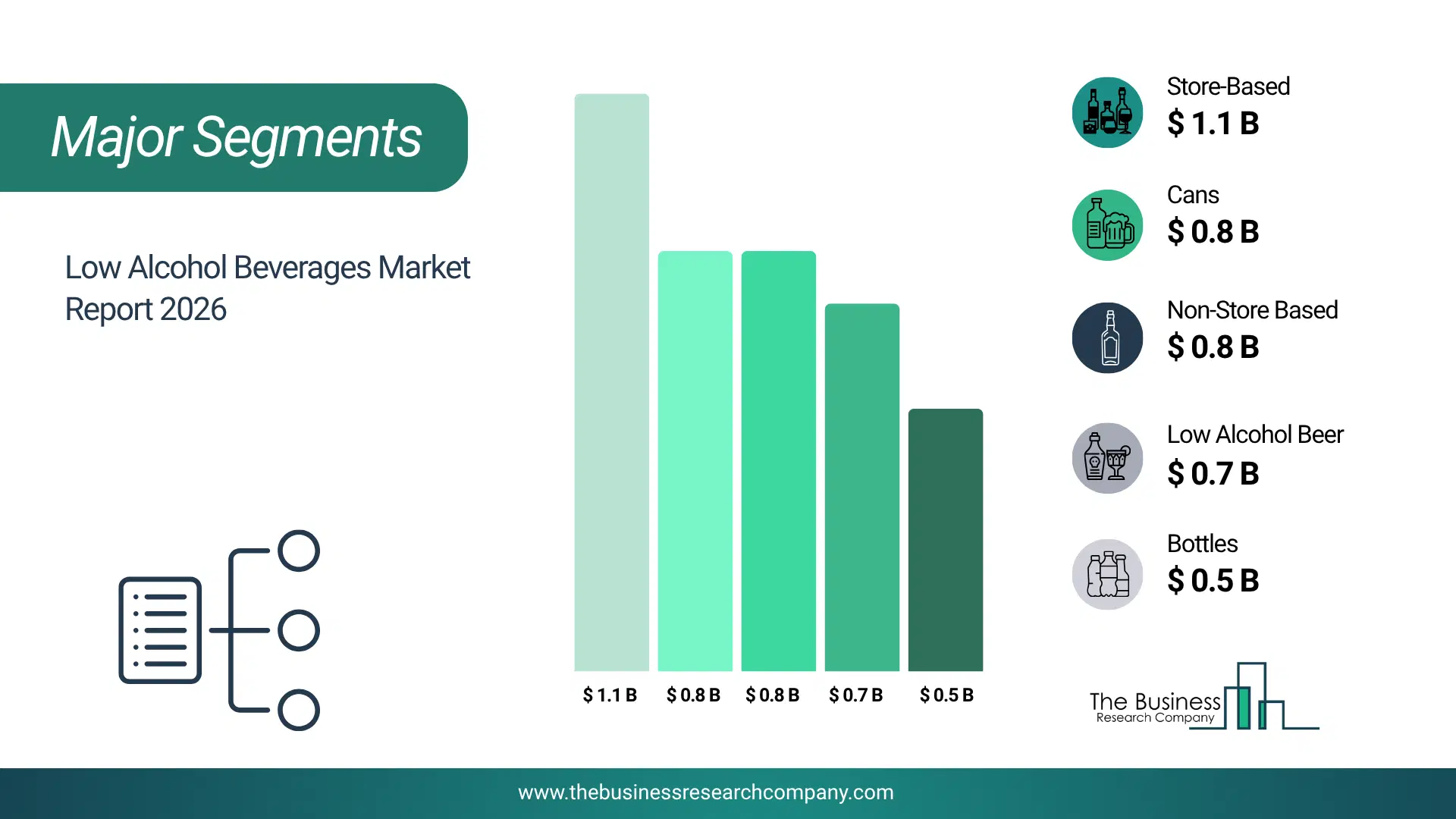
1) By Type: Low Alcohol Beer, Low Alcohol Wine, Low-Alcohol RTD, Low Alcohol Ciders 2) By Packaging: Bottles, Cans, Tetra Packs Or Cartons, Other Packaging Types 3) By Distribution Channel: Store-Based, Non-Store Based Subsegments: 1) By Low Alcohol Beer: Lager, Ale, Stout 2) By Low Alcohol Wine: Red Wine, White Wine, Sparkling Wine 3) By Low-Alcohol RTD (Ready-To-Drink): Cocktails, Fusions 4) By Low Alcohol Ciders: Traditional Cider, Flavored Cider The top segments in the low alcohol beverages market will be: • Store-Based will reach $1145.78 Million by 2030. • Low Alcohol Beer will reach $741.62 Million by 2030. • Cans will reach $863.71 Million by 2030. • Non-Store Based will reach $808.28 Million by 2030. • Bottles will reach $550.76 Million by 2030.What Is The Driver Of The Low Alcohol Beverages Market?
The increasing demand for a healthier lifestyle is expected to boost the growth of the low-alcohol beverages market going forward. The preference for a healthier lifestyle includes the intake of healthy beverages, which refers to a drink that is fit for consumption. Consumers believe that incorporating healthful fluids into daily life can help individuals become healthier, and low-alcohol beverages are often touted as having fewer calories and sugar than their full-alcohol substitutes, which can support a healthy lifestyle. For instance, in June 2024, according to the International Food Information Council (IFIC), a US‑based non‑profit organization, the proportion of Americans following a specific diet or eating pattern over the past year remains high at 54%. Most people are looking to increase their protein intake, with interest climbing from 59% in 2022 to 67% in 2023, and reaching 71% in 2024. Additionally, roughly half of consumers aim to eat more fresh foods, which are widely considered the healthiest options Therefore, the increasing demand for healthier beverages is driving the growth of the low-alcohol beverages market.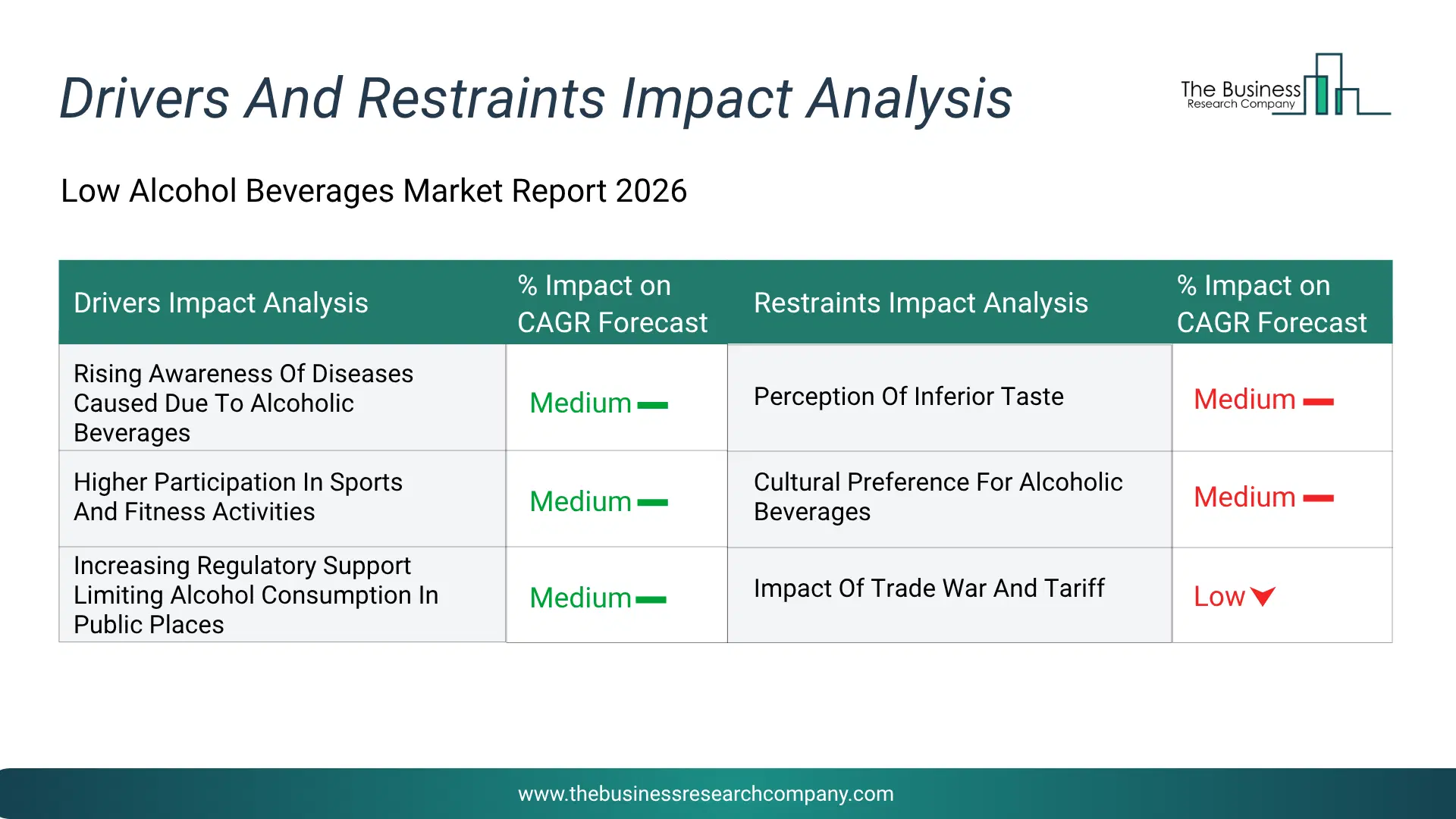
Infographic Chart Showing Key Market Drivers Analysis And Restraints For Low Alcohol Beverages Market
The chart presents an impact analysis of key drivers and restraints, quantifying their relative influence on the market's growth rate and helping assess the balance between growth enablers and limiting factors. This chart offers a high-level perspective; the full report contains more detailed insights.
How Will The Drivers Impact Growth In The Global Low Alcohol Beverages Market?
• Rising Awareness Of Diseases Caused Due To Alcoholic Beverages (Medium) – During the forecast period, the rising awareness of diseases caused due to alcoholic beverages is expected to propel the growth of the low alcohol beverages market. Consumers are becoming more informed about the risks of liver disease, cardiovascular disorders, obesity and mental health issues linked to high alcohol intake. This growing health consciousness is encouraging a shift toward beverages with reduced alcohol content that allow consumers to enjoy social drinking while minimizing adverse health effects. In addition, public health campaigns, medical recommendations and stricter alcohol regulations are reinforcing this trend. As a result, demand for low-alcohol alternatives is rising across multiple consumer segments, supporting sustained market expansion. Therefore, the rising awareness of diseases caused due to alcoholic beverages will drive the growth of the low alcohol beverages market. The rising awareness of diseases caused due to alcoholic beverages growth contribution during the forecast period in 2025 is 1.5%. • Higher Participation In Sports And Fitness Activities (Medium) – The higher participation in sports and fitness activities is expected to propel the growth of the low alcohol beverages market during forecast period. As consumers increasingly adopt active lifestyles, they are becoming more conscious of nutrition, hydration and overall physical performance. Traditional alcoholic beverages are often perceived as counterproductive to fitness goals due to their higher calorie content and negative impact on recovery and endurance. In contrast, low-alcohol beverages offer a more balanced option, enabling consumers to socialize while aligning with health and wellness priorities. This shift is particularly evident among younger and urban consumers who prioritize moderation, wellness trends and functional lifestyles, thereby driving sustained demand for low-alcohol beverage offerings. Therefore, the higher participation in sports and fitness activities will drive the growth of the low alcohol beverages market. The higher participation in sports and fitness activities growth contribution during the forecast period in 2025 is 1.3%. • Increasing Regulatory Support Limiting Alcohol Consumption In Public Places (Medium) – During the forecast period, the increasing regulatory support limiting alcohol consumption in public places is expected to propel the growth of the low alcohol beverages market. Governments and regulatory authorities across several regions are implementing stricter policies on alcohol sales, consumption limits and public drinking to address health and safety concerns. These regulations are encouraging consumers to seek alternatives that comply with legal thresholds while still offering a social drinking experience. Low-alcohol beverages meet these requirements by providing reduced alcohol content without eliminating taste or brand appeal. Consequently, hospitality venues, event organizers and consumers are increasingly adopting low-alcohol options, supporting steady market expansion. Therefore, the increasing regulatory support limiting alcohol consumption in public places will drive the growth of the low alcohol beverages market. The increasing regulatory support limiting alcohol consumption in public places growth contribution during the forecast period in 2025 is 1.0%. • Growing Awareness Of Gut Health And Digestive Wellness (Low) – During the forecast period, the growing awareness of gut health and digestive wellness is expected to propel the growth of the low alcohol beverages market during forecast period. consumers are increasingly recognizing the negative impact of high alcohol consumption on digestion, gut microbiota balance and overall gastrointestinal health. as a result, they are actively seeking beverage options that support digestive comfort while still offering an enjoyable drinking experience. low-alcohol beverages are perceived as gentler on the digestive system, with lower irritation and reduced disruption to gut health. this trend is further supported by wellness-focused marketing, nutritional education and the rising popularity of mindful consumption, collectively driving demand for low-alcohol alternatives across health-conscious consumer segments. therefore, the growing awareness of gut health and digestive wellness will drive the growth of the low alcohol beverages market. the growing awareness of gut health and digestive wellness growth contribution during the forecast period in 2025 is 0.5%.How Will The Restraints Impact Growth In The Global Low Alcohol Beverages Market?
• Perception Of Inferior Taste (Medium) – During the forecast period, perception of inferior taste is expected to hinder the growth of the low alcohol beverages market in forecast period. a significant portion of consumers believe that lowering alcohol content diminishes flavor intensity, aroma and overall drinking experience. this mindset is particularly strong among traditional alcohol consumers who associate higher alcohol levels with product quality and authenticity. as a result, low-alcohol beverages may be viewed as less satisfying or premium, limiting consumer willingness to switch from conventional options. additionally, inconsistent taste quality across brands can reinforce this negative perception. unless manufacturers continue improving formulations and sensory profiles, taste-related concerns may restrain market adoption and slow overall growth. therefore, perception of inferior taste may hinder the growth of the low alcohol beverages market. growth affected by the perception of inferior taste during the forecast period in 2025 is -1.5%. • Cultural Preference For Alcoholic Beverages (Medium) – During the forecast period, during forecast period, cultural preference for alcoholic beverages is expected to hinder the growth of the low alcohol beverages market. in many regions, alcoholic drinks with standard or high alcohol content are deeply embedded in social customs, celebrations and hospitality practices. consumers in these markets often associate full-strength alcohol with status, authenticity and cultural identity, making them less receptive to low-alcohol alternatives. this entrenched preference reduces willingness to experiment with reduced-alcohol options, particularly among older and traditional consumer groups. furthermore, peer influence and social norms can reinforce resistance to moderation-oriented products. as a result, strong cultural attachment to conventional alcoholic beverages may limit demand and slow market expansion. therefore, cultural preference for alcoholic beverages may hinder the growth of the low alcohol beverages market. growth affected by the cultural preference for alcoholic beverages during the forecast period in 2025 is -1.0%. • Impact Of Trade War And Tariff (Medium) – During the forecast period, trade wars and tariffs are expected to restrain the growth of the low alcohol beverages market during the forecast period by increasing the costs of imported raw materials, packaging materials and brewing or fermentation inputs, as well as finished low-alcohol beverage products. higher import duties on raw materials such as malt, hops, flavoring ingredients and packaging materials can raise production expenses for manufacturers. in addition, tariffs on finished low-alcohol beverage products may limit cross-border trade and reduce the availability of international brands. these cost pressures often translate into higher retail prices, negatively affecting consumer affordability and demand. moreover, supply chain disruptions caused by trade restrictions can delay product launches and limit innovation. collectively, these factors may slow market expansion, particularly in price-sensitive and emerging economies. therefore, trade wars and tariffs may restrain the growth of the low alcohol beverages market. growth affected by the impact of trade wars and tariffs during the forecast period in 2025 is -0.2%.Key Players In The Global Low Alcohol Beverages Market
Major companies operating in the low alcohol beverages market are Anheuser Busch Companies LLC, Heineken NV, Carlsberg Breweries AS, Molson Coors Brewing Company, Asahi Group Holdings Ltd, Diageo plc, Constellation Brands Inc, Sapporo Breweries Ltd, United Breweries Group, Royal Unibrew AS, The Boston Beer Company Inc, BrewDog plc, Athletic Brewing Company, Big Drop Brewing Co Ltd, Brooklyn Brewery Corp, Accolade Wines Ltd, Gnista Spirits, Curious Elixirs, Floreat Wines, Cerveceria Cuauhtemoc Moctezuma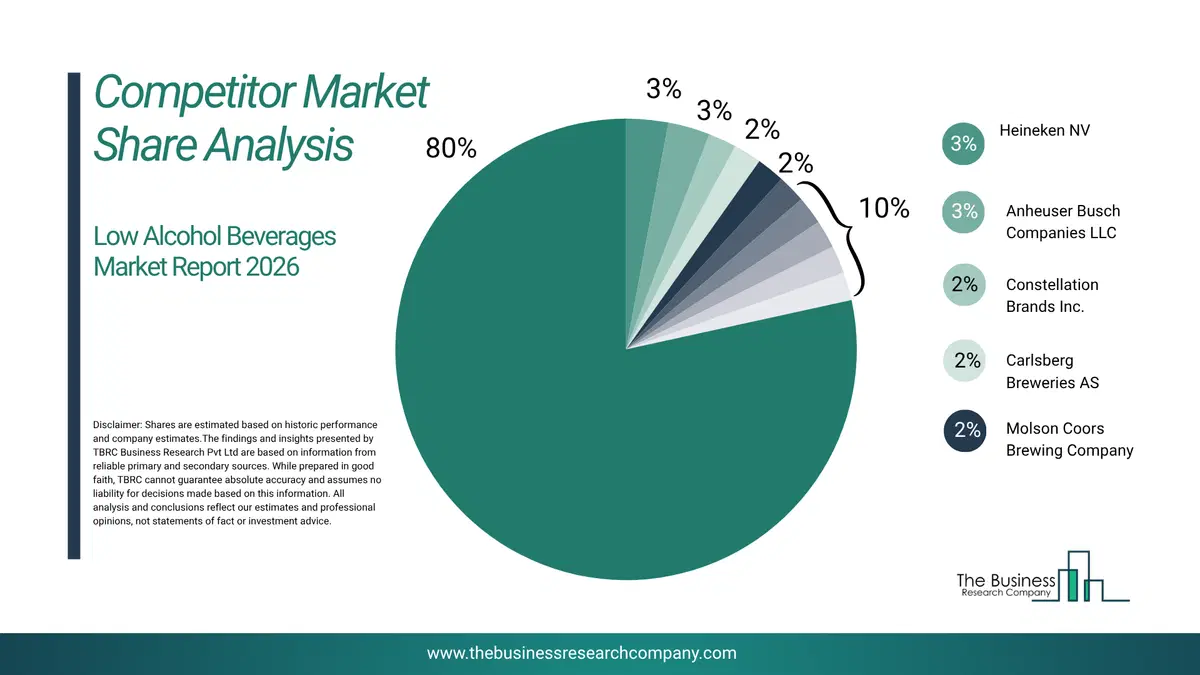
This chart is for illustrative purposes; the full report includes a detailed competitor analysis and comprehensive overview of the top 10 companies in the market.
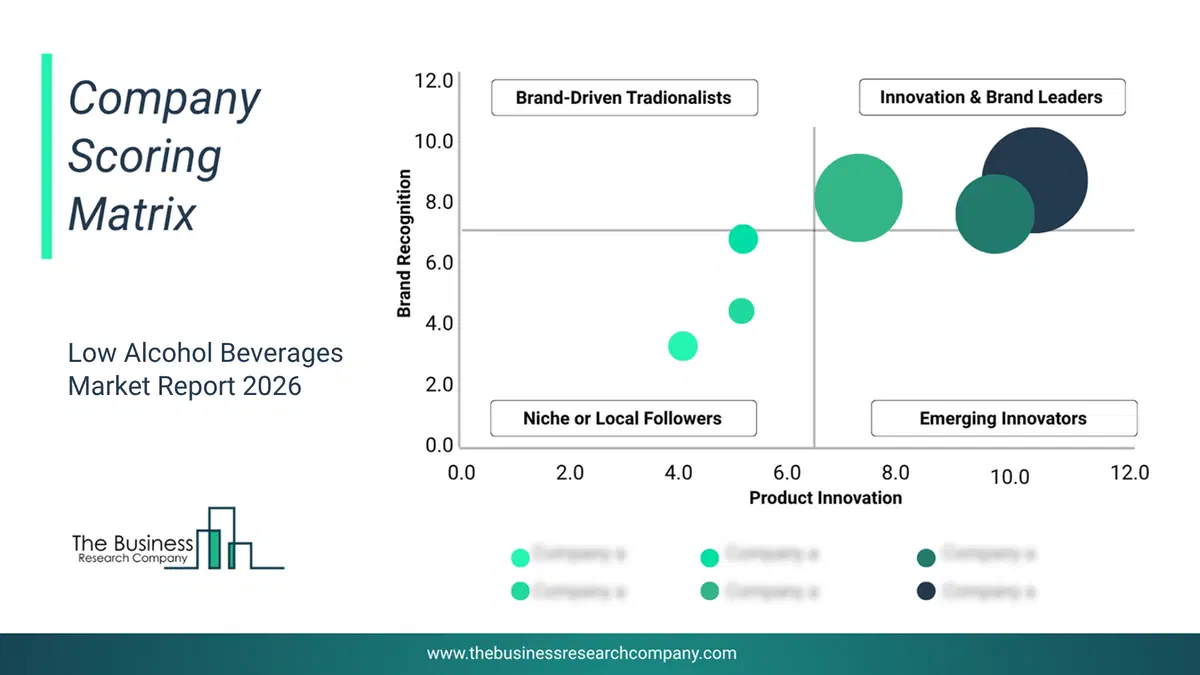
This chart maps companies by product innovation and brand strength, with bubble size indicating relative revenue, helping identify market leaders, challengers, and niche players. This is an illustrative chart; the full report provides a complete and accurate competitive analysis.
Global Low Alcohol Beverages Market Trends and Insights
Major companies operating in the low-alcohol beverages market are focusing on developing innovative products such as lemon-dou craft to drive revenues in their market. Lemon-Dou is a ready-to-drink alcoholic beverage which is a sparkling water and alcohol beverage with a lemon flavor that has grown in popularity in a number of nations. For instance, in December 2023, The Coca-Cola Company, a US-based soft drink manufacturing company launched Lemon-Dou to enter into the Indian alcoholic beverages market. It features a unique blend of shochu and lime, inspired by the traditional Japanese cocktail known as Chuhai. Priced at INR 230 for a 250-ml can, it offers a refreshing and tangy flavor profile. The drink is available in select regions, including parts of Maharashtra and Goa, catering to the evolving tastes of Indian consumers. Lemon Dou is produced separately, highlighting its distinct identity in the beverage market.What Are Latest Mergers And Acquisitions In The Low Alcohol Beverages Market?
In January 2023, Refresco Group, a Netherlands-based beverage solutions provider, acquired Avandis for an undisclosed amount. Through the acquisition, Refresco hopes to increase its selection of alcoholic beverages in Europe. The Avandis production facility in Zoetermeer, the Netherlands, is anticipated to join the Refresco network of more than 70 facilities across Europe, North America, and Australia, strengthening the company's position as a global independent beverage solutions provider to branded clients and top retailers. Avandis is a Netherlands-based company that produces high- and low-alcohol beverages and offers co-packing and private-label solutions for spirits in bottles and cans.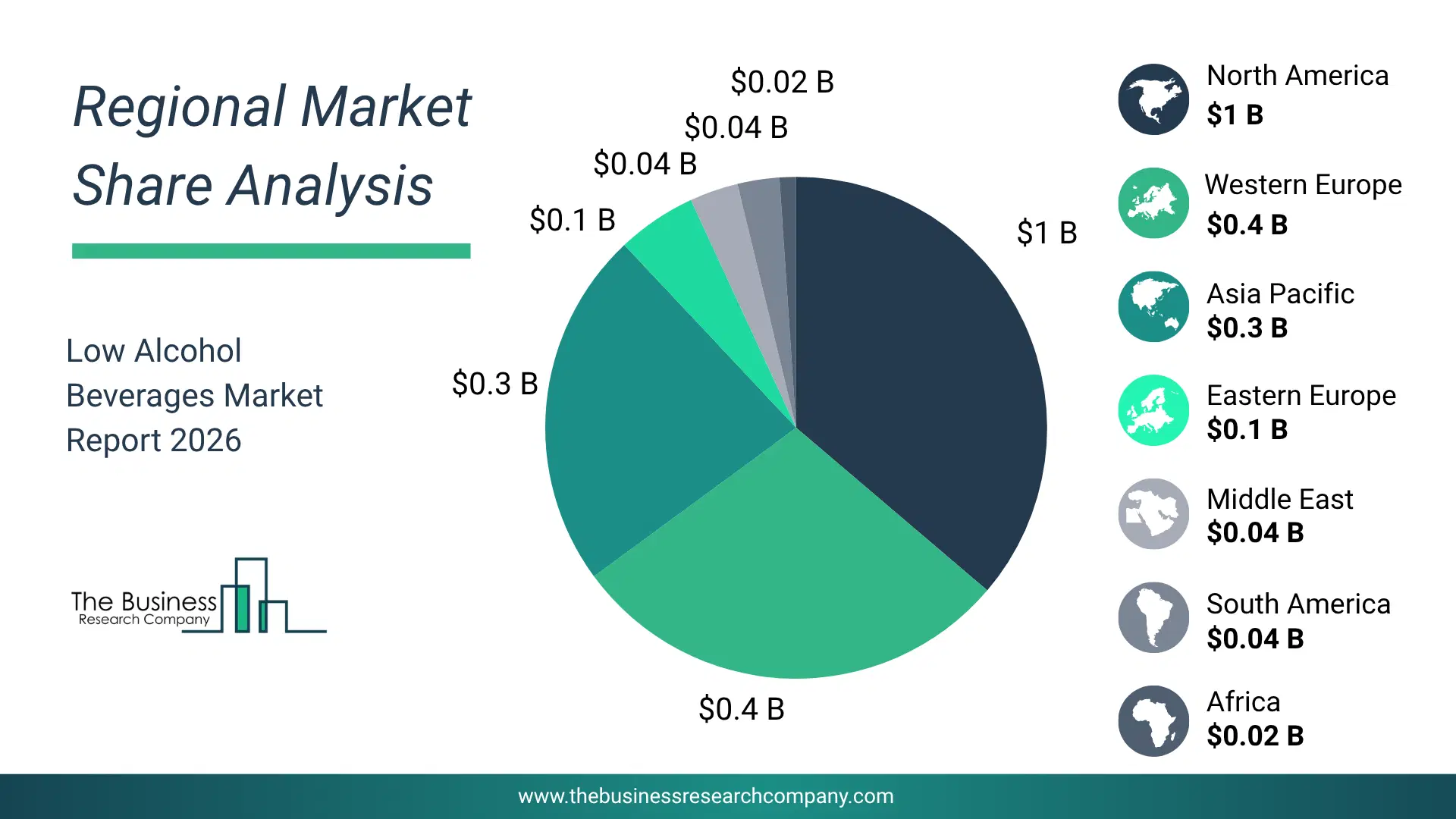
Regional Outlook
North America was the largest region in the low-alcohol beverages market in 2025. The regions covered in this market report are Asia-Pacific, South East Asia, Western Europe, Eastern Europe, North America, South America, Middle East and Africa. The countries covered in this market report are Australia, Brazil, China, France, Germany, India, Indonesia, Japan, Taiwan, Russia, South Korea, UK, USA, Italy, Spain, CanadaWhat Defines the Low Alcohol Beverages Market?
The low-alcohol beverages market consists of sales of roasted light beer, gin and diet tonic, hard seltzer, and other related products. Values in this market are ‘factory gate’ values, that is the value of goods sold by the manufacturers or creators of the goods, whether to other entities (including downstream manufacturers, wholesalers, distributors and retailers) or directly to end customers. The value of goods in this market includes related services sold by the creators of the goods.How is Market Value Defined and Measured?
The market value is defined as the revenues that enterprises gain from the sale of goods and/or services within the specified market and geography through sales, grants, or donations in terms of the currency (in USD unless otherwise specified). The revenues for a specified geography are consumption values that are revenues generated by organizations in the specified geography within the market, irrespective of where they are produced. It does not include revenues from resales along the supply chain, either further along the supply chain or as part of other products.
This chart presents market attractiveness based on a quantitative evaluation of growth, competition, strategic alignment, and risk, offering a clear view of opportunity areas for decision-making. This chart is for illustrative purposes; the full report contains the complete analysis.

This chart highlights the Total Addressable Market (TAM) by estimating the maximum revenue opportunity using an assumption-driven approach, supporting strategic planning and opportunity sizing across markets. The chart is illustrative; the full report provides a more comprehensive analysis.
What Key Data and Analysis Are Included in the Low Alcohol Beverages Market Report 2026?
The low alcohol beverages market research report is one of a series of new reports from The Business Research Company that provides market statistics, including industry global market size, regional shares, competitors with the market share, detailed market segments, market trends and opportunities, and any further data you may need to thrive in the low alcohol beverages industry. The market research report delivers a complete perspective of everything you need, with an in-depth analysis of the current and future state of the industry.Low Alcohol Beverages Market Report Forecast Analysis
| Report Attribute | Details |
|---|---|
| Market Size Value In 2026 | $1.48 billion |
| Revenue Forecast In 2030 | $1.87 billion |
| Growth Rate | CAGR of 5.2% from 2026 to 2030 |
| Base Year For Estimation | 2025 |
| Actual Estimates/Historical Data | 2020-2025 |
| Forecast Period | 2026 - 2030 - 2035 |
| Market Representation | Revenue in USD Billion and CAGR from 2026 to 2030 |
| Segments Covered | Type, Packaging, Distribution Channel |
| Regional Scope | Asia-Pacific, Western Europe, Eastern Europe, North America, South America, Middle East, Africa |
| Country Scope | The countries covered in the report are Australia, Brazil, China, France, Germany, India, Indonesia, Japan, Taiwan, Russia, South Korea, UK, USA, Canada, Italy, Spain. |
| Key Companies Profiled | Anheuser Busch Companies LLC, Heineken NV, Carlsberg Breweries AS, Molson Coors Brewing Company, Asahi Group Holdings Ltd, Diageo plc, Constellation Brands Inc, Sapporo Breweries Ltd, United Breweries Group, Royal Unibrew AS, The Boston Beer Company Inc, BrewDog plc, Athletic Brewing Company, Big Drop Brewing Co Ltd, Brooklyn Brewery Corp, Accolade Wines Ltd, Gnista Spirits, Curious Elixirs, Floreat Wines, Cerveceria Cuauhtemoc Moctezuma |
| Customization Scope | Request for Customization |
| Pricing And Purchase Options | Explore Purchase Options |