
Non-Alcoholic Beer Market Report 2026
Global Outlook – By Product (Alcohol free, Low alcohol), By Material (Malted Grains, Hops, Yeasts, Enzymes, Other Materials), By Category (Plain, Flavored), By Distribution Channel (Store-based, Non-Store-based ) – Market Size, Trends, Strategies, and Forecast to 2030
Non-Alcoholic Beer Market Overview
• Non-Alcoholic Beer market size has reached to $23.84 billion in 2025 • Expected to grow to $38.66 billion in 2030 at a compound annual growth rate (CAGR) of 10.2% • Growth Driver: The Growth Of The Food Service Industry Is Driving The Market Demand • Market Trend: Innovation In Non-Alcoholic Beer • North America was the largest region in 2025.Market Gains By 2030 – Top Opportunities By Segment
Market Gain identifies the most promising market opportunities by highlighting the segments or products expected to generate the highest incremental revenue growth over the next five years.
What Is Covered Under Non-Alcoholic Beer Market?
Non-alcoholic beer contains 0% to 1.2% of alcohol and it is generally manufactured by removing alcohol from the finished product or by boiling beer to evaporate the alcohol. The main types of non-alcoholic beer are alcohol-free and low alcohol. Low alcohol beers are beer that tastes similar to beer but contains significantly less amount of alcohol. The main types of materials used in producing non-alcoholic beer include malted grains, hops, yeasts, enzymes, and others. The various categories of non-alcoholic beer are plain and flavoured. These types of beer are sold to consumers through store-based and non-store-based sales channels.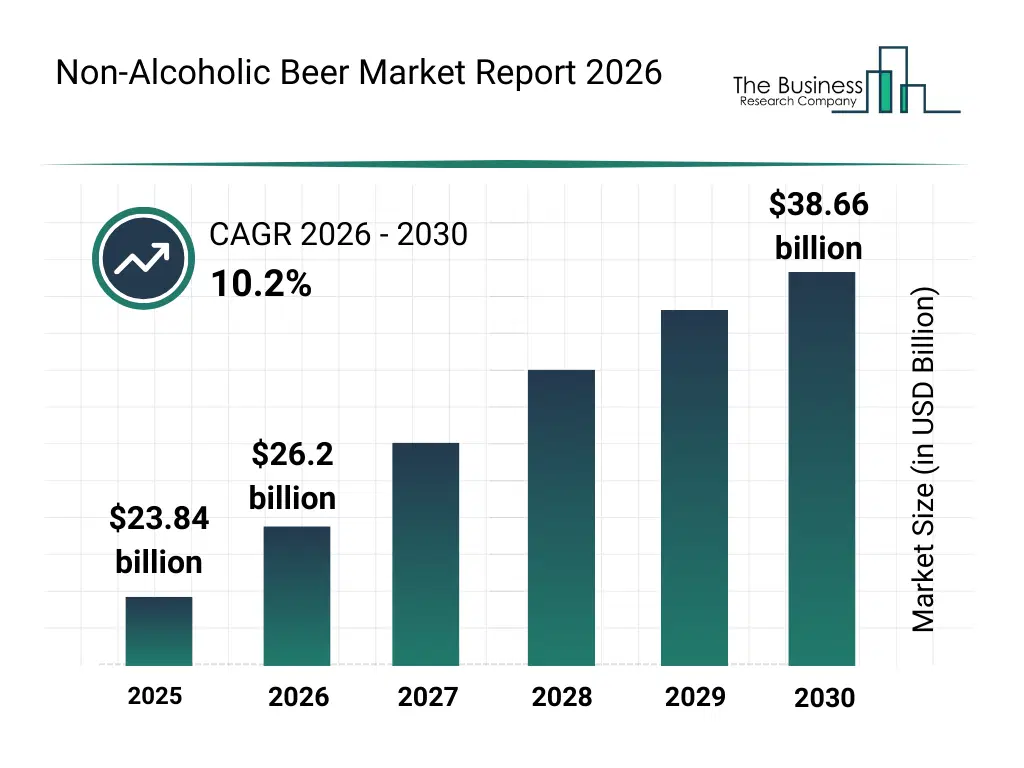
What Is The Non-Alcoholic Beer Market Size and Share 2026?
The non-alcoholic beer market size has grown strongly in recent years. It will grow from $23.84 billion in 2025 to $26.2 billion in 2026 at a compound annual growth rate (CAGR) of 9.9%. The growth in the historic period can be attributed to shifting consumer preferences toward low-alcohol lifestyles, increased awareness of health and wellness benefits, expansion of global beer consumption base, improved brewing and alcohol removal technologies, growing acceptance of non-alcoholic beverages.What Is The Non-Alcoholic Beer Market Growth Forecast?
The non-alcoholic beer market size is expected to see rapid growth in the next few years. It will grow to $38.66 billion in 2030 at a compound annual growth rate (CAGR) of 10.2%. The growth in the forecast period can be attributed to increasing demand from health-conscious consumers, expansion of non-alcoholic options in retail and horeca channels, rising product innovation in flavors and formulations, growing penetration in emerging markets, increased marketing by major beer brands. Major trends in the forecast period include increasing demand for alcohol-free beverage alternatives, rising innovation in dealcoholization techniques, growing popularity of flavored non-alcoholic beer variants, expansion of premium and craft non-alcoholic beer offerings, enhanced focus on taste and mouthfeel optimization.
Global Non-Alcoholic Beer Market Segmentation
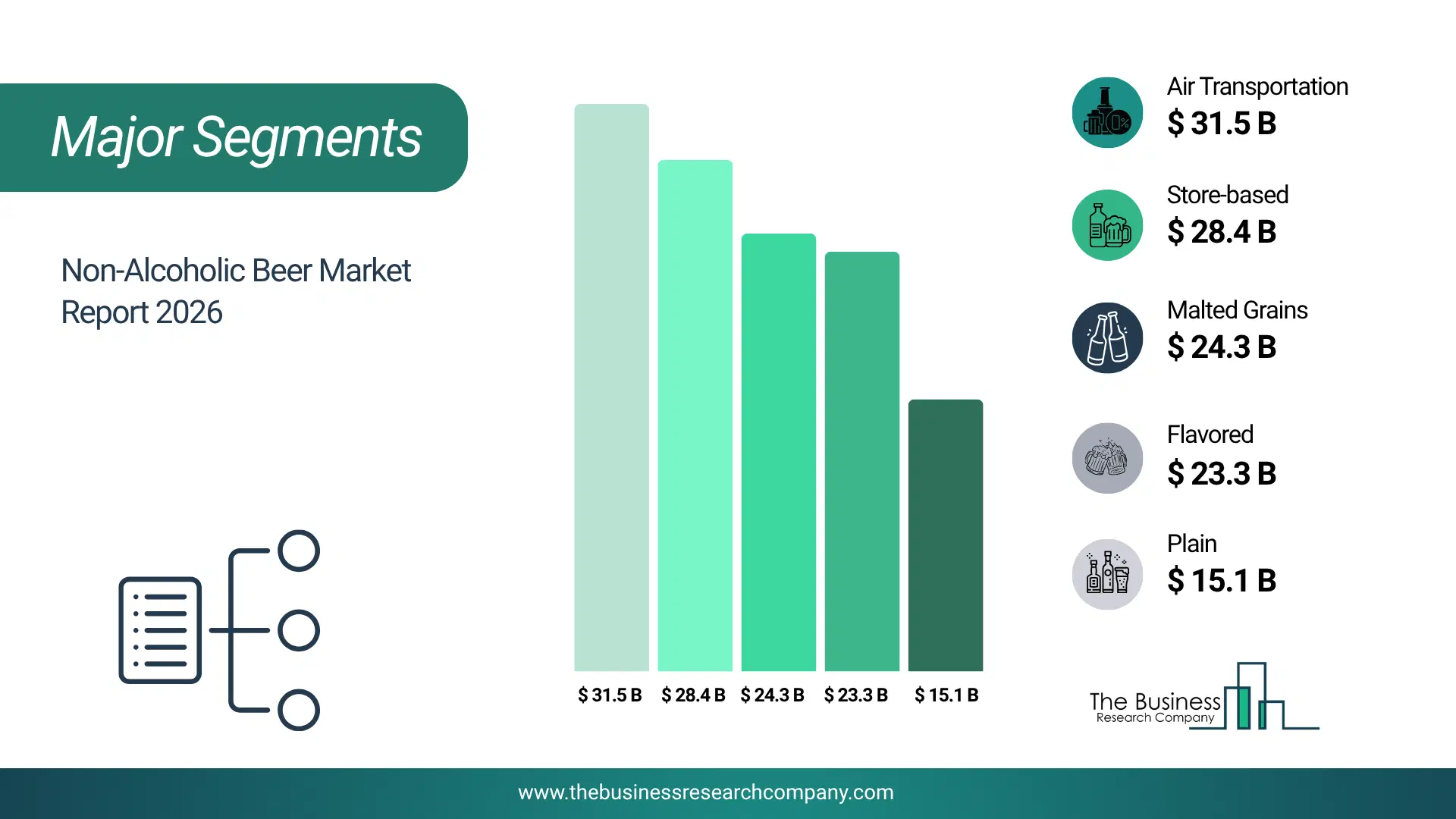
1) By Product: Alcohol free, Low alcohol 2) By Material: Malted Grains, Hops, Yeasts, Enzymes, Other Materials 3) By Category: Plain, Flavored 4) By Distribution Channel: Store-based, Non-Store-based Subsegments: 1) By Alcohol Free: Non-Alcoholic Lager, Non-Alcoholic Ale, Non-Alcoholic Stout Or Porter, Non-Alcoholic Wheat Beer 2) By Low Alcohol: Low Alcohol Lager, Low Alcohol Ale, Low Alcohol Stout Or Porter, Low Alcohol Wheat Beer The top segments in the non-alcoholic beer market will be: • Alcohol free will reach $31575.64 Million by 2030. • Store-based will reach $28464.63 Million by 2030. • Malted Grains will reach $24339.73 Million by 2030. • Flavored will reach $23373.4 Million by 2030. • Plain will reach $15152.11 Million by 2030.What Is The Driver Of The Non-Alcoholic Beer Market?
The growth of the food service industry is expected to propel the growth of the non-alcoholic beer market going forward. The food service industry encompasses businesses and establishments that prepare, serve, and sell food and beverages to customers. The food service industry uses non-alcoholic beer to cater to a wider range of customers, offering a beverage option for those who prefer not to consume alcohol while still providing a beer-like experience. For instance, in August 2024, according to the United States Department of Agriculture Economic Research Service, a U.S.-based government agency, in 2023, per capita spending on food away from home rose to USD 4,485, up from USD 4,004 in 2022. Therefore, the growth of the food service industry is driving the growth of the non-alcoholic beer industry.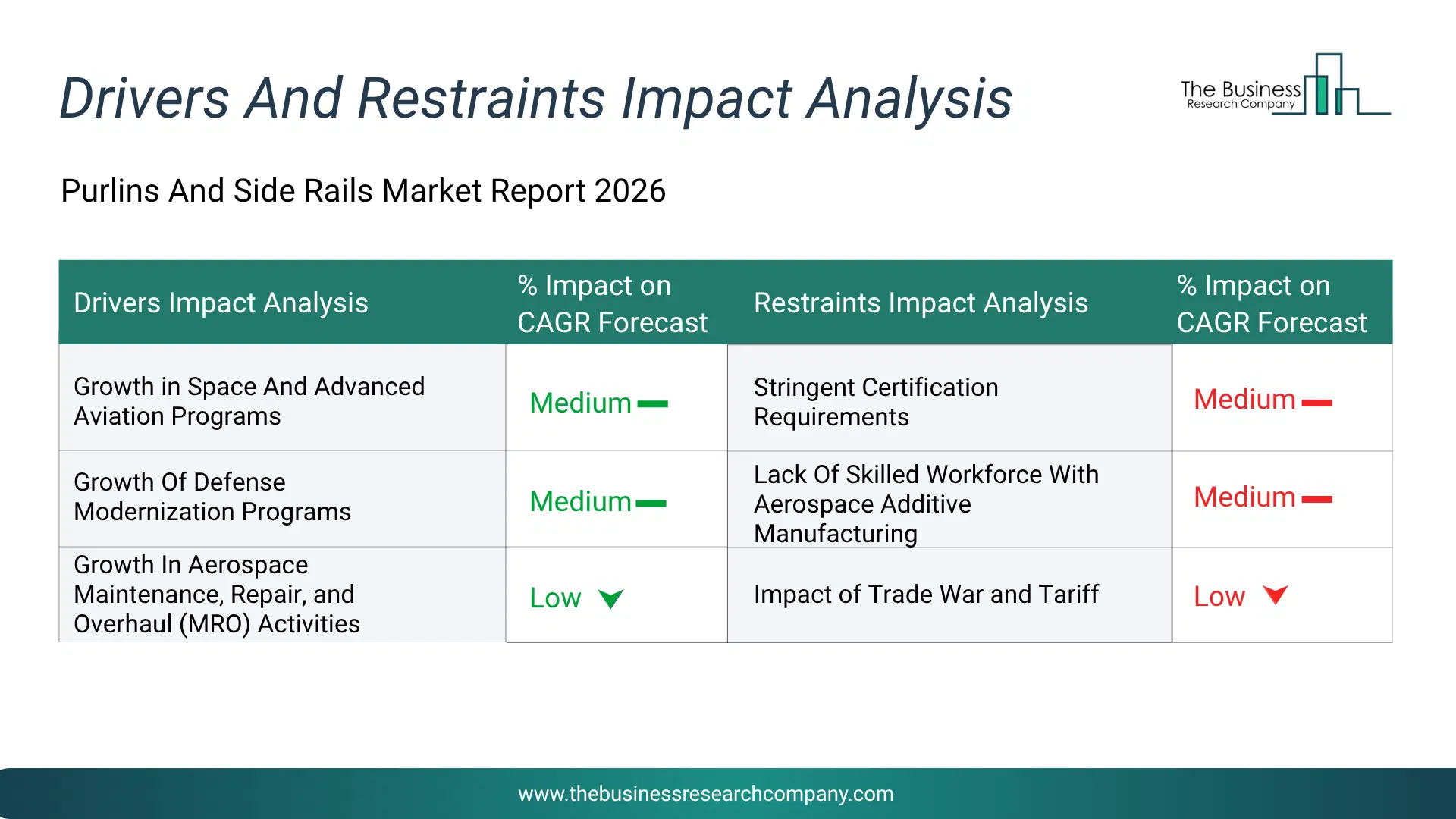
Infographic Chart Showing Key Market Drivers Analysis And Restraints For Non-Alcoholic Beer Market
The chart presents an impact analysis of key drivers and restraints, quantifying their relative influence on the market's growth rate and helping assess the balance between growth enablers and limiting factors. This chart offers a high-level perspective; the full report contains more detailed insights.
How Will The Drivers Impact Growth In The Global Non-Alcoholic Beer Market?
• Rising Awareness of Diseases Caused Due to Alcoholic Beverages (Medium) – During the forecast period, the rising awareness of diseases causes due to alcoholic beverages will become a key driver of growth in the non-alcoholic beer market by 2030. as scientific evidence and public health communication increasingly emphasize the association between alcohol intake and serious health conditions such as cancer, liver disease, and cardiovascular disorders, consumers are expected to become more cautious about regular alcohol consumption. this growing awareness is likely to reinforce long-term behavioral shifts toward alcohol moderation rather than complete abstinence, particularly among health-conscious and preventive-care-oriented consumers. as a result, demand for alternatives that allow participation in social and recreational drinking occasions without the health risks associated with alcohol is expected to rise. as consumers increasingly seek beverages that align with healthier lifestyle choices and risk-reduction strategies, the adoption of non-alcoholic beer is expected to accelerate. as a result, the rising awareness of diseases causes due to alcoholic beverages is anticipated to contributing to a 2.0% annual growth in the market. • Higher Participation in Sports and Fitness Activities (Medium) – During the forecast period, the higher participation in sports and fitness activities will emerge as a major factor driving the expansion of the market by 2030. as increasing numbers of individuals adopt physically active lifestyles and integrate regular exercise into their daily routines, preferences are expected to shift toward beverages that align with fitness, recovery, and overall wellness objectives. the growing emphasis on sports participation, recreational fitness, and structured physical activity is expected to influence consumption patterns, particularly around post-workout and social recovery occasions where alcohol intake is increasingly viewed as counterproductive. as more consumers seek hydration-oriented, low-calorie, and alcohol-free alternatives that complement active lifestyles while still offering familiar taste and social appeal, non-alcoholic beer is expected to gain wider acceptance. as participation in sports and fitness activities continues to rise across age groups and regions, there will be a greater opportunity for non-alcoholic beer products to position themselves as compatible with performance-focused and health-conscious consumption. consequently, the higher participation in sports and fitness activities is projected to contributing to a 1.3% annual growth in the market. • Increasing Regulatory Support Limiting Alcohol Consumption in Public Places (Low) – During the forecast period, the increasing regulatory support limiting alcohol consumption in public places will serve as a key growth catalyst for the market by 2030, biopharmaceutical products such as recombinant proteins, biosimilars, vaccines, enzymes, and fermentation-derived small molecules increasingly form the backbone of modern therapeutic pipelines. as governments and public authorities continue to implement stricter regulations on alcohol consumption in public spaces such as parks, streets, sporting venues, and areas near educational institutions, opportunities for consuming traditional alcoholic beverages are expected to become more restricted. these regulatory measures are designed to curb harmful drinking behaviors, improve public safety, and reduce alcohol-related social and health risks, thereby encouraging consumers to seek compliant alternatives. as alcohol-free beverages are permitted in a wider range of public and social settings, non-alcoholic beer is expected to gain stronger acceptance as a suitable substitute that allows social participation without regulatory constraints. as regulatory frameworks continue to evolve and enforcement of public alcohol restrictions intensifies, there will be a greater shift toward non-alcoholic beer options. therefore, this increasing regulatory support limiting alcohol consumption in public places projected to supporting to a 1.0% annual growth in the market. • Expanding E-Commerce (Low) – During the forecast period, expanding e-commerce will propel the growth of the non-alcoholic beer market. As digital retail infrastructure continues to strengthen globally and consumers increasingly adopt online shopping for food and beverages, the accessibility and visibility of non-alcoholic beer products are expected to increase significantly. The continued expansion of e-commerce platforms, direct-to-consumer channels, and last-mile delivery networks is enabling beverage brands to reach a wider consumer base beyond traditional retail formats, particularly in urban and digitally connected regions. As online channels offer greater product variety, convenience, and targeted marketing capabilities, non-alcoholic beer producers are expected to leverage these platforms to engage health-conscious and convenience-oriented consumers more effectively. As companies scale their digital distribution strategies and e-commerce becomes a more integral part of beverage purchasing behavior, there will be a greater opportunity for non-alcoholic beer brands to expand market penetration, improve customer reach, and drive sustained sales growth. The expanding e-commerce growth contribution during the forecast period in 2025 is 0.5%.How Will The Restraints Impact Growth In The Global Non-Alcoholic Beer Market?
• Perception of Inferior Taste (Medium) – During the forecast period, perception of inferior taste is restricting the growth of the non-alcoholic beer market during the forecast period. while non-alcoholic beer continues to improve in quality and formulation, long-standing consumer perceptions that alcohol-free variants offer less satisfying flavor and mouthfeel compared with traditional alcoholic beer remain a significant barrier to wider adoption. this entrenched perception can influence purchase decisions and reduce repeat consumption, particularly among beer drinkers who prioritize taste authenticity and sensory experience. even as producers invest in advanced brewing techniques to enhance flavor profiles and aroma complexity, addressing deeply rooted consumer biases often requires sustained marketing efforts, sampling initiatives, and educational outreach that extend beyond standard promotional activities. in many cases, taste skepticism may lead consumers to default to familiar alcoholic options or alternative beverages, limiting the willingness of broader demographic segments to explore non-alcoholic beer offerings. growth affected by the perception of inferior taste during the forecast period in 2025 is -2.0%. • Cultural Preference for Alcoholic Beverages (Medium) – During the forecast period, cultural preference for alcoholic beverages is restricting the growth of the non-alcoholic beer market during the forecast period. while non-alcoholic beer offers a viable alternative to traditional alcoholic options, deeply rooted social norms and cultural practices that associate alcohol consumption with celebration, bonding, and social lubrication can continue to limit broader adoption of alcohol-free variants. in many communities and social settings, alcoholic beer remains the default choice for occasions such as gatherings, festivals, and shared meals, reinforcing the perception that non-alcoholic options lack the same symbolic and experiential value. these entrenched cultural preferences can create resistance toward substituting alcoholic beer with non-alcoholic alternatives, particularly among established drinkers who prioritize tradition and shared rituals. growth affected by the cultural preference for alcoholic beverages during the forecast period in 2025 is -1.5%. • Impact of Trade Wars and Tariffs (Low) – During the forecast period, impact of trade wars and tariffs is restricting the growth of the non-alcoholic beer market during the forecast period. while global beverage producers continue to expand production and distribution networks, escalating trade tensions and the imposition of tariffs on imported goods can increase input and finished-goods costs, disrupt supply chains, and create pricing challenges that dampen market expansion efforts. tariffs imposed on key raw materials, packaging components, or beverage imports may erode competitive pricing advantages for non-alcoholic beer brands, particularly those reliant on cross-border sourcing or exports to key markets. these elevated costs and supply chain uncertainties can lead producers to delay market entry, scale back distribution plans, or absorb price increases that reduce consumer affordability. growth affected by the impact of trade wars and tariffs during the forecast period in 2025 is -0.2%.Key Players In The Global Non-Alcoholic Beer Market
Major companies operating in the non-alcoholic beer market are Anheuser-Busch InBev SA, BERNARD Family Brewery Inc., Big Drop Brewing Co., Carlsberg Breweries Group, Coors Brewing Company, Erdinger Weissbräu GmbH, Heineken N.V., Krombacher Brauerei Bernhard Schadeberg GmbH & Co. KG, Royal Swinkels Family Brewers UK Ltd., Suntory Holdings Limited, Kirin Brewery Company, The Bayerische Staatsbrauerei Weihenstephan, Athletic Brewing Company, Clausthaler Inc., BrewDog plc, Bitburger Braugruppe GmbH, Paulaner Brauerei Gruppe GmbH & Co. KGaA, Warsteiner Brauerei Haus Cramer KG, Franziskaner Brauerei GmbH, Jever Brauerei KG, Weihenstephaner Brauerei GmbH, Schneider Weisse KG, St. Pauli Brauerei KG, Krombacher Brauerei GmbH, Brooklyn Brewery Corp., Carlsberg Group A/S, Arthur Guinness & Sons plc, Ceria Innovations Private Limited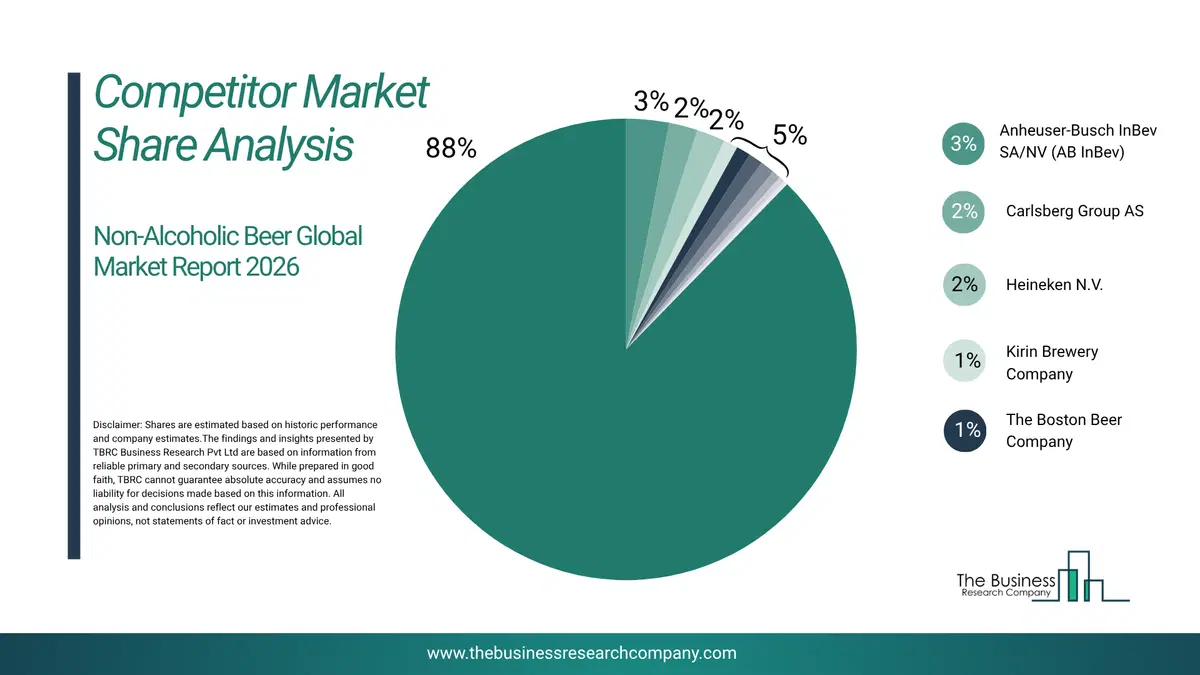
This chart is for illustrative purposes; the full report includes a detailed competitor analysis and comprehensive overview of the top 10 companies in the market.
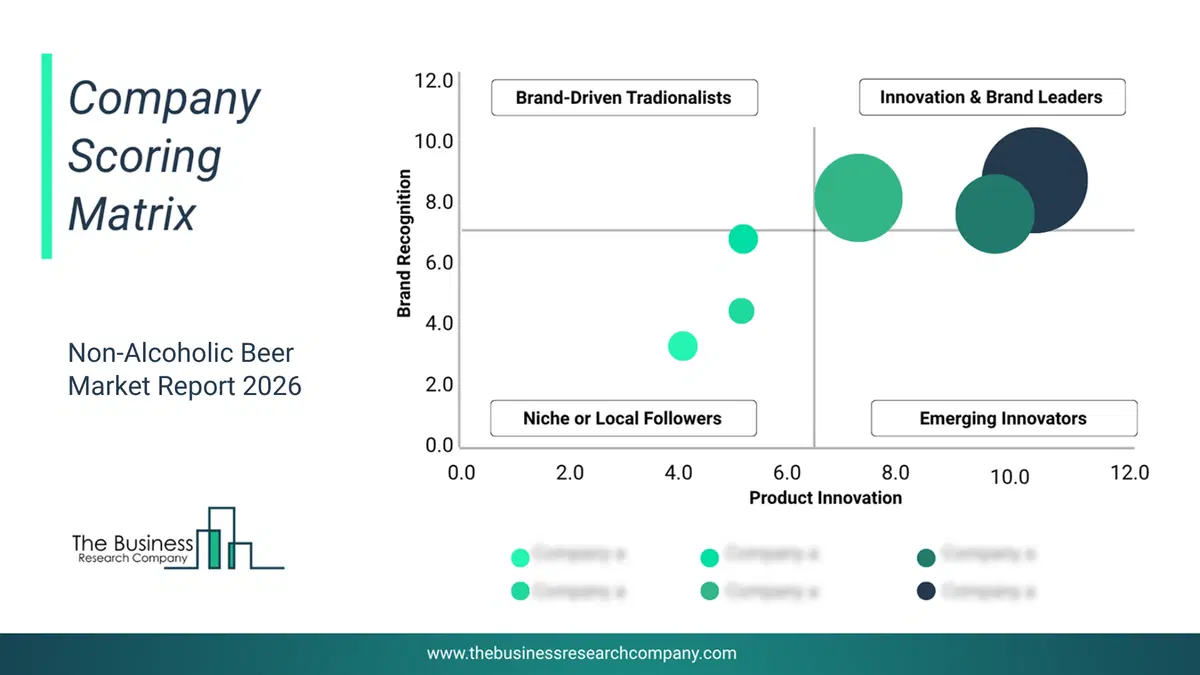
This chart maps companies by product innovation and brand strength, with bubble size indicating relative revenue, helping identify market leaders, challengers, and niche players. This is an illustrative chart; the full report provides a complete and accurate competitive analysis.
Global Non-Alcoholic Beer Market Trends and Insights
Major companies operating in the non-alcoholic beer market are focusing on developing innovative products, such as low-calorie and low-alcohol alternatives, to cater to the rising health consciousness among consumers. These innovations aim to offer refreshing beverage options with reduced alcohol content while maintaining the taste and experience of traditional beer. For instance, in September 2024, Firestone Walker Brewing Company, a US-based beer company, launched Non-Alcoholic Beer 8ZERO5. This product contains less than 0.5% ABV and only 60 calories, making it a healthier choice for consumers seeking a lighter beverage without the effects of alcohol. Its formulation replicates the signature flavor profile of the popular 805 Blonde Ale while appealing to the increasing demand for non-alcoholic options among health-conscious drinkers and active individuals.What Are Latest Mergers And Acquisitions In The Non-Alcoholic Beer Market?
In February 2025, MNG Brands, a U.S.-based provider of wellness, functional beverage, and alternative-consumer products, acquired WellBeing Brewing Company for an undisclosed amount. With this acquisition, MNG Brands aims to expand and diversify its non alcoholic and wellness beverage portfolio, leveraging WellBeing’s established NA beer brand and distribution capabilities to capture growing demand for alcohol free, health oriented beverages. WellBeing Brewing Company is a U.S.-based producer of award winning non alcoholic beers offering craft quality NA brews designed for health conscious and “sober curious” consumers.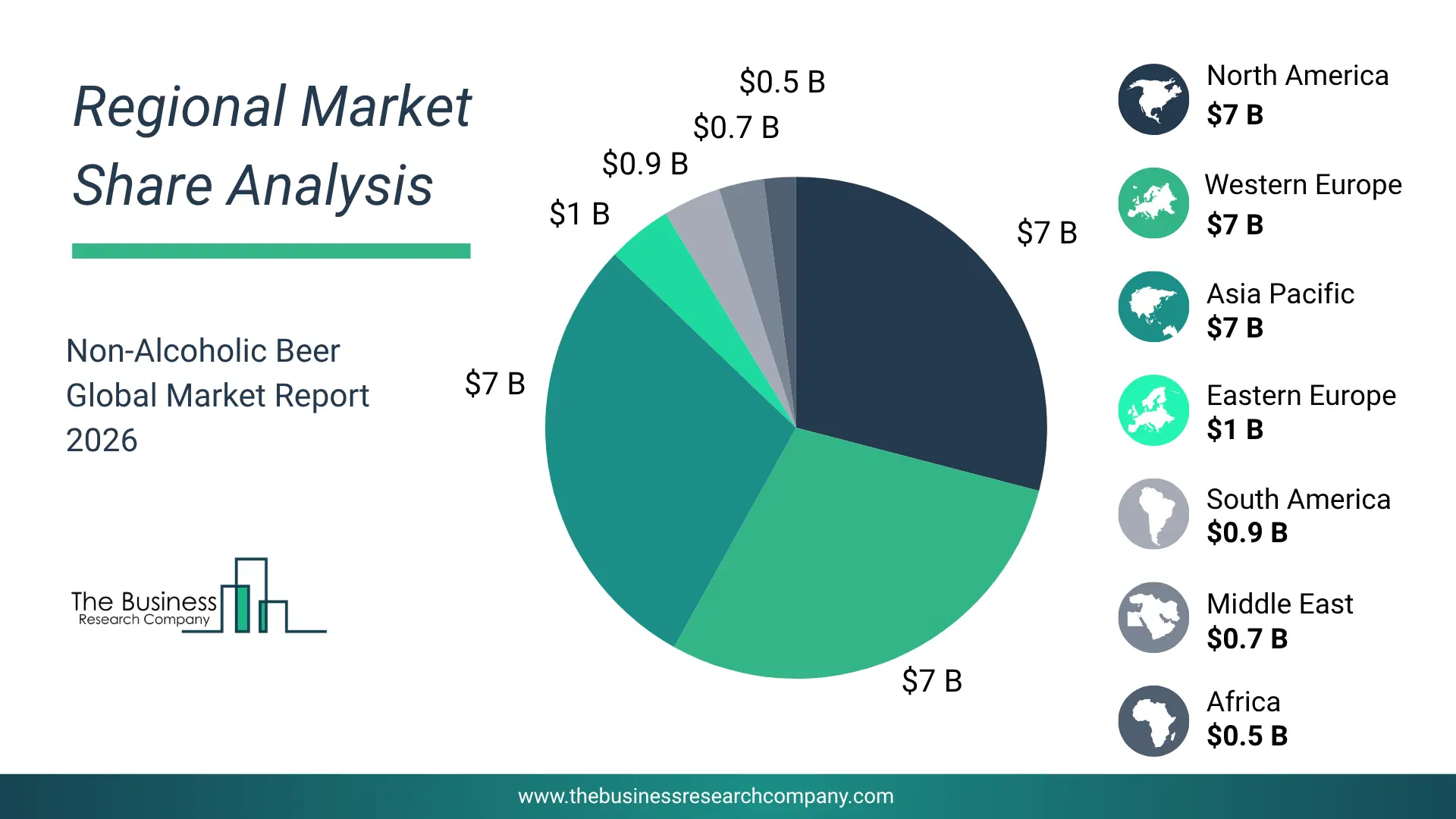
Regional Outlook
North America was the largest region in the non-alcoholic beer market in 2025. The regions covered in this market report are Asia-Pacific, South East Asia, Western Europe, Eastern Europe, North America, South America, Middle East and Africa. The countries covered in this market report are Australia, Brazil, China, France, Germany, India, Indonesia, Japan, Taiwan, Russia, South Korea, UK, USA, Italy, Spain, CanadaWhat Defines the Non-Alcoholic Beer Market?
The non-alcoholic beer market consists of sales of low alcohol beer and alcohol-free beer. Values in this market are ‘factory gate’ values, that is the value of goods sold by the manufacturers or creators of the goods, whether to other entities (including downstream manufacturers, wholesalers, distributors and retailers) or directly to end customers. The value of goods in this market includes related services sold by the creators of the goods.How is Market Value Defined and Measured?
The market value is defined as the revenues that enterprises gain from the sale of goods and/or services within the specified market and geography through sales, grants, or donations in terms of the currency (in USD unless otherwise specified). The revenues for a specified geography are consumption values that are revenues generated by organizations in the specified geography within the market, irrespective of where they are produced. It does not include revenues from resales along the supply chain, either further along the supply chain or as part of other products.
This chart presents market attractiveness based on a quantitative evaluation of growth, competition, strategic alignment, and risk, offering a clear view of opportunity areas for decision-making. This chart is for illustrative purposes; the full report contains the complete analysis.

This chart highlights the Total Addressable Market (TAM) by estimating the maximum revenue opportunity using an assumption-driven approach, supporting strategic planning and opportunity sizing across markets. The chart is illustrative; the full report provides a more comprehensive analysis.
What Key Data and Analysis Are Included in the Non-Alcoholic Beer Market Report 2026?
The non-alcoholic beer market research report is one of a series of new reports from The Business Research Company that provides market statistics, including industry global market size, regional shares, competitors with the market share, detailed market segments, market trends and opportunities, and any further data you may need to thrive in the non-alcoholic beer industry. The market research report delivers a complete perspective of everything you need, with an in-depth analysis of the current and future state of the industry.Non-Alcoholic Beer Market Report Forecast Analysis
| Report Attribute | Details |
|---|---|
| Market Size Value In 2026 | $26.2 billion |
| Revenue Forecast In 2030 | $38.66 billion |
| Growth Rate | CAGR of 9.9% from 2026 to 2030 |
| Base Year For Estimation | 2025 |
| Actual Estimates/Historical Data | 2020-2025 |
| Forecast Period | 2026 - 2030 - 2035 |
| Market Representation | Revenue in USD Billion and CAGR from 2026 to 2030 |
| Segments Covered | Product, Material, Category, Distribution Channel |
| Regional Scope | Asia-Pacific, Western Europe, Eastern Europe, North America, South America, Middle East, Africa |
| Country Scope | The countries covered in the report are Australia, Brazil, China, France, Germany, India, Indonesia, Japan, Taiwan, Russia, South Korea, UK, USA, Canada, Italy, Spain. |
| Key Companies Profiled | Anheuser-Busch InBev SA, BERNARD Family Brewery Inc., Big Drop Brewing Co., Carlsberg Breweries Group, Coors Brewing Company, Erdinger Weissbräu GmbH, Heineken N.V., Krombacher Brauerei Bernhard Schadeberg GmbH & Co. KG, Royal Swinkels Family Brewers UK Ltd., Suntory Holdings Limited, Kirin Brewery Company, The Bayerische Staatsbrauerei Weihenstephan, Athletic Brewing Company, Clausthaler Inc., BrewDog plc, Bitburger Braugruppe GmbH, Paulaner Brauerei Gruppe GmbH & Co. KGaA, Warsteiner Brauerei Haus Cramer KG, Franziskaner Brauerei GmbH, Jever Brauerei KG, Weihenstephaner Brauerei GmbH, Schneider Weisse KG, St. Pauli Brauerei KG, Krombacher Brauerei GmbH, Brooklyn Brewery Corp., Carlsberg Group A/S, Arthur Guinness & Sons plc, Ceria Innovations Private Limited |
| Customization Scope | Request for Customization |
| Pricing And Purchase Options | Explore Purchase Options |