
Luxury Car Market Report 2026
Global Outlook – By Vehicle (Hatchback, Sedan, Sports Utility, Multi-Purpose Vehicle), By Vehicle Class (Entry-Level Luxury, Mid-Level Luxury, Ultra Luxury), By Propulsion (Internal Combustion Engine (ICE), Electric), By Fuel (Gasoline, Diesel, Electric) – Market Size, Trends, Strategies, and Forecast to 2030
Luxury Car Market Overview
• Luxury Car market size has reached to $710.54 billion in 2025 • Expected to grow to $1006.68 billion in 2030 at a compound annual growth rate (CAGR) of 7.3% • Growth Driver: Rising Demand For Electric Luxury Vehicles Fuels Growth In The Luxury Car Market • Market Trend: Innovation Driving Advanced Automation In The Premium Mobility Segment • Asia-Pacific was the largest region in 2025.Market Gains By 2030 – Top Opportunities By Segment
Market Gain identifies the most promising market opportunities by highlighting the segments or products expected to generate the highest incremental revenue growth over the next five years.
What Is Covered Under Luxury Car Market?
Luxury cars refer to vehicles with more potent motors, quieter interiors, improved handling, sophisticated safety features, and electronic technology. It is used for a certain level of prestige and social status. The main types of luxury car vehicles are hatchback, sedan, sports utility, and multi-purpose vehicles. A hatchback refers to a vehicle with an additional back door that can be raised to allow objects to be loaded. The vehicle classes are entry-level luxury, mid-level luxury, and ultra-luxury with various propulsion such as internal combustion engine (ICE), and electric. The fuel types used are gasoline, diesel, and electric.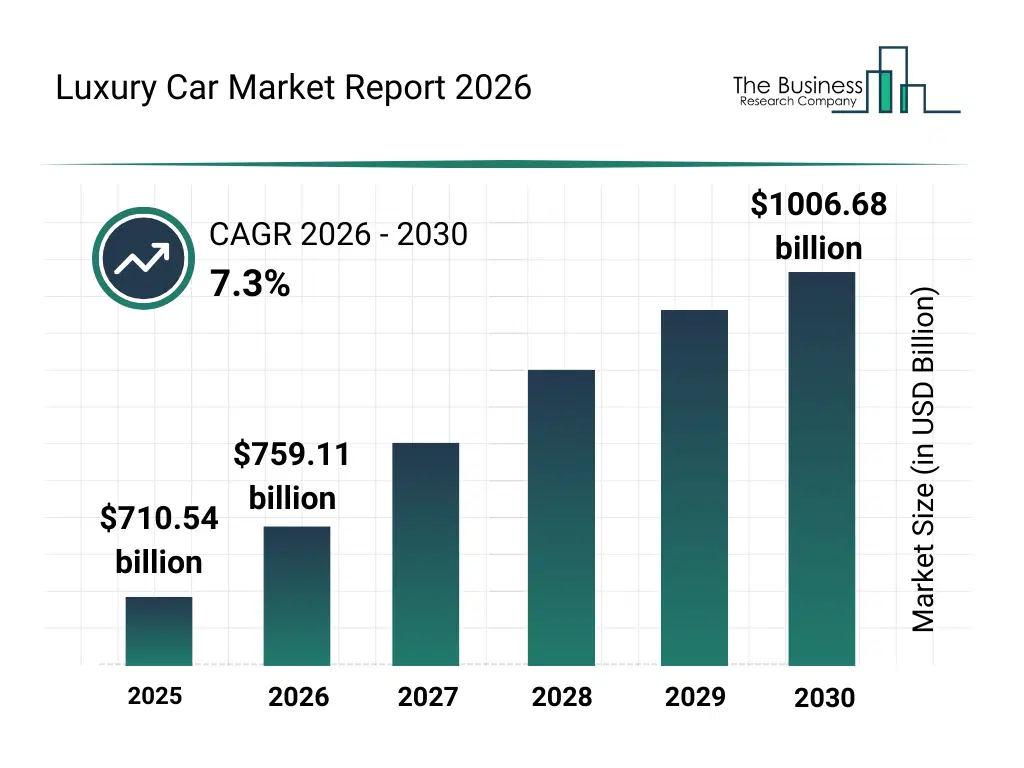
What Is The Luxury Car Market Size and Share 2026?
The luxury car market size has grown strongly in recent years. It will grow from $710.54 billion in 2025 to $759.11 billion in 2026 at a compound annual growth rate (CAGR) of 6.8%. The growth in the historic period can be attributed to growth of high net worth individuals, rising disposable income, expansion of premium automotive brands, demand for prestige vehicles, technological differentiation in luxury cars.What Is The Luxury Car Market Growth Forecast?
The luxury car market size is expected to see strong growth in the next few years. It will grow to $1006.68 billion in 2030 at a compound annual growth rate (CAGR) of 7.3%. The growth in the forecast period can be attributed to increasing adoption of electric luxury vehicles, demand for autonomous features, growth of digital vehicle experiences, expansion in emerging luxury markets, investments in premium mobility innovation. Major trends in the forecast period include integration of advanced driver assistance systems, growing demand for connected luxury vehicles, expansion of electric luxury car models, customization and personalization features, rising adoption of premium safety technologies.
Global Luxury Car Market Segmentation
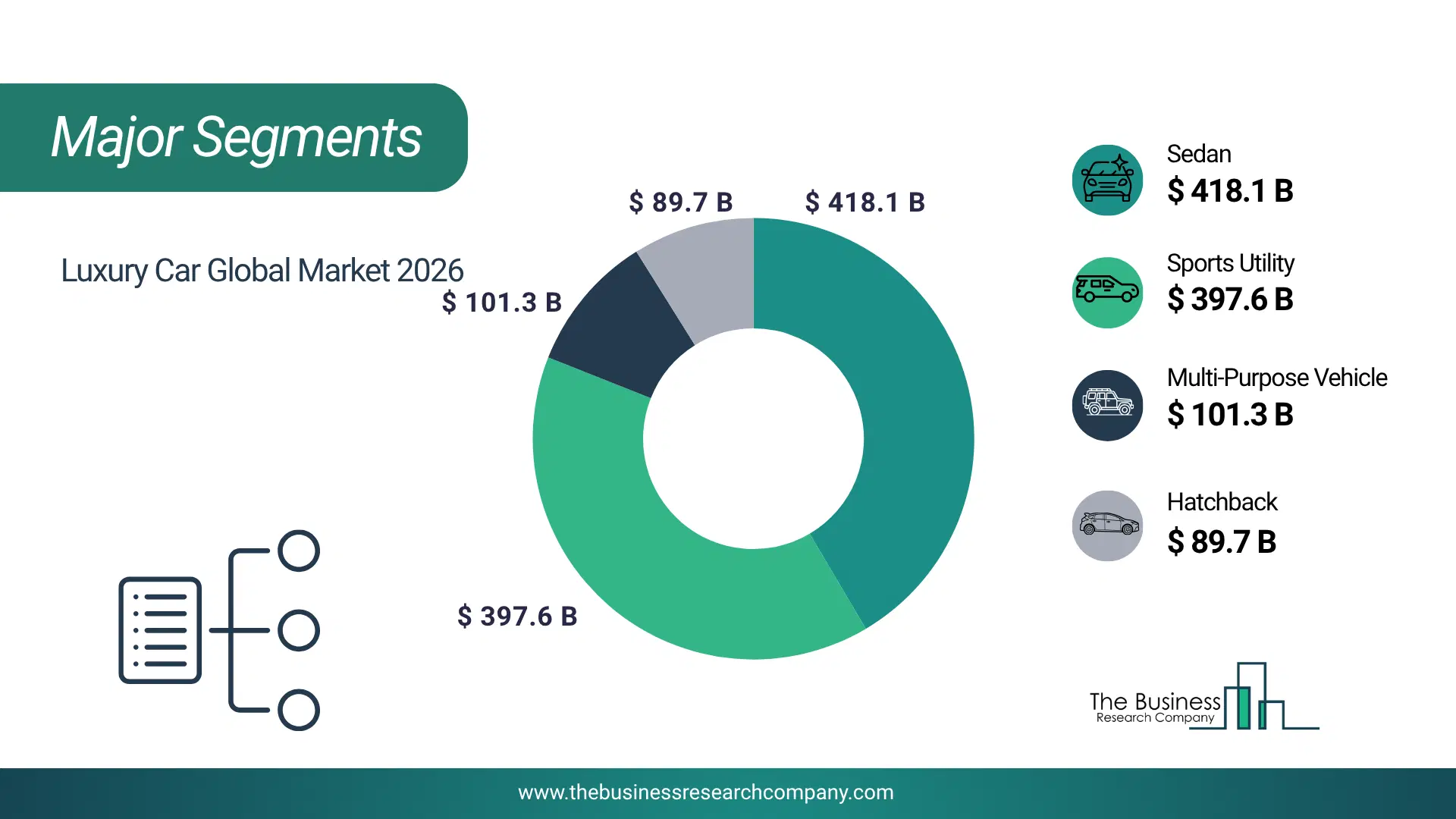
1) By Vehicle: Hatchback, Sedan, Sports Utility, Multi-Purpose Vehicle 2) By Vehicle Class: Entry-Level Luxury, Mid-Level Luxury, Ultra Luxury 3) By Propulsion: Internal Combustion Engine (ICE), Electric 4) By Fuel: Gasoline, Diesel, Electric Subsegments: 1) By Hatchback: Premium Hatchback, Luxury Compact Hatchback 2) By Sedan: Luxury Sedan, Executive Sedan, Sports Sedan 3) By Sports Utility: Luxury, Compact Luxury, Mid-Size Luxury, Full-Size Luxury 4) By Multi-Purpose Vehicle (MPV): Luxury, Premium The top segments in the luxury car market will be: • Sedan will reach $418.12 billion by 2030. • Sports Utility will reach $397.58 billion by 2030. • Multi-Purpose Vehicle will reach $101.27 billion by 2030. • Hatchback will reach $89.71 billion by 2030.What Is The Driver Of The Luxury Car Market?
The growing trend of electric luxury vehicles is expected to propel the growth of the luxury car market going forward. Electric luxury vehicles refer to a vehicle that utilizes exclusively battery-stored energy to be pushed by one or more electric traction motors. Rising environmental awareness and a desire for cutting-edge technology and innovation in luxury automobiles drive the rising demand for electric luxury cars. The surge in popularity of electric luxury automobiles is the main factor driving up demand in the luxury car market. For instance, in January 2024, according to the U.S. Department of Energy, a US-based government agency, in December 2023, plug-in electric vehicles accounted for 9.8% of all light-duty vehicle sales, up from 7.8% in December 2022. Throughout 2023, plug-in vehicles consistently made up at least 8% of monthly sales, whereas in 2022 their share ranged between 5.5% and 7.8%. Therefore, the growing trend of electric luxury vehicles is driving the growth of the luxury car industry.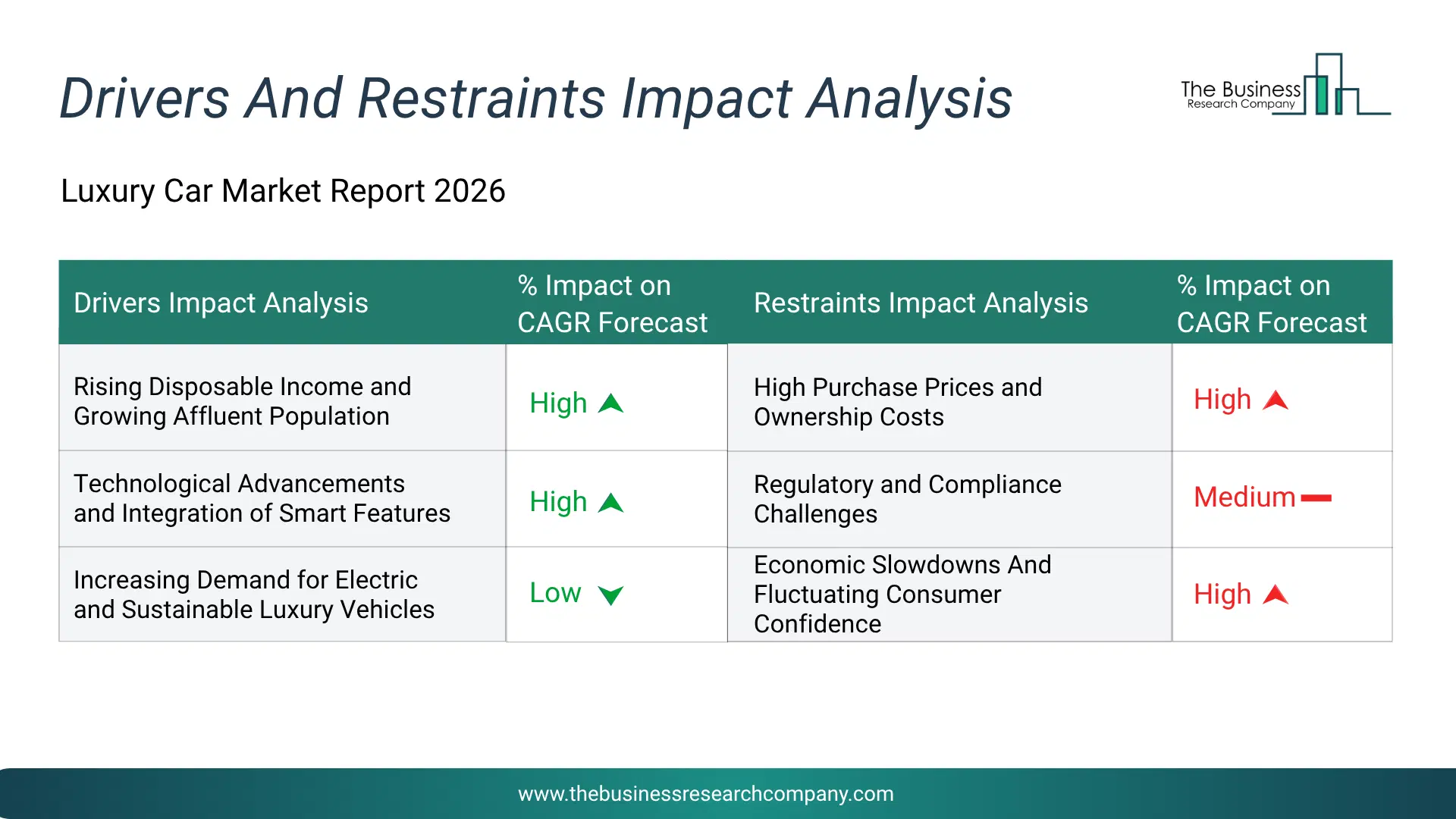
Infographic Chart Showing Key Market Drivers Analysis And Restraints For Luxury Car Market
The chart presents an impact analysis of key drivers and restraints, quantifying their relative influence on the market's growth rate and helping assess the balance between growth enablers and limiting factors. This chart offers a high-level perspective; the full report contains more detailed insights.
How Will The Drivers Impact Growth In The Global Luxury Car Market?
• Rising Disposable Income and Growing Affluent Population (High) – During the forecast period, the rising disposable income and growing affluent population is expected to become a key growth driver for the luxury car market by 2030. The increasing disposable income and the expansion of the affluent population globally are primary drivers for the luxury car market. Consumers with higher purchasing power are seeking vehicles that offer superior comfort, advanced technology, premium design, and brand prestige. Emerging economies such as china, india, and southeast asia are witnessing a growing number of high -net -worth individuals, fueling demand for luxury sedans, suvs, and electric luxury vehicles. Additionally, rising aspirations and lifestyle changes among millennials and younger consumers are contributing to sustained growth in premium vehicle sales. • Technological Advancements and Integration of Smart Features (High) – During the forecast period, the technological advancements and integration of smart features is expected to emerge as a major factor driving the expansion of the luxury car market by 2030. Luxury car buyers increasingly demand advanced technological features, including autonomous driving capabilities, connected car systems, ai-assisted driver aids, infotainment, and electric powertrains. Innovations such as adaptive cruise control, lane-keeping assistance, augmented reality dashboards, and premium electric vehicle platforms differentiate luxury cars from standard vehicles. Automotive manufacturers are investing heavily in r&d to introduce cutting-edge features that enhance comfort, safety, and performance. The rapid pace of technological innovation continues to attract tech-savvy consumers and drives premium vehicle adoption worldwide. • Increasing Demand for Electric and Sustainable Luxury Vehicles (Low) – During the forecast period, the increasing demand for electric and sustainable luxury vehicles are expected to act as a key growth catalyst for the luxury car market by 2030. With growing environmental concerns and stricter emission regulations, luxury car buyers are increasingly gravitating toward electric vehicles (evs) and hybrid options. Manufacturers such as mercedes-benz, bmw, audi, and tesla are introducing premium evs that combine high performance, luxury interiors, and sustainable technology. Governments are incentivizing ev adoption through subsidies, tax benefits, and supportive infrastructure, further boosting demand. The shift toward electric and sustainable mobility is shaping consumer preferences in the luxury segment, acting as a strong driver for the market over the forecast period.How Will The Restraints Impact Growth In The Global Luxury Car Market?
• High Purchase Prices and Ownership Costs (High) – During the forecast period, the luxury cars are associated with high upfront costs, insurance premiums, maintenance, and depreciation, which can deter potential buyers in price-sensitive markets. Even with growing disposable incomes, the affordability of luxury vehicles remains a concern for certain consumer segments, especially in emerging economies. High ownership costs act as a key restraint, potentially limiting market expansion and prompting consumers to consider leasing options or certified pre-owned vehicles instead of new luxury models. • Regulatory and Compliance Challenges (Medium) – During the forecast period, the luxury car manufacturers face stringent regulations related to safety, emissions, and fuel efficiency across different regions. Compliance with multiple regulatory standards, including crash tests, emission limits, and homologation procedures, increases production costs and can delay product launches. Additionally, changing environmental regulations and regional taxation policies can affect pricing and demand. These compliance requirements act as a restraint, particularly affecting smaller luxury car manufacturers or niche brands that may find it challenging to meet global standards efficiently. • Economic Slowdowns And Fluctuating Consumer Confidence (High) – During the forecast period, the economic slowdowns and fluctuating consumer confidence act as a restraint for the luxury car market by reducing discretionary spending on high-value purchases. During periods of economic uncertainty, consumers tend to delay or avoid buying premium vehicles, prioritizing essential expenses instead. This leads to lower demand cycles and slower sales growth for luxury car manufacturers. Additionally, reduced business profitability and tighter financing conditions further impact high-net-worth individuals’ purchasing decisions. Overall, macroeconomic instability limits consistent market expansion for luxury vehicles.Key Players In The Global Luxury Car Market
Major companies operating in the luxury car market report include Mercedes-Benz Group AG, BMW AG, Audi AG, Tesla Inc., Volvo Car Corporation, Jaguar Land Rover Automotive PLC, Rolls-Royce Motor Cars, Bentley Motors Limited, Ferrari N.V., Aston Martin Lagonda Group Limited, Lamborghini, Maserati, Porsche AG, Genesis Motor, Lexus, Acura, Infiniti, McLaren Automotive, Bugatti Automobiles, Pagani Automobili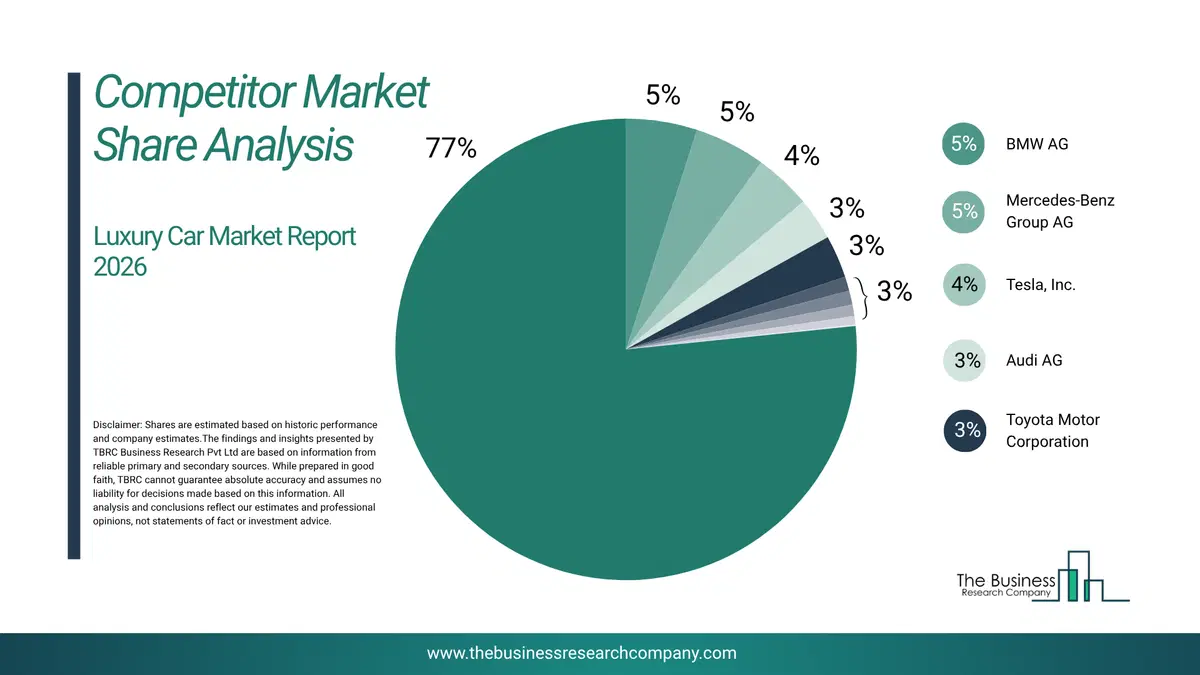
This chart is for illustrative purposes; the full report includes a detailed competitor analysis and comprehensive overview of the top 10 companies in the market.
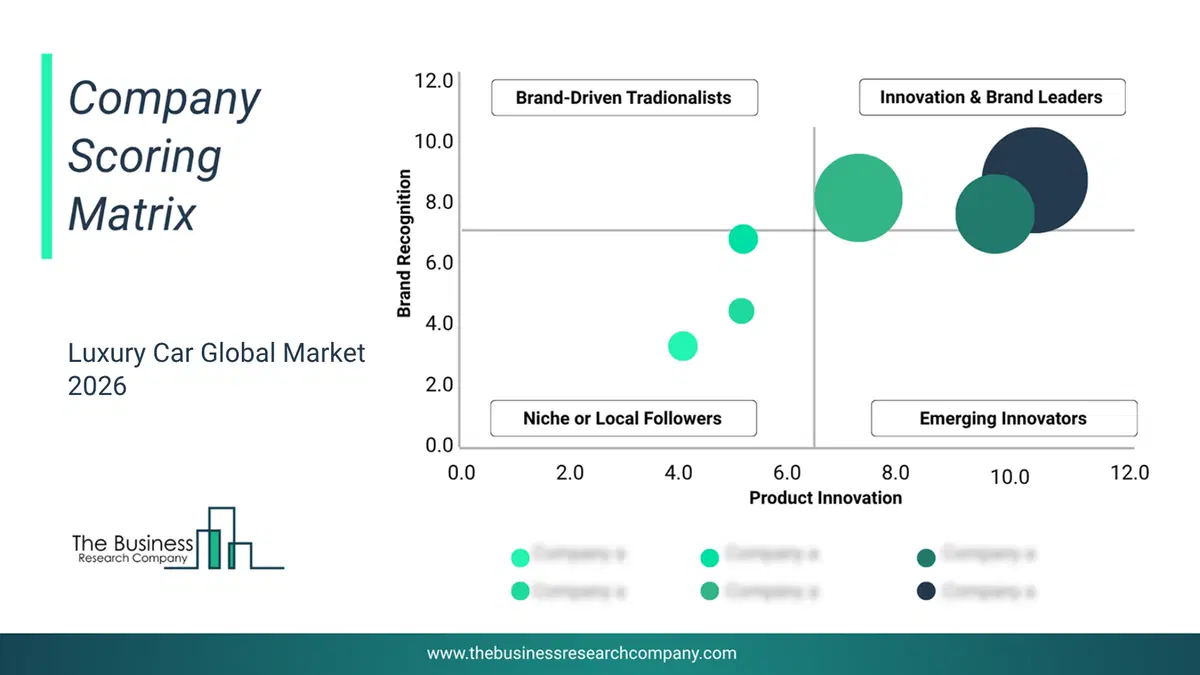
This chart maps companies by product innovation and brand strength, with bubble size indicating relative revenue, helping identify market leaders, challengers, and niche players. This is an illustrative chart; the full report provides a complete and accurate competitive analysis.
Global Luxury Car Market Trends and Insights
Major companies operating in the luxury car market are focusing on developing innovative solutions, such as Level 3 conditionally automated driving systems, to meet the rising demand for safer, more convenient, and tech-rich premium mobility as affluent buyers seek hands-free driving in traffic, seamless connectivity, and differentiated in-car experiences. Level 3 conditionally automated driving means the car drives itself in certain conditions, but the human must be ready to take over when the system requests. For instance, in September 2023, Mercedes-Benz Group AG, a Germany-based luxury automobile manufacturer, launched DRIVE PILOT, a production-ready SAE Level 3 automated driving feature initially available on a limited fleet of EQS Sedan and S-Class luxury models in California and DRIVE PILOT uses an expanded sensor suite with more than 30 sensors, including Valeo LiDAR, multiple radars, surround-view cameras, ultrasonic units, and road-moisture sensors, fused with HERE HD Live Map data and an ultra-precise GPS system that can locate the vehicle within inches, creating redundant 360-degree awareness beyond the capabilities of conventional ADAS. When activated on approved freeway sections and up to specified speeds, the system takes over longitudinal and lateral control so drivers can read, message, or use in-car apps that would normally be blocked, while Mercedes-Benz assumes liability for the driving task under defined conditions, an important differentiation from typical Level 2 luxury. DRIVE PILOT also incorporates robust fail-safe logic that monitors driver readiness, issues escalating takeover requests, and if the driver fails to respond, executes a controlled stop with hazard lights and emergency calling, reinforcing safety and brand trust in high-end segments.What Are Latest Mergers And Acquisitions In The Luxury Car Market?
In May 2024, Huawei Technologies Co., Ltd., a China-based technology company, partnered with Jianghuai Automobile Group, to develop a new luxury car aimed at competing with high-end models such as Maybach and Phantom. With this partnership, Huawei and Jianghuai Automobile Group aim to combine Huawei’s advanced smart automotive technologies with Jianghuai’s vehicle manufacturing expertise to create a premium electric vehicle offering enhanced connectivity, intelligent driving features, and luxury design. Jianghuai Automobile Group is a China-based automotive company that specializes in manufacturing electric and conventional vehicles across passenger and commercial segments.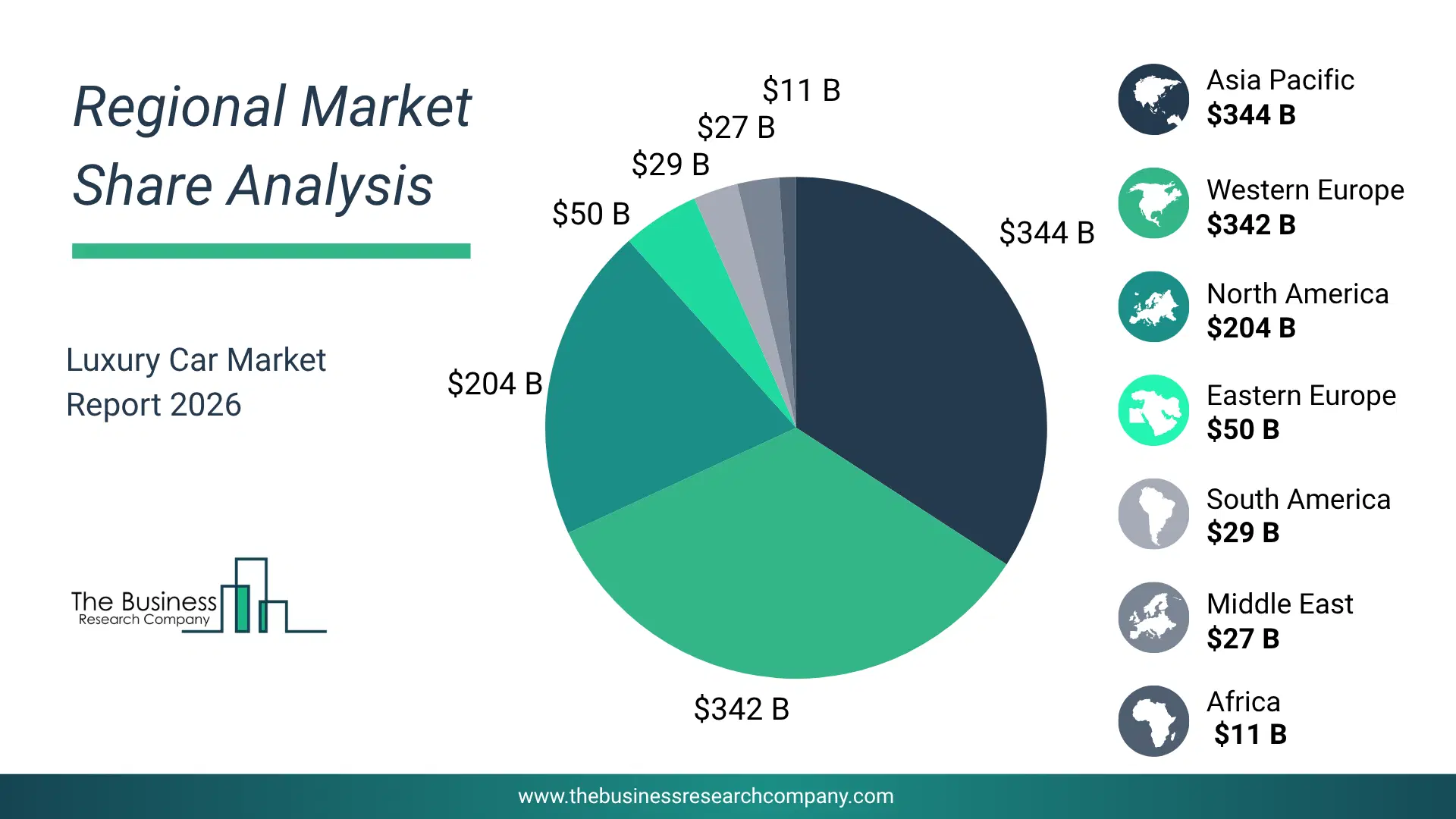
Regional Outlook
Asia-Pacific was the largest region in the luxury car market in 2025. The regions covered in this market report include Asia-Pacific, South East Asia, Western Europe, Eastern Europe, North America, South America, Middle East, Africa. The countries covered in this market report include Australia, Brazil, China, France, Germany, India, Indonesia, Japan, Taiwan, Russia, South Korea, UK, USA, Canada, Italy, SpainWhat Defines the Luxury Car Market?
The luxury car market consists of sales of luxury SUVs or crossovers, full-size luxury sedans, mid-size luxury and compact luxury cars. Values in this market are ‘factory gate’ values, that is the value of goods sold by the manufacturers or creators of the goods, whether to other entities (including downstream manufacturers, wholesalers, distributors, and retailers) or directly to end customers. The value of goods in this market includes related services sold by the creators of the goods.How is Market Value Defined and Measured?
The market value is defined as the revenues that enterprises gain from the sale of goods and/or services within the specified market and geography through sales, grants, or donations in terms of the currency (in USD unless otherwise specified). The revenues for a specified geography are consumption values that are revenues generated by organizations in the specified geography within the market, irrespective of where they are produced. It does not include revenues from resales along the supply chain, either further along the supply chain or as part of other products.
This chart presents market attractiveness based on a quantitative evaluation of growth, competition, strategic alignment, and risk, offering a clear view of opportunity areas for decision-making. This chart is for illustrative purposes; the full report contains the complete analysis.

This chart highlights the Total Addressable Market (TAM) by estimating the maximum revenue opportunity using an assumption-driven approach, supporting strategic planning and opportunity sizing across markets. The chart is illustrative; the full report provides a more comprehensive analysis.
What Key Data and Analysis Are Included in the Luxury Car Market Report 2026?
The luxury car market research report is one of a series of new reports from The Business Research Company that provides market statistics, including industry global market size, regional shares, competitors with the market share, detailed market segments, market trends and opportunities, and any further data you may need to thrive in the luxury car industry. The market research report delivers a complete perspective of everything you need, with an in-depth analysis of the current and future state of the industry.Luxury Car Market Report Forecast Analysis
| Report Attribute | Details |
|---|---|
| Market Size Value In 2026 | $759.11 billion |
| Revenue Forecast In 2030 | $1006.68 billion |
| Growth Rate | CAGR of 6.8% from 2026 to 2030 |
| Base Year For Estimation | 2025 |
| Actual Estimates/Historical Data | 2020-2025 |
| Forecast Period | 2026 - 2030 |
| Market Representation | Revenue in USD Billion and CAGR from 2026 to 2030 |
| Segments Covered | Vehicle, Vehicle Class, Propulsion, Fuel |
| Regional Scope | Asia-Pacific, Western Europe, Eastern Europe, North America, South America, Middle East, Africa |
| Country Scope | The countries covered in the report are Australia, Brazil, China, France, Germany, India, Indonesia, Japan, Taiwan, Russia, South Korea, UK, USA, Canada, Italy, Spain. |
| Key Companies Profiled | Mercedes-Benz Group AG, BMW AG, Audi AG, Tesla Inc., Volvo Car Corporation, Jaguar Land Rover Automotive PLC, Rolls-Royce Motor Cars, Bentley Motors Limited, Ferrari N.V., Aston Martin Lagonda Group Limited, Lamborghini, Maserati, Porsche AG, Genesis Motor, Lexus, Acura, Infiniti, McLaren Automotive, Bugatti Automobiles, Pagani Automobili |
| Customization Scope | Request for Customization |
| Pricing And Purchase Options | Explore Purchase Options |