
Medical Digital Imaging Systems Market Report 2026
Global Outlook – By Type (Magnetic Resonance Imaging (MRI), X-Ray, Ultrasound, Computed Tomography (CT), Nuclear Imaging, Mammography), By Technology (2D, 3D And 4D), By End-User (Hospitals, Diagnostic Centers, Specialty Centers, Other End-Users) – Market Size, Trends, Strategies, and Forecast to 2030
Medical Digital Imaging Systems Market Overview
• Medical Digital Imaging Systems market size has reached to $23.13 billion in 2025 • Expected to grow to $40.08 billion in 2030 at a compound annual growth rate (CAGR) of 11.6% • Growth Driver: Rising Prevalence Of Chronic Conditions Driving Growth In The Medical Digital Imaging Systems Market • Market Trend: Advancements In AI-Enhanced Imaging Technologies Propel Growth In The Medical Digital Imaging Systems Market • North America was the largest region in 2025 and Asia-Pacific is the fastest growing region.What Is Covered Under Medical Digital Imaging Systems Market?
A medical digital imaging system refers to a suite of technologies used for visualizing the interior of a body for clinical analysis, diagnosis, and treatment. It replaces traditional film-based imaging with digital methods, providing faster and more accurate results, better image storage, and enhanced image processing capabilities. The main medical digital imaging systems are magnetic resonance imaging (MRI), x-ray, ultrasound, computed tomography (CT), nuclear imaging, and mammography. Magnetic resonance imaging (MRI) uses strong magnetic fields and radio waves to produce detailed images of the organs and tissues within the body. It uses various technologies such as 2D, 3D, and 4D, and it is used by several end-users, including hospitals, diagnostic centers, specialty centers, and others.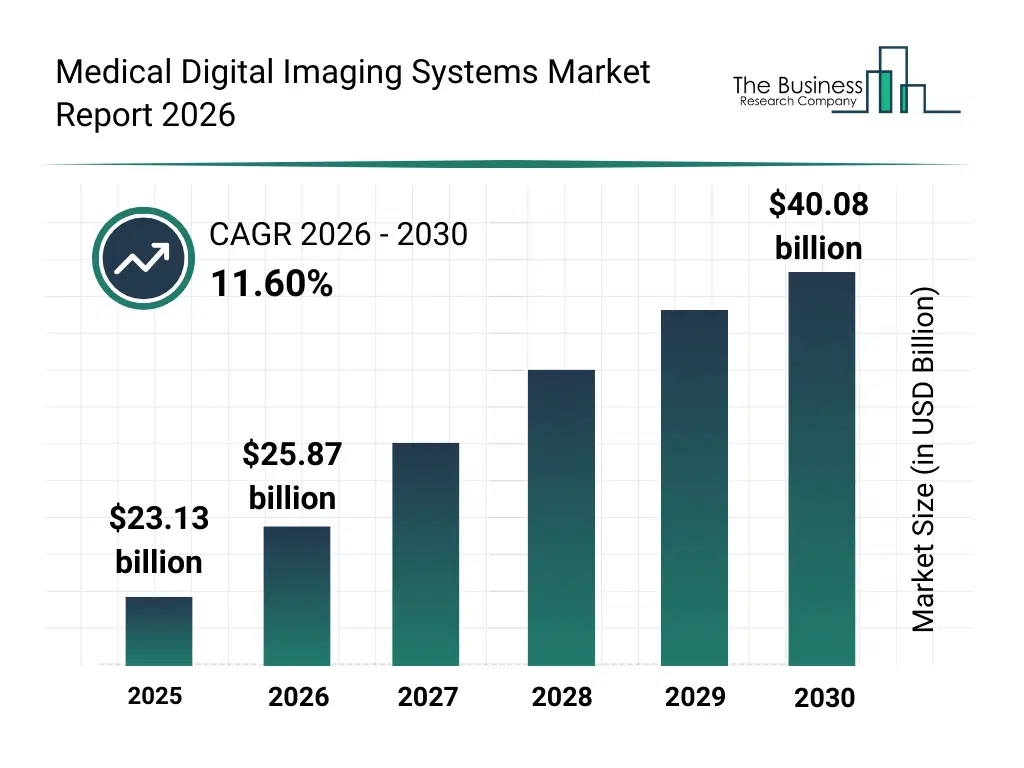
What Is The Medical Digital Imaging Systems Market Size and Share 2026?
The medical digital imaging systems market size has grown rapidly in recent years. It will grow from $23.13 billion in 2025 to $25.87 billion in 2026 at a compound annual growth rate (CAGR) of 11.9%. The growth in the historic period can be attributed to high cost of conventional film-based imaging, limited access to advanced imaging in developing regions, slow adoption of digital radiography, lack of integration with hospital information systems, increasing incidence of chronic diseases.What Is The Medical Digital Imaging Systems Market Growth Forecast?
The medical digital imaging systems market size is expected to see rapid growth in the next few years. It will grow to $40.08 billion in 2030 at a compound annual growth rate (CAGR) of 11.6%. The growth in the forecast period can be attributed to advancements in ai-assisted diagnostics, expansion of digital imaging infrastructure in hospitals, increasing government healthcare initiatives, rising demand for minimally invasive procedures, growing adoption of hybrid imaging modalities (pet/ct, pet/mri). Major trends in the forecast period include increasing adoption of 3D and 4d imaging systems, rising demand for portable and handheld imaging devices, integration of imaging systems with electronic health records (ehr), enhanced focus on patient safety and radiation dose reduction, growing use of imaging systems in early disease detection and screening.
Global Medical Digital Imaging Systems Market Segmentation
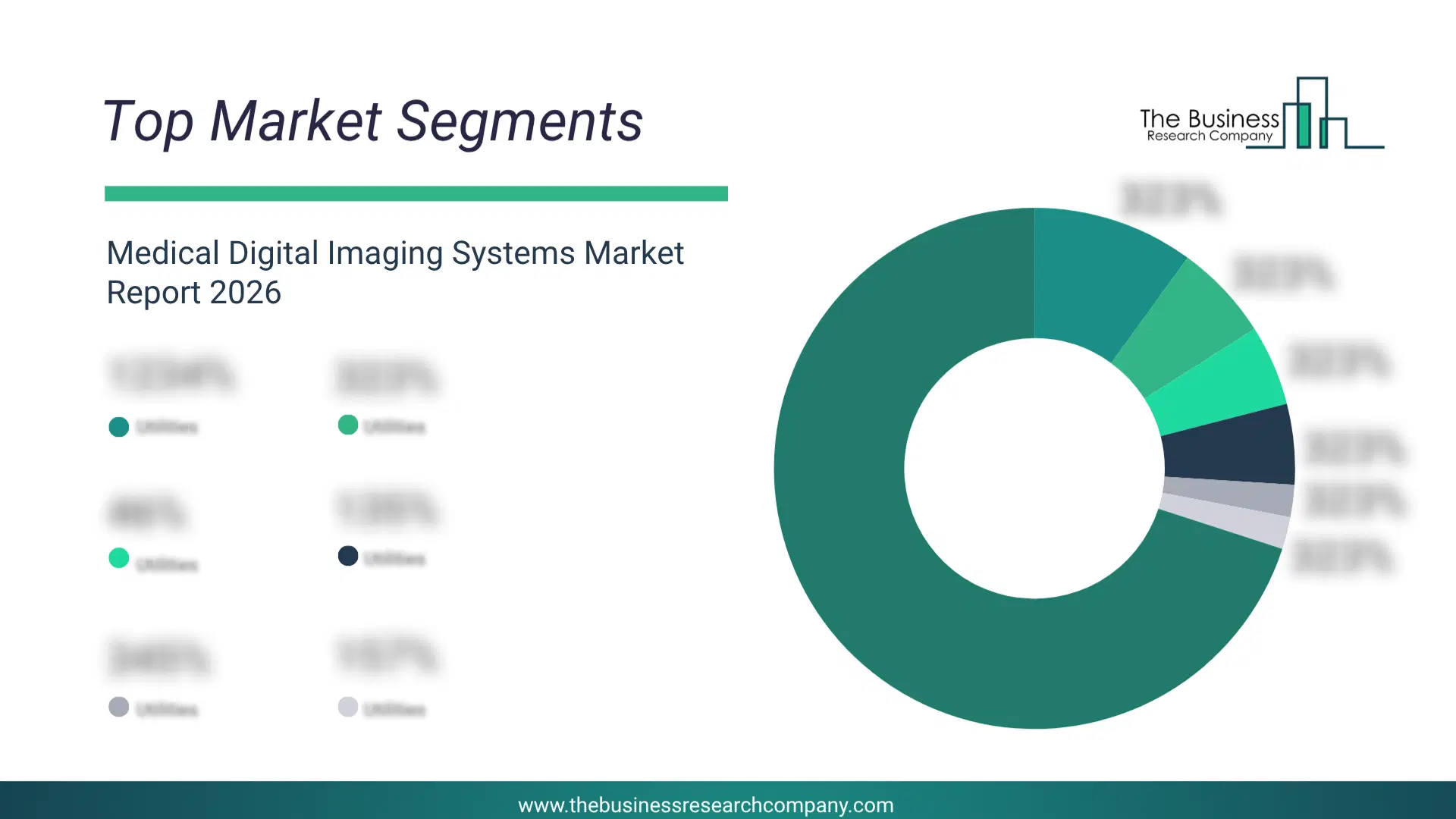
1) By Type: Magnetic Resonance Imaging (MRI), X-Ray, Ultrasound, Computed Tomography (CT), Nuclear Imaging, Mammography 2) By Technology: 2D, 3D And 4D 3) By End-User: Hospitals, Diagnostic Centers, Specialty Centers, Other End-Users Subsegments: 1) By Magnetic Resonance Imaging (MRI): Closed MRI Systems, Open MRI Systems, Functional MRI (fMRI), MRI-Guided Interventions 2) By X-Ray: Digital X-Ray Systems, Computed Radiography (CR), Fluoroscopy, Portable X-Ray Systems 3) By Ultrasound: 2D Ultrasound, 3D Or 4D Ultrasound, Doppler Ultrasound, Portable Or Handheld Ultrasound Devices 4) By Computed Tomography (CT): Helical Or Spiral CT, Multi-Slice CT Scanners, CT Angiography, Cone Beam CT 5) By Nuclear Imaging: Positron Emission Tomography (PET), Single Photon Emission Computed Tomography (SPECT), Hybrid Imaging Systems (PET/CT), Radiopharmaceuticals 6) By Mammography: Digital Mammography, 3D Digital Mammography (Tomosynthesis), Screening Mammography, Diagnostic MammographyWhat Is The Driver Of The Medical Digital Imaging Systems Market?
The increasing number of chronic conditions is expected to propel the growth of the medical digital imaging systems market going forward. Chronic conditions are long-lasting health issues that persist over time and require ongoing medical management, such as diabetes, cardiovascular diseases, and respiratory disorders. The prevalence of chronic diseases is a complex and multifaceted issue influenced by urbanization, genetic predisposition, and the adoption of sedentary lifestyles. Medical digital imaging systems help identify subtle changes in tissues and organs, allowing for more accurate diagnoses. It will enable physicians to compare past and present scans, identifying trends and patterns. For instance, in February 2024, according to the World Health Organization, a Switzerland-based agency of the United Nations, it is projected that over 35 million new cancer cases will arise by 2050, marking a 77% increase compared to the estimated 20 million cases in 2022. Therefore, the increasing chronic conditions drive the medical digital imaging systems industry.Key Players In The Global Medical Digital Imaging Systems Market
Major companies operating in the medical digital imaging systems market are Samsung Electronics Co. Ltd., Hitachi Ltd., Siemens AG, Koninklijke Philips N.V., GE HealthCare Technologies Inc., Shimadzu Corporation, Hologic Inc., Mindray Medical International Limited, Bruker Corporation, Carestream Health Inc., Barco NV, Analogic Corporation, Esaote SpA, Canon Medical Systems Corporation, Ampronix LLC, Pie Medical Imaging B.V., Agfa-Gevaert Group, Fujifilm Corporation, United Imaging Healthcare, Neusoft Medical Systems, Ziehm Imaging AG, Planmed Oy, Allengers Medical Systems, CurveBeam AI, United States Medical Imaging Systems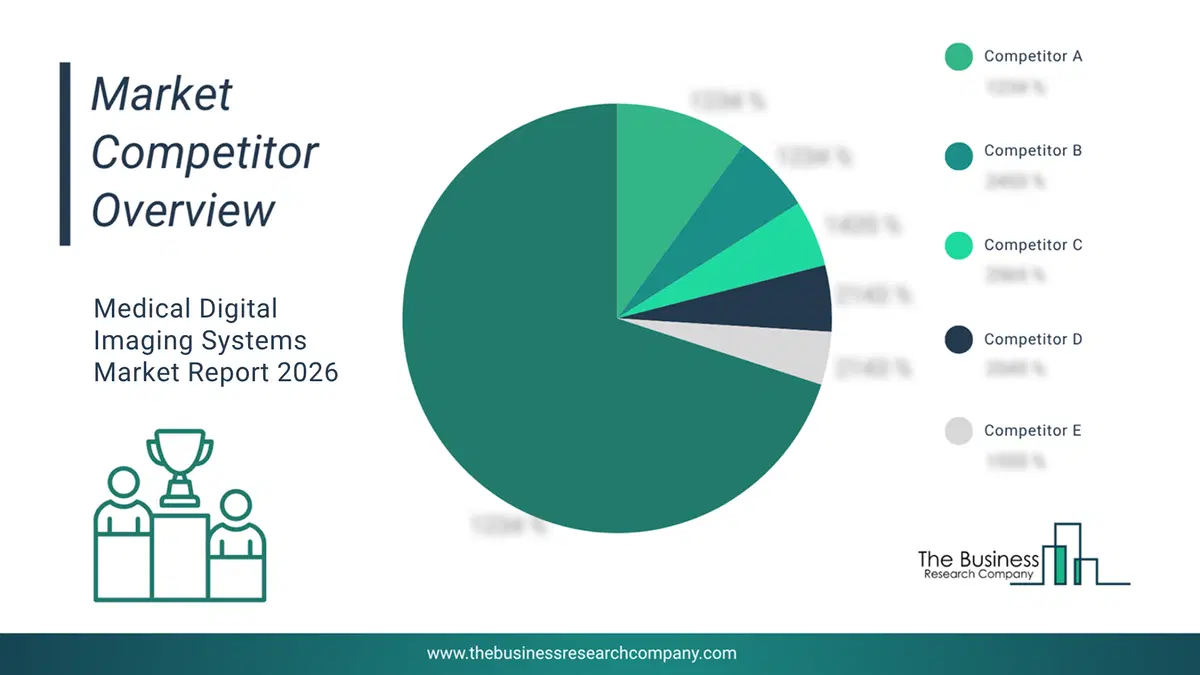
This chart is for illustrative purposes; the full report includes a detailed competitor analysis and comprehensive overview of the top 10 companies in the market.
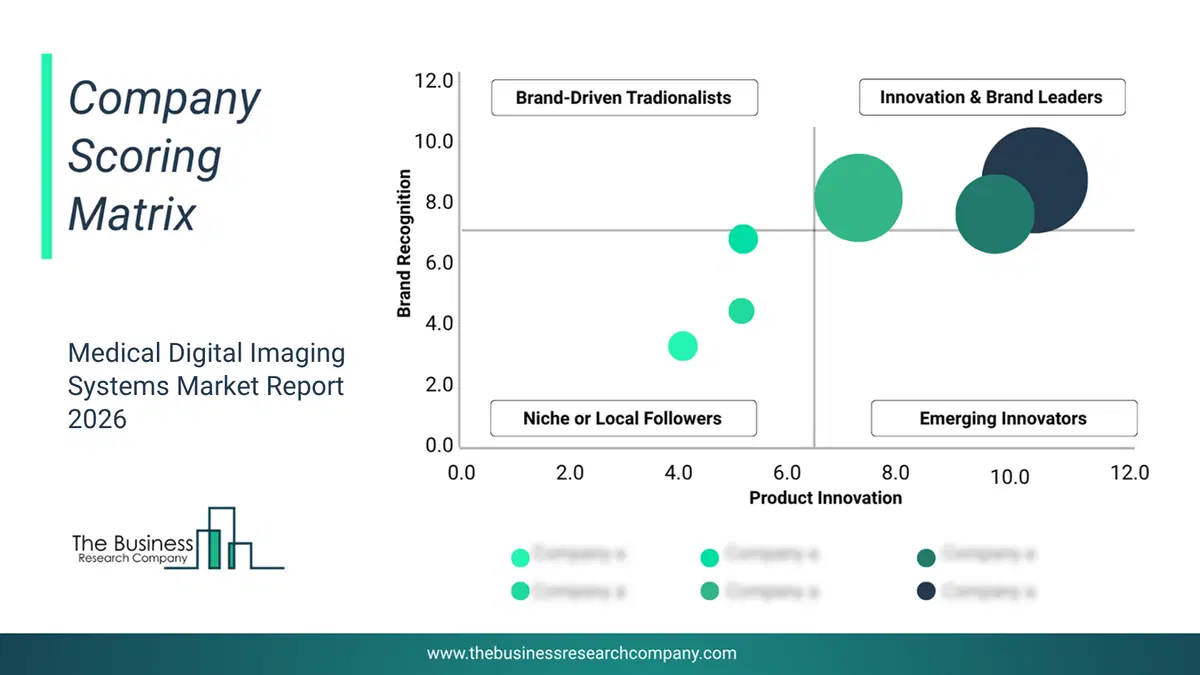
This chart maps companies by product innovation and brand strength, with bubble size indicating relative revenue, helping identify market leaders, challengers, and niche players. This is an illustrative chart; the full report provides a complete and accurate competitive analysis.
Global Medical Digital Imaging Systems Market Trends and Insights
Major companies operating in the medical digital imaging systems market are developing AI-enhanced imaging technologies to improve diagnostic accuracy, speed up image analysis, and assist in early disease detection. AI-enhanced imaging integrates artificial intelligence into digital imaging systems to improve diagnostic accuracy and efficiency. For instance, in April 2024, GE Healthcare, a U.S.-based medical technology company, introduced the AI-enhanced voluson signature 20 and 18 ultrasound systems designed specifically to advance women's health imaging. These systems utilize AI to enhance image quality, automatically detect fetal structures, and provide faster, more accurate measurements, thereby reducing scan times and improving diagnostic confidence. This innovation highlights the growing role of AI in specialized medical imaging, driving more precise and efficient healthcare solutions for women.What Are Latest Mergers And Acquisitions In The Medical Digital Imaging Systems Market?
In April 2024, Shimadzu Medical Systems USA, a US-based medical diagnostic equipment provider, acquired California X-Ray Imaging Services Inc. for an undisclosed amount. This acquisition aims to bolster Shimadzu's service and support capabilities, providing comprehensive medical imaging solutions to a broader customer base. By integrating California X-Ray Imaging Services' expertise, Shimadzu seeks to improve its market presence and offer advanced imaging technologies to healthcare providers. California X-ray Imaging Services Inc. is a US-based provider of quality diagnostic medical imaging products and services to the medical community.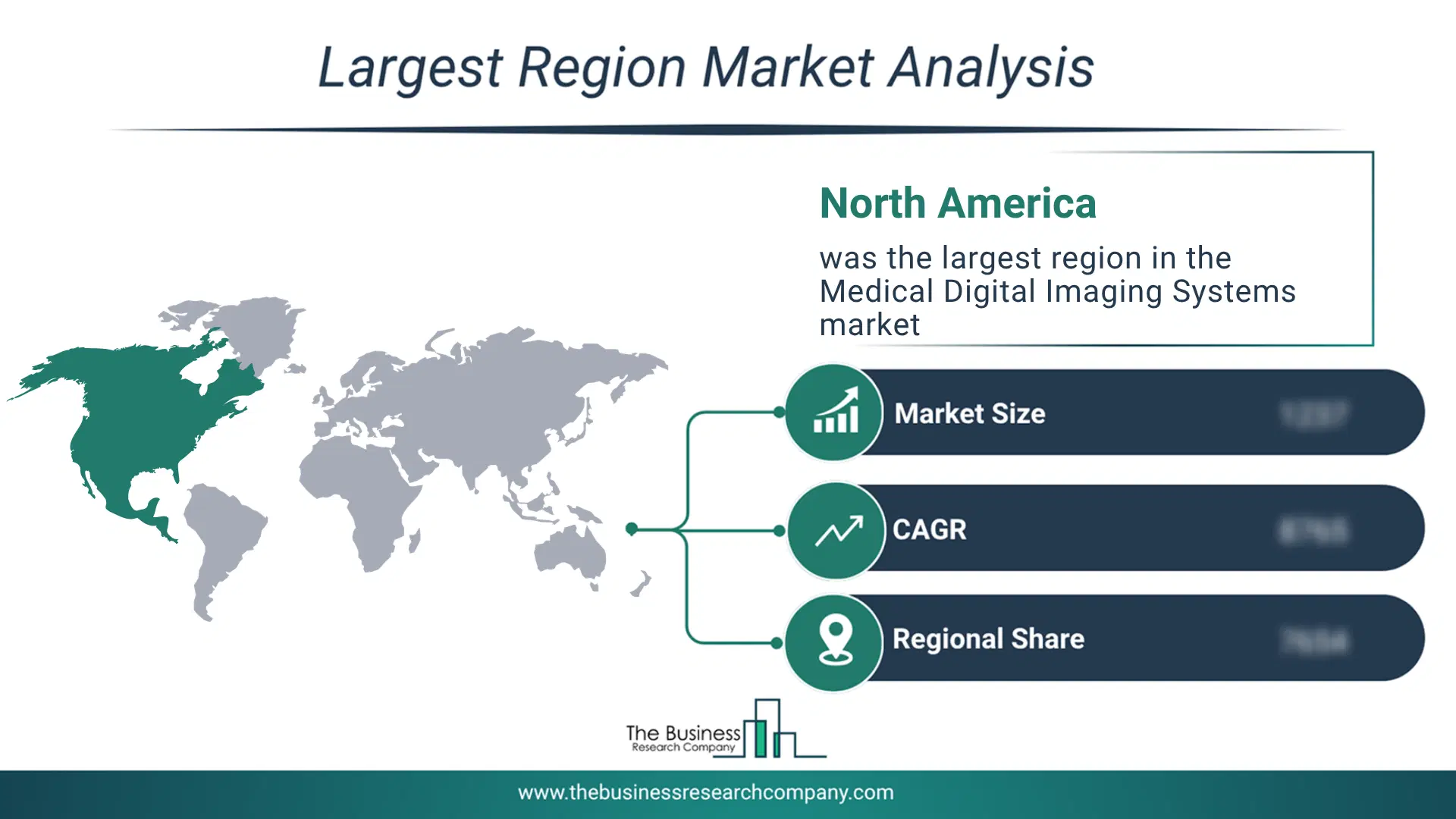
Regional Outlook
North America was the largest region in the medical digital imaging systems market in 2025. Asia-Pacific is expected to be the fastest-growing region in the forecast period. The regions covered in this market report are Asia-Pacific, South East Asia, Western Europe, Eastern Europe, North America, South America, Middle East, Africa. The countries covered in this market report are Australia, Brazil, China, France, Germany, India, Indonesia, Japan, Taiwan, Russia, South Korea, UK, USA, Canada, Italy, SpainWhat Defines the Medical Digital Imaging Systems Market?
The medical digital imaging systems market consists of revenues earned by entities by providing services such as system installation and integration, preventive maintenance, software upgrades and customization and image analysis. The market value includes the value of related goods sold by the service provider or included within the service offering. The medical digital imaging system market also includes sales of fluoroscopy systems, picture archiving and communication systems, digital radiography detectors, mobile and portable imaging systems. Values in this market are ‘factory gate’ values, that is the value of goods sold by the manufacturers or creators of the goods, whether to other entities (including downstream manufacturers, wholesalers, distributors and retailers) or directly to end customers. The value of goods in this market includes related services sold by the creators of the goods.How is Market Value Defined and Measured?
The market value is defined as the revenues that enterprises gain from the sale of goods and/or services within the specified market and geography through sales, grants, or donations in terms of the currency (in USD unless otherwise specified). The revenues for a specified geography are consumption values that are revenues generated by organizations in the specified geography within the market, irrespective of where they are produced. It does not include revenues from resales along the supply chain, either further along the supply chain or as part of other products.
This chart presents market attractiveness based on a quantitative evaluation of growth, competition, strategic alignment, and risk, offering a clear view of opportunity areas for decision-making. This chart is for illustrative purposes; the full report contains the complete analysis.

This chart highlights the Total Addressable Market (TAM) by estimating the maximum revenue opportunity using an assumption-driven approach, supporting strategic planning and opportunity sizing across markets. The chart is illustrative; the full report provides a more comprehensive analysis.
What Key Data and Analysis Are Included in the Medical Digital Imaging Systems Market Report 2026?
The medical digital imaging systems market research report is one of a series of new reports from The Business Research Company that provides market statistics, including industry global market size, regional shares, competitors with the market share, detailed market segments, market trends and opportunities, and any further data you may need to thrive in the medical digital imaging systems industry. The market research report delivers a complete perspective of everything you need, with an in-depth analysis of the current and future state of the industry.Medical Digital Imaging Systems Market Report Forecast Analysis
| Report Attribute | Details |
|---|---|
| Market Size Value In 2026 | $25.87 billion |
| Revenue Forecast In 2030 | $40.08 billion |
| Growth Rate | CAGR of 11.6% from 2026 to 2030 |
| Base Year For Estimation | 2025 |
| Actual Estimates/Historical Data | 2020-2025 |
| Forecast Period | 2026 - 2030 |
| Market Representation | Revenue in USD Billion and CAGR from 2026 to 2030 |
| Segments Covered | Type, Technology, End-User |
| Regional Scope | Asia-Pacific, Western Europe, Eastern Europe, North America, South America, Middle East, Africa |
| Country Scope | The countries covered in the report are Australia, Brazil, China, France, Germany, India, Indonesia, Japan, Taiwan, Russia, South Korea, UK, USA, Canada, Italy, Spain. |
| Key Companies Profiled | Samsung Electronics Co. Ltd., Hitachi Ltd., Siemens AG, Koninklijke Philips N.V., GE HealthCare Technologies Inc., Shimadzu Corporation, Hologic Inc., Mindray Medical International Limited, Bruker Corporation, Carestream Health Inc., Barco NV, Analogic Corporation, Esaote SpA, Canon Medical Systems Corporation, Ampronix LLC, Pie Medical Imaging B.V., Agfa-Gevaert Group, Fujifilm Corporation, United Imaging Healthcare, Neusoft Medical Systems, Ziehm Imaging AG, Planmed Oy, Allengers Medical Systems, CurveBeam AI, United States Medical Imaging Systems |
| Customization Scope | Request for Customization |
| Pricing And Purchase Options | Explore Purchase Options |