
Metal Powder Market Report 2026
Global Outlook – By Type (Ferrous, Non-Ferrous, Other Types), By Process (Atomization, Reduction Of Compounds, Electrolysis, Other Processes), By Application (Additive Manufacturing, Powder Metallurgy, Metal Injection Molding, Other Applications), By End-Use Industry (Transportation, Electrical And Electronics, Medical, Chemical And Metallurgical, Defense, Construction, Other End-User Industries) – Market Size, Trends, Strategies, and Forecast to 2030
Metal Powder Market Overview
• Metal Powder market size has reached to $7.99 billion in 2025 • Expected to grow to $11.34 billion in 2030 at a compound annual growth rate (CAGR) of 7.3% • Growth Driver: Surge In Electric Vehicle Demand Boosts Growth Of Metal Powder Market • Market Trend: Advanced Platforms To Maximize Their Profits In The Market • Asia-Pacific was the largest region in 2025.Market Gains By 2030 – Top Opportunities By Segment
Market Gain identifies the most promising market opportunities by highlighting the segments or products expected to generate the highest incremental revenue growth over the next five years.
What Is Covered Under Metal Powder Market?
Metal powders are finely divided or powdered metals that are used in the manufacture of sintered parts, thermal spraying, plastic filling, and other specialized applications. It is utilized in powder metallurgy, which fabricates metal parts and components by heating compressed powdered metals to just below melting temperatures. The main types of metal powders are ferrous, non-ferrous, and others. Ferrous refers to metals that contain iron, such as steel and cast-iron powders, used in applications that require magnetic properties, such as in the production of electromagnetic cores and components. They process involve in production are atomization, reduction of compounds, electrolysis, and others to be used in applications of additive manufacturing, powder metallurgy, metal injection molding, and others. These are applied in industries, including transportation, electrical and electronics, medical, chemical, and metallurgical, defense, construction, and others.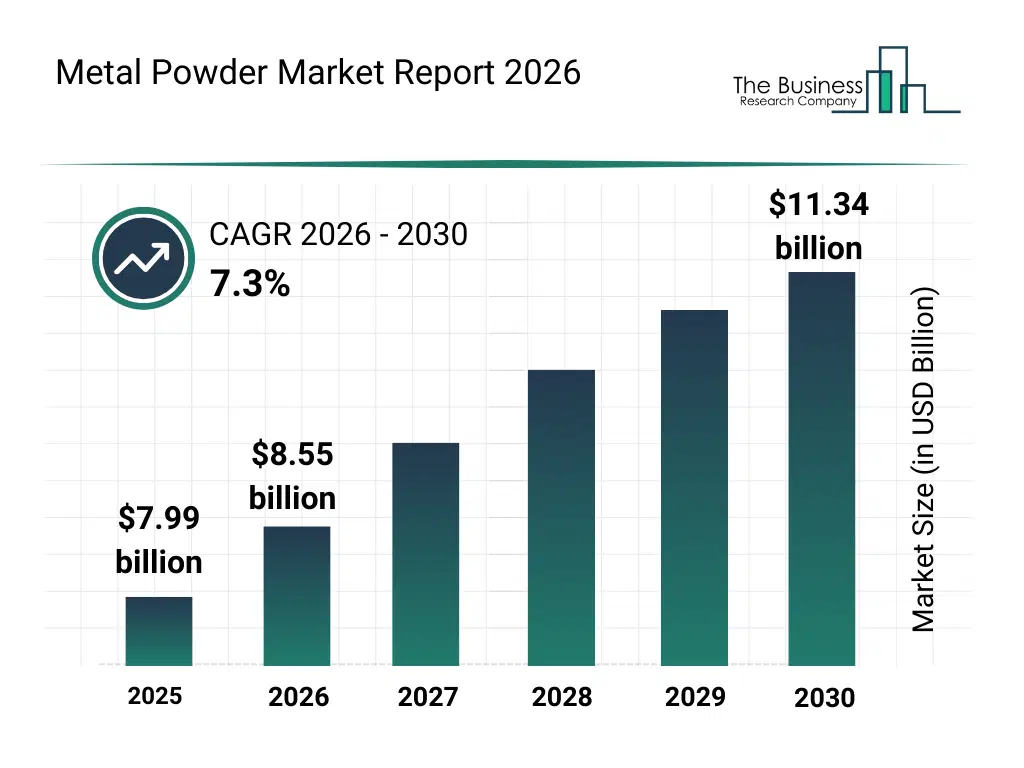
What Is The Metal Powder Market Size and Share 2026?
The metal powder market size has grown strongly in recent years. It will grow from $7.99 billion in 2025 to $8.55 billion in 2026 at a compound annual growth rate (CAGR) of 6.9%. The growth in the historic period can be attributed to growth of automotive manufacturing, rising use of metal powders in electrical and electronics, expansion of medical device production, increasing adoption in chemical and metallurgical applications, growth of defense and construction industries.What Is The Metal Powder Market Growth Forecast?
The metal powder market size is expected to see strong growth in the next few years. It will grow to $11.34 billion in 2030 at a compound annual growth rate (CAGR) of 7.3%. The growth in the forecast period can be attributed to increase in additive manufacturing applications, rising demand for lightweight transportation components, expansion of precision engineering applications, growing use in aerospace and defense segments, adoption of advanced powder production and atomization technologies. Major trends in the forecast period include rising demand for metal powders in additive manufacturing, growing adoption of powder metallurgy for industrial components, increasing use of metal injection molding in precision parts, expansion of specialty and precious metal powders, focus on high-purity and consistent particle size powders.
Global Metal Powder Market Segmentation
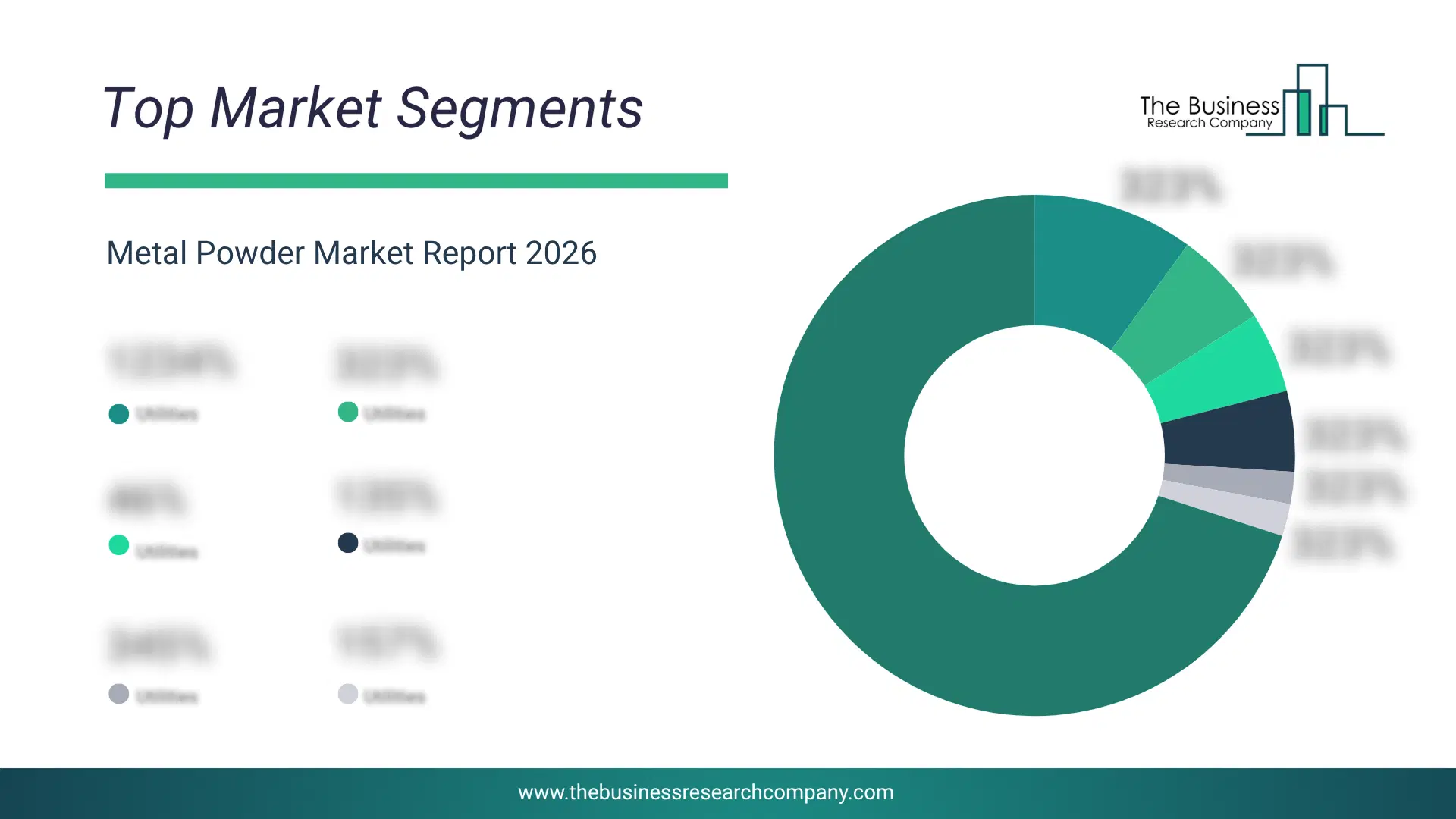
1) By Type: Ferrous, Non-Ferrous, Other Types 2) By Process: Atomization, Reduction Of Compounds, Electrolysis, Other Processes 3) By Application: Additive Manufacturing, Powder Metallurgy, Metal Injection Molding, Other Applications 4) By End-Use Industry: Transportation, Electrical And Electronics, Medical, Chemical And Metallurgical, Defense, Construction, Other End-User Industries Subsegments: 1) By Ferrous: Iron Powder, Steel Powder, Alloy Steel Powder, Stainless Steel Powder 2) By Non-Ferrous: Aluminum Powder, Copper Powder, Titanium Powder, Nickel Powder, Cobalt Powder 3) By Other Types: Precious Metal Powders, Specialty Metal Powders The top segments in the metal powder market will be: • Ferrous will reach $7.53 Billion by 2030. • Non-Ferrous will reach $3.2 Billion by 2030. • Other Types will reach $0.53 Billion by 2030.What Is The Driver Of The Metal Powder Market?
The increasing electric vehicle demand is expected to propel the growth of the metal powder market going forward. Electric vehicles are vehicles that consist of a motor that is powered by electricity stored in batteries, operates on electric motors, and charges its batteries with electricity rather than utilizing fossil fuels such as gasoline or diesel. Metal powder in the electric vehicle is used to create lighter components over traditionally forged alternatives such as battery production, motor production, and 3D printing to create lightweight, high-strength parts. For instance, in July 2023, according to the Internal Energy Agency, a France-based autonomous intergovernmental organization, over 2.3 million electric cars were sold in the first quarter of 2023, a 25% increase from the same period in 2022. By the end of 2023, sales are expected to reach 14 million, representing a 35% year-on-year increase, with growth accelerating in the second half of the year. Therefore, the increased demand for electric vehicles is driving the growth of metal powder.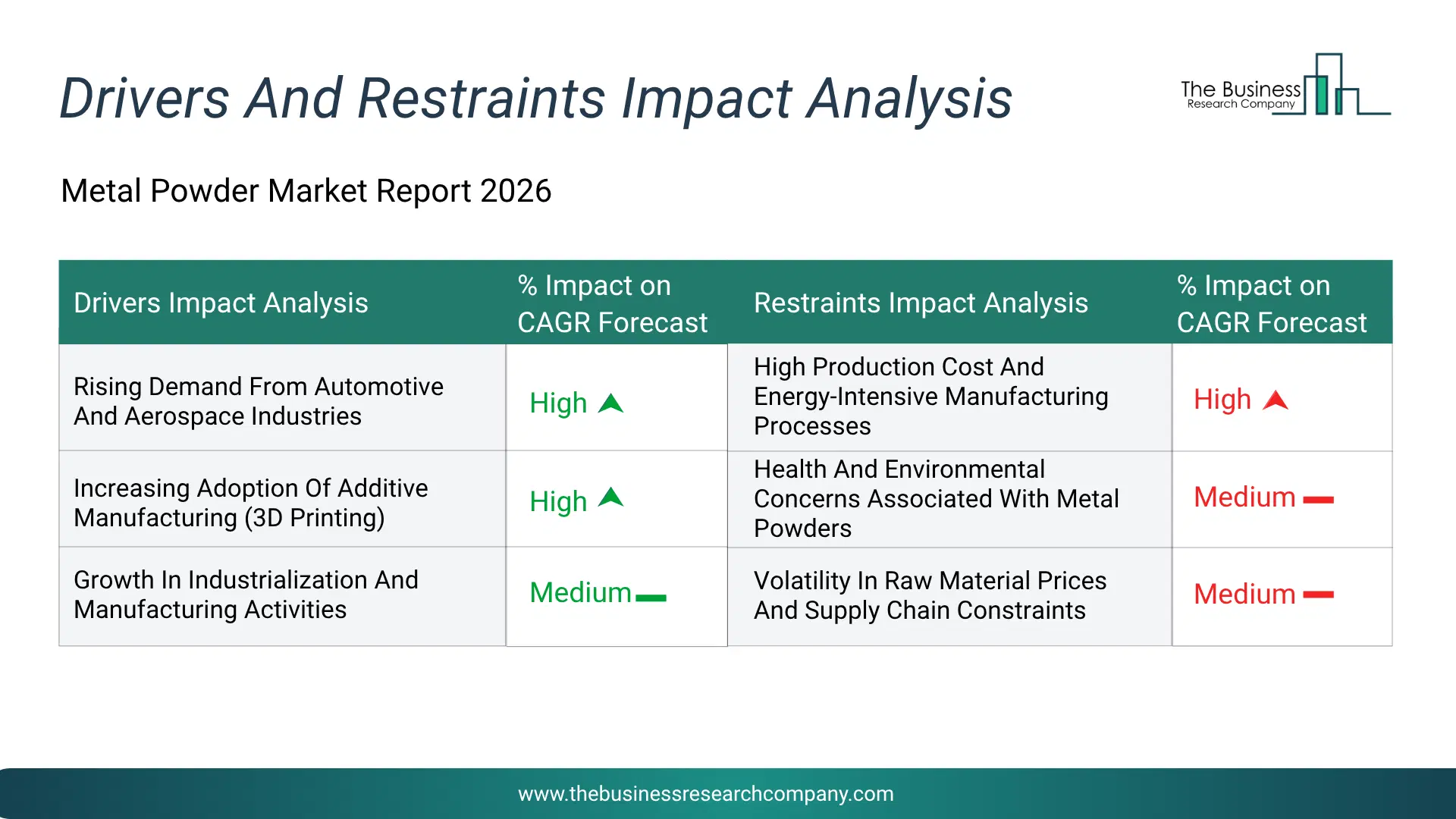
Infographic Chart Showing Key Market Drivers Analysis And Restraints For Metal Powder Market
The chart presents an impact analysis of key drivers and restraints, quantifying their relative influence on the market's growth rate and helping assess the balance between growth enablers and limiting factors. This chart offers a high-level perspective; the full report contains more detailed insights.
How Will The Drivers Impact Growth In The Global Metal Powder Market?
• Rising Demand From Automotive And Aerospace Industries (High) – During the forecast period, the rising demand from automotive and aerospace industries is expected to become a key growth driver for the metal powder market by 2030. Manufacturers in these sectors are increasingly utilizing metal powders to produce lightweight, high-strength, and precision-engineered components that improve performance and operational efficiency. The need for complex geometries, enhanced durability, and material optimization is encouraging greater adoption of powder-based production methods. In addition, ongoing innovation in next-generation vehicles and aircraft is creating sustained demand for specialized metal powders. • Increasing Adoption Of Additive Manufacturing (3D Printing) (High) – During the forecast period, the increasing adoption of additive manufacturing (3D printing) is expected to emerge as a major factor driving the expansion of the metal powder market by 2030. Advanced manufacturing processes are enabling the production of highly customized and intricate metal parts with reduced material waste and shorter development cycles. Industries are increasingly leveraging additive manufacturing to enhance design flexibility, accelerate prototyping, and improve production efficiency. The growing acceptance of 3D-printed metal components in critical applications is further strengthening demand for high-quality metal powders. • Growth In Industrialization And Manufacturing Activities (Medium) – During the forecast period, the growth in industrialization and manufacturing activities is expected to act as a key growth catalyst for the metal powder market by 2030. Expanding industrial output across emerging and developed economies is driving demand for advanced materials used in machinery, equipment, and engineered products. Metal powders are increasingly utilized in cost-efficient production processes that support high-volume manufacturing and consistent product quality. Furthermore, investments in modern production facilities and industrial infrastructure are strengthening consumption across a broad range of applications.How Will The Restraints Impact Growth In The Global Metal Powder Market?
• High Production Cost And Energy-Intensive Manufacturing Processes (High) – During the forecast period, the high production cost and energy-intensive manufacturing processes act as a key restraint in the metal powder market by increasing the overall cost structure for manufacturers. Techniques such as atomization and electrolysis require significant energy input and advanced equipment, making production expensive compared to conventional metal forms. This cost burden limits adoption, especially among small and medium-scale industries that operate on tight margins. Additionally, fluctuations in energy prices further impact profitability and pricing stability. As a result, high manufacturing costs restrict large-scale commercialization and slow market penetration. • Health And Environmental Concerns Associated With Metal Powders (High) – During the forecast period, the health and environmental concerns associated with metal powders act as a major restraint by creating strict handling, storage, and disposal requirements. Fine metal particles can pose risks such as inhalation hazards, skin exposure issues, and potential fire or explosion incidents during processing. Regulatory bodies impose stringent safety standards, increasing compliance costs and operational complexity for manufacturers. These concerns also necessitate investment in specialized safety infrastructure and training programs. Consequently, such risks discourage widespread usage and limit expansion in certain applications. • Volatility In Raw Material Prices And Supply Chain Constraints (Medium) – During the forecast period, the volatility in raw material prices and supply chain constraints act as a restraint by creating uncertainty in production planning and pricing strategies. The cost of base metals such as tin, lead, and bismuth is highly sensitive to global demand-supply dynamics and geopolitical factors. Sudden price fluctuations directly impact manufacturing costs, reducing profit margins for producers. Supply disruptions, including mining limitations and trade restrictions, further complicate consistent availability of raw materials. This instability hampers long-term contracts and slows down steady market growth.Key Players In The Global Metal Powder Market
Major companies operating in the metal powder market report are Höganäs AB, GKN plc, Sandvik AB, Allegheny Technologies Incorporated, Carpenter Technology Corporation, Kymera International, H.C. Starck GmbH, Polema Industries Limited, Royal Metal Powders Inc., Molyworks Materials Corporation, Xiamen Tungsten Co. Ltd., JFE Steel Corporation, Alcoa Corporation, Angang Group Aluminium Powder Co. Ltd., GGP Metalpowder AG, Shandong Luyin New Material Technology Co. Ltd., Hangzhou Yitong New Materials Co. Ltd., Hunan Ningxiang Jiweixin Metal Powder Co. Ltd., Showa Denko Materials Co. Ltd., Mitsubishi Chemical Corporation, Sumitomo Chemical Co. Ltd.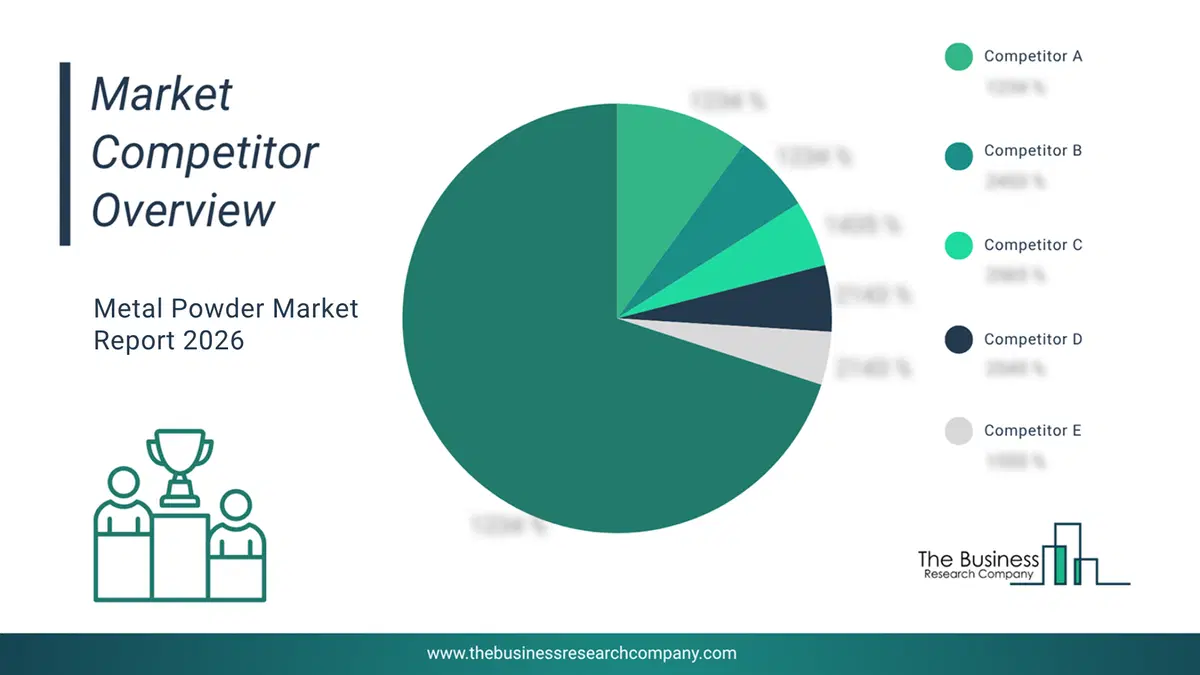
This chart is for illustrative purposes; the full report includes a detailed competitor analysis and comprehensive overview of the top 10 companies in the market.
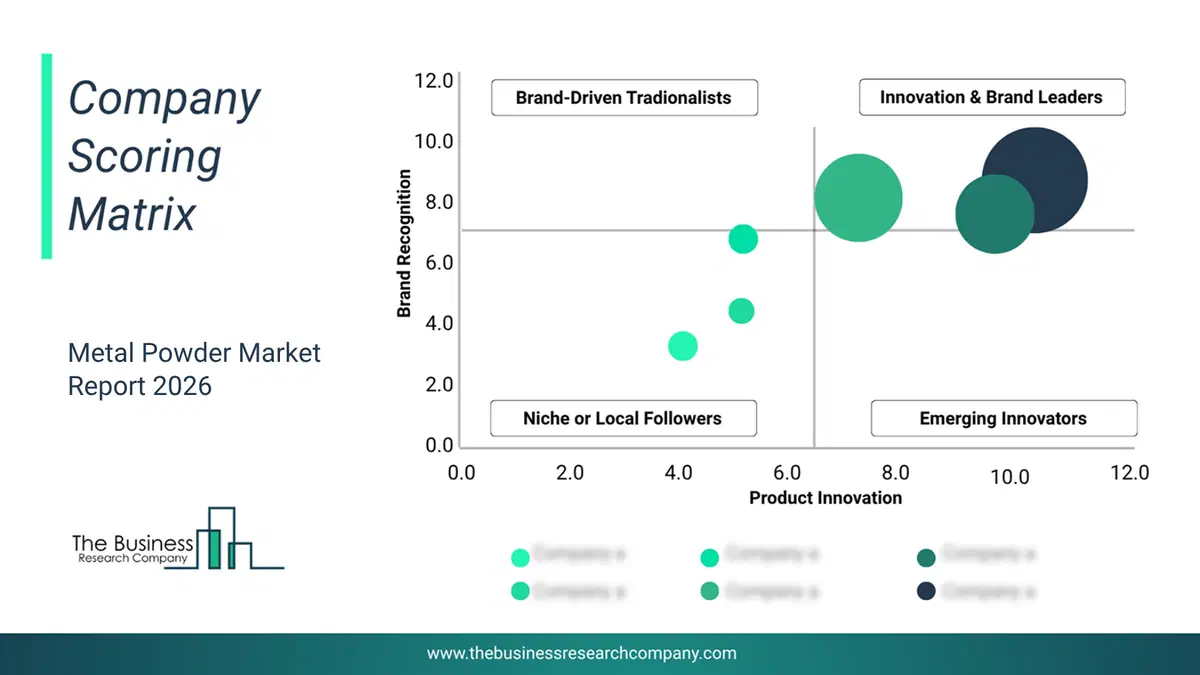
This chart maps companies by product innovation and brand strength, with bubble size indicating relative revenue, helping identify market leaders, challengers, and niche players. This is an illustrative chart; the full report provides a complete and accurate competitive analysis.
Global Metal Powder Market Trends and Insights
Major companies operating in the metal powder market are focused on developing advanced platforms that implement technology, such as cold hearth technology, to maximize their profits in the market. Cold hearth technology is a metallurgical process that involves melting and refining metal in an environment with a relatively lower temperature, as opposed to traditional methods. For instance, in November 2023, Continuum Powders, a US-based manufacturer of sustainable metal powder, launched the Greyhound M2P 3.0, an updated version of its powder atomization platform. The platform simplifies the recycling process, transforming alloyed metal waste-stream products into powder in a single step. The Greyhound M2P 3.0 offers improved flexibility, cycle times, cost competitiveness, and aligns with decarbonization goals. The upgraded platform uses a high-intensity DC plasma heat source, implements cold hearth technology for purity, and supports smaller order quantities and custom alloy configurations.What Are Latest Mergers And Acquisitions In The Metal Powder Market?
In November 2023, 6K Additive, a US-based company specializing in sustainable materials for additive manufacturing, acquired Global Metal Powders LLC for an undisclosed amount. Through this acquisition, 6K Additive aims to enhance its metal powder production capabilities by integrating GMP’s proprietary technology for processing titanium, chromium, molybdenum, niobium, tantalum, and tungsten powders, as well as expanding its recycling and feedstock preparation processes. Global Metal Powders LLC is a US-based company focused on advanced manufacturing and processing of high-purity metal powders.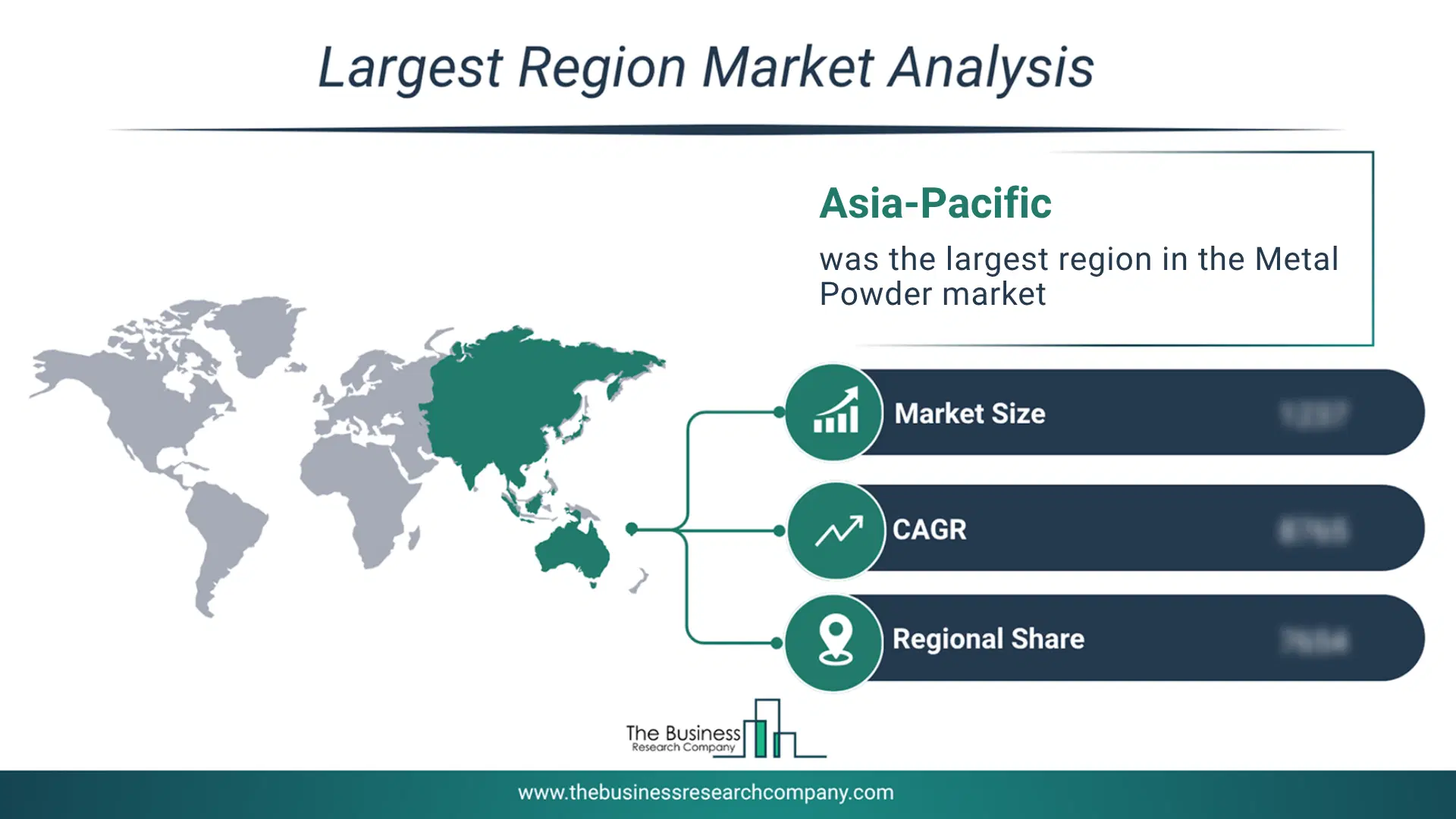
Regional Outlook
Asia-Pacific was the largest region in the metal powders market in 2025. The regions covered in the metal powder market are Asia-Pacific, South East Asia, Western Europe, Eastern Europe, North America, South America, Middle East, Africa. The countries covered in the metal powder market are Australia, Brazil, China, France, Germany, India, Indonesia, Japan, Taiwan, Russia, South Korea, UK, USA, Canada, Italy, Spain.What Defines the Metal Powder Market?
The metal powder consists of sales of lead powder, tin powder, bismuth powder, antimony powder, and cadmium powder. Values in this market are ‘factory gate’ values, that is the value of goods sold by the manufacturers or creators of the goods, whether to other entities (including downstream manufacturers, wholesalers, distributors and retailers) or directly to end customers. The value of goods in this market includes related services sold by the creators of the goods.How is Market Value Defined and Measured?
The market value is defined as the revenues that enterprises gain from the sale of goods and/or services within the specified market and geography through sales, grants, or donations in terms of the currency (in USD unless otherwise specified). The revenues for a specified geography are consumption values that are revenues generated by organizations in the specified geography within the market, irrespective of where they are produced. It does not include revenues from resales along the supply chain, either further along the supply chain or as part of other products.
This chart presents market attractiveness based on a quantitative evaluation of growth, competition, strategic alignment, and risk, offering a clear view of opportunity areas for decision-making. This chart is for illustrative purposes; the full report contains the complete analysis.

This chart highlights the Total Addressable Market (TAM) by estimating the maximum revenue opportunity using an assumption-driven approach, supporting strategic planning and opportunity sizing across markets. The chart is illustrative; the full report provides a more comprehensive analysis.
What Key Data and Analysis Are Included in the Metal Powder Market Report 2026?
The metal powder market research report is one of a series of new reports from The Business Research Company that provides market statistics, including Market Report 2026?global market size, regional shares, competitors with the market share, detailed market segments, market trends and opportunities, and any further data you may need to thrive in the metal powder Market Report 2026? The market research report delivers a complete perspective of everything you need, with an in-depth analysis of the current and future state of the Market Report 2026?Metal Powder Market Report Forecast Analysis
| Report Attribute | Details |
|---|---|
| Market Size Value In 2026 | $8.55 billion |
| Revenue Forecast In 2030 | $11.34 billion |
| Growth Rate | CAGR of 6.9% from 2026 to 2030 |
| Base Year For Estimation | 2025 |
| Actual Estimates/Historical Data | 2020-2025 |
| Forecast Period | 2026 - 2030 |
| Market Representation | Revenue in USD Billion and CAGR from 2026 to 2030 |
| Segments Covered | Type, Process, Application, End-Use Industry |
| Regional Scope | Asia-Pacific, Western Europe, Eastern Europe, North America, South America, Middle East, Africa |
| Country Scope | The countries covered in the report are Australia, Brazil, China, France, Germany, India, Indonesia, Japan, Taiwan, Russia, South Korea, UK, USA, Canada, Italy, Spain. |
| Key Companies Profiled | Höganäs AB, GKN plc, Sandvik AB, Allegheny Technologies Incorporated, Carpenter Technology Corporation, Kymera International, H.C. Starck GmbH, Polema Industries Limited, Royal Metal Powders Inc., Molyworks Materials Corporation, Xiamen Tungsten Co. Ltd., JFE Steel Corporation, Alcoa Corporation, Angang Group Aluminium Powder Co. Ltd., GGP Metalpowder AG, Shandong Luyin New Material Technology Co. Ltd., Hangzhou Yitong New Materials Co. Ltd., Hunan Ningxiang Jiweixin Metal Powder Co. Ltd., Showa Denko Materials Co. Ltd., Mitsubishi Chemical Corporation, Sumitomo Chemical Co. Ltd. |
| Customization Scope | Request for Customization |
| Pricing And Purchase Options | Explore Purchase Options |