
Microelectronic Medical Implants Market Report 2026
Global Outlook – By Product (Neurostimulators, Drug Infusion Pumps, Pacemakers, Spinal Fusion Stimulators, Implantable Drug Pumps, Hearing Implants, Eye Implants, Ocular Implants, Other Products), By Technology (Radiofrequency, Sensors, Other Technologies), By Material (Metals, Titanium, Stainless Steel, Platinum, Gold Brazed Alloys, Polymers, Ceramics, Other Materials), By Application (Cardiology, Neurology, Ophthalmology, Oncology, Other Applications), By End-Users (Hospitals And Clinics, Ambulatory Surgical Centers) – Market Size, Trends, Strategies, and Forecast to 2030
Microelectronic Medical Implants Market Overview
• Microelectronic Medical Implants market size has reached to $48.23 billion in 2025 • Expected to grow to $79.08 billion in 2030 at a compound annual growth rate (CAGR) of 10.3% • Growth Driver: Rising Hearing Impairments Propel Growth In Microelectronic Medical Implants Market A Future Outlook • Market Trend: Advancing Personalized Therapy Through Adaptive Neurostimulation • North America was the largest region in 2025 and Asia-Pacific is the fastest growing region.What Is Covered Under Microelectronic Medical Implants Market?
Microelectronic medical implants refer to devices that work with incredibly tiny and microscopic elements to create electronic components. These are used for monitoring, diagnosis, and therapy for a variety of medical problems. The main products of microelectronic medical implants are neurostimulators, drug infusion pumps, pacemakers, defibrillators, spinal fusion stimulators, implantable drug pumps, hearing implants, eye implants, ocular implants, and others. A neurostimulator is a stopwatch-sized, surgically implanted device that is used to treat neurological disorders. With technologies such as radiofrequency, sensors, and others and materials such as metals, such as titanium, stainless steel, platinum, gold-brazed alloys, polymers, ceramics, and others, these implants are used for various applications involving cardiology, neurology, ophthalmology, oncology, and others by different end-users such as hospitals and clinics, ambulatory surgical centers.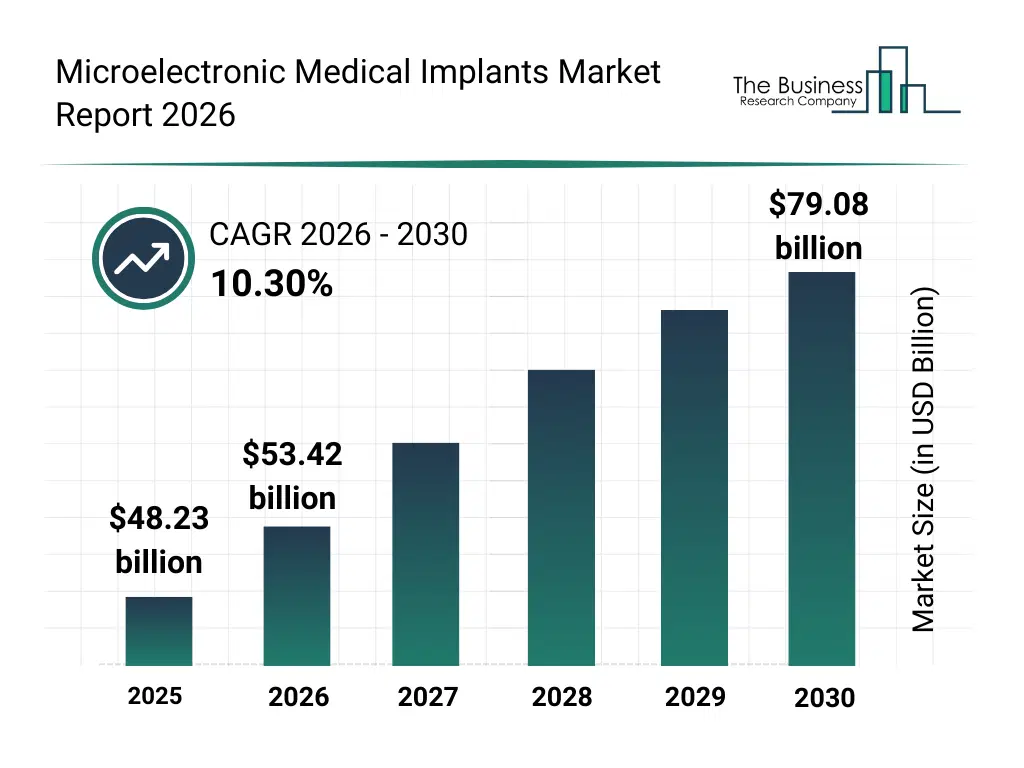
What Is The Microelectronic Medical Implants Market Size and Share 2026?
The microelectronic medical implants market size has grown rapidly in recent years. It will grow from $48.23 billion in 2025 to $53.42 billion in 2026 at a compound annual growth rate (CAGR) of 10.8%. The growth in the historic period can be attributed to advancements in microelectronics manufacturing, rising prevalence of chronic diseases, adoption of implantable cardiac devices, improvements in biocompatible materials, growth in minimally invasive therapies.What Is The Microelectronic Medical Implants Market Growth Forecast?
The microelectronic medical implants market size is expected to see rapid growth in the next few years. It will grow to $79.08 billion in 2030 at a compound annual growth rate (CAGR) of 10.3%. The growth in the forecast period can be attributed to increasing investments in bioelectronic medicine, rising adoption of personalized implant therapies, expansion of wireless and remote monitoring implants, growing demand for long-term therapeutic implants, increasing focus on digital health integration. Major trends in the forecast period include increasing adoption of smart implantable devices, rising demand for miniaturized electronic implants, growing integration of wireless monitoring capabilities, expansion of neurostimulation and cardiac implants, enhanced focus on long-term implant reliability.
Global Microelectronic Medical Implants Market Segmentation
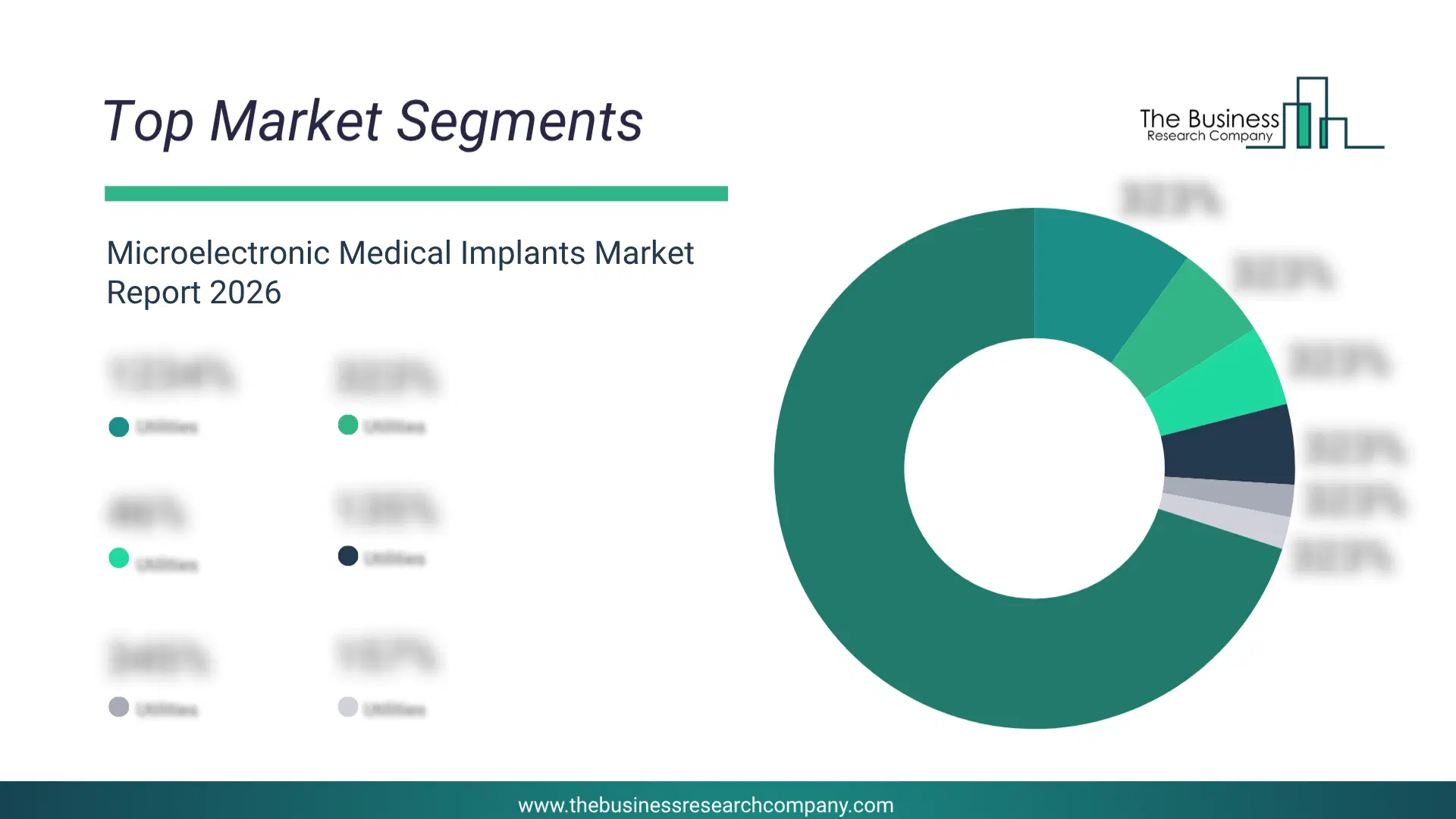
1) By Product: Neurostimulators, Drug Infusion Pumps, Pacemakers, Spinal Fusion Stimulators, Implantable Drug Pumps, Hearing Implants, Eye Implants, Ocular Implants, Other Products 2) By Technology: Radiofrequency, Sensors, Other Technologies 3) By Material: Metals, Titanium, Stainless Steel, Platinum, Gold Brazed Alloys, Polymers, Ceramics, Other Materials 4) By Application: Cardiology, Neurology, Ophthalmology, Oncology, Other Applications 5) By End-Users: Hospitals And Clinics, Ambulatory Surgical Centers Subsegments: 1) By Neurostimulators: Deep Brain Stimulators, Peripheral Nerve Stimulators 2) By Drug Infusion Pumps: Insulin Pumps, Pain Management Pumps 3) By Pacemakers: Single-Chamber Pacemakers, Dual-Chamber Pacemakers, Biventricular Pacemakers 4) By Spinal Fusion Stimulators: Bone Growth Stimulators, Electrical Stimulation Devices 5) By Implantable Drug Pumps: Intrathecal Drug Delivery Systems, Programmable Pumps 6) By Hearing Implants: Cochlear Implants, Bone-Anchored Hearing Aids 7) By Eye Implants: Retinal Implants, Glaucoma Implants 8) By Ocular Implant: Intraocular Lenses, Sustained-Release Drug Delivery Implants 9) By Other Products: Bioelectronic Implants: Wireless Monitoring DevicesWhat Is The Driver Of The Microelectronic Medical Implants Market?
The rising prevalence of hearing impairments is expected to boost the microelectronic medical implants market going forward. Hearing impairment is the inability to hear as well as someone with normal hearing, defined as hearing thresholds of 20 dB or better in both ears. Microelectronic medical implants can improve hearing in people with severe hearing loss who are no longer helped by using hearing aids, hence, they will boost the microelectronic medical implants market. For instance, in February 2024, according to the World Health Organization (WHO), a Switzerland-based intergovernmental organization responsible for providing leadership on global health matters, it is expected that over 5% of the global population, or 430 million people, including 34 million children, need rehabilitation for disabling hearing loss. By 2050, this number is expected to exceed 700 million. Therefore, the rising prevalence of hearing impairments is driving the growth of the microelectronic medical implant industry.Key Players In The Global Microelectronic Medical Implants Market
Major companies operating in the microelectronic medical implants market are Medtronic PLC, Abbott Laboratories, Boston Scientific Corporation, BIOTRONIK SE & Co. KG, Cochlear Limited, LivaNova PLC, MicroPort Scientific Corporation, Zimmer Biomet Holdings Inc., Edwards Lifesciences Corporation, Inspire Medical Systems Inc., NeuroPace Inc., Envoy Medical Corporation, ImThera Medical Inc., EndoStim Inc., Integra LifeSciences Corporation, MED-EL Elektromedizinische Geräte GmbH, Abiomed Inc., Lepu Medical Technology Co. Ltd., Beijing PINS Medical Co. Ltd., Nurotron Biotechnology Co. Ltd.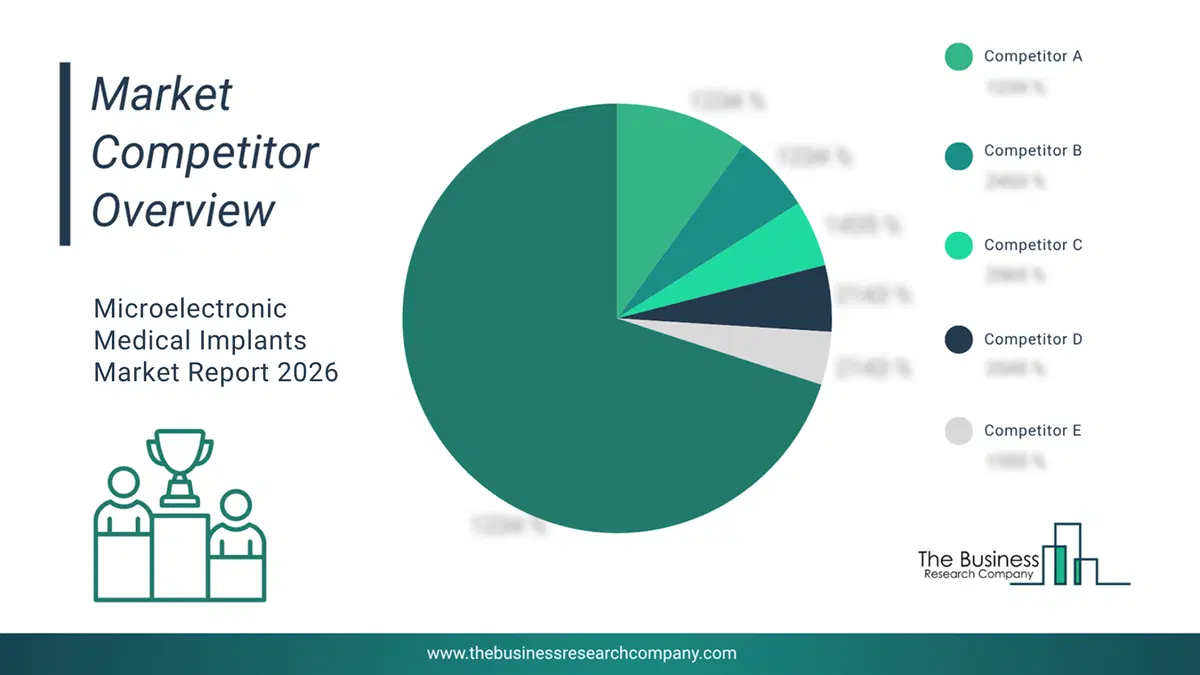
This chart is for illustrative purposes; the full report includes a detailed competitor analysis and comprehensive overview of the top 10 companies in the market.
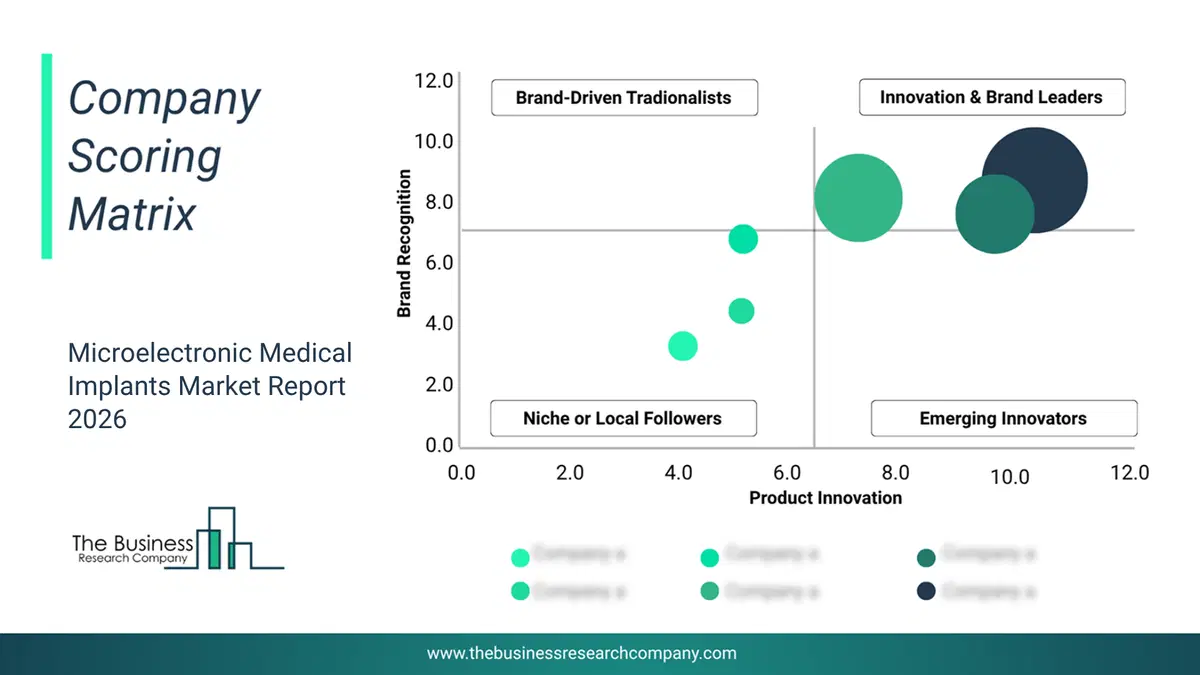
This chart maps companies by product innovation and brand strength, with bubble size indicating relative revenue, helping identify market leaders, challengers, and niche players. This is an illustrative chart; the full report provides a complete and accurate competitive analysis.
Global Microelectronic Medical Implants Market Trends and Insights
Major companies operating in the microelectronic medical implants market are focusing on incorporating adaptive neuromodulation technologies such as adaptive deep brain stimulation (aDBS) to enhance treatment precision, real-time monitoring, and personalized therapy optimization. aDBS systems are closed-loop neurostimulation technologies that sense neural activity and automatically adjust electrical stimulation based on real-time brain biomarkers, enabling capabilities such as dynamic therapy modulation, reduced overstimulation, and improved symptom management. For instance, in February 2025, Medtronic plc, an Ireland-based medical technology company, received U.S. FDA approval for its BrainSense Adaptive Deep Brain Stimulation (aDBS) System, an advanced aDBS technology designed to optimize Parkinson’s disease therapy by continuously sensing neural signals and adapting stimulation accordingly, featuring real-time brain-signal monitoring, automated stimulation adjustments, and an Electrode Identifier tool that accelerates and improves programming accuracy. BrainSense aDBS improves therapy consistency, clinician workflow efficiency, and overall patient outcomes.What Are Latest Mergers And Acquisitions In The Microelectronic Medical Implants Market?
In October 2024, MED-EL, an Austria-based medical technology company specializing in hearing implants and devices, acquired BHM Tech Inc. for an undisclosed amount. With this acquisition, MED-EL aims to expand its product portfolio in bone conduction technology, strengthen its market position, and drive innovation in hearing solutions for individuals with hearing loss. BHM Tech Inc. is an Austria-based technology company involved in the development of microelectronic medical implants, focusing on innovative technologies for health care applications.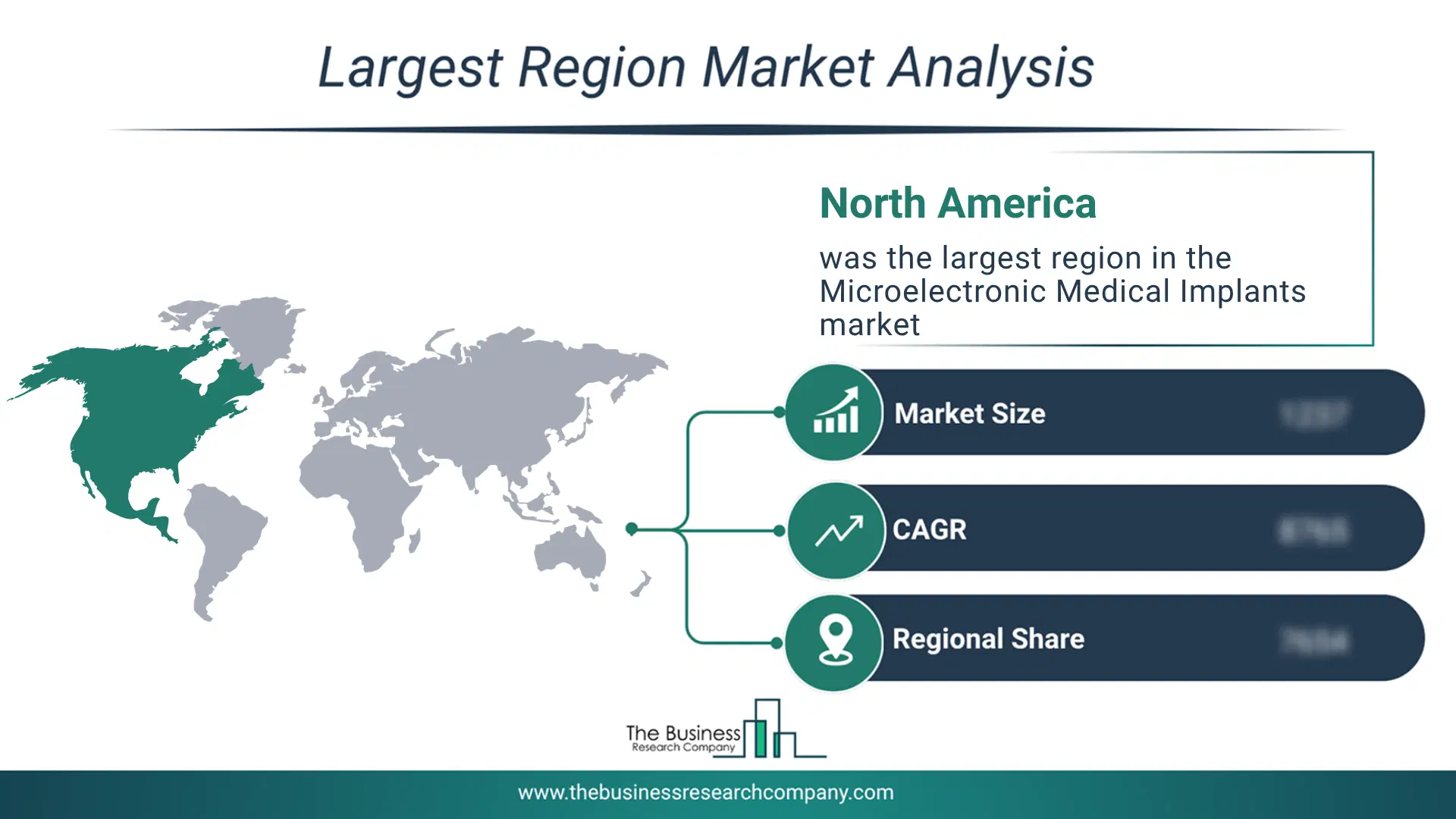
Regional Outlook
North America was the largest region in the microelectronic medical implants market share in 2025. Asia-Pacific is expected to be the fastest-growing region in the microelectronic medical implants market during the forecast period. The regions covered in this market report are Asia-Pacific, South East Asia, Western Europe, Eastern Europe, North America, South America, Middle East, Africa. The countries covered in this market report are Australia, Brazil, China, France, Germany, India, Indonesia, Japan, Taiwan, Russia, South Korea, UK, USA, Canada, Italy, SpainWhat Defines the Microelectronic Medical Implants Market?
The microelectronic medical implants market consists of sales of ventricular assist blood pumps, artificial hearts, implantable monitoring devices, and implantable loop recorders. Values in this market are ‘factory gate’ values, that is the value of goods sold by the manufacturers or creators of the goods, whether to other entities (including downstream manufacturers, wholesalers, distributors, and retailers) or directly to end customers. The value of goods in this market includes related services sold by the creators of the goods.How is Market Value Defined and Measured?
The market value is defined as the revenues that enterprises gain from the sale of goods and/or services within the specified market and geography through sales, grants, or donations in terms of the currency (in USD unless otherwise specified). The revenues for a specified geography are consumption values that are revenues generated by organizations in the specified geography within the market, irrespective of where they are produced. It does not include revenues from resales along the supply chain, either further along the supply chain or as part of other products.
This chart presents market attractiveness based on a quantitative evaluation of growth, competition, strategic alignment, and risk, offering a clear view of opportunity areas for decision-making. This chart is for illustrative purposes; the full report contains the complete analysis.

This chart highlights the Total Addressable Market (TAM) by estimating the maximum revenue opportunity using an assumption-driven approach, supporting strategic planning and opportunity sizing across markets. The chart is illustrative; the full report provides a more comprehensive analysis.
What Key Data and Analysis Are Included in the Microelectronic Medical Implants Market Report 2026?
The microelectronic medical implants market research report is one of a series of new reports from The Business Research Company that provides market statistics, including industry global market size, regional shares, competitors with the market share, detailed market segments, market trends and opportunities, and any further data you may need to thrive in the microelectronic medical implants industry. The market research report delivers a complete perspective of everything you need, with an in-depth analysis of the current and future state of the industry.Microelectronic Medical Implants Market Report Forecast Analysis
| Report Attribute | Details |
|---|---|
| Market Size Value In 2026 | $53.42 billion |
| Revenue Forecast In 2030 | $79.08 billion |
| Growth Rate | CAGR of 10.3% from 2026 to 2030 |
| Base Year For Estimation | 2025 |
| Actual Estimates/Historical Data | 2020-2025 |
| Forecast Period | 2026 - 2030 |
| Market Representation | Revenue in USD Billion and CAGR from 2026 to 2030 |
| Segments Covered | Product, Technology, Material, Application, End-Users |
| Regional Scope | Asia-Pacific, Western Europe, Eastern Europe, North America, South America, Middle East, Africa |
| Country Scope | The countries covered in the report are Australia, Brazil, China, France, Germany, India, Indonesia, Japan, Taiwan, Russia, South Korea, UK, USA, Canada, Italy, Spain. |
| Key Companies Profiled | Medtronic PLC, Abbott Laboratories, Boston Scientific Corporation, BIOTRONIK SE & Co. KG, Cochlear Limited, LivaNova PLC, MicroPort Scientific Corporation, Zimmer Biomet Holdings Inc., Edwards Lifesciences Corporation, Inspire Medical Systems Inc., NeuroPace Inc., Envoy Medical Corporation, ImThera Medical Inc., EndoStim Inc., Integra LifeSciences Corporation, MED-EL Elektromedizinische Geräte GmbH, Abiomed Inc., Lepu Medical Technology Co. Ltd., Beijing PINS Medical Co. Ltd., Nurotron Biotechnology Co. Ltd. |
| Customization Scope | Request for Customization |
| Pricing And Purchase Options | Explore Purchase Options |