
Molecular Breeding Market Report 2026
Global Outlook – By Process (QTL Mapping, Marker-Assisted Selection, Marker-Assisted Backcrossing, Genomic Selection, Other Process), By Marker Type (Single Sequence Repeats (SSR), Single Nucleotide Polymorphism (SNP), Other Marker Type), By Application (Crop Breeding, Livestock Breeding) – Market Size, Trends, Strategies, and Forecast to 2030
Molecular Breeding Market Overview
• Molecular Breeding market size has reached to $4.85 billion in 2025 • Expected to grow to $10.91 billion in 2030 at a compound annual growth rate (CAGR) of 17.6% • Growth Driver: Rising Investment In Agro-Genomics Research Fuels Molecular Breeding Market Growth • Market Trend: Innovative Solutions Driving Crop Improvement • North America was the largest region in 2025 and Asia-pacific is the fastest growing region.Market Gains By 2030 – Top Opportunities By Segment
Market Gain identifies the most promising market opportunities by highlighting the segments or products expected to generate the highest incremental revenue growth over the next five years.
What Is Covered Under Molecular Breeding Market?
Molecular breeding is a technique to identify and select desired genetic traits in organisms, by identification of specific genes or markers that are linked to the desired traits, which can be used to track those traits through generations of breeding. The main processes of molecular breeding are QTL (Quantitative Trait Locus) mapping, marker-assisted selection, marker-assisted backcrossing, genomic selection, and others. QTL mapping refers to Quantitative Trait Locus mapping, a statistical method of genetic research to identify the regions of the genome that are associated with particular quantitative traits. It is used in molecular breeding to identify trials such as height, weight, or disease susceptibility. The molecular breeding is typically segregated by single sequence repeats (SSR), single nucleotide polymorphism (SNP), and others that are applied in crop breeding and livestock breeding.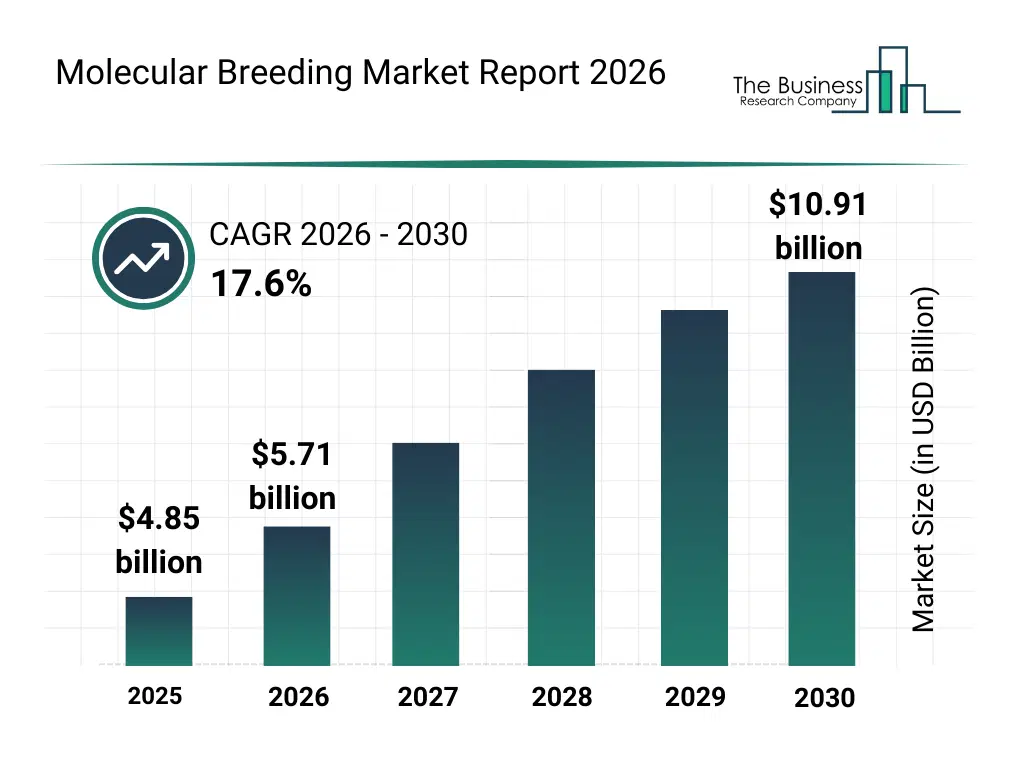
What Is The Molecular Breeding Market Size and Share 2026?
The molecular breeding market size has grown rapidly in recent years. It will grow from $4.85 billion in 2025 to $5.71 billion in 2026 at a compound annual growth rate (CAGR) of 17.8%. The growth in the historic period can be attributed to advancements in genetic marker technologies, early adoption of QTL mapping, rising demand for disease-resistant crops, increased funding for agricultural biotechnology, growth in livestock productivity enhancement programs.What Is The Molecular Breeding Market Growth Forecast?
The molecular breeding market size is expected to see rapid growth in the next few years. It will grow to $10.91 billion in 2030 at a compound annual growth rate (CAGR) of 17.6%. The growth in the forecast period can be attributed to expansion of genomic selection applications, rising need for climate-resilient crops, integration of AI-enabled breeding platforms, increasing global food security initiatives, growth in precision agriculture adoption. Major trends in the forecast period include rising adoption of precision trait identification, growing focus on high-yield and stress-resistant varieties, increasing use of molecular tools for livestock improvement, expansion of hybrid and cross-breeding programs, growing demand for faster and more accurate breeding cycles.
Global Molecular Breeding Market Segmentation
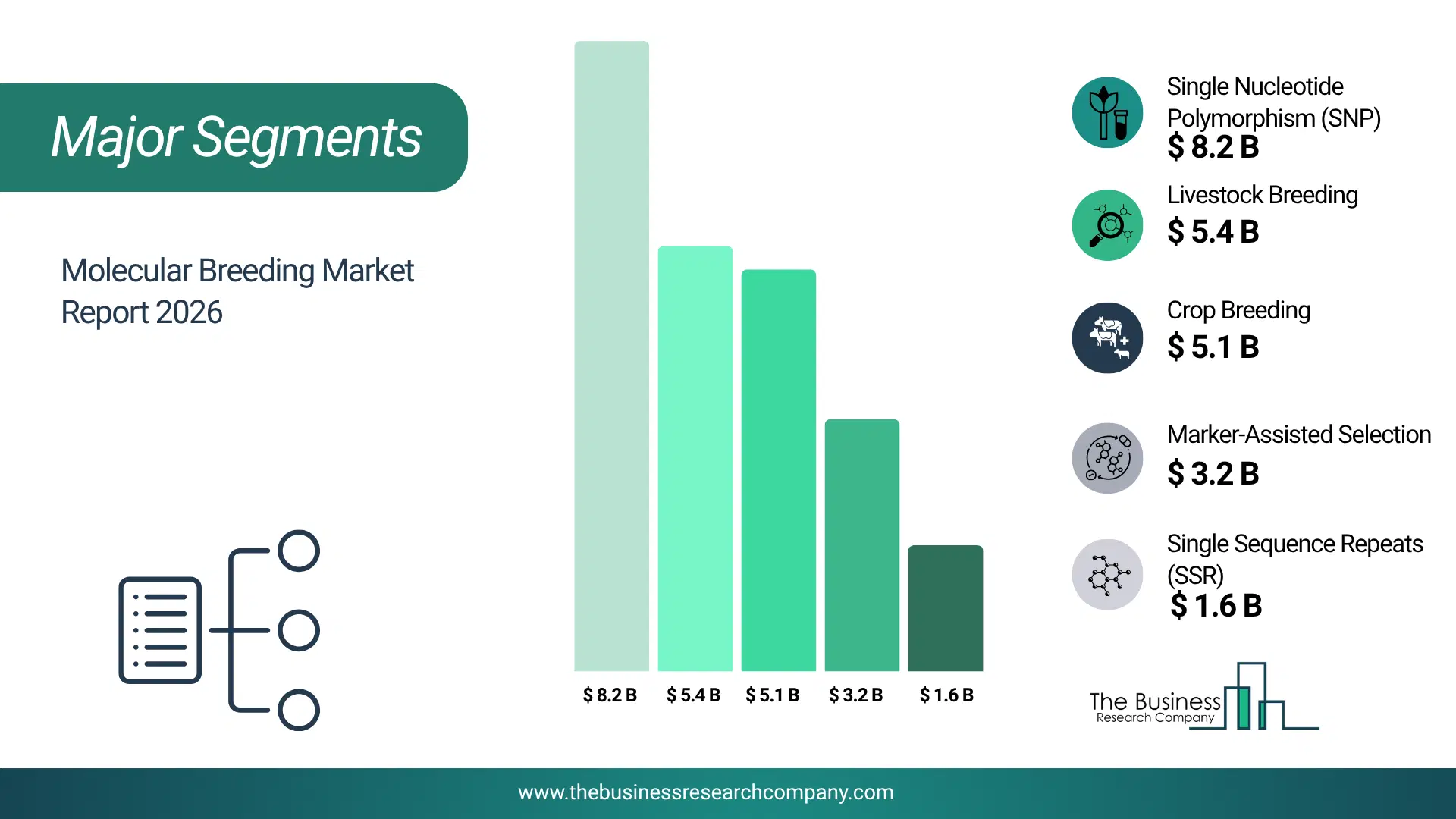
1) By Process: QTL Mapping, Marker-Assisted Selection, Marker-Assisted Backcrossing, Genomic Selection, Other Process 2) By Marker Type: Single Sequence Repeats (SSR), Single Nucleotide Polymorphism (SNP), Other Marker Type 3) By Application: Crop Breeding, Livestock Breeding Subsegments: 1) By QTL Mapping: Trait Mapping, Population Development, Phenotypic Data Collection, Genotypic Data Analysis, Other QTL Mapping Techniques 2) By Marker-Assisted Selection: Single Marker Selection, Multiple Marker Selection, Genomic Selection Markers, Other Marker-Assisted Selection Techniques 3) By Marker-Assisted Backcrossing: Backcrossing Protocols, Selection Of Donor and Recurrent Parents, Evaluation of Progeny, Other Backcrossing Techniques 4) By Genomic Selection: Genomic Prediction Models, Genotyping Technologies, Trait Prediction Accuracy, Other Genomic Selection Techniques 5) By Other Process: CRISPR-Cas9 Gene Editing, Transgenic Breeding Techniques, Synthetic Biology Applications, Other Emerging Molecular Breeding Processes The top segments in the molecular breeding market will be: • Crop Breeding will reach $5155.44 Million by 2030. • Single Nucleotide Polymorphism (SNP) will reach $8231.79 Million by 2030. • Marker-Assisted Selection will reach $3262.45 Million by 2030. • Livestock Breeding will reach $5485.74 Million by 2030. • Single Sequence Repeats (SSR) will reach $1638.93 Million by 2030.What Is Driver Of The Molecular Breeding Market?
Growing public and private expenditure for agro-genomics research capacities is expected to propel the growth of the molecular breeding market going forward. Public expenditure in agro-genomics research refers to government-funded financial support, while private expenditure signifies commercial investment by companies, both aiming to enhance agricultural genetics and technology for improved crop yield and sustainability. Public and private expenditure in agro-genomics research enhances genetic technologies, fostering innovation in molecular breeding for improved crop yields. For instance, in April 2023, according to Genomic Canada, a Canada-based non-profit organization, the Canadian government unveiled a federal support package of $18.1 million through Genome Canada for 13 advanced-stage research and development initiatives aimed at addressing significant challenges in health, environment, and agriculture using genomics. Therefore, growing public and private expenditure for agro-genomics research capacities is driving the growth of the molecular breeding industry.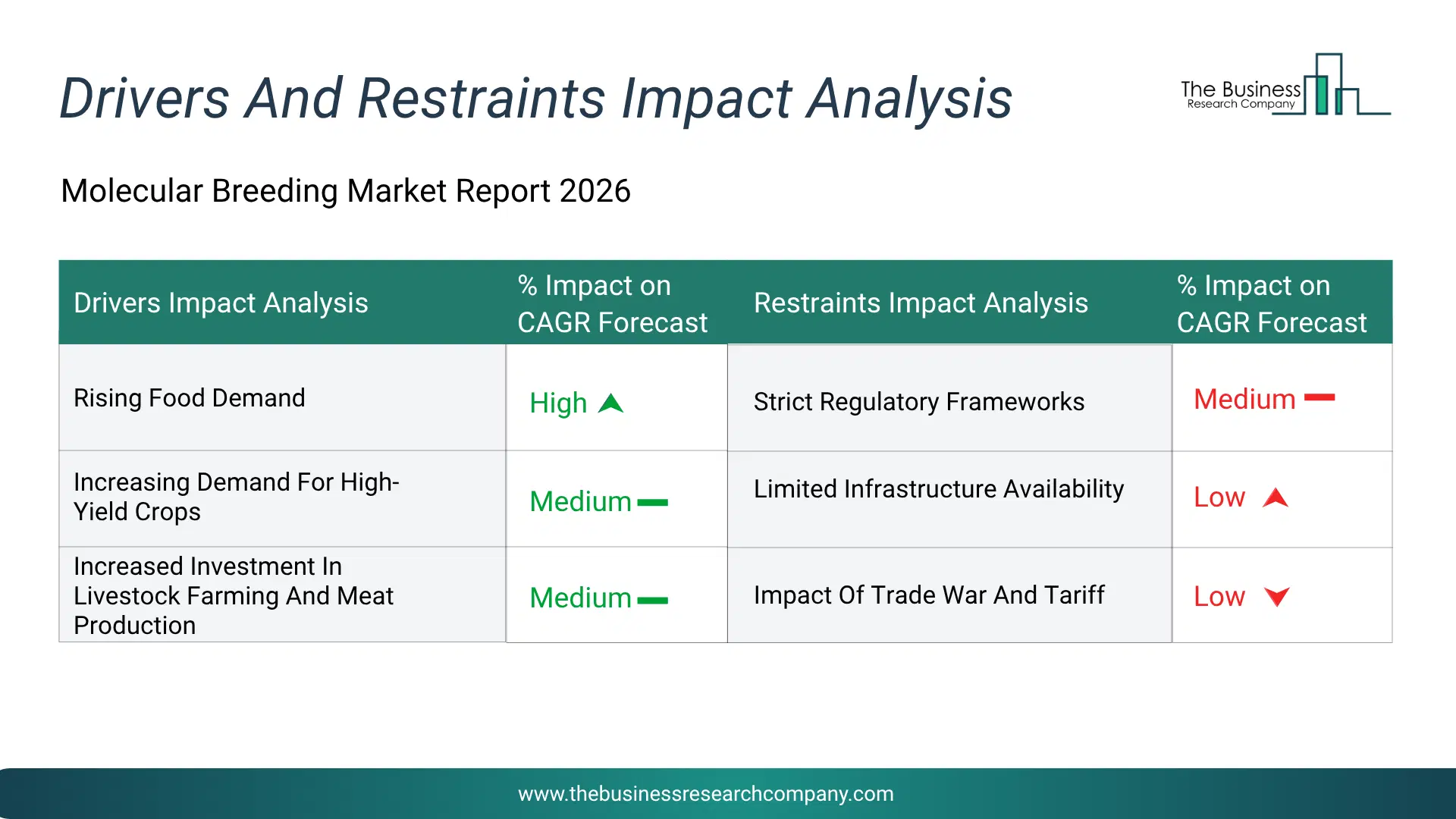
Infographic Chart Showing Key Market Drivers Analysis And Restraints For Molecular Breeding Market
The chart presents an impact analysis of key drivers and restraints, quantifying their relative influence on the market's growth rate and helping assess the balance between growth enablers and limiting factors. This chart offers a high-level perspective; the full report contains more detailed insights.
How Will The Drivers Impact Growth In The Global Molecular Breeding Market?
• Rising Food Demand (High) – During the forecast period, the rising food demand is anticipated to support the growth of the molecular breeding market in the forecast period. molecular breeding plays a critical role in addressing this challenge by accelerating the development of improved crops and livestock varieties capable of higher productivity and stability across diverse environments. traditional breeding approaches alone are often insufficient to meet rising demand within constrained timelines, whereas molecular breeding enables faster, more accurate trait selection and shorter breeding cycles. as governments and industry stakeholders focus on strengthening food security and ensuring reliable supply chains, molecular breeding technologies are increasingly integrated into large-scale breeding programs. this rising food demand is therefore a fundamental driver of market growth, reinforcing the strategic importance of molecular breeding in global agricultural development. the rising food demand growth contribution during the forecast period in 2025 is 2.0%. • Increasing Demand For High-Yield Crops (Medium) – During the forecast period, increasing demand for high-yield crops are expected to be a key driver of the molecular breeding market during the forecast period. high-yield performance is typically governed by complex quantitative traits influenced by multiple genes, making molecular breeding an essential approach for effective trait improvement. by leveraging genetic markers and genomic data, molecular breeding enables breeders to identify yield-related traits with greater precision and stability, improving selection outcomes across breeding cycles. as yield improvement remains a primary objective for both commercial seed companies and public-sector breeding programs, the adoption of molecular breeding tools continues to expand. this demand for consistently high-performing crop varieties is expected to sustain long-term investment in molecular breeding technologies and drive market growth throughout the forecast period. the increasing demand for high-yield crops growth contribution during the forecast period in 2025 is 1.5%. • Increased Investment In Livestock Farming And Meat Production (Medium) – During the forecast period, increased investment in livestock farming and meat production is expected to be a key driver of growth for the molecular breeding market during the forecast period. expanding livestock operations require animals with superior genetic traits such as faster growth rates, improved feed conversion efficiency, enhanced disease resistance, and better reproductive performance. molecular breeding techniques enable precise identification and selection of these complex traits, allowing breeding programs to deliver consistent genetic improvements over successive generations. as capital flows into modernizing livestock systems, there is growing reliance on genomic-driven breeding strategies to reduce biological risks, optimize herd performance, and ensure long-term sustainability. this increased focus on genetic optimization strengthens demand for molecular breeding tools and services, positioning them as a core enabler of future livestock sector growth. the increased investment in livestock farming and meat production growth contribution during the forecast period in 2025 is 1.0%. • Rising Awareness of Sustainable Farming Practices (Low) – During the forecast period, the global rising awareness of sustainable farming practices will propel the growth of the molecular breeding market. Farmers, breeders, and policymakers are increasingly prioritizing crops and livestock varieties that require fewer inputs, exhibit greater tolerance to environmental stress, and contribute to long-term ecosystem health. Molecular breeding supports these goals by enabling targeted improvement of traits such as drought tolerance, nutrient-use efficiency, and disease resistance, which reduce dependence on chemical inputs and enhance resource efficiency. As sustainability becomes a central decision-making criterion across the agricultural value chain, molecular breeding emerges as a strategic tool to align productivity with environmental stewardship. This shift is expected to drive sustained demand for advanced breeding technologies that can deliver resilient, sustainable varieties without compromising yield or quality. The rising awareness of sustainable farming practices growth contribution during the forecast period in 2025 is 0.5%.How Will The Restraints Impact Growth In The Global Molecular Breeding Market?
• Strict Regulatory Frameworks (High) – During the forecast period, strict regulatory frameworks are restricting the growth of the molecular breeding market during the forecast period. regulations around genetically modified organisms (gmos) and certain gene-edited crops create lengthy approval processes, safety assessments, and labeling requirements, increasing costs and delaying commercialization. while conventional breeding and marker-assisted selection face minimal regulatory barriers, the variability of rules across countries complicates global market entry for advanced molecular breeding techniques. these hurdles slow innovation, limit adoption, and pose challenges for smaller companies lacking resources to navigate complex frameworks. consequently, strict regulations act as a significant constraint on market expansion despite strong technological potential. growth affected by the strict regulatory frameworks during the forecast period in 2025 is -1.0%. • Limited Infrastructure Availability (Medium) – During the forecast period, limited infrastructure availability is restricting the growth of the molecular breeding market during the forecast period. in many regions, particularly in developing economies, such infrastructure remains inadequate or unevenly distributed. limited access to high-quality infrastructure restricts the ability of breeding programs to generate, analyze, and apply genomic and phenotypic data efficiently. infrastructure gaps also hinder collaboration between research institutions, seed companies, and technology providers, reducing knowledge transfer and slowing innovation. as a result, molecular breeding adoption remains concentrated in regions with established research ecosystems, limiting global market penetration and constraining overall industry growth. growth affected by the limited infrastructure availability during the forecast period in 2025 is -0.5%. • Impact Of Trade War And Tariff (Medium) – During the forecast period, the impact of trade war and tariffs is restricting the growth of the molecular breeding market during the forecast period. increased trade barriers can raise procurement costs for advanced technologies and delay the exchange of genetic resources essential for breeding programs. geopolitical tensions and protectionist policies also complicate international partnerships and collaborative research efforts, which are critical for accessing diverse genetic pools and accelerating trait development. this uncertainty can discourage long-term investment in molecular breeding initiatives and limit the ability of companies to operate efficiently across global markets, thereby restraining market growth and slowing the pace of innovation. growth affected by the impact of trade wars and tariffs during the forecast period in 2025 is -0.2%.Key Players In The Global Molecular Breeding Market
Major companies operating in the molecular breeding market are Illumina Inc., LGC Group Limited, Eurofins Scientific SE, Thermo Fisher Scientific Inc., SGS Société Générale de Surveillance S.A., Intertek Group plc, DanBred P/S, LemnaTec GmbH, Fruitbreedomics B.V., Keygene N.V., KWS SAAT SE & Co. KGaA, Genus plc, Groupe Limagrain, Syngenta Group, Bayer Aktiengesellschaft, Corteva Agriscience, BASF SE, Dow AgroSciences LLC, Monsanto Company, Pioneer Hi-Bred International Inc., Agilent Technologies Inc., QIAGEN N.V., Bio-Rad Laboratories Inc., Merck KGaA Darmstadt, GenScript Biotech Corporation, Genewiz Inc., Eurogentec S.A., Integrated DNA Technologies Inc., Novogene Corporation Limited, BGI Group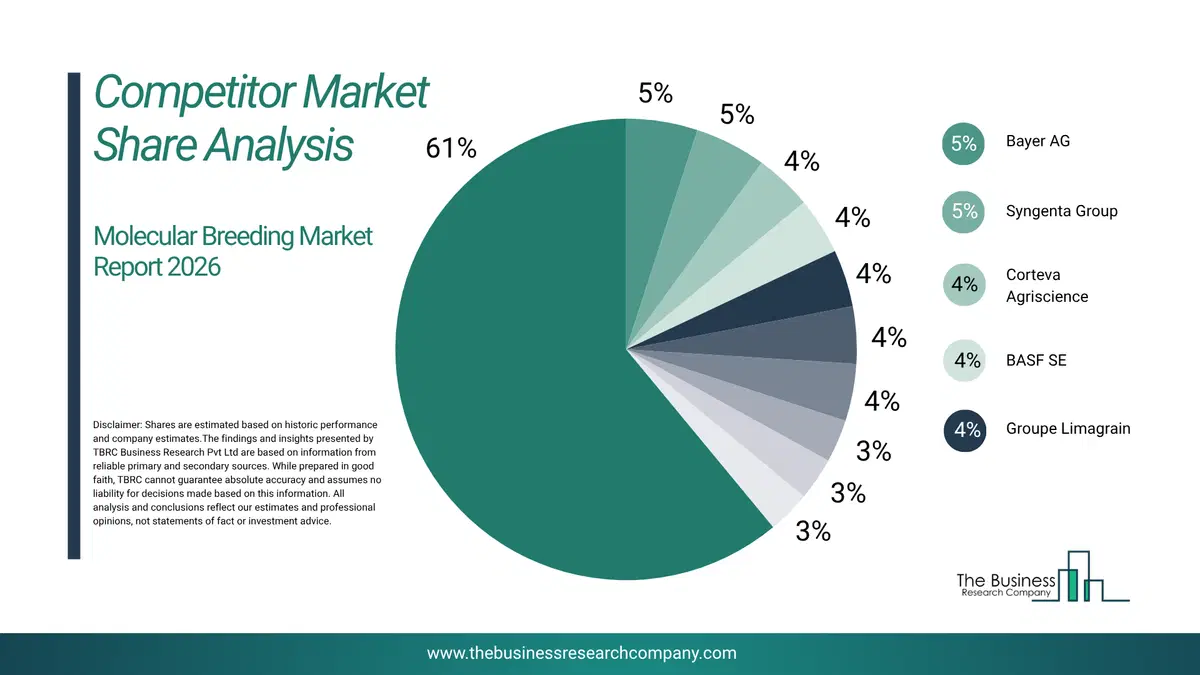
This chart is for illustrative purposes; the full report includes a detailed competitor analysis and comprehensive overview of the top 10 companies in the market.
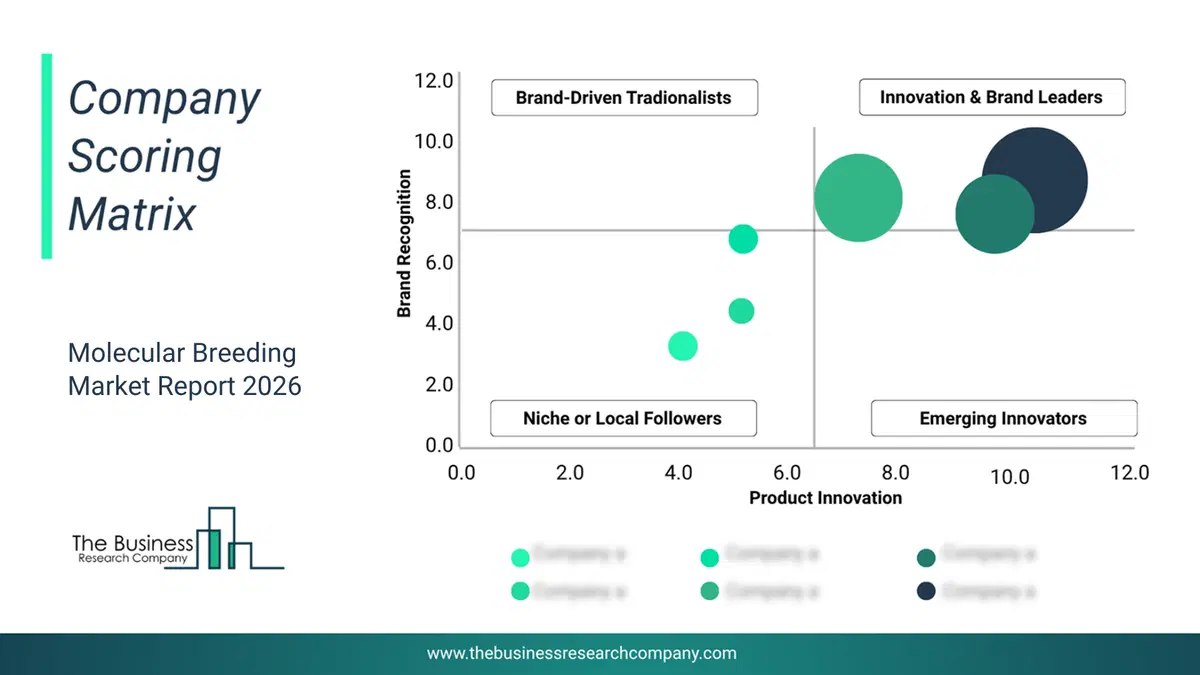
This chart maps companies by product innovation and brand strength, with bubble size indicating relative revenue, helping identify market leaders, challengers, and niche players. This is an illustrative chart; the full report provides a complete and accurate competitive analysis.
Global Molecular Breeding Market Trends and Insights
Major companies operating in the molecular breeding market are focused on developing advanced solutions such as integrated system to enhance crop yield, improve disease resistance, and accelerate the breeding process through cutting-edge genetic technologies. An integrated system refers to a cohesive framework that combines various components or processes into a single, unified operation, enabling seamless interaction and improved efficiency across all functions. For instance, in June 2024, MGI Tech, a China-based biotechnology company, launched a whole workflow solution for large-scale low-pass whole genome sequencing (WGS). This innovation is designed to enhance molecular breeding and genotyping processes for agricultural diploid species. Key features include an automated full-process product portfolio, high throughput capabilities, and advanced sequencing instruments.What Are Latest Mergers And Acquisitions In The Molecular Breeding Market? DLF Acquired Corteva Agriscience’s Alfalfa Breeding Program To Strengthen Global Forage Seed Capabilities
In September 2023, DLF, a Denmark-based real estate development company, acquired Corteva Agriscience's alfalfa breeding program for an undisclosed amount. With this acquisition, DLF’s aim is to significantly enhance DLF's global position in alfalfa breeding and sales by gaining access to elite alfalfa genetics, a strong brand portfolio, and expanded market access. Corteva Agriscience is a US-based pure-play agriculture company that provides and uses molecular breeding.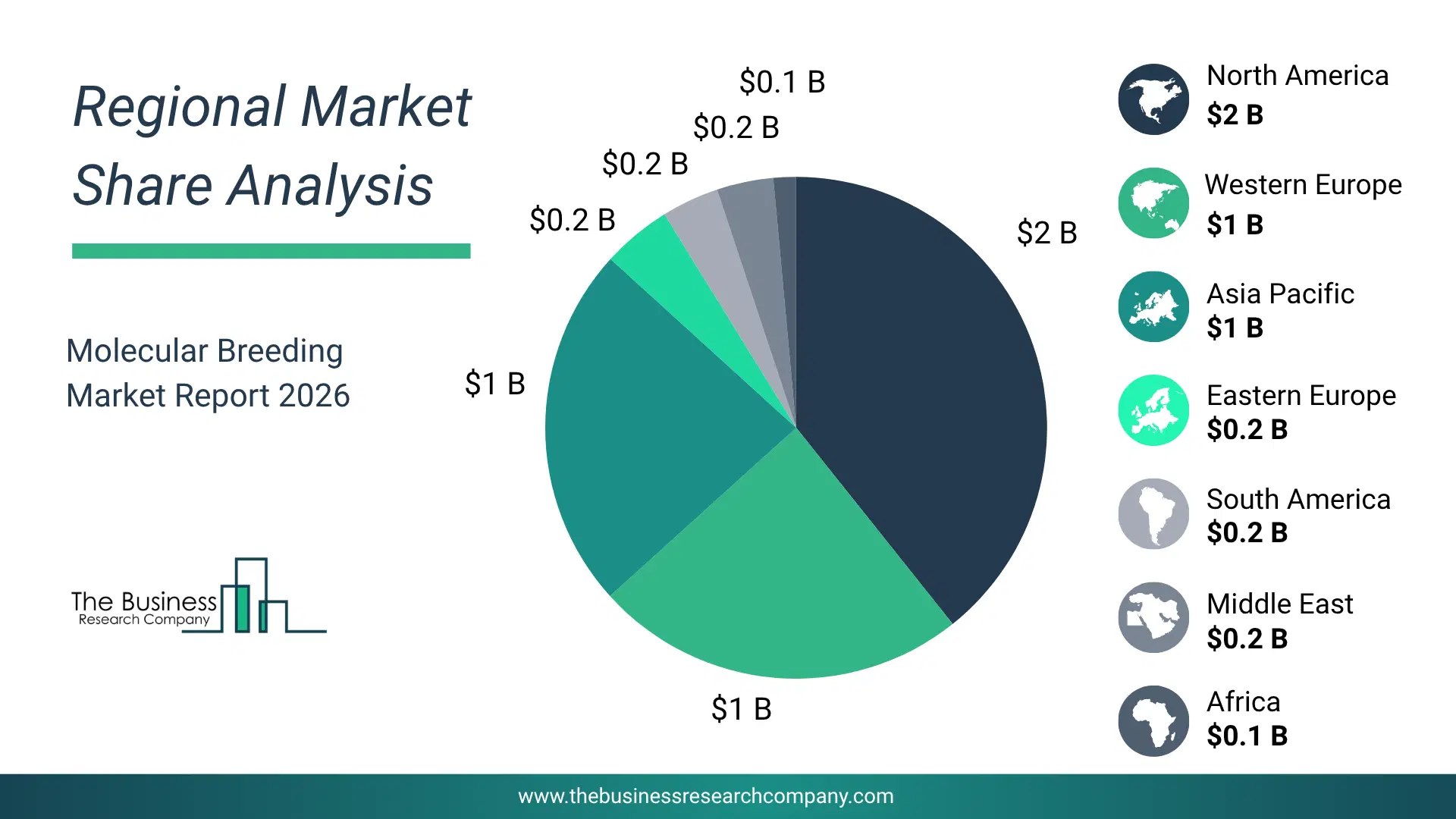
Regional Outlook
North America was the largest region in the molecular breeding market in 2025.Asia-pacific is expected to be the fastest-growing region in the global molecular breeding market report during the forecast period. The regions covered in this market report are Asia-Pacific, South East Asia, Western Europe, Eastern Europe, North America, South America, Middle East, Africa. The countries covered in this market report are Australia, Brazil, China, France, Germany, India, Indonesia, Japan, Taiwan, Russia, South Korea, UK, USA, Canada, Italy, SpainWhat Defines the Molecular Breeding Market?
The molecular breeding market consists of revenues earned by entities by providing genotyping, marker-assisted selection, genomic selection, and bioinformatics services. The market value includes the value of related goods sold by the service provider or included within the service offering. Only goods and services traded between entities or sold to end consumers are included.How is Market Value Defined and Measured?
The market value is defined as the revenues that enterprises gain from the sale of goods and/or services within the specified market and geography through sales, grants, or donations in terms of the currency (in USD unless otherwise specified). The revenues for a specified geography are consumption values that are revenues generated by organizations in the specified geography within the market, irrespective of where they are produced. It does not include revenues from resales along the supply chain, either further along the supply chain or as part of other products.
This chart presents market attractiveness based on a quantitative evaluation of growth, competition, strategic alignment, and risk, offering a clear view of opportunity areas for decision-making. This chart is for illustrative purposes; the full report contains the complete analysis.

This chart highlights the Total Addressable Market (TAM) by estimating the maximum revenue opportunity using an assumption-driven approach, supporting strategic planning and opportunity sizing across markets. The chart is illustrative; the full report provides a more comprehensive analysis.
What Key Data and Analysis Are Included in the Molecular Breeding Market Report 2026?
The molecular breeding market research report is one of a series of new reports from The Business Research Company that provides market statistics, including industry global market size, regional shares, competitors with the market share, detailed market segments, market trends and opportunities, and any further data you may need to thrive in the molecular breeding industry. The market research report delivers a complete perspective of everything you need, with an in-depth analysis of the current and future state of the industry.Molecular Breeding Market Report Forecast Analysis
| Report Attribute | Details |
|---|---|
| Market Size Value In 2026 | $5.71 billion |
| Revenue Forecast In 2030 | $5.72 billion |
| Growth Rate | CAGR of 17.8% from 2026 to 2030 |
| Base Year For Estimation | 2025 |
| Actual Estimates/Historical Data | 2020-2025 |
| Forecast Period | 2026 - 2030 - 2035 |
| Market Representation | Revenue in USD Billion and CAGR from 2026 to 2030 |
| Segments Covered | Process, Marker Type, Application |
| Regional Scope | Asia-Pacific, Western Europe, Eastern Europe, North America, South America, Middle East, Africa |
| Country Scope | The countries covered in the report are Australia, Brazil, China, France, Germany, India, Indonesia, Japan, Taiwan, Russia, South Korea, UK, USA, Canada, Italy, Spain. |
| Key Companies Profiled | Illumina Inc., LGC Group Limited, Eurofins Scientific SE, Thermo Fisher Scientific Inc., SGS Société Générale de Surveillance S.A., Intertek Group plc, DanBred P/S, LemnaTec GmbH, Fruitbreedomics B.V., Keygene N.V., KWS SAAT SE & Co. KGaA, Genus plc, Groupe Limagrain, Syngenta Group, Bayer Aktiengesellschaft, Corteva Agriscience, BASF SE, Dow AgroSciences LLC, Monsanto Company, Pioneer Hi-Bred International Inc., Agilent Technologies Inc., QIAGEN N.V., Bio-Rad Laboratories Inc., Merck KGaA Darmstadt, GenScript Biotech Corporation, Genewiz Inc., Eurogentec S.A., Integrated DNA Technologies Inc., Novogene Corporation Limited, BGI Group |
| Customization Scope | Request for Customization |
| Pricing And Purchase Options | Explore Purchase Options |