
Natural Oil Polyols Market Report 2026
Global Outlook – By Type (Polyester Oil, Polyether Oil), By Application (Polyurethane Foams, Cushioning, Other Applications), By End-User (Construction, Automobile) – Market Size, Trends, Strategies, and Forecast to 2030
Natural Oil Polyols Market Overview
• Natural Oil Polyols market size has reached to $8.11 billion in 2025 • Expected to grow to $11.47 billion in 2030 at a compound annual growth rate (CAGR) of 7% • Growth Driver: Increasing Demand in the Automotive Sector Driving Market Growth Due to Technological Advancements, Rising Consumer Preferences, and Expansion of Electric Vehicles • Market Trend: Technological Advancements In Bio-Based Polyols Boost Sustainability In Coatings, Foams, And Adhesives • North America was the largest region in 2025.What Is Covered Under Natural Oil Polyols Market?
Natural Oil Polyols (NOPs), also known as biopolyols, are polyols derived from natural oils and fats. These oils and fats are typically sourced from renewable agricultural products such as soybean oil, castor oil, palm oil, sunflower oil, and rapeseed oil. The polyols are produced by chemically modifying natural oils, often through processes such as epoxidation and ring-opening polymerization, to create polyol molecules with hydroxyl groups that can react with isocyanates to form polyurethanes. The main types of natural oil polyols are polyester oil and polyether oil. Polyester oil is a natural oil polyol formed from polyester polyols, which are usually produced from renewable sources such as soybean or palm oil. They are used for various applications including polyurethane foams, metallic coatings, cushioning, feed stocks, bakery products, and others by construction, automobile, food, transportation, and others.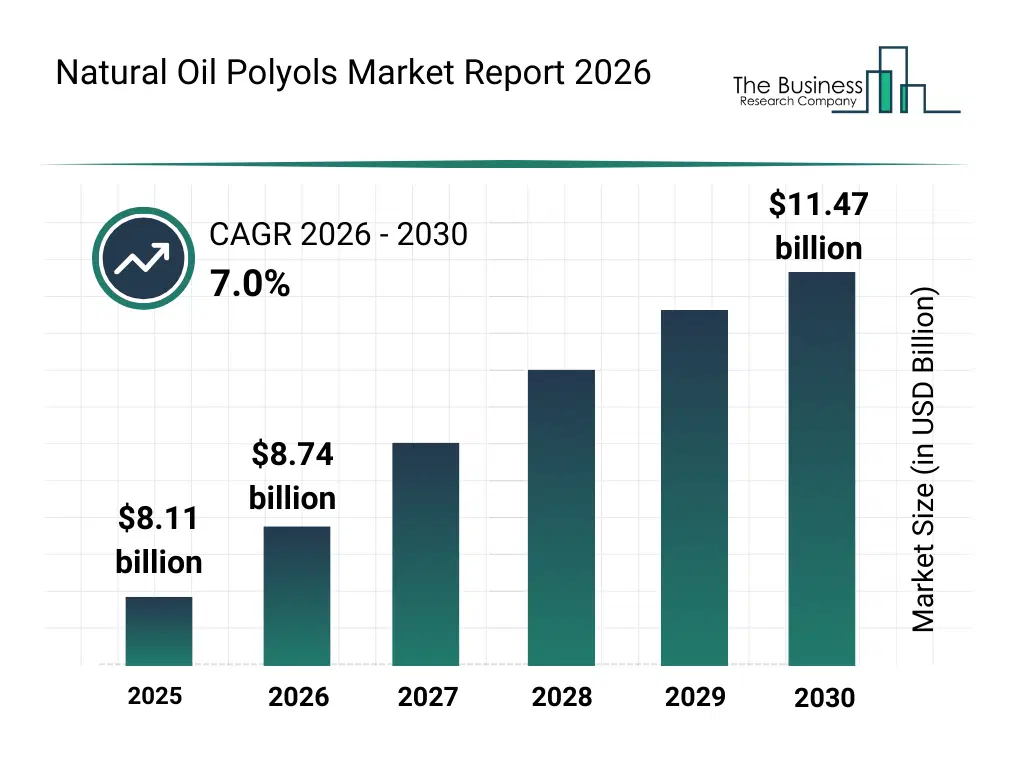
What Is The Natural Oil Polyols Market Size and Share 2026?
The natural oil polyols market size has grown strongly in recent years. It will grow from $8.11 billion in 2025 to $8.74 billion in 2026 at a compound annual growth rate (CAGR) of 7.8%. The growth in the historic period can be attributed to development of vegetable oil-based polyols, increasing environmental regulations on petrochemical polyols, expansion of polyurethane foam applications, availability of agricultural oil feedstocks, growth of green chemistry initiatives.What Is The Natural Oil Polyols Market Growth Forecast?
The natural oil polyols market size is expected to see strong growth in the next few years. It will grow to $11.47 billion in 2030 at a compound annual growth rate (CAGR) of 7.0%. The growth in the forecast period can be attributed to rising demand for circular economy materials, expansion of bio-based plastics adoption, increasing investments in sustainable polymers, growing automotive electrification needs, rising focus on carbon footprint reduction. Major trends in the forecast period include increasing adoption of bio-based polyurethanes, rising use in sustainable construction materials, growing demand for low-voc coatings, expansion of automotive lightweight applications, enhanced focus on renewable feedstocks.
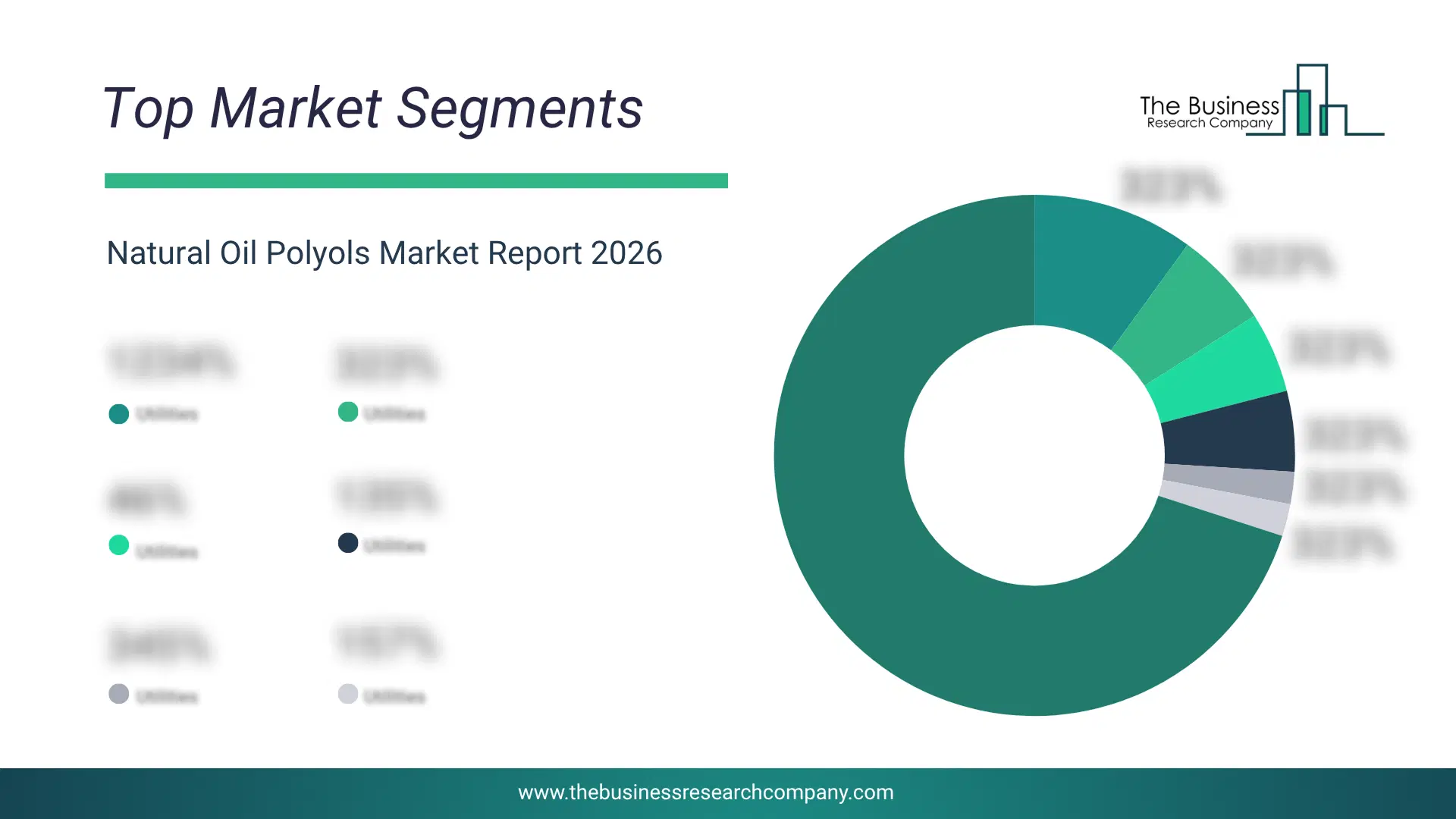
Global Natural Oil Polyols Market Segmentation
1) By Type: Polyester Oil, Polyether Oil 2) By Application: Polyurethane Foams, Cushioning, Other Applications 3) By End-User: Construction, Automobile Subsegments: 1) By Polyester Oil: Vegetable Oil-Based Polyester Polyols, Animal Fat-Based Polyester Polyols 2) By Polyether Oil: Propylene Oxide-Based Polyether Polyols, Ethylene Oxide-Based Polyether PolyolsWhat Are The Drivers Of The Natural Oil Polyols Market?
The increasing demand in the automotive sector is expected to propel the growth of the Natural Oil Polyols market going forward. The automotive sector refers to the industry involved in the design, development, manufacturing, marketing, and sale of motor vehicles including passenger cars and commercial vehicles. The rising demand in the automotive sector is largely driven by urbanization and economic growth, as expanding urban populations and increased disposable incomes in developing regions accelerate vehicle ownership and production to meet transportation needs. The growing demand in the automotive sector supports the natural oil polyols as these bio-based materials are essential for producing lightweight polyurethane foams used in vehicle seats, interior panels, and insulation, helping manufacturers reduce vehicle weight and meet environmental regulations. For instance, in March 2025, according to the European Automobile Manufacturers’ Association (ACEA), a Belgium-based automobile association, in 2024, global car sales reached 74.6 million units, marking a 2.5% increase compared to 2023. Therefore, the increasing demand in the automotive sector is driving the growth of the natural oil polyols industry. The increasing demand in the construction industry is expected to propel the growth of the natural oil polyols market going forward. The construction industry involves the activities related to the creation, renovation, and upkeep of infrastructure, as well as residential, commercial, and industrial buildings. As urbanization increases due to migration for better job prospects, education, and living standards, the demand for infrastructure fuels construction growth. Natural oil polyols are vital in construction, improving the sustainability and performance of materials such as coatings, adhesives, and foams. They offer eco-friendly alternatives to petrochemical polyols, promoting greener building practices. For instance, in July 2024, according to the United States Census Bureau, a US-based government administration, in June 2023, 1,493,000 privately owned housing units were allowed by building permits at a seasonally adjusted annual rate. This is 3.1 percent higher than the May rate of 1,399,000. In June 2023, a privately owned home starts at a seasonally adjusted annual rate of 1,415,000. This is 4.4 percent higher than the May 2023 rate of 1,314,000. Therefore, the increasing demand in the construction industry is driving the growth of the natural oil polyols industry.Key Players In The Global Natural Oil Polyols Market
Major companies operating in the natural oil polyols market are Cargill Incorporated, Mitsui Chemicals Inc., BASF SE, Repsol S.A, The Dow Chemical Company, Wanhua Chemical Group, Covestro AG, Evonik Industries AG, Arkema, Huntsman International LLC., Stepan Company, Croda International Plc, Perstorp Holding AB, Sanyo Chemical Industries Ltd., Kukdo Chemical Co. Ltd., Jayant Agro Organics Ltd., Oleon NV, Emery Oleochemicals, Elevance Renewable Sciences Inc., Novomer Inc
This chart is for illustrative purposes; the full report includes a detailed competitor analysis and comprehensive overview of the top 10 companies in the market.
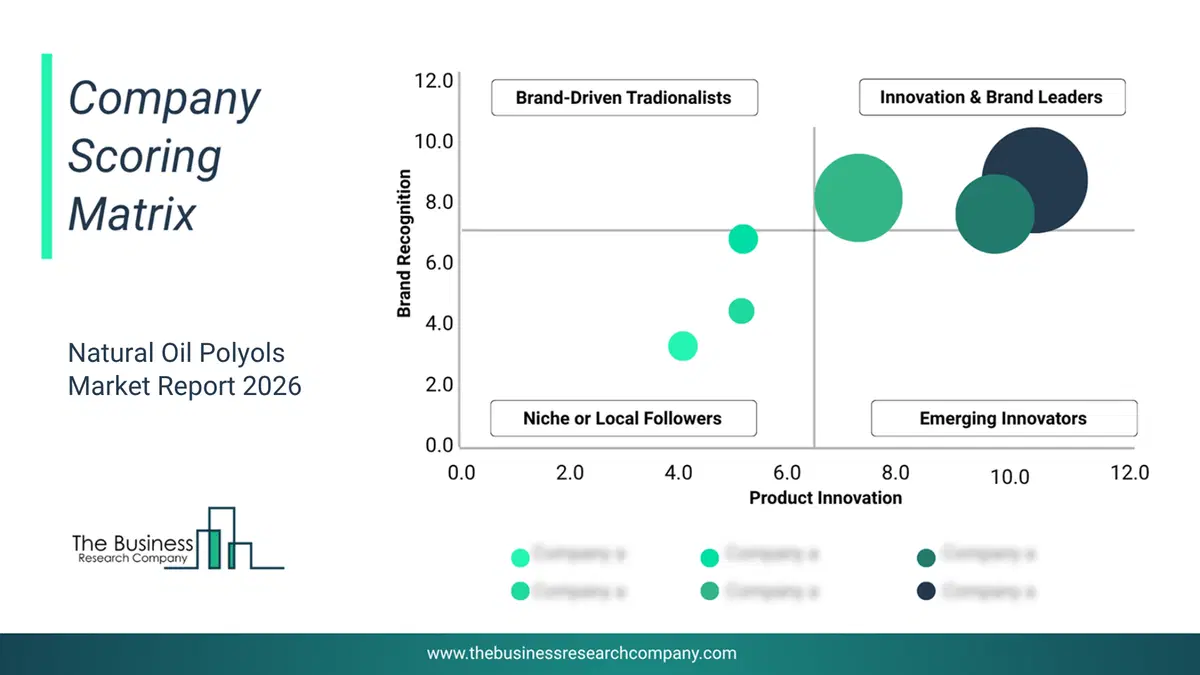
This chart maps companies by product innovation and brand strength, with bubble size indicating relative revenue, helping identify market leaders, challengers, and niche players. This is an illustrative chart; the full report provides a complete and accurate competitive analysis.
What Are Latest Mergers And Acquisitions In The Natural Oil Polyols Market?
Regional Outlook
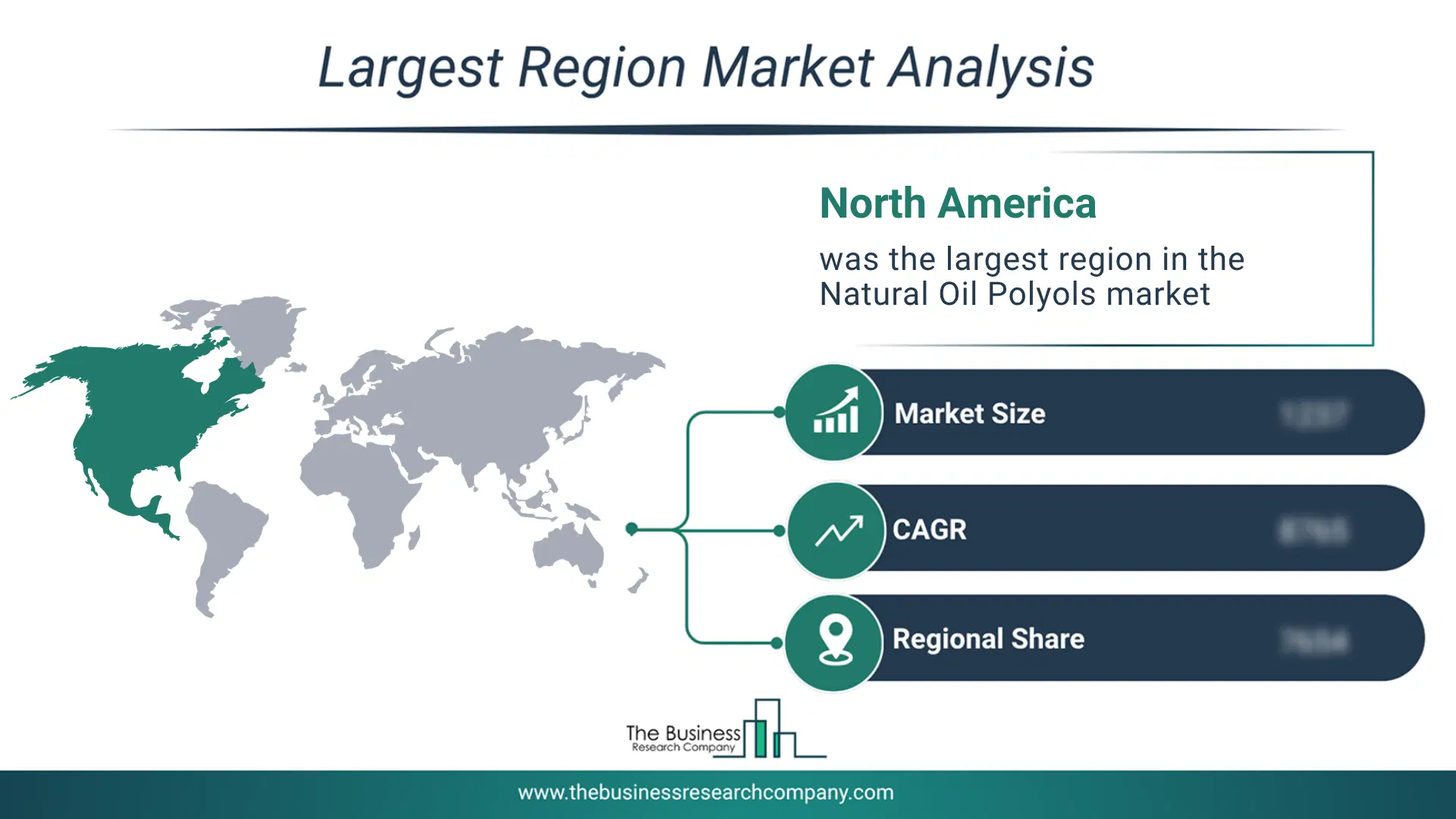
North America was the largest region in the natural oil polyols market in 2025. The regions covered in this market report are Asia-Pacific, South East Asia, Western Europe, Eastern Europe, North America, South America, Middle East and Africa. The countries covered in this market report are Australia, Brazil, China, France, Germany, India, Indonesia, Japan, Taiwan, Russia, South Korea, UK, USA, Italy, Spain, CanadaWhat Defines the Natural Oil Polyols Market?
The natural oil polyols market consists of sales of castor oil polyols, soy oil polyols, palm oil polyols, and rapeseed oil polyols. Values in this market are ‘factory gate’ values, that is, the value of goods sold by the manufacturers or creators of the goods, whether to other entities (including downstream manufacturers, wholesalers, distributors, and retailers) or directly to end customers. The value of goods in this market includes related services sold by the creators of the goods.How is Market Value Defined and Measured?
The market value is defined as the revenues that enterprises gain from the sale of goods and/or services within the specified market and geography through sales, grants, or donations in terms of the currency (in USD unless otherwise specified). The revenues for a specified geography are consumption values that are revenues generated by organizations in the specified geography within the market, irrespective of where they are produced. It does not include revenues from resales along the supply chain, either further along the supply chain or as part of other products.
This chart presents market attractiveness based on a quantitative evaluation of growth, competition, strategic alignment, and risk, offering a clear view of opportunity areas for decision-making. This chart is for illustrative purposes; the full report contains the complete analysis.

This chart highlights the Total Addressable Market (TAM) by estimating the maximum revenue opportunity using an assumption-driven approach, supporting strategic planning and opportunity sizing across markets. The chart is illustrative; the full report provides a more comprehensive analysis.
What Key Data and Analysis Are Included in the Natural Oil Polyols Market Report 2026?
The natural oil polyols market research report is one of a series of new reports from The Business Research Company that provides market statistics, including industry global market size, regional shares, competitors with the market share, detailed market segments, market trends and opportunities, and any further data you may need to thrive in the natural oil polyols industry. The market research report delivers a complete perspective of everything you need, with an in-depth analysis of the current and future state of the industry.Natural Oil Polyols Market Report Forecast Analysis
| Report Attribute | Details |
|---|---|
| Market Size Value In 2026 | $8.74 billion |
| Revenue Forecast In 2030 | $11.47 billion |
| Growth Rate | CAGR of 7.8% from 2026 to 2030 |
| Base Year For Estimation | 2025 |
| Actual Estimates/Historical Data | 2020-2025 |
| Forecast Period | 2026 - 2030 |
| Market Representation | Revenue in USD Billion and CAGR from 2026 to 2030 |
| Segments Covered | Type, Application, End-User |
| Regional Scope | Asia-Pacific, Western Europe, Eastern Europe, North America, South America, Middle East, Africa |
| Country Scope | The countries covered in the report are Australia, Brazil, China, France, Germany, India, Indonesia, Japan, Taiwan, Russia, South Korea, UK, USA, Canada, Italy, Spain. |
| Key Companies Profiled | Cargill Incorporated, Mitsui Chemicals Inc., BASF SE, Repsol S.A, The Dow Chemical Company, Wanhua Chemical Group, Covestro AG, Evonik Industries AG, Arkema, Huntsman International LLC., Stepan Company, Croda International Plc, Perstorp Holding AB, Sanyo Chemical Industries Ltd., Kukdo Chemical Co. Ltd., Jayant Agro Organics Ltd., Oleon NV, Emery Oleochemicals, Elevance Renewable Sciences Inc., Novomer Inc |
| Customization Scope | Request for Customization |
| Pricing And Purchase Options | Explore Purchase Options |