
Nematicides Market Report 2026
Global Outlook – By Type (Fumigants, Bio Nematicides, Organophosphates, Carbamates), By Form (Granular Or Powder, Liquid), By Crop Type (Fruits and Vegetables, Oilseeds, Cereals and Grains, Other Crop Types), By Application (Fumigation, Soil Dressing, Drenching, Seed Treatment, Other Applications) – Market Size, Trends, Strategies, and Forecast to 2030
Nematicides Market Overview
• Nematicides market size has reached to $1.8 billion in 2025 • Expected to grow to $2.67 billion in 2030 at a compound annual growth rate (CAGR) of 8.1% • Growth Driver: Rising Crop Pests Drive Growth In The Nematicides Market • Market Trend: Technological Advancements To Sustain Market Position • North America was the largest region in 2025 and Asia-Pacific is the fastest growing region.What Is Covered Under Nematicides Market?
Nematicides refer to chemical or biological agents used for the control and management of plant-parasitic nematodes in agricultural soils and crops. It is used for reducing nematode populations that damage plant roots, improving nutrient and water uptake, preventing yield losses, and protecting crops such as vegetables, fruits, cereals, and plantation crops from nematode-induced diseases. The main types of nematicides market are fumigants, bio nematicides, organophosphates, carbamates, and others. The term ""fumigants"" refers to highly volatile nematicides. They move quickly through the air gaps between soil particles, but if soil pore spaces or pore necks are filled with water, their mobility may be limited. The different forms include granular or powder, liquid and involve various crop types such as fruits and vegetables, oilseeds, cereals and grains, and other crops. It is used in several applications including fumigation, soil dressing, drenching, seed treatment, and others.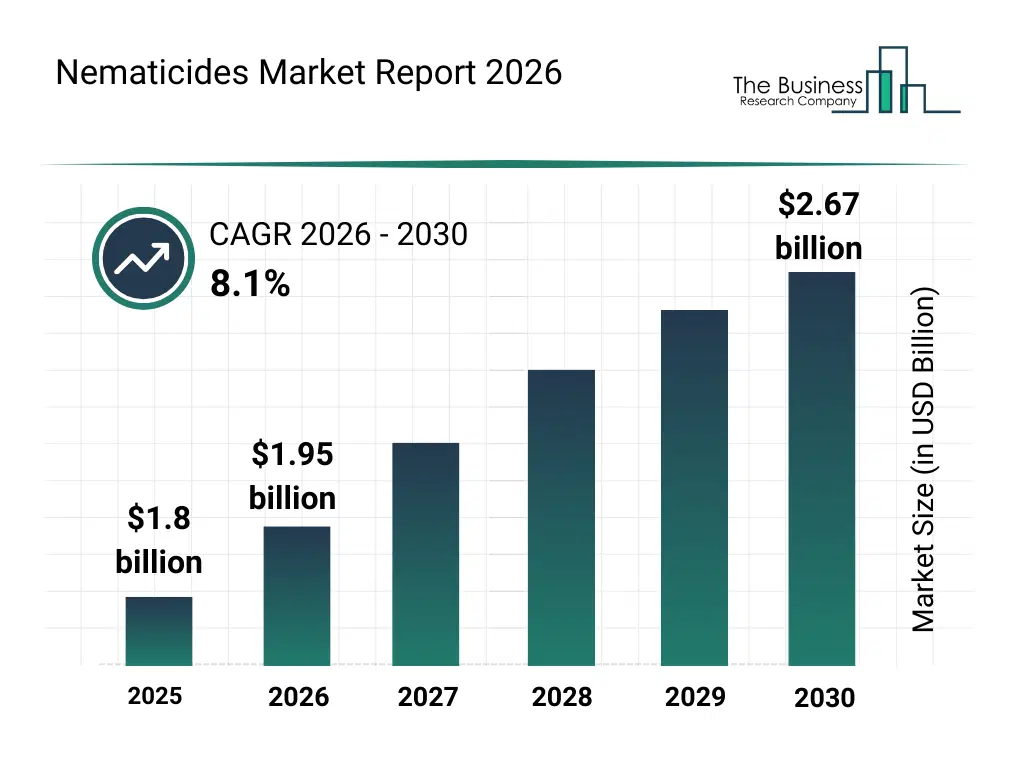
What Is The Nematicides Market Size and Share 2026?
The nematicides market size has grown strongly in recent years. It will grow from $1.8 billion in 2025 to $1.95 billion in 2026 at a compound annual growth rate (CAGR) of 8.6%. The growth in the historic period can be attributed to expansion of intensive farming practices, increasing crop yield losses from nematodes, growth of horticulture and vegetable farming, availability of chemical nematicide formulations, adoption of soil fumigation techniques.What Is The Nematicides Market Growth Forecast?
The nematicides market size is expected to see strong growth in the next few years. It will grow to $2.67 billion in 2030 at a compound annual growth rate (CAGR) of 8.1%. The growth in the forecast period can be attributed to increasing regulatory restrictions on synthetic chemicals, rising demand for sustainable crop protection, expansion of organic farming practices, growing investments in biological crop inputs, increasing focus on residue-free agriculture. Major trends in the forecast period include increasing adoption of bio-based nematicides, rising demand for integrated pest management solutions, growing focus on soil health preservation, expansion of high-value crop protection applications, enhanced regulatory compliance.
Global Nematicides Market Segmentation
1) By Type: Fumigants, Bio Nematicides, Organophosphates, Carbamates 2) By Form: Granular Or Powder, Liquid 3) By Crop Type: Fruits and Vegetables, Oilseeds, Cereals and Grains, Other Crop Types 4) By Application: Fumigation, Soil Dressing, Drenching, Seed Treatment, Other Applications Subsegments: 1) By Fumigants: Methyl Bromide, Chloropicrin, 1,3-Dichloropropene 2) By Bio Nematicides: Bacterial-Based Bio Nematicides, Fungal-Based Bio Nematicides, Plant-Based Bio Nematicides 3) By Organophosphates: Oxamyl, Terbufos 4) By Carbamates: Carbofuran, Methomyl, AldicarbWhat Is The Driver Of The Nematicides Market?
The increasing crop pests are expected to propel the growth of the nematicides market going forward. Crop pests are organisms, typically insects, fungi, bacteria, viruses, nematodes, rodents, or weeds that harm or damage crops leading to reduced agricultural yields and economic losses. Nematicides are used in crop pest control to protect crops from nematodes, control nematode populations, improve crop quality, and enhance plant health. For instance, in March 2024, according to Crop Protection Network, a US-based partnership of university and provincial extension specialists, disease losses in 2023 were estimated at 6.1% in Ontario, Canada, marking an increase from the previous year's decline and indicating a resurgence in pest outbreaks and disease pressures linked to changing environmental conditions and agricultural practices. Therefore, the increasing crop pests is driving the nematicides industry.Key Players In The Global Nematicides Market
Major companies operating in the nematicides market are BASF SE, Syngenta AG, Bayer AG, Corteva Agriscience, FMC Corporation, UPL Limited, Nufarm Limited, Sumitomo Chemical Co., Ltd., Adama Agricultural Solutions Ltd., Marrone Bio Innovations, Valent BioSciences LLC, Koppert Biological Systems, Bionema, Vegalab SA, STK bio-ag technologies, Andermatt Biocontrol AG, Certis USA LLC, Novozymes A/S, BioConsortia Inc., Gowan Company, American Vanguard Corporation
This chart is for illustrative purposes; the full report includes a detailed competitor analysis and comprehensive overview of the top 10 companies in the market.
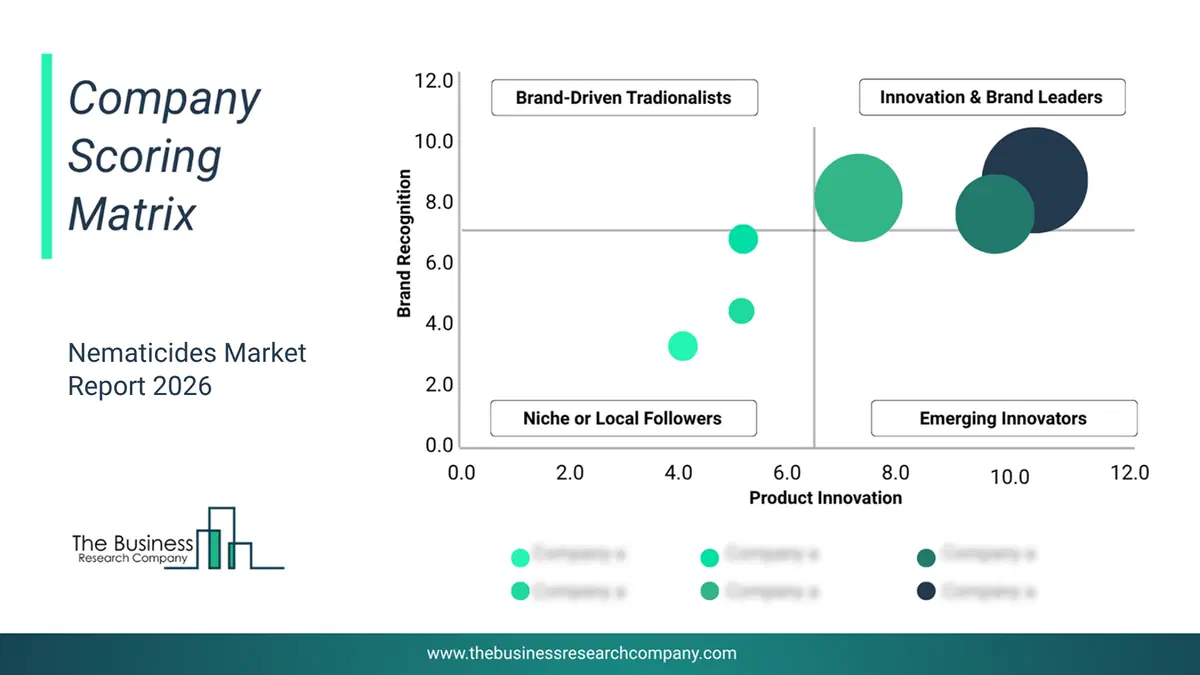
This chart maps companies by product innovation and brand strength, with bubble size indicating relative revenue, helping identify market leaders, challengers, and niche players. This is an illustrative chart; the full report provides a complete and accurate competitive analysis.
Global Nematicides Market Trends and Insights
Major companies operating in the nematicides market are focusing on developing innovative products such as broad-spectrum nematicidal formulations to improve crop protection and support sustainable farming practices. Broad-spectrum nematicidal formulations refer to advanced chemical or biological solutions designed to control a wide range of nematodes and related soilborne pests while minimizing environmental impact and input requirements. For instance, in September 2023, Bayer Inc., a Germany-based life science company, launched Velum and Emesto. This offers innovative formulations that provide broad-spectrum protection against pests and diseases, enhancing crop yield and quality while promoting sustainable agricultural practices through low dose rates and efficient application. These advancements signify a commitment to integrated pest management, equipping Canadian potato growers with effective tools to address the challenges of pest resistance and ensure a more reliable harvest.What Are Latest Mergers And Acquisitions In The Nematicides Market?
In July 2023, Biobest Inc., a Belgium-based agricultural chemicals company, acquired BioWorks Inc. for an undisclosed amount. This acquisition accelerates Biobest's entry into the biopesticide market, a global strategic priority, by integrating BioWorks' strong portfolio of innovative biopesticides for disease and insect control, allowing Biobest to leverage BioWorks' expertise in product development and logistics to enhance its biocontrol solutions for growers. BioWorks Inc. is a US-based manufacturer of biopesticides, including biological control against nematodes.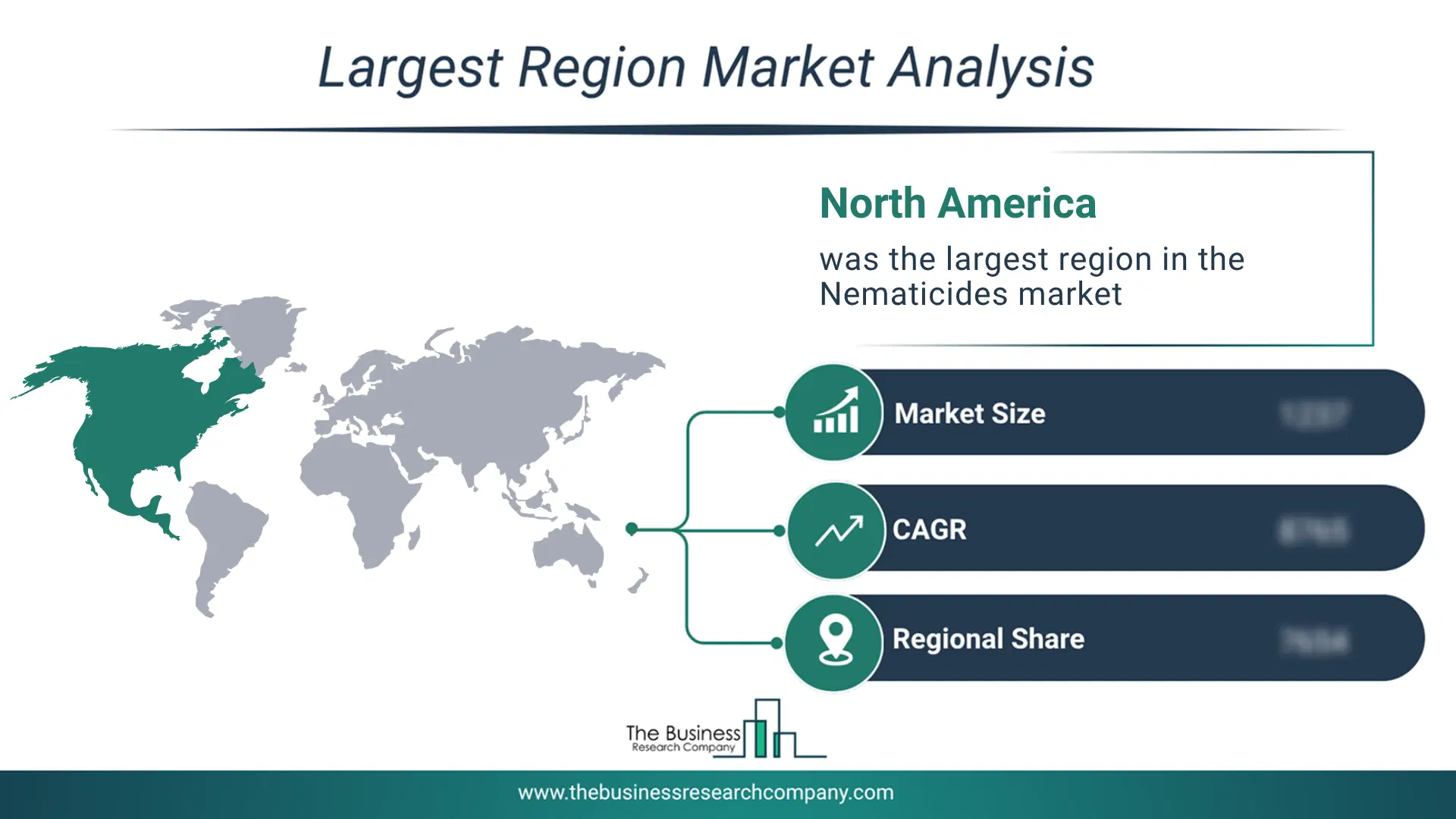
Regional Insights
North America was the largest region in the nematicides market in 2025. Asia-Pacific is expected to be the fastest-growing region in the forecast period. The regions covered in this market report are Asia-Pacific, South East Asia, Western Europe, Eastern Europe, North America, South America, Middle East, Africa The countries covered in this market report are Australia, Brazil, China, France, Germany, India, Indonesia, Japan, Taiwan, Russia, South Korea, UK, USA, Canada, Italy, SpainWhat Defines the Nematicides Market?
The nematicides market consists of sales of natural nematicides and chemical nematicides. Values in this market are ‘factory gate’ values, that is the value of goods sold by the manufacturers or creators of the goods, whether to other entities (including downstream manufacturers, wholesalers, distributors, and retailers) or directly to end customers. The value of goods in this market includes related services sold by the creators of the goods.How is Market Value Defined and Measured?
The market value is defined as the revenues that enterprises gain from the sale of goods and/or services within the specified market and geography through sales, grants, or donations in terms of the currency (in USD unless otherwise specified). The revenues for a specified geography are consumption values that are revenues generated by organizations in the specified geography within the market, irrespective of where they are produced. It does not include revenues from resales along the supply chain, either further along the supply chain or as part of other products.
This chart presents market attractiveness based on a quantitative evaluation of growth, competition, strategic alignment, and risk, offering a clear view of opportunity areas for decision-making. This chart is for illustrative purposes; the full report contains the complete analysis.

This chart highlights the Total Addressable Market (TAM) by estimating the maximum revenue opportunity using an assumption-driven approach, supporting strategic planning and opportunity sizing across markets. The chart is illustrative; the full report provides a more comprehensive analysis.
What Key Data and Analysis Are Included in the Nematicides Market Report 2026?
The nematicides market research report is one of a series of new reports from The Business Research Company that provides market statistics, including industry global market size, regional shares, competitors with the market share, detailed market segments, market trends and opportunities, and any further data you may need to thrive in the nematicides industry. The market research report delivers a complete perspective of everything you need, with an in-depth analysis of the current and future state of the industry.Nematicides Market Report Forecast Analysis
| Report Attribute | Details |
|---|---|
| Market Size Value In 2026 | $1.95 billion |
| Revenue Forecast In 2030 | $2.67 billion |
| Growth Rate | CAGR of 8.6% from 2026 to 2030 |
| Base Year For Estimation | 2025 |
| Actual Estimates/Historical Data | 2020-2025 |
| Forecast Period | 2026 - 2030 |
| Market Representation | Revenue in USD Billion and CAGR from 2026 to 2030 |
| Segments Covered | Type, Form, Crop Type, Application |
| Regional Scope | Asia-Pacific, Western Europe, Eastern Europe, North America, South America, Middle East, Africa |
| Country Scope | The countries covered in this market report are Australia, Brazil, China, France, Germany, India, Indonesia, Japan, Taiwan, Russia, South Korea, UK, USA, Canada, Italy, Spain |
| Key Companies Profiled | BASF SE, Syngenta AG, Bayer AG, Corteva Agriscience, FMC Corporation, UPL Limited, Nufarm Limited, Sumitomo Chemical Co., Ltd., Adama Agricultural Solutions Ltd., Marrone Bio Innovations, Valent BioSciences LLC, Koppert Biological Systems, Bionema, Vegalab SA, STK bio-ag technologies, Andermatt Biocontrol AG, Certis USA LLC, Novozymes A/S, BioConsortia Inc., Gowan Company, American Vanguard Corporation |
| Customization Scope | Request for Customization |
| Pricing And Purchase Options | Explore Purchase Options |