
Non-Meat Ingredients Market Report 2026
Global Outlook – By Ingredient (Binders, Extenders, Flavoring Agents, Coloring Agents, Preservatives, Salts, Texturing Agents), By Product Type (Fresh Processed Meat, Raw-Cooked Meat, Pre-Cooked Meat, Raw Fermented Sausages, Cured Meat, Dried Meat), By Source (Chemical substances, Plant origin, Animal origin) – Market Size, Trends, Strategies, and Forecast to 2030
Non-Meat Ingredients Market Overview
• Non-Meat Ingredients market size has reached to $44.71 billion in 2025 • Expected to grow to $59.93 billion in 2030 at a compound annual growth rate (CAGR) of 6.1% • Growth Driver: Non-Meat Ingredients Market Surges With The Rise In Ready-To-Eat Foods • Market Trend: Technological Advancements Transform The Non-Meat Ingredients Market • North America was the largest region in 2025 and Asia-Pacific is the fastest growing region.What Is Covered Under Non-Meat Ingredients Market?
The non-meat ingredients refer to non-meat ingredients products used to add flavor notes and improve acceptability and bind moisture via proteins and carbs. It improves texture and extends shelf life by improving freeze-thaw stability with modified starches. The primary purpose of ingredients is to enhance the seasoning and color of the meat product, in addition to other functional and textural properties. The main ingredients of non-meat ingredients are binders, fillers, extenders, flavoring agents, coloring agents, preservatives, salts and texturing agents. The binders ingredients of non-meat ingredients are used to retain or attracts additional materials to form a coherent whole. Binders are food additives that are added to foods in order to improve the texture by thickening or binding the ingredients together. The non-meat ingredients product are fresh processed meat, raw-cooked meat, pre-cooked meat, raw fermented sausages, cured meat and dried meat, which are sourced through chemical substances, plant origin, and animal origin.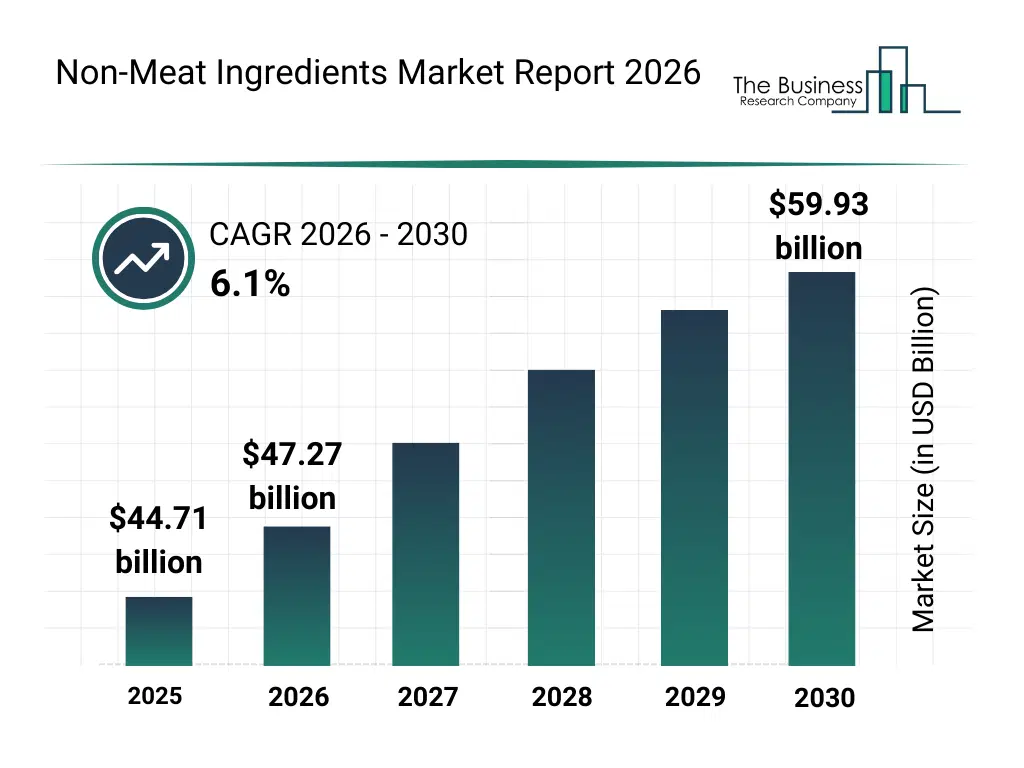
What Is The Non-Meat Ingredients Market Size and Share 2026?
The non-meat ingredients market size has grown strongly in recent years. It will grow from $44.71 billion in 2025 to $47.27 billion in 2026 at a compound annual growth rate (CAGR) of 5.7%. The growth in the historic period can be attributed to expansion of processed meat production, increasing use of functional additives, rising consumer preference for improved meat texture, growth in frozen and ready-to-eat meat products, advancements in food ingredient formulation.What Is The Non-Meat Ingredients Market Growth Forecast?
The non-meat ingredients market size is expected to see strong growth in the next few years. It will grow to $59.93 billion in 2030 at a compound annual growth rate (CAGR) of 6.1%. The growth in the forecast period can be attributed to increasing demand for clean-label and natural ingredients, expansion of plant-based meat alternatives, growing focus on sodium and preservative reduction, rising investments in food ingredient innovation, increasing regulatory scrutiny on additives. Major trends in the forecast period include increasing use of plant-based functional ingredients, rising demand for clean-label meat formulations, growing adoption of modified starches and proteins, expansion of texture and moisture enhancement solutions, enhanced focus on shelf-life extension.
Global Non-Meat Ingredients Market Segmentation
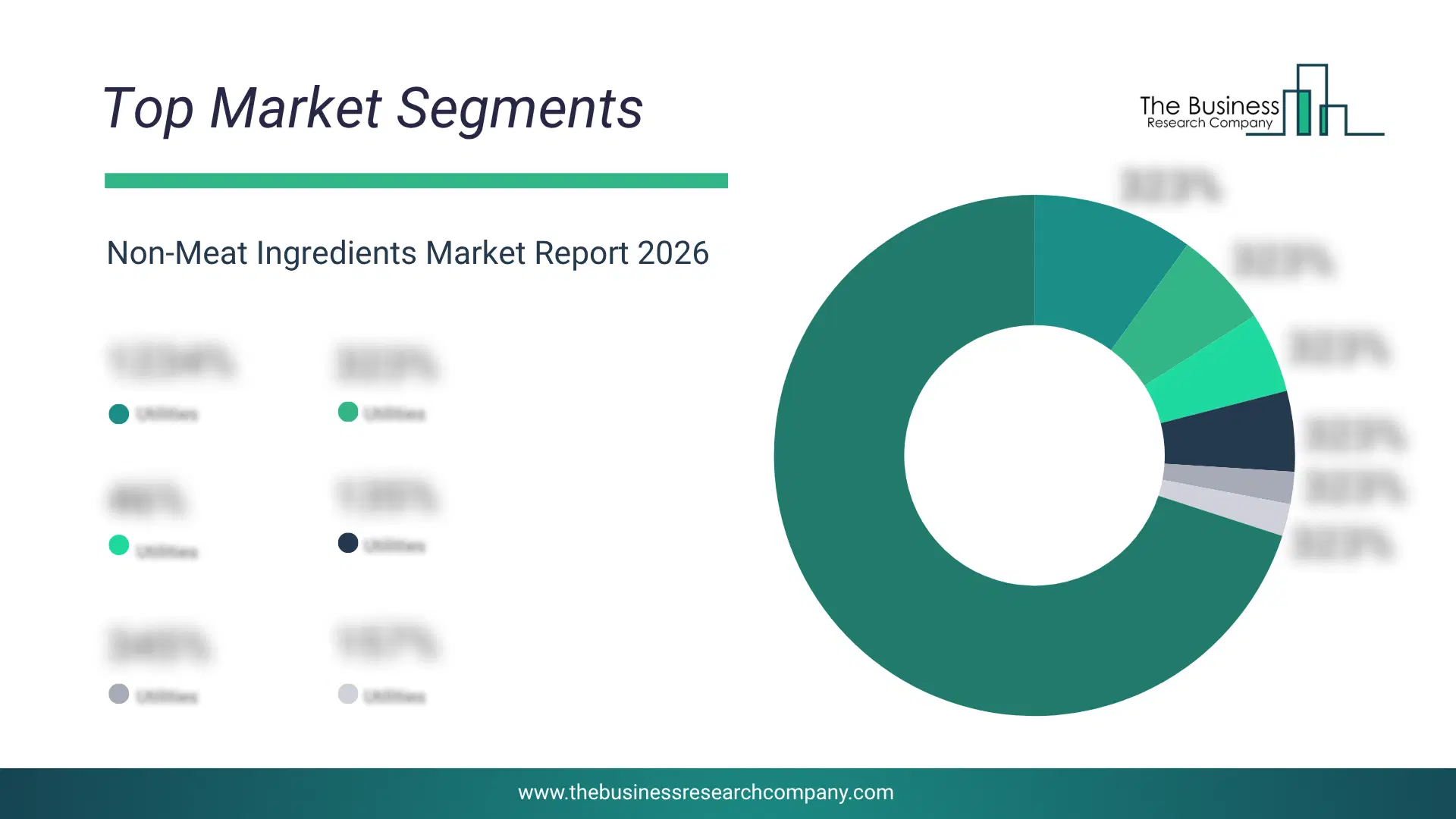
1) By Ingredient: Binders, Extenders, Flavoring Agents, Coloring Agents, Preservatives, Salts, Texturing Agents 2) By Product Type: Fresh Processed Meat, Raw-Cooked Meat, Pre-Cooked Meat, Raw Fermented Sausages, Cured Meat, Dried Meat 3) By Source: Chemical substances, Plant origin, Animal origin Subsegments: 1) By Binders: Starches, Gums 2) By Extenders: Mycoprotein, Legume-Based Extenders 3) By Flavoring Agents: Natural Flavors, Artificial Flavors, Seasonings And Spices 4) By Coloring Agents: Natural Colorants, Synthetic Dyes 5) By Preservatives: Antioxidants, Antimicrobial Agents 6) By Salts: Sodium-Based Salts, Potassium-Based Salts 7) By Texturing Agents: Hydrocolloids, ProteinsWhat Is The Driver Of The Non-Meat Ingredients Market?
The rising consumption of convenience food is expected to propel the growth of the non-meat ingredients market. Convenience foods refer to processed food products that require less time to prepare prior to consumption. They include ready-to-eat food products, packaged foods, and preserved foods. Increasing preferences towards convenience foods are expected to increase the utilization of non-meat ingredients, as it improves the flavor and color of the meat product, in addition to other functional and textural aspects. For instance, in September 2023, according to the Connected Dining: Ready-to-Eat Meals Are Eating Restaurants’ Lunch report published by PYMNTS, a US-based news and analysis company in payments, retail, fintech, financial services, and the digital economy, 37% of consumers aim to opt for consumption of ready-to-eat meals out of 2,400 US consumers due to the affordability of prepared meals. Therefore, a rising consumption of convenience food will drive the non-meat ingredients industry.Key Players In The Global Non-Meat Ingredients Market
Major companies operating in the non-meat ingredients market are Associated British Foods plc, BASF SE, Kerry Group plc, The Dow Chemical Company, Essentia Protein Solutions Holdings, Advanced Food Systems Inc., Wiberg GmbH, DuPont de Nemours Inc., Archer-Daniels-Midland Company, Koninklijke DSM N.V., Ingredion Incorporated, Wenda Ingredients, Cargill Incorporated, Roquette Frères S.A., Emsland Group, Axiom Foods Inc., MGP Ingredients Inc., BENEO GmbH, Glanbia plc, Avebe U.A., A&B Ingredients Inc., Fiberstar Inc., Cosucra Groupe Warcoing SA, Tereos S.A., Burcon NutraScience Corporation, Nutriati Inc., Sotexpro SAS, Gold Coast Ingredients, Hydrosol GmbH & Co. KG, Südzucker AG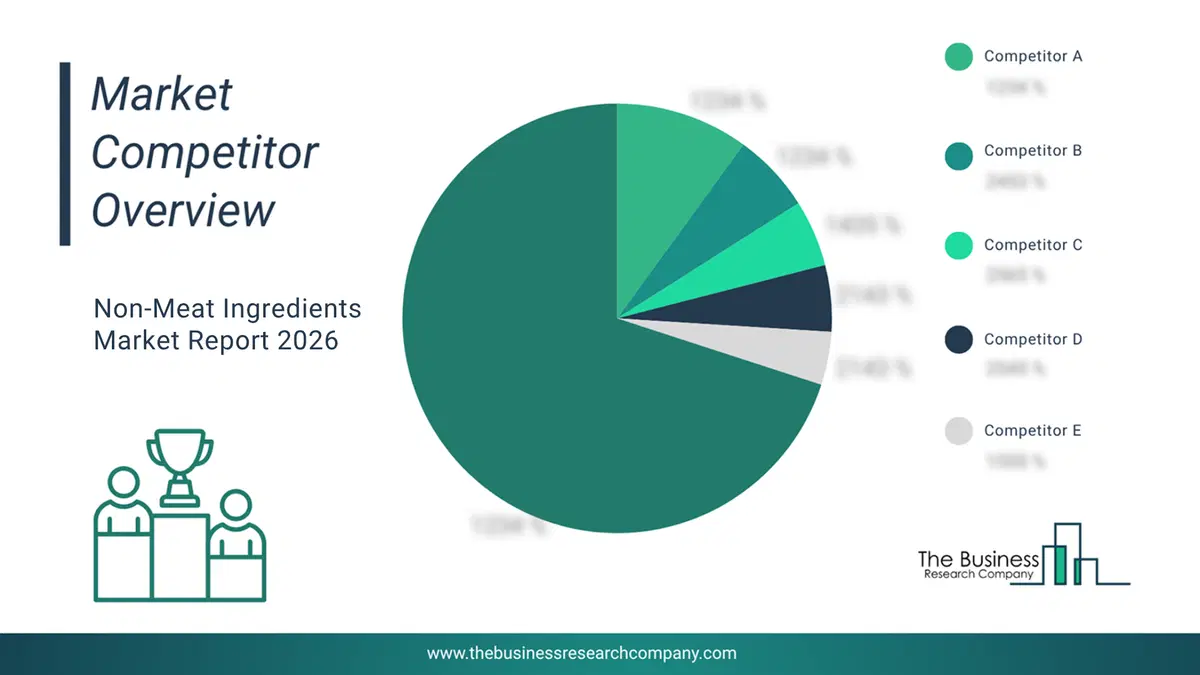
This chart is for illustrative purposes; the full report includes a detailed competitor analysis and comprehensive overview of the top 10 companies in the market.
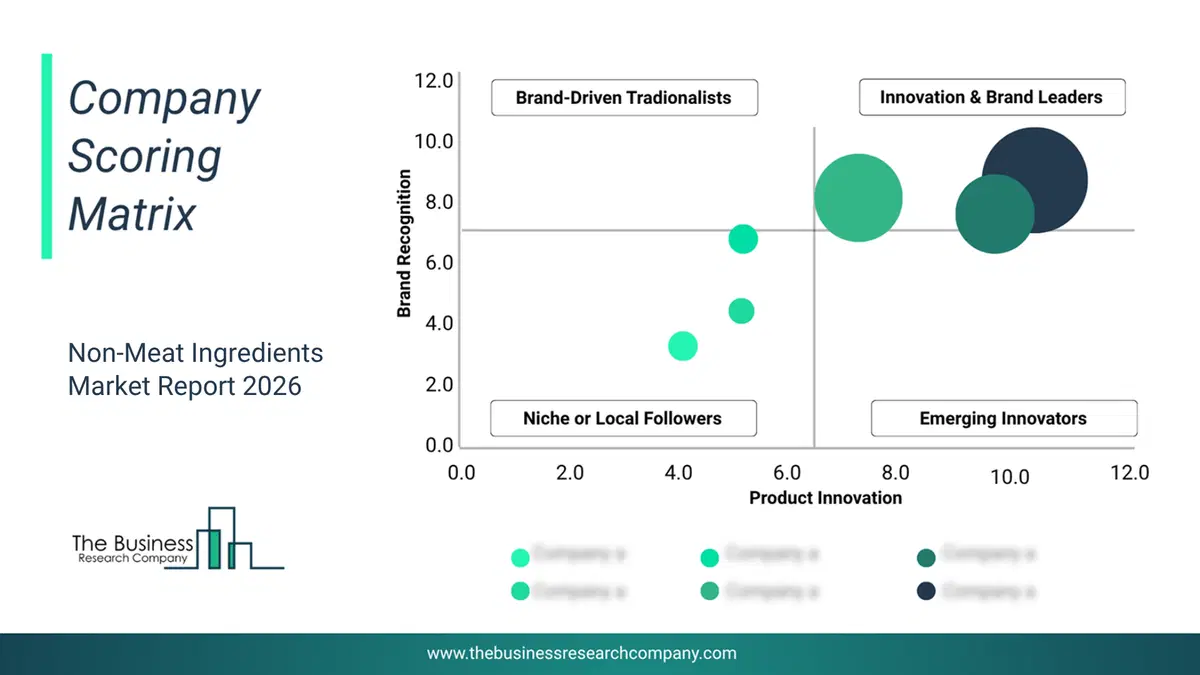
This chart maps companies by product innovation and brand strength, with bubble size indicating relative revenue, helping identify market leaders, challengers, and niche players. This is an illustrative chart; the full report provides a complete and accurate competitive analysis.
Global Non-Meat Ingredients Market Trends and Insights
Major players operating in the non-meat ingredients market are focusing on developing innovative solutions such as advanced plant-based meat substitutes to meet rising demand for healthful, sustainable, and convenient food products. Plant-based meat substitutes are specially formulated ingredients designed to replicate the taste, texture, and nutritional profile of traditional meat while offering lower environmental impact. These ingredients help enhance the sensory experience of plant-based foods, improve nutritional content, and support sustainable eating practices. For instance, in March 2023, Kerry Group plc, an Ireland-based public food and beverage taste-and-nutrition solutions company, launched SucculencePB, an innovative taste/juiciness technology for plant-based meat alternatives. SucculencePB is a patent-pending system formulated to recreate the succulent, juicy taste and mouthfeel of real meat, solving the common “dry mouth” issue often experienced in cooked plant-based meats.What Are Latest Mergers And Acquisitions In The Non-Meat Ingredients Market?
In June 2024, Tate & Lyle PLC, a UK-based food and beverage ingredients company, acquired CP Kelco LLC for an undisclosed amount. Through this acquisition, Tate & Lyle aims to enhance its sweetening, mouthfeel, and fortification solutions, expand technical capabilities across food and beverage applications, accelerate innovation in texture and functional ingredients, and strengthen its global market presence. CP Kelco LLC is a US-based ingredients company specializing in carrageenan, citrus fiber, pectin, refined locust bean gum, and xanthan gum.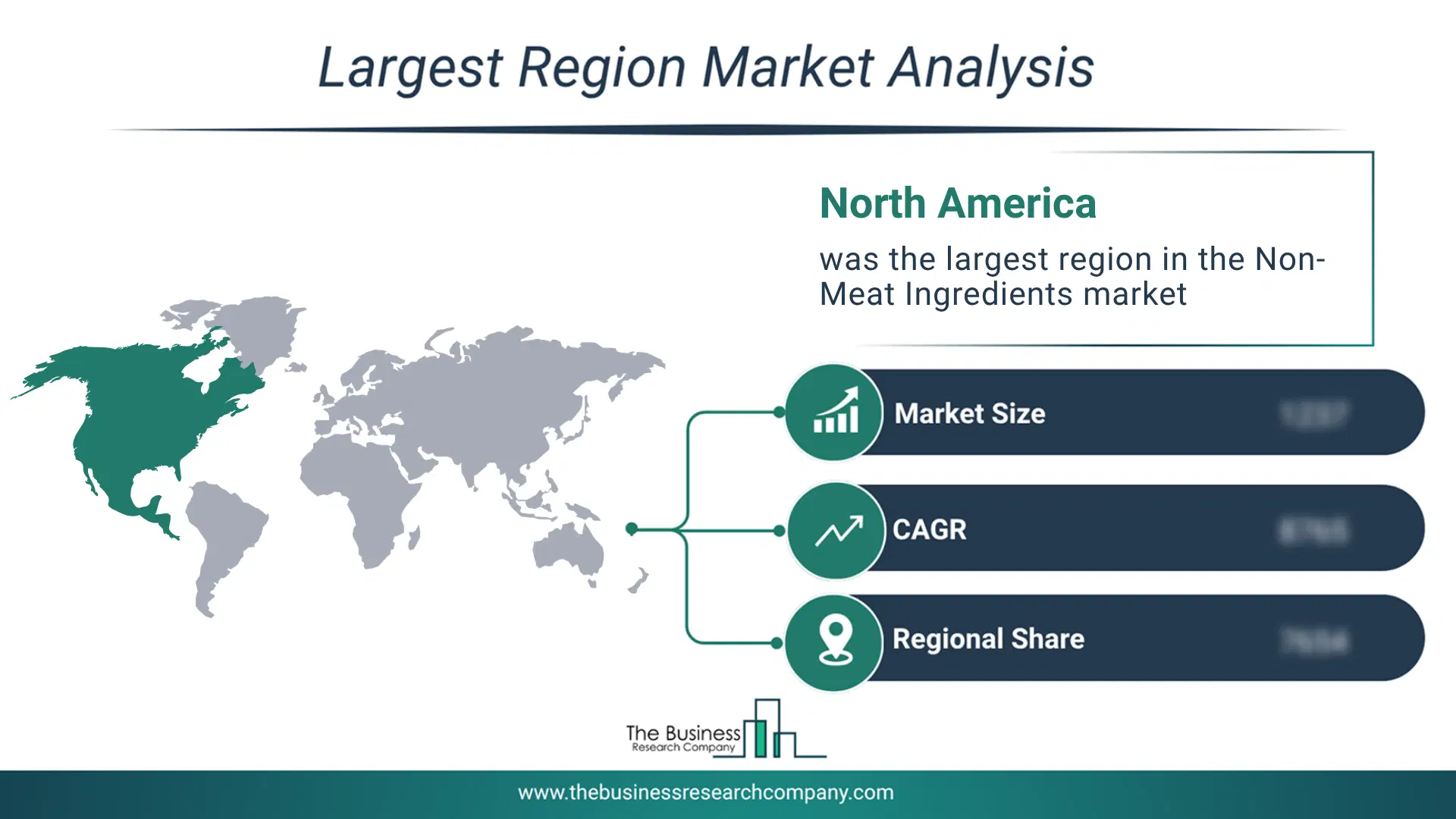
Regional Outlook
North America was the largest region in the non-meat ingredients market in 2025. Asia-Pacific is expected to be the fastest-growing region in the non-meat ingredients market during the forecast period. The regions covered in this market report are Asia-Pacific, South East Asia, Western Europe, Eastern Europe, North America, South America, Middle East and Africa. The countries covered in this market report are Australia, Brazil, China, France, Germany, India, Indonesia, Japan, Taiwan, Russia, South Korea, UK, USA, Italy, Spain, CanadaWhat Defines the Non-Meat Ingredients Market?
The non-meat ingredients market consists of sales of soy protein, starch protein, milk protein, and extenders. Values in this market are ‘factory gate’ values, that is the value of goods sold by the manufacturers or creators of the goods, whether to other entities (including downstream manufacturers, wholesalers, distributors and retailers) or directly to end customers. The value of goods in this market includes related services sold by the creators of the goods.How is Market Value Defined and Measured?
The market value is defined as the revenues that enterprises gain from the sale of goods and/or services within the specified market and geography through sales, grants, or donations in terms of the currency (in USD unless otherwise specified). The revenues for a specified geography are consumption values that are revenues generated by organizations in the specified geography within the market, irrespective of where they are produced. It does not include revenues from resales along the supply chain, either further along the supply chain or as part of other products.
This chart presents market attractiveness based on a quantitative evaluation of growth, competition, strategic alignment, and risk, offering a clear view of opportunity areas for decision-making. This chart is for illustrative purposes; the full report contains the complete analysis.

This chart highlights the Total Addressable Market (TAM) by estimating the maximum revenue opportunity using an assumption-driven approach, supporting strategic planning and opportunity sizing across markets. The chart is illustrative; the full report provides a more comprehensive analysis.
What Key Data and Analysis Are Included in the Non-Meat Ingredients Market Report 2026?
The non-meat ingredients market research report is one of a series of new reports from The Business Research Company that provides market statistics, including industry global market size, regional shares, competitors with the market share, detailed market segments, market trends and opportunities, and any further data you may need to thrive in the non-meat ingredients industry. The market research report delivers a complete perspective of everything you need, with an in-depth analysis of the current and future state of the industry.Non-Meat Ingredients Market Report Forecast Analysis
| Report Attribute | Details |
|---|---|
| Market Size Value In 2026 | $47.27 billion |
| Revenue Forecast In 2030 | $59.93 billion |
| Growth Rate | CAGR of 5.7% from 2026 to 2030 |
| Base Year For Estimation | 2025 |
| Actual Estimates/Historical Data | 2020-2025 |
| Forecast Period | 2026 - 2030 |
| Market Representation | Revenue in USD Billion and CAGR from 2026 to 2030 |
| Segments Covered | Ingredient, Product Type, Source |
| Regional Scope | Asia-Pacific, Western Europe, Eastern Europe, North America, South America, Middle East, Africa |
| Country Scope | The countries covered in the report are Australia, Brazil, China, France, Germany, India, Indonesia, Japan, Taiwan, Russia, South Korea, UK, USA, Canada, Italy, Spain. |
| Key Companies Profiled | Associated British Foods plc, BASF SE, Kerry Group plc, The Dow Chemical Company, Essentia Protein Solutions Holdings, Advanced Food Systems Inc., Wiberg GmbH, DuPont de Nemours Inc., Archer-Daniels-Midland Company, Koninklijke DSM N.V., Ingredion Incorporated, Wenda Ingredients, Cargill Incorporated, Roquette Frères S.A., Emsland Group, Axiom Foods Inc., MGP Ingredients Inc., BENEO GmbH, Glanbia plc, Avebe U.A., A&B Ingredients Inc., Fiberstar Inc., Cosucra Groupe Warcoing SA, Tereos S.A., Burcon NutraScience Corporation, Nutriati Inc., Sotexpro SAS, Gold Coast Ingredients, Hydrosol GmbH & Co. KG, Südzucker AG |
| Customization Scope | Request for Customization |
| Pricing And Purchase Options | Explore Purchase Options |