
Oilfield Chemicals Market Report 2026
Global Outlook – By Type (Polymers, Corrosion And Scale Inhibitors, Demulsifiers, Surfactants, Gellants And Viscosifiers, Other Types), By Location (Onshore, Offshore), By Application (Drilling, Cementing, Enhanced Oil Recovery, Production Chemicals, Well Stimulation, Workover And Completion) – Market Size, Trends, Strategies, and Forecast to 2030
Oilfield Chemicals Market Overview
• Oilfield Chemicals market size has reached to $37.15 billion in 2025 • Expected to grow to $50.44 billion in 2030 at a compound annual growth rate (CAGR) of 6.3% • Growth Driver: Rising Demand Of Crude Oil Ans Its By Product • Market Trend: Innovation In Bio-Based Oil Field • North America was the largest region in 2025 and Asia-Pacific is the fastest growing region.Market Gains By 2030 – Top Opportunities By Segment
Market Gain identifies the most promising market opportunities by highlighting the segments or products expected to generate the highest incremental revenue growth over the next five years.
What Is Covered Under Oilfield Chemicals Market?
Oilfield chemicals refer to chemical compounds of specialty chemicals that are used to improve oil recovery, protect from corrosion, optimize drilling, prevent mud loss in different geological formations, and stabilize drilling fluid in high-temperature and high-pressure environments. The main types of oilfield chemicals markets are polymers, corrosion, and scale inhibitors, demulsifiers, surfactants, gellants and viscosifiers, and others. Polymers are used in drilling fluid for better extraction of oil and gas operations. Polymers used in the oilfield chemicals market refers to large molecule made up of repeating units is added in drilling muds to design drilling fluids for specific drilling conditions, even allowing for complete replacement of clay with polymer when drilling through formations with water-sensitive shales, and in water-producing zones. The various locations are onshore and offshore. The various applications are drilling, cementing, enhanced oil recovery, production chemicals, well stimulation, and workover and completion.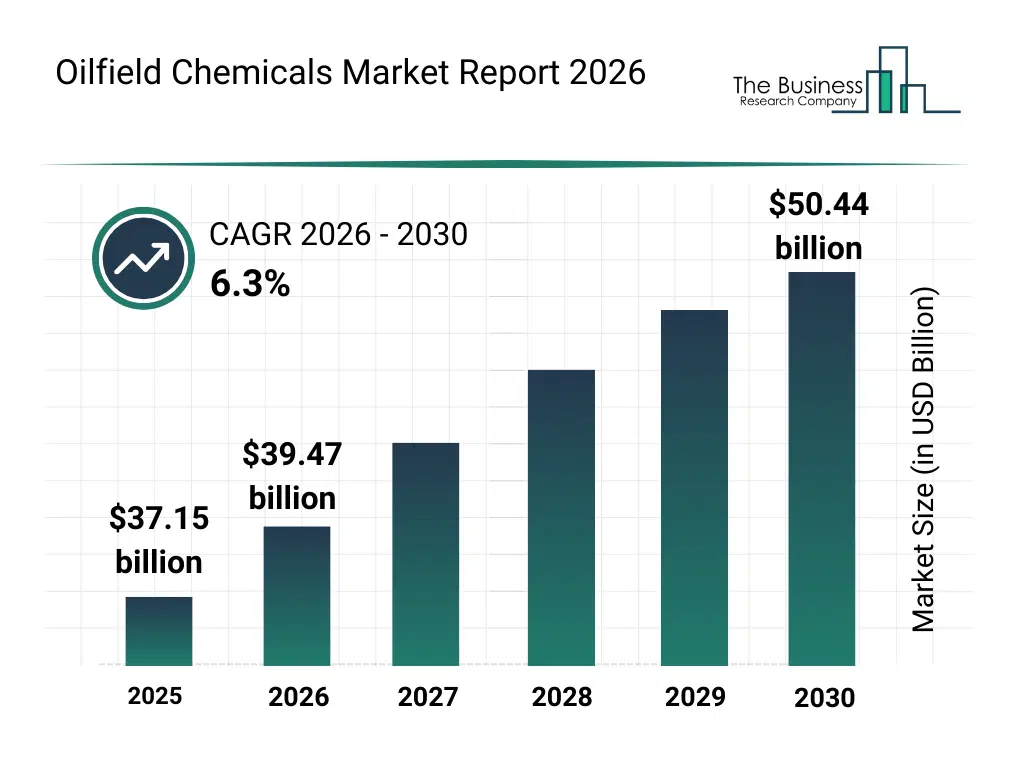
What Is The Oilfield Chemicals Market Size and Share 2026?
The oilfield chemicals market size has grown strongly in recent years. It will grow from $37.15 billion in 2025 to $39.47 billion in 2026 at a compound annual growth rate (CAGR) of 6.2%. The growth in the historic period can be attributed to expansion of global drilling activities, increased offshore oil exploration, rising demand for corrosion protection, growth of unconventional oil production, availability of advanced polymer chemistries.What Is The Oilfield Chemicals Market Growth Forecast?
The oilfield chemicals market size is expected to see strong growth in the next few years. It will grow to $50.44 billion in 2030 at a compound annual growth rate (CAGR) of 6.3%. The growth in the forecast period can be attributed to increasing investments in deepwater exploration, rising focus on production efficiency optimization, expansion of environmentally compliant oilfield chemicals, growing demand for flow assurance solutions, increasing adoption of digital chemical monitoring. Major trends in the forecast period include increasing adoption of specialty drilling chemicals, rising use of enhanced oil recovery additives, growing focus on high-temperature and high-pressure stability, expansion of offshore chemical applications, enhanced chemical performance optimization.
Global Oilfield Chemicals Market Segmentation
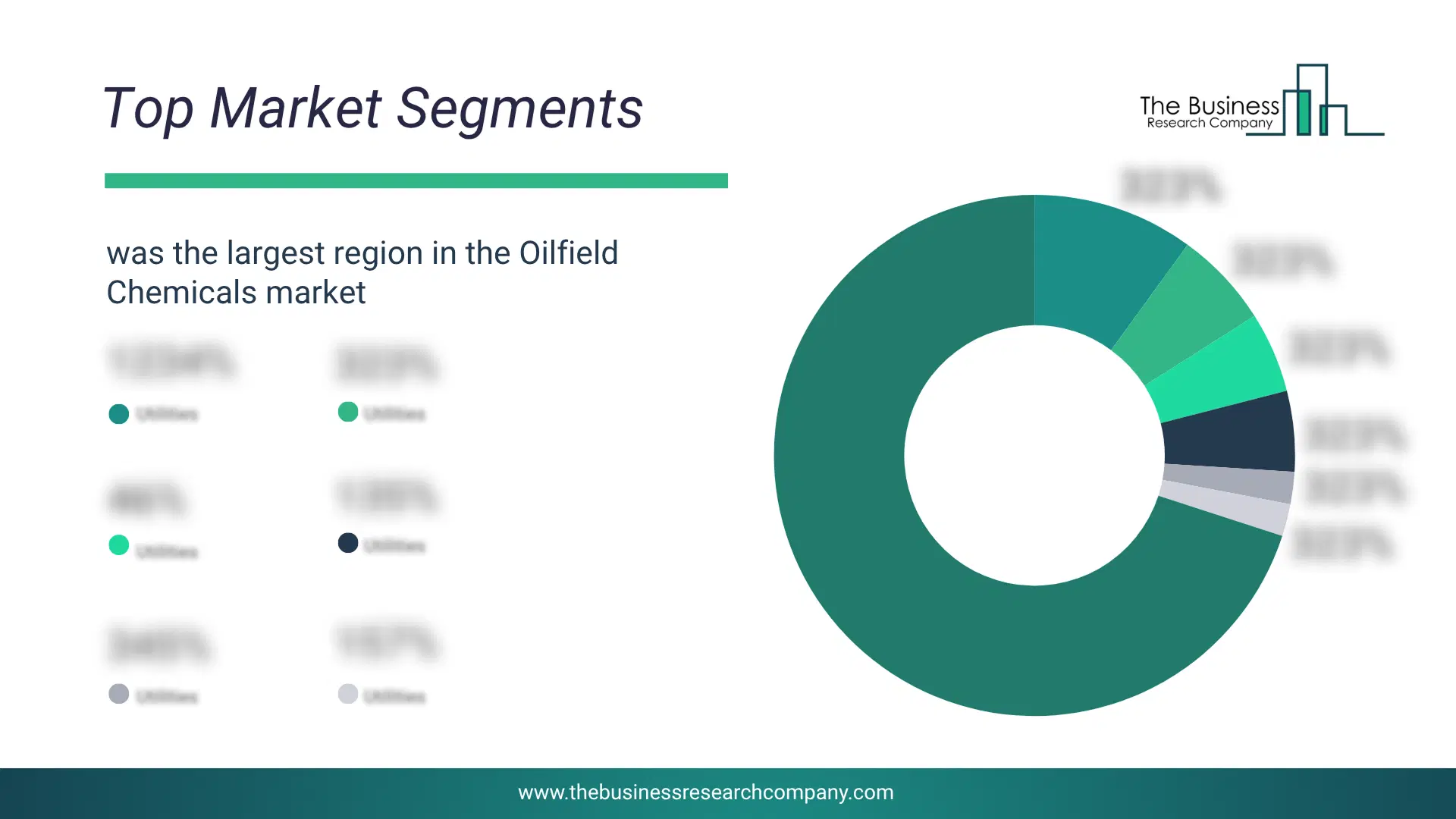
1) By Type: Polymers, Corrosion And Scale Inhibitors, Demulsifiers, Surfactants, Gellants And Viscosifiers, Other Types 2) By Location: Onshore, Offshore 3) By Application: Drilling, Cementing, Enhanced Oil Recovery, Production Chemicals, Well Stimulation, Workover And Completion Subsegments: 1) By Polymers: Friction Reducers, Drag Reducers, Thickening Agents 2) By Corrosion And Scale Inhibitors: Corrosion Inhibitors, Scale Inhibitors 3) By Demulsifiers: Water-In-Oil Demulsifiers, Oil-In-Water Demulsifiers 4) By Surfactants: Anionic Surfactants, Cationic Surfactants, Nonionic Surfactants 5) By Gellants And Viscosifiers: Clay-Based Gellants, Synthetic Viscosifiers 6) By Other Types: Biocides, Flow Assurance Chemicals, PH Adjusters The top segments in the oilfield chemicals market will be: • Corrosion And Scale Inhibitors will reach $14.26 Billion by 2030. • Demulsifiers will reach $9.79 Billion by 2030. • Polymers will reach $8.97 Billion by 2030. • Surfactants will reach $6.44 Billion by 2030. • Gellants And Viscosifiers will reach $5.94 Billion by 2030.What Is The Driver Of The Oilfield Chemicals Market?
The rising demand for crude oil and its by-products is expected to propel the growth of the oilfield chemicals market going forward. Crude oil is a combination of hydrocarbons that occurs in the liquid phase in natural subterranean reservoirs and stays liquid under normal pressure despite passing through surface-separating facilities. The by-products are products obtained by the extraction process in a refinery, and these products include gasoline, aviation fuel, diesel, and asphalt. The rising demand for crude oil has led to increased exploration and production activities, which, in turn, has driven the demand for oilfield chemicals. These chemicals are utilized in various petroleum operations such as drilling, well stimulation, production, cementing, enhanced oil recovery, and hydraulic fracturing For instance, in March 2023, according to the US Energy Information Administration, a US-based federal statistical system for gathering, processing, and disseminating energy data, the U.S. crude oil output increased to 12.4 million b/d in 2023 from the record high of 11.7 million b/d in 2022. Therefore, the rising demand for crude oil and its by-products is driving the oilfield chemicals industry.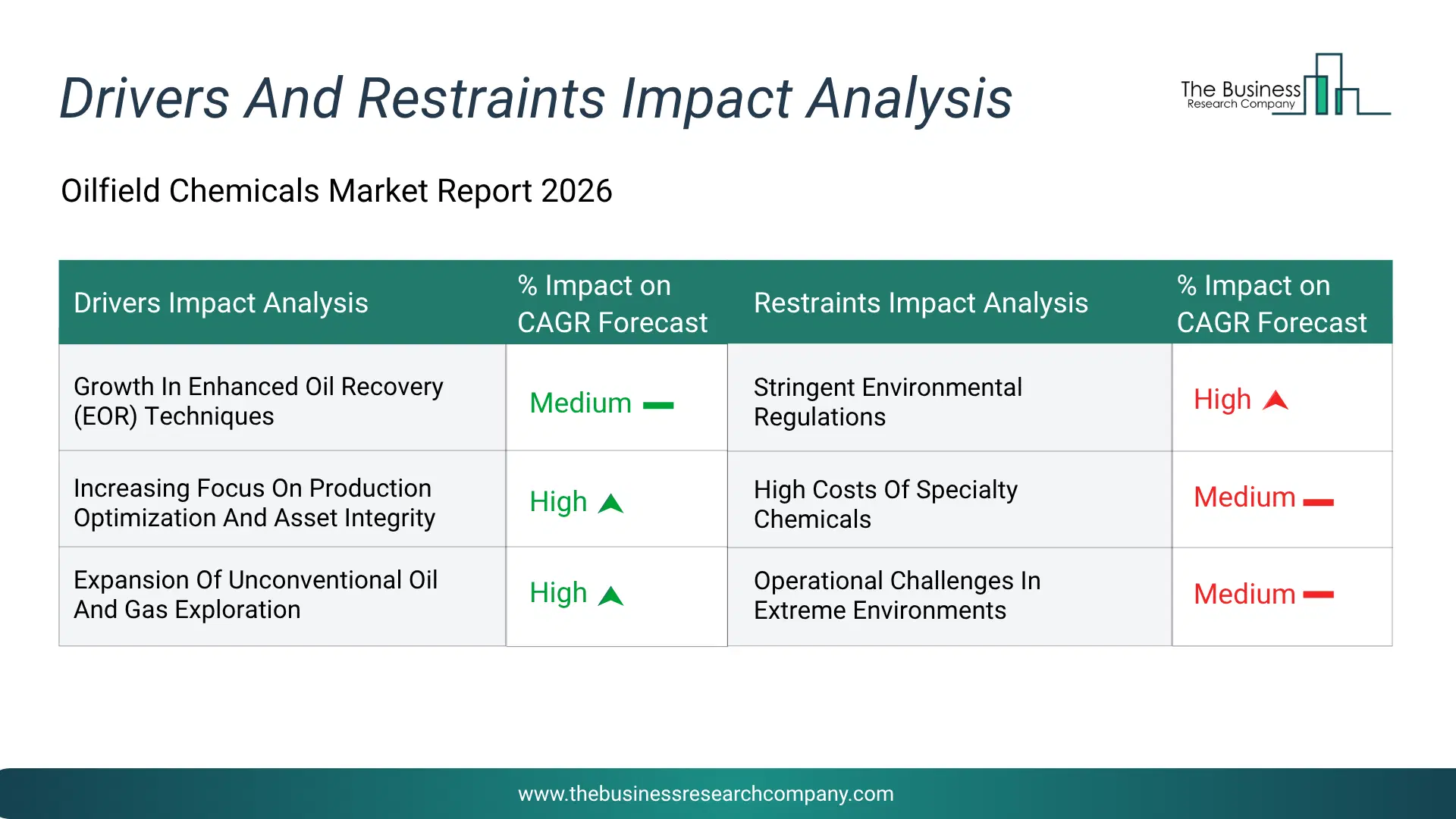
Infographic Chart Showing Key Market Drivers Analysis And Restraints For Oilfield Chemicals Market
The chart presents an impact analysis of key drivers and restraints, quantifying their relative influence on the market's growth rate and helping assess the balance between growth enablers and limiting factors. This chart offers a high-level perspective; the full report contains more detailed insights.
How Will The Drivers Impact Growth In The Global Oilfield Chemicals Market?
• Growth In Enhanced Oil Recovery (EOR) Techniques (Medium) – During the forecast period, the growth in enhanced oil recovery (EOR) techniques is expected to become a key growth driver for the oilfield chemicals market by 2030. Operators are increasingly deploying chemical-based EOR methods to maximize extraction rates from mature and declining reservoirs. The use of specialized polymers, surfactants, and related formulations helps improve sweep efficiency, mobilize trapped hydrocarbons, and increase ultimate recovery factors. As conventional reserves mature and production targets become more demanding, investment in advanced recovery solutions continues to accelerate. • Increasing Focus On Production Optimization And Asset Integrity (High) – During the forecast period, the increasing focus on production optimization and asset integrity is expected to emerge as a major factor driving the expansion of the oilfield chemicals market by 2030. Energy producers are adopting advanced chemical treatment programs to improve operational efficiency, maintain stable production rates, and protect critical infrastructure from performance degradation. Effective chemical management supports reduced downtime, improved equipment reliability, and enhanced field productivity across upstream operations. • Expansion Of Unconventional Oil And Gas Exploration (High) – During the forecast period, the expansion of unconventional oil and gas exploration is expected to act as a key growth catalyst for the oilfield chemicals market by 2030. Increasing development of shale formations, tight reservoirs, and other unconventional resources requires extensive use of drilling, completion, stimulation, and production chemicals. These operations often involve complex geological conditions that demand tailored chemical formulations to improve extraction efficiency and operational effectiveness. Growing investments in unconventional resource development across major producing regions are further accelerating chemical consumption.How Will The Restraints Impact Growth In The Global Oilfield Chemicals Market?
• Stringent Environmental Regulations (Medium) – During the forecast period, the stringent environmental regulations act as a major restraint on the oilfield chemicals market by limiting the use, production, and disposal of certain chemical formulations. Governments and environmental bodies impose strict rules to reduce pollution, protect ecosystems, and ensure safe handling of hazardous substances used in oilfield operations. Compliance with these regulations often requires companies to reformulate products, invest in eco-friendly alternatives, and adopt advanced waste management systems. These adjustments increase operational complexity and extend product development timelines. In some cases, certain effective but harmful chemicals are banned, reducing the range of available solutions for oil recovery and drilling efficiency. Regulatory approvals can also delay project execution, especially in offshore and environmentally sensitive regions. Additionally, companies may face penalties or legal risks if they fail to meet compliance standards. This creates uncertainty and discourages smaller players from entering the market. The need for continuous monitoring and reporting further adds to administrative costs. Overall, these regulatory pressures limit innovation flexibility and increase the cost burden, thereby restraining market growth. • High Costs Of Specialty Chemicals (High) – During the forecast period, the high cost of specialty chemicals significantly restrains the growth of the oilfield chemicals market by increasing the overall expenditure of oil and gas operations. These chemicals are often complex formulations designed to perform under extreme conditions, requiring advanced raw materials and sophisticated manufacturing processes. As a result, their production and procurement costs are considerably higher than conventional chemicals. For oilfield operators, especially in price-sensitive or low-margin environments, these costs can reduce profitability and limit adoption. Fluctuations in raw material prices further add to cost uncertainty, making budgeting more difficult. Smaller exploration companies may struggle to afford these high-performance chemicals, leading them to opt for less effective alternatives. Additionally, during periods of low crude oil prices, companies tend to cut operational costs, including spending on specialty chemicals. This directly impacts demand in the market. The high cost also affects research and development investments, as companies must balance innovation with affordability. Overall, the expensive nature of these chemicals restricts widespread usage and slows market expansion. • Operational Challenges In Extreme Environments (High) – During the forecast period, the operational challenges in extreme environments act as a restraint by complicating the effective use of oilfield chemicals in demanding conditions such as high pressure, high temperature, and deepwater drilling. In such environments, standard chemical formulations may degrade, lose effectiveness, or behave unpredictably, requiring continuous adaptation and customization. Developing chemicals that can withstand these harsh conditions involves significant research, testing, and cost, which can delay deployment. Equipment limitations and logistical difficulties in remote or offshore locations further hinder the proper application of these chemicals. Inconsistent performance can lead to operational inefficiencies, increased downtime, and higher maintenance costs. Additionally, extreme conditions increase the risk of chemical failure, which can compromise safety and environmental standards. This creates hesitation among operators to rely heavily on certain chemical solutions. The need for specialized handling, storage, and transportation adds another layer of complexity. These operational constraints reduce efficiency and increase risk, ultimately limiting the growth potential of the oilfield chemicals market.Key Players In The Global Oilfield Chemicals Market
Major companies operating in the oilfield chemicals market are Halliburton, Schlumberger Limited, Baker Hughes Company, ChampionX, Clariant AG, BASF SE, Solvay S.A., Kemira Oyj, Nouryon, The Lubrizol Corporation, Innospec Inc., Flotek Industries Inc., CES Energy Solutions Corp., Croda International Plc, Ashland Global Holdings Inc., Albemarle Corporation, Elementis PLC, Zirax Limited, Aquapharm Chemical Pvt. Ltd., Thermax Limited, Chevron Phillips Chemical Company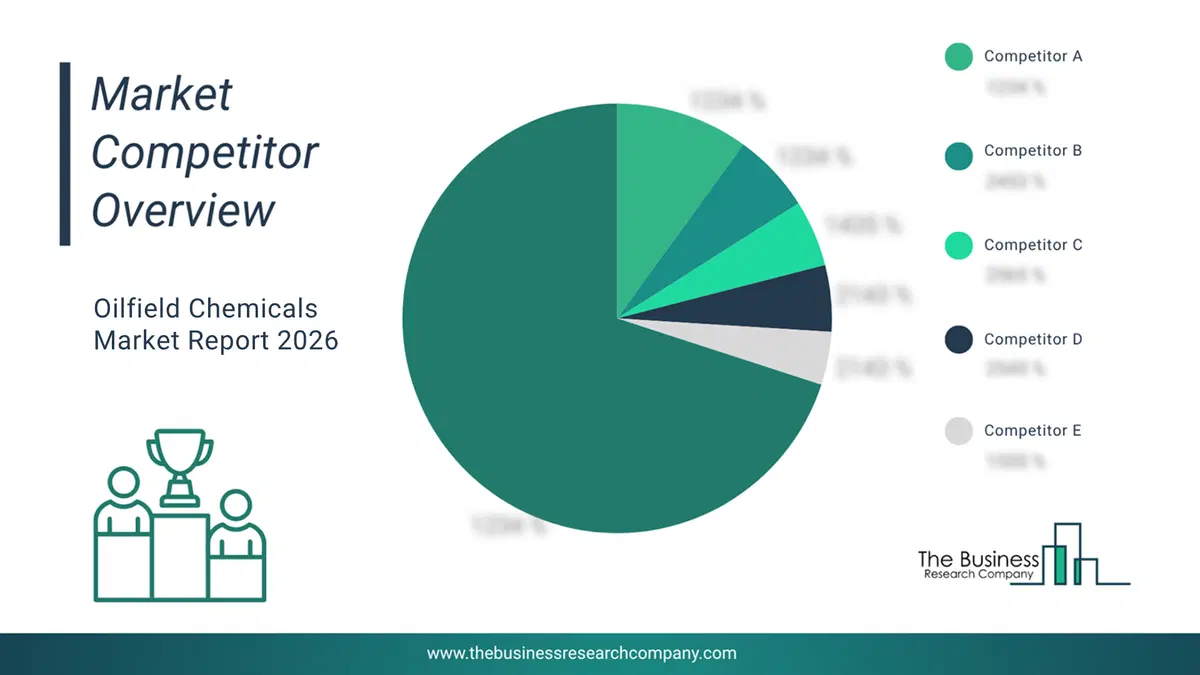
This chart is for illustrative purposes; the full report includes a detailed competitor analysis and comprehensive overview of the top 10 companies in the market.
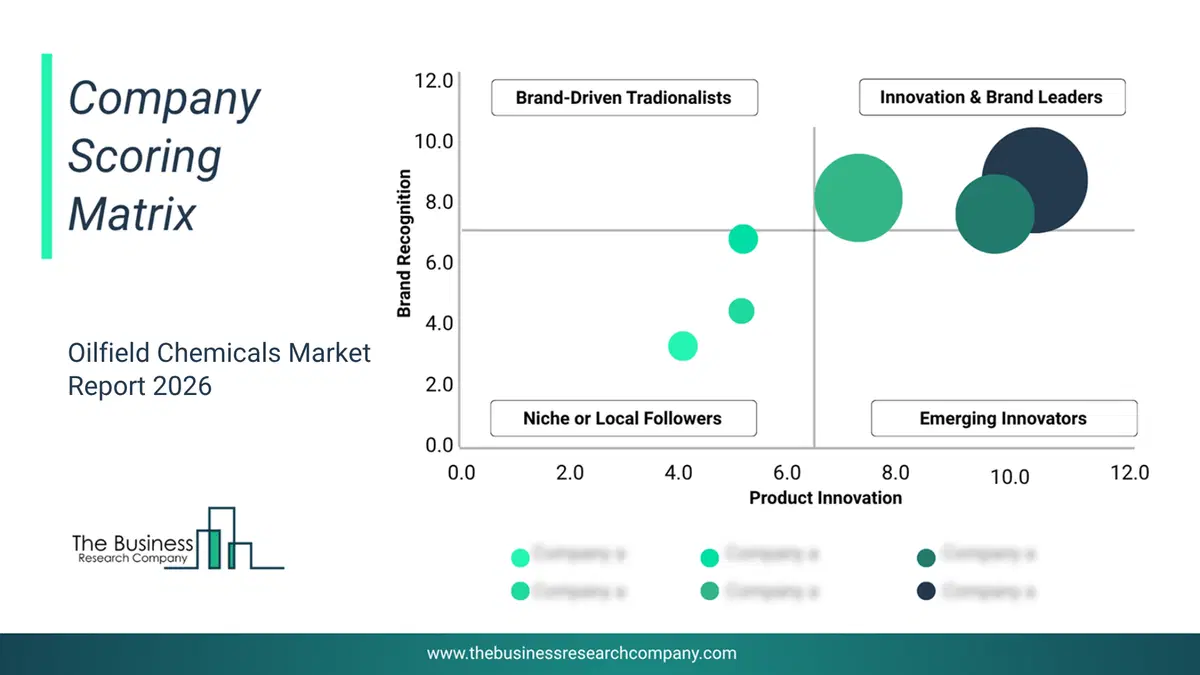
This chart maps companies by product innovation and brand strength, with bubble size indicating relative revenue, helping identify market leaders, challengers, and niche players. This is an illustrative chart; the full report provides a complete and accurate competitive analysis.
Global Oilfield Chemicals Market Trends and Insights
Major companies operating in the oilfield chemicals market are focusing on developing innovative solutions, such as nano-emulsion-based demulsifiers, to meet the rising demand for higher production efficiency, lower chemical usage, and reduced environmental impact. These next-generation technologies outperform traditional formulations by offering superior emulsion destabilization, lower operational costs, and improved safety for operators. For instance, in June 2023, Clariant Oil Services, a Switzerland-based chemical company, launched PhaseTreat WET, an advanced nano-emulsion demulsifier. This product dramatically improves oil-water separation efficiency and allows operators to reduce demulsifier dosage by up to 75% compared with conventional demulsifiers, significantly lowering chemical consumption, operational costs, and carbon footprint. PhaseTreat WET also ensures safer handling, enhanced emulsion destabilization, and optimized processing across a wide range of crude oil conditions. This launch exemplifies the industry trend toward sustainable, high-performance chemical solutions that enhance productivity while minimizing environmental impact.What Are Latest Mergers And Acquisitions In The Oilfield Chemicals Market?
In November 2024, SMC Global, a U.S.-based provider of oilfield services, treatment chemicals, and produced-water treatment solutions, acquired International Chemicals LLC (ICC) for an undisclosed amount. With this acquisition, SMC Global aimed to broaden its oilfield chemical and water-treatment product portfolio and enhance its manufacturing and distribution capacity globally. International Chemicals LLC is a U.S.-based firm that manufactures and supplies specialty oilfield chemicals and produced-water treatment products, along with associated logistics and quality-control services.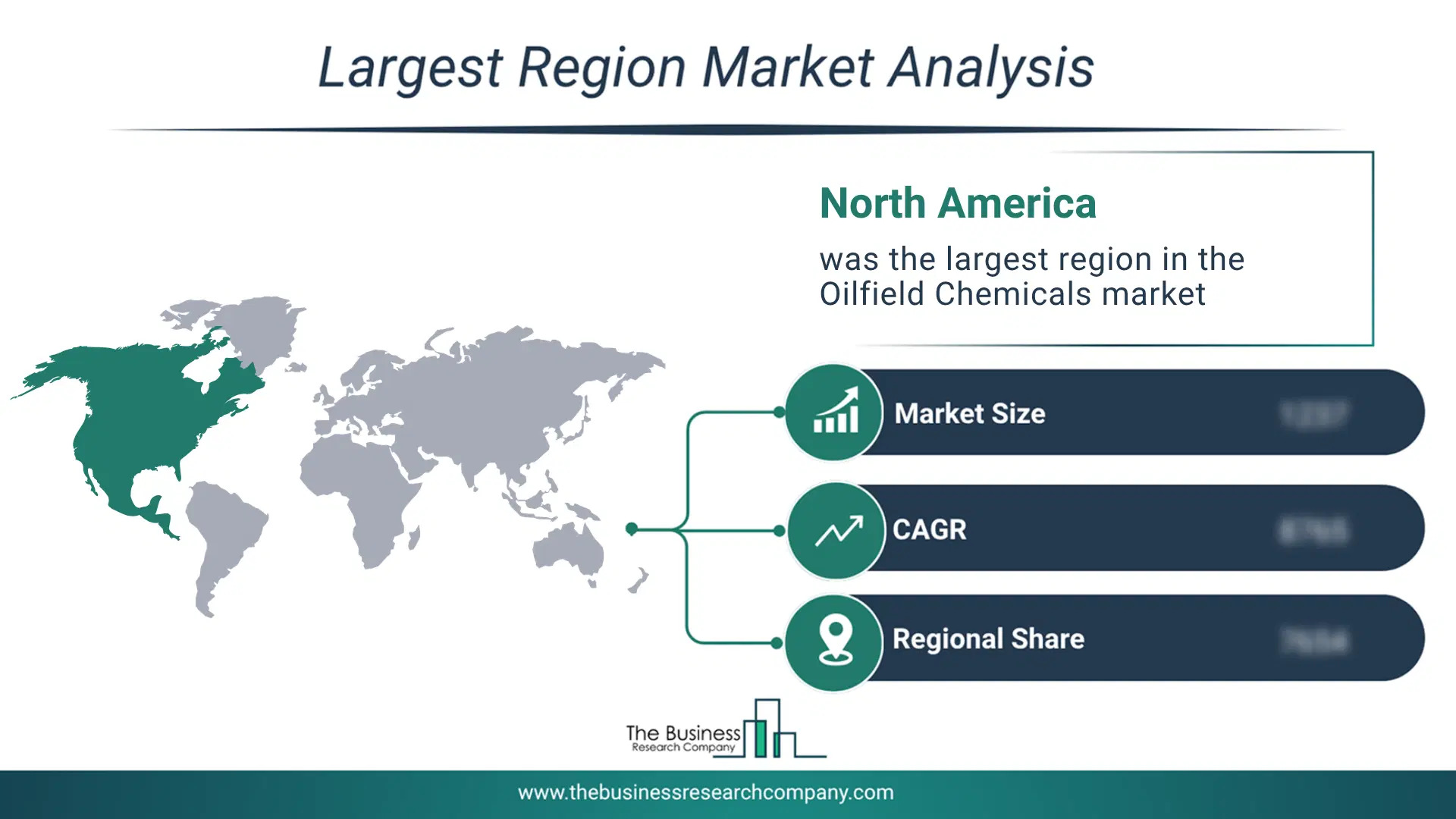
Regional Insights
North America was the largest region in the oilfield chemicals market in 2025. Asia-Pacific is expected to be the fastest-growing region in the forecast period. The regions covered in this market report are Asia-Pacific, South East Asia, Western Europe, Eastern Europe, North America, South America, Middle East, Africa The countries covered in this market report are Australia, Brazil, China, France, Germany, India, Indonesia, Japan, Taiwan, Russia, South Korea, UK, USA, Canada, Italy, SpainWhat Defines the Oilfield Chemicals Market?
The oilfield chemicals market consists of sales of water clarifiers, hydrogen sulphide scavengers and gas well foamers. Values in this market are ‘factory gate’ values, that is the value of goods sold by the manufacturers or creators of the goods, whether to other entities (including downstream manufacturers, wholesalers, distributors and retailers) or directly to end customers. The value of goods in this market includes related services sold by the creators of the goods.How is Market Value Defined and Measured?
The market value is defined as the revenues that enterprises gain from the sale of goods and/or services within the specified market and geography through sales, grants, or donations in terms of the currency (in USD unless otherwise specified). The revenues for a specified geography are consumption values that are revenues generated by organizations in the specified geography within the market, irrespective of where they are produced. It does not include revenues from resales along the supply chain, either further along the supply chain or as part of other products.
This chart presents market attractiveness based on a quantitative evaluation of growth, competition, strategic alignment, and risk, offering a clear view of opportunity areas for decision-making. This chart is for illustrative purposes; the full report contains the complete analysis.

This chart highlights the Total Addressable Market (TAM) by estimating the maximum revenue opportunity using an assumption-driven approach, supporting strategic planning and opportunity sizing across markets. The chart is illustrative; the full report provides a more comprehensive analysis.
What Key Data and Analysis Are Included in the Oilfield Chemicals Market Report 2026?
The oilfield chemicals market research report is one of a series of new reports from The Business Research Company that provides market statistics, including industry global market size, regional shares, competitors with the market share, detailed market segments, market trends and opportunities, and any further data you may need to thrive in the oilfield chemicals industry. The market research report delivers a complete perspective of everything you need, with an in-depth analysis of the current and future state of the industry.Oilfield Chemicals Market Report Forecast Analysis
| Report Attribute | Details |
|---|---|
| Market Size Value In 2026 | $39.47 billion |
| Revenue Forecast In 2030 | $50.44 billion |
| Growth Rate | CAGR of 6.2% from 2026 to 2030 |
| Base Year For Estimation | 2025 |
| Actual Estimates/Historical Data | 2020-2025 |
| Forecast Period | 2026 - 2030 |
| Market Representation | Revenue in USD Billion and CAGR from 2026 to 2030 |
| Segments Covered | Type, Location, Application |
| Regional Scope | Asia-Pacific, Western Europe, Eastern Europe, North America, South America, Middle East, Africa |
| Country Scope | The countries covered in the report are Australia, Brazil, China, France, Germany, India, Indonesia, Japan, Taiwan, Russia, South Korea, UK, USA, Canada, Italy, Spain. |
| Key Companies Profiled | Halliburton, Schlumberger Limited, Baker Hughes Company, ChampionX, Clariant AG, BASF SE, Solvay S.A., Kemira Oyj, Nouryon, The Lubrizol Corporation, Innospec Inc., Flotek Industries Inc., CES Energy Solutions Corp., Croda International Plc, Ashland Global Holdings Inc., Albemarle Corporation, Elementis PLC, Zirax Limited, Aquapharm Chemical Pvt. Ltd., Thermax Limited, Chevron Phillips Chemical Company |
| Customization Scope | Request for Customization |
| Pricing And Purchase Options | Explore Purchase Options |