
On-demand transportation Market Report 2026
Global Outlook – By Type (Ride-Hailing Or Ride Sourcing; Ride-Sharing And Ride-Pooling; On-Demand Vehicle Rental), By Vehicle (Four-Wheeler; Two-Wheeler; Micro Mobility), By Application (Passenger Transportation; Goods Transportation) – Market Size, Trends, Strategies, and Forecast to 2030
On-demand transportation Market Overview
• On-demand transportation market size has reached to $235.65 billion in 2025 • Expected to grow to $601.21 billion in 2030 at a compound annual growth rate (CAGR) of 20.5% • Growth Driver: Tourism And Working-Class Mobility Boost On-Demand Transportation Market • Market Trend: Skånetrafiken to launch new on-demand public transport trial • Asia-Pacific was the largest region in 2025 and North America is the fastest growing region.Market Gains By 2030 – Top Opportunities By Segment
Market Gain identifies the most promising market opportunities by highlighting the segments or products expected to generate the highest incremental revenue growth over the next five years.
What Is Covered Under On-demand transportation Market?
The on-demand transportation refers to a service that is used by the passengers to book their journey at a convenient time (during service operating hours) and to be picked up from an agreed location. It is a mobility service that is tailored to places with a low demand for shared transportation. From dial-a-ride shuttle services to taxis and now App-based pick-up and drop-off options, transport services that are 'on-demand' are making life easier and more convenient for commuters. The main types of on-demand transportation are ride-sharing, vehicle rental or leasing, and ride-sourcing. Ride-sharing refers to the act or practice of sharing automobile trips, used to reduce traffic congestion and parking demands, help to eliminate vehicle emissions, and create less stressful commutes. The vehicles include four-wheelers and micro-mobility. The various applications involve passenger transportation and goods transportation.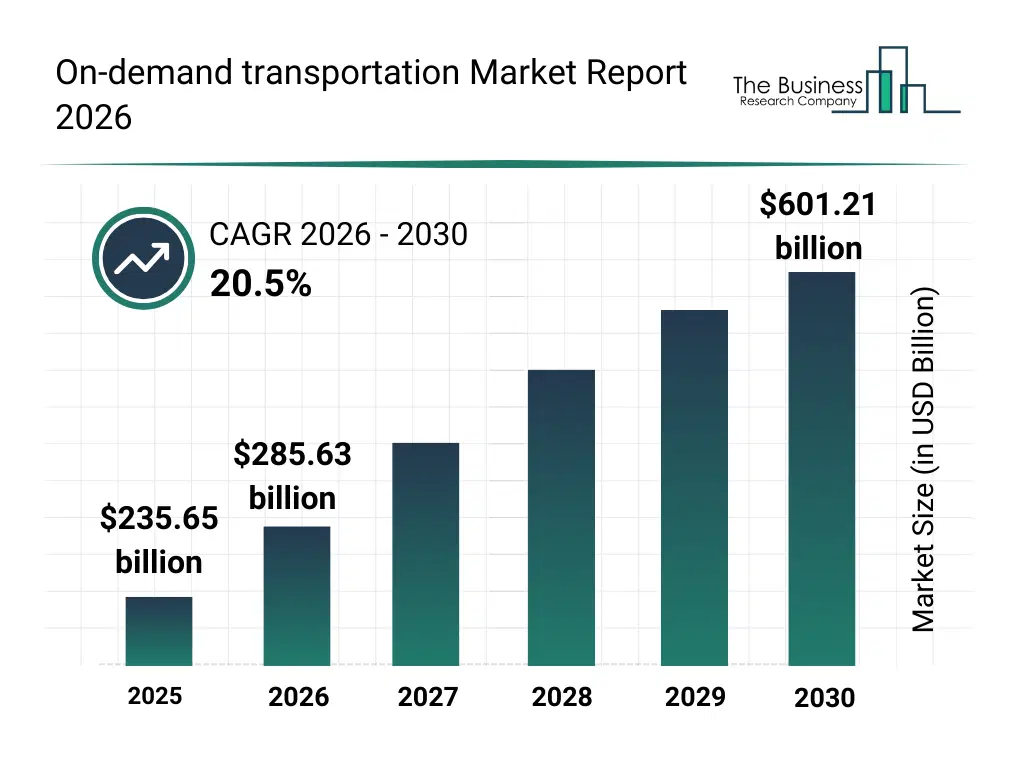
What Is The On-demand transportation Market Size and Share 2026?
The on-demand transportation market size has grown exponentially in recent years. It will grow from $235.65 billion in 2025 to $285.63 billion in 2026 at a compound annual growth rate (CAGR) of 21.2%. The growth in the historic period can be attributed to growth of urban population density, expansion of smartphone penetration, increasing congestion in metropolitan areas, rising preference for convenience-based travel, growth of shared mobility platforms.What Is The On-demand transportation Market Growth Forecast?
The on-demand transportation market size is expected to see exponential growth in the next few years. It will grow to $601.21 billion in 2030 at a compound annual growth rate (CAGR) of 20.5%. The growth in the forecast period can be attributed to expansion of autonomous mobility services, rising adoption of electric fleets, increasing investments in smart city mobility, growing demand for low-emission transport options, expansion of mobility-as-a-service platforms. Major trends in the forecast period include increasing adoption of app-based mobility platforms, rising demand for flexible ride-sharing services, growing integration of micro-mobility solutions, expansion of subscription-based transportation models, enhanced focus on service personalization.
Global On-demand transportation Market Segmentation
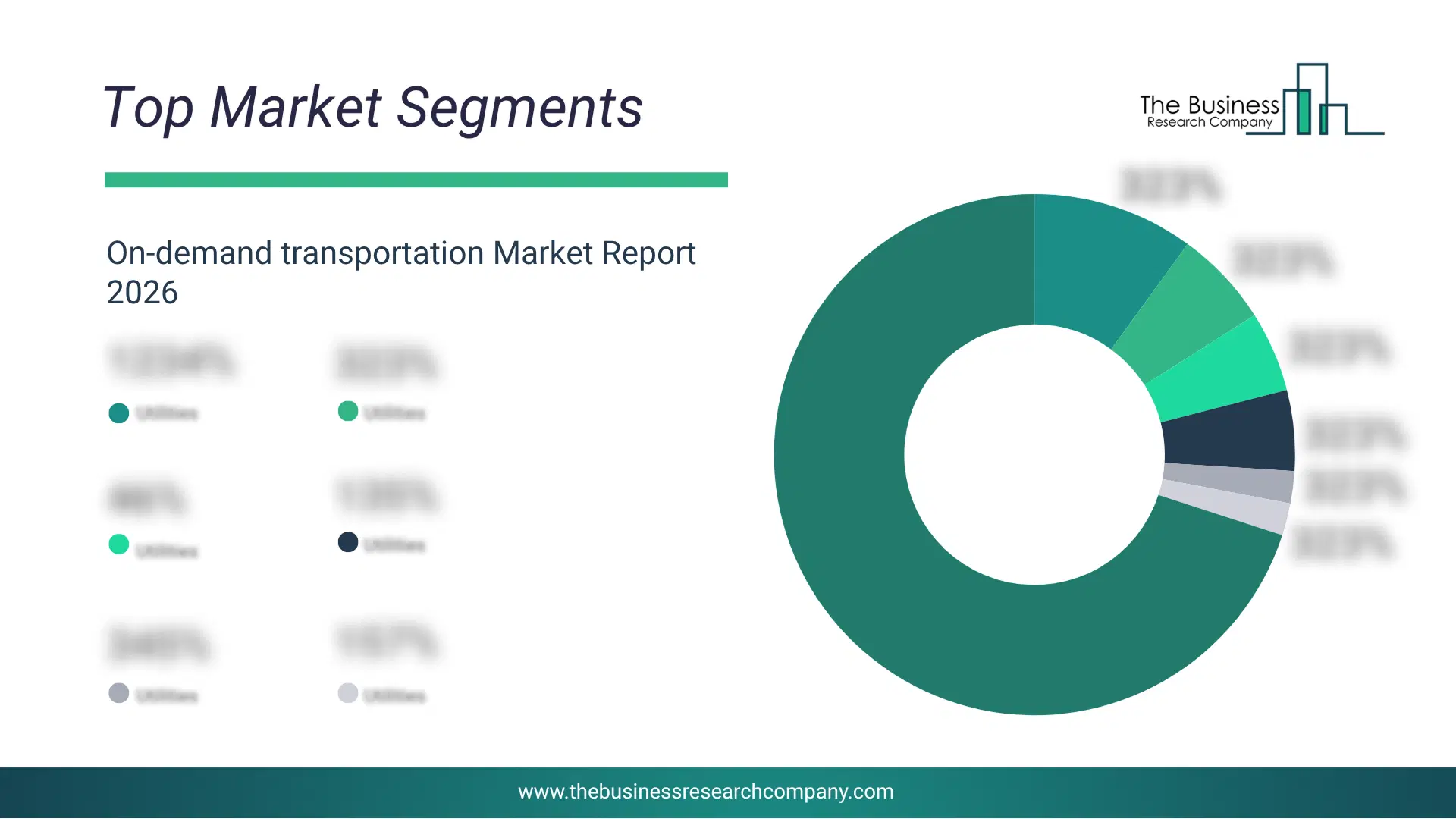
1) By Type: Ride-Hailing Or Ride Sourcing, Ride-Sharing And Ride-Pooling, On-Demand Vehicle Rental 2) By Vehicle: Four-Wheeler, Two-Wheeler, Micro Mobility 3) By Application: Passenger Transportation, Goods Transportation Subsegments: 1) By Ride-Hailing Or Ride Sourcing: E-Hailing Services, App-Based Ride Booking Platforms, Taxi Dispatch Services 2) By Ride-Sharing And Ride-Pooling: Carpooling Services, Ride-Pooling Services, Shuttle / Dial-A-Ride Services, Luxury Ride-Sharing 3) By On-Demand Vehicle Rental: Short-Term Rentals, Peer-To-Peer Rentals The top segments in the on-demand transportation market will be: • Ride-Hailing Or Ride Sourcing will reach $356.13 Billion by 2030. • Ride-Sharing And Ride-Pooling will reach $140.52 Billion by 2030. • On-Demand Vehicle Rental will reach $102.38 Billion by 2030.What Is The Driver Of The On-demand transportation Market?
Growing tourism and a working-class population are expected to propel the growth of the on-demand transportation market going forward. Tourism refers to a social and economic phenomenon that entails the movement of people to countries or places outside their usual environment for personal, business, or professional purposes. On-demand transportation helps tourism and the working-class population by booking their journey at a convenient time and being picked up from an agreed location that is quicker and easier to use. For instance, in November 2023, according to the UNWTO (United Nations World Tourism Organization), a Spain-based non-profit organization, estimated 975 million international tourists travelled between January and September 2023, an increase of 38% compared to the same period in 2022, with a 22% rise in international tourist arrivals during the third quarter of 2023. Therefore, the growing tourism and working-class population are driving the growth of the on-demand transportation industry.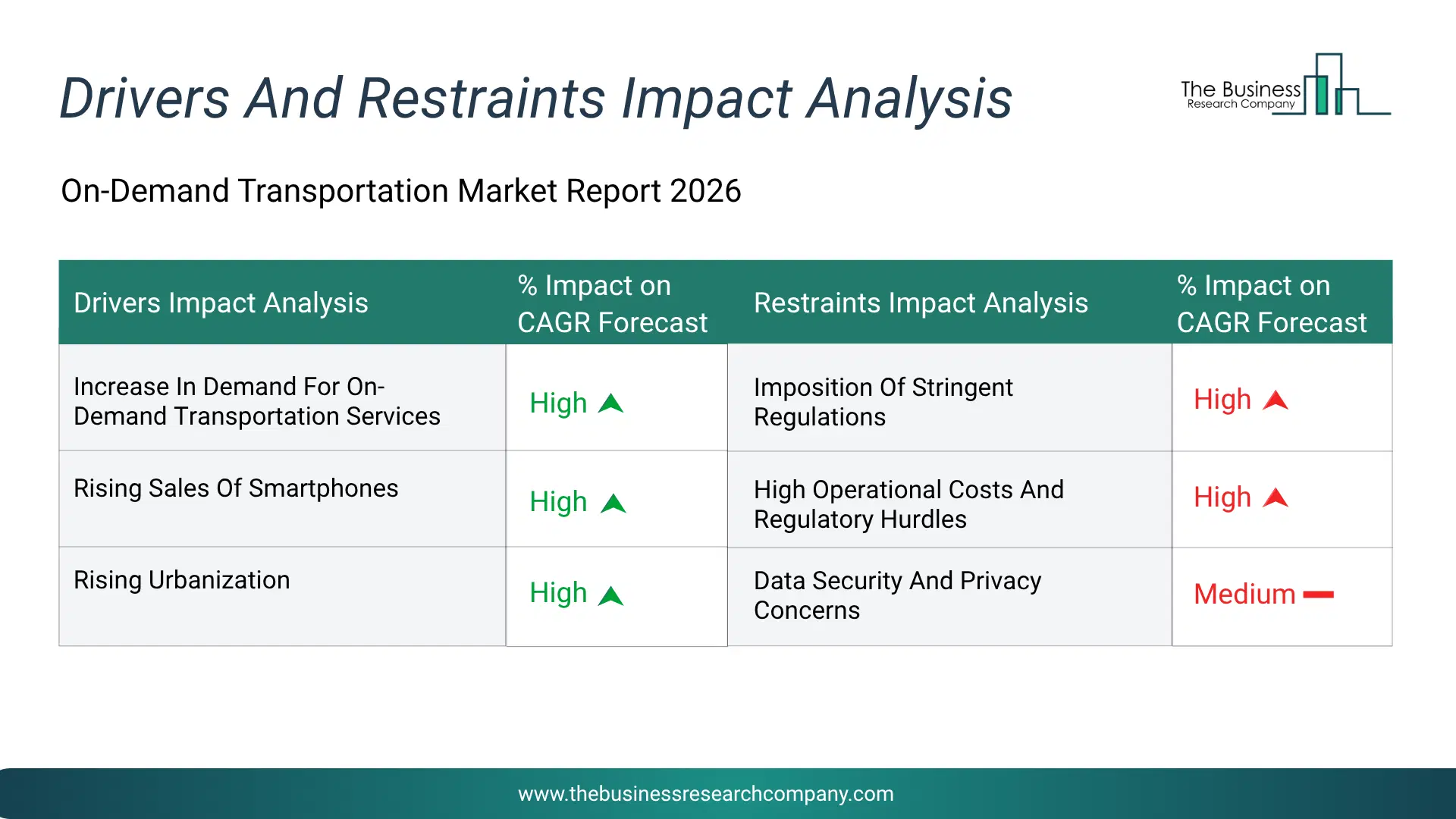
Infographic Chart Showing Key Market Drivers Analysis And Restraints For On-Demand Transportation Market
The chart presents an impact analysis of key drivers and restraints, quantifying their relative influence on the market's growth rate and helping assess the balance between growth enablers and limiting factors. This chart offers a high-level perspective; the full report contains more detailed insights.
How Will The Drivers Impact Growth In The Global On-Demand Transportation Market?
• Increase In Demand For On-Demand Transportation Services (High) – During the forecast period, the increase in demand for on-demand transportation services is expected to become a key growth driver for the on-demand transportation market by 2030. Increase in demand for on-demand transportation services acts as a major driver for the on-demand transportation market by encouraging consumers to shift toward flexible and digitally connected mobility solutions. Customers increasingly prefer transportation services that offer instant booking, real-time tracking, shorter waiting times, and convenient payment options through mobile applications. The growing need for efficient daily commuting, airport transfers, and urban mobility solutions is accelerating the adoption of app-based transportation platforms across major cities worldwide. In addition, changing consumer lifestyles and busy work schedules are increasing reliance on convenient travel options that can be accessed anytime during operating hours. Transportation companies are also expanding their service offerings through shared rides, premium travel options, and subscription-based mobility models to attract a wider user base. The continuous improvement of customer experience through AI-enabled route optimization and digital integration is further strengthening market growth. Consequently, rising consumer preference for convenient mobility services continues to drive the expansion of the on-demand transportation market. • Rising Sales Of Smartphones (High) – During the forecast period, the rising sales of smartphones is expected to emerge as a major factor driving the expansion of the on-demand transportation market by 2030. Rising sales of smartphones act as a significant driver for the on-demand transportation market by enabling greater accessibility to app-based mobility services. Smartphones allow consumers to book rides instantly, track vehicles in real time, make digital payments, and access navigation features, thereby improving the overall transportation experience. Increasing internet penetration and affordable mobile data availability are further accelerating the use of transportation applications across both developed and emerging economies. In addition, mobility service providers are continuously upgrading mobile applications with advanced features such as ride scheduling, AI-based route optimization, and cashless transactions to enhance customer convenience. The growing adoption of smartphones among working professionals and younger populations is also increasing the frequency of ride bookings for personal and business travel. Furthermore, the integration of GPS technology and location-based services is improving operational efficiency for transportation companies. As a result, expanding smartphone usage continues to create strong growth opportunities for the on-demand transportation market. • Rising Urbanization (High) – During the forecast period, the rising urbanization is expected to act as a key growth catalyst for the on-demand transportation market by 2030. Rising urbanization acts as a key driver for the on-demand transportation market by increasing the demand for efficient and accessible mobility services in densely populated cities. Rapid urban population growth is creating greater pressure on existing public transportation systems, encouraging consumers to adopt app-based transportation alternatives for daily commuting. Increasing traffic congestion, limited parking availability, and higher private vehicle ownership costs are also motivating urban residents to rely on flexible transportation solutions. In addition, the development of smart cities and digital infrastructure is supporting the integration of advanced mobility technologies and connected transportation platforms. Expanding employment opportunities in metropolitan regions are increasing travel frequency for both personal and professional purposes, further boosting service demand. On-demand transportation providers are actively expanding their operations in urban centers to address growing commuter requirements and improve accessibility. Therefore, continuous urban expansion and infrastructure development are significantly contributing to the growth of the on-demand transportation market.How Will The Restraints Impact Growth In The Global On-Demand Transportation Market?
• Imposition Of Stringent Regulations (High) – During the forecast period, the imposition of stringent regulations restrains the growth of the on-demand transportation market by increasing compliance complexities for service providers. Regulatory authorities across several countries are introducing strict rules related to driver licensing, passenger safety, fare control, insurance requirements, and vehicle emissions standards. These regulations often differ across regions, creating operational challenges for companies expanding internationally. In addition, increasing scrutiny regarding labor laws and driver employment classification raises legal and administrative burdens for ride service providers. Compliance with local taxation policies and transport regulations also increases operational expenses and delays market expansion strategies. Several cities have further imposed ride caps and operational restrictions to control traffic congestion and protect traditional taxi operators. As a result, stringent regulatory frameworks continue to limit operational flexibility and profitability within the on-demand transportation market. • High Operational Costs And Regulatory Hurdles (High) – During the forecast period, the high operational costs and regulatory hurdles act as a major restraint for the on-demand transportation market by reducing profitability and increasing service management expenses. Companies are required to invest heavily in fleet operations, digital infrastructure, driver incentives, application maintenance, and customer support systems to maintain competitive positioning. Rising fuel prices, insurance costs, and vehicle maintenance expenses further increase the financial burden on service providers. In addition, compliance with transportation laws, taxation requirements, safety standards, and labor regulations creates additional operational complexity. Expanding services into new cities or countries often involves obtaining permits and meeting multiple legal requirements, which can delay business expansion. Companies also face challenges in maintaining affordable ride pricing while sustaining operational efficiency. Consequently, high operating expenditures and regulatory barriers continue to hinder the growth potential of the on-demand transportation market. • Data Security And Privacy Concerns (High) – During the forecast period, the data security and privacy concerns hinder the growth of the on-demand transportation market due to increasing dependence on digital platforms and customer data management systems. Mobility applications collect sensitive information including payment credentials, personal details, travel patterns, and real-time location tracking data, making platforms vulnerable to cyberattacks and data breaches. Security incidents can negatively affect customer confidence and damage brand reputation for transportation service providers. In addition, governments are implementing stricter data protection regulations that require companies to strengthen cybersecurity infrastructure and maintain compliance standards. Continuous investments in encryption technologies, secure payment systems, and data protection mechanisms increase operational costs for market participants. Concerns regarding misuse of personal information and unauthorized data sharing may also discourage consumers from fully adopting app-based transportation services. Therefore, growing cybersecurity risks and privacy-related challenges continue to act as restraints for the on-demand transportation market.Key Players In The Global On-demand transportation Market
Major companies operating in the on-demand transportation market are Avis Budget Group Inc., BlaBlaCar SA, Bolt Financial Inc., Cabify SA, Careem Inc., Curb Mobility Private Ltd., Daimler AG, Europcar Mobility Group SA, Ford Motor Company, General Motor Company, Grab Holdings Inc., Hyundai Motor Company, Lyft Inc., Didi Chuxing Technology Co, Enterprise Holdings Inc., Jugnoo, Uber Technologies Inc, Bird Global Inc., MOIA GmbH, ANI Technologies Pvt Ltd., PT Gojek, Bolt Mobility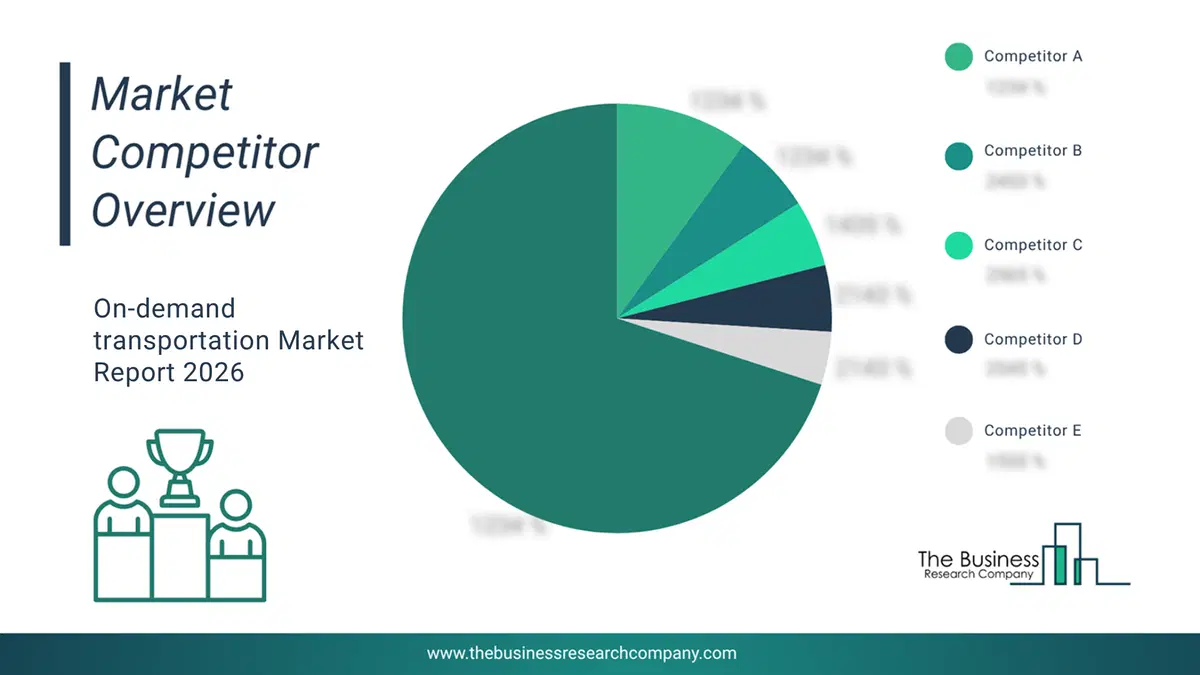
This chart is for illustrative purposes; the full report includes a detailed competitor analysis and comprehensive overview of the top 10 companies in the market.
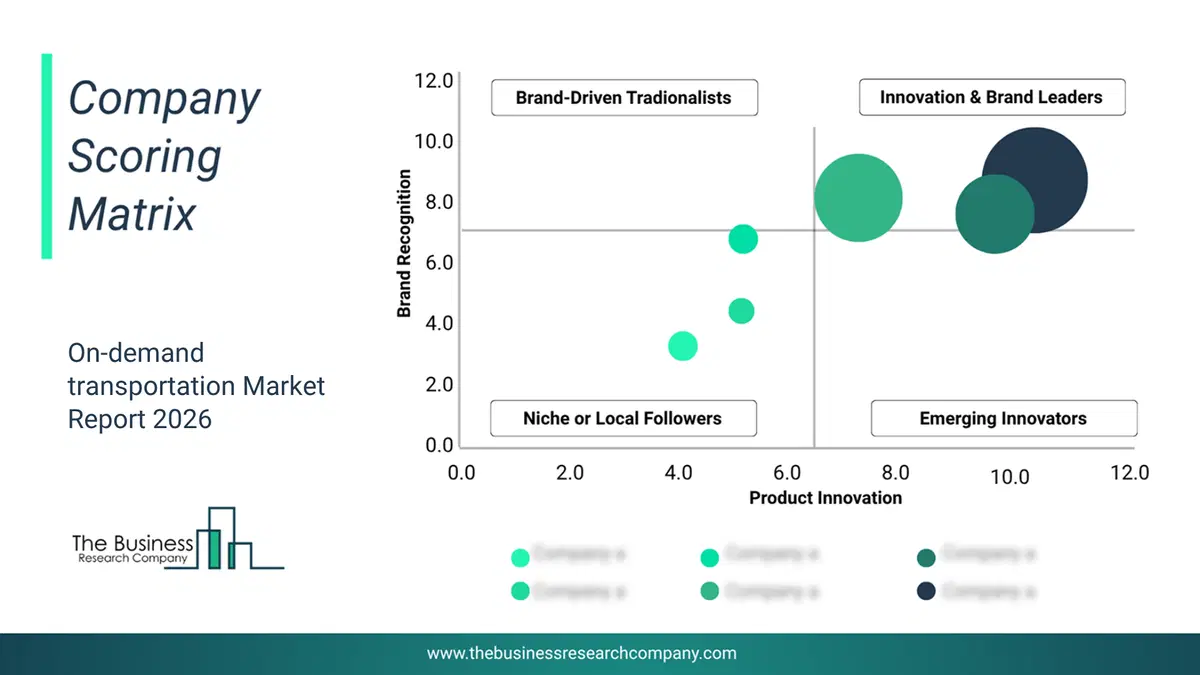
This chart maps companies by product innovation and brand strength, with bubble size indicating relative revenue, helping identify market leaders, challengers, and niche players. This is an illustrative chart; the full report provides a complete and accurate competitive analysis.
Global On-demand transportation Market Trends and Insights
Major companies operating in on-demand transportation market are focusing on developing technology advancement such as public transport trial to improve service efficiency, enhance user experience, and increase accessibility. The trial aims to determine the viability of on-demand services as a sustainable and efficient public transport option, potentially influencing future transportation strategies in the region. For instance, in May 2024, Skånetrafiken, a Sweden-based organization is responsible for public transportation in the Skåne region, including bus and train services. The new on-demand public transport trial involves implementing a flexible transit service that allows passengers to request rides via a mobile app, offering a tailored transportation solution that adapts to real-time demand.What Are Latest Mergers And Acquisitions In The On-demand transportation Market?
In September 2024, Van Pool Transportation LLC, a US-based company specializes in providing transportation solutions, including corporate shuttles and commuter services acquired Control-Transaction Corporate Shuttles, Inc. for an disclosed amount. Van Pool Transportation LLC's acquisition of Transaction Corporate Shuttles, Inc. aims to enhance its corporate transportation services, expand its customer base, and improve operational efficiency. Transaction Corporate Shuttles, Inc. is a U.S-based company specializes in providing transportation solutions, particularly for corporate clients.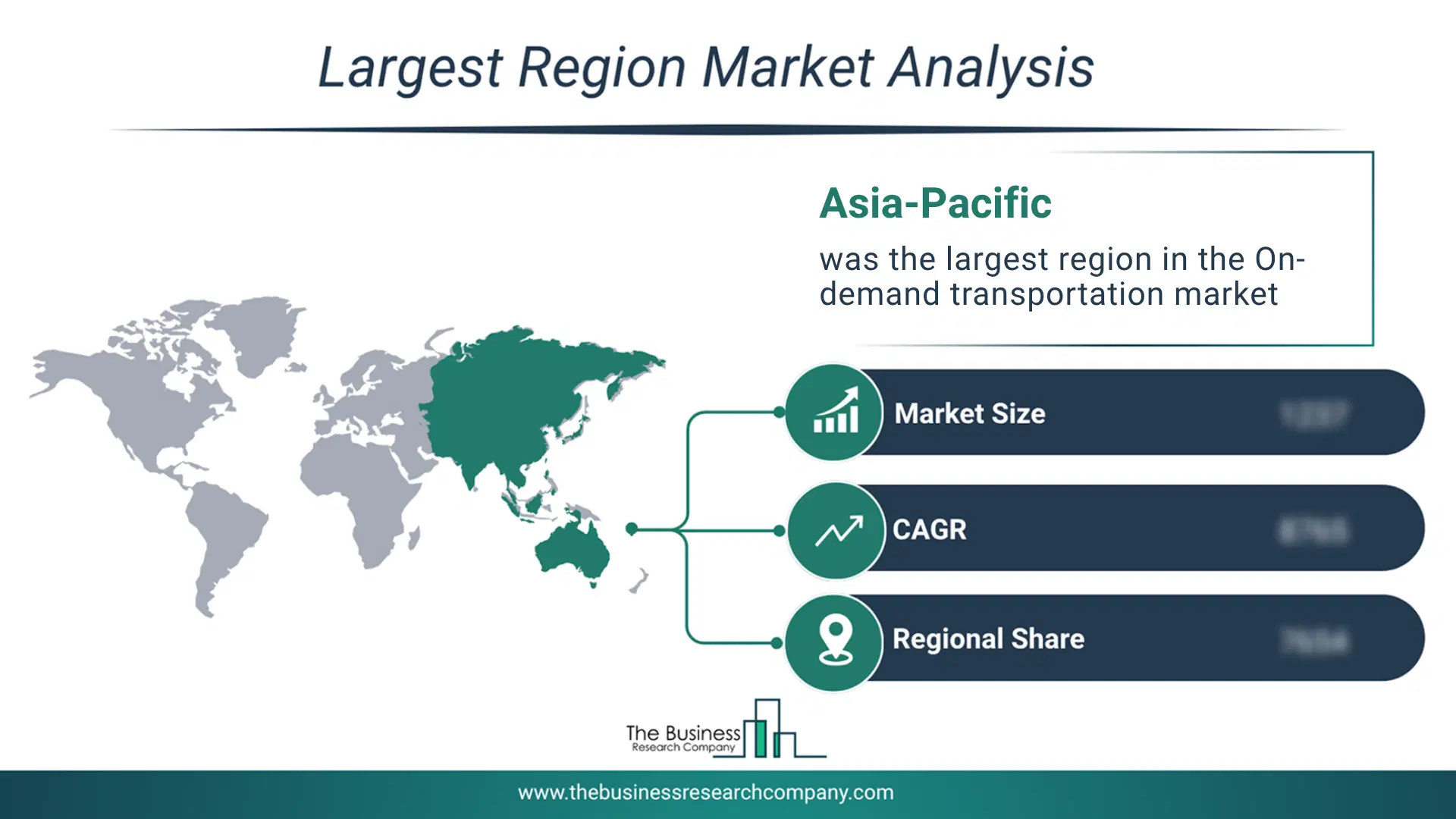
Regional Outlook
Asia-Pacific was the largest region in the on-demand transportation market in 2025. North America is expected to be the fastest growing region in the forecast period. The regions covered in this market report are Asia-Pacific, South East Asia, Western Europe, Eastern Europe, North America, South America, Middle East, Africa. The countries covered in this market report are Australia; Brazil; China; France; Germany; India; Indonesia; Japan; Taiwan; Russia; South Korea; UK; USA; Canada; Italy; Spain.What Defines the On-demand transportation Market?
The on-demand transportation market includes revenues earned by entities by establishing connections between remote places and providing customers complete mobility through digital apps. The market value includes the value of related goods sold by the service provider or included within the service offering. Only goods and services traded between entities or sold to end consumers are included.How is Market Value Defined and Measured?
The market value is defined as the revenues that enterprises gain from the sale of goods and/or services within the specified market and geography through sales, grants, or donations in terms of the currency (in USD unless otherwise specified). The revenues for a specified geography are consumption values that are revenues generated by organizations in the specified geography within the market, irrespective of where they are produced. It does not include revenues from resales along the supply chain, either further along the supply chain or as part of other products.
This chart presents market attractiveness based on a quantitative evaluation of growth, competition, strategic alignment, and risk, offering a clear view of opportunity areas for decision-making. This chart is for illustrative purposes; the full report contains the complete analysis.

This chart highlights the Total Addressable Market (TAM) by estimating the maximum revenue opportunity using an assumption-driven approach, supporting strategic planning and opportunity sizing across markets. The chart is illustrative; the full report provides a more comprehensive analysis.
What Key Data and Analysis Are Included in the On-demand transportation Market Report 2026?
The on-demand transportation market research report is one of a series of new reports from The Business Research Company that provides market statistics, including Market Report 2026?global market size, regional shares, competitors with the market share, detailed market segments, market trends and opportunities, and any further data you may need to thrive in the on-demand transportation Market Report 2026? The market research report delivers a complete perspective of everything you need, with an in-depth analysis of the current and future state of the Market Report 2026?On-demand transportation Market Report Forecast Analysis
| Report Attribute | Details |
|---|---|
| Market Size Value In 2026 | $285.63 billion |
| Revenue Forecast In 2030 | $601.21 billion |
| Growth Rate | CAGR of 21.2% from 2026 to 2030 |
| Base Year For Estimation | 2025 |
| Actual Estimates/Historical Data | 2020-2025 |
| Forecast Period | 2026 - 2030 |
| Market Representation | Revenue in USD Billion and CAGR from 2026 to 2030 |
| Segments Covered | Type, Vehicle, Application |
| Regional Scope | Asia-Pacific, Western Europe, Eastern Europe, North America, South America, Middle East, Africa |
| Country Scope | The countries covered in the report are Australia, Brazil, China, France, Germany, India, Indonesia, Japan, Taiwan, Russia, South Korea, UK, USA, Canada, Italy, Spain. |
| Key Companies Profiled | Avis Budget Group Inc., BlaBlaCar SA, Bolt Financial Inc., Cabify SA, Careem Inc., Curb Mobility Private Ltd., Daimler AG, Europcar Mobility Group SA, Ford Motor Company, General Motor Company, Grab Holdings Inc., Hyundai Motor Company, Lyft Inc., Didi Chuxing Technology Co, Enterprise Holdings Inc., Jugnoo, Uber Technologies Inc, Bird Global Inc., MOIA GmbH, ANI Technologies Pvt Ltd., PT Gojek, Bolt Mobility |
| Customization Scope | Request for Customization |
| Pricing And Purchase Options | Explore Purchase Options |