
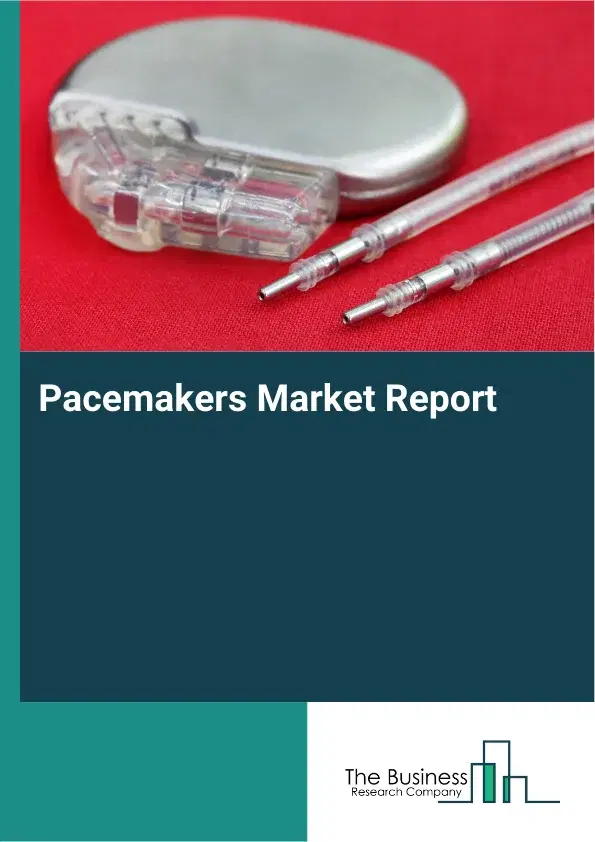
Pacemakers Market Report 2026
Global Outlook – By Type (MRI Compatible Pacemaker, Conventional Pacemaker ), By Technology (Single-Chamber Pacemaker, Dual-Chamber Pacemaker, Biventricular Or CRT Pacemaker), By Implantability (Implantable Pacemaker, External Pacemaker), By Application (Congestive Heart Failure, Arrhythmias, Bradycardia, Tachycardia), By End-User (Hospitals, Cardiac Care Centers, Ambulatory Surgical Centers, Other End Users) - Market Size, Trends, Strategies, and Forecast to 2030
Pacemakers Market Overview
• Pacemakers market size has reached to $5.68 billion in 2025 • Expected to grow to $8.38 billion in 2030 at a compound annual growth rate (CAGR) of 8% • Growth Driver: Rising Prevalence Of Cardiovascular Diseases Fuels Pacemaker Market Growth • Market Trend: Pioneering Innovation In The Pacemaker Market With Miniaturized Leadless Devices • North America was the largest region in 2025 and Asia-Pacific is the fastest growing region.What Is Covered Under Pacemakers Market?
Pacemakers refer to small devices that are placed in the chest to help control the heartbeat. It is being used to prevent the heart from beating too slowly. The pacemaker is used to treat fainting spells, congestive heart failure, and hypertrophic cardiomyopathy. The main types of pacemakers are MRI compatible pacemakers and conventional pacemakers. The MRI-compatible pacemakers are the devices that pose no known hazards in a specified MRI environment under specific devices and MRI scanner conditions. The various technologies include single-chamber pacemaker, dual-chamber pacemaker, and biventricular or CRT pacemakers, which have different implantability, such as implantable pacemaker, and external pacemaker. The numerous applications include congestive heart failure, arrhythmias, bradycardia, and tachycardia that are used by various end users, including hospitals, cardiac care centres, ambulatory surgical centers, and others.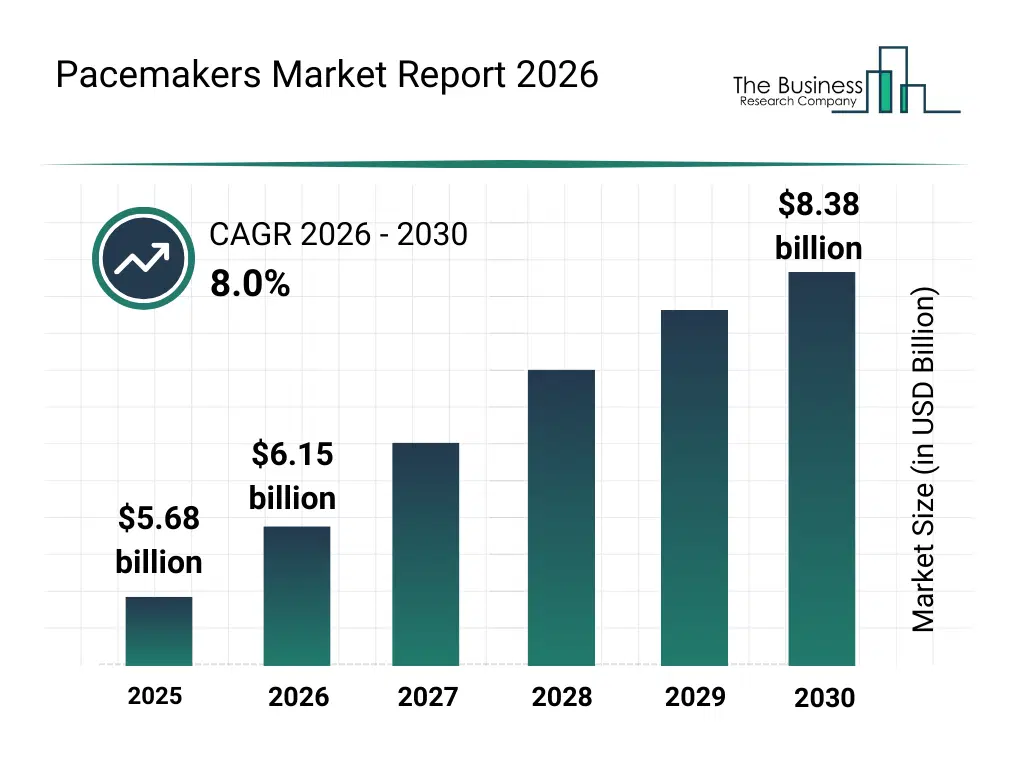
What Is The Pacemakers Market Size and Share 2026?
The pacemakers market size has grown strongly in recent years. It will grow from $5.68 billion in 2025 to $6.15 billion in 2026 at a compound annual growth rate (CAGR) of 8.2%. The growth in the historic period can be attributed to limited access to diagnostic labs, reliance on in-clinic testing, growing prevalence of chronic diseases, increasing health awareness, adoption of traditional testing methods.What Is The Pacemakers Market Growth Forecast?
The pacemakers market size is expected to see strong growth in the next few years. It will grow to $8.38 billion in 2030 at a compound annual growth rate (CAGR) of 8.0%. The growth in the forecast period can be attributed to rise in home healthcare adoption, increasing demand for personalized diagnostics, expansion of rapid diagnostic technologies, integration of tests with mobile apps and connected devices, rising consumer preference for convenience and privacy. Major trends in the forecast period include rising adoption of self-testing kits by consumers, growing demand for home-based diagnostics, expansion of rapid diagnostic testing, increasing awareness about preventive healthcare, integration of smart devices with otc tests.
Global Pacemakers Market Segmentation
1) By Type: MRI Compatible Pacemaker, Conventional Pacemaker 2) By Technology: Single-Chamber Pacemaker, Dual-Chamber Pacemaker, Biventricular Or CRT Pacemaker 3) By Implantability: Implantable Pacemaker, External Pacemaker 4) By Application: Congestive Heart Failure, Arrhythmias, Bradycardia, Tachycardia 5) By End-User: Hospitals, Cardiac Care Centers, Ambulatory Surgical Centers, Other End Users Subsegments: 1) By MRI Compatible Pacemaker: Single-Chamber MRI Compatible Pacemaker, Dual-Chamber MRI Compatible Pacemaker, Biventricular MRI Compatible Pacemaker 2) By Conventional Pacemaker: Single-Chamber Conventional Pacemaker, Dual-Chamber Conventional Pacemaker, Biventricular Conventional PacemakerWhat Is The Driver Of The Pacemakers Market?
The increasing prevalence of cardiovascular diseases is contributing to the growth of the pacemaker market going forward. Cardiovascular diseases refer to diseases that affect the heart and blood vessels. Drug discovery technologies are used to discover new drugs for cardiovascular diseases. Pacemakers include flexible and insulated wires that are helpful in controlling cardiovascular diseases by controlling irregular heart rhythms. For instance, in January 2024, according to the American Heart Association, a US-based nonprofit organization, the age-adjusted death rate from cardiovascular disease rose to 233.3 per 100,000, reflecting a 4.0% increase from last year's rate of 224.4 per 100,000, following a 4.6% rise in 2023, marking the first increase in these rates observed in many years. Therefore, the increasing prevalence of cardiovascular diseases will drive the growth of the pacemaker industry.Key Players In The Global Pacemakers Market
Major companies operating in the pacemakers market are Boston Scientific Corporation, Medtronic plc, Biotronik SE & Co KG, MicroPort Scientific Corporation, Shree Pacetronix Ltd, Oscor Inc, Osypka Medical GmbH, Abbott Laboratories, Lepu Medical Technology Beijing Co Ltd, Vitatron Holding BV, Pacetronix Limited, Sorin Group Italia SRL, CCC Medical Devices, Cardioelectronica, Izhevsky Mekhanichesky Zavod, Neuroiz, St Jude Medical (Abbott), Medico Spa, Braile Biomedica, Cardiaccs ApS, Hunan Huacheng Medical, Progetti SRL, Nihon Kohden Corporation, Schiller AG, Koninklijke Philips NV, Stryker Corporation, Physio Control Inc, AliveCor Inc.
This chart is for illustrative purposes; the full report includes a detailed competitor analysis and comprehensive overview of the top 10 companies in the market.
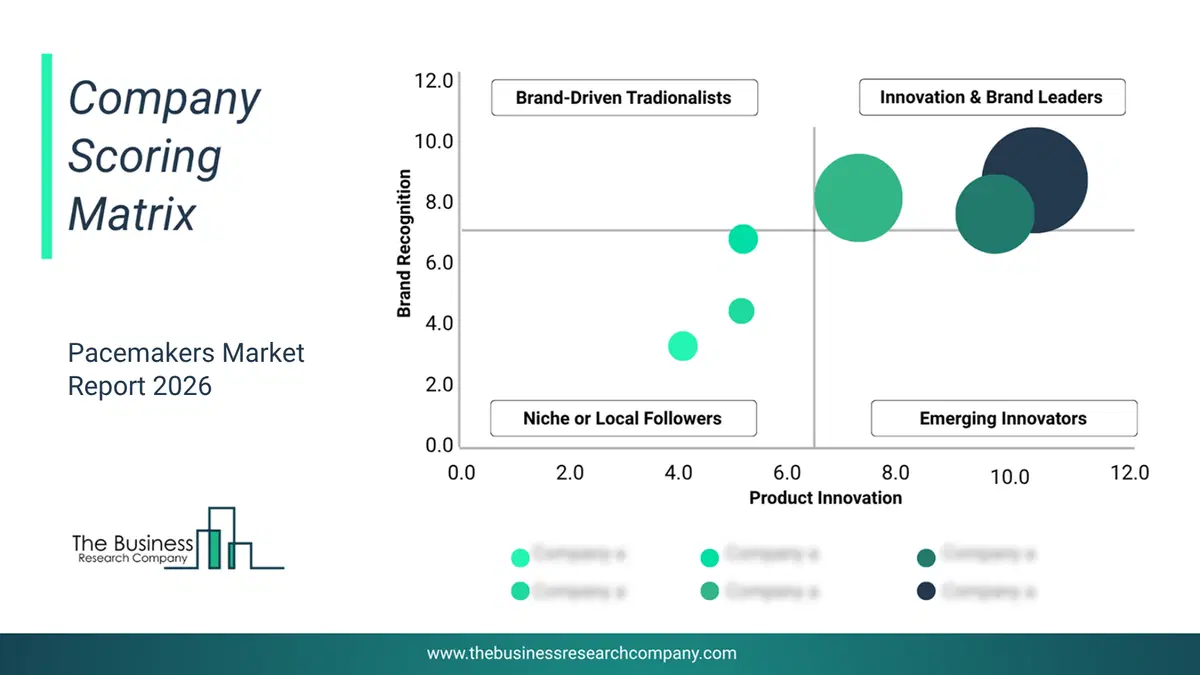
This chart maps companies by product innovation and brand strength, with bubble size indicating relative revenue, helping identify market leaders, challengers, and niche players. This is an illustrative chart; the full report provides a complete and accurate competitive analysis.
Global Pacemakers Market Trends and Insights
Major companies operating in the pacemaker market are developing innovative products such as miniaturized pacemakers to meet larger customer bases, increase sales, and increase revenue. Miniaturized pacemakers are highly compact cardiac implantable electronic devices (CIEDs) designed to regulate the heart's rhythm and treat certain heart rhythm disorders, specifically without the use of electrical leads or wires. For instance, in May 2023, Medtronic plc, a US-based medical device company, announced the U.S. Food and Drug Administration (FDA) approval for the Micra AV2 and Micra VR2, two miniaturized, leadless pacemakers. The Micra AV2 and Micra VR2, recognized as the world's smallest pacemakers, offer extended battery life and simplified programming compared to their predecessors. These leadless pacemakers continue to provide the benefits of reduced complications when compared to traditional pacemakers. With a remarkable approximately 40% increase in battery life as compared to earlier versions, the projected median battery life for the Micra AV2 and Micra VR2 stands at nearly 16 and 17 years, respectively. This translates to over 80% of patients who receive a Micra pacemaker being expected to require only one device for their lifetime. Moreover, the new Micra AV2 incorporates advanced algorithms that autonomously program AV synchrony, ensuring the coordination of the heart's upper and lower chambers.What Are Latest Mergers And Acquisitions In The Pacemakers Market?
In Feb 2023, Royal Philips, a Netherlands-based health technology company, announced a long-term strategic partnership with TriHealth. This collaboration seeks to integrate Philips’ comprehensive cardiology solutions into TriHealth's new Heart & Vascular Institute at Bethesda North Hospital and the Harold and Eugenia Thomas Comprehensive Care Center, thereby enhancing cardiac care services, fulfilling community health commitments, coordinating health services among providers, and educating future healthcare professionals. TriHealth, a US-based company, specializes in integrated healthcare delivery systems, including pacemakers.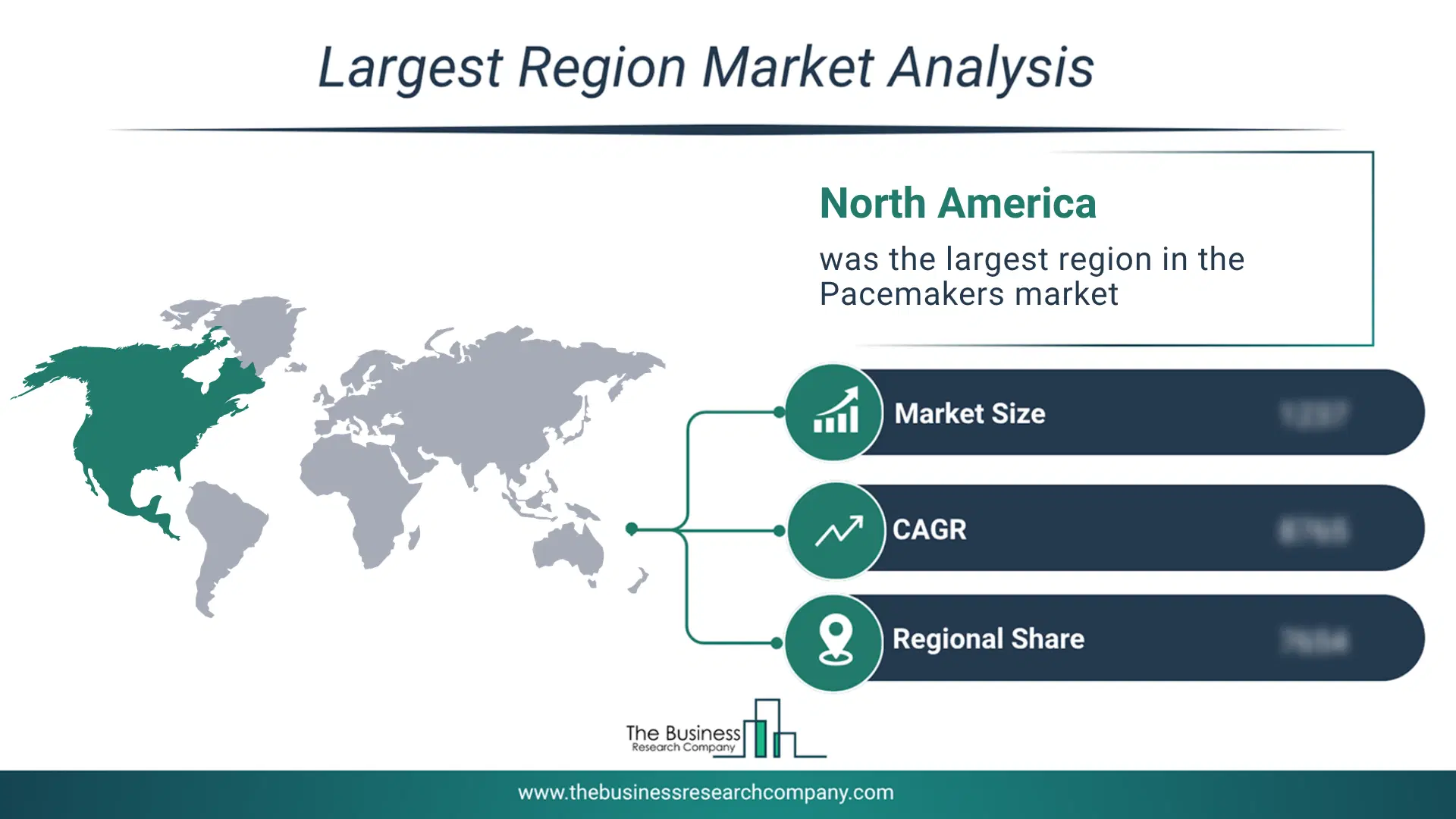
Regional Outlook
North America was the largest region in the pacemaker market in 2025. Asia-Pacific is expected to be the fastest-growing region in the forecast period. The regions covered in this market report are Asia-Pacific, South East Asia, Western Europe, Eastern Europe, North America, South America, Middle East, Africa. The countries covered in this market report are Australia, Brazil, China, France, Germany, India, Indonesia, Japan, Taiwan, Russia, South Korea, UK, USA, Canada, Italy, Spain.What Defines the Pacemakers Market?
The pacemaker market consists of sales of leadless pacemakers and transvenous peacemakers. Values in this market are ‘factory gate’ values, that is the value of goods sold by the manufacturers or creators of the goods, whether to other entities (including downstream manufacturers, wholesalers, distributors and retailers) or directly to end customers. The value of goods in this market includes related services sold by the creators of the goods.How is Market Value Defined and Measured?
The market value is defined as the revenues that enterprises gain from the sale of goods and/or services within the specified market and geography through sales, grants, or donations in terms of the currency (in USD unless otherwise specified). The revenues for a specified geography are consumption values that are revenues generated by organizations in the specified geography within the market, irrespective of where they are produced. It does not include revenues from resales along the supply chain, either further along the supply chain or as part of other products.
This chart presents market attractiveness based on a quantitative evaluation of growth, competition, strategic alignment, and risk, offering a clear view of opportunity areas for decision-making. This chart is for illustrative purposes; the full report contains the complete analysis.

This chart highlights the Total Addressable Market (TAM) by estimating the maximum revenue opportunity using an assumption-driven approach, supporting strategic planning and opportunity sizing across markets. The chart is illustrative; the full report provides a more comprehensive analysis.
What Key Data and Analysis Are Included in the Pacemakers Market Report 2026?
The pacemakers market research report is one of a series of new reports from The Business Research Company that provides market statistics, including industry global market size, regional shares, competitors with the market share, detailed market segments, market trends and opportunities, and any further data you may need to thrive in the pacemakers industry. The market research report delivers a complete perspective of everything you need, with an in-depth analysis of the current and future state of the industry.Pacemakers Market Report Forecast Analysis
| Report Attribute | Details |
|---|---|
| Market Size Value In 2026 | $6.15 billion |
| Revenue Forecast In 2030 | $8.38 billion |
| Growth Rate | CAGR of 8% from 2026 to 2030 |
| Base Year For Estimation | 2025 |
| Actual Estimates/Historical Data | 2020-2025 |
| Forecast Period | 2026 - 2030 |
| Market Representation | Revenue in USD Billion and CAGR from 2026 to 2030 |
| Segments Covered | Type, Technology, Implantability, Application, End-User |
| Regional Scope | Asia-Pacific, Western Europe, Eastern Europe, North America, South America, Middle East, Africa |
| Country Scope | The countries covered in the report are Australia, Brazil, China, France, Germany, India, Indonesia, Japan, Taiwan, Russia, South Korea, UK, USA, Canada, Italy, Spain |
| Key Companies Profiled | Boston Scientific Corporation, Medtronic plc, Biotronik SE & Co KG, MicroPort Scientific Corporation, Shree Pacetronix Ltd, Oscor Inc, Osypka Medical GmbH, Abbott Laboratories, Lepu Medical Technology Beijing Co Ltd, Vitatron Holding BV, Pacetronix Limited, Sorin Group Italia SRL, CCC Medical Devices, Cardioelectronica, Izhevsky Mekhanichesky Zavod, Neuroiz, St Jude Medical (Abbott), Medico Spa, Braile Biomedica, Cardiaccs ApS, Hunan Huacheng Medical, Progetti SRL, Nihon Kohden Corporation, Schiller AG, Koninklijke Philips NV, Stryker Corporation, Physio Control Inc, AliveCor Inc. |
| Customization Scope | Request for Customization |
| Pricing And Purchase Options | Explore Purchase Options |