
Plant-Based Food Packaging Market Report 2026
Global Outlook – By Packaging Type (Paper Based, Biodegradable And Compostable Packaging), By Material (Bioplastics, Mycelium, Bagasse, Starch Based, Paper), By Packaging Formats (Flexible Packaging, Stand-Up Pouches, Flat Bottom Bags, Flow Wraps, Rigid Packaging, Trays, Containers, Bottles) – Market Size, Trends, Strategies, and Forecast to 2030
Plant-Based Food Packaging Market Overview
• Plant-Based Food Packaging market size has reached to $7.2 billion in 2025 • Expected to grow to $13.33 billion in 2030 at a compound annual growth rate (CAGR) of 13.1% • Growth Driver: Online Shopping Surge Fuels Growth In The Plant-Based Food Packaging Market • Market Trend: Innovative Biodegradable Solutions Revolutionize Plant-Based Food Packaging • Europe was the largest region and fastest growing region.What Is Covered Under Plant-Based Food Packaging Market?
Plant-based food packaging is made from renewable, biodegradable materials such as cornstarch, sugarcane, or mushroom mycelium, designed to reduce environmental impact. It provides an eco-friendly alternative to traditional plastic packaging, helping to minimize waste and carbon footprint. This type of packaging is used for various food products to enhance sustainability and appeal to environmentally conscious consumers. The main types of plant-based food packaging are paper-based, biodegradable and compostable packaging, and recyclable plastic packaging. Paper-based packaging is any packaging made primarily from paper and its derivatives. It is known for its sustainability, as it can be recycled multiple times and is biodegradable. The materials used, such as bioplastics, mycelium, bagasse, starch-based, and paper, for various packaging formats include flexible packaging, stand-up pouches, flat bottom bags, flow wraps, rigid packaging, trays, containers, and bottles.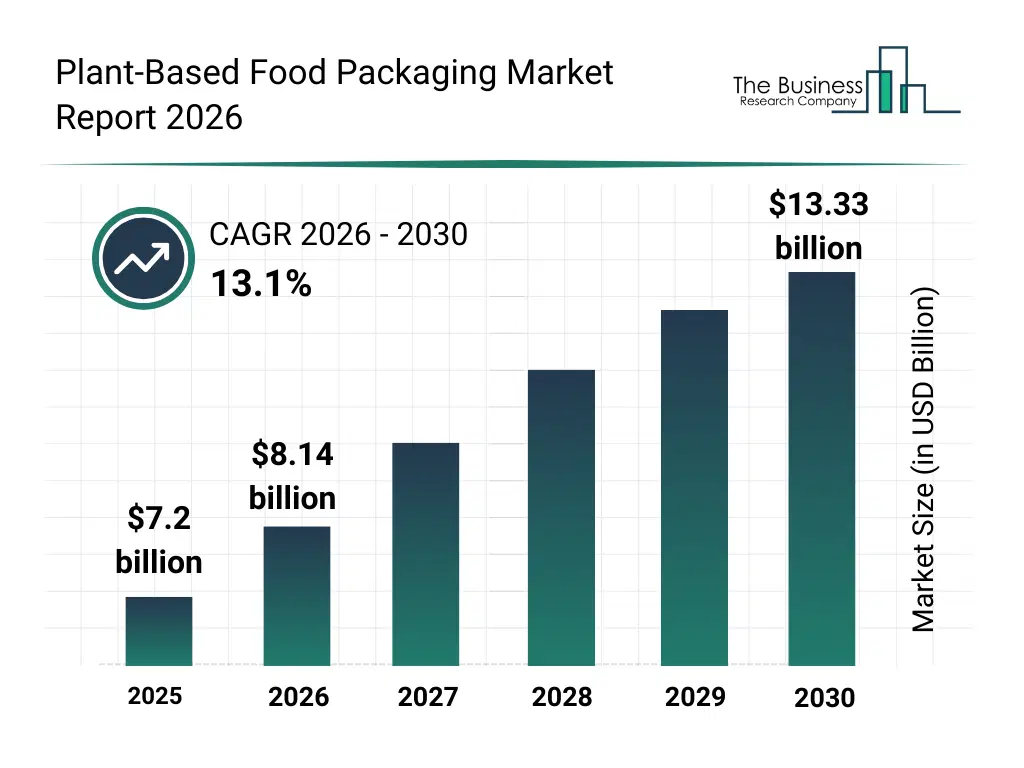
What Is The Plant-Based Food Packaging Market Size and Share 2026?
The plant-based food packaging market size has grown rapidly in recent years. It will grow from $7.2 billion in 2025 to $8.14 billion in 2026 at a compound annual growth rate (CAGR) of 13.1%. The growth in the historic period can be attributed to rising consumer awareness of plastic pollution, expansion of organic and natural food markets, availability of agricultural waste feedstock, early adoption by food brands, supportive environmental regulations.What Is The Plant-Based Food Packaging Market Growth Forecast?
The plant-based food packaging market size is expected to see rapid growth in the next few years. It will grow to $13.33 billion in 2030 at a compound annual growth rate (CAGR) of 13.1%. The growth in the forecast period can be attributed to growing investments in bio-based material innovation, rising demand from foodservice chains, expansion of composting infrastructure, increasing regulatory restrictions on single-use plastics, scale-up of plant-based packaging production. Major trends in the forecast period include increasing adoption of biodegradable food packaging, rising use of plant-based raw materials, growing demand for compostable packaging formats, expansion of molded fiber and mycelium packaging, enhanced focus on plastic replacement solutions.
Global Plant-Based Food Packaging Market Segmentation
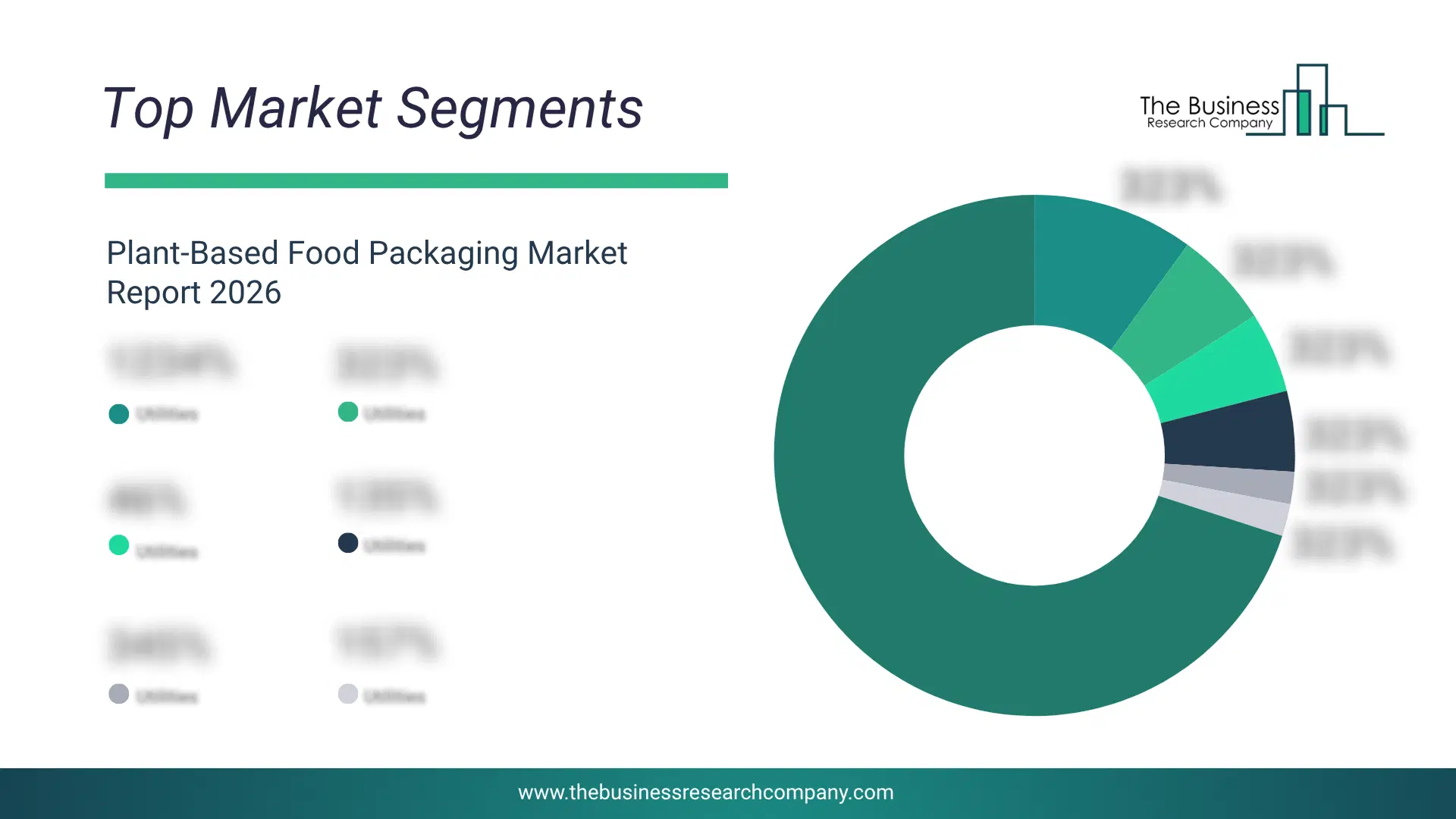
1) By Packaging Type: Paper Based, Biodegradable And Compostable Packaging 2) By Material: Bioplastics, Mycelium, Bagasse, Starch Based, Paper 3) By Packaging Formats: Flexible Packaging, Stand-Up Pouches, Flat Bottom Bags, Flow Wraps, Rigid Packaging, Trays, Containers, Bottles Subsegments: 1) By Paper-Based: Kraft Paper Packaging, Coated Paperboard Packaging, Molded Pulp Packaging, Paper Bags And Pouches, Paper Cups And Containers 2) By Biodegradable And Compostable Packaging: Polylactic Acid (PLA) Packaging, Polyhydroxyalkanoates (PHA) Packaging, Starch-Based Packaging, Mushroom Packaging, Cellulose-Based Packaging, Bagasse Packaging (Sugarcane Pulp)What Is The Driver Of The Plant-Based Food Packaging Market?
The growing adoption of online shopping is expected to propel the growth of the plant-based food packaging market going forward. Online shopping refers to the process of buying goods and services over the Internet. Online shopping allows consumers to purchase goods and services from the comfort of their own homes, eliminating the need to travel to physical stores. It saves time by providing a quick and easy way to browse, compare, and purchase products. Online shoppers increasingly seek eco-friendly options, prompting retailers to adopt plant-based packaging that offers customization and convenience, enabling brand differentiation. For instance, in May 2024, according to the United States Census Bureau, a US-based government agency, the first quarter of 2024 e-commerce estimate increased 8.5% from the first quarter of 2023, while total retail sales increased 2.8% in the same period. Therefore, the growing adoption of online shopping is driving the growth of the plant-based food packaging industry.Key Players In The Global Plant-Based Food Packaging Market
Major companies operating in the plant-based food packaging market are Amcor plc, WestRock Company, International Paper, Tetra Pak International S.A., Stora Enso, Huhtamaki, Mondi Group, Cascades Inc., Glatfelter Corporation, Genpak, Nordic Paper, Danimer Scientific, Good Natured Products Inc., Vegware, Sulapac Oy, Be Green Packaging, BioPak, TIPA LTD, WorldCentric.com, Ecologic, Earthpack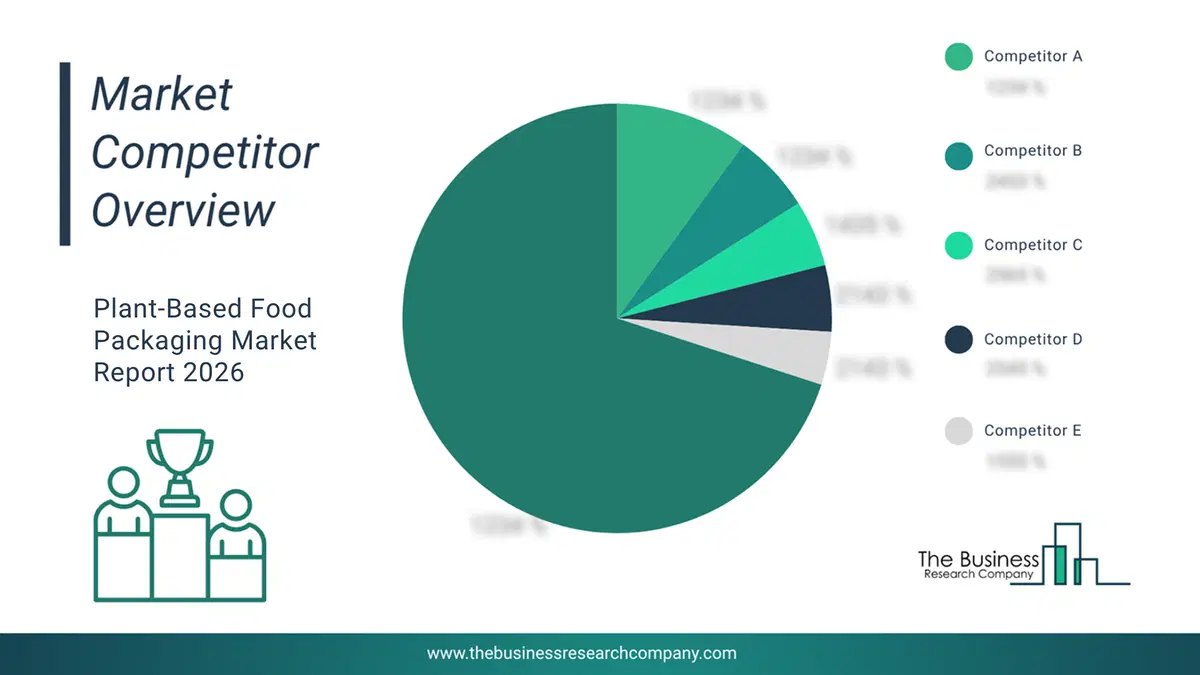
This chart is for illustrative purposes; the full report includes a detailed competitor analysis and comprehensive overview of the top 10 companies in the market.
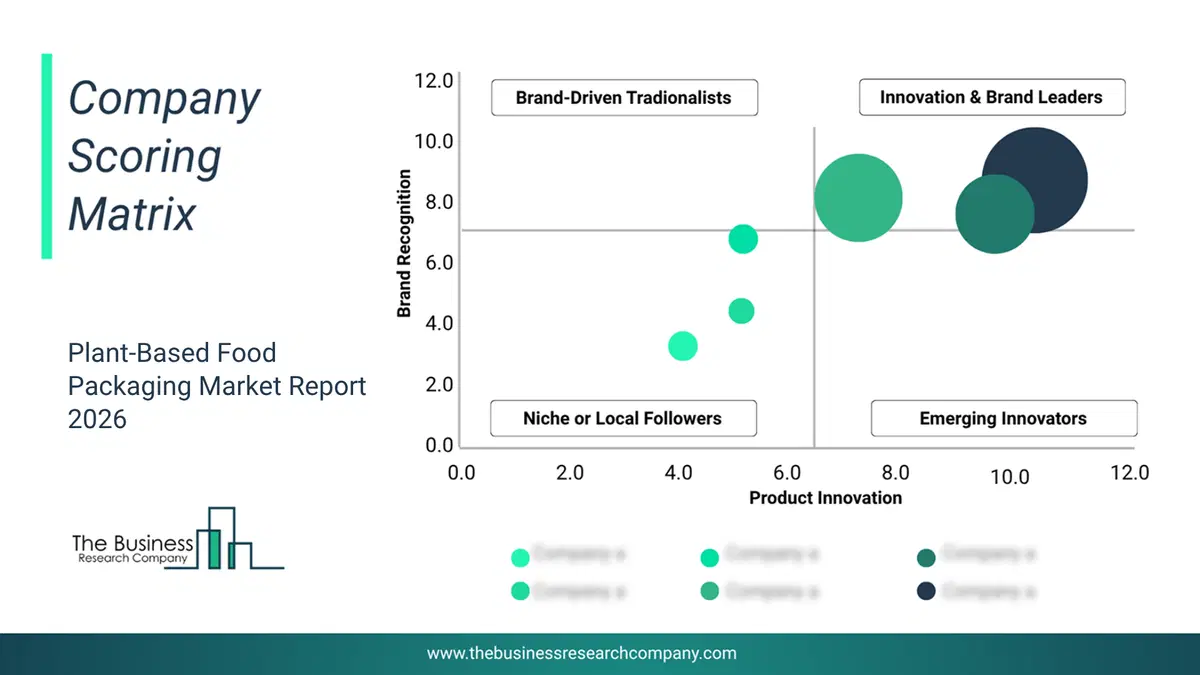
This chart maps companies by product innovation and brand strength, with bubble size indicating relative revenue, helping identify market leaders, challengers, and niche players. This is an illustrative chart; the full report provides a complete and accurate competitive analysis.
Global Plant-Based Food Packaging Market Trends and Insights
Major companies operating in the plant-based food packaging market are advancing solutions with sustainable packaging practices to provide biodegradable alternatives to traditional plastic, thereby reducing waste and environmental impact. Sustainable packaging practices are ways of designing, producing, and disposing of packaging materials that reduce the ecological footprint by including eco-friendly, resource-efficient materials and procedures that encourage a circular economy. For instance, in March 2024, Donovan Bros Ltd., a UK-based provider of sustainable packaging solutions, launched mushroom-based packaging. It is an environmentally friendly and biodegradable food packaging solution that combines agricultural waste with mycelium to generate strong and compostable packaging. It is a flexible, edible, or compostable packaging alternative appropriate for various food goods. This innovative packaging enables a distinct 'unboxing' experience.What Are Latest Mergers And Acquisitions In The Plant-Based Food Packaging Market?
In May 2023, TIPA Compostable Packaging Ltd., an Israel-based sustainable packaging company, acquired Bio4Pack for US$ 8 million. With this acquisition, TIPA aimed to expand its market presence across Europe and strengthen its portfolio of compostable and plant-based packaging solutions. Bio4Pack B.V. is a Germany-based sustainable packaging company that specializes in manufacturing certified compostable and bio-based packaging materials for food and consumer goods applications.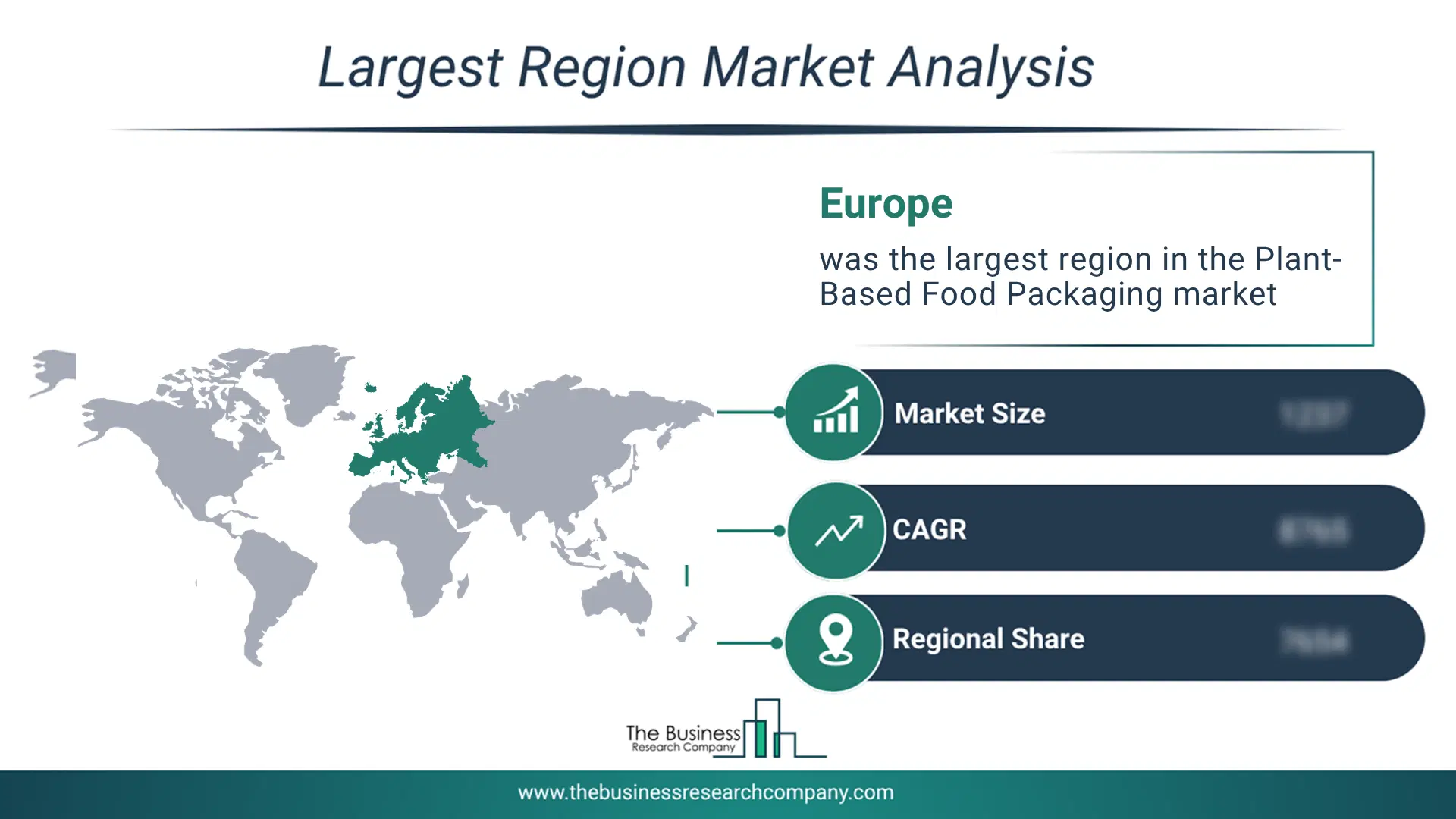
Regional Outlook
Europe was the largest region in the plant-based food packaging market in 2025 and is expected to be the fastest-growing region in the forecast period. The regions covered in this market report are Asia-Pacific, South East Asia, Western Europe, Eastern Europe, North America, South America, Middle East, Africa. The countries covered in this market report are Australia, Brazil, China, France, Germany, India, Indonesia, Japan, Taiwan, Russia, South Korea, UK, USA, Canada, Italy, Spain.What Defines the Plant-Based Food Packaging Market?
The plant-based food packaging consists of sales of biodegradable bags, compostable containers, plant-based plastics, and paper and cardboard packaging. Values in this market are ‘factory gate’ values, that is the value of goods sold by the manufacturers or creators of the goods, whether to other entities (including downstream manufacturers, wholesalers, distributors and retailers) or directly to end customers. The value of goods in this market includes related services sold by the creators of the goods.How is Market Value Defined and Measured?
The market value is defined as the revenues that enterprises gain from the sale of goods and/or services within the specified market and geography through sales, grants, or donations in terms of the currency (in USD unless otherwise specified). The revenues for a specified geography are consumption values that are revenues generated by organizations in the specified geography within the market, irrespective of where they are produced. It does not include revenues from resales along the supply chain, either further along the supply chain or as part of other products.
This chart presents market attractiveness based on a quantitative evaluation of growth, competition, strategic alignment, and risk, offering a clear view of opportunity areas for decision-making. This chart is for illustrative purposes; the full report contains the complete analysis.

This chart highlights the Total Addressable Market (TAM) by estimating the maximum revenue opportunity using an assumption-driven approach, supporting strategic planning and opportunity sizing across markets. The chart is illustrative; the full report provides a more comprehensive analysis.
What Key Data and Analysis Are Included in the Plant-Based Food Packaging Market Report 2026?
The plant-based food packaging market research report is one of a series of new reports from The Business Research Company that provides market statistics, including Market Report 2026?global market size, regional shares, competitors with the market share, detailed market segments, market trends and opportunities, and any further data you may need to thrive in the plant-based food packaging Market Report 2026? The market research report delivers a complete perspective of everything you need, with an in-depth analysis of the current and future state of the Market Report 2026?Plant-Based Food Packaging Market Report Forecast Analysis
| Report Attribute | Details |
|---|---|
| Market Size Value In 2026 | $8.14 billion |
| Revenue Forecast In 2030 | $13.33 billion |
| Growth Rate | CAGR of 13.1% from 2026 to 2030 |
| Base Year For Estimation | 2025 |
| Actual Estimates/Historical Data | 2020-2025 |
| Forecast Period | 2026 - 2030 |
| Market Representation | Revenue in USD Billion and CAGR from 2026 to 2030 |
| Segments Covered | Packaging Type, Material, Packaging Formats |
| Regional Scope | Asia-Pacific, Western Europe, Eastern Europe, North America, South America, Middle East, Africa |
| Country Scope | The countries covered in the report are Australia, Brazil, China, France, Germany, India, Indonesia, Japan, Taiwan, Russia, South Korea, UK, USA, Canada, Italy, Spain. |
| Key Companies Profiled | Amcor plc, WestRock Company, International Paper, Tetra Pak International S.A., Stora Enso, Huhtamaki, Mondi Group, Cascades Inc., Glatfelter Corporation, Genpak, Nordic Paper, Danimer Scientific, Good Natured Products Inc., Vegware, Sulapac Oy, Be Green Packaging, BioPak, TIPA LTD, WorldCentric.com, Ecologic, Earthpack |
| Customization Scope | Request for Customization |
| Pricing And Purchase Options | Explore Purchase Options |