
Plant-Based Ice Cream Market Report 2026
Global Outlook – By Product Type (Bars, Cones, Cups Or Tubs, Other Product Types ), By Source (Soy Milk, Coconut Milk, Almond Milk, Cashew Milk, Other Sources), By Flavor (Beans, Nuts, Fruits, Herbs, Other Flavors ), By Sales Channel (Indirect Sales, Hyper Or Supermarket, Franchise Outlet, Online, Other Sales Channels) – Market Size, Trends, Strategies, and Forecast to 2030
Plant-Based Ice Cream Market Overview
• Plant-Based Ice Cream market size has reached to $4.25 billion in 2025 • Expected to grow to $10.95 billion in 2030 at a compound annual growth rate (CAGR) of 20.8% • Growth Driver: Increase In Vegan Food Consumers Fueling The Growth Of The Market Due To Rising Demand For Dairy-Free And Ethical Alternatives • Market Trend: Innovation In Dairy-Free Desserts Targets Consumer Demand • North America was the largest region in 2025 and Asia-Pacific is the fastest growing region.What Is Covered Under Plant-Based Ice Cream Market?
Plant-based ice creams are dairy-free frozen desserts made from a variety of plant-derived milk alternatives. Designed to cater to vegan, health-conscious, and lactose-intolerant consumers, they replicate the creamy texture and taste of traditional ice cream without relying on animal products. These products support healthier eating habits, encourage sustainable food practices, and offer environmentally friendly alternatives to conventional dairy desserts. Ultimately, plant-based ice creams contribute to expanding consumer choices and promoting dietary sustainability. The main product types of plant-based ice cream are bars, cones, cups or tubs, and others. Ice cream bars are individually wrapped, handheld treats made with dairy-free alternatives such as almond milk or coconut milk. These products are derived from a variety of plant-based sources, including soy milk, coconut milk, almond milk, cashew milk, and others. They come in a wide range of flavors, incorporating ingredients such as beans, nuts, fruits, herbs, and more. Plant-based ice cream is distributed through various sales channels, including indirect sales, hypermarkets or supermarkets, franchise outlets, online platforms, and others.
What Is The Plant-Based Ice Cream Market Size and Share 2026?
The plant-based ice cream market size has grown exponentially in recent years. It will grow from $4.25 billion in 2025 to $5.15 billion in 2026 at a compound annual growth rate (CAGR) of 21.0%. The growth in the historic period can be attributed to growth in lactose intolerance awareness, rising vegan and flexitarian populations, expansion of frozen dessert retail channels, increasing availability of plant-based milk alternatives, evolving consumer taste preferences.What Is The Plant-Based Ice Cream Market Growth Forecast?
The plant-based ice cream market size is expected to see exponential growth in the next few years. It will grow to $10.95 billion in 2030 at a compound annual growth rate (CAGR) of 20.8%. The growth in the forecast period can be attributed to increasing product diversification in plant-based desserts, rising demand for sustainable indulgent foods, expansion of online and direct-to-consumer sales, growing investments in plant-based food innovation, increasing focus on health-oriented frozen treats. Major trends in the forecast period include increasing demand for dairy-free frozen desserts, rising popularity of clean-label and organic ice creams, growing innovation in plant-based flavor profiles, expansion of premium and artisanal product lines, enhanced focus on low-calorie and functional variants.
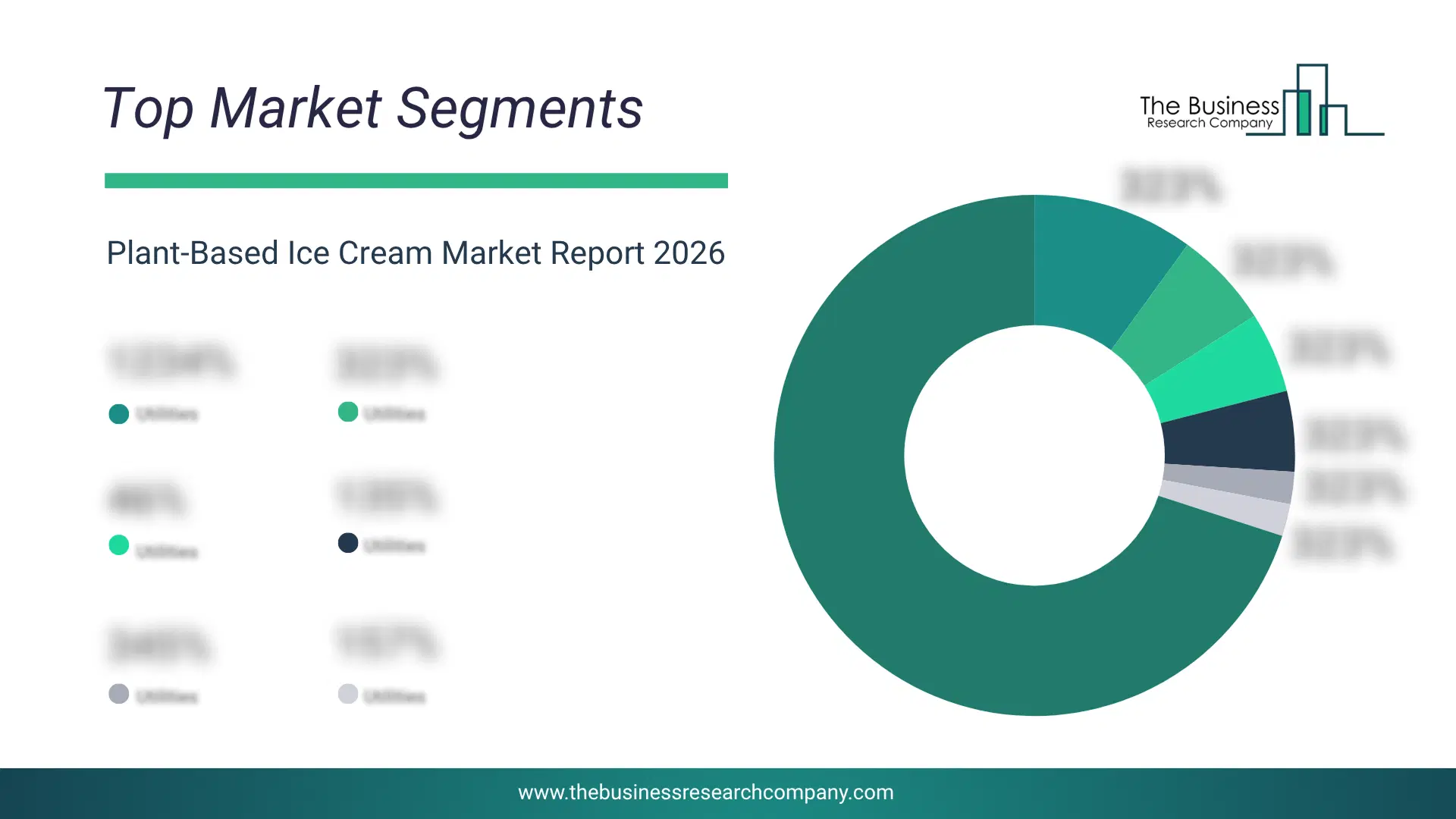
Global Plant-Based Ice Cream Market Segmentation
1) By Product Type: Bars, Cones, Cups Or Tubs, Other Product Types 2) By Source: Soy Milk, Coconut Milk, Almond Milk, Cashew Milk, Other Sources 3) By Flavor: Beans, Nuts, Fruits, Herbs, Other Flavors 4) By Sales Channel: Indirect Sales, Hyper Or Supermarket, Franchise Outlet, Online, Other Sales Channels Subsegments: 1) By Bars: Chocolate Coated Bars, Fruit-Based Bars, Nut-Based Bars, Protein-Enriched Bars 2) By Cones: Waffle Cones, Sugar Cones, Gluten-Free Cones, Chocolate-Dipped Cones 3) By Cups Or Tubs: Single-Serve Cups, Multi-Serve Tubs, Organic Plant-Based Ice Cream, Low-Calorie or Light Ice Cream 4) By Other Product Types: Ice Cream Sandwiches, Ice Cream Sticks, Ice Cream Cakes, Ice Cream PopsiclesWhat Is The Driver Of The Plant-Based Ice Cream Market?
The increase in consumers of vegan food is expected to propel the growth of the plant-based ice cream market going forward. Vegan foods are foods that do not contain any animal products or by-products. Vegan foods are increasing due to rising health awareness, environmental concerns, and growing demand for cruelty-free, plant-based alternatives. Vegan food consumers are driving demand for plant-based ice cream as they seek dairy-free treats that align with their ethical and health-conscious lifestyles. Plant-based ice cream supports vegan consumers by providing a dairy-free alternative that aligns with their ethical, environmental, and health-conscious lifestyle choices. For instance, in April 2024, according to the Good Food Institute (GFI), a US-based nonprofit organization focused on alternative protein research, US retail plant-based food dollar sales reached $8.1 billion in 2023, and 81% of households that purchased plant-based foods in 2023 made repeat purchases throughout the year. Therefore, the increase in consumers of vegan food is going to drive the growth of plant-based ice cream industry.Key Players In The Global Plant-Based Ice Cream Market
Major companies operating in the plant-based ice cream market are Nestlé S.A., Danone S.A., Pressed Juicery Inc, GoodPop LLC, Vegetarian Express Ltd., Little Red Rooster Ice Cream Company LLC, Booja-Booja Ltd., The Brooklyn Creamery, Cado Inc., Wildgood Inc., Cosmic Bliss Inc., PapaCream, Poco Ice Cream LLC, So Delicious Dairy Free, NadaMoo!, Coconut Bliss, Alpro Frozen Desserts, Oatly Ice Cream, Rebellyous Foods, Plantology Ice Cream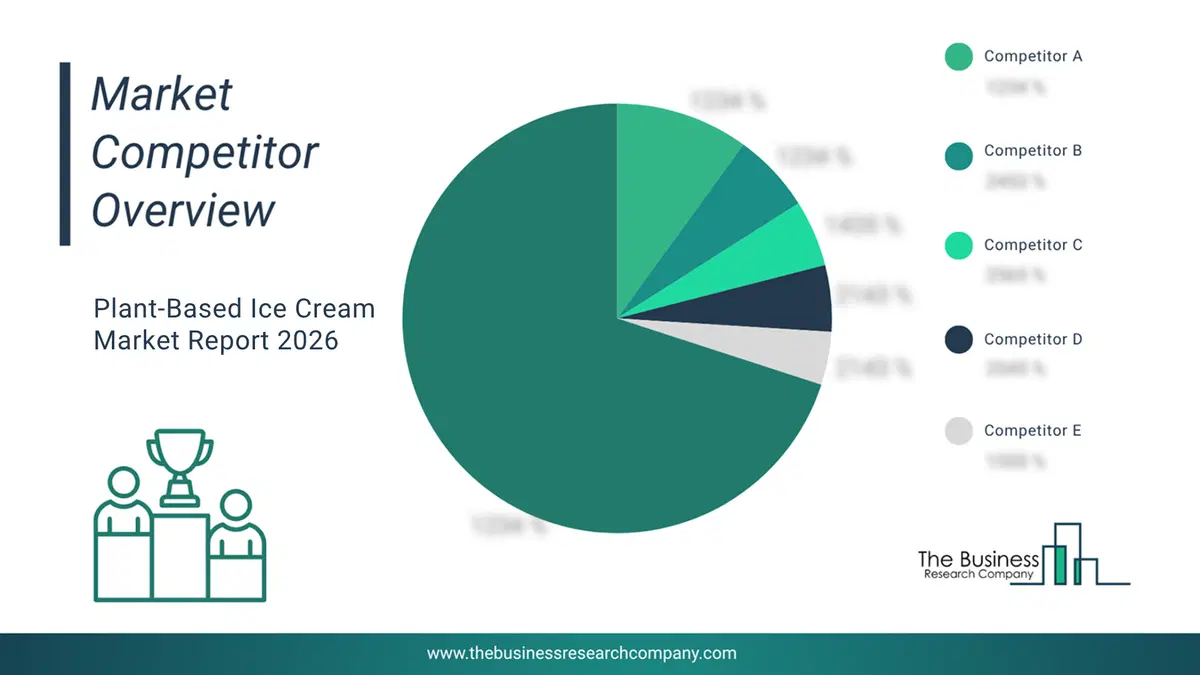
This chart is for illustrative purposes; the full report includes a detailed competitor analysis and comprehensive overview of the top 10 companies in the market.
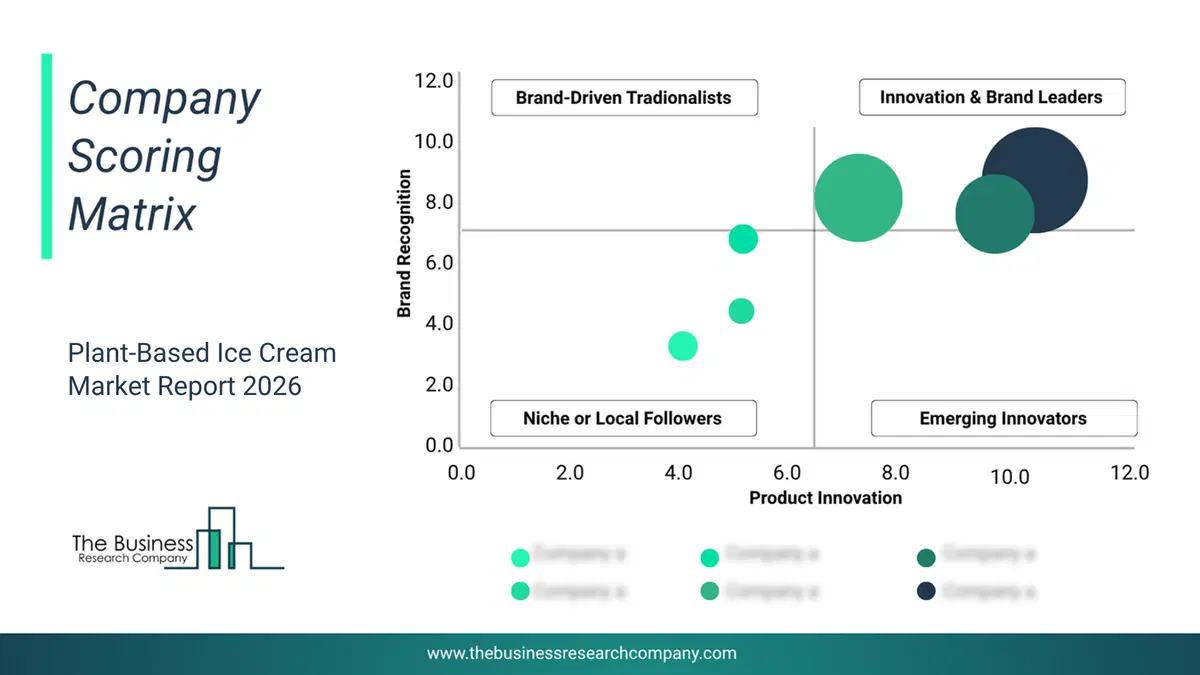
This chart maps companies by product innovation and brand strength, with bubble size indicating relative revenue, helping identify market leaders, challengers, and niche players. This is an illustrative chart; the full report provides a complete and accurate competitive analysis.
Global Plant-Based Ice Cream Market Trends and Insights
Major companies operating in the plant-based ice cream market are focusing on launching new products, such as vegan-based twin flavor ice cream, to attract health-conscious and environmentally aware consumers by offering indulgent yet sustainable dessert options. Vegan ice cream is a dairy-free frozen dessert made from plant-based ingredients such as almond, soy, coconut, or oat milk instead of animal-derived milk. For instance, in February 2024, Magnum, a UK-based frozen dessert brand of Unilever, launched a new vegan ice cream flavor, Chill Blueberry Cookie, as part of its mood-inspired range. This product features a blueberry sorbet core surrounded by vegan milk chocolate and cookie elements, catering to rising consumer demand for plant-based treats and emotionally resonant food experiences that align with specific moods or feelings, in this case, promoting calm or relaxation.What Are Latest Mergers And Acquisitions In The Plant-Based Ice Cream Market?
In April 2024, Greenyard, a Belgium-based fresh fruits and vegetables company, acquired Crème de la Crème Inc. for an undisclosed amount. This acquisition of Crème de la Crème boosts its plant-based frozen dessert expertise, accelerating its push into guilt-free, fruit- and veggie-based snacking while expanding its pure-plant product range. Crème de la Crème Inc. is a Belgium-based food technology company specializes in plant-based frozen desserts.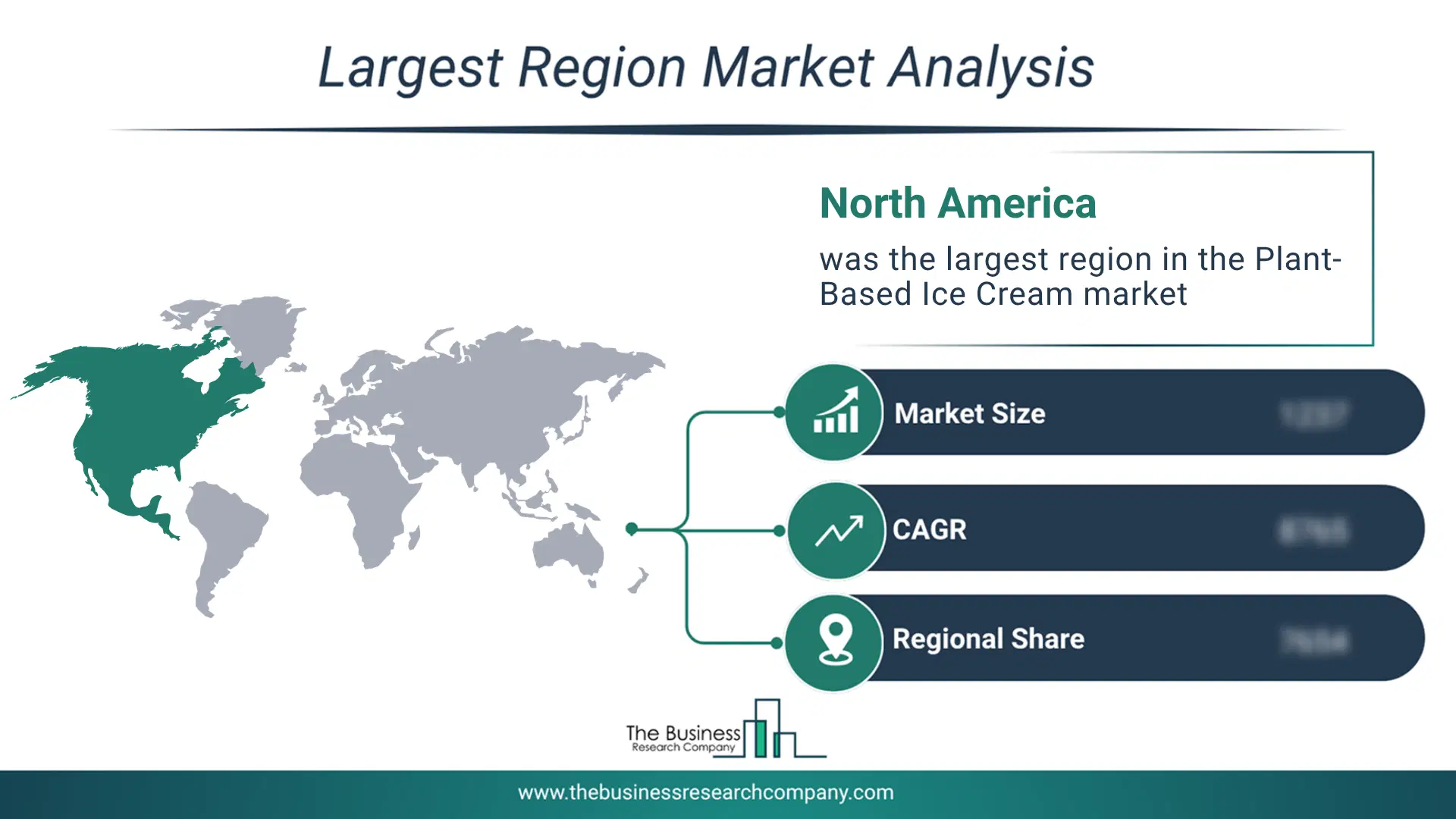
Regional Outlook
North America was the largest region in the plant-based ice cream market in 2025. Asia-Pacific is expected to be the fastest-growing region in the forecast period. The regions covered in this market report are Asia-Pacific, South East Asia, Western Europe, Eastern Europe, North America, South America, Middle East and Africa. The countries covered in this market report are Australia, Brazil, China, France, Germany, India, Indonesia, Japan, Taiwan, Russia, South Korea, UK, USA, Italy, Spain, CanadaWhat Defines the Plant-Based Ice Cream Market?
The plant-based ice creams market consists of sales of plant-based ice cream sticks, cups, cakes, and soft serve. Values in this market are ‘factory gate’ values, that is, the value of goods sold by the manufacturers or creators of the goods, whether to other entities (including downstream manufacturers, wholesalers, distributors, and retailers) or directly to end customers. The value of goods in this market includes related services sold by the creators of the goods.How is Market Value Defined and Measured?
The market value is defined as the revenues that enterprises gain from the sale of goods and/or services within the specified market and geography through sales, grants, or donations in terms of the currency (in USD unless otherwise specified). The revenues for a specified geography are consumption values that are revenues generated by organizations in the specified geography within the market, irrespective of where they are produced. It does not include revenues from resales along the supply chain, either further along the supply chain or as part of other products.
This chart presents market attractiveness based on a quantitative evaluation of growth, competition, strategic alignment, and risk, offering a clear view of opportunity areas for decision-making. This chart is for illustrative purposes; the full report contains the complete analysis.

This chart highlights the Total Addressable Market (TAM) by estimating the maximum revenue opportunity using an assumption-driven approach, supporting strategic planning and opportunity sizing across markets. The chart is illustrative; the full report provides a more comprehensive analysis.
What Key Data and Analysis Are Included in the Plant-Based Ice Cream Market Report 2026?
The plant-based ice cream market research report is one of a series of new reports from The Business Research Company that provides market statistics, including industry global market size, regional shares, competitors with the market share, detailed market segments, market trends and opportunities, and any further data you may need to thrive in the plant-based ice cream industry. The market research report delivers a complete perspective of everything you need, with an in-depth analysis of the current and future state of the industry.Plant-Based Ice Cream Market Report Forecast Analysis
| Report Attribute | Details |
|---|---|
| Market Size Value In 2026 | $5.15 billion |
| Revenue Forecast In 2030 | $10.95 billion |
| Growth Rate | CAGR of 21.0% from 2026 to 2030 |
| Base Year For Estimation | 2025 |
| Actual Estimates/Historical Data | 2020-2025 |
| Forecast Period | 2026 - 2030 |
| Market Representation | Revenue in USD Billion and CAGR from 2026 to 2030 |
| Segments Covered | Product Type, Source, Flavor, Sales Channel |
| Regional Scope | Asia-Pacific, Western Europe, Eastern Europe, North America, South America, Middle East, Africa |
| Country Scope | The countries covered in the report are Australia, Brazil, China, France, Germany, India, Indonesia, Japan, Taiwan, Russia, South Korea, UK, USA, Canada, Italy, Spain. |
| Key Companies Profiled | Nestlé S.A., Danone S.A., Pressed Juicery Inc, GoodPop LLC, Vegetarian Express Ltd., Little Red Rooster Ice Cream Company LLC, Booja-Booja Ltd., The Brooklyn Creamery, Cado Inc., Wildgood Inc., Cosmic Bliss Inc., PapaCream, Poco Ice Cream LLC, So Delicious Dairy Free, NadaMoo!, Coconut Bliss, Alpro Frozen Desserts, Oatly Ice Cream, Rebellyous Foods, Plantology Ice Cream |
| Customization Scope | Request for Customization |
| Pricing And Purchase Options | Explore Purchase Options |