
Plant-Based Vitamin D Market Report 2026
Global Outlook – By Product Type (Vitamin D2, Vitamin D3), By Form (Powder, Liquid, Capsule, Tablet, Other Forms), By Source (Mushroom, Lichen, Algae, Yeast, Other Sources), By Distribution Channel (Online Stores, Supermarkets Or Hypermarkets, Specialty Stores, Other Distribution Channels), By Application (Dietary Supplements, Food And Beverages, Pharmaceuticals, Cosmetics And Personal Care, Other Applications) – Market Size, Trends, Strategies, and Forecast to 2030
Plant-Based Vitamin D Market Overview
• Plant-Based Vitamin D market size has reached to $1.23 billion in 2025 • Expected to grow to $1.94 billion in 2030 at a compound annual growth rate (CAGR) of 9.5% • Growth Driver: Rising Adoption Of Vegan Diets Fueling The Growth Of The Market Due To Increasing Health Consciousness And Nutritional Needs • Market Trend: Companies Advancing Vegan Vitamin D With Pharmacopeial-Grade Innovations • North America was the largest region in 2025 and Asia-Pacific is the fastest growing region.What Is Covered Under Plant-Based Vitamin D Market?
Plant-based vitamin D is a form of vitamin D that is derived from non-animal biological sources and is intended to support overall vitamin D levels in the body. It plays a vital role in maintaining various physiological functions, including the regulation of calcium and phosphorus levels, which are essential for healthy bone structure and immune system performance. The main product types of plant-based vitamin D include vitamin D2 and vitamin D3. Vitamin D2 refers to a plant-derived form of vitamin D, commonly sourced from fungi such as mushrooms or yeast and used in fortified foods and supplements. It is available in different forms, such as powder, liquid, capsule, tablet, and others, and is derived from different sources, such as mushrooms, lichen, algae, yeast, and others. It is distributed through online stores, supermarkets or hypermarkets, specialty stores, and others and is applied for dietary supplements, food and beverages, pharmaceuticals, cosmetics and personal care, and others.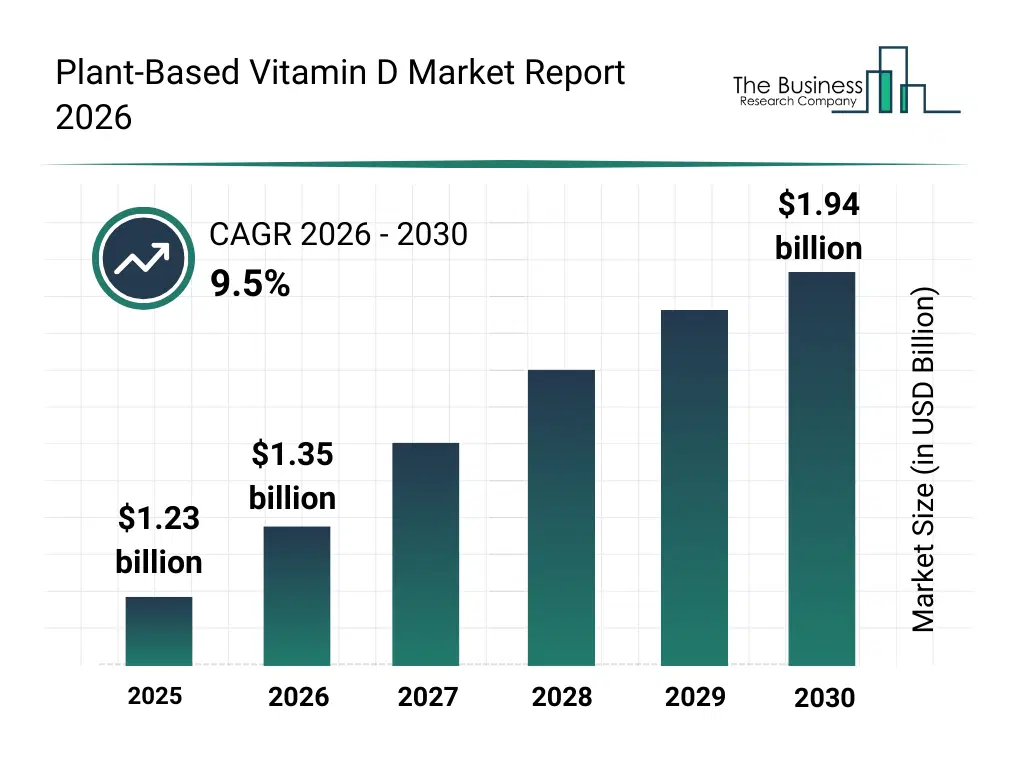
What Is The Plant-Based Vitamin D Market Size and Share 2026?
The plant-based vitamin d market size has grown strongly in recent years. It will grow from $1.23 billion in 2025 to $1.35 billion in 2026 at a compound annual growth rate (CAGR) of 9.8%. The growth in the historic period can be attributed to rising prevalence of vitamin d deficiency, increased awareness of bone and immune health, growth of vegetarian and vegan populations, availability of fermentation-based production methods, expansion of dietary supplement markets.What Is The Plant-Based Vitamin D Market Growth Forecast?
The plant-based vitamin d market size is expected to see strong growth in the next few years. It will grow to $1.94 billion in 2030 at a compound annual growth rate (CAGR) of 9.5%. The growth in the forecast period can be attributed to increasing demand for sustainable nutrition solutions, rising investments in plant-based ingredient innovation, expansion of functional food applications, growing focus on immune health supplementation, increasing regulatory support for fortified food products. Major trends in the forecast period include increasing adoption of lichen-derived vitamin d3, rising demand for vegan and plant-based supplements, growing use of bio-fortification technologies, expansion of vitamin d fortified foods and beverages, enhanced focus on clean and transparent labeling.
Global Plant-Based Vitamin D Market Segmentation
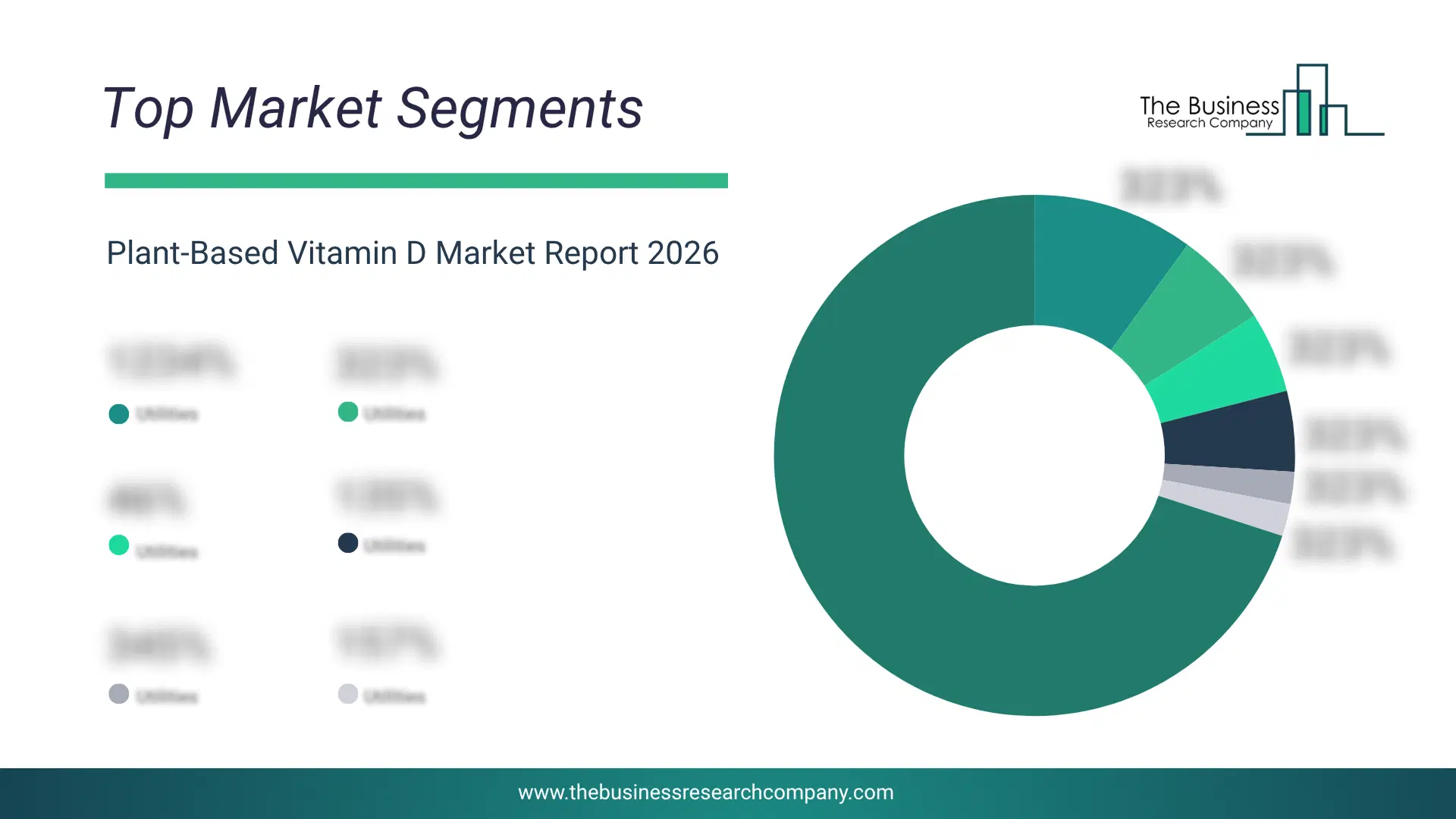
1) By Product Type: Vitamin D2, Vitamin D3 2) By Form: Powder, Liquid, Capsule, Tablet, Other Forms 3) By Source: Mushroom, Lichen, Algae, Yeast, Other Sources 4) By Distribution Channel: Online Stores, Supermarkets Or Hypermarkets, Specialty Stores, Other Distribution Channels 5) By Application: Dietary Supplements, Food And Beverages, Pharmaceuticals, Cosmetics And Personal Care, Other Applications Subsegments: 1) By Vitamin D2: Ergocalciferol Extract, Fortified Plant-Based Foods, Fermented Yeast-Based Vitamin D2, Mushroom-Derived Vitamin D2, Synthetic Plant-Sourced Vitamin D2 2) By Vitamin D3: Lichen-Derived Vitamin D3, Algae-Based Vitamin D3, Fortified Plant-Based Beverages, Fermented Plant-Based Sources, Bio-Fortified CropsWhat Is The Driver Of The Plant-Based Vitamin D Market?
The increasing adoption of vegan diets is expected to propel the growth of the plant-based vitamin D market going forward. A vegan diet is a way of eating that completely avoids all foods made from animals, focusing entirely on plant-based options. Vegan diets are rising due to growing health awareness, as more people recognize the benefits of plant-based eating in reducing the risk of chronic diseases such as heart conditions, obesity, and type 2 diabetes. Plant-based vitamin D supports vegan diets by offering a non-animal source of this vital nutrient, helping vegans maintain strong bones and a healthy immune system while staying true to their plant-based lifestyle. For instance, in January 2024, according to Retail Times, a UK-based news organization, as of early 2024, 2.5 million UK adults, equivalent to 4.7% of the population, are following a vegan diet, reflecting a significant increase of 1.1 million compared to the previous year. Therefore, the increasing adoption of vegan diets is driving the growth of the plant-based vitamin D industry.Key Players In The Global Plant-Based Vitamin D Market
Major companies operating in the plant-based vitamin d market are Royal DSM NV, Divi’s Laboratories Limited, Now Foods, Swanson Health Products Inc., Zhejiang Garden Biochemical High-Tech Company Limited, Nordic Naturals Inc., Vitabiotics Limited, Fermenta Biotech Limited, Pure Encapsulations LLC, MaryRuth Organics LLC, Solgar Inc., Bluebonnet Nutrition Corporation, Carlson Laboratories Inc., Doctor’s Best Inc., Truvani LLC, Naturelo Premium Supplements LLC, Source Naturals Inc., Future Kind LLC, ESKIMO-3 Limited Vitashine, Avlaan Pharma Private Limited.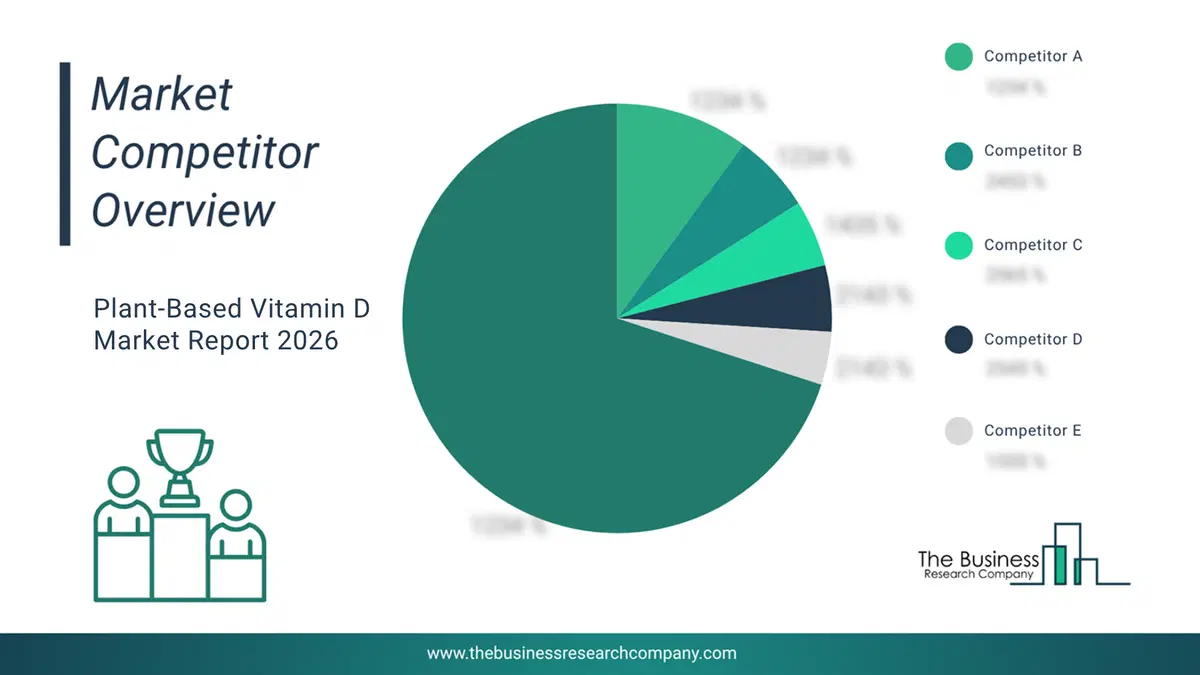
This chart is for illustrative purposes; the full report includes a detailed competitor analysis and comprehensive overview of the top 10 companies in the market.
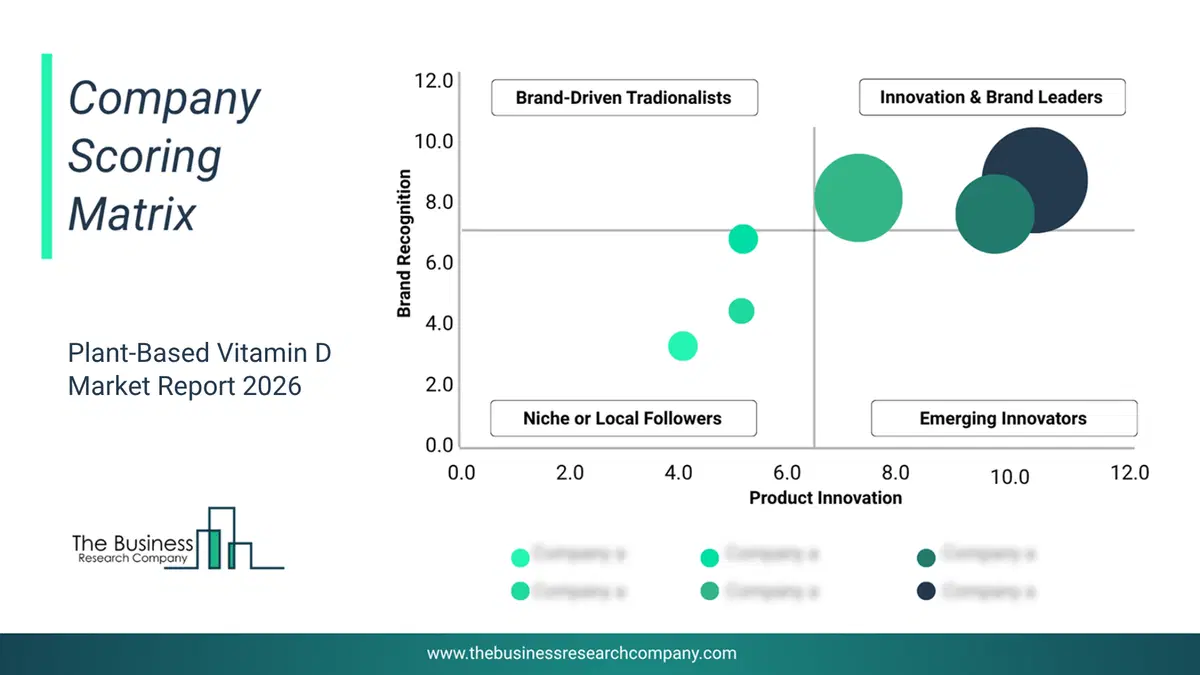
This chart maps companies by product innovation and brand strength, with bubble size indicating relative revenue, helping identify market leaders, challengers, and niche players. This is an illustrative chart; the full report provides a complete and accurate competitive analysis.
Global Plant-Based Vitamin D Market Trends and Insights
Major companies operating in the plant-based vitamin D market are focusing on developing innovative products, such as pharmacopeial-grade vegan vitamins, to offer verified potency and purity, which is essential for accurate dosing and effective health outcomes. Pharmacopeial-grade vegan vitamin is a plant-derived vitamin that adheres to officially recognized quality and purity standards, making it suitable for vegans and compliant with regulatory benchmarks. For instance, in March 2025, Fermenta Biotech Limited, an India-based manufacturer of Vitamin D3, introduced VITADEE Green, a fully plant-based Vitamin D3 product designed for food and nutraceutical applications. The product is available in powder (100,000 IU/g) and oil (1,000,000 IU/g) formats. It is suitable for fortifying items such as supplements, margarine, and plant-based milks. VITADEE Green caters to the increasing demand for sustainable and ethical vitamin D3 alternatives. This launch reinforces Fermenta's commitment to plant-based nutrition and clean-label innovation.What Are Latest Mergers And Acquisitions In The Plant-Based Vitamin D Market?
In May 2023, Innovad, a Belgium-based provider of animal health and nutrition solutions, acquired Herbonis for an undisclosed amount. The acquisition will boost Innovad’s range of natural specialty feed ingredients while supporting its move into primary ingredients. It will also provide added resources and expertise to grow its botanicals and nutraceuticals offerings. Herbonis is a Switzerland-based manufacturer of plant-based vitamin D supplements.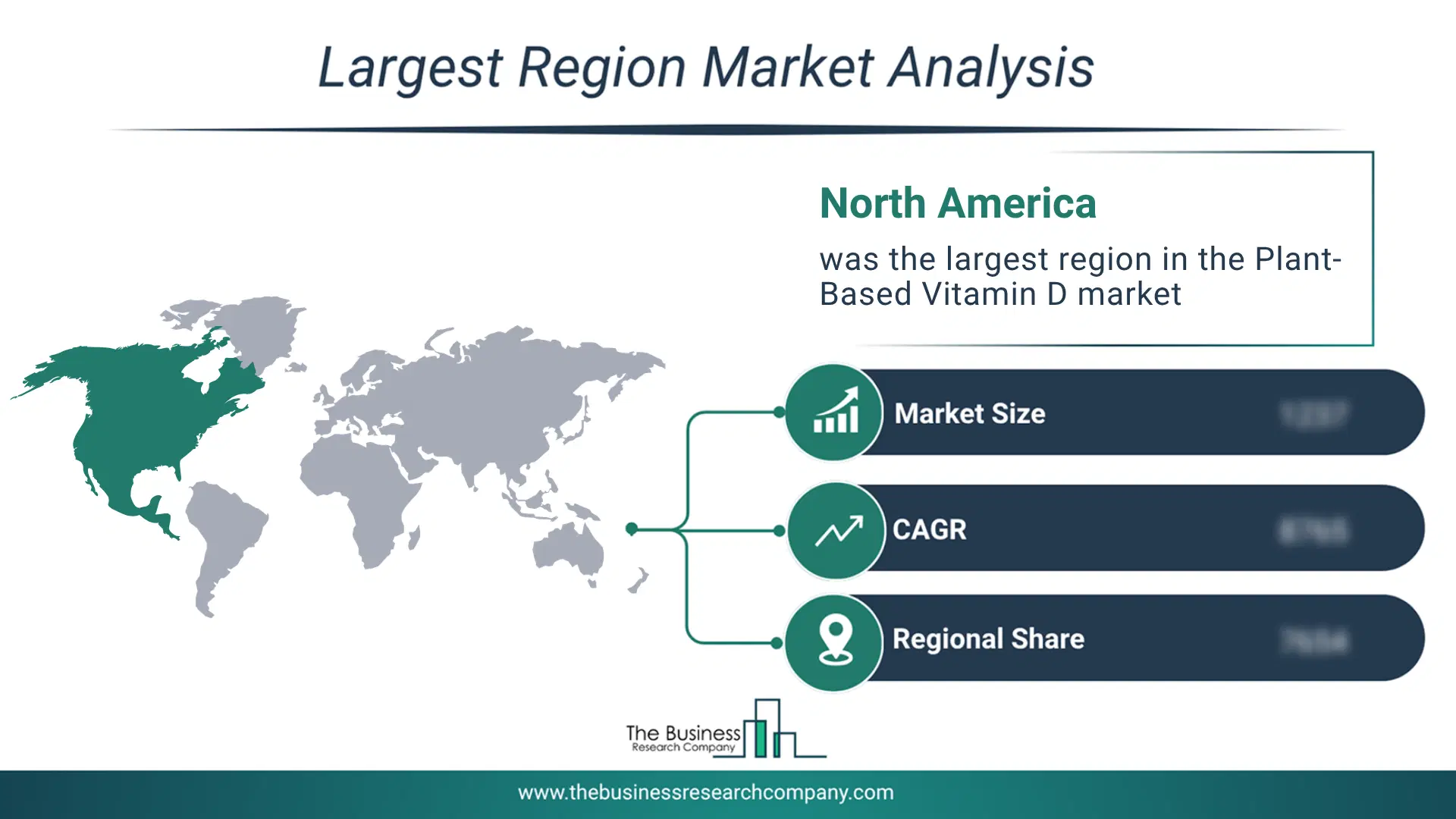
Regional Outlook
North America was the largest region in the plant-Based vitamin D market in 2025. Asia-Pacific is expected to be the fastest-growing region in the forecast period. The regions covered in this market report are Asia-Pacific, South East Asia, Western Europe, Eastern Europe, North America, South America, Middle East and Africa. The countries covered in this market report are Australia, Brazil, China, France, Germany, India, Indonesia, Japan, Taiwan, Russia, South Korea, UK, USA, Italy, Spain, CanadaWhat Defines the Plant-Based Vitamin D Market?
The plant-based vitamin D market consists of sales of fortified plant-based milk, energy bars, frozen plant-based meals, and pet food products. Values in this market are ‘factory gate’ values, that is, the value of goods sold by the manufacturers or creators of the goods, whether to other entities (including downstream manufacturers, wholesalers, distributors, and retailers) or directly to end customers. The value of goods in this market includes related services sold by the creators of the goods.How is Market Value Defined and Measured?
The market value is defined as the revenues that enterprises gain from the sale of goods and/or services within the specified market and geography through sales, grants, or donations in terms of the currency (in USD unless otherwise specified). The revenues for a specified geography are consumption values that are revenues generated by organizations in the specified geography within the market, irrespective of where they are produced. It does not include revenues from resales along the supply chain, either further along the supply chain or as part of other products.
This chart presents market attractiveness based on a quantitative evaluation of growth, competition, strategic alignment, and risk, offering a clear view of opportunity areas for decision-making. This chart is for illustrative purposes; the full report contains the complete analysis.

This chart highlights the Total Addressable Market (TAM) by estimating the maximum revenue opportunity using an assumption-driven approach, supporting strategic planning and opportunity sizing across markets. The chart is illustrative; the full report provides a more comprehensive analysis.
What Key Data and Analysis Are Included in the Plant-Based Vitamin D Market Report 2026?
The plant-based vitamin d market research report is one of a series of new reports from The Business Research Company that provides market statistics, including industry global market size, regional shares, competitors with the market share, detailed market segments, market trends and opportunities, and any further data you may need to thrive in the plant-based vitamin d industry. The market research report delivers a complete perspective of everything you need, with an in-depth analysis of the current and future state of the industry.Plant-Based Vitamin D Market Report Forecast Analysis
| Report Attribute | Details |
|---|---|
| Market Size Value In 2026 | $1.35 billion |
| Revenue Forecast In 2030 | $1.94 billion |
| Growth Rate | CAGR of 9.8% from 2026 to 2030 |
| Base Year For Estimation | 2025 |
| Actual Estimates/Historical Data | 2020-2025 |
| Forecast Period | 2026 - 2030 |
| Market Representation | Revenue in USD Billion and CAGR from 2026 to 2030 |
| Segments Covered | Product Type, Form, Source, Distribution Channel, Application |
| Regional Scope | Asia-Pacific, Western Europe, Eastern Europe, North America, South America, Middle East, Africa |
| Country Scope | The countries covered in the report are Australia, Brazil, China, France, Germany, India, Indonesia, Japan, Taiwan, Russia, South Korea, UK, USA, Canada, Italy, Spain. |
| Key Companies Profiled | Royal DSM NV, Divi’s Laboratories Limited, Now Foods, Swanson Health Products Inc., Zhejiang Garden Biochemical High-Tech Company Limited, Nordic Naturals Inc., Vitabiotics Limited, Fermenta Biotech Limited, Pure Encapsulations LLC, MaryRuth Organics LLC, Solgar Inc., Bluebonnet Nutrition Corporation, Carlson Laboratories Inc., Doctor’s Best Inc., Truvani LLC, Naturelo Premium Supplements LLC, Source Naturals Inc., Future Kind LLC, ESKIMO-3 Limited Vitashine, Avlaan Pharma Private Limited. |
| Customization Scope | Request for Customization |
| Pricing And Purchase Options | Explore Purchase Options |