
Power System Simulation Software Market Report 2026
Global Outlook – By Type (Transmission, Distribution, Other Types), By Module Type (Power Flow, Short Circuit, Device Coordination, Arc Flash, Dynamic State Studies Module, Renewable Energy Integration, Energy Storage System Modeling, Other Module Types), By Deployment Type (Cloud, On-Premise), By Application (Industrial Manufacturing, Commercial, Public Utilities) – Market Size, Trends, Strategies, and Forecast to 2030
Power System Simulation Software Market Overview
• Power System Simulation Software market size has reached to $1.42 billion in 2025 • Expected to grow to $2.07 billion in 2030 at a compound annual growth rate (CAGR) of 7.6% • Growth Driver: Increasing Demand For Electricity Fuels Growth In The Power System Simulation Software Market • Market Trend: Advancements In Droop Simulation Technology And Enhanced Features In Power System Simulation Software • North America was the largest region in 2025.What Is Covered Under Power System Simulation Software Market?
Power system simulation software refers to specialized tools used for modeling, analyzing, and optimizing electrical power systems. It simulates various scenarios to predict system behavior, assess reliability, optimize performance, and plan for future expansions or modifications. Engineers and researchers use these tools to design, operate, and maintain efficient and reliable power grids, ensuring stability and resilience in electricity distribution. The main types of power system simulation software are transmission, distribution, and others. The modules are power flow, short circuit, device coordination, arc flash, dynamic state studies module, renewable energy integration, energy storage system modeling, and others, and are deployed on the cloud and on-premise. It is used in various applications, such as industrial manufacturing, commercial, and public utilities.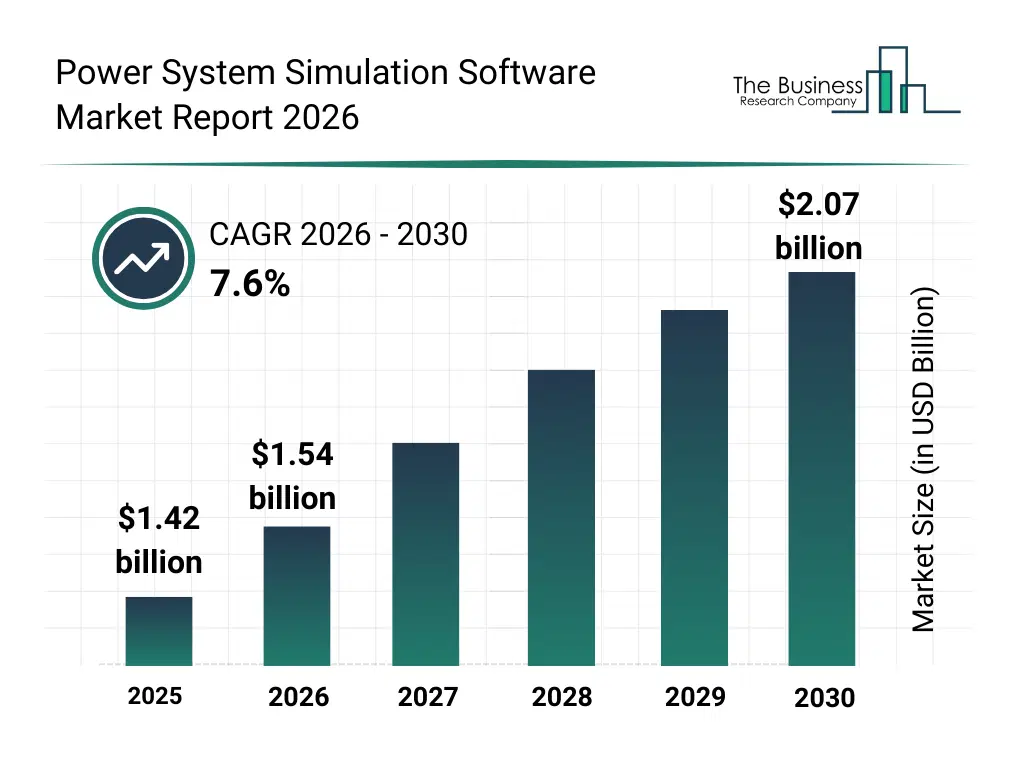
What Is The Power System Simulation Software Market Size and Share 2026?
The power system simulation software market size has grown strongly in recent years. It will grow from $1.42 billion in 2025 to $1.54 billion in 2026 at a compound annual growth rate (CAGR) of 8.6%. The growth in the historic period can be attributed to growth of complex transmission networks, increasing penetration of renewable energy sources, expansion of power infrastructure projects, rising need for grid reliability analysis, adoption of digital tools in power planning.What Is The Power System Simulation Software Market Growth Forecast?
The power system simulation software market size is expected to see strong growth in the next few years. It will grow to $2.07 billion in 2030 at a compound annual growth rate (CAGR) of 7.6%. The growth in the forecast period can be attributed to increasing investments in smart grid development, rising demand for energy storage modeling, expansion of electric vehicle charging infrastructure, growing focus on grid decarbonization, increasing use of ai-enabled power analytics. Major trends in the forecast period include increasing adoption of cloud-based grid simulation tools, rising integration of renewable energy modeling modules, growing use of real-time grid stability analysis, expansion of microgrid and distributed energy simulation, enhanced focus on grid resilience and reliability.
Global Power System Simulation Software Market Segmentation
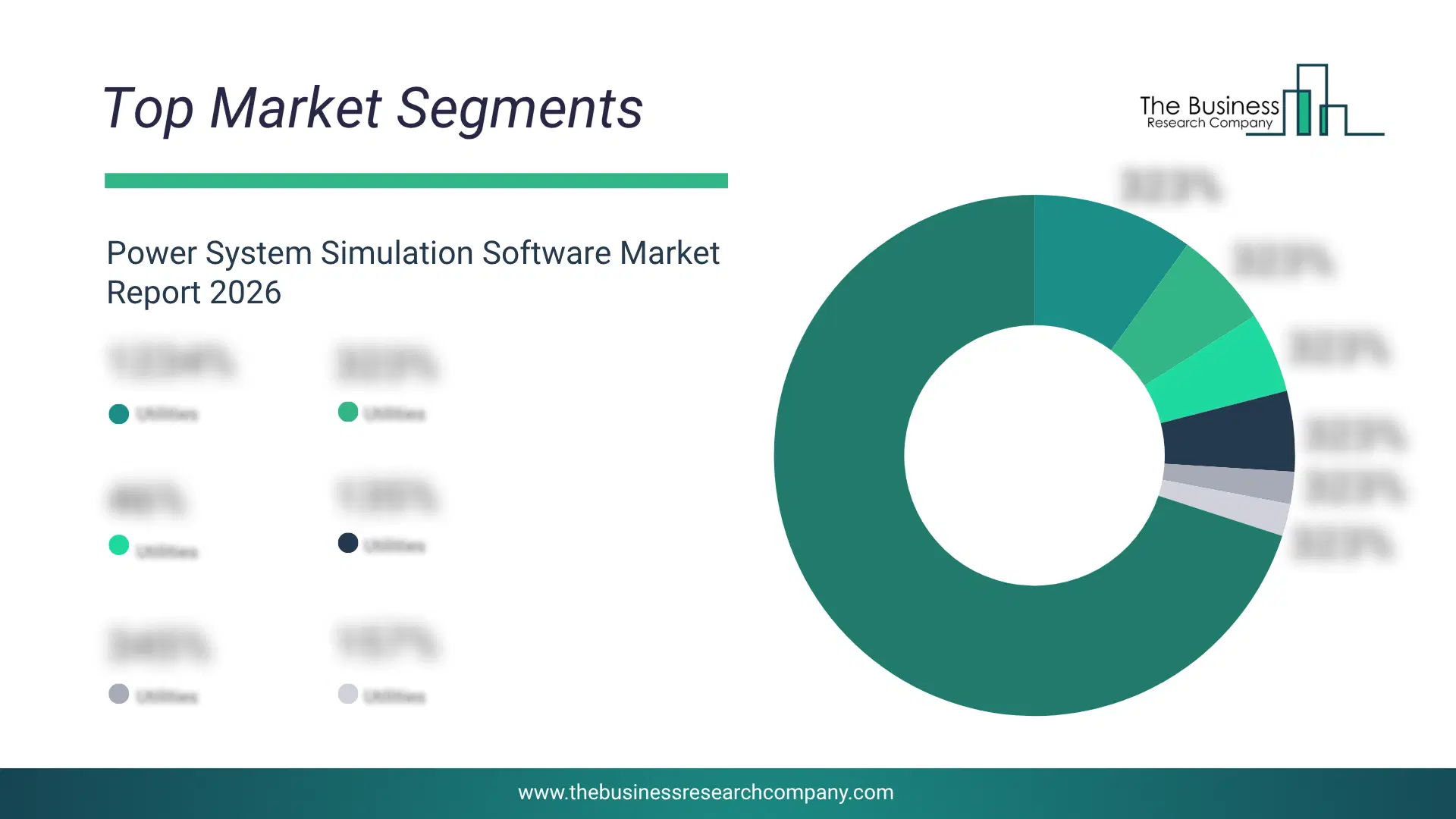
1) By Type: Transmission, Distribution, Other Types 2) By Module Type: Power Flow, Short Circuit, Device Coordination, Arc Flash, Dynamic State Studies Module, Renewable Energy Integration, Energy Storage System Modeling, Other Module Types 3) By Deployment Type: Cloud, On-Premise 4) By Application: Industrial Manufacturing, Commercial, Public Utilities Subsegments: 1) By Transmission: Power Flow Analysis, Stability Analysis, Fault Analysis, Contingency Analysis, Dynamic Simulation 2) By Distribution: Load Flow Analysis, Voltage Drop and Loss Analysis, Protection Coordination, Distributed Generation Integration, Smart Grid Simulation 3) By Other Types: Renewable Energy Integration, Microgrid Simulation, Energy Storage System Simulation, Power Quality AnalysisWhat Is The Driver Of The Power System Simulation Software Market?
The increasing demand for electricity is expected to propel the growth of the power system simulation software market going forward. The demand for electricity is rising due to increasing industrialization, urbanization, and the growing use of electric-powered devices and vehicles. Power system simulation software supports the increasing demand for electricity by optimizing grid performance, integrating renewable energy sources, and enhancing grid reliability to meet growing energy needs efficiently and sustainably. For instance, in January 2024, according to the International Energy Agency (IEA), a France-based autonomous intergovernmental organization, the world’s demand for electricity grew by 2.2% in 2023. Global electricity demand is expected to rise at a faster rate over the next three years, growing by an average of 3.4% annually through 2026. Therefore, the increasing demand for electricity is driving the growth of the power system simulation software industry.Key Players In The Global Power System Simulation Software Market
Major companies operating in the power system simulation software market are Siemens AG, General Electric Company, Schneider Electric SE, ABB Ltd, Eaton Corporation plc, ANSYS Inc., Bentley Systems, ESI Group, Operation Technology Inc., OPAL-RT Technologies Inc, GSE Systems Inc., Cyme International, Modelon Inc., Neplan AG, DigSILENT, RTDS Technologies, PowerGEM LLC, EMTP-RV, PowerWorld Corporation, SKM Systems Analysis, Nayak Power Systems Pvt. Ltd., Omicron Lab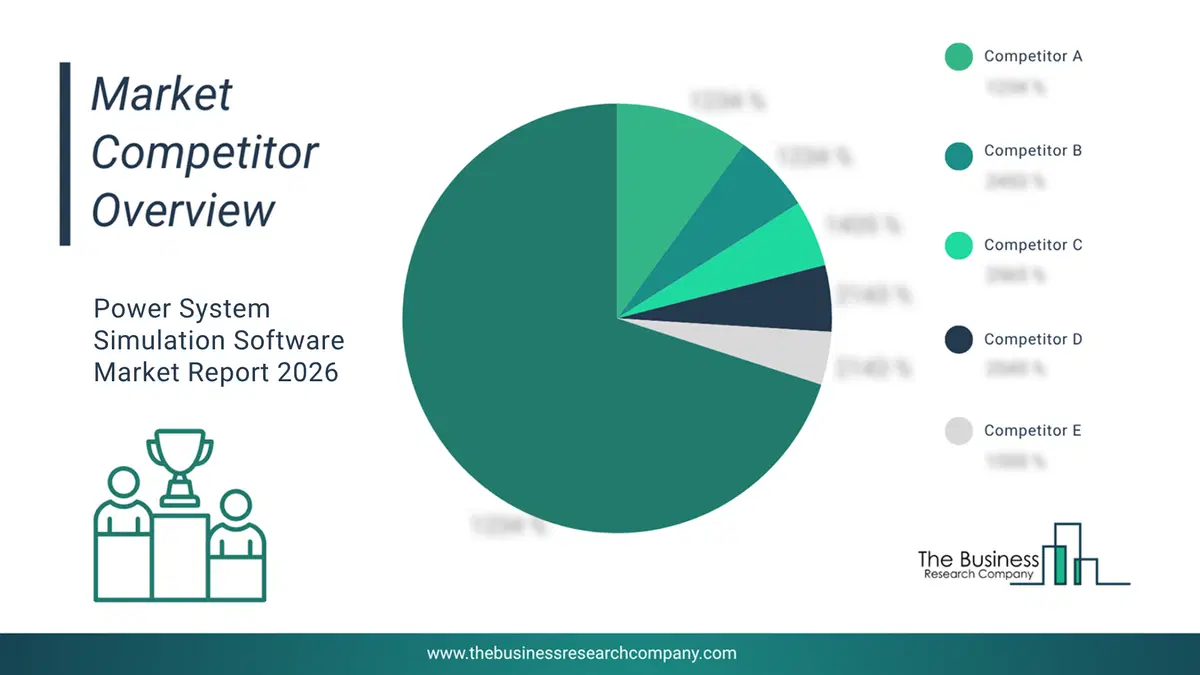
This chart is for illustrative purposes; the full report includes a detailed competitor analysis and comprehensive overview of the top 10 companies in the market.
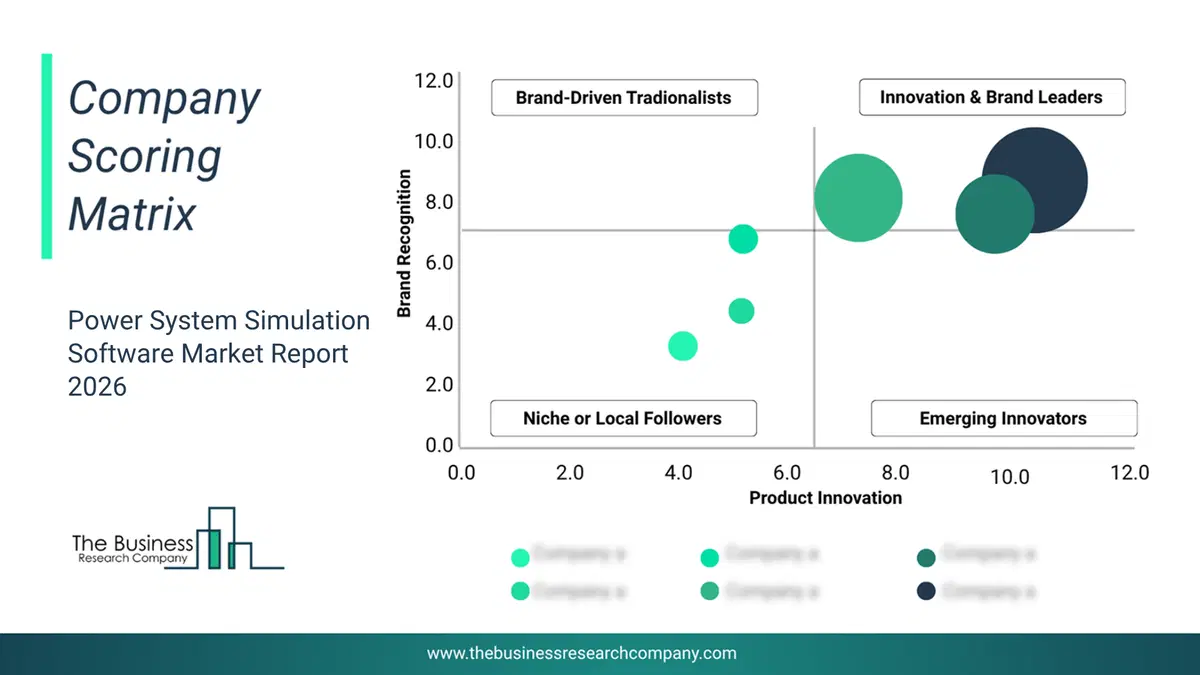
This chart maps companies by product innovation and brand strength, with bubble size indicating relative revenue, helping identify market leaders, challengers, and niche players. This is an illustrative chart; the full report provides a complete and accurate competitive analysis.
Global Power System Simulation Software Market Trends and Insights
Major companies operating in the power system simulation software market are focusing on developing advanced technologies, such as droop simulation technology, to gain a competitive edge in the market. Droop simulation technology refers to the computational methods and models used in power system simulation software to simulate and analyze droop control strategies. Droop control is commonly used in interconnected power systems to regulate the sharing of loads and maintain stability. For instance, in April 2024, Flextronics International Ltd., a Singapore-based electronics manufacturing services company, launched version 4.5 of their Flex Power Designer (FPD) software. This updated release introduces several significant enhancements, including a new 3D visualization tool for better understanding the physical layout and performance of power systems. It now supports Xilinx Versal Adaptive Compute Acceleration Platform (ACAP) devices and features a bus voltage optimization capability aimed at enhancing system efficiency. The update also includes improved thermal models for specific power modules, enabling more precise thermal simulations.What Are Latest Mergers And Acquisitions In The Power System Simulation Software Market?
In May 2023, Powersys, a France-based software company, acquired SIMBA for an undisclosed amount. The acquisition supports Powersys’ mission to move electrification industries forward faster by providing clients with innovative solutions that reduce time-to-market, increase design robustness, and promote sustainability. SIMBA is a France-based power system simulation software company.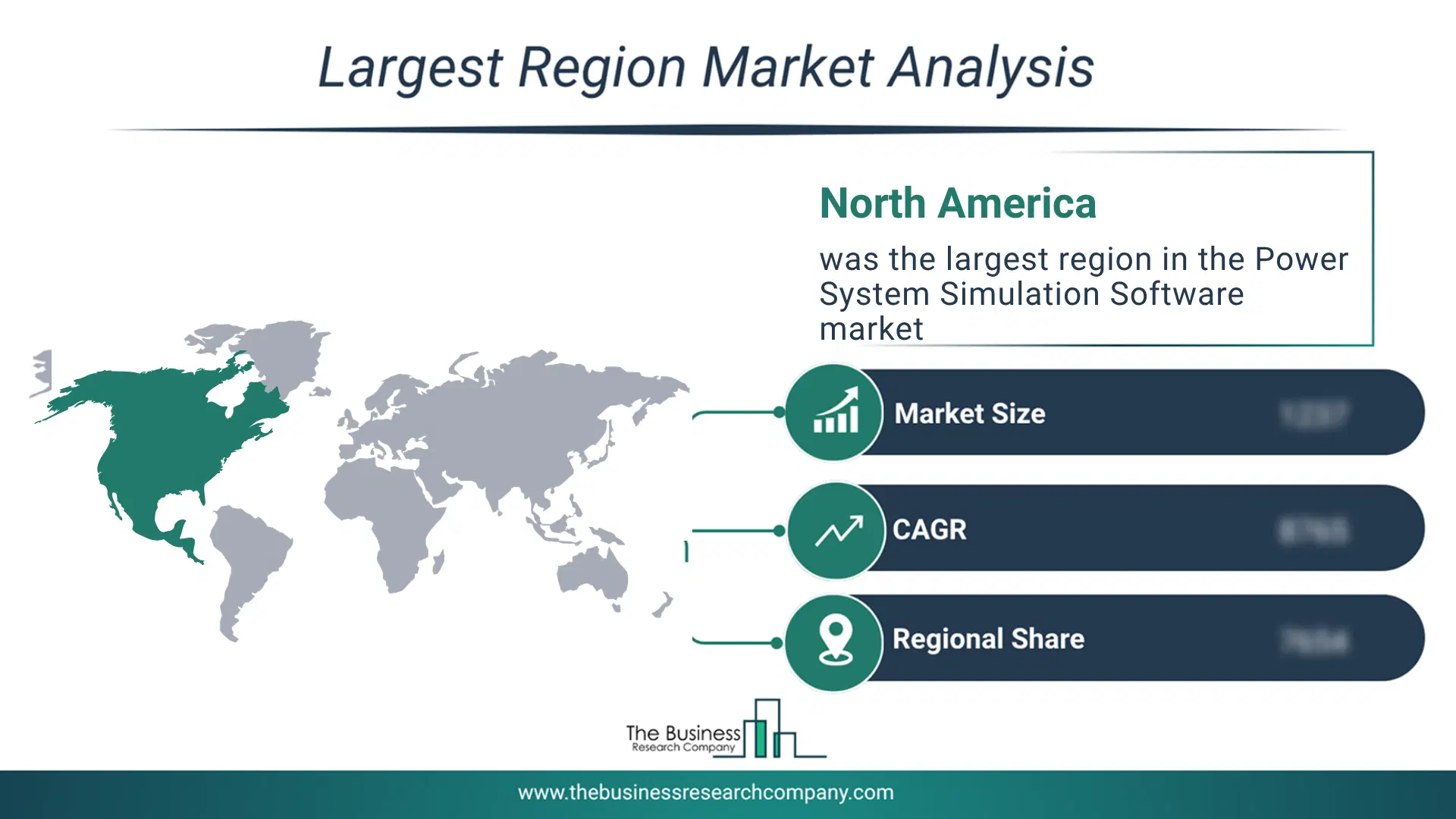
Regional Outlook
North America was the largest region in the power system simulation software market in 2025. The regions covered in this market report are Asia-Pacific, South East Asia, Western Europe, Eastern Europe, North America, South America, Middle East, Africa. The countries covered in this market report are Australia, Brazil, China, France, Germany, India, Indonesia, Japan, Taiwan, Russia, South Korea, UK, USA, Canada, Italy, SpainWhat Defines the Power System Simulation Software Market?
The power system simulation software market includes revenues earned by entities by providing services such as custom solutions, assisting utilities and industries with inefficient grid planning, analysis, and operational optimization. The market value includes the value of related goods sold by the service provider or included within the service offering. Only goods and services traded between entities or sold to end consumers are included.How is Market Value Defined and Measured?
The market value is defined as the revenues that enterprises gain from the sale of goods and/or services within the specified market and geography through sales, grants, or donations in terms of the currency (in USD unless otherwise specified). The revenues for a specified geography are consumption values that are revenues generated by organizations in the specified geography within the market, irrespective of where they are produced. It does not include revenues from resales along the supply chain, either further along the supply chain or as part of other products.
This chart presents market attractiveness based on a quantitative evaluation of growth, competition, strategic alignment, and risk, offering a clear view of opportunity areas for decision-making. This chart is for illustrative purposes; the full report contains the complete analysis.

This chart highlights the Total Addressable Market (TAM) by estimating the maximum revenue opportunity using an assumption-driven approach, supporting strategic planning and opportunity sizing across markets. The chart is illustrative; the full report provides a more comprehensive analysis.
What Key Data and Analysis Are Included in the Power System Simulation Software Market Report 2026?
The power system simulation software market research report is one of a series of new reports from The Business Research Company that provides market statistics, including Market Report 2026?global market size, regional shares, competitors with the market share, detailed market segments, market trends and opportunities, and any further data you may need to thrive in the power system simulation software Market Report 2026? The market research report delivers a complete perspective of everything you need, with an in-depth analysis of the current and future state of the Market Report 2026?Power System Simulation Software Market Report Forecast Analysis
| Report Attribute | Details |
|---|---|
| Market Size Value In 2026 | $1.54 billion |
| Revenue Forecast In 2030 | $2.07 billion |
| Growth Rate | CAGR of 8.6% from 2026 to 2030 |
| Base Year For Estimation | 2025 |
| Actual Estimates/Historical Data | 2020-2025 |
| Forecast Period | 2026 - 2030 - 2030 |
| Market Representation | Revenue in USD Billion and CAGR from 2026 to 2030 |
| Segments Covered | Type, Module Type, Deployment Type, Application |
| Regional Scope | Asia-Pacific, Western Europe, Eastern Europe, North America, South America, Middle East, Africa |
| Country Scope | The countries covered in the report are Australia, Brazil, China, France, Germany, India, Indonesia, Japan, Taiwan, Russia, South Korea, UK, USA, Canada, Italy, Spain. |
| Key Companies Profiled | Siemens AG, General Electric Company, Schneider Electric SE, ABB Ltd, Eaton Corporation plc, ANSYS Inc., Bentley Systems, ESI Group, Operation Technology Inc., OPAL-RT Technologies Inc, GSE Systems Inc., Cyme International, Modelon Inc., Neplan AG, DigSILENT, RTDS Technologies, PowerGEM LLC, EMTP-RV, PowerWorld Corporation, SKM Systems Analysis, Nayak Power Systems Pvt. Ltd., Omicron Lab |
| Customization Scope | Request for Customization |
| Pricing And Purchase Options | Explore Purchase Options |