
Preclinical Imaging Market Report 2026
Global Outlook – By Modality (Optical Imaging Systems, Preclinical Nuclear Imaging Systems, Micro-Magnetic Resonance Imaging Systems, Micro-Ultrasound Systems, Micro-Computed Tomography Systems, Preclinical Photoacoustic Imaging Systems, Preclinical Magnetic Particle Imaging (MPI) Systems), By Reagents (Preclinical Optical Imaging Reagents, Preclinical Nuclear Imaging Reagents, Preclinical MRI Contrast Agents, Preclinical Ultrasound Contrast Agents, Preclinical CT Contrast Agents ), By End User (Hospital, Diagnostics Center, Other End-User) - Market Size, Trends, Strategies, and Forecast to 2030
Preclinical Imaging Market Overview
• Preclinical Imaging market size has reached to $3.69 billion in 2025 • Expected to grow to $5.18 billion in 2030 at a compound annual growth rate (CAGR) of 7.1% • Growth Driver: Rising Chronic Disease Burden Fuels Preclinical Imaging Market Growth • Market Trend: Next-Generation Imaging Systems For Enhanced Capabilities And Workflow Efficiency • North America was the largest region in 2025.What Is Covered Under Preclinical Imaging Market?
Preclinical imaging refers to the techniques used to visualize and study biological processes in animal models before being applied to human clinical trials. These imaging techniques allow researchers to track disease progression, evaluate the efficacy and safety of potential therapeutics, and gain insights into the biological mechanisms underlying diseases. The main types of modalities in preclinical imaging are optical imaging systems, preclinical nuclear imaging systems, micro-magnetic resonance imaging systems, micro-ultrasound systems, micro-computed tomography systems, preclinical photoacoustic imaging systems, and preclinical magnetic particle imaging (MPI) systems. Optical imaging systems refer to a range of imaging technologies that utilize light to visualize and capture images of biological tissues, cells, or molecules. Optical imaging systems are employed in the preclinical phase of imaging for research, illness diagnostics, tumor blood vessel growth monitoring, and tissue blood oxygenation tracking in animals. It includes various reagents such as preclinical optical imaging reagents, preclinical nuclear imaging reagents, preclinical MRI contrast agents, preclinical ultrasound contrast agents and preclinical CT contrast agents. The main end-users are hospitals, diagnostic centers, and others.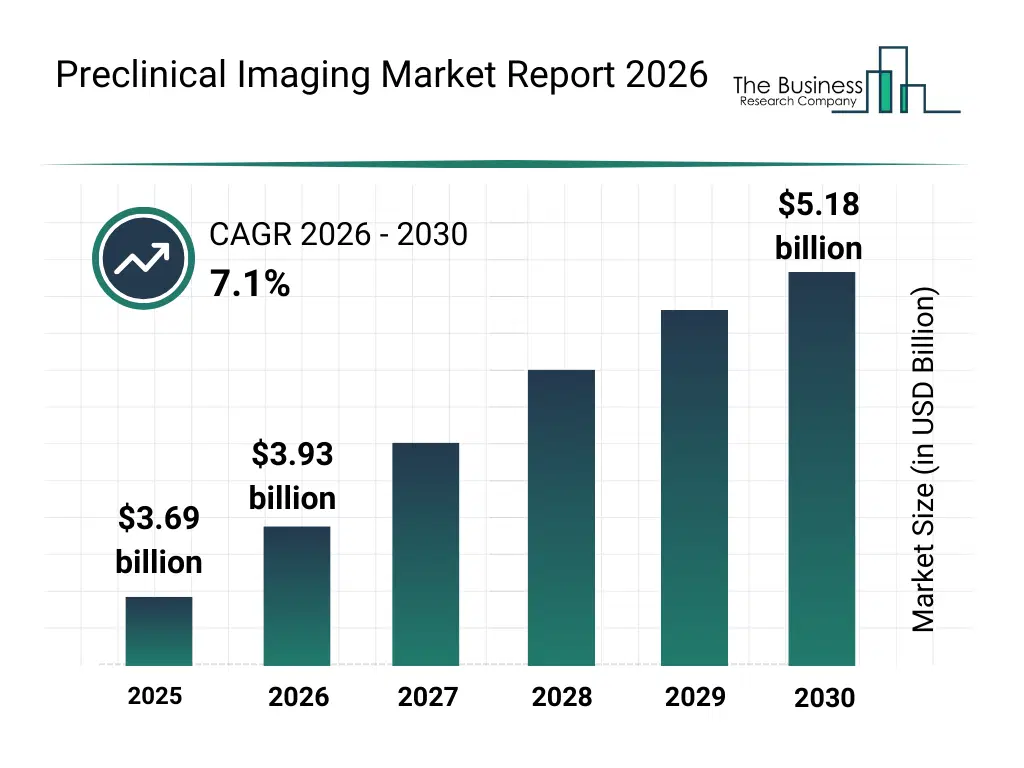
What Is The Preclinical Imaging Market Size and Share 2026?
The preclinical imaging market size has grown strongly in recent years. It will grow from $3.69 billion in 2025 to $3.93 billion in 2026 at a compound annual growth rate (CAGR) of 6.7%. The growth in the historic period can be attributed to increasing use of animal models in biomedical research, expansion of oncology and neurology research, rising adoption of non-invasive imaging techniques, growth in preclinical drug testing activities, availability of advanced imaging reagents.What Is The Preclinical Imaging Market Growth Forecast?
The preclinical imaging market size is expected to see strong growth in the next few years. It will grow to $5.18 billion in 2030 at a compound annual growth rate (CAGR) of 7.1%. The growth in the forecast period can be attributed to increasing demand for real-time disease visualization, rising investments in translational research, expansion of precision medicine studies, growing use of ai-assisted image analysis, increasing deployment of advanced contrast agents. Major trends in the forecast period include increasing adoption of multi-modal imaging platforms, rising use of high-resolution imaging systems, growing integration of imaging with data analytics, expansion of longitudinal disease monitoring studies, enhanced focus on translational imaging accuracy.
Global Preclinical Imaging Market Segmentation
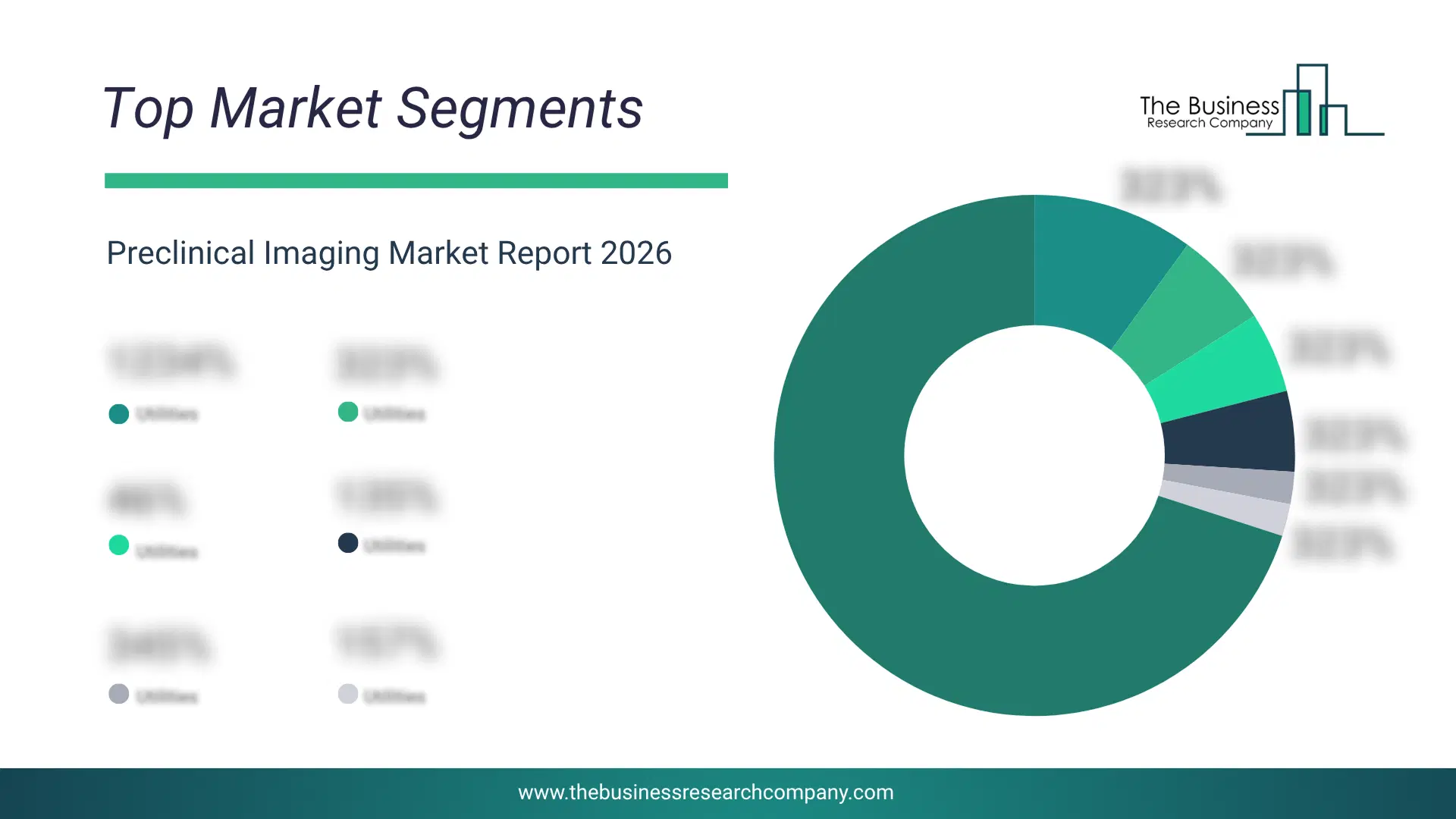
1) By Modality: Optical Imaging Systems, Preclinical Nuclear Imaging Systems, Micro-Magnetic Resonance Imaging Systems, Micro-Ultrasound Systems, Micro-Computed Tomography Systems, Preclinical Photoacoustic Imaging Systems, Preclinical Magnetic Particle Imaging (MPI) Systems 2) By Reagents: Preclinical Optical Imaging Reagents, Preclinical Nuclear Imaging Reagents, Preclinical MRI Contrast Agents, Preclinical Ultrasound Contrast Agents, Preclinical CT Contrast Agents 3) By End User: Hospital, Diagnostics Center, Other End-User Subsegments: 1) By Optical Imaging Systems: Bioluminescence Imaging, Fluorescence Imaging 2) By Preclinical Nuclear Imaging Systems: Positron Emission Tomography (PET), Single-Photon Emission Computed Tomography (SPECT) 3) By Micro-Magnetic Resonance Imaging (Micro-MRI) Systems: High-Resolution Micro-MRI Systems, Functional Micro-MRI Systems 4) By Micro-Ultrasound Systems: High-Frequency Ultrasound Imaging, Real-Time Micro-Ultrasound Systems 5) By Micro-Computed Tomography (Micro-CT) Systems: In Vivo Micro-CT Systems, Ex Vivo Micro-CT Systems 6) By Preclinical Photoacoustic Imaging Systems: Multi-Wavelength Photoacoustic Imaging, Hybrid Photoacoustic Imaging Systems 7) By Preclinical Magnetic Particle Imaging (MPI) Systems: MPI For Cell Tracking, MPI For Vascular ImagingWhat Is The Driver Of The Preclinical Imaging Market?
The increase in chronic diseases is expected to propel the growth of the preclinical imaging market going forward. Chronic diseases refer to long-term health conditions that persist for an extended period, typically lasting for three months or more. These diseases often require ongoing medical management and can significantly impact a person's quality of life. For identifying chronic diseases, preclinical imaging tools are used for visualizing the bone structure and lung function. It is also used to study chronic diseases to visualize the progression of the disease and improve disease understanding. For instance, in February 2024, according to the World Health Organization (WHO), a Switzerland-based agency responsible for international public health, NCDs are responsible for 75% (three‑quarters) of all deaths worldwide. Therefore, increasing chronic disease is driving the growth of the preclinical imaging industry.Key Players In The Global Preclinical Imaging Market
Major companies operating in the preclinical imaging market are Thermo Fisher Scientific Inc, FUJIFILM Visualsonics Inc, Agilent Technologies Inc, PerkinElmer Inc, Bruker Corporation, Miltenyi Biotech, Sofie Biosciences Inc, Ion Beam Applications SA, Piramal Enterprises Ltd, LI COR Biosciences Inc, Aspect Imaging Ltd, Capintec Inc, Spectral Instruments Inc, Mediso Ltd, MR Solutions Ltd, Biospace Lab SA, Scintica Instrumentation Inc, Trifoil Imaging, Bioscan Inc, Inviscan SAS, Kubtec X Ray, MILabs BV, SCANCO Medical AG, Fujifilm Holdings Corporation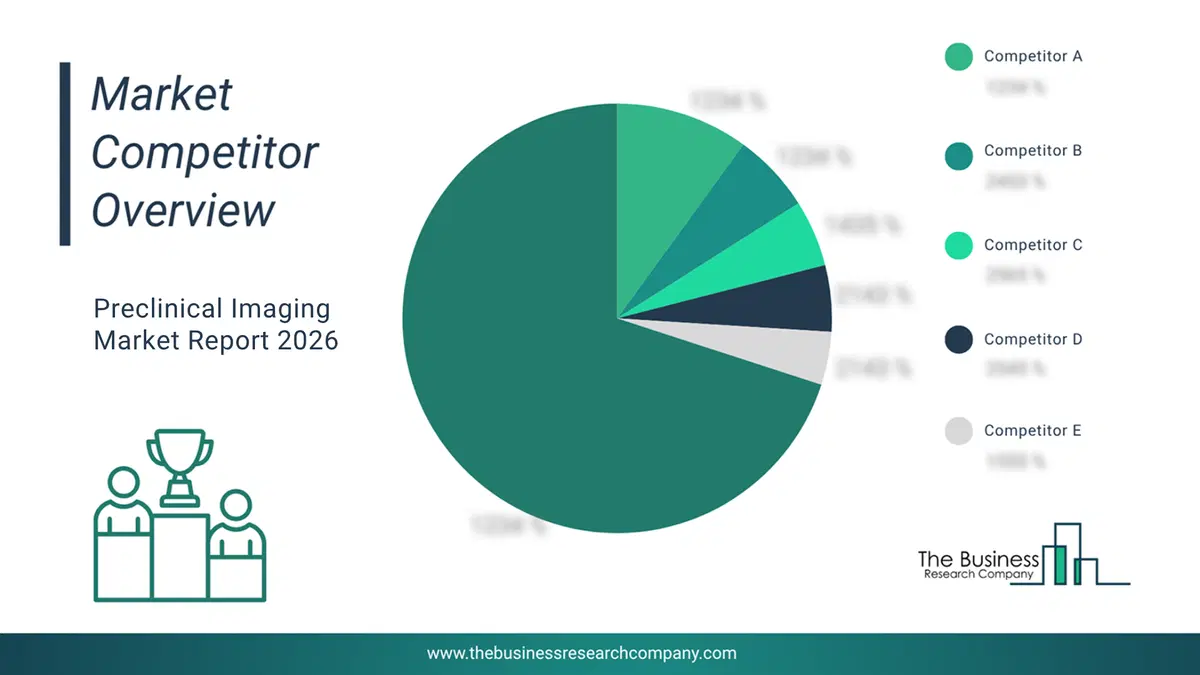
This chart is for illustrative purposes; the full report includes a detailed competitor analysis and comprehensive overview of the top 10 companies in the market.
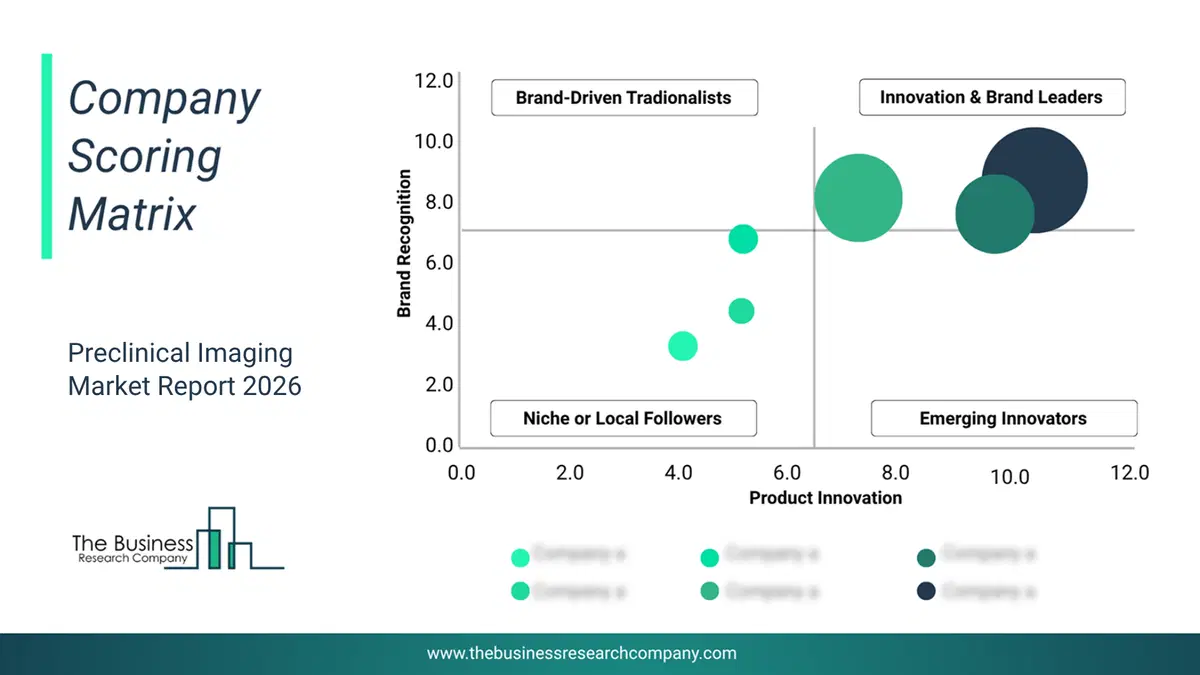
This chart maps companies by product innovation and brand strength, with bubble size indicating relative revenue, helping identify market leaders, challengers, and niche players. This is an illustrative chart; the full report provides a complete and accurate competitive analysis.
Global Preclinical Imaging Market Trends and Insights
Major companies operating in the preclinical imaging market are increasing their focus on introducing next-generation imaging systems to gain a competitive edge in the market. Next-generation imaging systems refer to advanced and innovative technologies that go beyond current capabilities, incorporating cutting-edge features. For instance, in September 2023, Revvity Inc., a US-based biotechnology company, launched next-generation imaging systems that are designed to drive innovation across diverse applications in preclinical research. The newly launched products include the next-generation IVIS Spectrum 2 and the IVIS SpectrumCT 2 imaging systems, the Quantum GX3 microCT imaging solution, and a system that seamlessly integrates 2D optical and full 3D imaging. These imaging systems feature improved image-based capabilities and are designed to streamline the imaging workflow.What Are Latest Mergers And Acquisitions In The Preclinical Imaging Market?
In February 2024, Bruker Corporation, a USA-based Medical device company, acquired Spectral Instruments Imaging (SII) for a $37.5million. this acquisition reflects Bruker's commitment to advancing scientific research and improving its technological capabilities in the life sciences sector. Spectral Instruments Imaging (SII) is a US-based manufacturer of preclinical optical systems for bioluminescent, fluorescent, and X-ray imaging.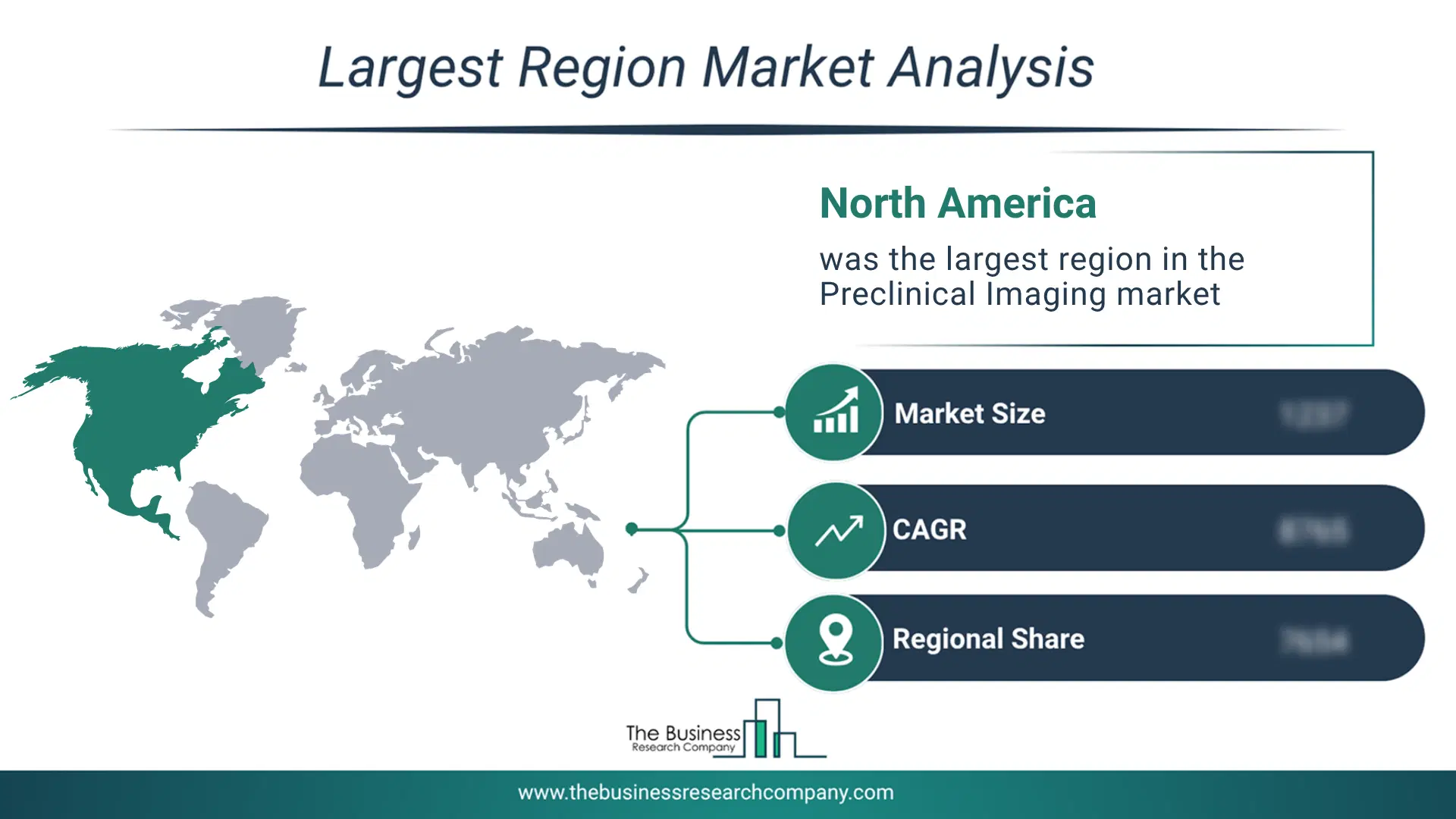
Regional Outlook
North America was the largest region in the preclinical imaging market in 2025. The regions covered in this market report are Asia-Pacific, South East Asia, Western Europe, Eastern Europe, North America, South America, Middle East, Africa. The countries covered in this market report are Australia, Brazil, China, France, Germany, India, Indonesia, Japan, Taiwan, Russia, South Korea, UK, USA, Canada, Italy, Spain.What Defines the Preclinical Imaging Market?
The preclinical imaging market includes of revenues earned by entities by providing preclinical imaging services such as magnetic resonance imaging, positron emission tomography, computed tomography, and optical imaging services. The market value includes the value of related goods sold by the service provider or included within the service offering. Only goods and services traded between entities or sold to end consumers are included.How is Market Value Defined and Measured?
The market value is defined as the revenues that enterprises gain from the sale of goods and/or services within the specified market and geography through sales, grants, or donations in terms of the currency (in USD unless otherwise specified). The revenues for a specified geography are consumption values that are revenues generated by organizations in the specified geography within the market, irrespective of where they are produced. It does not include revenues from resales along the supply chain, either further along the supply chain or as part of other products.
This chart presents market attractiveness based on a quantitative evaluation of growth, competition, strategic alignment, and risk, offering a clear view of opportunity areas for decision-making. This chart is for illustrative purposes; the full report contains the complete analysis.

This chart highlights the Total Addressable Market (TAM) by estimating the maximum revenue opportunity using an assumption-driven approach, supporting strategic planning and opportunity sizing across markets. The chart is illustrative; the full report provides a more comprehensive analysis.
What Key Data and Analysis Are Included in the Preclinical Imaging Market Report 2026?
The preclinical imaging market research report is one of a series of new reports from The Business Research Company that provides market statistics, including industry global market size, regional shares, competitors with the market share, detailed market segments, market trends and opportunities, and any further data you may need to thrive in the preclinical imaging industry. The market research report delivers a complete perspective of everything you need, with an in-depth analysis of the current and future state of the industry.Preclinical Imaging Market Report Forecast Analysis
| Report Attribute | Details |
|---|---|
| Market Size Value In 2026 | $3.93 billion |
| Revenue Forecast In 2030 | $5.18 billion |
| Growth Rate | CAGR of 7.1% from 2026 to 2030 |
| Base Year For Estimation | 2025 |
| Actual Estimates/Historical Data | 2020-2025 |
| Forecast Period | 2026 - 2030 |
| Market Representation | Revenue in USD Billion and CAGR from 2026 to 2030 |
| Segments Covered | Modality, Reagents, End User |
| Regional Scope | Asia-Pacific, Western Europe, Eastern Europe, North America, South America, Middle East, Africa |
| Country Scope | The countries covered in the report are Australia, Brazil, China, France, Germany, India, Indonesia, Japan, Taiwan, Russia, South Korea, UK, USA, Canada, Italy, Spain |
| Key Companies Profiled | Thermo Fisher Scientific Inc, FUJIFILM Visualsonics Inc, Agilent Technologies Inc, PerkinElmer Inc, Bruker Corporation, Miltenyi Biotech, Sofie Biosciences Inc, Ion Beam Applications SA, Piramal Enterprises Ltd, LI COR Biosciences Inc, Aspect Imaging Ltd, Capintec Inc, Spectral Instruments Inc, Mediso Ltd, MR Solutions Ltd, Biospace Lab SA, Scintica Instrumentation Inc, Trifoil Imaging, Bioscan Inc, Inviscan SAS, Kubtec X Ray, MILabs BV, SCANCO Medical AG, Fujifilm Holdings Corporation |
| Customization Scope | Request for Customization |
| Pricing And Purchase Options | Explore Purchase Options |