
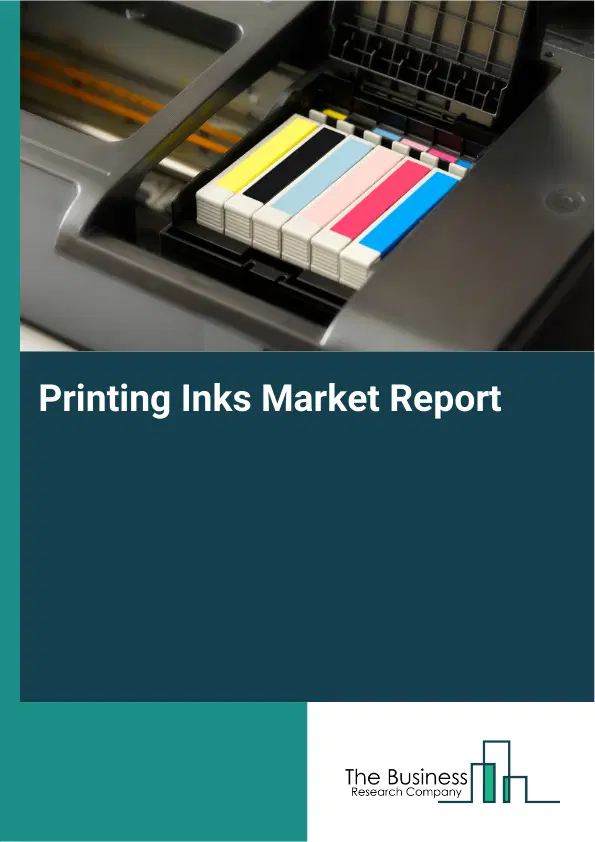
Printing Inks Market Report 2026
Global Outlook – By Ink Type (Oil-Based Printing Inks, Solvent-Based Printing Inks, Water-Based Printing Inks ), By Application (Offset Printing, Flexographic Printing, Gravure Printing, Letterpress Or Relief Printing, Pad Printing), By End User Industries (Packaging, Print Media, Commercial Printing, Other End-Use Industries ) – Market Size, Trends, Strategies, and Forecast to 2030
Printing Inks Market Overview
• Printing Inks market size has reached to $38.15 billion in 2025 • Expected to grow to $47.09 billion in 2030 at a compound annual growth rate (CAGR) of 4.5% • Growth Driver: Increased Growth In The Textiles And Garments Sectors Fuels The Growth Of The Printing Inks Market • Market Trend: Printing Inks Market Embrace Innovation For Better Quality And Ink Savings • Western Europe was the largest region in 2025 and Asia-Pacific is the fastest growing region.What Is Covered Under Printing Inks Market?
Printing inks are liquids that contain pigments or dyes that are used to produce images, text, and designs. They are widely used in letterpress and lithographic printing. Printing inks consist of a pigment or pigments of the required color mixed with oil or varnish. For example, black ink made from carbon black is mixed with thick linseed oil or similar oil, often with rosin oil to which rosin varnish is added. Inkjet inks consist of a base carrier such as water, oil, or a solvent, and colorants such as dyes or pigments, along with small amounts of chemical additives to provide some unique characteristics. The main types of printing inks are oil-based printing inks, solvent-based printing inks, and water-based printing inks. Water-based printing ink is ink made with water rather than plastic or PVC. The product types are offset printing inks, flexographic printing inks, rotogravure printing inks, and digital printing inks. The various end-use industries involved are packaging, print media, commercial printing, and other end-use industries.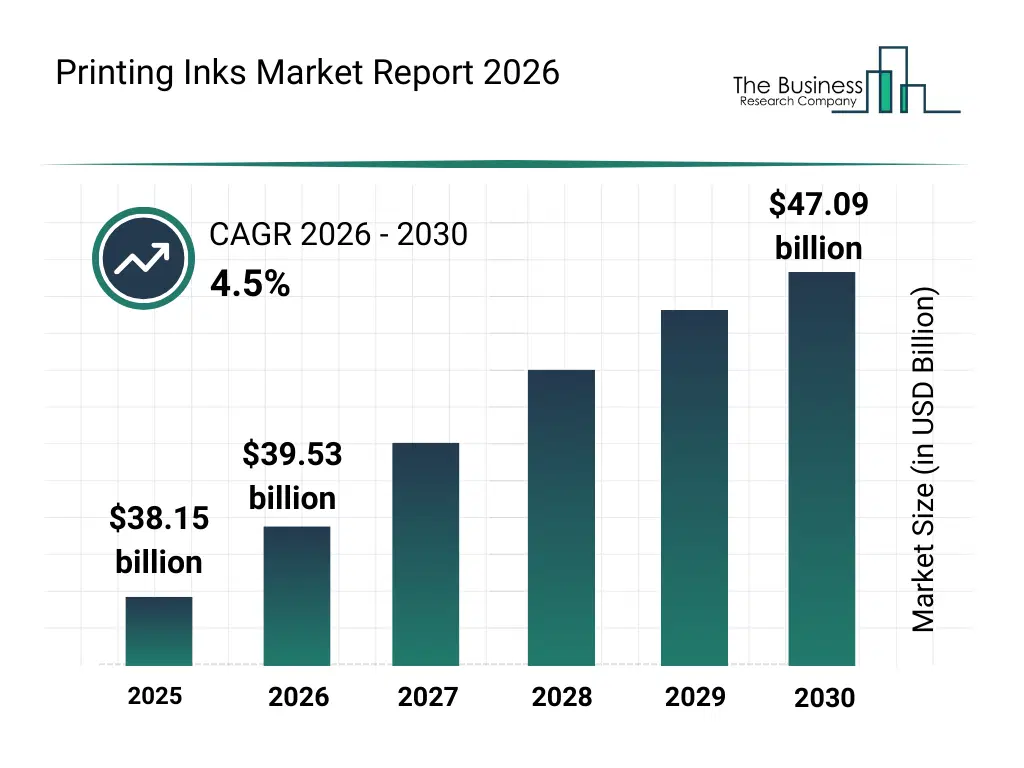
What Is The Printing Inks Market Size and Share 2026?
The printing inks market size has grown steadily in recent years. It will grow from $38.15 billion in 2025 to $39.53 billion in 2026 at a compound annual growth rate (CAGR) of 3.6%. The growth in the historic period can be attributed to growth in print media consumption, expansion of packaging industries, rising demand for commercial printing, availability of raw ink materials, development of printing technologies.What Is The Printing Inks Market Growth Forecast?
The printing inks market size is expected to see steady growth in the next few years. It will grow to $47.09 billion in 2030 at a compound annual growth rate (CAGR) of 4.5%. The growth in the forecast period can be attributed to growth in flexible packaging, increasing demand for eco friendly inks, expansion of digital printing, rising branding and labeling requirements, advancements in ink formulation technologies. Major trends in the forecast period include rising demand for packaging printing inks, growing adoption of water based printing inks, expansion of digital printing applications, increasing use of high performance pigments, higher focus on print quality and color consistency.
Global Printing Inks Market Segmentation
1) By Ink Type: Oil-Based Printing Inks, Solvent-Based Printing Inks, Water-Based Printing Inks 2) By Application: Offset Printing, Flexographic Printing, Gravure Printing, Letterpress Or Relief Printing, Pad Printing 3) By End User Industries: Packaging, Print Media, Commercial Printing, Other End-Use Industries Subsegments: 1) By Oil-Based Printing Inks: Lithographic Inks, Gravure Inks 2) By Solvent-Based Printing Inks: Eco-Solvent Inks, Conventional Solvent Inks 3) By Water-Based Printing Inks: Acrylic Inks, Pigment Inks, Dye-Based InksWhat Is The Driver Of The Printing Inks Market?
An increasing growth in the textiles and garments sectors are expected to propel the growth of the printing inks market going forward. The textile sector, also known as the textile industry, encompasses the entire process of manufacturing and producing textiles or fabrics, which are materials made from fibers. The garments sector, also known as the clothing or apparel industry, refers to the segment of the textile industry that specializes in the production, manufacturing, and distribution of clothing and wearable accessories for consumers. Printing inks are utilized for labeling textiles with care instructions, size information, branding, and other essential details. For instance, in April 2024, according to the National Council of Textile Organizations, a US-based association of textile manufacturers, in 2023, the value of U.S. man-made fiber, textile, and apparel shipments totaled an estimated $64.8 billion compared with $67.4 billion, in shipments in 2022. Further, U.S. exports of fibers, textiles and apparel were $29.7 billion in 2023 compared with $33.9 billion in 2022. Therefore, an increased growth in the textiles and garments sectors are driving the growth of the printing inks industry.Key Players In The Global Printing Inks Market
Major companies operating in the printing inks market are DuPont Inc., Arkema SA, DIC Corporation, Sun Chemical Corporation, Altana AG, TOYO Ink Group, Agfa-Gevaert NV, Flint Group, Siegwerk Druckfarben AG & Co., Rieger Druckfarben GmbH & Co. KG, Sakata INX Corporation, Ferro Corp., Huber Group, T&K TOKA Corporation, Tokyo Printing Ink Mfg. Co. Ltd., Nazdar Company, DYO Matbaa Mürekkepleri Sanayi ve Ticaret A.Ş., Wikoff Color Corporation, Sanchez SA de CV, Dainichiseika Color & Chemicals Mfg.Co. Ltd, Marabu GmbH & Co. KG, Epple Druckfarben AG, Fujifilm Sericol India Private Limited, Doneck Euroflex S.A., RUCO Druckfarben, Encres Dubuit, Zeller+Gmelin GmbH & Co. KG, Royal Dutch Printing Ink Factories Van Son, Brancher Company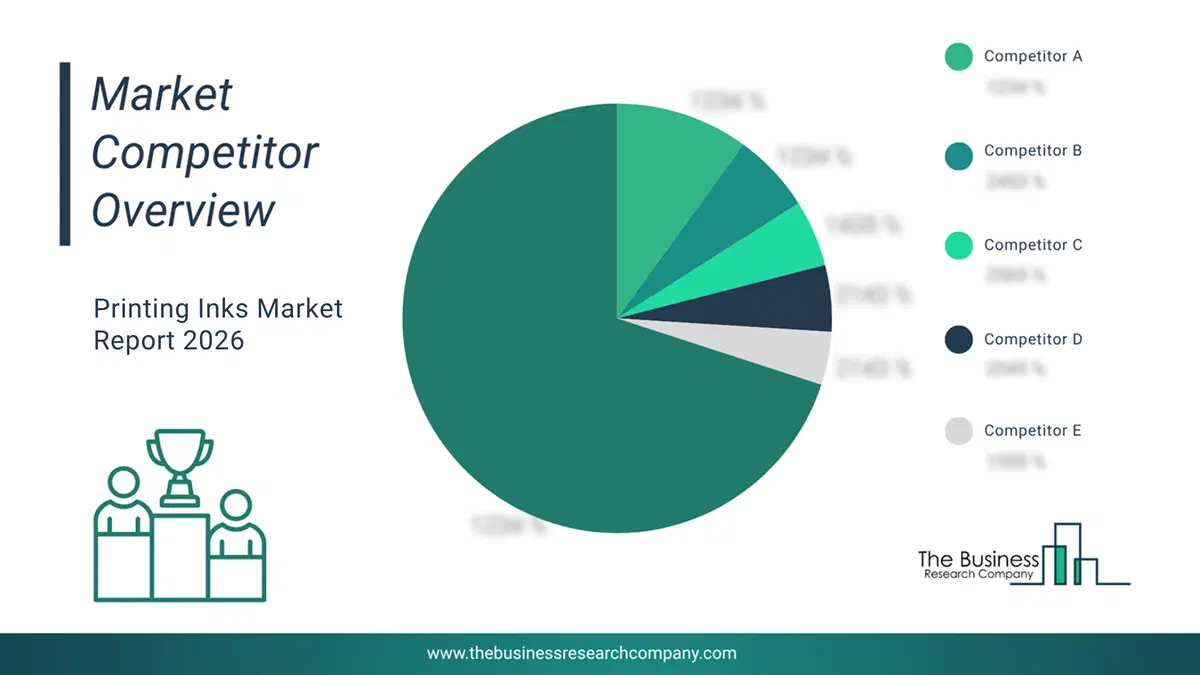
This chart is for illustrative purposes; the full report includes a detailed competitor analysis and comprehensive overview of the top 10 companies in the market.
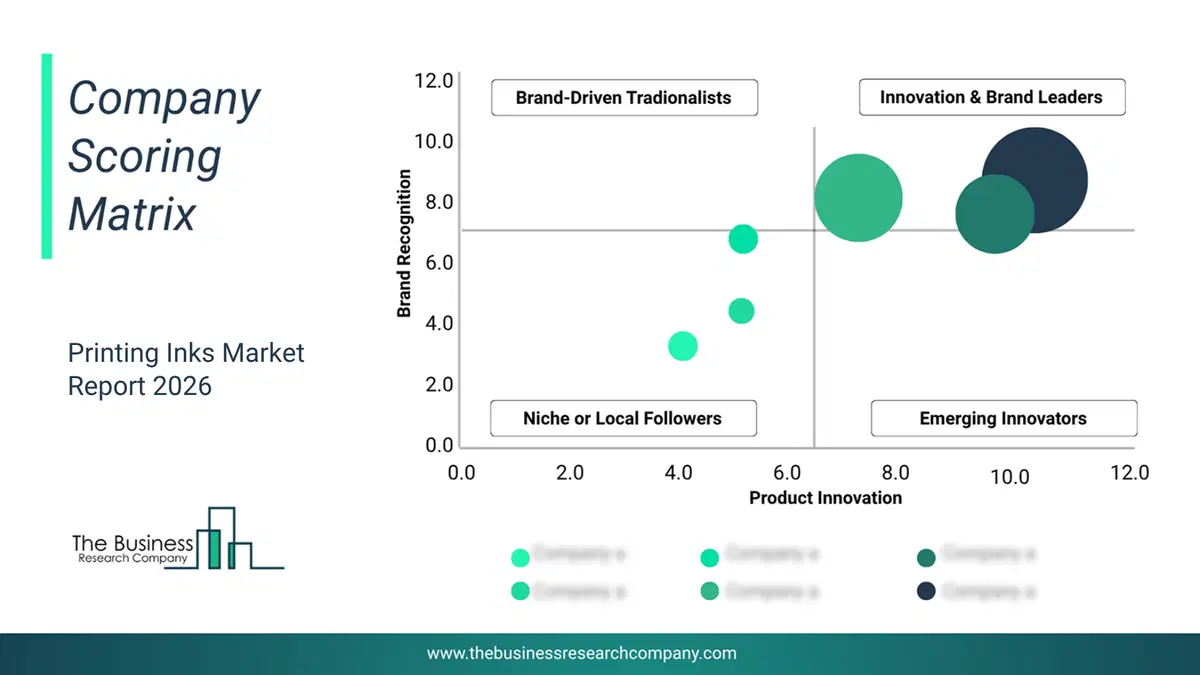
This chart maps companies by product innovation and brand strength, with bubble size indicating relative revenue, helping identify market leaders, challengers, and niche players. This is an illustrative chart; the full report provides a complete and accurate competitive analysis.
Global Printing Inks Market Trends and Insights
Major companies operating in the printing inks market are introducing innovative solutions such as Onset 560 ink to gain a competitive edge in the market. The Onset 560 inkjet printing press is equipped with a comprehensive full width printhead system and incorporates cutting-edge automation including robotic technology. It is capable of addressing various applications in signage, display, and packaging, achieving speeds of up to 1450 square meters per hour. For instance, in May 2023, Agfa Corporation, a Belgium-based developer and provider of imaging systems and IT solutions, mainly for the printing industry, launched Onset 560 ink that offers exceptional print quality, an extensive range of colors, and minimal ink consumption. This combination results in substantial cost savings, typically exceeding 20% in ink savings when compared to other ink options.What Are Latest Mergers And Acquisitions In The Printing Inks Market?
In July 2023, Koenig & Bauer, a Germany-based manufacturer of printing presses acquired Hubergroup Print Solutions for an undisclosed amount. This acquisition will help Koenig & Bauer accelerate its ability to scale up its printing capabilities using high performance inks that are produced by Hubergroup Print Solutions. Hubergroup Print Solutions is a US-based producer of specialty inks that are used in packaging, paints, primers, cosmetics, displays, and other various applications.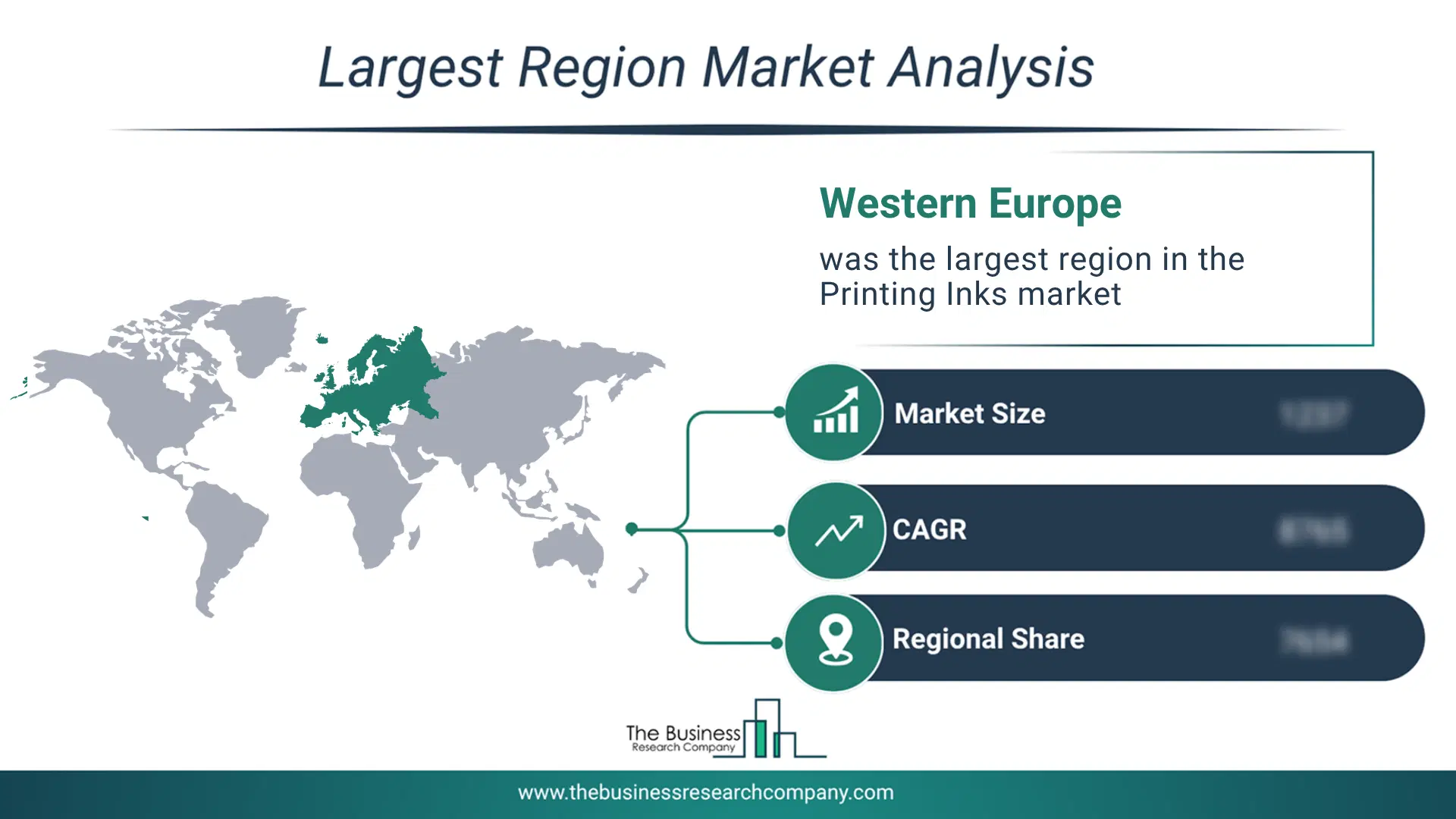
Regional Insights
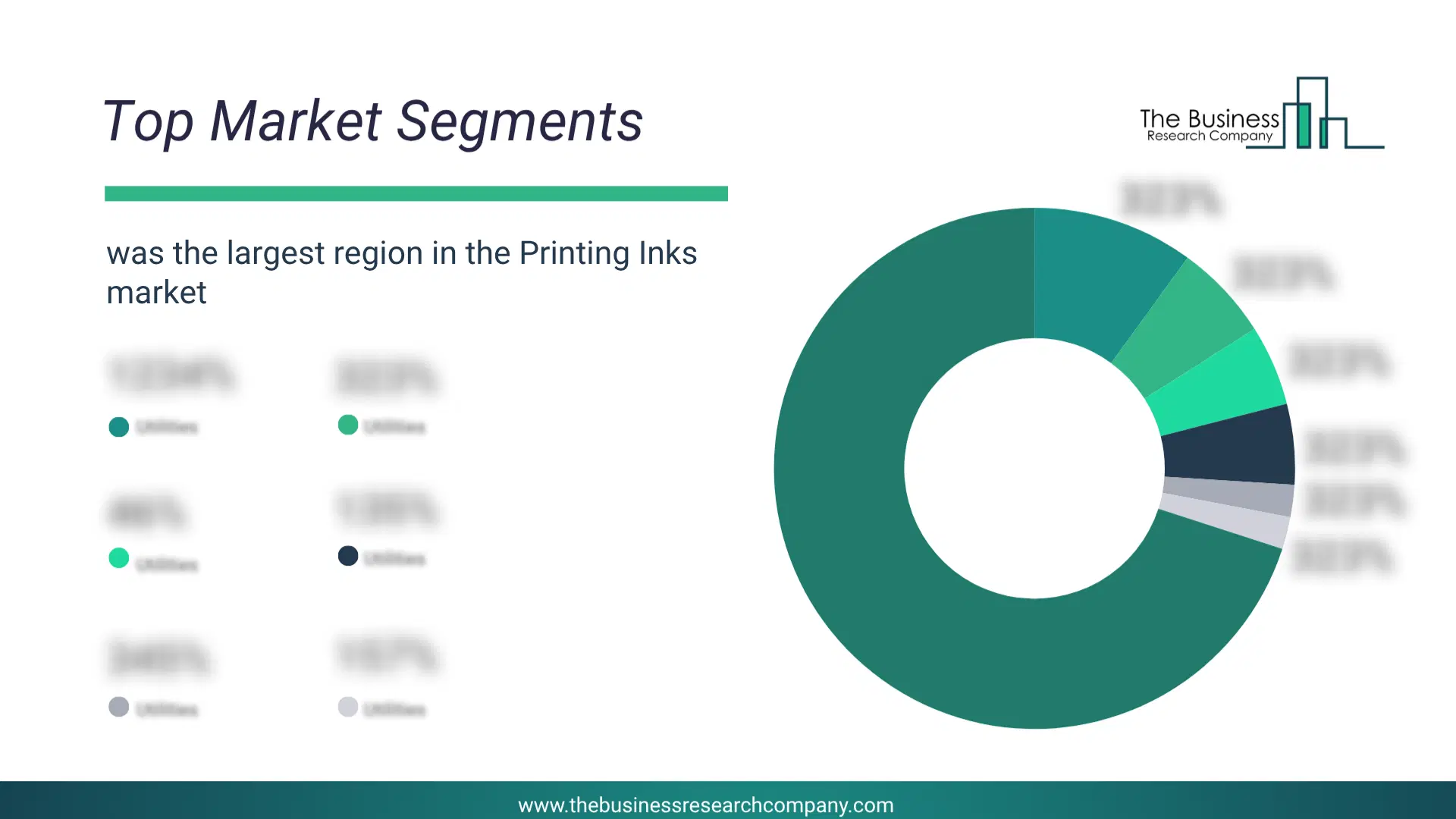
Western Europe was the largest region in the printing inks market in 2025. Asia-Pacific was the second largest region in the printing inks market. The regions covered in this market report are Asia-Pacific, South East Asia, Western Europe, Eastern Europe, North America, South America, Middle East, Africa The countries covered in this market report are China, India, Japan, Australia, Indonesia, South Korea, Bangladesh, Thailand, Vietnam, Malaysia, Singapore, Philippines, Hong Kong, Taiwan, New Zealand, UK, Germany, France, Italy, Spain, Austria, Belgium, Denmark, Finland, Ireland, Netherlands, Norway, Portugal, Sweden, Switzerland, Russia, Czech Republic, Poland, Romania, Ukraine, USA, Canada, Mexico, Brazil, Chile, Argentina, Colombia, Peru, Saudi Arabia, Israel, Iran, Turkey, UAE, Egypt, Nigeria, South Africa.What Defines the Printing Inks Market?
The printing inks market consists of the sales of liquid Ink, solid ink, toner, ribbon ink, UV ink, and 3D printing inks. Values in this market are ‘factory gate’ values, that is the value of goods sold by the manufacturers or creators of the goods, whether to other entities (including downstream manufacturers, wholesalers, distributors, and retailers) or directly to end customers. The value of goods in this market includes related services sold by the creators of the goods.How is Market Value Defined and Measured?
The market value is defined as the revenues that enterprises gain from the sale of goods and/or services within the specified market and geography through sales, grants, or donations in terms of the currency (in USD unless otherwise specified). The revenues for a specified geography are consumption values that are revenues generated by organizations in the specified geography within the market, irrespective of where they are produced. It does not include revenues from resales along the supply chain, either further along the supply chain or as part of other products.
This chart presents market attractiveness based on a quantitative evaluation of growth, competition, strategic alignment, and risk, offering a clear view of opportunity areas for decision-making. This chart is for illustrative purposes; the full report contains the complete analysis.

This chart highlights the Total Addressable Market (TAM) by estimating the maximum revenue opportunity using an assumption-driven approach, supporting strategic planning and opportunity sizing across markets. The chart is illustrative; the full report provides a more comprehensive analysis.
What Key Data and Analysis Are Included in the Printing Inks Market Report 2026?
The printing inks market research report is one of a series of new reports from The Business Research Company that provides market statistics, including industry global market size, regional shares, competitors with the market share, detailed market segments, market trends and opportunities, and any further data you may need to thrive in the printing inks industry. The market research report delivers a complete perspective of everything you need, with an in-depth analysis of the current and future state of the industry.Printing Inks Market Report Forecast Analysis
| Report Attribute | Details |
|---|---|
| Market Size Value In 2026 | $39.53 billion |
| Revenue Forecast In 2030 | $47.09 billion |
| Growth Rate | CAGR of 3.6% from 2026 to 2030 |
| Base Year For Estimation | 2025 |
| Actual Estimates/Historical Data | 2020-2025 |
| Forecast Period | 2026 - 2030 |
| Market Representation | Revenue in USD Billion and CAGR from 2026 to 2030 |
| Segments Covered | Ink Type, Application, End User Industries |
| Regional Scope | Asia-Pacific, Western Europe, Eastern Europe, North America, South America, Middle East, Africa |
| Country Scope | The countries covered in this market report are Australia, Brazil, China, France, Germany, India, Indonesia, Japan, Taiwan, Russia, South Korea, UK, USA, Canada, Italy, Spain |
| Key Companies Profiled | DuPont Inc., Arkema SA, DIC Corporation, Sun Chemical Corporation, Altana AG, TOYO Ink Group, Agfa-Gevaert NV, Flint Group, Siegwerk Druckfarben AG & Co., Rieger Druckfarben GmbH & Co. KG, Sakata INX Corporation, Ferro Corp., Huber Group, T&K TOKA Corporation, Tokyo Printing Ink Mfg. Co. Ltd., Nazdar Company, DYO Matbaa Mürekkepleri Sanayi ve Ticaret A.Ş., Wikoff Color Corporation, Sanchez SA de CV, Dainichiseika Color & Chemicals Mfg.Co. Ltd, Marabu GmbH & Co. KG, Epple Druckfarben AG, Fujifilm Sericol India Private Limited, Doneck Euroflex S.A., RUCO Druckfarben, Encres Dubuit, Zeller+Gmelin GmbH & Co. KG, Royal Dutch Printing Ink Factories Van Son, Brancher Company |
| Customization Scope | Request for Customization |
| Pricing And Purchase Options | Explore Purchase Options |