

Probiotics Market Report 2026
Global Outlook – By Form (Liquid, Dry), By Ingredient (Bacteria, Yeast), By Application (Food and Beverages, Dietary Supplements, Animal Feed), By End User (Human, Animal), By Distribution Channel (Hypermarkets Or Supermarkets, Pharmacies Or Health Stores, Convenience Stores, Online Retail, Other Distribution Channels) – Market Size, Trends, Strategies, and Forecast to 2030
Probiotics Market Overview
• Probiotics market size has reached to $86.01 billion in 2025 • Expected to grow to $144.76 billion in 2030 at a compound annual growth rate (CAGR) of 11.1% • Growth Driver: Rising Consumer Embrace Of Healthy Eating And Nutrient-Rich Supplements Fuels Probiotics Market Growth • Market Trend: Cutting-Edge Technological Advancements Transforming The Probiotic Market • Asia-Pacific was the largest region in 2025.What Is Covered Under Probiotics Market?
The probiotics are used to provide health benefits when consumed or administered in an adequate amount to the host body. Probiotics are live microorganisms that help treat or prevent disease when given in sufficient concentrations. These are available in many different forms, each with its own set of advantages. The most widely studied benefits of probiotics are that they promote a healthy digestive tract and immune system. The main forms of probiotics market are liquid and dry. Probiotics are produced in liquid forms such as probiotic liquid supplements, yogurt drinks, and fermented beverages such as kefir and kombucha. The different ingredients include bacteria, and yeast, and are applied in functional food and beverages, dietary supplements, and animal feeds. These are used by human, and animals, and is sold through multiple distribution channels including hypermarket or supermarket, pharmacies or health stores, convenience stores, online retail, and others.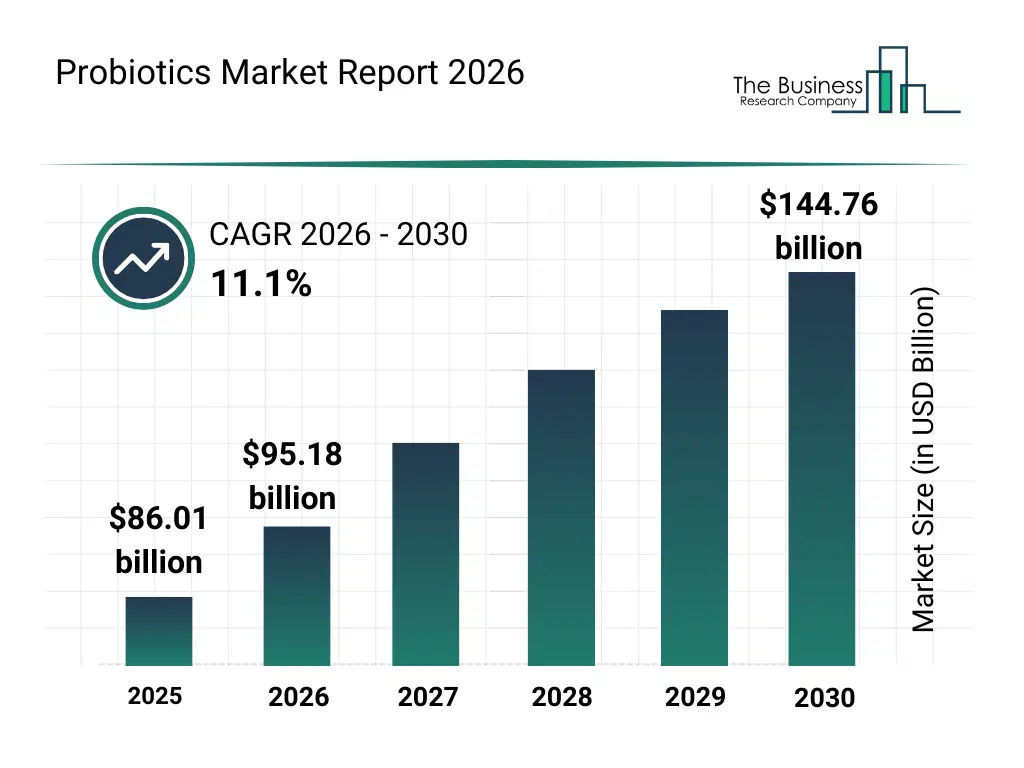
What Is The Probiotics Market Size and Share 2026?
The probiotics market size has grown rapidly in recent years. It will grow from $86.01 billion in 2025 to $95.18 billion in 2026 at a compound annual growth rate (CAGR) of 10.7%. The growth in the historic period can be attributed to increasing consumer focus on digestive wellness, rising adoption of dietary supplements, expansion of probiotic food and beverage offerings, growing availability of refrigerated probiotic products, increased healthcare recommendations.What Is The Probiotics Market Growth Forecast?
The probiotics market size is expected to see rapid growth in the next few years. It will grow to $144.76 billion in 2030 at a compound annual growth rate (CAGR) of 11.1%. The growth in the forecast period can be attributed to increasing demand for condition-specific probiotics, rising investment in microbiome research, expansion of probiotic applications in immunity support, growing preference for natural health solutions, increasing online distribution of probiotic products. Major trends in the forecast period include increasing use of multi-strain probiotic formulations, rising demand for shelf-stable probiotics, growing application of probiotics in functional foods, expansion of targeted digestive health products, enhanced focus on clinical efficacy and stability.
Global Probiotics Market Segmentation
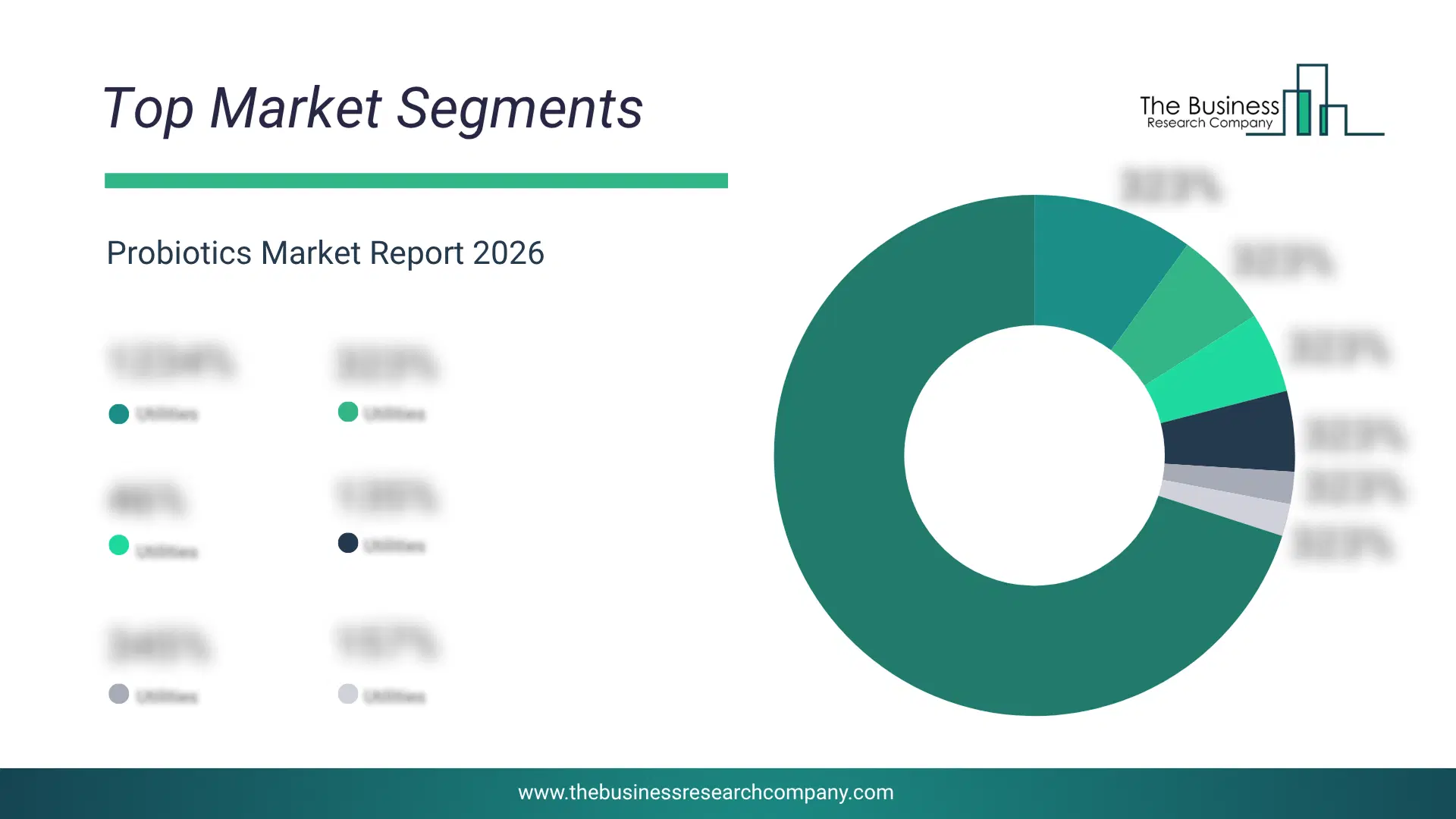
1) By Form: Liquid, Dry 2) By Ingredient: Bacteria, Yeast 3) By Application: Food and Beverages, Dietary Supplements, Animal Feed 4) By End User: Human, Animal 5) By Distribution Channel: Hypermarkets Or Supermarkets, Pharmacies Or Health Stores, Convenience Stores, Online Retail, Other Distribution Channels Subsegments: 1) By Liquid: Beverages, Yogurt, Drops 2) By Dry: Capsules, Tablets, Powders, SachetsWhat Is The Driver Of The Probiotics Market?
The increasing tendency of customers towards healthy foods and nutrient-rich dietary supplements is expected to foster the probiotics market growth going forward. Self-care has evolved into a necessary component of the modern consumer's lifestyle. Furthermore, the growing emphasis on holistic health and immunity has resulted in some substantial dietary modifications among consumers. The use of vitamins, minerals, immunity-boosting meals, organic products, supplements, and other nutritional supplements has increased significantly. Probiotics are used as a supplement form in food and beverages and provide health benefits to the human digestive system. For instance, in October 2023, according to the survey of 3,192 adults conducted by the Council for Responsible Nutrition, a US-based trade association for the dietary supplement and functional food industry, 74% of U.S. adults are utilizing dietary supplements. Consumer confidence in the quality of sports nutrition supplements has risen by 5 percentage points to 66% compared to 2022, while confidence in the weight management category has increased by 4 percentage points to 56% during the same period. Therefore, the increasing tendency of customers towards healthy foods drives the growth of the probiotics industry.Key Players In The Global Probiotics Market
Major companies operating in the probiotics market are Probi AB, Nestlé SA, Archer-Daniels-Midland Company, Danone SA, Yakult Honsha Co. Ltd., BioGaia AB, Morinaga Milk Industry Co. Ltd., Lallemand Inc., Chr. Hansen Holding A/S, Kerry Group, Ganeden Inc., Lesaffre Group, Nutraceutix Inc., Bifodan A/S, DuPont Inc., International Flavors & Fragrances Inc., UAS Laboratories LLC, Synbiotech Inc., Nebraska Cultures Inc., Custom Probiotics Inc.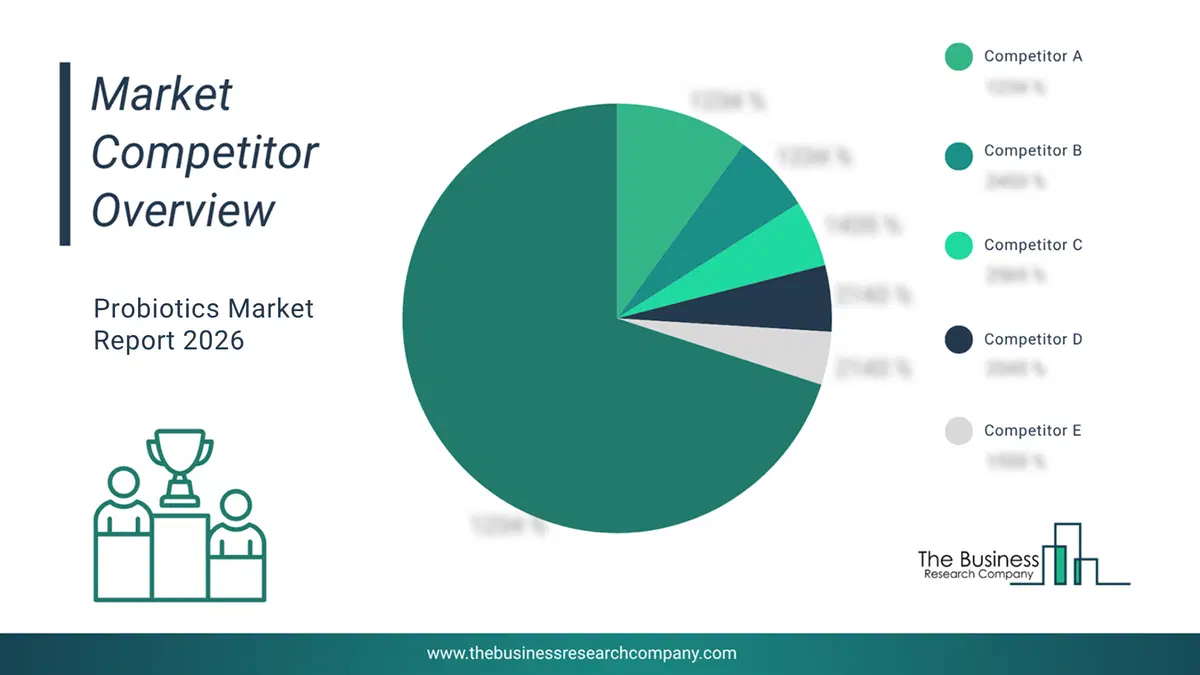
This chart is for illustrative purposes; the full report includes a detailed competitor analysis and comprehensive overview of the top 10 companies in the market.
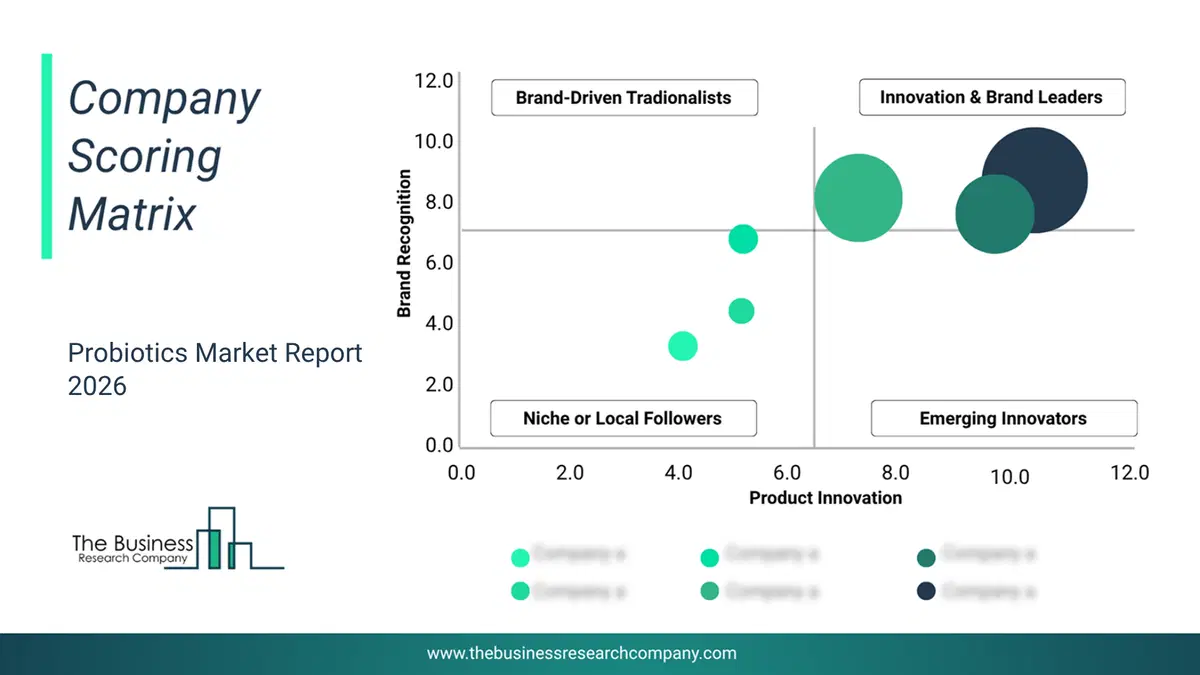
This chart maps companies by product innovation and brand strength, with bubble size indicating relative revenue, helping identify market leaders, challengers, and niche players. This is an illustrative chart; the full report provides a complete and accurate competitive analysis.
Global Probiotics Market Trends and Insights
Major companies operating in the probiotics market are focusing on developing innovative solutions, such as personalized probiotic technologies, to meet the rising demand for tailored gut health solutions. These technologies aim to improve the quality, effectiveness, and life cycle of probiotic products compared with standardized alternatives. For instance, in June 2024, MicrobioTx, an India-based gut health startup, launched two innovative products: Personal Probiotics, India's first prebiotic and probiotic blend customized to individual gut profiles, and GutChat, a free chatbot focused on gut health. These offerings use technology to personalize gut health solutions. With an estimated 1 in 4 urban Indians experiencing gut issues due to poor diet, stress, and irregular habits, MicrobioTx provides tailored solutions through its patent-protected, clinically proven gut microbiome test, addressing the limitations of standardized probiotics.What Are Latest Mergers And Acquisitions In The Probiotics Market?
In December 2023, L'Oréal S.A., a France-based personal care corporation, acquired Lactobio for an undisclosed amount. This acquisition is designed to strengthen L'Oréal's microbiome research capabilities, which have been in development for over 20 years. By leveraging Lactobio's expertise and intellectual property portfolio, L'Oréal aims to develop innovative cosmetic solutions that incorporate live bacteria. Lactobio A/S is a Denmark-based probiotic and microbiome research company.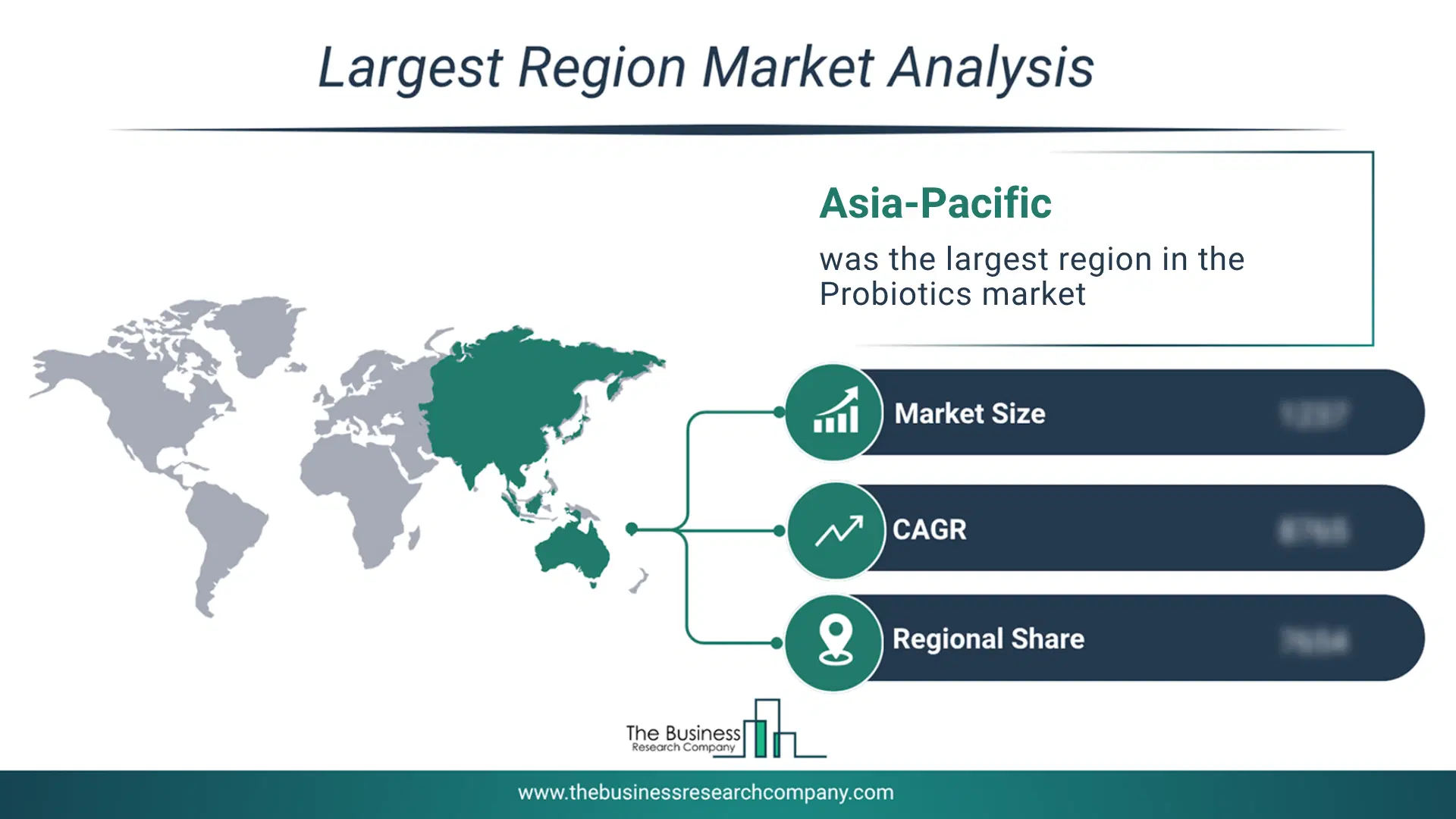
Regional Outlook
Asia-Pacific was the largest region in the probiotics market in 2025. The regions covered in this market report are Asia-Pacific, South East Asia, Western Europe, Eastern Europe, North America, South America, Middle East and Africa. The countries covered in this market report are Australia, Brazil, China, France, Germany, India, Indonesia, Japan, Taiwan, Russia, South Korea, UK, USA, Italy, Spain, CanadaWhat Defines the Probiotics Market?
The probiotics market consists of sales of yogurt, sauerkraut, miso soup, soft cheeses, kefir, sourdough bread, acidophilus milks. Values in this market are ‘factory gate’ values, that is the value of goods sold by the manufacturers or creators of the goods, whether to other entities (including downstream manufacturers, wholesalers, distributors and retailers) or directly to end customers. The value of goods in this market includes related services sold by the creators of the goods.How is Market Value Defined and Measured?
The market value is defined as the revenues that enterprises gain from the sale of goods and/or services within the specified market and geography through sales, grants, or donations in terms of the currency (in USD unless otherwise specified). The revenues for a specified geography are consumption values that are revenues generated by organizations in the specified geography within the market, irrespective of where they are produced. It does not include revenues from resales along the supply chain, either further along the supply chain or as part of other products.
This chart presents market attractiveness based on a quantitative evaluation of growth, competition, strategic alignment, and risk, offering a clear view of opportunity areas for decision-making. This chart is for illustrative purposes; the full report contains the complete analysis.

This chart highlights the Total Addressable Market (TAM) by estimating the maximum revenue opportunity using an assumption-driven approach, supporting strategic planning and opportunity sizing across markets. The chart is illustrative; the full report provides a more comprehensive analysis.
What Key Data and Analysis Are Included in the Probiotics Market Report 2026?
The probiotics market research report is one of a series of new reports from The Business Research Company that provides market statistics, including industry global market size, regional shares, competitors with the market share, detailed market segments, market trends and opportunities, and any further data you may need to thrive in the probiotics industry. The market research report delivers a complete perspective of everything you need, with an in-depth analysis of the current and future state of the industry.Probiotics Market Report Forecast Analysis
| Report Attribute | Details |
|---|---|
| Market Size Value In 2026 | $95.18 billion |
| Revenue Forecast In 2030 | $144.76 billion |
| Growth Rate | CAGR of 10.7% from 2026 to 2030 |
| Base Year For Estimation | 2025 |
| Actual Estimates/Historical Data | 2020-2025 |
| Forecast Period | 2026 - 2030 |
| Market Representation | Revenue in USD Billion and CAGR from 2026 to 2030 |
| Segments Covered | Form, Ingredient, Application, End User, Distribution Channel |
| Regional Scope | Asia-Pacific, Western Europe, Eastern Europe, North America, South America, Middle East, Africa |
| Country Scope | The countries covered in the report are Australia, Brazil, China, France, Germany, India, Indonesia, Japan, Taiwan, Russia, South Korea, UK, USA, Canada, Italy, Spain. |
| Key Companies Profiled | Probi AB, Nestlé SA, Archer-Daniels-Midland Company, Danone SA, Yakult Honsha Co. Ltd., BioGaia AB, Morinaga Milk Industry Co. Ltd., Lallemand Inc., Chr. Hansen Holding A/S, Kerry Group, Ganeden Inc., Lesaffre Group, Nutraceutix Inc., Bifodan A/S, DuPont Inc., International Flavors & Fragrances Inc., UAS Laboratories LLC, Synbiotech Inc., Nebraska Cultures Inc., Custom Probiotics Inc. |
| Customization Scope | Request for Customization |
| Pricing And Purchase Options | Explore Purchase Options |