
Prebiotic Ingredients Market Report 2026
Global Outlook – By Type (Inulin, Fructooligosaccharides (FOSs), Mannan-Oligosaccharide (MOS), Soy Oligosaccharides, Other Types ), By Source (Roots, Grains, Vegetables, Other Sources ), By Operability (Gut Health, Immunity, Cardiovascular Health, Bone Health, Weight Management ), By Application (Functional Food and Beverage, Infant Formula and Baby Food, Dietary Supplements, Animal Feed, Pet Food) – Market Size, Trends, Strategies, and Forecast to 2030
Prebiotic Ingredients Market Overview
• Prebiotic Ingredients market size has reached to $7.9 billion in 2025 • Expected to grow to $12.91 billion in 2030 at a compound annual growth rate (CAGR) of 10.3% • Growth Driver: Growing Food And Drink Supplements Fuels Prebiotic Ingredients Market Growth • Market Trend: Strategic Collaboration To Integrate Their Research Into The Development • Europe was the largest region in 2025 and South America is the fastest growing region.What Is Covered Under Prebiotic Ingredients Market?
The prebiotic ingredients are used as food ingredients to sustain or renovate a healthy gut microflora along with other health benefits. Prebiotic ingredients refer to a collection of nutrients that the gut bacteria degrades. They can nourish the intestinal flora and their breakdown products are short-chain fatty acids that are discharged into the bloodstream, impacting not just the GI tract but also distant organs. The main types of prebiotic ingredients are inulin, fructooligosaccharides (FOSs), mannan-oligosaccharides (MOS), disaccharides, monosaccharides, nucleotide-activated saccharides, soy oligosaccharides and other types. Inulin refers to a white, mildly sweet, indigestible polysaccharide that occurs chiefly in the roots or tubers of various plants that is used as an additive in low-fat and low-sugar foods to improve the flavour and texture and as a diagnostic agent in a test for kidney function. The various sources include roots, grains, vegetables, fruit trunks (or) stems and other sources. The operationalities are gut health, immunity, cardiovascular health, bone health and weight management. The various applications involved are functional food and beverages, infant formula and baby food, dietary supplements, animal feed and pet food.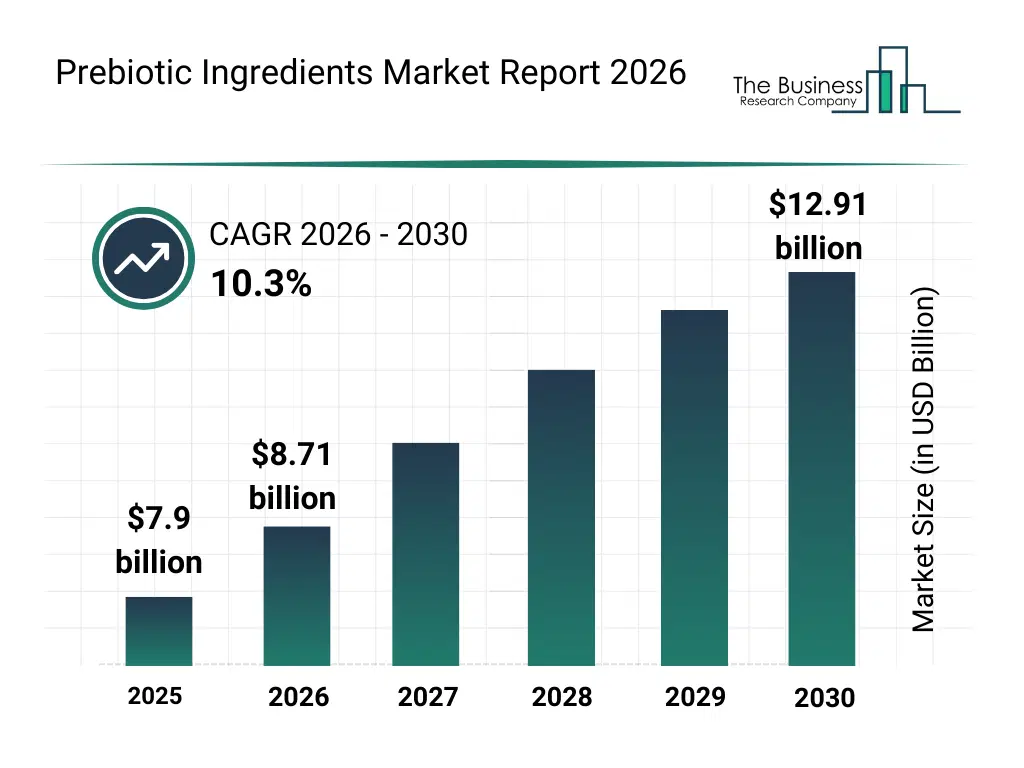
What Is The Prebiotic Ingredients Market Size and Share 2026?
The prebiotic ingredients market size has grown rapidly in recent years. It will grow from $7.9 billion in 2025 to $8.71 billion in 2026 at a compound annual growth rate (CAGR) of 10.3%. The growth in the historic period can be attributed to rising consumer awareness of digestive health, increased use of functional food ingredients, expansion of infant nutrition formulations, growing scientific research on gut microbiota, improved availability of natural prebiotic sources.What Is The Prebiotic Ingredients Market Growth Forecast?
The prebiotic ingredients market size is expected to see rapid growth in the next few years. It will grow to $12.91 billion in 2030 at a compound annual growth rate (CAGR) of 10.3%. The growth in the forecast period can be attributed to increasing demand for personalized nutrition, rising focus on preventive healthcare, expansion of clean-label food formulations, growing use of prebiotics in immunity support products, increasing incorporation of prebiotics in animal and pet nutrition. Major trends in the forecast period include increasing adoption of gut health-focused functional ingredients, rising demand for plant-derived prebiotics, growing use of prebiotics in infant nutrition, expansion of prebiotic-enriched functional foods, enhanced focus on clinically validated ingredients.
Global Prebiotic Ingredients Market Segmentation
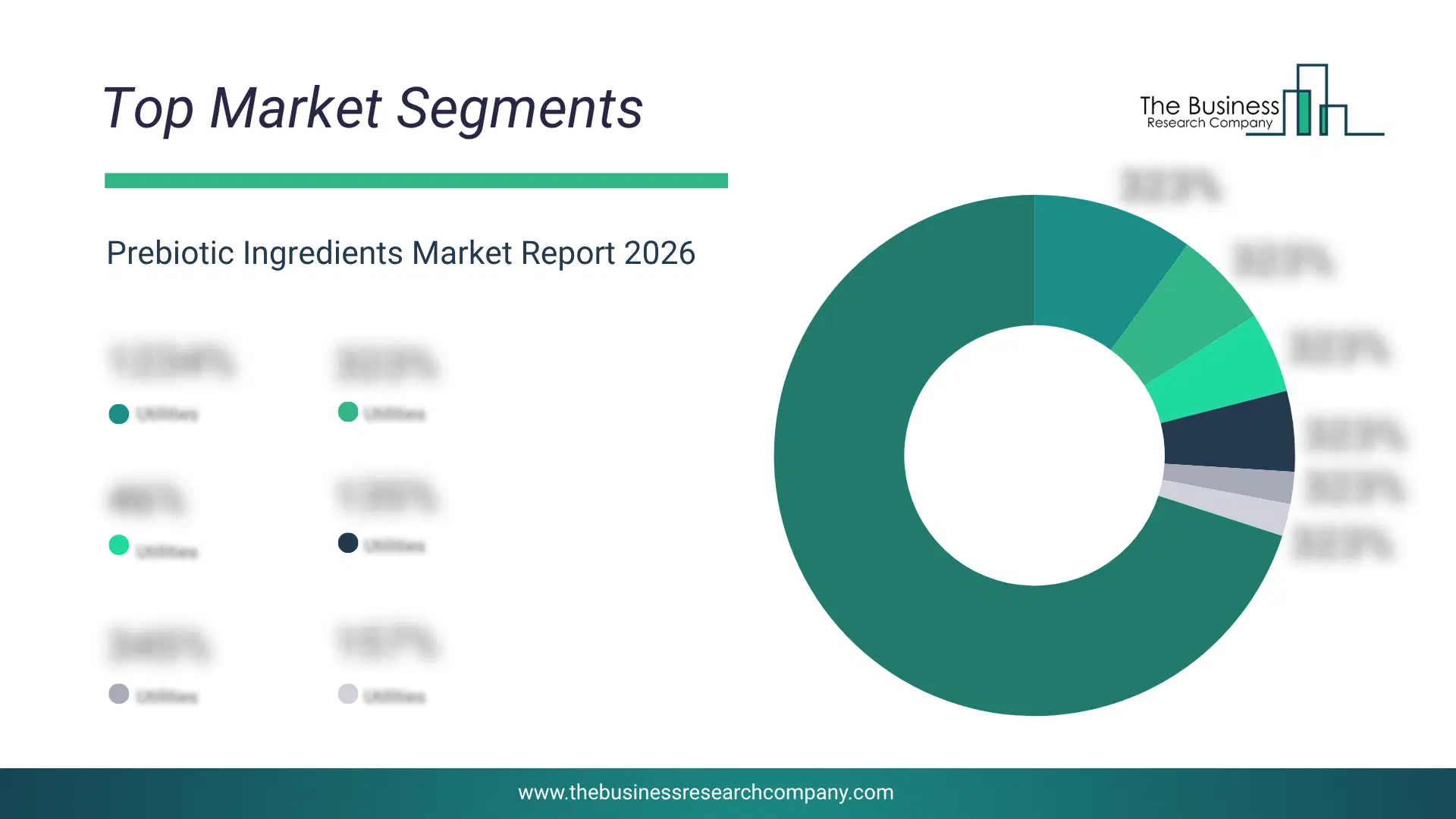
1) By Type: Inulin, Fructooligosaccharides (FOSs), Mannan-Oligosaccharide (MOS), Soy Oligosaccharides, Other Types 2) By Source: Roots, Grains, Vegetables, Other Sources 3) By Operability: Gut Health, Immunity, Cardiovascular Health, Bone Health, Weight Management 4) By Application: Functional Food and Beverage, Infant Formula and Baby Food, Dietary Supplements, Animal Feed, Pet Food Subsegments: 1) By Inulin: Chicory Root Inulin, Agave Inulin 2) By Fructooligosaccharides (FOSs): Short-chain FOS, Long-chain FOS 3) By Mannan-Oligosaccharide (MOS): Yeast-Derived MOS, Plant-Derived MOS 4) By Soy Oligosaccharides: Stachyose, Raffinose 5) By Other Types: Polydextrose, Resistant StarchWhat Is The Driver Of The Prebiotic Ingredients Market?
An increase in the demand for food and drink supplements is expected to propel the growth of the prebiotic ingredients market going forward. Food and drink supplements refer to concentrated sources of nutrients or other compounds with a nutritional or physiological effect. Prebiotic ingredients are consumed in foods or in supplement forms such as drinks and food. For instance, in March 2023, according to a report published by Agriculture and Agri-Food Canada, a Canada-based government agency, the health and wellness (HW) food and beverage sector in Japan achieved a retail sales value of $56.4 billion in 2022, with projections indicating an increase to $59.8 billion by 2026, reflecting a compound annual growth rate (CAGR) of 1.6%. Additionally, the functional food and beverage segment reached retail sales of $19.1 billion in 2022, with forecasts suggesting growth to $20.3 billion by 2026. Therefore, an increase in the demand for food and drink supplements is driving the growth of the prebiotic ingredients industry.Key Players In The Global Prebiotic Ingredients Market
Major companies operating in the prebiotic ingredients market are DuPont de Nemours Inc., Cargill Inc., Ingredion Inc., Royal FrieslandCampina N.V., Samyang Genex Corporation, BENEO GmbH, Beghin Meiji S.A., Nexira SAS, Yakult Pharmaceutical Industry Co Ltd, Coöperatie Koninklijke Cosun U.A., Kerry Group plc, Fonterra Co-operative Group Limited, Prenexus Health, Taiyo International Inc., AIDP Inc., Jennewein Biotechnologie GmbH, Cosucra Groupe Warcoing SA, Sensus BV, Tate & Lyle PLC, Roquette Frères S.A., Archer Daniels Midland Company, Bunge Limited, FrieslandCampina Ingredients, GTC Nutrition LLC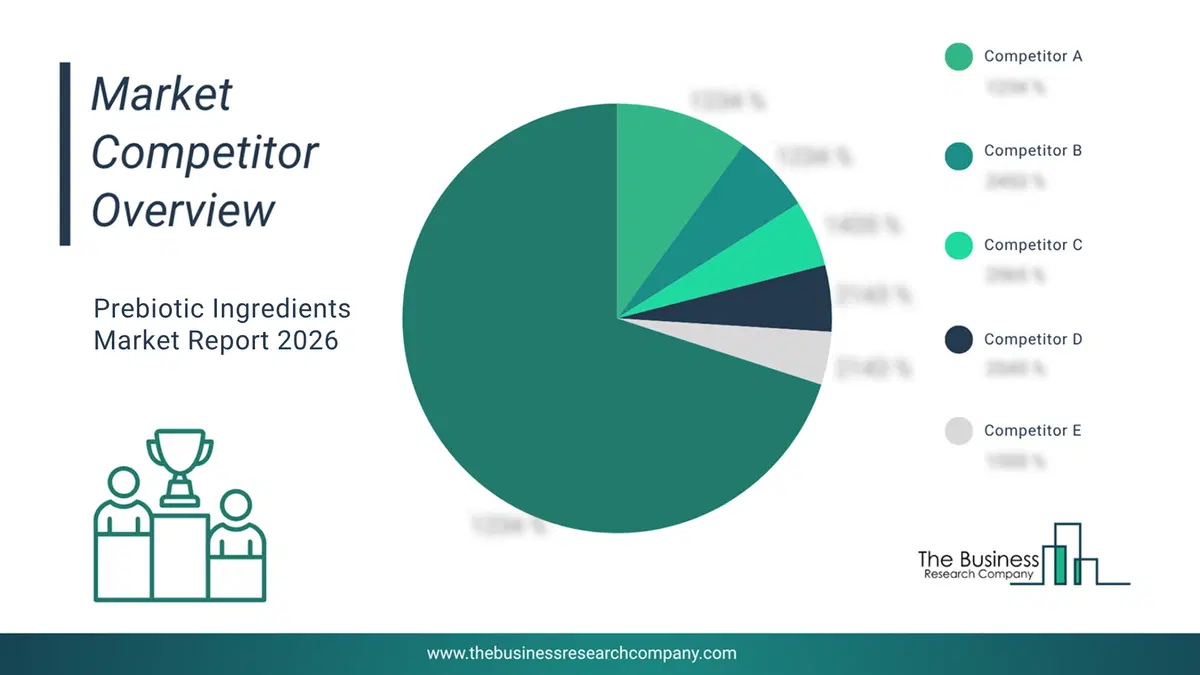
This chart is for illustrative purposes; the full report includes a detailed competitor analysis and comprehensive overview of the top 10 companies in the market.
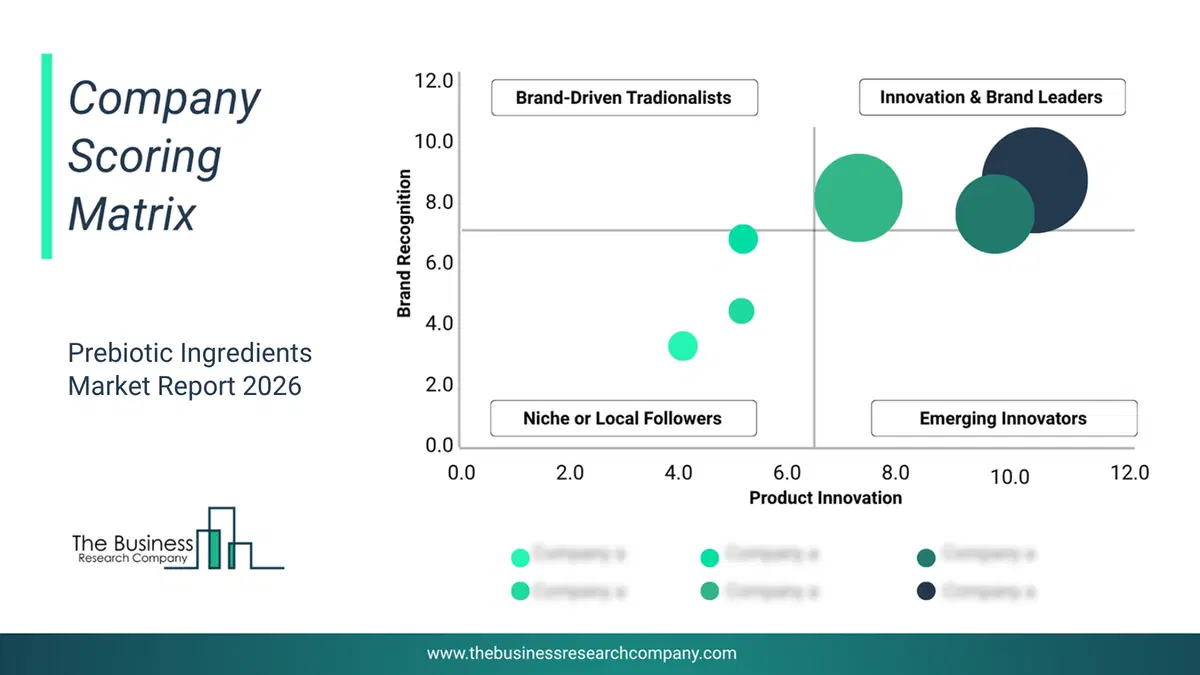
This chart maps companies by product innovation and brand strength, with bubble size indicating relative revenue, helping identify market leaders, challengers, and niche players. This is an illustrative chart; the full report provides a complete and accurate competitive analysis.
Global Prebiotic Ingredients Market Trends and Insights
Major companies operating in the probiotic ingredients sector are focused on strategic collaboration to integrate their research into the development of better products, to meet customer demands and strengthen their market position. Strategic partnerships refer to a process in which companies leverage each other's strengths and resources to achieve mutual benefits and success. For instance, in June 2023, Probi, a Sweden-based probiotics company, announced a strategic collaboration with Clasado Biosciences, a UK-based research and development company in gut microbiome and prebiotic ingredients, to develop health-promoting synbiotic products. The partnership's primary objectives will include attempting to advance their collective knowledge of prebiotic and probiotic interactions and investigating the possibility of merging their probiotic strains.What Are Latest Mergers And Acquisitions In The Prebiotic Ingredients Market?
In May 2025, PepsiCo, Inc., a US-based multinational food and beverage company specializing in beverages and functional products, acquired Poppi for $1.95 billion. Through this acquisition, PepsiCo aims to expand its presence in the functional beverage segment by integrating Poppi’s prebiotic soda offerings, which combine fruit juice, apple cider vinegar, and prebiotic fiber to promote gut health. Poppi is a US-based beverage company specializing in prebiotic sodas and functional drinks targeting health-conscious consumers.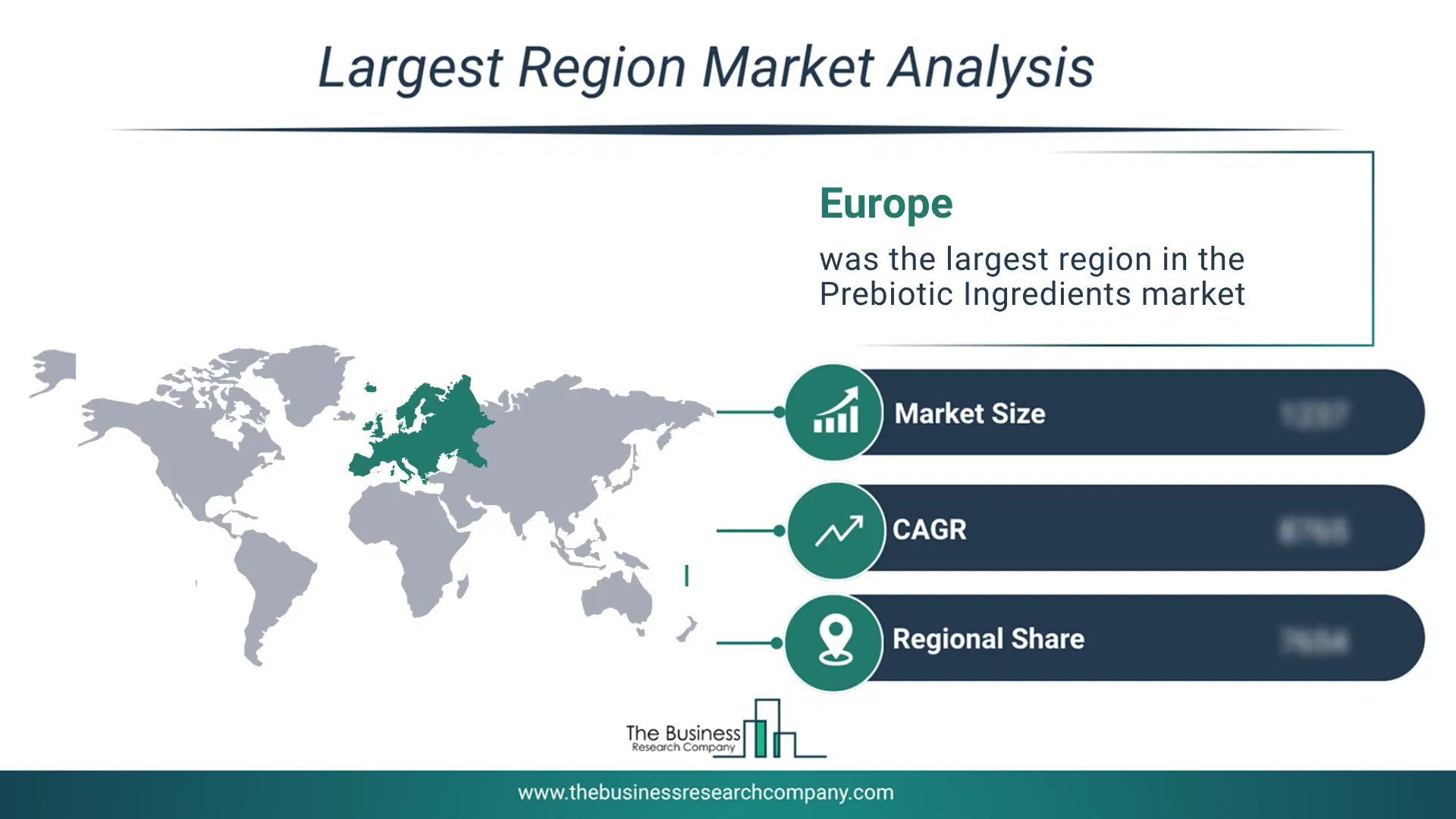
Regional Outlook
Europe was the largest region in the prebiotic ingredients market in 2025. South America is expected to be the fastest-growing region in the forecast period. The regions covered in this market report are Asia-Pacific, South East Asia, Western Europe, Eastern Europe, North America, South America, Middle East and Africa. The countries covered in this market report are Australia, Brazil, China, France, Germany, India, Indonesia, Japan, Taiwan, Russia, South Korea, UK, USA, Italy, Spain, CanadaWhat Defines the Prebiotic Ingredients Market?
The prebiotic ingredients market consists of sales of inulin, fructo-oligosaccharides, galacto-oligosaccharides, mannan-oligosaccharides and polydextrose. Values in this market are ‘factory gate’ values, that is the value of goods sold by the manufacturers or creators of the goods, whether to other entities (including downstream manufacturers, wholesalers, distributors and retailers) or directly to end customers. The value of goods in this market includes related services sold by the creators of the goods.How is Market Value Defined and Measured?
The market value is defined as the revenues that enterprises gain from the sale of goods and/or services within the specified market and geography through sales, grants, or donations in terms of the currency (in USD unless otherwise specified). The revenues for a specified geography are consumption values that are revenues generated by organizations in the specified geography within the market, irrespective of where they are produced. It does not include revenues from resales along the supply chain, either further along the supply chain or as part of other products.
This chart presents market attractiveness based on a quantitative evaluation of growth, competition, strategic alignment, and risk, offering a clear view of opportunity areas for decision-making. This chart is for illustrative purposes; the full report contains the complete analysis.

This chart highlights the Total Addressable Market (TAM) by estimating the maximum revenue opportunity using an assumption-driven approach, supporting strategic planning and opportunity sizing across markets. The chart is illustrative; the full report provides a more comprehensive analysis.
What Key Data and Analysis Are Included in the Prebiotic Ingredients Market Report 2026?
The prebiotic ingredients market research report is one of a series of new reports from The Business Research Company that provides market statistics, including industry global market size, regional shares, competitors with the market share, detailed market segments, market trends and opportunities, and any further data you may need to thrive in the prebiotic ingredients industry. The market research report delivers a complete perspective of everything you need, with an in-depth analysis of the current and future state of the industry.Prebiotic Ingredients Market Report Forecast Analysis
| Report Attribute | Details |
|---|---|
| Market Size Value In 2026 | $8.71 billion |
| Revenue Forecast In 2030 | $12.91 billion |
| Growth Rate | CAGR of 10.3% from 2026 to 2030 |
| Base Year For Estimation | 2025 |
| Actual Estimates/Historical Data | 2020-2025 |
| Forecast Period | 2026 - 2030 |
| Market Representation | Revenue in USD Billion and CAGR from 2026 to 2030 |
| Segments Covered | Type, Source, Operability, Application |
| Regional Scope | Asia-Pacific, Western Europe, Eastern Europe, North America, South America, Middle East, Africa |
| Country Scope | The countries covered in the report are Australia, Brazil, China, France, Germany, India, Indonesia, Japan, Taiwan, Russia, South Korea, UK, USA, Canada, Italy, Spain. |
| Key Companies Profiled | DuPont de Nemours Inc., Cargill Inc., Ingredion Inc., Royal FrieslandCampina N.V., Samyang Genex Corporation, BENEO GmbH, Beghin Meiji S.A., Nexira SAS, Yakult Pharmaceutical Industry Co Ltd, Coöperatie Koninklijke Cosun U.A., Kerry Group plc, Fonterra Co-operative Group Limited, Prenexus Health, Taiyo International Inc., AIDP Inc., Jennewein Biotechnologie GmbH, Cosucra Groupe Warcoing SA, Sensus BV, Tate & Lyle PLC, Roquette Frères S.A., Archer Daniels Midland Company, Bunge Limited, FrieslandCampina Ingredients, GTC Nutrition LLC |
| Customization Scope | Request for Customization |
| Pricing And Purchase Options | Explore Purchase Options |