
Rare Earth Elements Market Report 2026
Global Outlook – By Product (Cerium, Dysprosium, Erbium, Europium, Gadolinium, Holmium, Other Products), By Application (Permanent Magnets, Metals Alloys, Polishing, Additives, Catalysts, Phosphors), By End User (Automotive, Oil And Gas, Electronics, Renewable Energy, Defense And Aerospace, Other End Users) – Market Size, Trends, Strategies, and Forecast to 2030
Rare Earth Elements Market Overview
• Rare Earth Elements market size has reached to $6.18 billion in 2025 • Expected to grow to $10.44 billion in 2030 at a compound annual growth rate (CAGR) of 11.1% • Growth Driver: Rising Adoption Of Clean Energy And Electric Vehicles Fueling The Growth Of The Market Due To Demand For High-Performance Magnet Materials • Market Trend: Advancements In High-Grade Rare Earth Element Exploration And Resource Efficiency • Asia-Pacific was the largest region in 2025 and North America is the fastest growing region.Market Gains By 2030 – Top Opportunities By Segment
Market Gain identifies the most promising market opportunities by highlighting the segments or products expected to generate the highest incremental revenue growth over the next five years.
What Is Covered Under Rare Earth Elements Market?
Rare earth elements refer to a group of 17 chemically similar metallic elements, including the 15 lanthanides along with scandium and yttrium. They are essential for producing high-performance magnets, electronics, renewable energy technologies, and various advanced industrial applications due to their unique magnetic and optical properties. The main products of rare earth elements are cerium, dysprosium, erbium, europium, gadolinium, holmium, and others. Cerium is a soft, silvery-white metallic element belonging to the lanthanide series of rare earth elements. The various applications involved are permanent magnets, metal alloys, polishing, additives, catalysts, and phosphors and are used by several end users such as automotive, oil and gas, electronics, renewable energy, defense and aerospace, and others.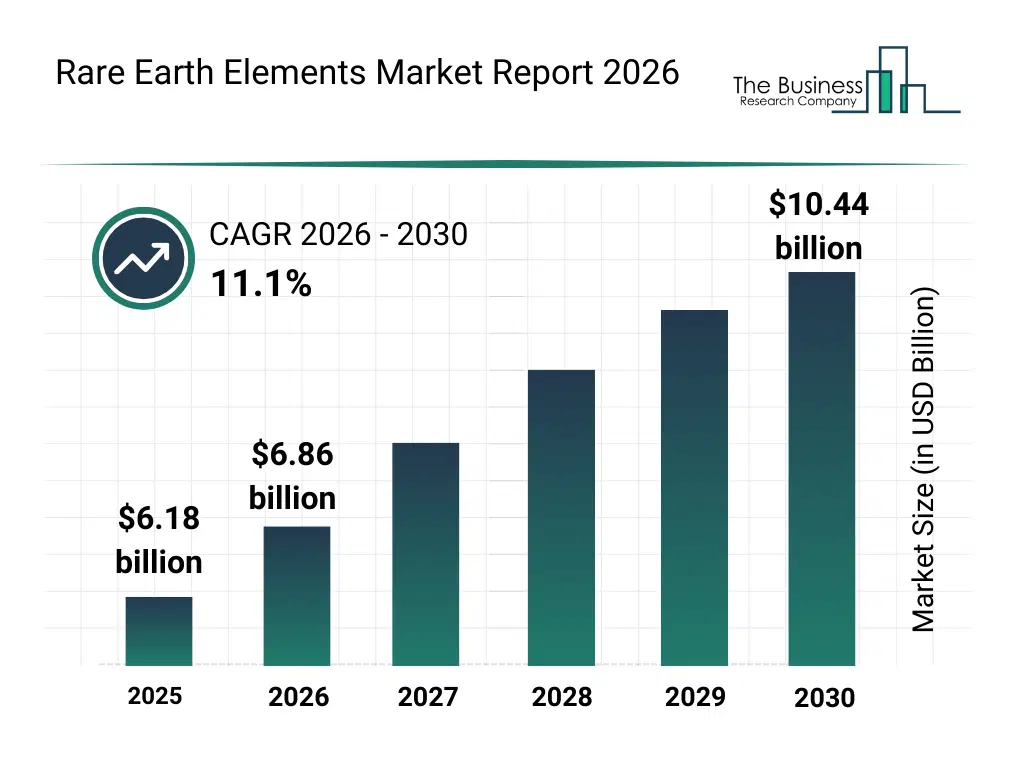
What Is The Rare Earth Elements Market Size and Share 2026?
The rare earth elements market size has grown rapidly in recent years. It will grow from $6.18 billion in 2025 to $6.86 billion in 2026 at a compound annual growth rate (CAGR) of 10.9%. The growth in the historic period can be attributed to growth in electronics and automotive industries, increasing demand for permanent magnets, expansion of renewable energy projects, rising use in catalysts and polishing applications, development of large-scale rare earth mining operations.What Is The Rare Earth Elements Market Growth Forecast?
The rare earth elements market size is expected to see rapid growth in the next few years. It will grow to $10.44 billion in 2030 at a compound annual growth rate (CAGR) of 11.1%. The growth in the forecast period can be attributed to growth in electric vehicle and wind energy sectors, increasing demand for high-performance electronics, rising adoption in defense and aerospace applications, expansion of sustainable and recycled rare earth sourcing, adoption of advanced extraction and separation technologies. Major trends in the forecast period include rising demand for rare earth elements in high-performance magnets, increasing use of cerium, neodymium, and dysprosium in electronics, expansion of rare earth elements in renewable energy applications, growing focus on recycling and sustainable sourcing of rare earth elements, rising adoption of rare earth elements in advanced industrial applications.
Global Rare Earth Elements Market Segmentation
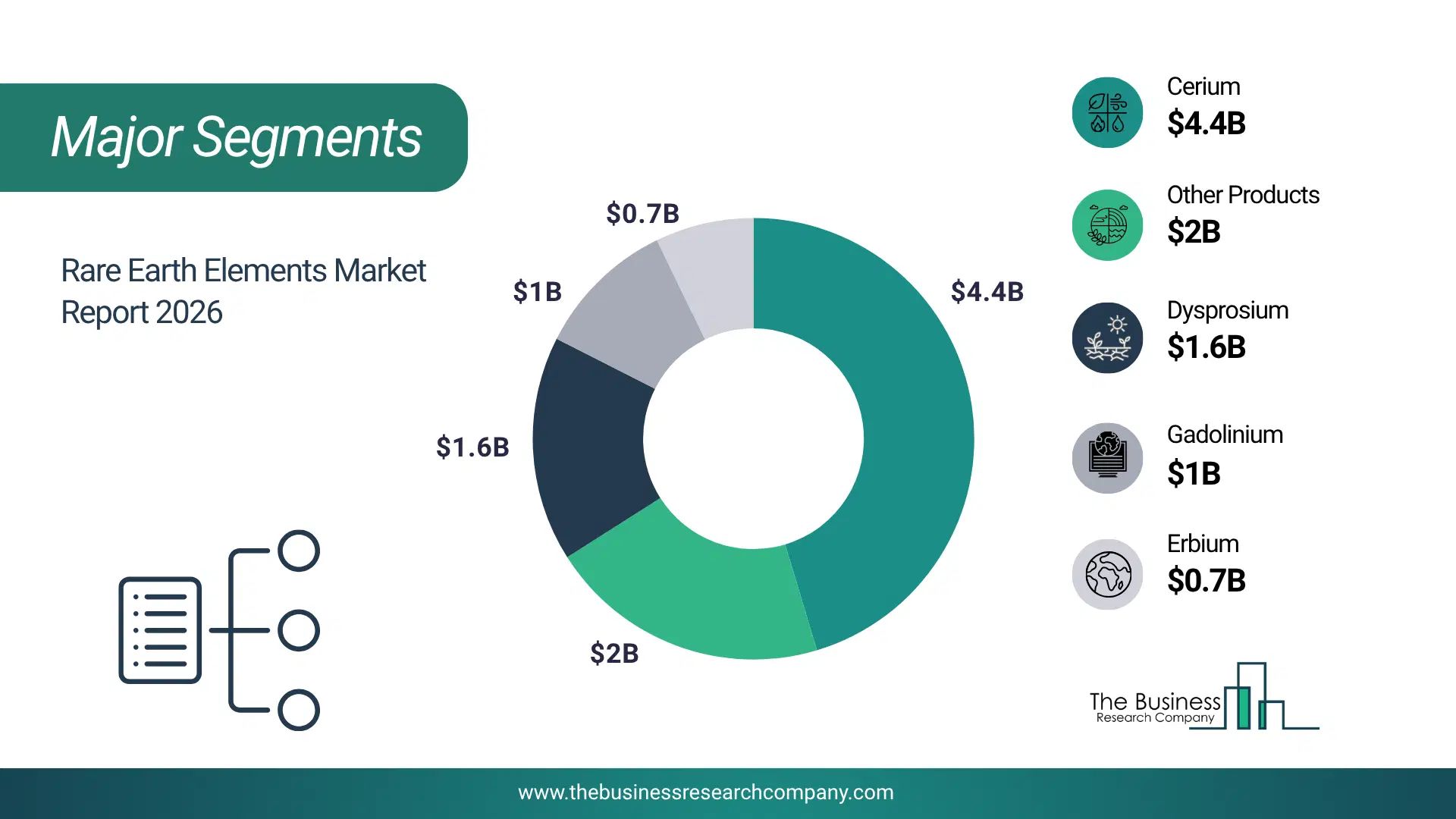
1) By Product: Cerium, Dysprosium, Erbium, Europium, Gadolinium, Holmium, Other Products 2) By Application: Permanent Magnets, Metals Alloys, Polishing, Additives, Catalysts, Phosphors 3) By End User: Automotive, Oil And Gas, Electronics, Renewable Energy, Defense And Aerospace, Other End Users Subsegments: 1) By Cerium: Cerium Oxide, Cerium Nitrate, Cerium Chloride, Cerium Acetate 2) By Dysprosium: Dysprosium Oxide, Dysprosium Chloride, Dysprosium Nitrate 3) By Erbium: Erbium Oxide, Erbium Chloride, Erbium Nitrate 4) By Europium: Europium Oxide, Europium Chloride, Europium Nitrate 5) By Gadolinium: Gadolinium Oxide, Gadolinium Nitrate, Gadolinium Chloride 6) By Holmium: Holmium Oxide, Holmium Nitrate, Holmium Chloride 7) By Other Products: Lanthanum, Neodymium, Praseodymium, Samarium, Terbium, Thulium, Ytterbium, Yttrium The top segments in the rare earth elements market will be: • Cerium will reach $4.39 billion by 2030. • Other Products will reach $1.97 billion by 2030. • Dysprosium will reach $1.52 billion by 2030. • Gadolinium will reach $0.94 billion by 2030. • Erbium will reach $0.63 billion by 2030.What Is The Driver Of The Rare Earth Elements Market?
The increasing demand for clean energy and electric vehicles is expected to propel the growth of the rare earth elements market going forward. Clean energy refers to power from renewable sources such as solar and wind, and electric vehicles use this energy through battery-powered systems to reduce carbon emissions. The rise in clean energy and electric vehicles is driven by environmental concerns, as they help reduce greenhouse gas emissions and combat climate change. Rare earth elements play a crucial role in clean energy and electric vehicles by enabling the production of high-performance magnets used in wind turbines and electric motors. For instance, in January 2024, according to the U.S. Energy Information Administration, a US-based government agency, electric vehicles and hybrids accounted for more than 16% of total U.S. light-duty vehicle sales in 2023, up from 12.9% in 2022, reflecting growing consumer adoption of alternative fuel vehicles. Therefore, the increasing demand for clean energy and electric vehicles is driving the growth of the rare earth elements industry.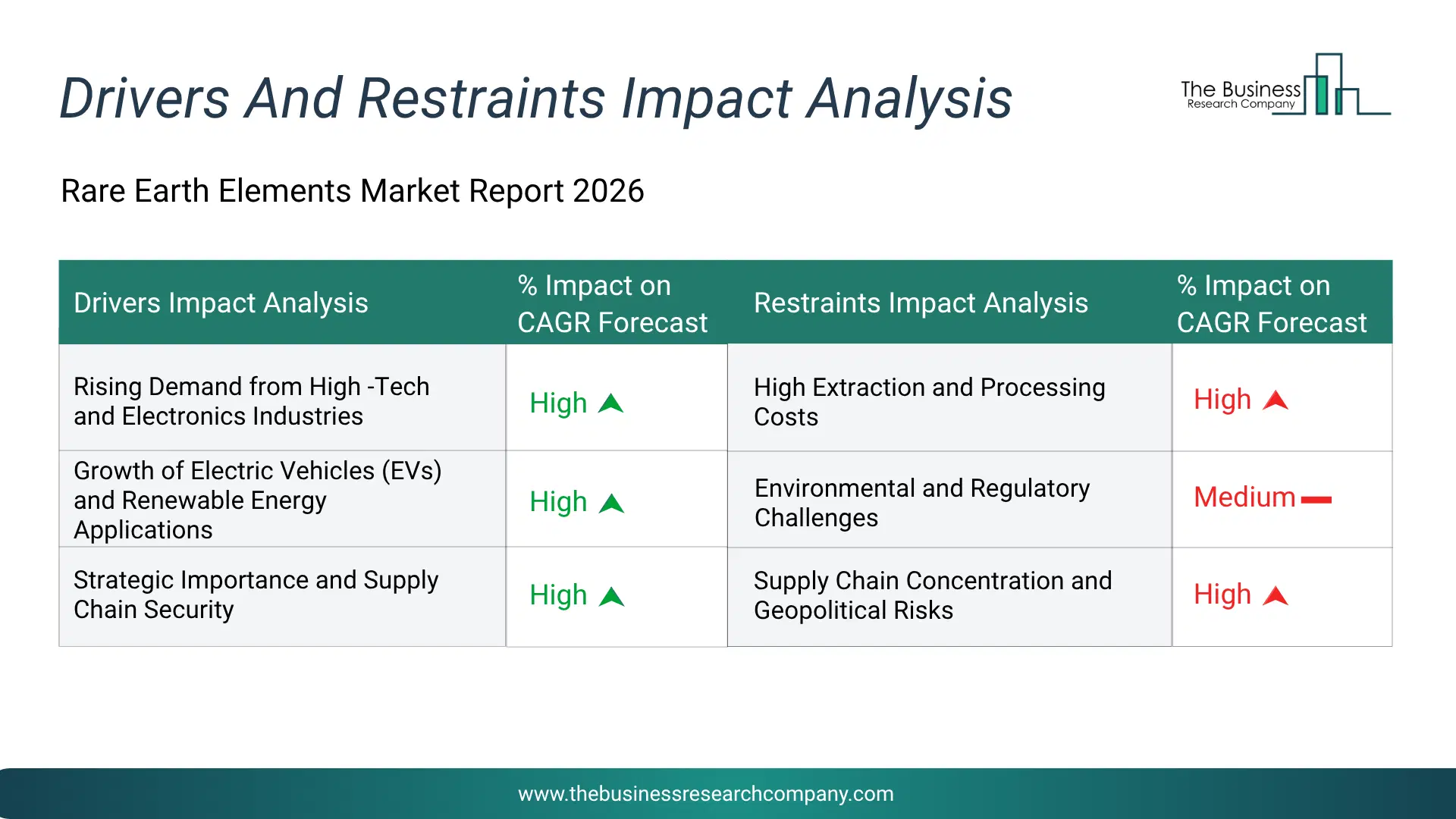
Infographic Chart Showing Key Market Drivers Analysis And Restraints For Rare Earth Elements Market
The chart presents an impact analysis of key drivers and restraints, quantifying their relative influence on the market's growth rate and helping assess the balance between growth enablers and limiting factors. This chart offers a high-level perspective; the full report contains more detailed insights.
How Will The Drivers Impact Growth In The Global Rare Earth Elements Market?
• Rising Demand from High -Tech and Electronics Industries (High) – During the forecast period, the rising demand from high -tech and electronics industries is expected to become a key growth driver for the rare earth elements market by 2030. Rare earth elements are critical in the production of high -tech devices, including smartphones, laptops, leds, permanent magnets, and precision electronics. The rapid expansion of consumer electronics, 5g infrastructure, and wearable technology is significantly driving demand for rees. Their unique magnetic, luminescent, and conductive properties make them indispensable for advanced components, such as permanent magnets in motors and speakers or phosphors in displays. As technology adoption accelerates globally, the reliance on rare earth materials continues to be a primary driver for the market. • Growth of Electric Vehicles (EVs) and Renewable Energy Applications (High) – During the forecast period, the growth of electric vehicles (evs) and renewable energy applications is expected to emerge as a major factor driving the expansion of the rare earth elements market by 2030. The transition toward electric mobility and renewable energy solutions is significantly boosting ree demand. Electric vehicles require high-performance permanent magnets in motors, while wind turbines rely on rare earth magnets for efficiency and durability. Government incentives, climate change mitigation policies, and increasing ev adoption are driving the consumption of neodymium, dysprosium, and other rees in transportation and green energy sectors. The expansion of renewable energy infrastructure globally makes rees indispensable, creating sustained long-term growth opportunities for the market. • Strategic Importance and Supply Chain Security (High) – During the forecast period, the strategic importance and supply chain security is expected to act as a key growth catalyst for the rare earth elements market by 2030. Rees are critical for national security, defense applications, and aerospace systems, making them a strategic resource for many countries. Governments are increasingly focusing on domestic production, recycling initiatives, and secure supply chains to reduce dependency on foreign sources, particularly china, which dominates global production. Investments in exploration, mining, and processing facilities aim to ensure long-term availability and reduce geopolitical risks. The strategic importance of rare earths continues to drive investment in the market, stimulating technological innovation and supply chain development.How Will The Restraints Impact Growth In The Global Rare Earth Elements Market?
• High Extraction and Processing Costs (High) – During the forecast period, the mining and processing rare earth elements are complex, energy-intensive, and environmentally challenging, requiring significant capital investment and specialized expertise. High costs for extraction, separation, and refining processes can limit profitability and slow market expansion. Environmental compliance, water usage, and waste management further increase operational expenses, acting as a key restraint for ree producers and new entrants in the market. • Environmental and Regulatory Challenges (Medium) – During the forecast period, the ree mining and processing generate hazardous waste, radioactive by-products, and significant ecological impact, leading to stringent environmental regulations. Regulatory approvals, compliance costs, and public opposition can slow project development and restrict production expansion. These challenges act as a restraint on market growth, particularly in regions with strict environmental oversight or limited sustainable mining practices. • Supply Chain Concentration and Geopolitical Risks (High) – During the forecast period, the supply chain concentration and geopolitical risks act as a restraint for the rare earth elements market by creating dependency on a limited number of producing countries and suppliers. This concentration increases vulnerability to trade restrictions, export controls, and geopolitical tensions, which can disrupt global supply flows. Any policy changes or resource nationalism can lead to sudden price volatility and supply shortages. These uncertainties make long-term planning difficult for downstream industries relying on rare earth materials. Overall, supply chain concentration limits market stability and restricts diversified global growth.Key Players In The Global Rare Earth Elements Market
Major companies operating in the rare earth elements market report are Solvay SA, Resonac Holdings Corporation, Sinosteel Corporation, Shenghe Resources Holding Company Limited, Lynas Rare Earths Limited, MP Materials Corporation, Treibacher Industrie AG, Neo Performance Materials, Energy Fuels Incorporated, Medallion Resources Limited, Vital Metals Limited, Rare Element Resources Limited, Ucore Rare Metals Incorporated, Appia Rare Earths & Uranium Corporation, REEtec AS, Australian Strategic Materials Limited, Arafura Rare Earths Ltd., Hastings Technology Metals, Pensana Public Limited Company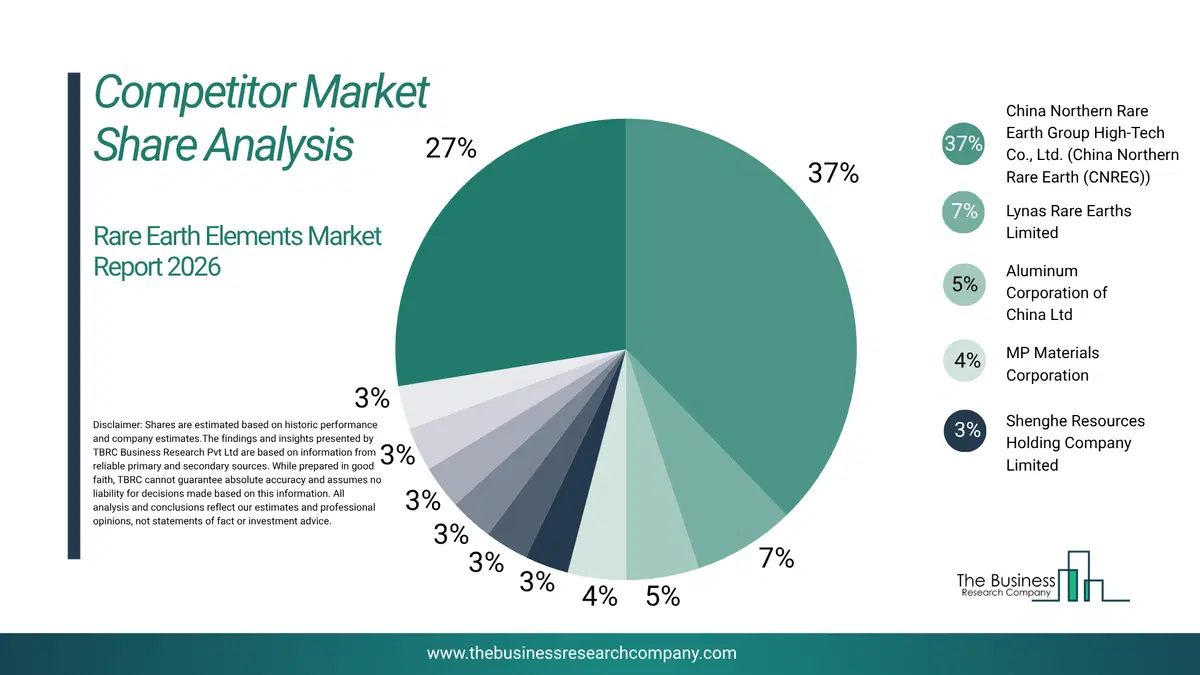
This chart is for illustrative purposes; the full report includes a detailed competitor analysis and comprehensive overview of the top 10 companies in the market.
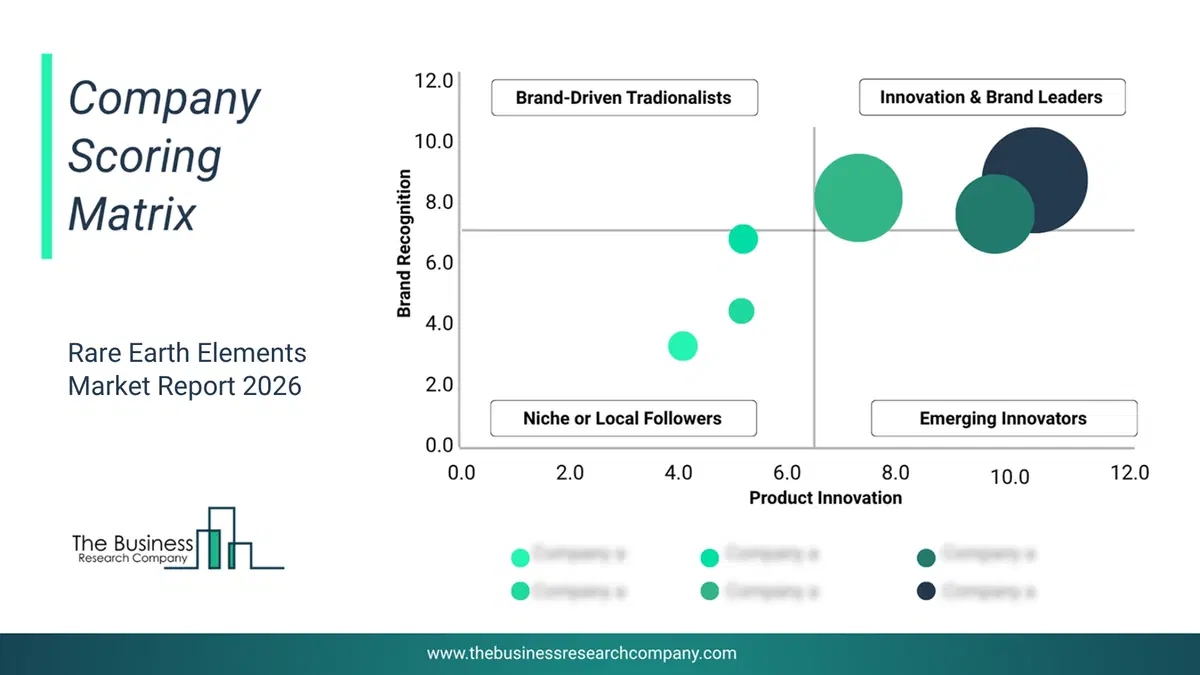
This chart maps companies by product innovation and brand strength, with bubble size indicating relative revenue, helping identify market leaders, challengers, and niche players. This is an illustrative chart; the full report provides a complete and accurate competitive analysis.
Global Rare Earth Elements Market Trends and Insights
Major companies operating in the rare earth elements market are focusing on developing innovative solutions, such as high-grade rare potential, to enhance resource efficiency, meet rising demand, and strengthen their competitive position in the global market. High-grade rare earth potential refers to the quality and economic viability of rare earth element (REE) deposits in a specific location, indicating that the deposit contains a relatively high concentration of valuable rare earth elements compared to typical deposits. For instance, in December 2025, MRG Metals Limited, an Australia-based mineral exploration and development company, unveiled promising high-grade laboratory results from auger drillholes at its Adriano Rare Earth Project in Mozambique. This project features significant alluvial deposits with district-scale potential, indicating a continuous rare earth system within the Adriano–Fotinho corridor. The high-grade REE project supports applications in permanent magnets, batteries, and electronics, while offering improved resource efficiency, enhanced extraction yield, and reduced environmental impact relative to conventional methods.What Are Latest Mergers And Acquisitions In The Rare Earth Elements Market?
In March 2025, Chemours Company, a US-based chemical company, partnered with Energy Fuels Inc. to boost U.S. rare earth element production and reduce reliance on imports. This collaboration aims to enhance the processing of rare earth elements and other essential minerals. By utilizing Energy Fuels' White Mesa Mill, the alliance seeks to reduce dependence on foreign sources. The partnership also aims to boost U.S. economic growth and security by creating jobs and strengthening mineral supply chains. Energy Fuels Inc. is a US-based company specializing in the extraction and processing of uranium, vanadium, and rare earth elements (REEs).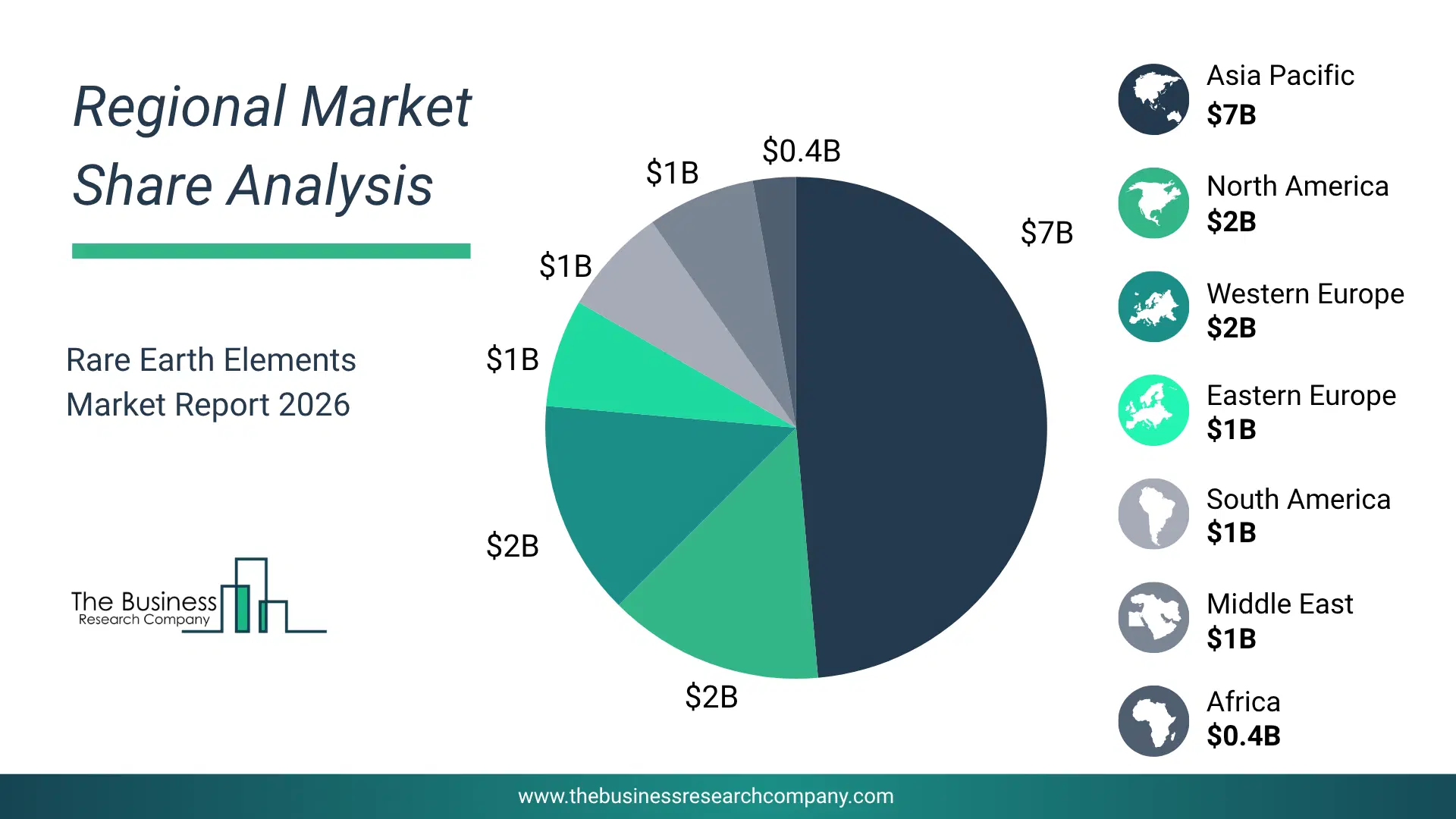
Regional Outlook
Asia-Pacific was the largest region in the rare earth elements market in 2025. North America is expected to be the fastest-growing region in the forecast period. The regions covered in the rare earth elements market are Asia-Pacific, South East Asia, Western Europe, Eastern Europe, North America, South America, Middle East, Africa. The countries covered in the rare earth elements market are Australia, Brazil, China, France, Germany, India, Indonesia, Japan, Taiwan, Russia, South Korea, UK, USA, Canada, Italy, Spain.What Defines the Rare Earth Elements Market?
The rare earth elements market consists of sales of glass additives, battery materials, and nuclear reactor control materials. Values in this market are ‘factory gate’ values, that is, the value of goods sold by the manufacturers or creators of the goods, whether to other entities (including downstream manufacturers, wholesalers, distributors, and retailers) or directly to end customers. The value of goods in this market includes related services sold by the creators of the goods.How is Market Value Defined and Measured?
The market value is defined as the revenues that enterprises gain from the sale of goods and/or services within the specified market and geography through sales, grants, or donations in terms of the currency (in USD unless otherwise specified). The revenues for a specified geography are consumption values that are revenues generated by organizations in the specified geography within the market, irrespective of where they are produced. It does not include revenues from resales along the supply chain, either further along the supply chain or as part of other products.
This chart presents market attractiveness based on a quantitative evaluation of growth, competition, strategic alignment, and risk, offering a clear view of opportunity areas for decision-making. This chart is for illustrative purposes; the full report contains the complete analysis.

This chart highlights the Total Addressable Market (TAM) by estimating the maximum revenue opportunity using an assumption-driven approach, supporting strategic planning and opportunity sizing across markets. The chart is illustrative; the full report provides a more comprehensive analysis.
What Key Data and Analysis Are Included in the Rare Earth Elements Market Report 2026?
The rare earth elements market research report is one of a series of new reports from The Business Research Company that provides market statistics, including Market Report 2026?global market size, regional shares, competitors with the market share, detailed market segments, market trends and opportunities, and any further data you may need to thrive in the rare earth elements Market Report 2026? The market research report delivers a complete perspective of everything you need, with an in-depth analysis of the current and future state of the Market Report 2026?Rare Earth Elements Market Report Forecast Analysis
| Report Attribute | Details |
|---|---|
| Market Size Value In 2026 | $6.86 billion |
| Revenue Forecast In 2030 | $10.44 billion |
| Growth Rate | CAGR of 11.1% from 2026 to 2030 |
| Base Year For Estimation | 2025 |
| Actual Estimates/Historical Data | 2020-2025 |
| Forecast Period | 2026 - 2030 |
| Market Representation | Revenue in USD Billion and CAGR from 2026 to 2030 |
| Segments Covered | Product, Application, End User |
| Regional Scope | Asia-Pacific, Western Europe, Eastern Europe, North America, South America, Middle East, Africa |
| Country Scope | The countries covered in the report are Australia, Brazil, China, France, Germany, India, ... |
| Key Companies Profiled | Solvay SA, Resonac Holdings Corporation, Sinosteel Corporation, Shenghe Resources Holding Company Limited, Lynas Rare Earths Limited, MP Materials Corporation, Treibacher Industrie AG, Neo Performance Materials, Energy Fuels Incorporated, Medallion Resources Limited, Vital Metals Limited, Rare Element Resources Limited, Ucore Rare Metals Incorporated, Appia Rare Earths & Uranium Corporation, REEtec AS, Australian Strategic Materials Limited, Arafura Rare Earths Ltd., Hastings Technology Metals, Pensana Public Limited Company |
| Customization Scope | Request for Customization |
| Pricing And Purchase Options | Explore Purchase Options |