

Retail Media Networks Market Report 2026
Global Outlook – By Type (Search Ads, Display Ads), By Cloud Deployment (Public Cloud, Private Cloud, Hybrid Cloud), By Application (Consumer Goods, Catering, Other Applications) – Market Size, Trends, Strategies, and Forecast to 2030
Retail Media Networks Market Overview
• Retail Media Networks market size has reached to $23.96 billion in 2025 • Expected to grow to $37.76 billion in 2030 at a compound annual growth rate (CAGR) of 9.5% • Growth Driver: Media And Entertainment Industry's Effect On Retail Media Networks Market • Market Trend: Redefining Retail Media Landscape With The Launch Of Commerce Max • North America was the largest region in 2025.Market Gains By 2030 – Top Opportunities By Segment
Market Gain identifies the most promising market opportunities by highlighting the segments or products expected to generate the highest incremental revenue growth over the next five years.
What Is Covered Under Retail Media Networks Market?
Retail media networks are digital platforms that enable businesses to purchase advertising space on a retailer's website, apps, and other digital properties, including in-store displays. Retailers can partner with media companies to expand their brand and improve their target audience by using detailed shopper data. The major types of retail media networks are search ads and display ads. Search advertising refers to a strategy that shows advertisements in search engine results whenever someone searches for the advertiser's services or products. They are deployed in three different clouds such as public cloud, private cloud and hybrid cloud for consumer goods, catering, and other applications.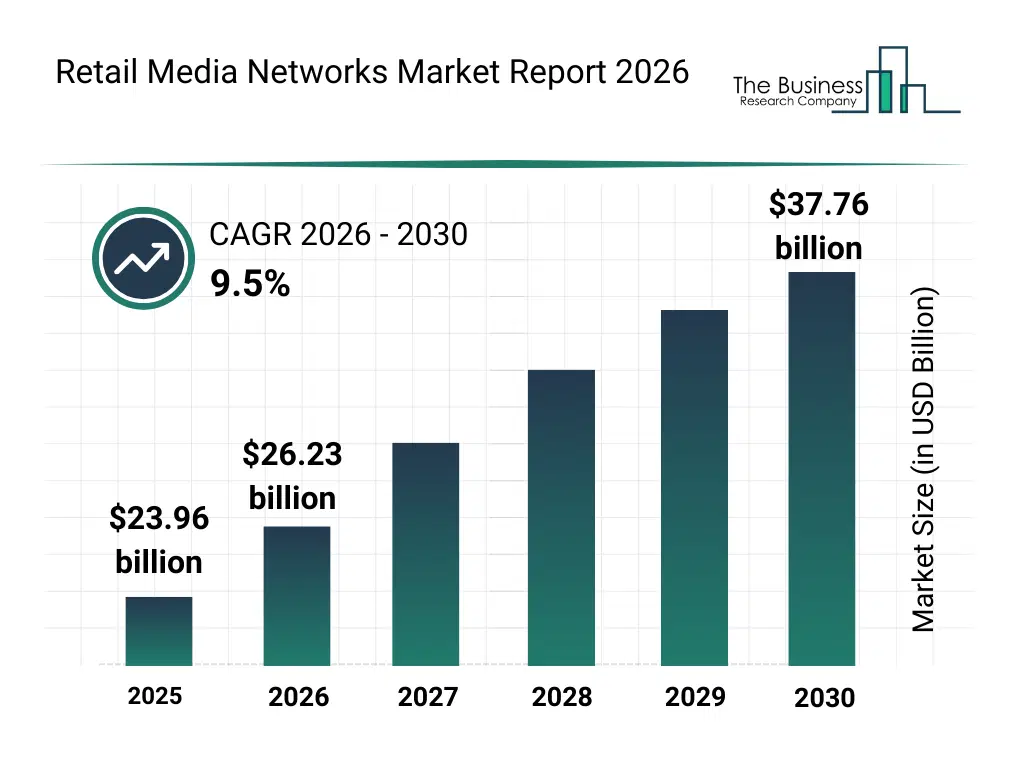
What Is The Retail Media Networks Market Size and Share 2026?
The retail media networks market size has grown strongly in recent years. It will grow from $23.96 billion in 2025 to $26.23 billion in 2026 at a compound annual growth rate (CAGR) of 9.5%. The growth in the historic period can be attributed to growth of e-commerce platforms, increasing digital ad spend, early adoption of loyalty programs, rising demand for targeted marketing, expansion of retail e-commerce websites.What Is The Retail Media Networks Market Growth Forecast?
The retail media networks market size is expected to see strong growth in the next few years. It will grow to $37.76 billion in 2030 at a compound annual growth rate (CAGR) of 9.5%. The growth in the forecast period can be attributed to advancements in ai-driven ad personalization, integration of omnichannel retail strategies, growth of mobile commerce, increasing investment in retail tech solutions, rising demand for data-driven marketing insights. Major trends in the forecast period include personalized advertising strategies, shopper data analytics optimization, omnichannel retail engagement, programmatic advertising adoption, retailer-brand partnership expansion.
Global Retail Media Networks Market Segmentation
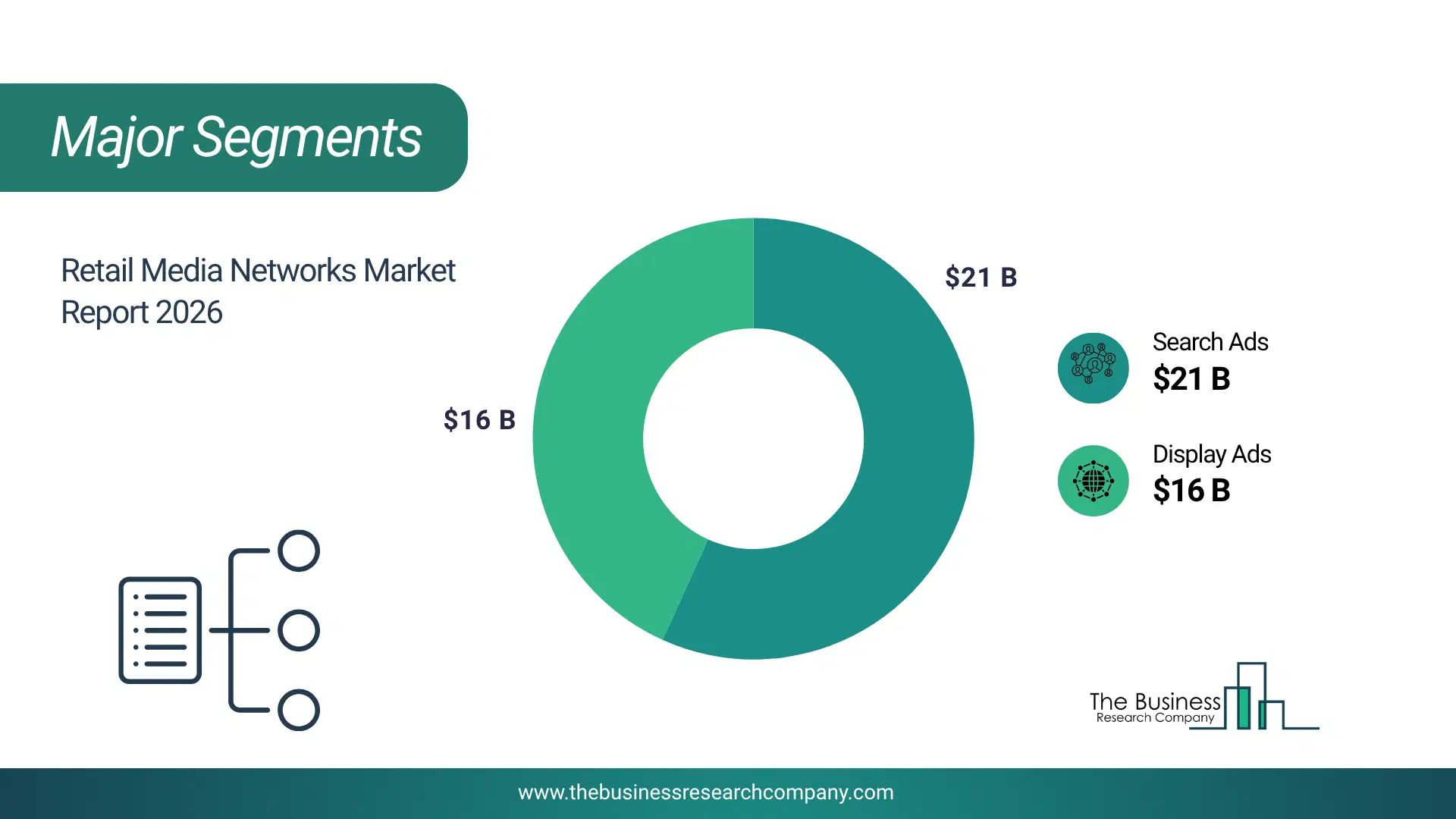
1) By Type: Search Ads, Display Ads 2) By Cloud Deployment: Public Cloud, Private Cloud, Hybrid Cloud 3) By Application: Consumer Goods, Catering, Other Applications Subsegments: 1) By Search Ads: Sponsored Product Listings, Keyword-Targeted Ads, In-Search Advertising 2) By Display Ads: Banner Ads On Retail Websites, Product Recommendation Ads, Retargeting Ads The top segments in the retail media networks market will be: • Search Ads will reach $21.42 Billion by 2030. • Display Ads will reach $16.07 Billion by 2030.What Is The Driver Of The Retail Media Networks Market?
The growing media and entertainment industry is expected to propel the growth of the retail media networks market going forward. The media and entertainment industry encompasses the creation, production, and distribution of diverse content, including audio, visual, and interactive media, to entertain, inform, and engage audiences through various platforms and channels. The media and entertainment industry uses retail media networks strategically to enhance brand visibility, target specific audience segments, and optimize advertising efforts by integrating promotional content seamlessly within retail environments. For instance, in January 2025, according to the British Association for Screen Entertainment (BASE), a UK-based voice for the home entertainment industry, in 2024, the total UK media and entertainment industry was valued at $40 billion (this includes cinema, games, music, pay‑TV/home entertainment and transactional media). Therefore, the growing media and entertainment industry is expected to drive growth of the retail media network industry.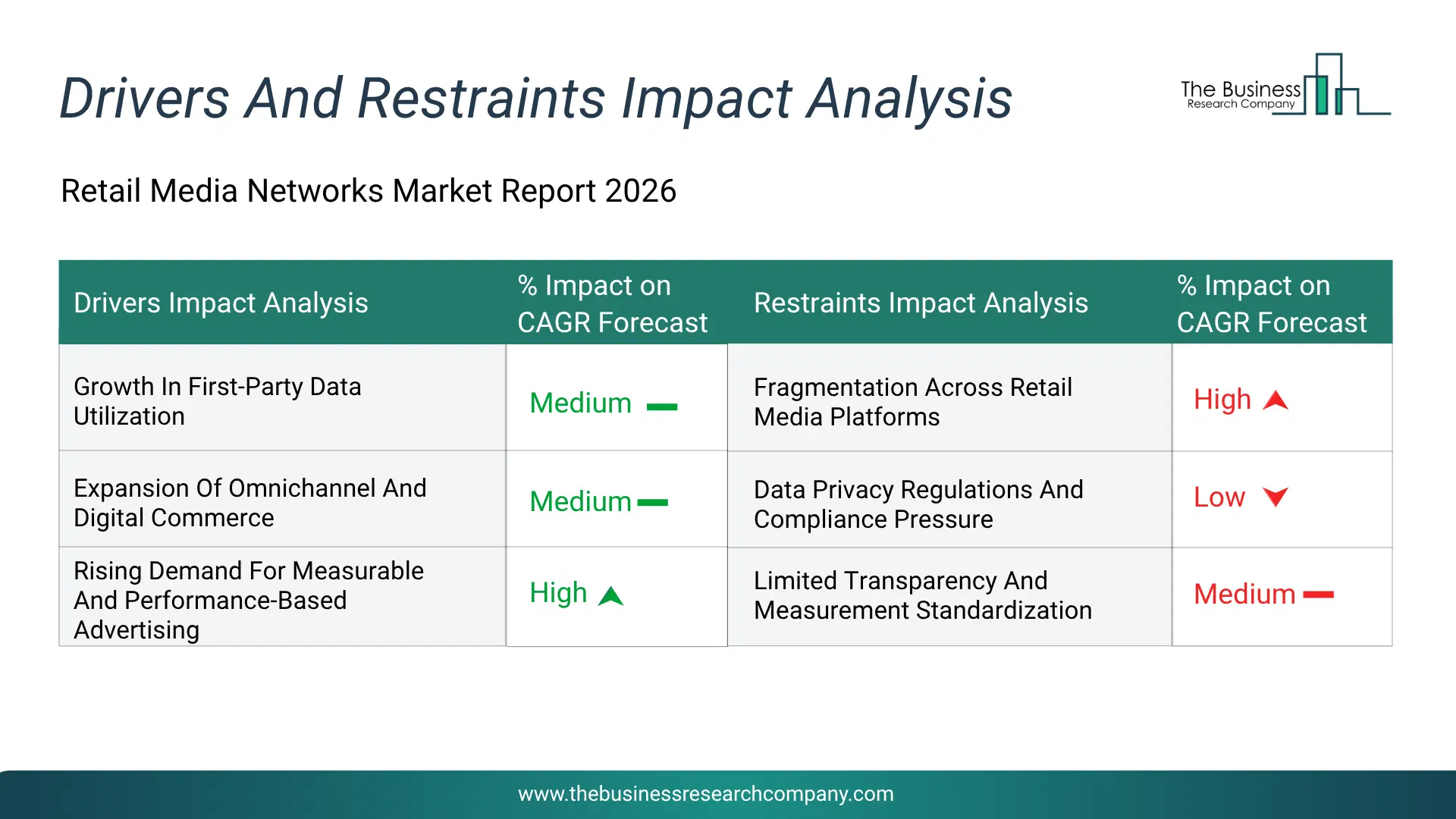
Infographic Chart Showing Key Market Drivers Analysis And Restraints For Retail Media Networks Market
The chart presents an impact analysis of key drivers and restraints, quantifying their relative influence on the market's growth rate and helping assess the balance between growth enablers and limiting factors. This chart offers a high-level perspective; the full report contains more detailed insights.
How Will The Drivers Impact Growth In The Global Retail Media Networks Market?
• Growth In First-Party Data Utilization (Medium) – During the forecast period, the growth in first-party data utilization is expected to become a key growth driver for the retail media networks market by 2030. Retailers are increasingly leveraging their owned customer data, including purchase history, browsing behavior, and loyalty program insights, to offer highly targeted advertising solutions to brands. With the gradual decline of third-party cookies and stricter data privacy regulations, advertisers are shifting toward platforms that provide reliable, consent-based audience data. This enables more accurate audience segmentation and personalized campaign execution, improving conversion rates and return on ad spend. Retailers are therefore strengthening their data infrastructure and analytics capabilities to maximize monetization opportunities. • Expansion Of Omnichannel And Digital Commerce (Medium) – During the forecast period, the expansion of omnichannel and digital commerce is expected to emerge as a major factor driving the expansion of the retail media networks market by 2030. The seamless integration of online and offline retail channels is enabling advertisers to engage consumers across multiple touchpoints, including websites, mobile apps, in-store digital screens, and connected devices. Retailers are developing unified platforms that connect physical store data with digital interactions, allowing brands to execute cohesive advertising campaigns across the entire customer journey. The increasing adoption of click-and-collect services, digital payments, and hybrid shopping models is further strengthening this ecosystem. • Rising Demand For Measurable And Performance-Based Advertising (High) – During the forecast period, the rising demand for measurable and performance-based advertising is expected to act as a key growth catalyst for the retail media networks market by 2030. Advertisers are prioritizing platforms that provide transparent metrics, closed-loop attribution, and direct linkage between ad spend and sales outcomes. Retail media networks offer detailed insights into campaign effectiveness, including impressions, conversions, and return on investment, enabling brands to optimize marketing strategies in real time. This performance-driven approach is encouraging the reallocation of advertising budgets from traditional channels to retail-owned media platforms. Additionally, the ability to track end-to-end consumer journeys enhances accountability and efficiency in ad spending.How Will The Restraints Impact Growth In The Global Retail Media Networks Market?
• Fragmentation Across Retail Media Platforms (Medium) – During the forecast period, fragmentation across retail media platforms is significantly restricting the growth of the retail media networks market. The proliferation of multiple retailer-owned advertising ecosystems is creating inconsistencies in campaign execution, increasing operational inefficiencies, and forcing advertisers to manage complex multi-platform strategies. • Data Privacy Regulations And Compliance Pressure (Medium) – During the forecast period, data privacy regulations and compliance pressure are significantly restricting the growth of the retail media networks market. Stringent global data protection laws, consent requirements, and evolving regulatory frameworks are limiting data accessibility, increasing compliance costs, and restricting targeted advertising capabilities. • Limited Transparency And Measurement Standardization (High) – During the forecast period, limited transparency and measurement standardization are significantly restricting the growth of the retail media networks market. The absence of unified metrics, inconsistent reporting standards, and lack of cross-platform attribution models are reducing advertiser confidence and limiting scalable investment in retail media ecosystems.Key Players In The Global Retail Media Networks Market
Major companies operating in the retail media networks market are Walmart Inc., Amazon.com Inc., Google LLC, Home Depot Product Authority LLC, The Kroger Co, Verizon Communications Inc., Alibaba Group Holding Limited, Walgreens Boots Alliance Inc., Target Brands Inc., Lowe's Companies Inc., Carrefour SA, Tesco PLC, Best Buy Co Inc., Inter IKEA Systems B.V., Macy's Inc., Wakefern Food Corp, METRO Inc., Wayfair LLC, Ulta Beauty Inc., eBay Inc., Petco Animal Supplies Inc., Maplebear Inc., Criteo Corporation, dunnhumby Ltd, CitrusAd Pty Ltd, Amobee Inc.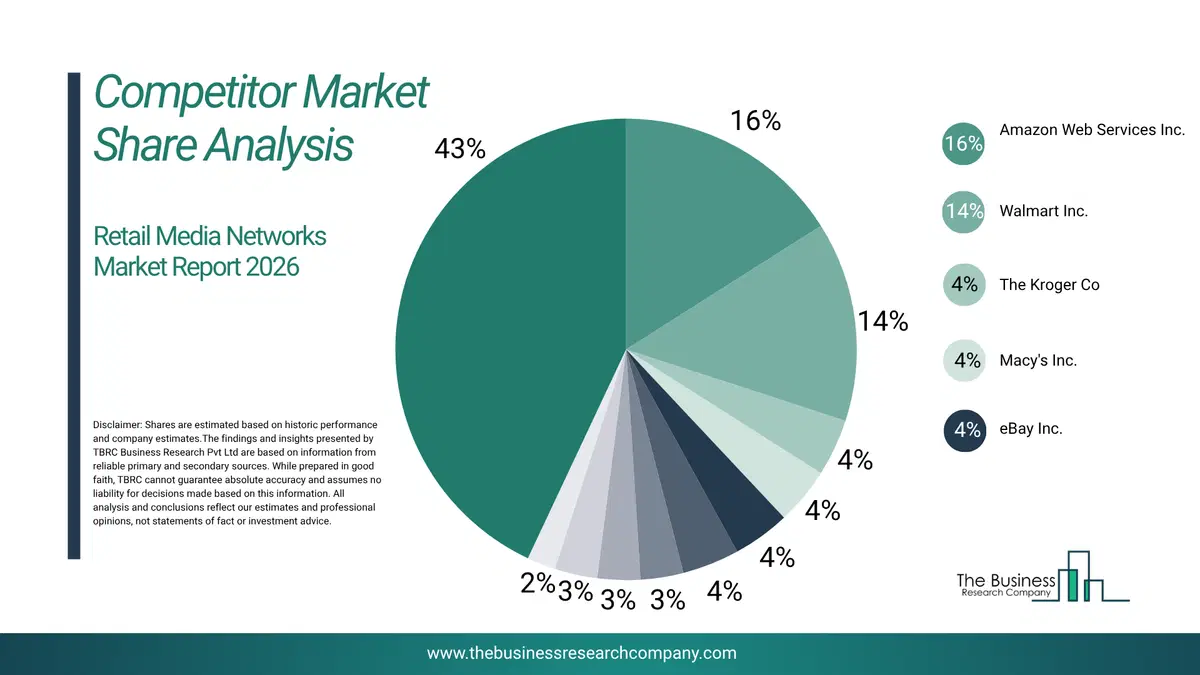
This chart is for illustrative purposes; the full report includes a detailed competitor analysis and comprehensive overview of the top 10 companies in the market.
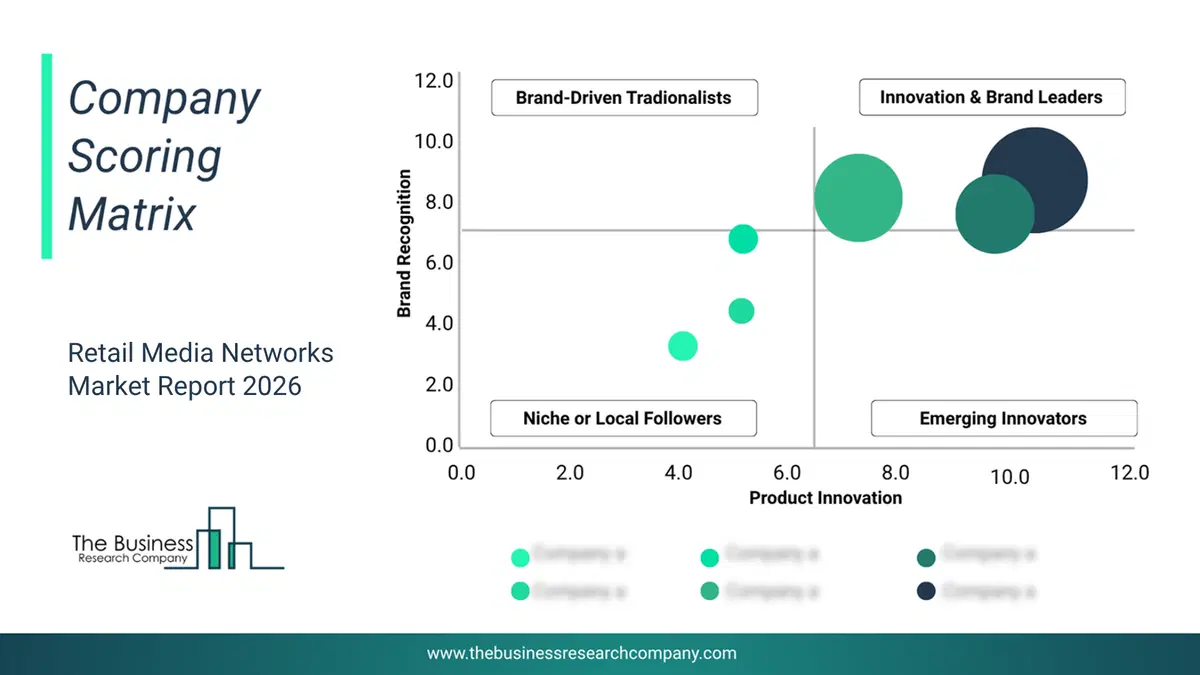
This chart maps companies by product innovation and brand strength, with bubble size indicating relative revenue, helping identify market leaders, challengers, and niche players. This is an illustrative chart; the full report provides a complete and accurate competitive analysis.
Global Retail Media Networks Market Trends and Insights
Major companies operating in the retail media network market are increasingly focusing on developing advanced, integrated advertising technologies to strengthen their competitive position and address market fragmentation. Integrated advertising technologies refer to unified digital platforms that combine data, ad buying, targeting, measurement, and optimization tools to manage and deliver advertising campaigns seamlessly across multiple channels and touchpoints. For instance, in September 2023, Criteo S.A., a France-based advertisement company, launched Commerce Max DSP, providing brands and agencies with a single point of entry to retail media inventory onsite and across multiple retailers, and offering a suite of retail media solutions designed to drive commerce outcomes across the open internet. The platform helps address fragmentation in the retail media ecosystem by enabling streamlined campaign planning, execution, and measurement across diverse retail environments. By leveraging data-driven insights and automation, Commerce Max DSP enhances targeting efficiency and improves return on ad spend for advertisers.What Are Latest Mergers And Acquisitions In The Retail Media Networks Market?
In March 2023, Criteo S.A., a France-based provider of commerce media and retail advertising technology solutions, acquired Brandcrush for an undisclosed amount. Through this acquisition, Criteo aimed to accelerate its omnichannel retail media capabilities by integrating Brandcrush’s platform for buying and selling retail media including offline media channels into its commerce media ecosystem, enhancing its ability to offer comprehensive retail advertising solutions. Brandcrush Pty Ltd is a Australia-based provider of omnichannel retail media technology enabling advertisers and retailers to transact media across both online and offline channels.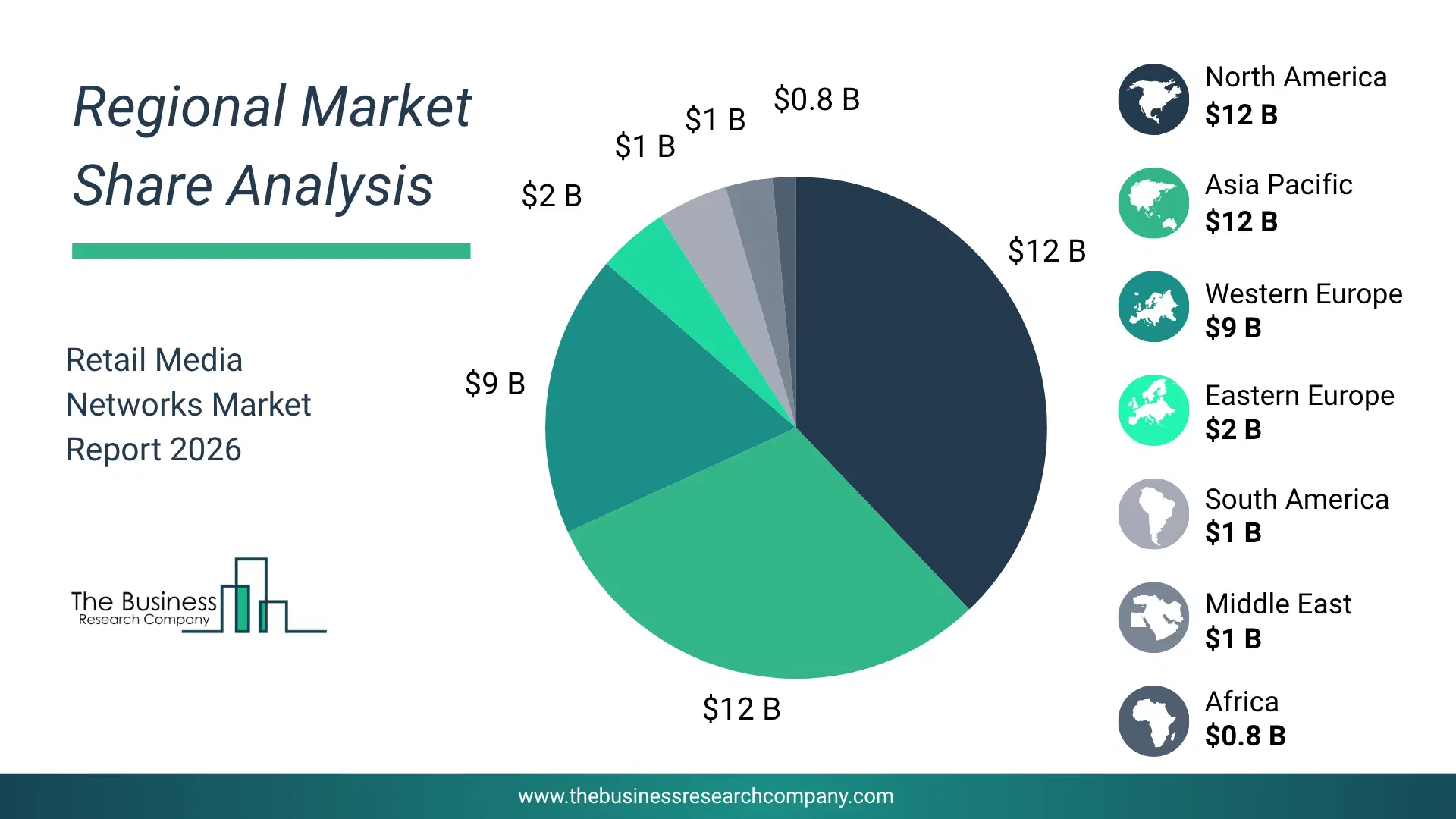
Regional Outlook
North America was the largest region in the retail media networks market in 2025. The regions covered in this market report are Asia-Pacific, South East Asia, Western Europe, Eastern Europe, North America, South America, Middle East, Africa. The countries covered in this market report are Australia, Brazil, China, France, Germany, India, Indonesia, Japan, Taiwan, Russia, South Korea, UK, USA, Canada, Italy, Spain.What Defines the Retail Media Networks Market?
The retail media networks market includes revenues earned by entities by providing on-site media, off-site media, digital incentives, chat-based media, influencer marketing, and in-store media. The market value includes the value of related goods sold by the service provider or included within the service offering. Only goods and services traded between entities or sold to end consumers are included.How is Market Value Defined and Measured?
The market value is defined as the revenues that enterprises gain from the sale of goods and/or services within the specified market and geography through sales, grants, or donations in terms of the currency (in USD unless otherwise specified). The revenues for a specified geography are consumption values that are revenues generated by organizations in the specified geography within the market, irrespective of where they are produced. It does not include revenues from resales along the supply chain, either further along the supply chain or as part of other products.
This chart presents market attractiveness based on a quantitative evaluation of growth, competition, strategic alignment, and risk, offering a clear view of opportunity areas for decision-making. This chart is for illustrative purposes; the full report contains the complete analysis.

This chart highlights the Total Addressable Market (TAM) by estimating the maximum revenue opportunity using an assumption-driven approach, supporting strategic planning and opportunity sizing across markets. The chart is illustrative; the full report provides a more comprehensive analysis.
What Key Data and Analysis Are Included in the Retail Media Networks Market Report 2026?
The retail media networks market research report is one of a series of new reports from The Business Research Company that provides market statistics, including industry global market size, regional shares, competitors with the market share, detailed market segments, market trends and opportunities, and any further data you may need to thrive in the retail media networks industry. The market research report delivers a complete perspective of everything you need, with an in-depth analysis of the current and future state of the industry.Retail Media Networks Market Report Forecast Analysis
| Report Attribute | Details |
|---|---|
| Market Size Value In 2026 | $26.23 billion |
| Revenue Forecast In 2030 | $37.76 billion |
| Growth Rate | CAGR of 9.5% from 2026 to 2030 |
| Base Year For Estimation | 2025 |
| Actual Estimates/Historical Data | 2020-2025 |
| Forecast Period | 2026 - 2030 |
| Market Representation | Revenue in USD Billion and CAGR from 2026 to 2030 |
| Segments Covered | Type, Cloud Deployment, Application |
| Regional Scope | Asia-Pacific, Western Europe, Eastern Europe, North America, South America, Middle East, Africa |
| Country Scope | The countries covered in the report are Australia, Brazil, China, France, Germany, India, Indonesia, Japan, Taiwan, Russia, South Korea, UK, USA, Canada, Italy, Spain. |
| Key Companies Profiled | Walmart Inc., Amazon.com Inc., Google LLC, Home Depot Product Authority LLC, The Kroger Co, Verizon Communications Inc., Alibaba Group Holding Limited, Walgreens Boots Alliance Inc., Target Brands Inc., Lowe's Companies Inc., Carrefour SA, Tesco PLC, Best Buy Co Inc., Inter IKEA Systems B.V., Macy's Inc., Wakefern Food Corp, METRO Inc., Wayfair LLC, Ulta Beauty Inc., eBay Inc., Petco Animal Supplies Inc., Maplebear Inc., Criteo Corporation, dunnhumby Ltd, CitrusAd Pty Ltd, Amobee Inc. |
| Customization Scope | Request for Customization |
| Pricing And Purchase Options | Explore Purchase Options |