
Serum Free Media Market Report 2026
Global Outlook – By Media Type (Chinese Hamster Ovary (CHO) Cell Media, Protein Expression Media, Immunology Media, Insect Cell Media, Hybridoma Media, Stem Cell Media, Chemically Defined Media), By Application (Biopharmaceutical Production, Tissue Engineering And Regenerative Medicine), By End-User (Biopharmaceutical Companies, Clinical Research Organizations, Academic Research Centers, Other End-Users) - Market Size, Trends, Strategies, and Forecast to 2030
Serum Free Media Market Overview
• Serum Free Media market size has reached to $1.76 billion in 2025 • Expected to grow to $3.17 billion in 2030 at a compound annual growth rate (CAGR) of 12.5% • Growth Driver: Serum-Free Media’s Vital Role In Chronic Disease Research • Market Trend: Launch Of Serum-Free Media For CAR T-Cell Manufacturing • North America was the largest region in 2025 and Asia-Pacific is the fastest growing region.What Is Covered Under Serum Free Media Market?
Serum-free media is a type of cell culture media that allows cells to be cultured without animal sera. Serum-free media is used in cell culture to reduce the risk of contamination and to provide better control over the physiological responsiveness of the cells. The main types of serum-free media are Chinese hamster ovary (CHO) cell media, protein expression media, immunology media, insect cell media, hybridoma media, stem cell media, and chemically defined media. Chinese hamster ovary (CHO) cell media refers to a chemically defined, protein-free, and serum-free medium that is best for Chinese hamster ovary (CHO) cell proliferation and the expression of recombinant proteins in suspension culture. It is used for various applications including biopharmaceutical production, tissue engineering, and regenerative medicine by biopharmaceutical companies, clinical research organizations, academic research centers, and other end-users.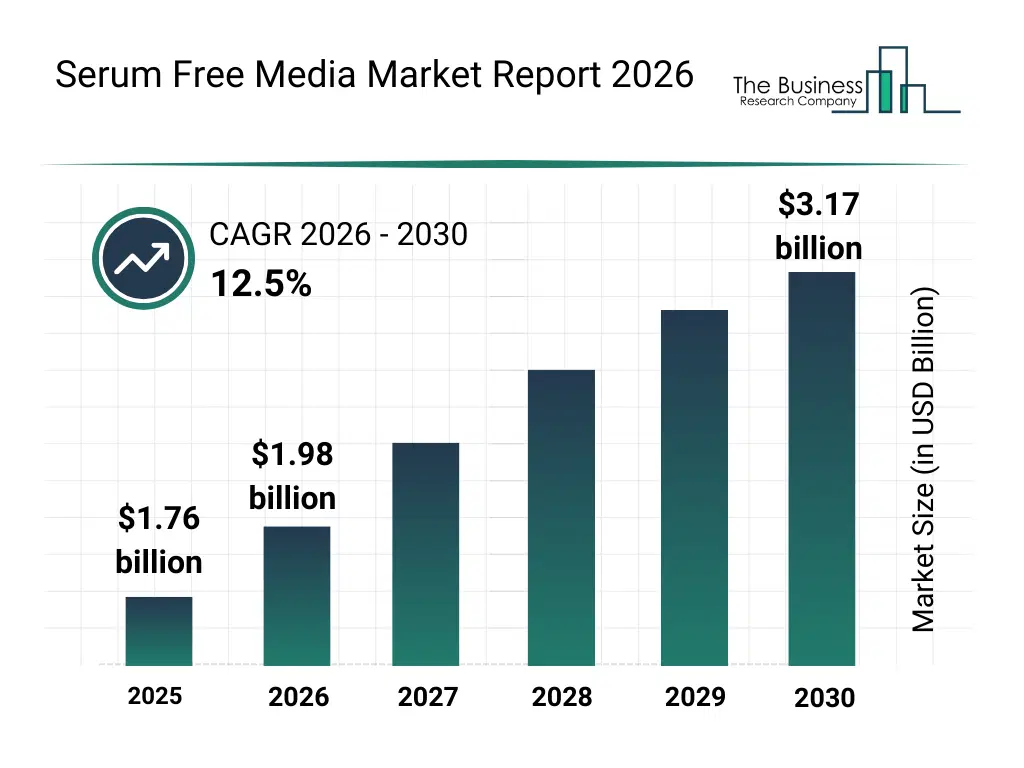
What Is The Serum Free Media Market Size and Share 2026?
The serum free media market size has grown rapidly in recent years. It will grow from $1.76 billion in 2025 to $1.98 billion in 2026 at a compound annual growth rate (CAGR) of 12.3%. The growth in the historic period can be attributed to adoption in biopharma production, regulatory push for animal-free components, improved cell growth formulations, increasing biologics manufacturing, technological advances in media development.What Is The Serum Free Media Market Growth Forecast?
The serum free media market size is expected to see rapid growth in the next few years. It will grow to $3.17 billion in 2030 at a compound annual growth rate (CAGR) of 12.5%. The growth in the forecast period can be attributed to expansion in cell & gene therapy, demand for scalable serum-free media, development of optimized formulations, integration with automated bioprocessing, sustainability-focused media solutions. Major trends in the forecast period include animal component-free media, customizable media formulations, optimized growth media for stem cells, integration with bioreactors, single-use bioprocessing media.
Global Serum Free Media Market Segmentation
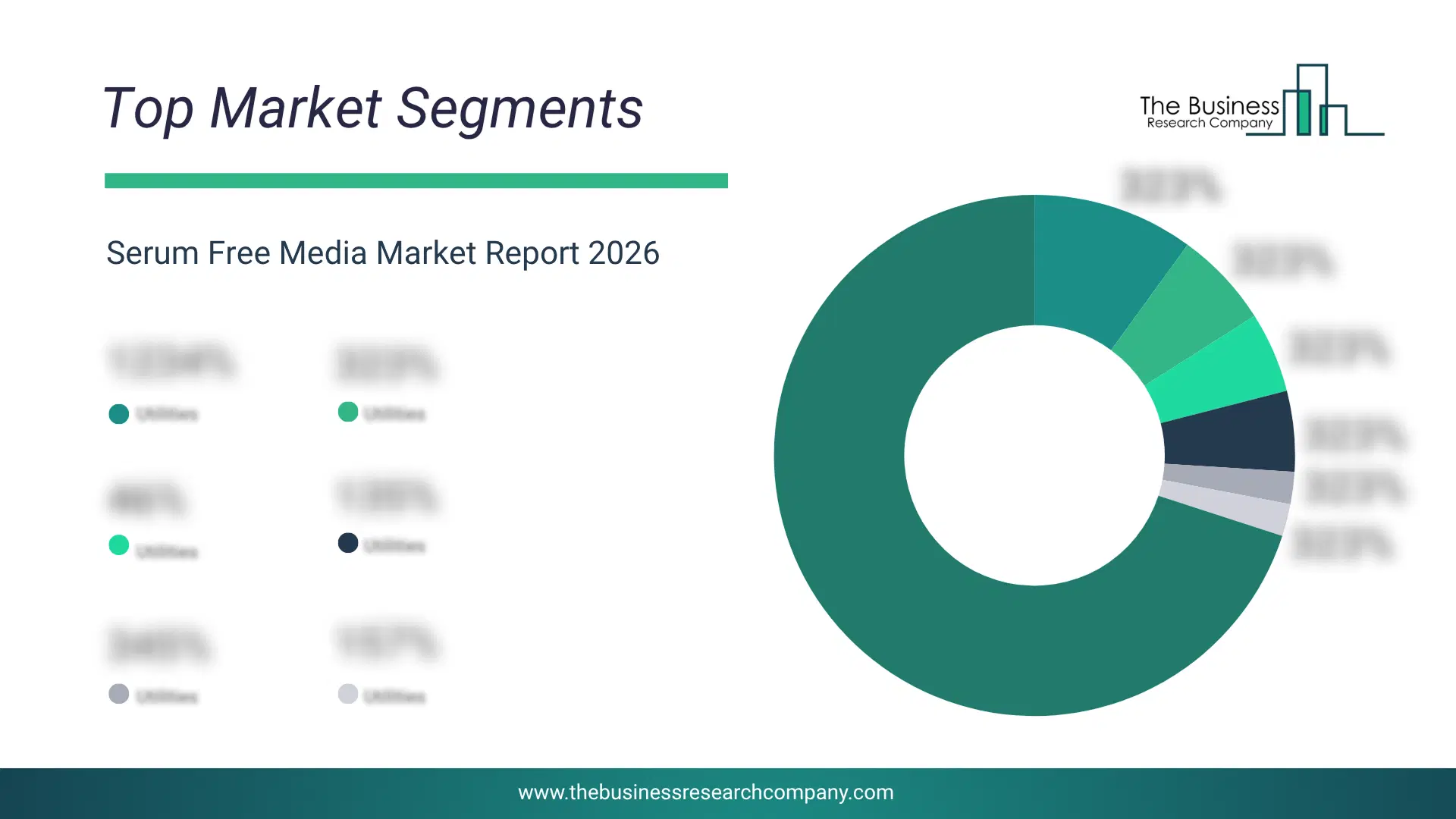
1) By Media Type: Chinese Hamster Ovary (CHO) Cell Media, Protein Expression Media, Immunology Media, Insect Cell Media, Hybridoma Media, Stem Cell Media, Chemically Defined Media 2) By Application: Biopharmaceutical Production, Tissue Engineering And Regenerative Medicine 3) By End-User: Biopharmaceutical Companies, Clinical Research Organizations, Academic Research Centers, Other End-Users Subsegments: 1) By Chinese Hamster Ovary (CHO) Cell Media: CHO-S Media, CHO-DG44 Media 2) By Protein Expression Media: E. coli Expression Media, Yeast Expression Media 3) By Immunology Media: T Cell Media, B Cell Media 4) By Insect Cell Media: Sf9 Media, Sf21 Media 5) By Hybridoma Media: Hybridoma Growth Media, Selection Media 6) By Stem Cell Media: Embryonic Stem Cell Media, Adult Stem Cell Media 7) By Chemically Defined Media: Custom Formulations, Pre-Defined FormulationsWhat Is The Driver Of The Serum Free Media Market?
The increasing prevalence of chronic diseases is expected to propel the growth of the serum-free media market going forward. Chronic diseases last for a year or longer and necessitate continuing medical care, restricting everyday activities, or both. Serum-free media allows researchers to optimize the media for the specific cell type used and to ensure that the cells grow under optimal conditions. Further, Researchers use serum-free media to produce cell types or perform specific applications without serum, which helps develop new therapies and treatments for chronic diseases. For instance, in June 2023, the Institute for Health Metrics and Evaluation, a US-based public health research institute, reported that over half a billion people globally were living with diabetes. This number is expected to more than double, reaching 1.3 billion people by 2050. Therefore, the increasing prevalence of chronic diseases is driving the growth of the serum-free media market.Key Players In The Global Serum Free Media Market
Major companies operating in the serum free media market are Thermo Fisher Scientific Inc., Merck KGaA, FUJIFILM Irvine Scientific Inc., GE HealthCare Technologies Inc., Corning Inc., Lonza Group AG, Cytiva, Sigma-Aldrich, Bio-Techne Corporation, Serumwerk Bernburg AG, STEMCELL Technologies Inc., MP Biomedicals LLC, InVitria Inc., Takara Bio Inc., HiMedia Laboratories Pvt. Ltd., PAA Laboratories GmbH, PromoCell GmbH, CellGenix GmbH, Biochrom AG, Biological Industries, Pan Biotech GmbH, Biowest SAS, Bovogen Biologicals Pty Ltd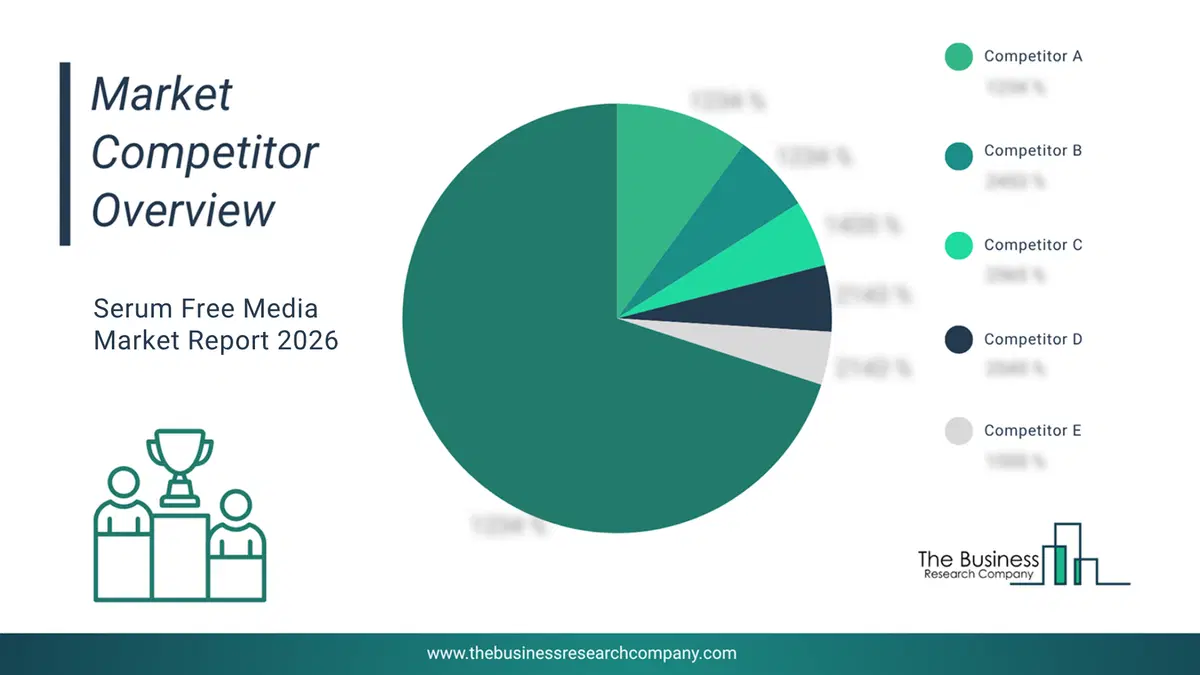
This chart is for illustrative purposes; the full report includes a detailed competitor analysis and comprehensive overview of the top 10 companies in the market.
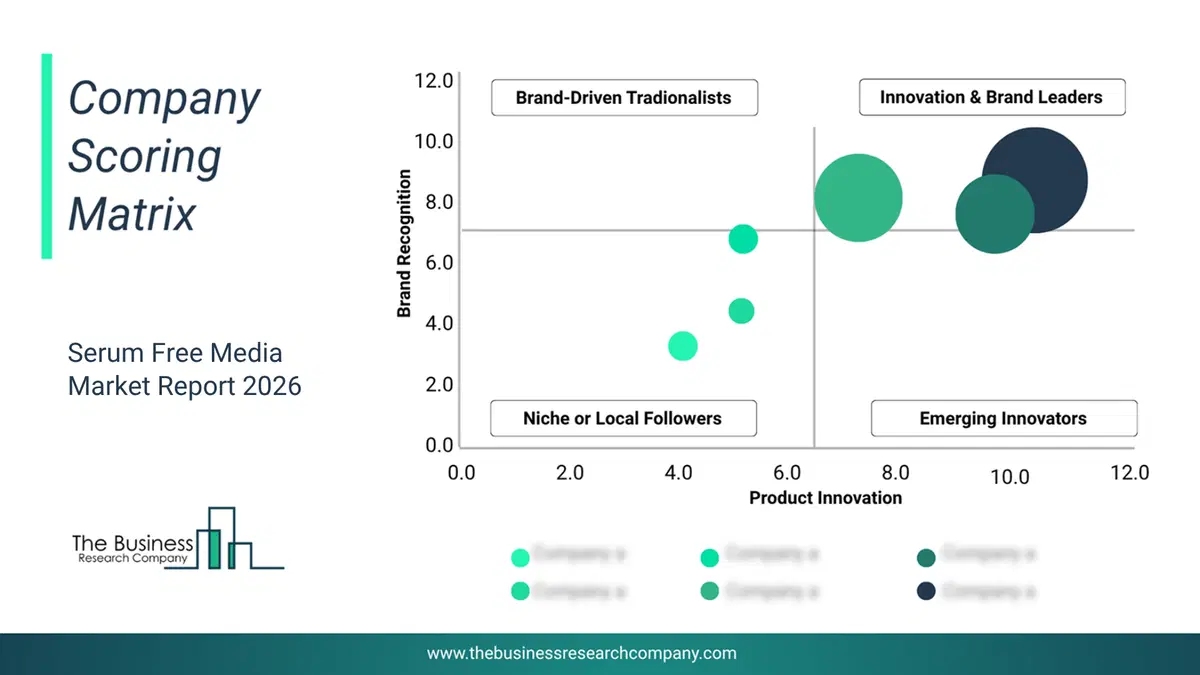
This chart maps companies by product innovation and brand strength, with bubble size indicating relative revenue, helping identify market leaders, challengers, and niche players. This is an illustrative chart; the full report provides a complete and accurate competitive analysis.
Global Serum Free Media Market Trends and Insights
Major companies operating in the serum-free media market are focusing on developing innovative products, such as advanced CAR T-cell manufacturing solutions, to support cell therapy and cancer treatment advancements. CAR T-cell manufacturing refers to the process of engineering a patient's own T-cells (a type of immune cell) to express a chimeric antigen receptor (CAR) that targets specific cancer cells. For instance, in May 2023, Lonza, a Switzerland-based pharmaceutical company, launched TheraPEAK T-VIVO Cell Culture Medium. TheraPEAK T-VIVO Cell Culture Medium is a specialized serum-free medium designed for the growth and maintenance of various types of immune cells, particularly CAR T-cell manufacturing. This medium is characterized by its chemically defined formulation that is serum-free and non-animal origin (NAO), which significantly reduces variability and improves consistency in T-cell culture processes.What Are Latest Mergers And Acquisitions In The Serum Free Media Market?
In November 2025, Multus Bio, a UK-based provider of advanced cell culture media and bioprocessing ingredients, partnered with Appleton Woods to expand its presence in the UK life sciences market by offering a new range of advanced serum-free media formulations and ingredients, strengthening its product portfolio and customer reach. Appleton Woods is a UK-based life sciences company that specializes in providing high-quality laboratory reagents, media, and consumables to research and bioprocessing organizations.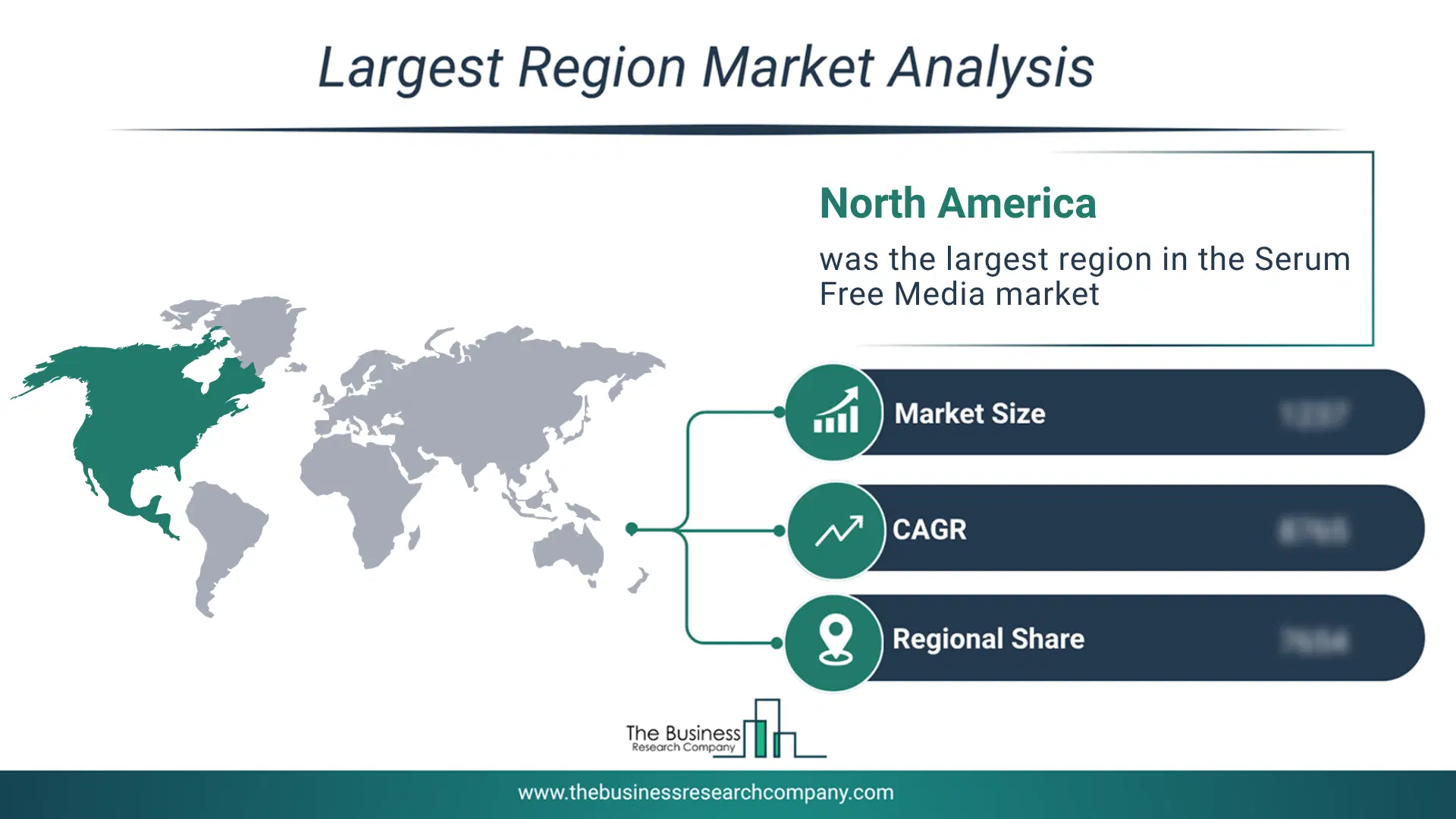
Regional Outlook
North America was the largest region in the serum-free media market in 2025. Asia-Pacific is expected to be the fastest-growing region in the forecast period. The regions covered in this market report are Asia-Pacific, South East Asia, Western Europe, Eastern Europe, North America, South America, Middle East, Africa. The countries covered in this market report are Australia, Brazil, China, France, Germany, India, Indonesia, Japan, Taiwan, Russia, South Korea, UK, USA, Canada, Italy, Spain.What Defines the Serum Free Media Market?
The serum-free media market consists of sales of xeno-free, protein-free, and benchstable media. Values in this market are ‘factory gate’ values, that is the value of goods sold by the manufacturers or creators of the goods, whether to other entities (including downstream manufacturers, wholesalers, distributors and retailers) or directly to end customers. The value of goods in this market includes related services sold by the creators of the goods.How is Market Value Defined and Measured?
The market value is defined as the revenues that enterprises gain from the sale of goods and/or services within the specified market and geography through sales, grants, or donations in terms of the currency (in USD unless otherwise specified). The revenues for a specified geography are consumption values that are revenues generated by organizations in the specified geography within the market, irrespective of where they are produced. It does not include revenues from resales along the supply chain, either further along the supply chain or as part of other products.
This chart presents market attractiveness based on a quantitative evaluation of growth, competition, strategic alignment, and risk, offering a clear view of opportunity areas for decision-making. This chart is for illustrative purposes; the full report contains the complete analysis.

This chart highlights the Total Addressable Market (TAM) by estimating the maximum revenue opportunity using an assumption-driven approach, supporting strategic planning and opportunity sizing across markets. The chart is illustrative; the full report provides a more comprehensive analysis.
What Key Data and Analysis Are Included in the Serum Free Media Market Report 2026?
The serum free media market research report is one of a series of new reports from The Business Research Company that provides market statistics, including industry global market size, regional shares, competitors with the market share, detailed market segments, market trends and opportunities, and any further data you may need to thrive in the serum free media industry. The market research report delivers a complete perspective of everything you need, with an in-depth analysis of the current and future state of the industry.Serum Free Media Market Report Forecast Analysis
| Report Attribute | Details |
|---|---|
| Market Size Value In 2026 | $1.98 billion |
| Revenue Forecast In 2030 | $3.17 billion |
| Growth Rate | CAGR of 12.5% from 2026 to 2030 |
| Base Year For Estimation | 2025 |
| Actual Estimates/Historical Data | 2020-2025 |
| Forecast Period | 2026 - 2030 |
| Market Representation | Revenue in USD Billion and CAGR from 2026 to 2030 |
| Segments Covered | Media Type, Application, End-User |
| Regional Scope | Asia-Pacific, Western Europe, Eastern Europe, North America, South America, Middle East, Africa |
| Country Scope | The countries covered in the report are Australia, Brazil, China, France, Germany, India, Indonesia, Japan, Taiwan, Russia, South Korea, UK, USA, Canada, Italy, Spain |
| Key Companies Profiled | Thermo Fisher Scientific Inc., Merck KGaA, FUJIFILM Irvine Scientific Inc., GE HealthCare Technologies Inc., Corning Inc., Lonza Group AG, Cytiva, Sigma-Aldrich, Bio-Techne Corporation, Serumwerk Bernburg AG, STEMCELL Technologies Inc., MP Biomedicals LLC, InVitria Inc., Takara Bio Inc., HiMedia Laboratories Pvt. Ltd., PAA Laboratories GmbH, PromoCell GmbH, CellGenix GmbH, Biochrom AG, Biological Industries, Pan Biotech GmbH, Biowest SAS, Bovogen Biologicals Pty Ltd |
| Customization Scope | Request for Customization |
| Pricing And Purchase Options | Explore Purchase Options |