
Smart Luggage Market Report 2026
Global Outlook – By Product Type (Duffel Bags, Travel Backpacks, Other Product Types), By Technology (Sensors, SIM Cards, USB Charging, Connectivity Technology), By Material (Nylon, Leather, Canvas, Plastic, Other materials), By Distribution Channel (Specialty Stores, Online Stores, Brand Stores, Other Distribution Channels) – Market Size, Trends, Strategies, and Forecast to 2030
Smart Luggage Market Overview
• Smart Luggage market size has reached to $2.5 billion in 2025 • Expected to grow to $5.79 billion in 2030 at a compound annual growth rate (CAGR) of 18.2% • Growth Driver: Rise In Air Travel Drives Market Growth Due To Increasing Demand For Security Convenience And Connectivity • Market Trend: The Rise Of Wallet Trackers In The Market • North America was the largest region in 2025 and Asia-Pacific is the fastest growing region.Market Gains By 2030 – Top Opportunities By Segment
Market Gain identifies the most promising market opportunities by highlighting the segments or products expected to generate the highest incremental revenue growth over the next five years.
What Is Covered Under Smart Luggage Market?
Smart luggage refers to travel bags and suitcases equipped with advanced technology, such as GPS tracking, built-in charging ports, and biometric locks. These features aim to enhance convenience, security, and efficiency for travelers, which makes it easy to track luggage locations, charge electronic devices on the go, and improve luggage safety with remote locking mechanisms. Smart luggage is designed to simplify travel by combining traditional functionality with modern tech features. The main smart luggage products are duffel bags, strollers, travel backpacks, and others. A duffel bag is a large, cylindrical bag typically made of cloth or other flexible materials, often used for travel or sports. It uses various technologies such as sensors, sim cards, usb charging and connectivity technology and is made using nylon, leather, canvas, plastic, and others. It is distributed through specialty stores, online stores, brand stores, and others.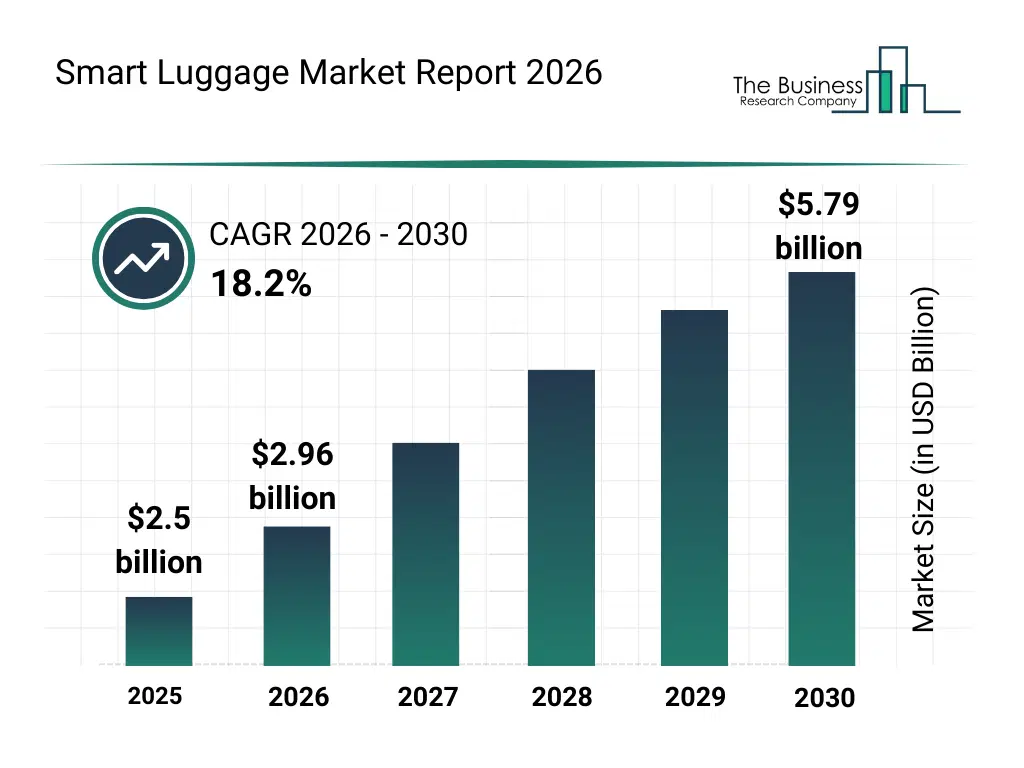
What Is The Smart Luggage Market Size and Share 2026?
The smart luggage market size has grown rapidly in recent years. It will grow from $2.5 billion in 2025 to $2.96 billion in 2026 at a compound annual growth rate (CAGR) of 18.6%. The growth in the historic period can be attributed to growth in global air travel volumes, increasing adoption of connected consumer electronics, rising demand for premium travel accessories, expansion of e-commerce distribution channels, growing consumer awareness of smart travel solutions.What Is The Smart Luggage Market Growth Forecast?
The smart luggage market size is expected to see rapid growth in the next few years. It will grow to $5.79 billion in 2030 at a compound annual growth rate (CAGR) of 18.2%. The growth in the forecast period can be attributed to increasing penetration of iot-enabled travel products, rising demand for contactless and secure travel solutions, expansion of smart mobility ecosystems, growing focus on sustainable luggage materials, increasing integration of ai-driven tracking and security features. Major trends in the forecast period include increasing integration of gps-based luggage tracking, rising adoption of usb and wireless charging features, growing use of biometric and smart locking systems, expansion of lightweight and durable smart materials, enhanced focus on travel convenience and security.
Global Smart Luggage Market Segmentation
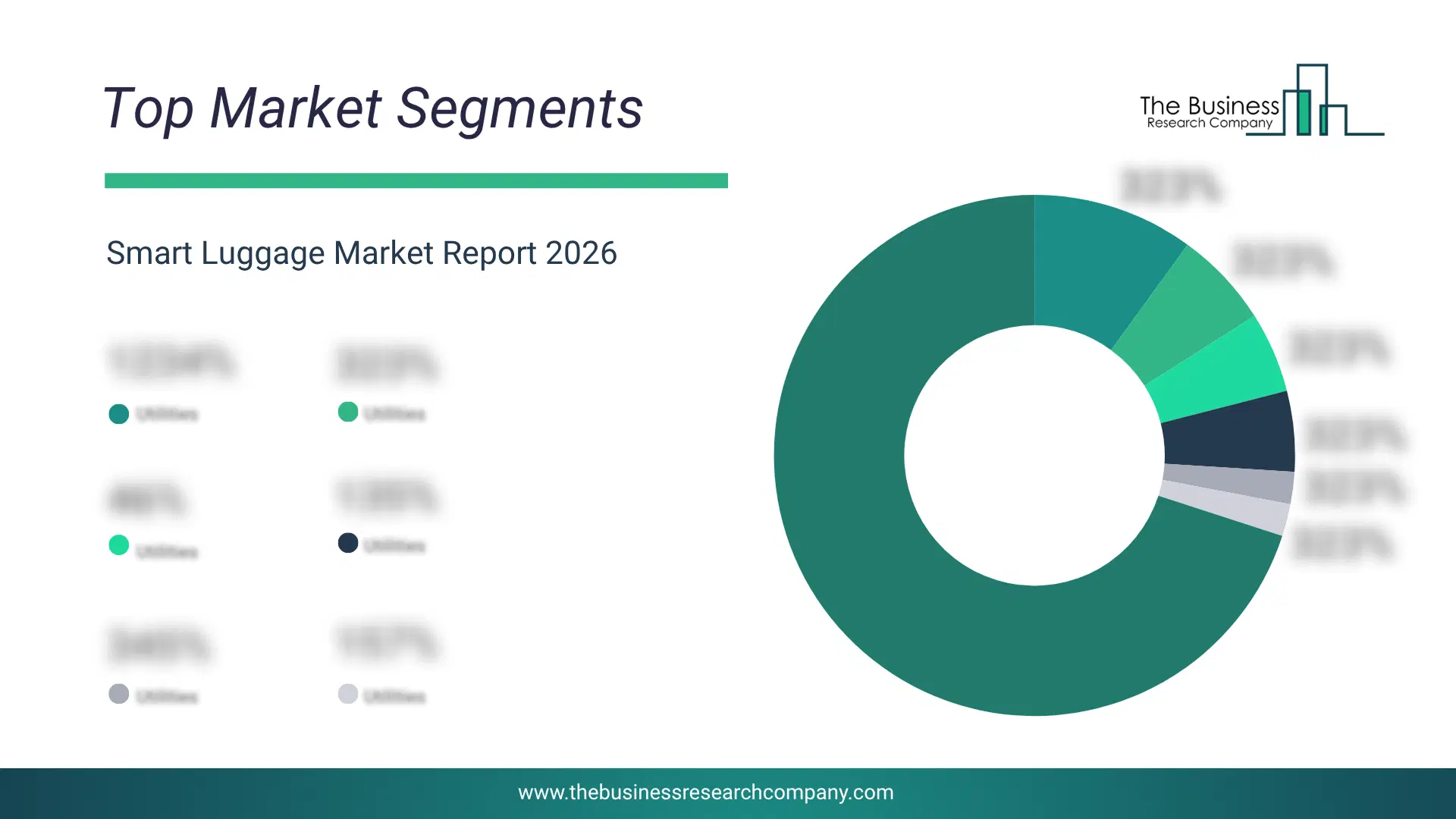
1) By Product Type: Duffel Bags, Travel Backpacks, Other Product Types 2) By Technology: Sensors, SIM Cards, USB Charging, Connectivity Technology 3) By Material: Nylon, Leather, Canvas, Plastic, Other materials 4) By Distribution Channel: Specialty Stores, Online Stores, Brand Stores, Other Distribution Channels Subsegments: 1) By Duffel Bags: Medium Duffel Bags, Large Duffel Bags, Rolling Duffel Bags 2) By Travel Backpacks: Carry-On Backpacks, Laptop Backpacks 3) By Other Product Types: Smart Suitcases, Smart Carry-Ons, Smart Totes The top segments in the smart luggage market will be: • Other Product Types will reach $2.48 Billion by 2030. • Travel Backpacks will reach $2.18 Billion by 2030. • Duffel Bags will reach $1.2 Billion by 2030.What Is The Driver Of The Smart Luggage Market?
The rise in air travel is expected to propel the growth of the smart luggage market going forward. Air travel involves flying in airplanes or other aircraft, allowing people and goods to quickly travel long distances between cities, countries, or continents. The rise in air travel is due to lower costs, faster travel, better connectivity, and growing demand for global travel. Smart luggage enhances air travel by providing GPS tracking, remote locking, and built-in scales, ensuring security, convenience, and compliance with airline weight restrictions. USB charging ports and proximity alerts also help travelers stay connected and prevent lost or stolen baggage. For instance, in January 2025, according to the International Air Transport Association (IATA), a Canada-based international trade organization, total full-year air traffic in 2024, measured in revenue passenger kilometers (RPKs), grew by 10.4% compared to 2023. International traffic saw a 13.6% increase year-over-year, with capacity rising by 12.8%. Meanwhile, domestic traffic for 2024 recorded a 5.7% growth from the previous year, while capacity expanded by 2.5%. Therefore, the rise in air travel is driving the smart luggage industry.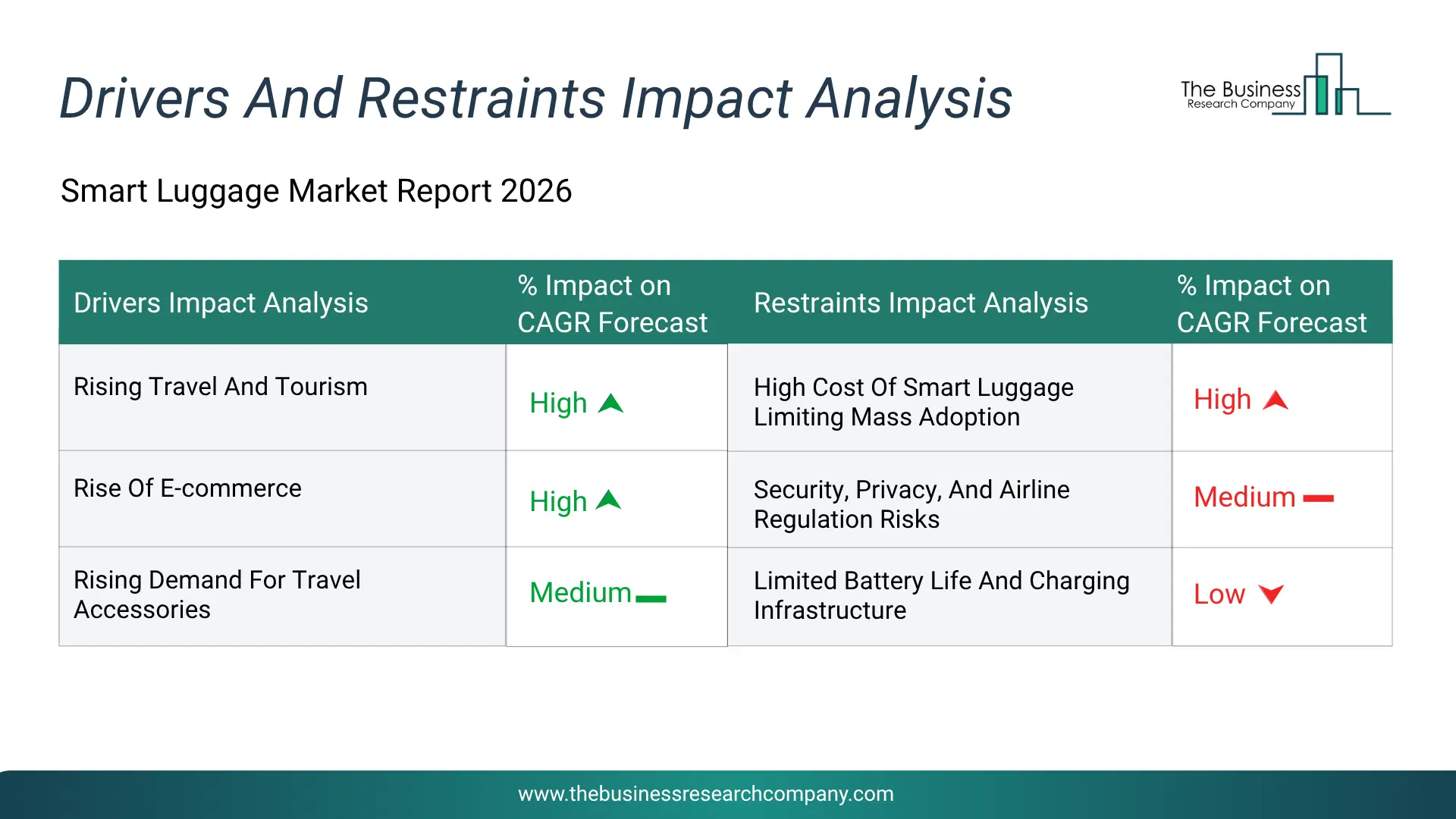
Infographic Chart Showing Key Market Drivers Analysis And Restraints For Smart Luggage Market
The chart presents an impact analysis of key drivers and restraints, quantifying their relative influence on the market's growth rate and helping assess the balance between growth enablers and limiting factors. This chart offers a high-level perspective; the full report contains more detailed insights.
How Will The Drivers Impact Growth In The Global Smart Luggage Market?
• Rising Travel And Tourism (High) – During the forecast period, the rising travel and tourism is expected to become a key growth driver for the smart luggage market by 2030. Rising travel and tourism is a major driver of the Smart Luggage market as increasing numbers of people travel for business, leisure, and international tourism. Frequent travelers seek convenient baggage solutions that simplify their journeys and enhance travel efficiency. Smart luggage equipped with GPS tracking, digital locks, USB charging ports, and weight sensors addresses common travel challenges. The growth of air passenger traffic has increased demand for technologically advanced travel accessories. Travelers are becoming more willing to invest in premium luggage that improves comfort and security. The expansion of global tourism activities also encourages manufacturers to introduce innovative smart baggage solutions. • Rise Of E-commerce (High) – During the forecast period, the rise of e-commerce is expected to emerge as a major factor driving the expansion of the smart luggage market by 2030. Rise of e-commerce significantly drives the Smart Luggage market by improving product accessibility and consumer awareness. Online retail platforms enable customers to compare features, prices, and reviews before making purchasing decisions. Manufacturers can reach broader customer bases across multiple regions without relying solely on physical stores. E-commerce channels also support the promotion of technologically advanced luggage through targeted digital marketing campaigns. Attractive discounts, doorstep delivery, and easy return policies encourage consumers to purchase smart luggage online. The availability of extensive product information helps buyers understand the benefits of smart features. • Rising Demand For Travel Accessories (Medium) – During the forecast period, the rising demand for travel accessories is expected to act as a key growth catalyst for the smart luggage market by 2030. Rising demand for travel accessories is accelerating growth in the Smart Luggage market as consumers increasingly prioritize convenience and functionality during travel. Modern travelers prefer products that combine multiple features into a single solution, reducing the need for additional accessories. Smart luggage offers integrated technologies such as device charging, location tracking, and digital security systems. Growing disposable incomes and changing lifestyle preferences are encouraging spending on premium travel products. Business travelers and tech-savvy consumers particularly value innovative luggage that enhances travel experiences. The trend toward connected and smart consumer products further supports market adoption. As demand for advanced travel accessories grows, smart luggage manufacturers benefit from expanding customer interest.How Will The Restraints Impact Growth In The Global Smart Luggage Market?
• High Cost Of Smart Luggage Limiting Mass Adoption (High) – During the forecast period, the high cost of smart luggage remains a significant restraint for market growth, particularly in price-sensitive regions and among budget-conscious travelers. The integration of advanced technologies such as GPS tracking, Bluetooth connectivity, USB charging systems, and electronic locks increases manufacturing expenses. These added costs result in higher retail prices compared to conventional luggage products. Many consumers may perceive smart features as non-essential and hesitate to pay premium prices. The affordability gap restricts market penetration beyond affluent and frequent traveler segments. Additionally, replacement and maintenance costs associated with electronic components can further discourage purchases. As a result, high product pricing continues to limit widespread adoption and slows the overall expansion of the smart luggage market. • Security, Privacy, And Airline Regulation Risks (High) – During the forecast period, the security, privacy, and airline regulation risks pose notable challenges to the smart luggage market by creating uncertainty among consumers and manufacturers. Smart luggage often relies on connected technologies that collect and transmit user data, raising concerns about data protection and cybersecurity threats. Travelers may be hesitant to adopt products that could be vulnerable to hacking or unauthorized tracking. Furthermore, regulations regarding lithium-ion batteries have led several airlines to impose restrictions on certain smart luggage models. Compliance with varying airline and international transportation regulations increases product development complexity. Frequent regulatory changes can also create confusion for consumers regarding permissible luggage features. These concerns collectively hinder consumer confidence and may restrict the pace of market growth. • Limited Battery Life And Charging Infrastructure (Medium) – During the forecast period, the limited battery life and charging infrastructure act as a significant restraint for the smart luggage market because many smart features, including GPS tracking, Bluetooth connectivity, and USB charging, depend on rechargeable batteries. Frequent charging requirements and battery depletion during travel can reduce the reliability and convenience of these features. Travelers may also face difficulties accessing charging facilities during long journeys or at transit locations. Battery performance degradation over time can increase maintenance and replacement costs. These limitations may discourage consumers from investing in smart luggage, thereby restraining market growth.Key Players In The Global Smart Luggage Market
Major companies operating in the smart luggage market are Samsonite International, Tumi, Rimowa, Delsey, Away Travel, Arlo Skye, Horizn Studios, Modobag, Airwheel, Bluesmart, Samsara Luggage, Monos, July, Plevo, ForwardX, Trunkster, Ovis, Cowarobot, Xiaomi, Heys International, Travelmate Robotics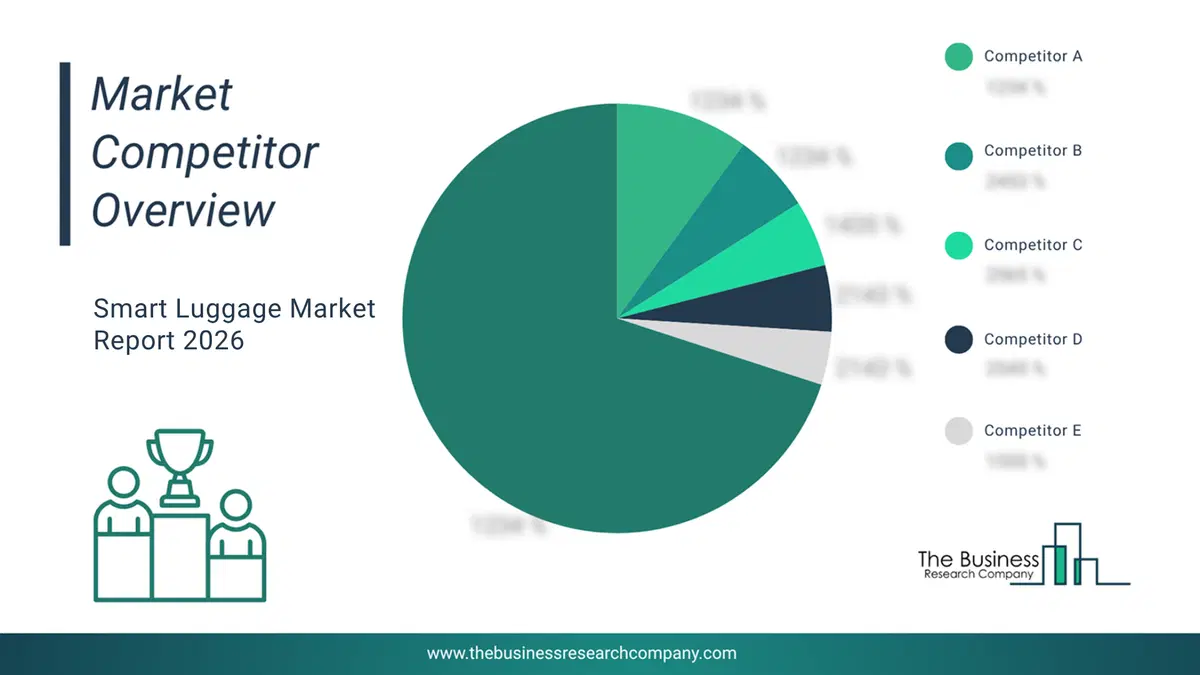
This chart is for illustrative purposes; the full report includes a detailed competitor analysis and comprehensive overview of the top 10 companies in the market.
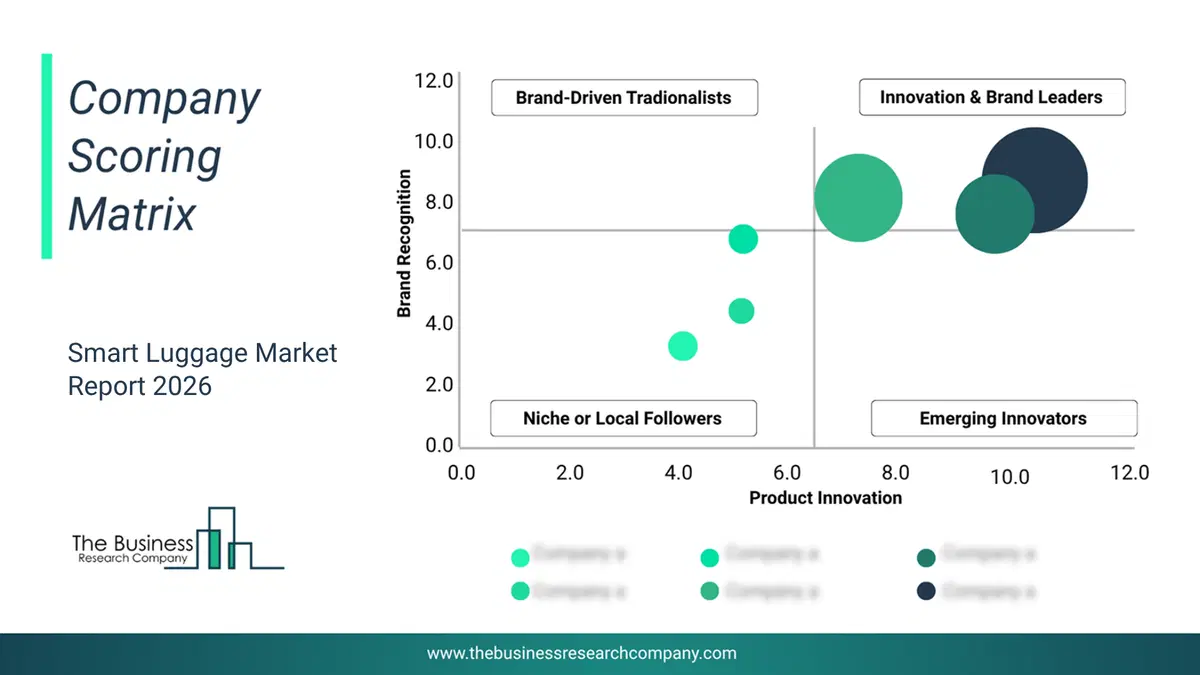
This chart maps companies by product innovation and brand strength, with bubble size indicating relative revenue, helping identify market leaders, challengers, and niche players. This is an illustrative chart; the full report provides a complete and accurate competitive analysis.
Global Smart Luggage Market Trends and Insights
Major companies operating in the smart luggage market are focusing on technological advancements, such as wallet trackers, to prevent loss and theft by providing real-time location tracking, smartphone alerts, and easy retrieval of misplaced wallets. A wallet tracker is a compact, Bluetooth, or GPS-enabled device designed to help locate lost or misplaced wallets through a connected smartphone app. For instance, in October 2023, Samsung, a South Korea-based manufacturer of electronic components, launched the Galaxy SmartTag2, an advanced Bluetooth tracker designed for bag packs. It has a redesigned ring-shaped body that replaces the previous punch-hole design and supports ultra-wideband and Bluetooth connectivity. Its standout features include a new ‘Lost Mode,’ allowing users to input contact information to recover lost items quickly, and the Compass View feature provides directional guidance with on-screen arrows. Additionally, Samsung has enhanced battery life to allow for extended usability.What Are Latest Mergers And Acquisitions In The Smart Luggage Market?
In January 2024, Ilustrato Pictures International Inc., a US-based investment company, acquired majority stakes in Samsara Luggage Inc. for an undisclosed amount. With this acquisition, SAML intends to rebrand with a new name and ticker to align with its strategic shift. The company is also set to expand Emergency Response Technologies aggressively to support the business objectives of its parent company, ILUS. Samsara Luggage Inc. is a US-based manufacturer of smart luggage.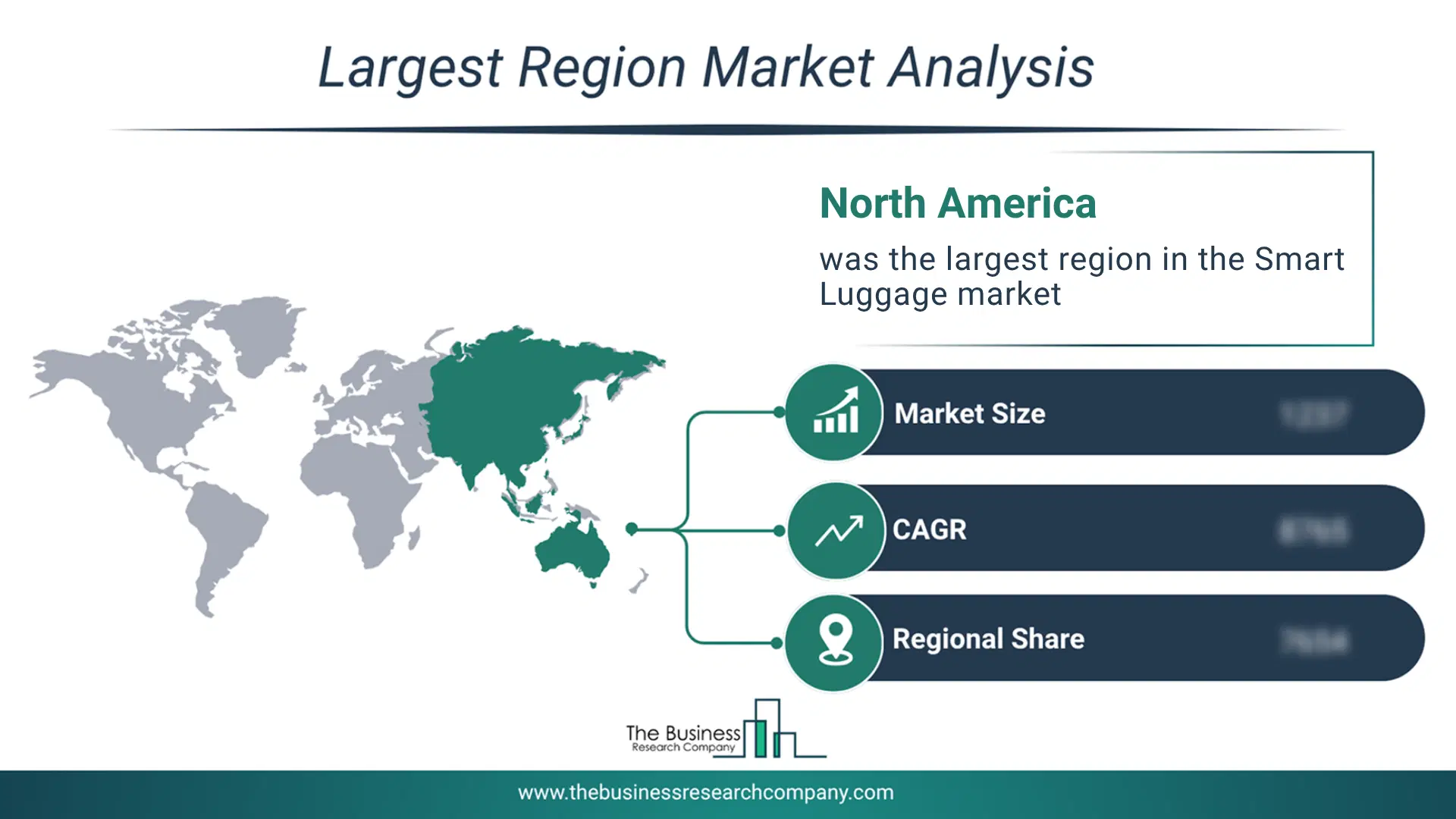
Regional Outlook
North America was the largest region in the smart luggage market in 2025. Asia-Pacific is expected to be the fastest-growing region in the forecast period. The regions covered in this market report are Asia-Pacific, South East Asia, Western Europe, Eastern Europe, North America, South America, Middle East, Africa The countries covered in this market report are Australia, Brazil, China, France, Germany, India, Indonesia, Japan, Taiwan, Russia, South Korea, UK, USA, Canada, Italy, Spain.What Defines the Smart Luggage Market?
The smart luggage market consists of revenues earned by entities by providing services such as AI-powered travel assistance, self-weighing feature integration and others. The market value includes the value of related goods sold by the service provider or included within the service offering. The smart luggage market also includes sales of smart carry-ons, smart passport holders, smart laptop bags and smart trolley bags. Values in this market are ‘factory gate’ values, that is the value of goods sold by the manufacturers or creators of the goods, whether to other entities (including downstream manufacturers, wholesalers, distributors and retailers) or directly to end customers. The value of goods in this market includes related services sold by the creators of the goods.How is Market Value Defined and Measured?
The market value is defined as the revenues that enterprises gain from the sale of goods and/or services within the specified market and geography through sales, grants, or donations in terms of the currency (in USD unless otherwise specified). The revenues for a specified geography are consumption values that are revenues generated by organizations in the specified geography within the market, irrespective of where they are produced. It does not include revenues from resales along the supply chain, either further along the supply chain or as part of other products.
This chart presents market attractiveness based on a quantitative evaluation of growth, competition, strategic alignment, and risk, offering a clear view of opportunity areas for decision-making. This chart is for illustrative purposes; the full report contains the complete analysis.

This chart highlights the Total Addressable Market (TAM) by estimating the maximum revenue opportunity using an assumption-driven approach, supporting strategic planning and opportunity sizing across markets. The chart is illustrative; the full report provides a more comprehensive analysis.
What Key Data and Analysis Are Included in the Smart Luggage Market Report 2026?
The smart luggage market research report is one of a series of new reports from The Business Research Company that provides market statistics, including Market Report 2026?global market size, regional shares, competitors with the market share, detailed market segments, market trends and opportunities, and any further data you may need to thrive in the smart luggage Market Report 2026? The market research report delivers a complete perspective of everything you need, with an in-depth analysis of the current and future state of the Market Report 2026?Smart Luggage Market Report Forecast Analysis
| Report Attribute | Details |
|---|---|
| Market Size Value In 2026 | $2.96 billion |
| Revenue Forecast In 2030 | $5.79 billion |
| Growth Rate | CAGR of 18.6% from 2026 to 2030 |
| Base Year For Estimation | 2025 |
| Actual Estimates/Historical Data | 2020-2025 |
| Forecast Period | 2026 - 2030 |
| Market Representation | Revenue in USD Billion and CAGR from 2026 to 2030 |
| Segments Covered | Product Type, Technology, Material, Distribution Channel |
| Regional Scope | Asia-Pacific, Western Europe, Eastern Europe, North America, South America, Middle East, Africa |
| Country Scope | The countries covered in the report are Australia, Brazil, China, France, Germany, India, ... |
| Key Companies Profiled | Samsonite International, Tumi, Rimowa, Delsey, Away Travel, Arlo Skye, Horizn Studios, Modobag, Airwheel, Bluesmart, Samsara Luggage, Monos, July, Plevo, ForwardX, Trunkster, Ovis, Cowarobot, Xiaomi, Heys International, Travelmate Robotics |
| Customization Scope | Request for Customization |
| Pricing And Purchase Options | Explore Purchase Options |