
Sustainable Athleisure Market Report 2026
Global Outlook – By Type (Premium, Mass), By Gender (Women, Men), By Distribution Channel (Offline, Online) – Market Size, Trends, Strategies, and Forecast to 2030
Sustainable Athleisure Market Overview
• Sustainable Athleisure market size has reached to $108.08 billion in 2025 • Expected to grow to $164.11 billion in 2030 at a compound annual growth rate (CAGR) of 8.7% • Growth Driver: Role Of Ecofriendly clothing The Sustainable Athleisure Market • Market Trend: Technological Advancements In Sustainable Athleisure Market • North America was the largest region in 2025 and Asia-Pacific is the fastest growing region.Market Gains By 2030 – Top Opportunities By Segment
Market Gain identifies the most promising market opportunities by highlighting the segments or products expected to generate the highest incremental revenue growth over the next five years.
What Is Covered Under Sustainable Athleisure Market?
Sustainable athleisure is a look that is stylish and appealing enough to wear for other occasions while remaining comfortable and appropriate for sports. It is made of bio-based and recyclable materials. Athleisure is a type of hybrid clothing that is typically worn during athletic activities as well as in other settings such as the workplace, school, or other casual or social occasions. Sustainable athleisure is made up of natural, renewable, recycled, biodegradable, and low-impact textiles to provide consumers with high-performance activewear while protecting both people and the planet. The main types of sustainable athleisure are mass and premium. Premium sustainable athleisure is sportswear made up of organic fibers that are durable and eco-friendly and are costlier than mass products. The various distribution channel of sustainable athleisure includes online and offline channels that are used by men and women.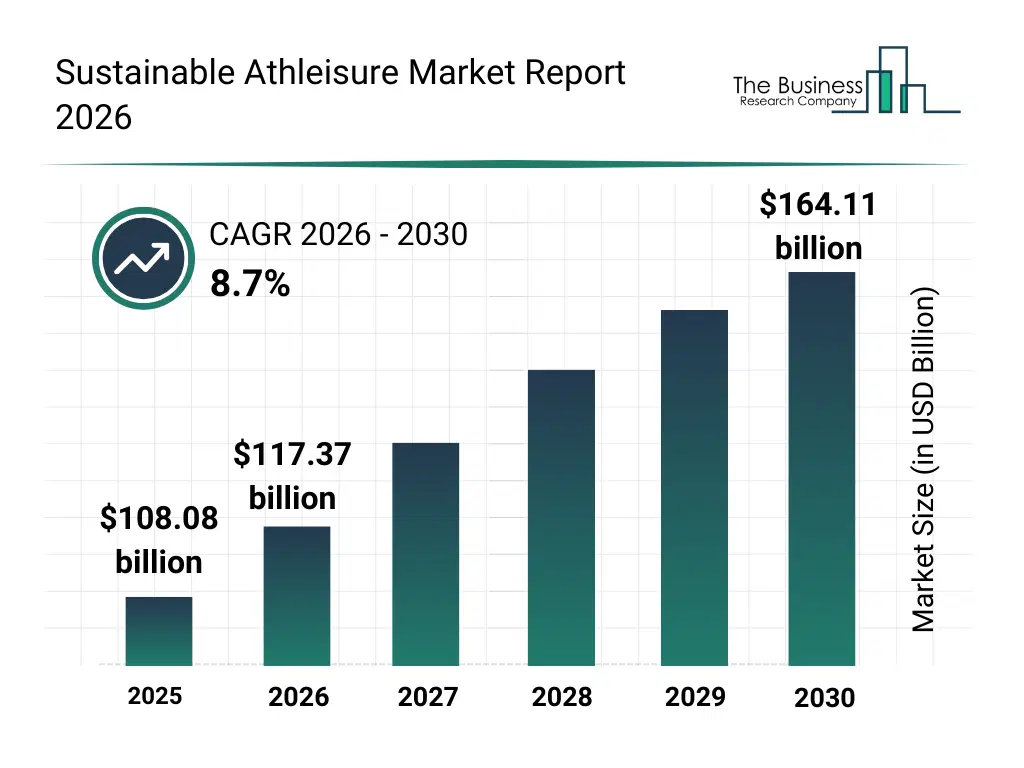
What Is The Sustainable Athleisure Market Size and Share 2026?
The sustainable athleisure market size has grown strongly in recent years. It will grow from $108.08 billion in 2025 to $117.37 billion in 2026 at a compound annual growth rate (CAGR) of 8.6%. The growth in the historic period can be attributed to rising health and fitness awareness, expansion of casual workplace dressing culture, increasing availability of recycled textile materials, growth of direct-to-consumer apparel brands, rising consumer spending on premium apparel.What Is The Sustainable Athleisure Market Growth Forecast?
The sustainable athleisure market size is expected to see strong growth in the next few years. It will grow to $164.11 billion in 2030 at a compound annual growth rate (CAGR) of 8.7%. The growth in the forecast period can be attributed to growing demand for low-impact apparel, increasing innovation in sustainable textile blends, expansion of online sustainable fashion platforms, rising adoption of circular fashion models, increasing brand investments in eco-friendly product lines. Major trends in the forecast period include increasing adoption of recycled and bio-based fabrics, rising demand for stylish multi-use activewear, growing preference for ethical and transparent supply chains, expansion of premium sustainable athleisure lines, higher focus on comfort-performance balance.
Global Sustainable Athleisure Market Segmentation
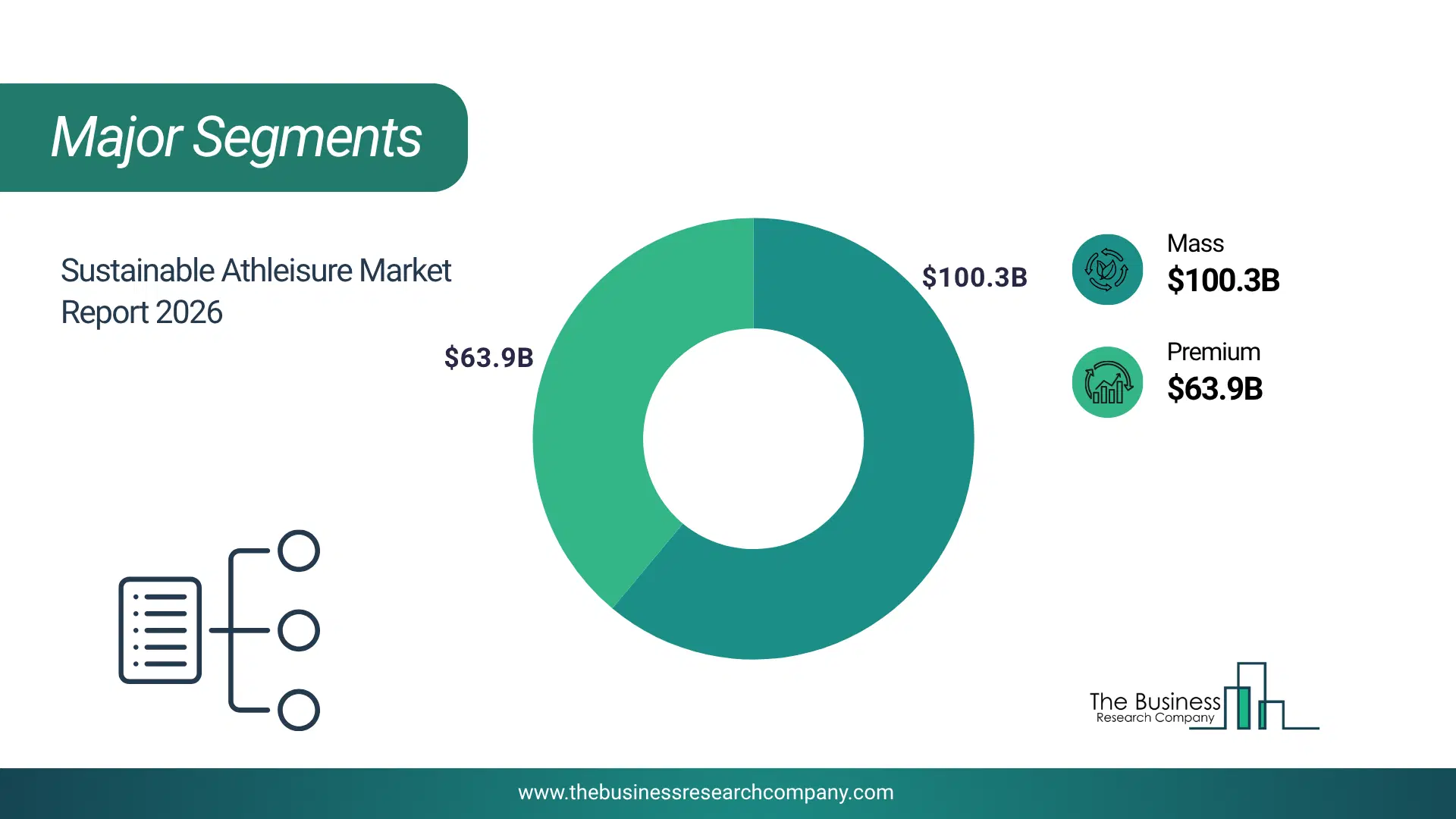
1) By Type: Premium, Mass 2) By Gender: Women, Men 3) By Distribution Channel: Offline, Online Subsegments: 1) By Premium: High-End Brands, Eco-Luxury Collections, Limited Edition Releases 2) By Mass: Affordable Sustainable Options, Mainstream Brands Offering Eco-Friendly Lines, Bulk Production Sustainable Athleisure The top segments in the sustainable athleisure market will be: • Mass will reach $100.28 billion by 2030. • Premium will reach $63.83 billion by 2030.What Is The Driver Of The Sustainable Athleisure Market?
The growing demand for ecofriendly clothing will support the growth of the sustainable athleisure market going forward. The growing demand for eco-friendly clothing is driven by heightened consumer awareness of sustainability, environmental concerns, and a desire for ethical fashion choices. The growing demand for eco-friendly clothing boosts the sustainable athleisure market by encouraging brands to adopt sustainable materials and practices, appealing to environmentally conscious consumers. For instance, in May 2023, according to a survey published by the Organic Trade Association (OTA), a US-based business association for the organic industry, sales of organic linens and clothing made up about 40% of total sales, reaching $2.4 billion, which represents a 2.5% increase compared to the previous year. Therefore, growing demand for ecofriendly clothing is driving the growth of the sustainable athleisure industry.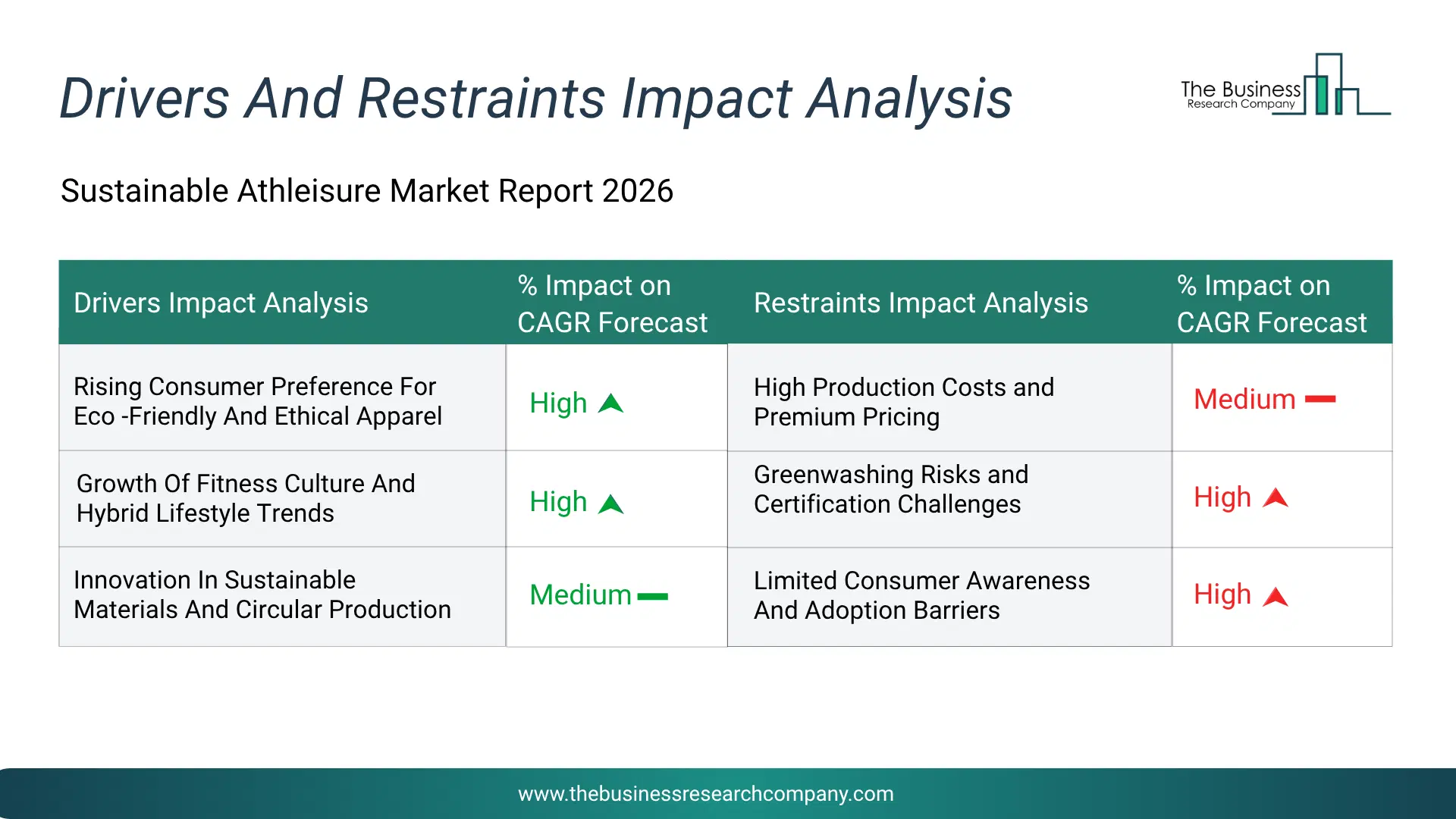
Infographic Chart Showing Key Market Drivers Analysis And Restraints For Sustainable Athleisure Market
The chart presents an impact analysis of key drivers and restraints, quantifying their relative influence on the market's growth rate and helping assess the balance between growth enablers and limiting factors. This chart offers a high-level perspective; the full report contains more detailed insights.
How Will The Drivers Impact Growth In The Global Sustainable Athleisure Market?
• Rising Consumer Preference For Eco -Friendly And Ethical Apparel (High) – During the forecast period, the increasing consumer inclination toward eco -friendly and ethically produced apparel is expected to serve as a primary growth driver for the sustainable athleisure market by 2030. Millennials and gen z consumers are showing stronger preference for garments made from recycled polyester, organic cotton, bamboo -based fabrics, and low -impact dyes. Greater emphasis on supply chain transparency, reduced carbon emissions, and fair labor standards is significantly influencing buying behavior. As sustainability evolves into a key element of brand differentiation, global demand for environmentally responsible activewear continues to rise. • Growth Of Fitness Culture And Hybrid Lifestyle Trends (High) – During the forecast period, the expansion of fitness culture and the rise of hybrid lifestyle patterns are expected to become major contributors to the sustainable athleisure market’s growth by 2030. Increased participation in yoga, gym activities, running, and outdoor recreation is driving demand for functional, comfortable, and performance-oriented clothing. The versatility of athleisure, suitable for both athletic activities and everyday casual wear, supports higher purchase frequency. As global health awareness strengthens, consumers are increasingly aligning active lifestyles with environmentally conscious fashion preferences. • Innovation In Sustainable Materials And Circular Production (Medium) – During the forecast period, advancements in sustainable materials and circular manufacturing practices are expected to act as significant growth enablers for the sustainable athleisure market by 2030. Developments such as biodegradable textiles, water-efficient dyeing methods, and closed-loop recycling technologies are improving both product functionality and environmental performance. Companies are also investing in garment take-back initiatives, resale channels, and carbon-neutral production strategies to strengthen sustainability credentials. These innovations enhance brand equity while enabling scalable and responsible production models.How Will The Restraints Impact Growth In The Global Sustainable Athleisure Market?
• High Production Costs and Premium Pricing (Medium) – During the forecast period, the higher production costs and premium pricing act as significant restraints in the sustainable athleisure market. Eco-friendly raw materials, ethical sourcing, and certified manufacturing processes often increase operational expenses. These costs are typically passed on to consumers, making sustainable products more expensive than conventional alternatives. Price-sensitive buyers, particularly in emerging markets, may limit market penetration. • Greenwashing Risks and Certification Challenges (High) – During the forecast period, the greenwashing concerns and lack of standardized sustainability certifications also restrain growth. Some brands exaggerate environmental claims, leading to consumer skepticism and trust issues. The absence of globally harmonized sustainability metrics complicates transparency and comparability. Regulatory scrutiny and demand for verifiable claims may increase compliance burdens for manufacturers. • Limited Consumer Awareness And Adoption Barriers (High) – During the forecast period, the limited consumer awareness and adoption barriers act as a restraint for the sustainable athleisure market by slowing the shift from conventional apparel to eco-friendly alternatives. Many consumers are still not fully informed about the environmental benefits and long-term value of sustainable clothing. Additionally, behavioral resistance to change and preference for fast fashion options reduce demand growth. In price-sensitive regions, limited willingness to pay a premium further restricts adoption. Overall, low awareness and slow behavioral change hinder market expansion.Key Players In The Global Sustainable Athleisure Market
Major companies operating in the sustainable athleisure market are Nike Inc., Adidas Aktiengesellschaft, Puma SE, Patagonia Inc., Athleta LLC, Outdoor Voices Inc., Vuori Inc., PANGAIA AG, Reformation Inc., Girlfriend Collective, Summersalt LLC, Tentree, Nimble Activewear, Amble, Outfyt, Wolven, Lively Activewear, Yoga Democracy, Avocado Activewear, Teeki Activewear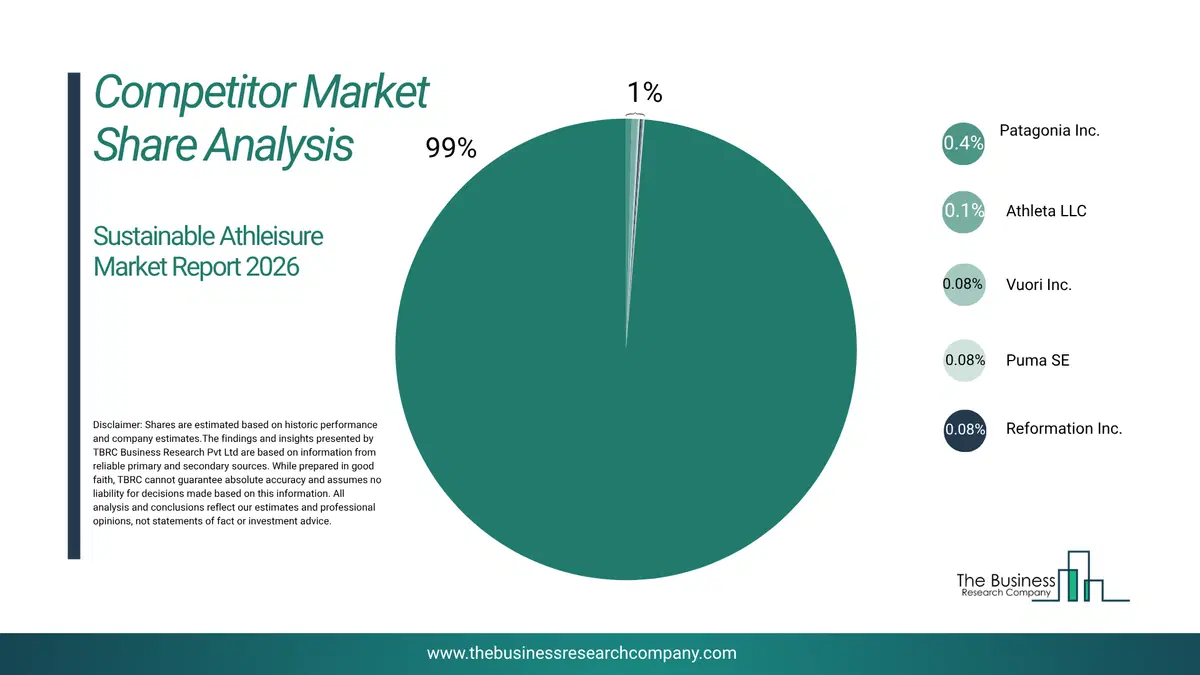
This chart is for illustrative purposes; the full report includes a detailed competitor analysis and comprehensive overview of the top 10 companies in the market.
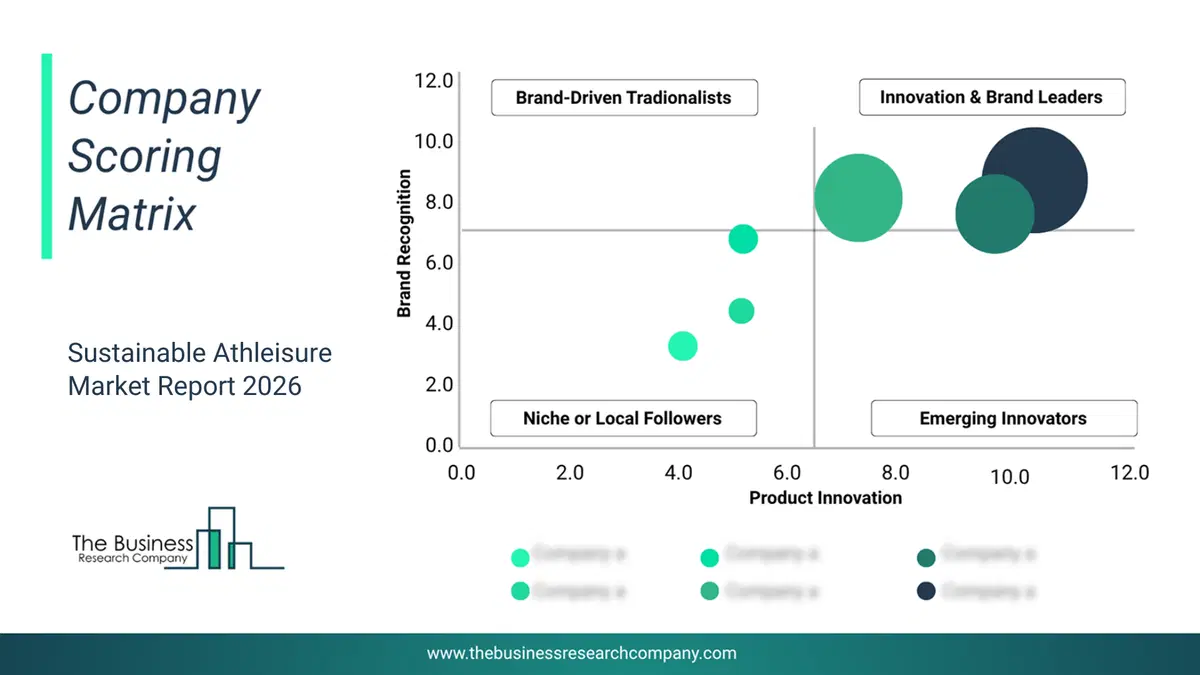
This chart maps companies by product innovation and brand strength, with bubble size indicating relative revenue, helping identify market leaders, challengers, and niche players. This is an illustrative chart; the full report provides a complete and accurate competitive analysis.
Global Sustainable Athleisure Market Trends and Insights
Major companies operating in the sustainable athleisure market are developing advanced technologies, such as quick-dry technologies, to meet larger customer bases, increase sales, and increase revenue. Quick-dry technology refers to a set of innovations and materials designed to accelerate the drying process of various products, especially in the context of textiles and coatings. For instance, in October 2023, Bata India Ltd, an India-based footwear manufacturing company, launched Power Acti-Wear, activewear, and athleisure clothing. The Power Acti-Wear, a part of Bata's flagship athleisure brand Power, is a clothing range specifically crafted to cater to the needs of fitness enthusiasts with a focus on both comfort and contemporary style. With an emphasis on the latest innovations and technology, the Power Acti-Wear stands out by seamlessly merging cutting-edge features with fashion-forward designs. This range introduces advanced technologies such as Qik-Dry, Acti-Vent, Acti-Stretch, and Feather Tech. These unique features collectively facilitate quick sweat absorption, improved air circulation, enhanced stretch capabilities, and a lightweight design, all contributing to elevated performance levels while ensuring a supremely comfortable workout experience.What Are Latest Mergers And Acquisitions In The Sustainable Athleisure Market?
In October 2023, Anta Sports Products Limited, a China-based manufacturer of sporting goods, acquired Maia Active for an undisclosed amount. The acquisition serves as a valuable complement to the group's women's business sector, aligning with its objective to address a wide range of consumer needs. Additionally, it will contribute to the further fortification of the group's brand portfolio. Maia Active is a China-based female athleisure brand.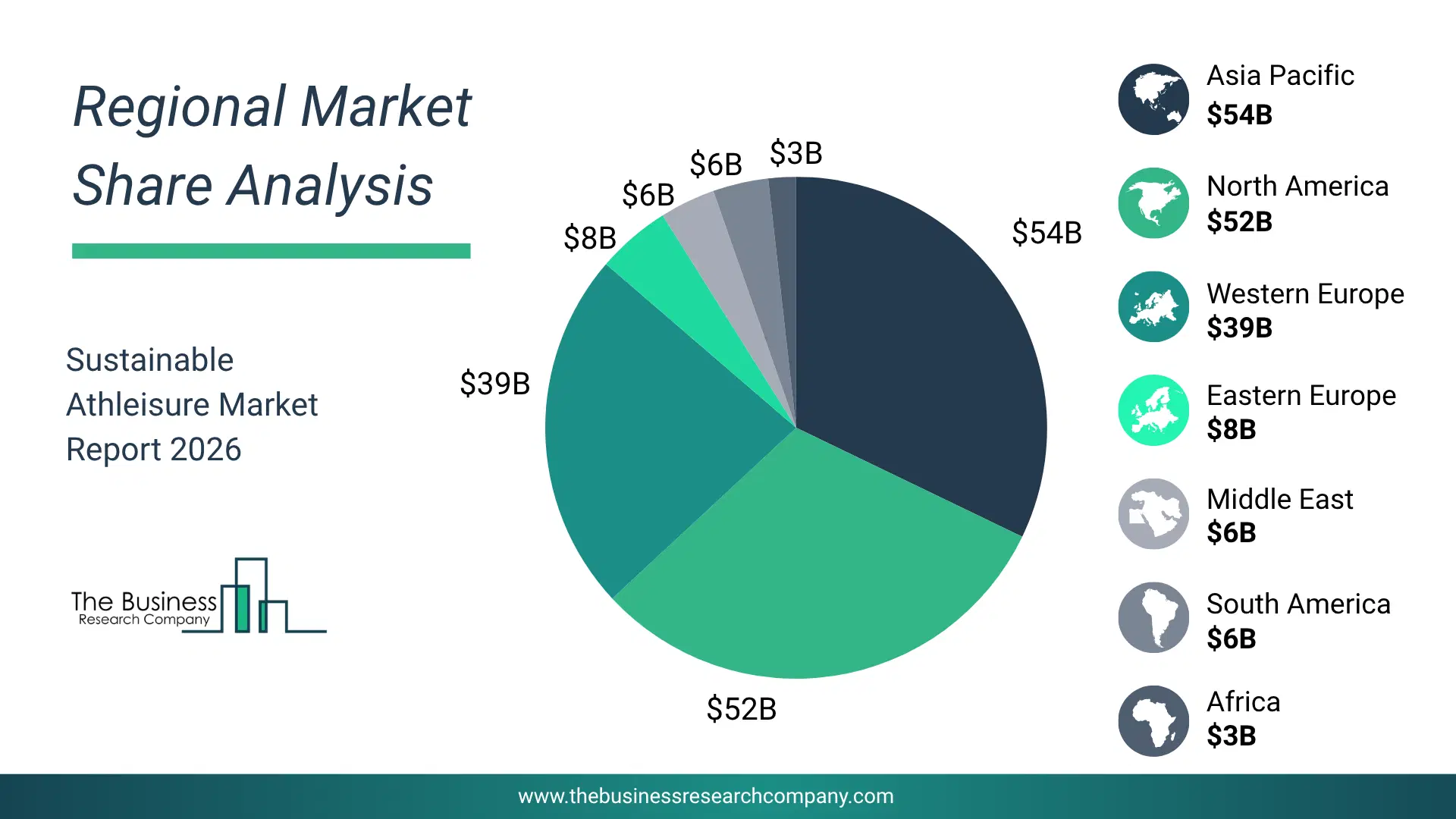
Regional Outlook
North America was the largest market in the sustainable athleisure market share in 2025. Asia-Pacific is expected to be the fastest-growing region in the forecast period. The regions covered in this market report are Asia-Pacific, South East Asia, Western Europe, Eastern Europe, North America, South America, Middle East, Africa. The countries covered in this market report are Australia, Brazil, China, France, Germany, India, Indonesia, Japan, Taiwan, Russia, South Korea, UK, USA, Canada, Italy, Spain.What Defines the Sustainable Athleisure Market?
The sustainable athleisure market consists of sales of hemp fiber, bamboo, merino wool, cotton, and recycled synthetics. Values in this market are ‘factory gate’ values, that is the value of goods sold by the manufacturers or creators of the goods, whether to other entities (including downstream manufacturers, wholesalers, distributors and retailers) or directly to end customers. The value of goods in this market includes related services sold by the creators of the goods.How is Market Value Defined and Measured?
The market value is defined as the revenues that enterprises gain from the sale of goods and/or services within the specified market and geography through sales, grants, or donations in terms of the currency (in USD unless otherwise specified). The revenues for a specified geography are consumption values that are revenues generated by organizations in the specified geography within the market, irrespective of where they are produced. It does not include revenues from resales along the supply chain, either further along the supply chain or as part of other products.
This chart presents market attractiveness based on a quantitative evaluation of growth, competition, strategic alignment, and risk, offering a clear view of opportunity areas for decision-making. This chart is for illustrative purposes; the full report contains the complete analysis.

This chart highlights the Total Addressable Market (TAM) by estimating the maximum revenue opportunity using an assumption-driven approach, supporting strategic planning and opportunity sizing across markets. The chart is illustrative; the full report provides a more comprehensive analysis.
What Key Data and Analysis Are Included in the Sustainable Athleisure Market Report 2026?
The sustainable athleisure market research report is one of a series of new reports from The Business Research Company that provides market statistics, including Market Report 2026?global market size, regional shares, competitors with the market share, detailed market segments, market trends and opportunities, and any further data you may need to thrive in the sustainable athleisure Market Report 2026? The market research report delivers a complete perspective of everything you need, with an in-depth analysis of the current and future state of the Market Report 2026?Sustainable Athleisure Market Report Forecast Analysis
| Report Attribute | Details |
|---|---|
| Market Size Value In 2026 | $117.37 billion |
| Revenue Forecast In 2030 | $164.11 billion |
| Growth Rate | CAGR of 8.7% from 2026 to 2030 |
| Base Year For Estimation | 2025 |
| Actual Estimates/Historical Data | 2020-2025 |
| Forecast Period | 2026 - 2030 |
| Market Representation | Revenue in USD Billion and CAGR from 2026 to 2030 |
| Segments Covered | Type, Gender, Distribution Channel |
| Regional Scope | Asia-Pacific, Western Europe, Eastern Europe, North America, South America, Middle East, Africa |
| Country Scope | The countries covered in the report are Australia, Brazil, China, France, Germany, India, ... |
| Key Companies Profiled | Nike Inc., Adidas Aktiengesellschaft, Puma SE, Patagonia Inc., Athleta LLC, Outdoor Voices Inc., Vuori Inc., PANGAIA AG, Reformation Inc., Girlfriend Collective, Summersalt LLC, Tentree, Nimble Activewear, Amble, Outfyt, Wolven, Lively Activewear, Yoga Democracy, Avocado Activewear, Teeki Activewear |
| Customization Scope | Request for Customization |
| Pricing And Purchase Options | Explore Purchase Options |