
Wireless Gas Detection Market Report 2026
Global Outlook – By Type (Hardware, Software, Services), By Technology (Wi-Fi, Bluetooth, Cellular, License-Free ISM Band, Other Technologies), By End User (Oil And Gas, Chemical And Petrochemicals, Mining And Metals, Discrete Manufacturing Industry, Commercial Buildings And Public Facilities, Other End Users) – Market Size, Trends, Strategies, and Forecast to 2030
Wireless Gas Detection Market Overview
• Wireless Gas Detection market size has reached to $2.42 billion in 2025 • Expected to grow to $3.46 billion in 2030 at a compound annual growth rate (CAGR) of 7.3% • Growth Driver: The Impact Of The Expanding Energy Sector On The Wireless Gas Detection Market • Market Trend: KARAM Safety Launches Innovative Portable Single Gas Detectors for Enhanced Workplace Safety • North America was the largest region in 2025.What Is Covered Under Wireless Gas Detection Market?
Wireless gas detection is a system or device that is designed for continuous monitoring of toxic and combustible gases in the air. Wireless solutions combine battery-powered sensors with integrated radiofrequency (RF) technology running on license-free frequency bands to deliver proven long-term results, even in the harshest environments. The main types of wireless gas detection include hardware, software and services. Hardware refers to the external and internal devices and equipment that enable the identification of gas and measure gas concentration. These are connected by wi-fi, Bluetooth, cellular, license-free ISM band and other technologies for various applications by oil & gas, chemical and petrochemicals, mining and metals, discrete manufacturing industry, commercial buildings and public facilities and other end users.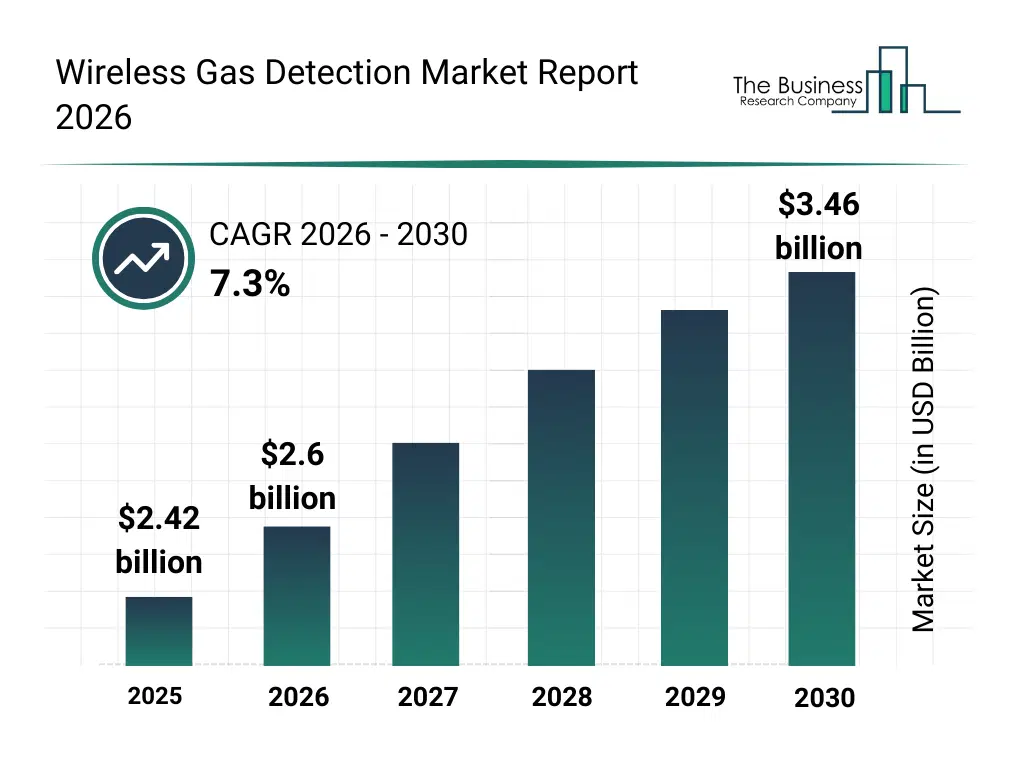
What Is The Wireless Gas Detection Market Size and Share 2026?
The wireless gas detection market size has grown strongly in recent years. It will grow from $2.42 billion in 2025 to $2.6 billion in 2026 at a compound annual growth rate (CAGR) of 7.4%. The growth in the historic period can be attributed to industrial safety regulations, growth in oil and gas operations, expansion of mining activities, increased workplace safety awareness, adoption of fixed gas detection systems.What Is The Wireless Gas Detection Market Growth Forecast?
The wireless gas detection market size is expected to see strong growth in the next few years. It will grow to $3.46 billion in 2030 at a compound annual growth rate (CAGR) of 7.3%. The growth in the forecast period can be attributed to smart industrial safety adoption, expansion of industrial IoT networks, stricter environmental regulations, growth in hazardous area monitoring, demand for remote monitoring solutions. Major trends in the forecast period include growing adoption of wireless safety systems, rising demand for real time gas monitoring, expansion of battery powered detection devices, increasing use in harsh industrial environments, focus on predictive safety analytics.Tariff Impact On Wireless Gas Detection Market
Tariffs have influenced the wireless gas detection market by increasing costs of imported sensors, transmitters, communication modules, and electronic components. Hardware intensive deployments are most affected, particularly in North America and Asia Pacific. Higher system costs have slowed large scale rollouts in some industries. Meanwhile, tariffs have encouraged domestic manufacturing and software driven safety solutions.
Global Wireless Gas Detection Market Segmentation
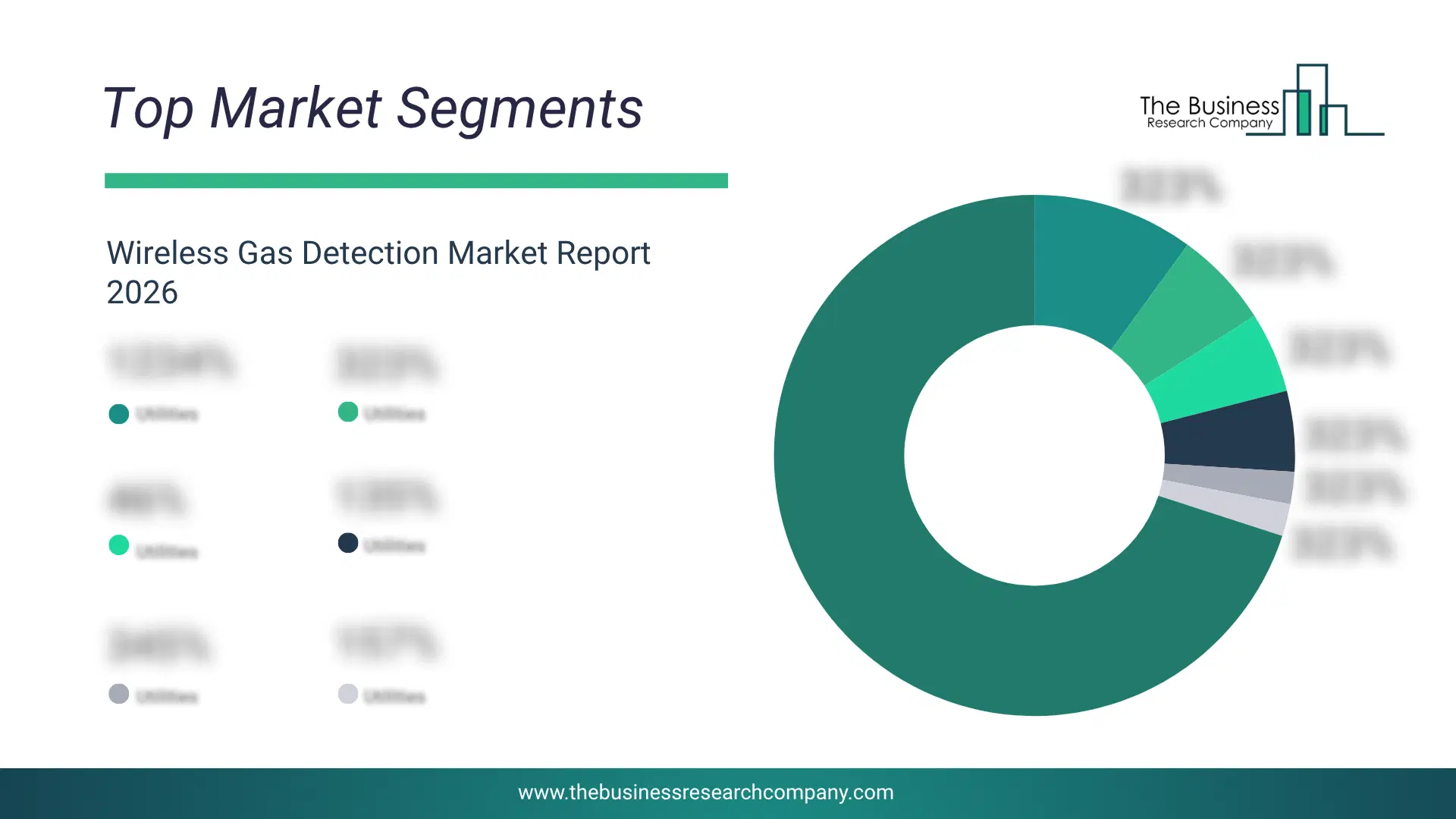
1) By Type: Hardware, Software, Services 2) By Technology: Wi-Fi, Bluetooth, Cellular, License-Free ISM Band, Other Technologies 3) By End User: Oil And Gas, Chemical And Petrochemicals, Mining And Metals, Discrete Manufacturing Industry, Commercial Buildings And Public Facilities, Other End Users Subsegments: 1) By Hardware: Gas Sensors, Transmitters, Controllers, Alarms 2) By Software: Monitoring Software, Data Analysis Software, Integration Software 3) By Services: Installation Services, Maintenance And Support Services, Training ServicesWhat Is The Driver Of The Wireless Gas Detection Market?
The growing energy sector is expected to boost the growth of the wireless gas detection market going forward. The energy sector refers to the industry involved in the exploration, extraction, production, refining, and distribution of various forms of energy resources, including fossil fuels. renewable energy sources, and nuclear energy. In environments susceptible to gas hazards, wireless gas detectors are used in maintaining compliance with safety standards and regulations by providing continuous monitoring for gas leaks, thereby ensuring a secure working environment in the energy sector. For instance, in April 2023, according to a report published by the Energy Information Administration, a US-based government agency, the United States is projected to experience growth in energy consumption across all forms, with an anticipated increase ranging from 0% to 15% from 2022 to 2050. Specifically, within the industrial sector, energy consumption is expected to rise by approximately 5% to 32% during the same period. In 2022, households in the U.S. residential sector purchased 5.1 quadrillion British thermal units (quads) of electricity, and residential consumption of purchased electricity is forecasted to increase by approximately 14% to 22% between 2022 and 2050 in all scenarios, reaching a range of 5.9 quads to 6.3 quads. Therefore, the growing energy sector is driving the growth of the wireless gas detection industry.Key Players In The Global Wireless Gas Detection Market
Major companies operating in the wireless gas detection market are Siemens AG, Honeywell International Inc., 3M Company, AMETEK Inc., Sensit Technologies, AirTest Technologies Inc., MSA Safety Incorporated, Sensirion AG, Industrial Scientific Corporation, Beijing SDL Technology Co Ltd., Crowcon Detection Instruments Ltd., Comstack Ltd., RKI Instruments Inc., United Electric Control Co, California Analytical Instruments Inc., Aeris Environmental Ltd., Drägerwerk AG & Co KGaA, Yokogawa India Ltd., Detector Electronics Corporation, RAE Systems Inc., Pem-Tech Inc., Tek Troniks Ltd., Ambetronics Engineers Pvt Ltd., Global Detection Systems Corp, Otis Instruments Inc., Teledyne Gas and Flame Detection, New Cosmos Electric Co Ltd., Trolex, International Gas Detectors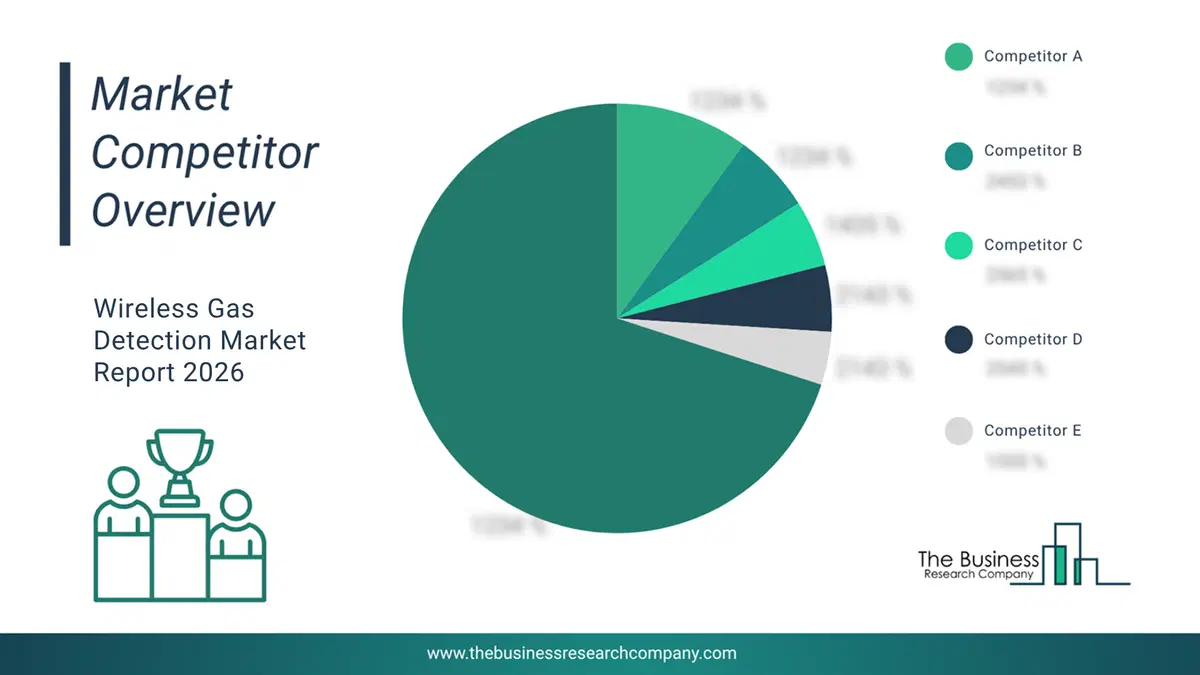
This chart is for illustrative purposes; the full report includes a detailed competitor analysis and comprehensive overview of the top 10 companies in the market.
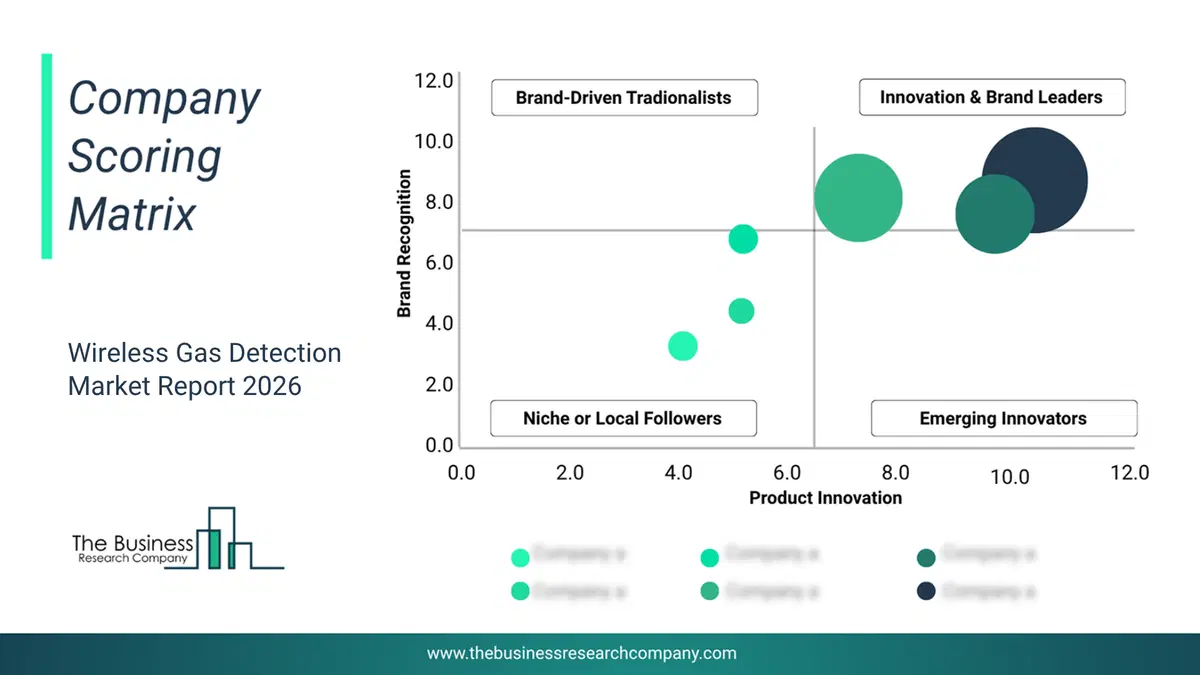
This chart maps companies by product innovation and brand strength, with bubble size indicating relative revenue, helping identify market leaders, challengers, and niche players. This is an illustrative chart; the full report provides a complete and accurate competitive analysis.
Global Wireless Gas Detection Market Trends and Insights
Major companies operating in the wireless gas detection market are developing portable single gas detectors to enhance real-time monitoring, improve worker safety, and offer convenient, on-the-go solutions for detecting specific hazardous gases in various industrial settings. Portable single gas detectors are compact, handheld devices designed to detect the presence of a specific hazardous gas in an environment. For instance, in August 2024, KARAM Safety, an India-based personal protective equipment manufacturing company, introduced a line of portable single gas detectors. These devices are designed for workplace safety, detecting hazardous gases effectively. They feature replaceable sensors and batteries, a robust design for challenging environments, and conform to the IP67 standard for dust and waterproof performance. The detectors provide real-time gas concentration levels and include automated troubleshooting checks along with audible and vibrating alarms for alerts.What Are Latest Mergers And Acquisitions In The Wireless Gas Detection Market?
In January 2024, Fortive, a US-based diversified industrial technology company, acquired EA ElektroAutomatik for an undisclosed amount. EA Elektro-Automatik specializes in high-power electronic test solutions, which can complement Fortive's existing technologies in electronic measurement and control. This integration can lead to the development of more sophisticated wireless gas detection systems that leverage advanced electronic testing and monitoring capabilities. EA ElektroAutomatik is a Germany-based technology company specializes in manufacturing wireless gas detectors, including GS01-EA gas detector.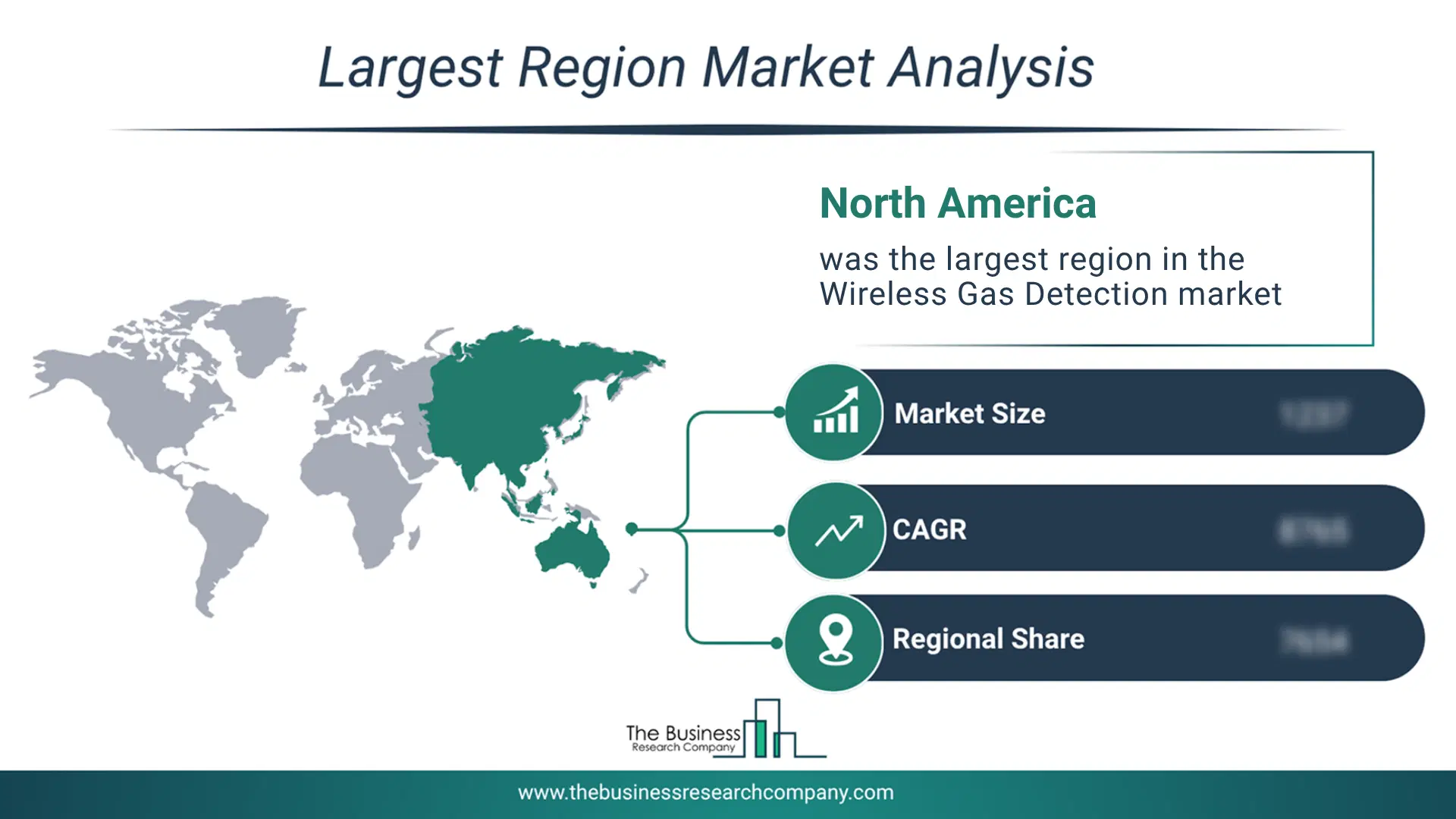
Regional Outlook
North America was the largest region in the wireless gas detection market in 2025. The regions covered in this market report are Asia-Pacific, South East Asia, Western Europe, Eastern Europe, North America, South America, Middle East, Africa The countries covered in this market report are Australia, Brazil, China, France, Germany, India, Indonesia, Japan, Taiwan, Russia, South Korea, UK, USA, Canada, Italy, Spain.What Defines the Wireless Gas Detection Market?
The wireless gas detection market consists of revenues earned by entities by providing services such as smart gas detection and measure gas concentration. The market value includes the value of related goods sold by the service provider or included within the service offering. The wireless gas detection market also includes sales of portable devices and fixed gas detectors and gas detection sensors, which are used in providing wireless gas detection services. Values in this market are ‘factory gate’ values, that is the value of goods sold by the manufacturers or creators of the goods, whether to other entities (including downstream manufacturers, wholesalers, distributors and retailers) or directly to end customers. The value of goods in this market includes related services sold by the creators of the goods.How is Market Value Defined and Measured?
The market value is defined as the revenues that enterprises gain from the sale of goods and/or services within the specified market and geography through sales, grants, or donations in terms of the currency (in USD unless otherwise specified). The revenues for a specified geography are consumption values that are revenues generated by organizations in the specified geography within the market, irrespective of where they are produced. It does not include revenues from resales along the supply chain, either further along the supply chain or as part of other products.
This chart presents market attractiveness based on a quantitative evaluation of growth, competition, strategic alignment, and risk, offering a clear view of opportunity areas for decision-making. This chart is for illustrative purposes; the full report contains the complete analysis.

This chart highlights the Total Addressable Market (TAM) by estimating the maximum revenue opportunity using an assumption-driven approach, supporting strategic planning and opportunity sizing across markets. The chart is illustrative; the full report provides a more comprehensive analysis.
What Key Data and Analysis Are Included in the Wireless Gas Detection Market Report 2026?
The wireless gas detection market research report is one of a series of new reports from The Business Research Company that provides market statistics, including industry global market size, regional shares, competitors with the market share, detailed market segments, market trends and opportunities, and any further data you may need to thrive in the wireless gas detection industry. The market research report delivers a complete perspective of everything you need, with an in-depth analysis of the current and future state of the industry.Wireless Gas Detection Market Report Forecast Analysis
| Report Attribute | Details |
|---|---|
| Market Size Value In 2026 | $2.6 billion |
| Revenue Forecast In 2030 | $3.46 billion |
| Growth Rate | CAGR of 7.3% from 2026 to 2030 |
| Base Year For Estimation | 2025 |
| Actual Estimates/Historical Data | 2020-2025 |
| Forecast Period | 2026 - 2030 |
| Market Representation | Revenue in USD Billion and CAGR from 2026 to 2030 |
| Segments Covered | Type, Technology, End User |
| Regional Scope | Asia-Pacific, Western Europe, Eastern Europe, North America, South America, Middle East, Africa |
| Key Companies Profiled | Siemens AG, Honeywell International Inc., 3M Company, AMETEK Inc., Sensit Technologies, AirTest Technologies Inc., MSA Safety Incorporated, Sensirion AG, Industrial Scientific Corporation, Beijing SDL Technology Co Ltd., Crowcon Detection Instruments Ltd., Comstack Ltd., RKI Instruments Inc., United Electric Control Co, California Analytical Instruments Inc., Aeris Environmental Ltd., Drägerwerk AG & Co KGaA, Yokogawa India Ltd., Detector Electronics Corporation, RAE Systems Inc., Pem-Tech Inc., Tek Troniks Ltd., Ambetronics Engineers Pvt Ltd., Global Detection Systems Corp, Otis Instruments Inc., Teledyne Gas and Flame Detection, New Cosmos Electric Co Ltd., Trolex, International Gas Detectors |
| Customization Scope | Request for Customization |
| Pricing And Purchase Options | Explore Purchase Options |