

Workload Scheduling And Automation Market Report 2026
Global Outlook – By Deployment (On-premise, Cloud), By Enterprise (Large Enterprise, Small And Medium Enterprise), By End-Use (Banking, Financial Services And Insurance (BFSI), Information Technology (IT) And Telecommunication, Retail, Healthcare, Government And Public Sector, Manufacturing, Other End-Users) – Market Size, Trends, Strategies, and Forecast to 2030
Workload Scheduling And Automation Market Overview
• Workload Scheduling And Automation market size has reached to $3.61 billion in 2025 • Expected to grow to $5.62 billion in 2030 at a compound annual growth rate (CAGR) of 8.9% • Growth Driver: The Rise Of Cloud Computing Propels The Workload Scheduling And Automation Market • Market Trend: Innovative Self-Healing Workflow Automation Platforms Transforming Workload Scheduling Market • North America was the largest region in 2025 and Asia-Pacific is the fastest growing region.What Is Covered Under Workload Scheduling And Automation Market?
Workload scheduling and automation refers to the process of efficiently distributing and managing tasks, processes, or jobs among computing resources such as servers, networks, and cloud environments via automated tools and systems. It aims to simplify and optimize the execution of diverse tasks, increase resource utilization, improve system reliability, and eliminate manual involvement in routine processes. Workload scheduling and automation can be deployed on-premise and in the cloud. In workload scheduling and automation, on-premise solutions involve deploying software or tools within the organization's infrastructure to manage and automate tasks such as job scheduling, data processing, and system maintenance. They are used in large enterprises and small and medium enterprises in banking, financial services and insurance (BFSI), information technology (IT) and telecommunication, retail, healthcare, government and public sector, manufacturing, and other end-users.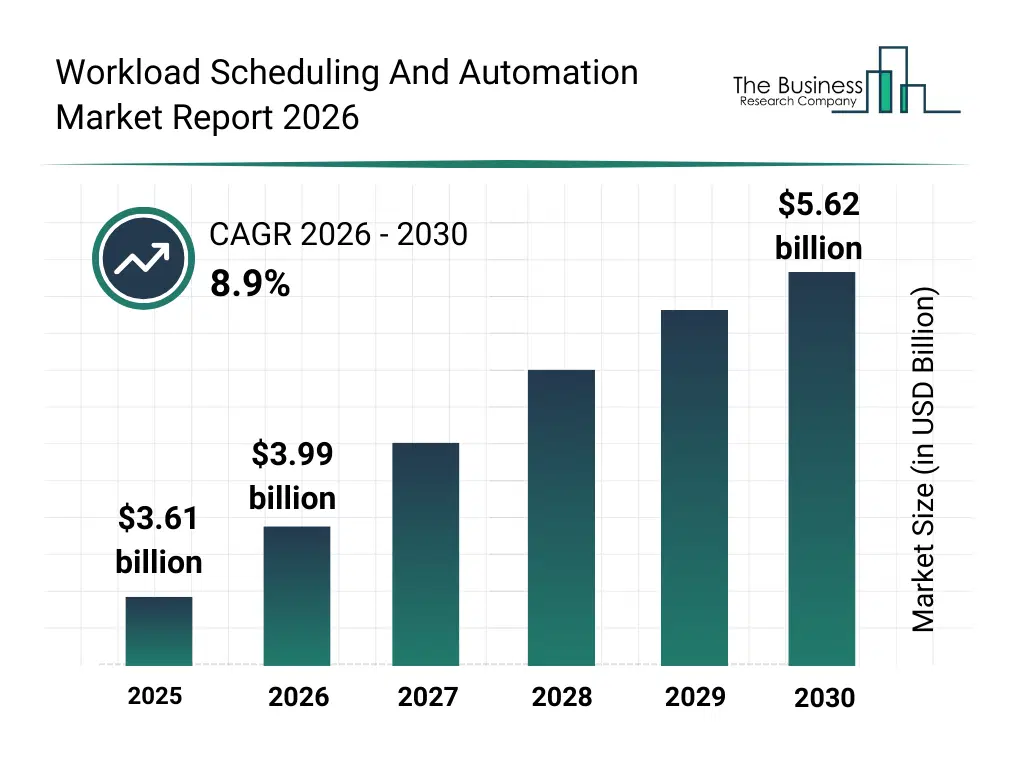
What Is The Workload Scheduling And Automation Market Size and Share 2026?
The workload scheduling and automation market size has grown rapidly in recent years. It will grow from $3.61 billion in 2025 to $3.99 billion in 2026 at a compound annual growth rate (CAGR) of 10.6%. The growth in the historic period can be attributed to increasing enterprise digitization initiatives, rising complexity of IT environments, adoption of batch processing systems, growth of data center operations, increasing reliance on automated IT operations.What Is The Workload Scheduling And Automation Market Growth Forecast?
The workload scheduling and automation market size is expected to see strong growth in the next few years. It will grow to $5.62 billion in 2030 at a compound annual growth rate (CAGR) of 8.9%. The growth in the forecast period can be attributed to increasing migration to hybrid and multi-cloud environments, rising demand for autonomous IT operations, expansion of DevOps and CI/CD pipelines, growing need for real-time workload orchestration, increasing focus on operational efficiency optimization. Major trends in the forecast period include increasing adoption of intelligent workload automation platforms, rising deployment of cloud-based scheduling solutions, growing integration of ai-driven resource optimization, expansion of cross-platform automation capabilities, enhanced focus on high-availability and reliability.
Global Workload Scheduling And Automation Market Segmentation
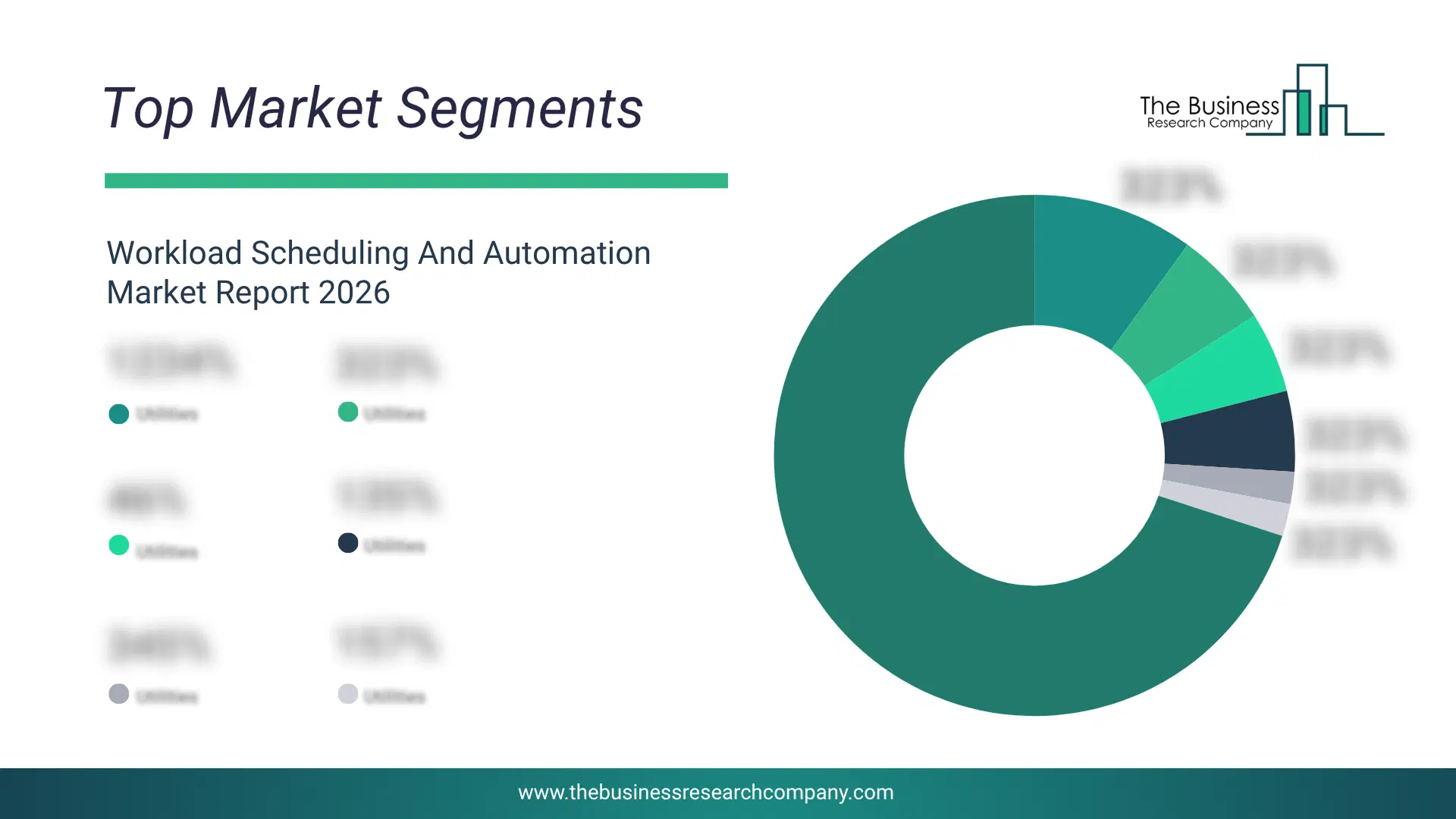
1) By Deployment: On-premise, Cloud 2) By Enterprise: Large Enterprise, Small And Medium Enterprise 3) By End-Use: Banking, Financial Services And Insurance (BFSI), Information Technology (IT) And Telecommunication, Retail, Healthcare, Government And Public Sector, Manufacturing, Other End-Users Subsegments: 1) By On-premise: On-Premise Deployment Solutions, On-Premise Automation Tools 2) By Cloud: Cloud-Based Workload Scheduling Solutions, Cloud-Based Automation ToolsWhat Is The Driver Of The Workload Scheduling And Automation Market?
The growing demand for cloud computing is expected to propel the growth of the workload scheduling and automation market going forward. Cloud computing is the delivery of computing services over the Internet, offering resources such as storage, processing power, and software on a pay-as-you-go basis, enabling scalability, flexibility, and cost-efficiency for users. In workload scheduling and automation, cloud computing allows for the deployment of scalable infrastructure and software resources over the Internet, facilitating efficient management of tasks, data processing, and system maintenance. For instance, in December 2023, according to the Eurostat, a Luxembourg-based Statistical Office of the European Union (EU), in 2023, the proportion of enterprises using cloud computing services increased by 4.2 percentage points compared to the previous year, with e-mail services being the most widely adopted (82.7%), followed by file storage services (68.0%) and office software (66.3%). Therefore, the growing demand for cloud computing is driving the growth of the workload scheduling and automation industryKey Players In The Global Workload Scheduling And Automation Market
Major companies operating in the workload scheduling and automation market are Foxconn Technology Group, Dell Technologies Inc., Bosch Group, Siemens AG, Hitachi Ltd., Lenovo Group Limited, General Electric Company, Intel Corporation, International Business Machines Corporation, Caterpillar Inc., Deere & Company, Mitsubishi Electric Corporation, Schneider Electric SE, Honeywell International Inc., 3M Company, ABB Ltd., Hewlett-Packard Enterprise Company, Danaher Corporation, Johnson Controls International plc, Emerson Electric Co., Rockwell Automation Inc., Fanuc Corporation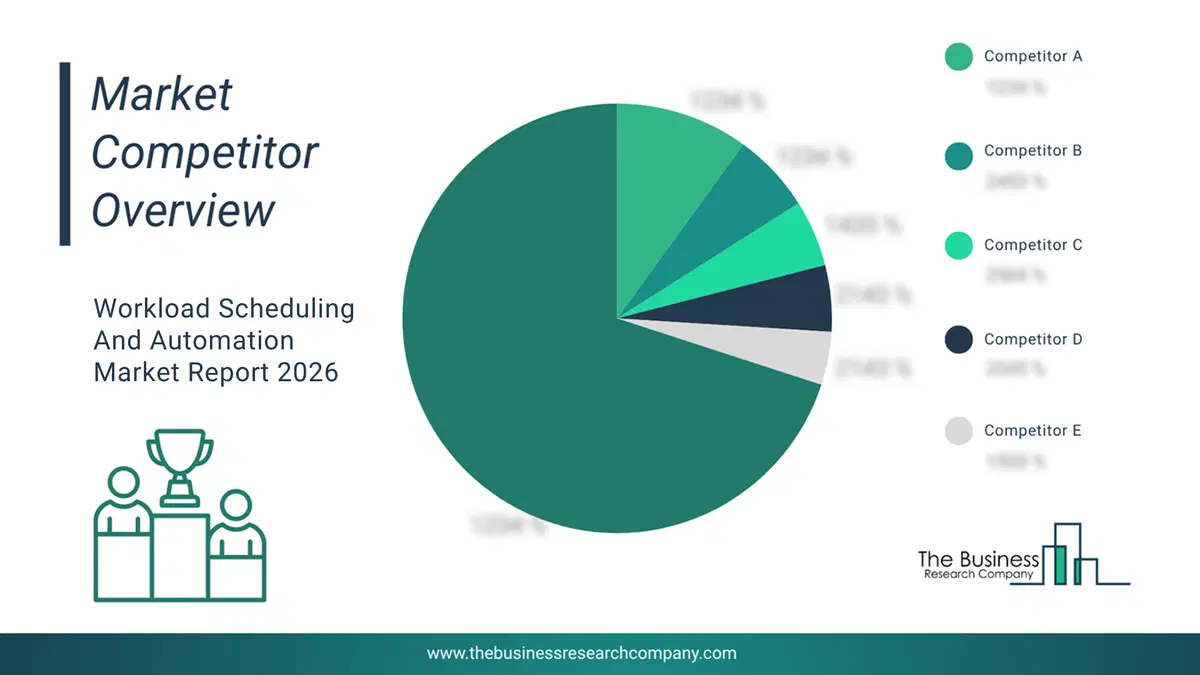
This chart is for illustrative purposes; the full report includes a detailed competitor analysis and comprehensive overview of the top 10 companies in the market.
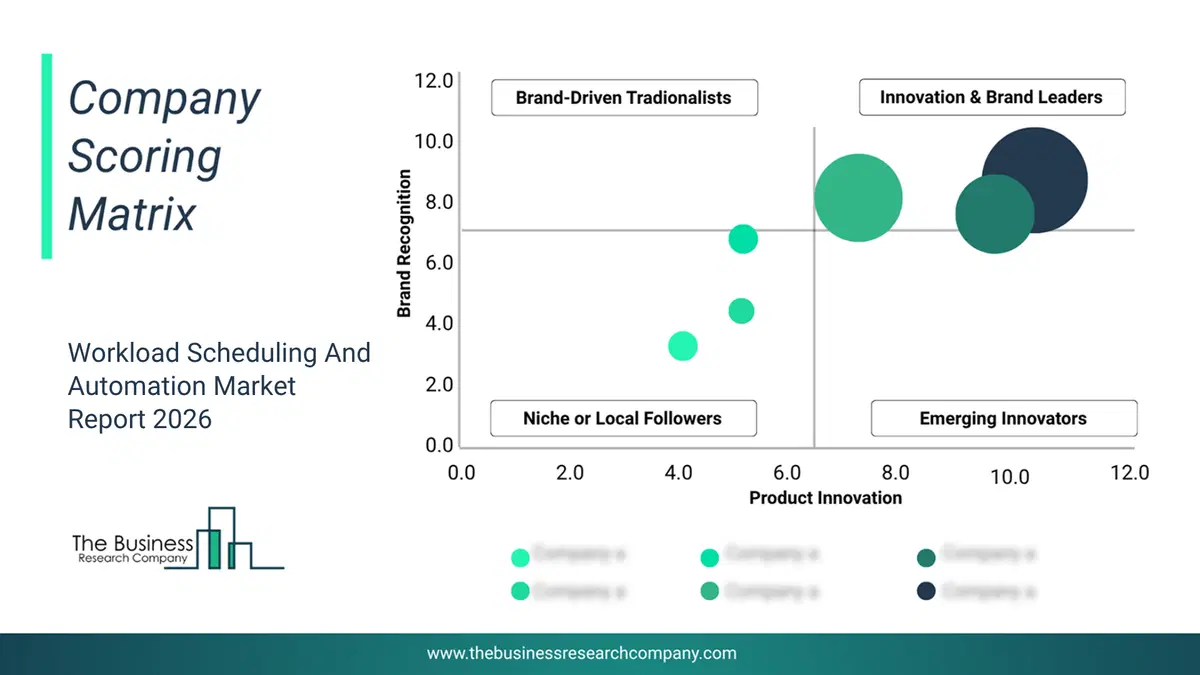
This chart maps companies by product innovation and brand strength, with bubble size indicating relative revenue, helping identify market leaders, challengers, and niche players. This is an illustrative chart; the full report provides a complete and accurate competitive analysis.
Global Workload Scheduling And Automation Market Trends and Insights
Major companies operating in the workload scheduling and automation market are focused on developing innovative solutions, such as self-healing workflow automation platforms, to gain a competitive edge in the market. A self-healing workflow automation platform is a software solution designed to automatically detect, diagnose, and resolve issues or failures within workflows or processes without the need for human intervention. For instance, in September 2024, Qualitia, an India-based technology company, launched Qualitia Boson on the Salesforce AppExchange, an AI-native self-healing test automation platform specifically designed for Salesforce deployments. This innovative technology dramatically shortens the Salesforce testing cycle from weeks to mere hours, allowing Banking, Financial Services, and Insurance (BFSI) clients to implement quality solutions 30% faster, 72% cheaper, and with 100% reliability. Qualitia Boson’s self-healing capabilities automatically adjust to changes in the software environment, facilitating continuous and efficient testing without requiring manual intervention.What Are Latest Mergers And Acquisitions In The Workload Scheduling And Automation Market?
In January 2023, Redwood Software, a US-based company engaged in full-stack automation, acquired Tidal Software for an undisclosed amount. The acquisition adds increased depth and breadth to Redwood’s already extensive suite of automation solutions, which includes RunMyJobs, ActiveBatch, and JSCAPE. Tidal Software is a US-based provider of enterprise workload automation solutions that orchestrate the execution of complex workflows across systems, applications, and IT environments.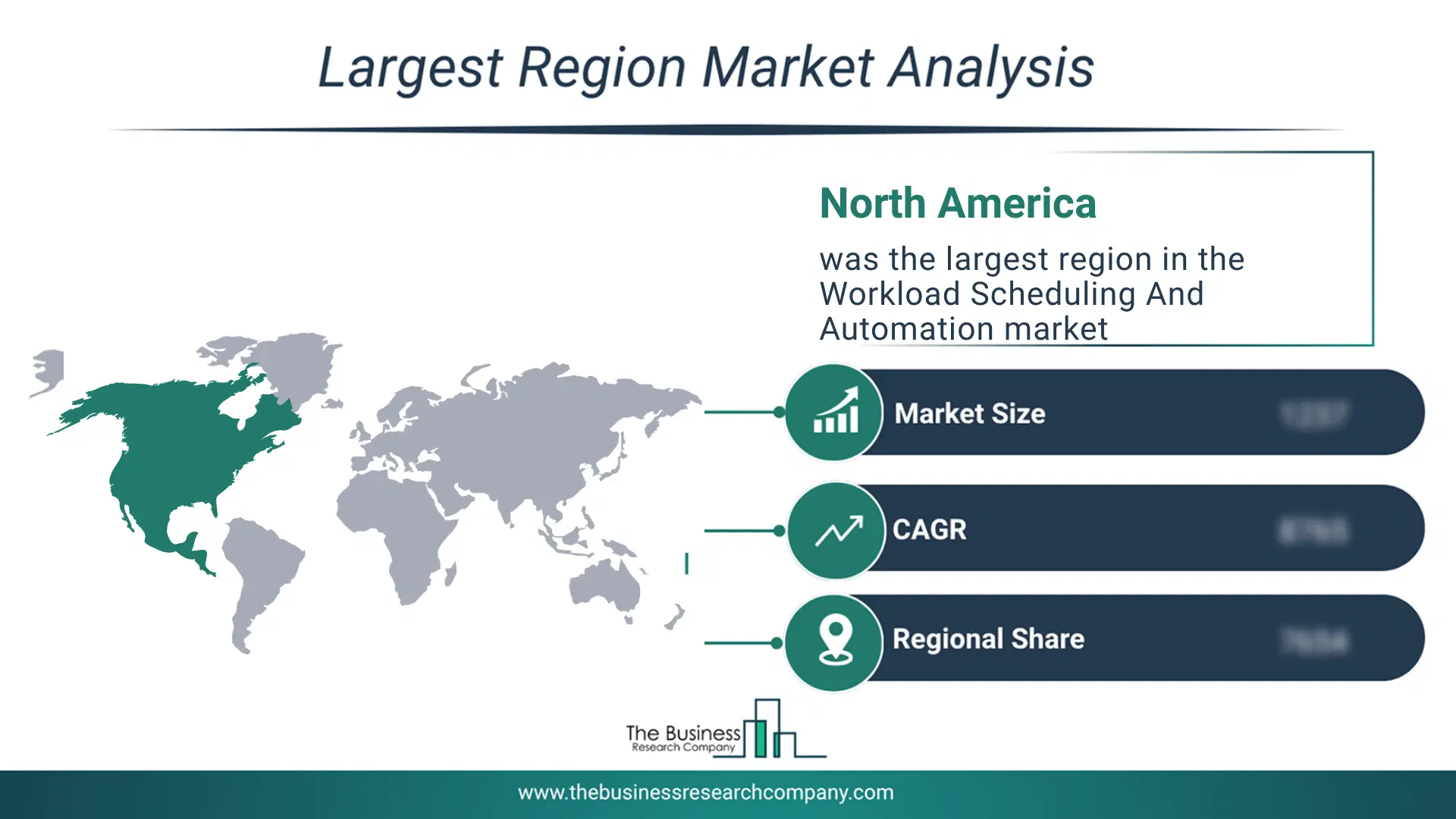
Regional Insights
North America was the largest region in the workload scheduling and automation market in 2025. Asia-Pacific is expected to be the fastest-growing region in the forecast period. The regions covered in this market report are Asia-Pacific, South East Asia, Western Europe, Eastern Europe, North America, South America, Middle East, Africa. The countries covered in this market report are Australia, Brazil, China, France, Germany, India, Indonesia, Japan, Taiwan, Russia, South Korea, UK, USA, Canada, Italy, Spain.What Defines the Workload Scheduling And Automation Market?
The workload scheduling and automation market includes revenues earned by entities by providing services such as task scheduling, dependency management, cloud orchestration, disaster recovery, and backup. The market value includes the value of related goods sold by the service provider or included within the service offering. Only goods and services traded between entities or sold to end consumers are included.How is Market Value Defined and Measured?
The market value is defined as the revenues that enterprises gain from the sale of goods and/or services within the specified market and geography through sales, grants, or donations in terms of the currency (in USD unless otherwise specified). The revenues for a specified geography are consumption values that are revenues generated by organizations in the specified geography within the market, irrespective of where they are produced. It does not include revenues from resales along the supply chain, either further along the supply chain or as part of other products.
This chart presents market attractiveness based on a quantitative evaluation of growth, competition, strategic alignment, and risk, offering a clear view of opportunity areas for decision-making. This chart is for illustrative purposes; the full report contains the complete analysis.

This chart highlights the Total Addressable Market (TAM) by estimating the maximum revenue opportunity using an assumption-driven approach, supporting strategic planning and opportunity sizing across markets. The chart is illustrative; the full report provides a more comprehensive analysis.
What Key Data and Analysis Are Included in the Workload Scheduling And Automation Market Report 2026?
The workload scheduling and automation market research report is one of a series of new reports from The Business Research Company that provides market statistics, including industry global market size, regional shares, competitors with the market share, detailed market segments, market trends and opportunities, and any further data you may need to thrive in the workload scheduling and automation industry. The market research report delivers a complete perspective of everything you need, with an in-depth analysis of the current and future state of the industry.Workload Scheduling And Automation Market Report Forecast Analysis
| Report Attribute | Details |
|---|---|
| Market Size Value In 2026 | $3.99 billion |
| Revenue Forecast In 2030 | $5.62 billion |
| Growth Rate | CAGR of 10.6% from 2026 to 2030 |
| Base Year For Estimation | 2025 |
| Actual Estimates/Historical Data | 2020-2025 |
| Forecast Period | 2026 - 2030 |
| Market Representation | Revenue in USD Billion and CAGR from 2026 to 2030 |
| Segments Covered | Deployment, Enterprise, End-Use |
| Regional Scope | Asia-Pacific, Western Europe, Eastern Europe, North America, South America, Middle East, Africa |
| Country Scope | The countries covered in the report are Australia, Brazil, China, France, Germany, India, Indonesia, Japan, Taiwan, Russia, South Korea, UK, USA, Canada, Italy, Spain. |
| Key Companies Profiled | Foxconn Technology Group, Dell Technologies Inc., Bosch Group, Siemens AG, Hitachi Ltd., Lenovo Group Limited, General Electric Company, Intel Corporation, International Business Machines Corporation, Caterpillar Inc., Deere & Company, Mitsubishi Electric Corporation, Schneider Electric SE, Honeywell International Inc., 3M Company, ABB Ltd., Hewlett-Packard Enterprise Company, Danaher Corporation, Johnson Controls International plc, Emerson Electric Co., Rockwell Automation Inc., Fanuc Corporation |
| Customization Scope | Request for Customization |
| Pricing And Purchase Options | Explore Purchase Options |