
Aerospace Energy Storage Market Report 2026
Global Outlook – By Type (Lead Acid Battery, Lithium Battery, Other Types), By Technology (Batteries, Flywheels, Fuel Cells, Other Technology), By Application (Aircraft, Spacecraft) – Market Size, Trends, Strategies, and Forecast to 2030
Aerospace Energy Storage Market Overview
• Aerospace Energy Storage market size has reached to $2.06 billion in 2025 • Expected to grow to $3.1 billion in 2030 at a compound annual growth rate (CAGR) of 8.5% • Growth Driver: Growing Aerospace Industry Propels Growth In The Aerospace Energy Storage Market • Market Trend: High-Energy-Density Batteries Driving Extended Range And Enhanced Performance In Electric Aviation And Beyond • Europe was the largest region in 2025 and Asia-Pacific is the fastest growing region.Market Gains By 2030 – Top Opportunities By Segment
Market Gain identifies the most promising market opportunities by highlighting the segments or products expected to generate the highest incremental revenue growth over the next five years.
What Is Covered Under Aerospace Energy Storage Market?
Aerospace energy storage refers to the technologies, systems, and components used to store and supply energy in aerospace applications. These systems ensure reliable and efficient power supply for aerospace applications while meeting the unique requirements and challenges of the aerospace industry, such as weight restrictions, space limitations, safety considerations, and environmental sustainability. The main types of the aerospace energy storage include lead acid battery, lithium battery, and others. Lead acid batteries refer to electrochemical energy storage systems that use lead dioxide and sponge lead as electrodes and sulfuric acid as the electrolyte. There are technologies such as batteries, flywheels, fuel cells, and others, and they are used by several applications such as aircraft and spacecraft.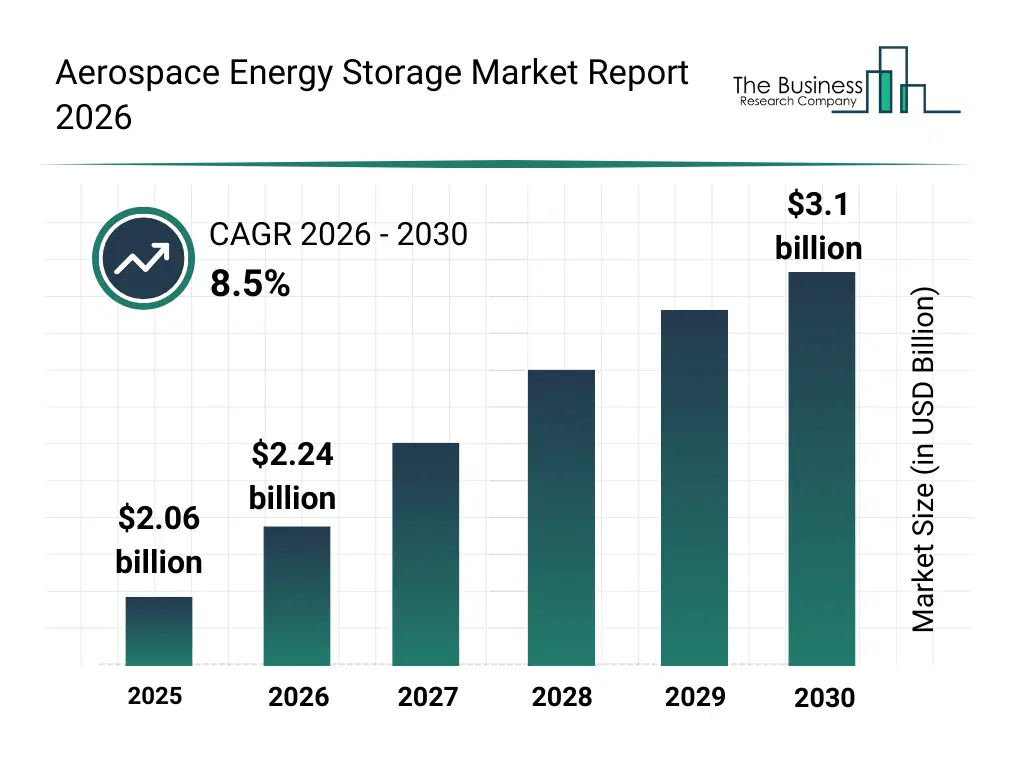
What Is The Aerospace Energy Storage Market Size and Share 2026?
The aerospace energy storage market size has grown strongly in recent years. It will grow from $2.06 billion in 2025 to $2.24 billion in 2026 at a compound annual growth rate (CAGR) of 8.6%. The growth in the historic period can be attributed to early adoption of onboard energy storage systems to support essential aerospace functions, increasing demand for lightweight power solutions driven by strict weight and space constraints, initial development of energy conversion systems to stabilize power supply in aircraft, rising use of advanced materials to enhance storage efficiency and safety, expansion of electrical subsystem requirements in modern aerospace platforms.What Is The Aerospace Energy Storage Market Growth Forecast?
The aerospace energy storage market size is expected to see strong growth in the next few years. It will grow to $3.1 billion in 2030 at a compound annual growth rate (CAGR) of 8.5%. The growth in the forecast period can be attributed to growing adoption of high-density storage technologies to support electric and hybrid aircraft, increasing development of advanced materials-based storage for improved performance and sustainability, rising integration of energy storage systems in next-generation avionics and propulsion architectures, expansion of aerospace electrification initiatives requiring more efficient power management, technological advancements enabling safer and longer-duration energy storage solutions. Major trends in the forecast period include advancements in lightweight aerospace battery systems, growing integration of high-density energy storage for spacecraft, development of thermal-resilient power storage materials, increasing use of hybrid energy storage architectures, rising demand for safe, compact, and vibration-resistant aerospace batteries.
Global Aerospace Energy Storage Market Segmentation
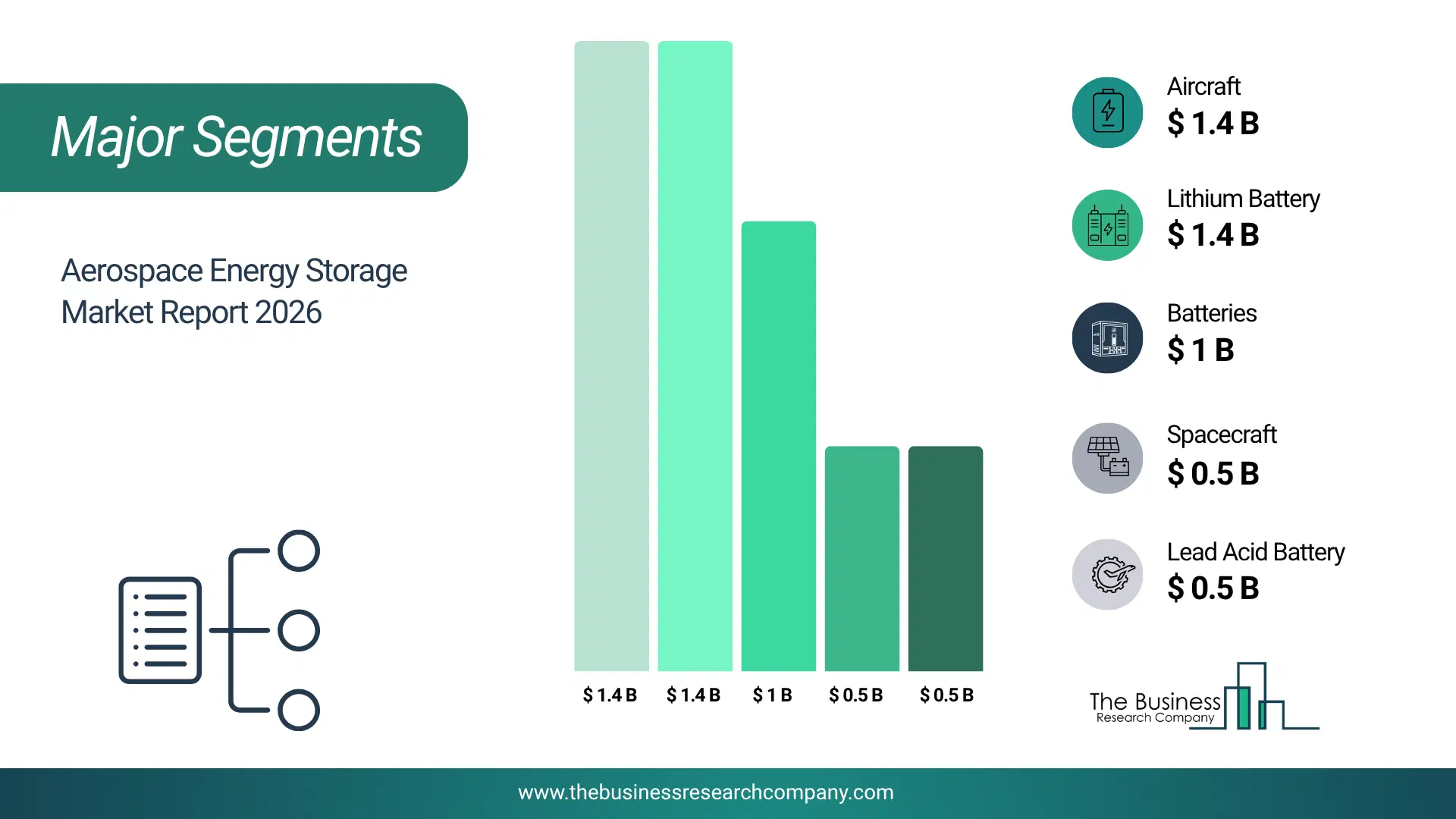
1) By Type: Lead Acid Battery, Lithium Battery, Other Types 2) By Technology: Batteries, Flywheels, Fuel Cells, Other Technology 3) By Application: Aircraft, Spacecraft Subsegments: 1) By Lead Acid Battery: Flooded Lead Acid Battery, Valve-Regulated Lead Acid (VRLA) Battery 2) By Lithium Battery: Lithium-Ion Battery, Lithium Polymer Battery, Lithium Iron Phosphate (LiFePO4) Battery 3) By Other Types: Nickel-Cadmium (NiCd) Battery, Nickel-Metal Hydride (NiMH) Battery, Solid-State Batteries, Ultracapacitors The top segments in the aerospace energy storage market will be: • Aircraft will reach $1482.69 Million by 2025. • Lithium Battery will reach $1400.44 Million by 2025. • Batteries will reach $1035 Million by 2025. • Spacecraft will reach $588.34 Million by 2025. • Lead Acid Battery will reach $526.03 Million by 2025.What Is Driver Of The Aerospace Energy Storage Market?
The rising adoption of unmanned aerial vehicles (UAVs) is expected to propel the growth of the aerospace energy storage market going forward. Unmanned aerial vehicles are aircraft operated without an onboard pilot, controlled remotely or autonomously for various commercial, military, and civilian applications. The adoption of UAVs is growing due to expanding commercial applications and clearer regulations, as organizations across industries deploy drones for package delivery, infrastructure inspection, agriculture, and emergency services. The increasing deployment of UAVs drives demand for advanced aerospace energy storage solutions, as these aircraft require high-energy-density lithium-based batteries to support extended flight times, payload capacity, and mission-critical operations in extreme environmental conditions. For instance, in June 2025, according to the Ministry of Defence, a UK-based government department, in 2025, the UK is committing a record US$472 million (£350 million) to strengthen Ukraine's drone supply, aiming to raise the number of drones delivered from 10,000 in 2024 to 100,000. Therefore, the rising adoption of unmanned aerial vehicles is driving the growth of the aerospace energy storage industry.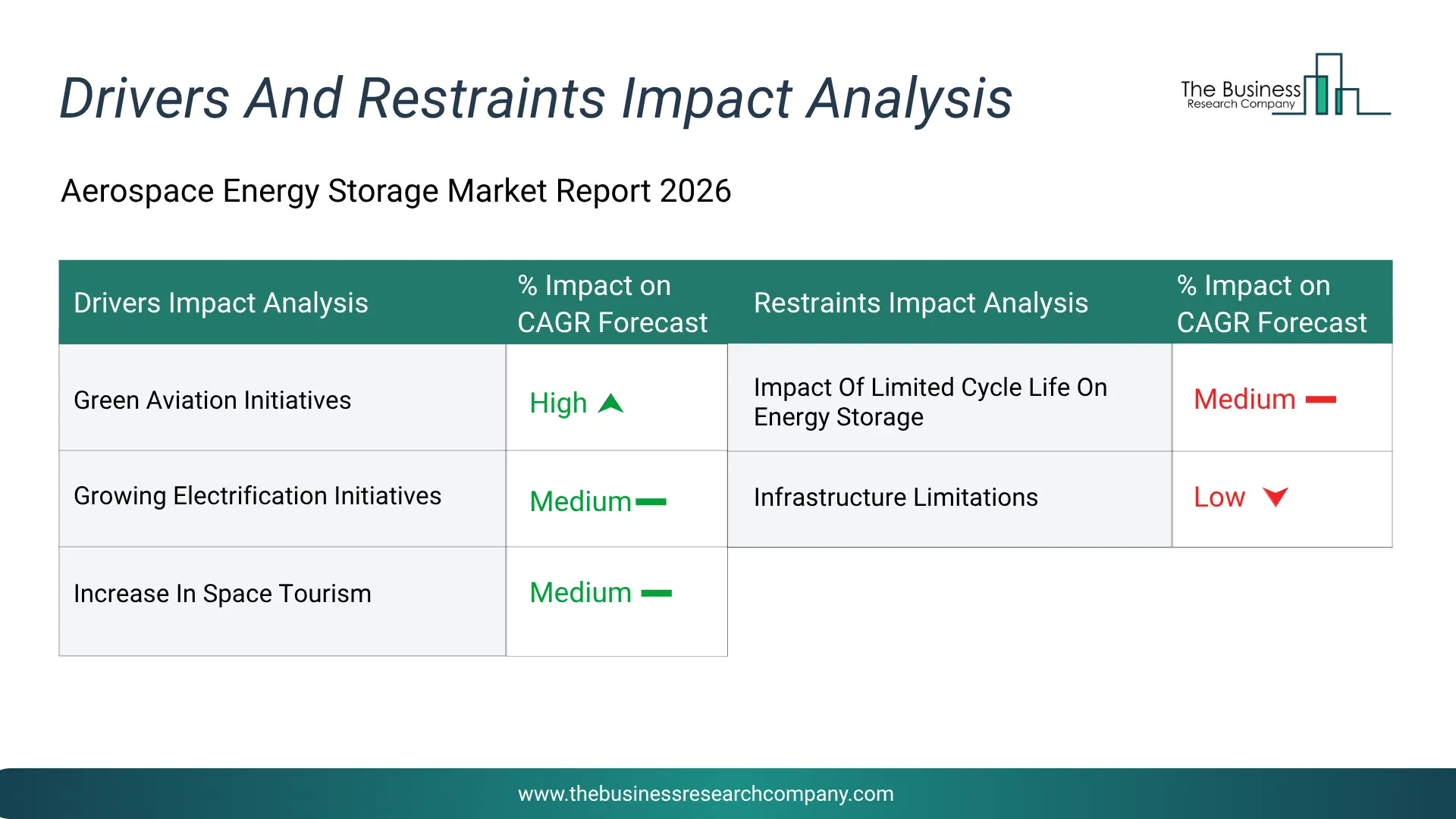
Infographic Chart Showing Key Market Drivers Analysis And Restraints For Aerospace Energy Storage Market
The chart presents an impact analysis of key drivers and restraints, quantifying their relative influence on the market's growth rate and helping assess the balance between growth enablers and limiting factors. This chart offers a high-level perspective; the full report contains more detailed insights.
How Will The Drivers Impact Growth In The Global Aerospace Energy Storage Market?
• Green Aviation Initiatives (High) – The increasing emphasis on green aviation initiatives will become a key driver of growth in the aerospace energy storage market by 2030. As aerospace companies face stricter environmental regulations, increasing demand for fuel-efficient and low-emission aircraft, and the rising adoption of electric and hybrid-electric propulsion systems, they are investing in advanced energy storage technologies. Solutions such as next-generation lithium-ion batteries, solid-state batteries, and hydrogen fuel cells are being developed and integrated to improve energy density, reduce weight, and enhance the range and efficiency of electric and hybrid aircraft. As a result, the growing deployment of green aviation initiatives is anticipated to contributing to a 2.0% annual growth in the market. • Growing Electrification Initiatives (Medium) – The growing focus on electrification initiatives will emerge as a major factor driving the expansion of the aerospace energy storage market by 2030. As the sector faces increasing pressure to reduce greenhouse gas emissions, meet global sustainability goals, and enhance fuel efficiency, aerospace manufacturers are prioritizing electrification of aircraft systems. This shift is driving investments in high-performance energy storage technologies, including high-capacity lithium-ion batteries, solid-state batteries, and hybrid energy systems. Consequently, the accelerating adoption of electrification initiatives capabilities is projected to contributing to a 1.5% annual growth in the market. • Increase In Space Tourism (Medium) – The expanding integration of international tourism processes will serve as a key growth catalyst for the aerospace energy storage market by 2030. As global air travel continues to recover and grow, airlines and aircraft manufacturers are under increasing pressure to meet higher passenger volumes while complying with stricter environmental regulations and customer expectations for greener travel. This trend is encouraging the development and integration of next-generation energy storage technologies, such as high-density lithium-ion and solid-state batteries, to power electric and hybrid-electric aircraft capable of supporting short-haul and regional routes efficiently. Therefore, this growing integration of international tourism operations is projected to supporting to a 1.0% annual growth in the market. • Rising International Tourism (Low) – The increasing emphasis on space tourism will become a significant driver contributing to the growth of the aerospace energy storage market by 2030. As private companies expand their space tourism offerings and more passengers seek suborbital and orbital experiences, the need for reliable, high-performance energy storage systems has become critical. This trend is accelerating investment in advanced battery technologies, such as radiation-hardened lithium-ion and solid-state batteries, to support propulsion, life support, and onboard power systems in reusable spacecraft. Energy storage innovations are also crucial for optimizing spacecraft weight, improving turnaround times between missions, and enhancing energy efficiency in harsh space environments. Consequently, the rising adoption of space tourism strategies is projected to contributing to a 0.5% annual growth in the market.How Will The Restraints Impact Growth In The Global Aerospace Energy Storage Market?
• Impact Of Limited Cycle Life On Energy Storage (Medium) – Impact Of Limited Cycle Life On Energy Storage will restrict the growth of the Aerospace Energy Storage market during the forecast period. Aerospace energy storage systems face limitations in cycle life affecting replacement frequency and costs. Limited cycle life can affect system reliability and increase operational costs. Cycle life constraints can limit the adoption of certain battery technologies in aerospace applications. • Infrastructure Limitations (Medium) – Infrastructure Limitations will restrict the growth of the Aerospace Energy Storage market during the forecast period. Aerospace electrification requires specialized charging and maintenance infrastructure that may be limited. Infrastructure gaps can affect the deployment of electric aircraft and energy storage systems. Infrastructure requirements can delay the adoption of electrified aerospace technologies.Key Players In The Global Aerospace Energy Storage Market
Major companies operating in the aerospace energy storage market are Tesla Inc, GE Energy, Raytheon Technologies, The Boeing Company, Lockheed Martin, BYD Co. Ltd, Northrop Grumman, Honeywell Aerospace, Jabil Energy Storage, Siemens Energy AG, NextEra Energy Resources, Eaton Corporation plc, Rolls-Royce PLC, Parker Hannifin, Sichuan Changhong Battery Co. Ltd., GreenSmith Energy Management Systems, Sungrow Power Supply Co.Ltd, Samsung SDI, Fluence Energy Inc., Saft Batteries, LG Energy Solution Ltd, Meggitt PLC, Invenergy LLC, Enphase Energy, A123 Systems LLC, Eagle-Picher Technologies LLC, ComEd, Electric Power Systems Inc, NEC Energy Solutions, EAS Batteries GmbH, Kokam Co. Ltd, Xtreme Power, Custom Cells, EEnovate Technology, nanoFlowcell Holdings plc, Cuberg Inc., Gnanomat S.L., Electroflight Ltd., Nsure Reliable Power Solutions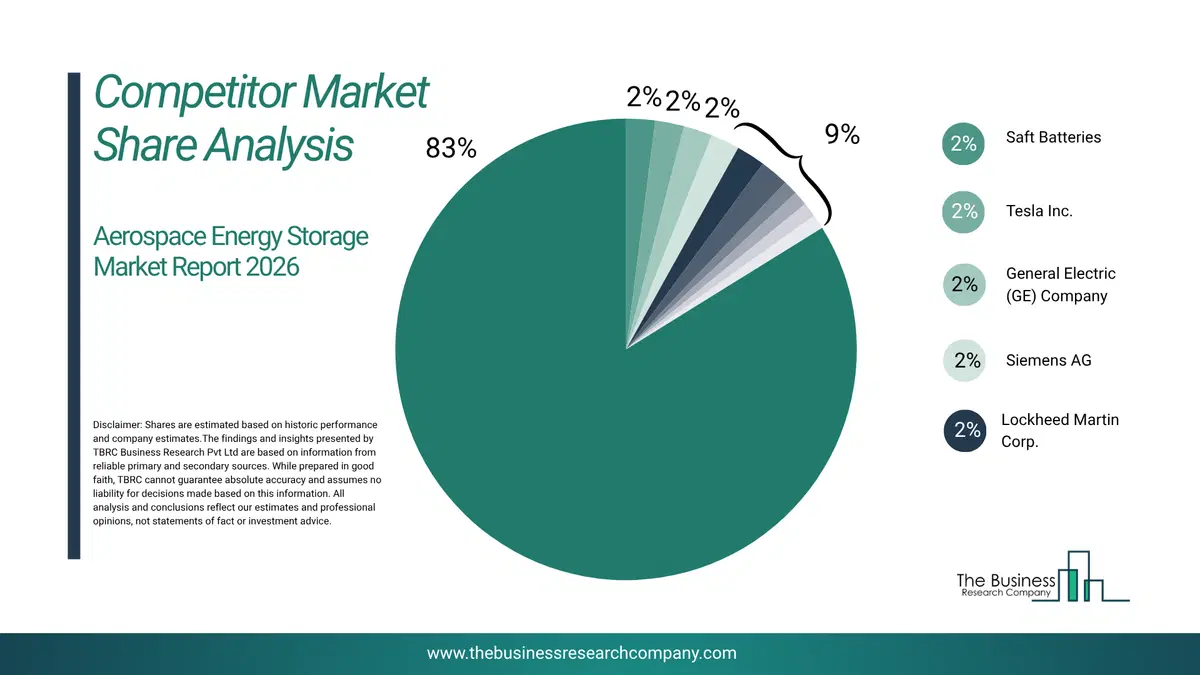
This chart is for illustrative purposes; the full report includes a detailed competitor analysis and comprehensive overview of the top 10 companies in the market.
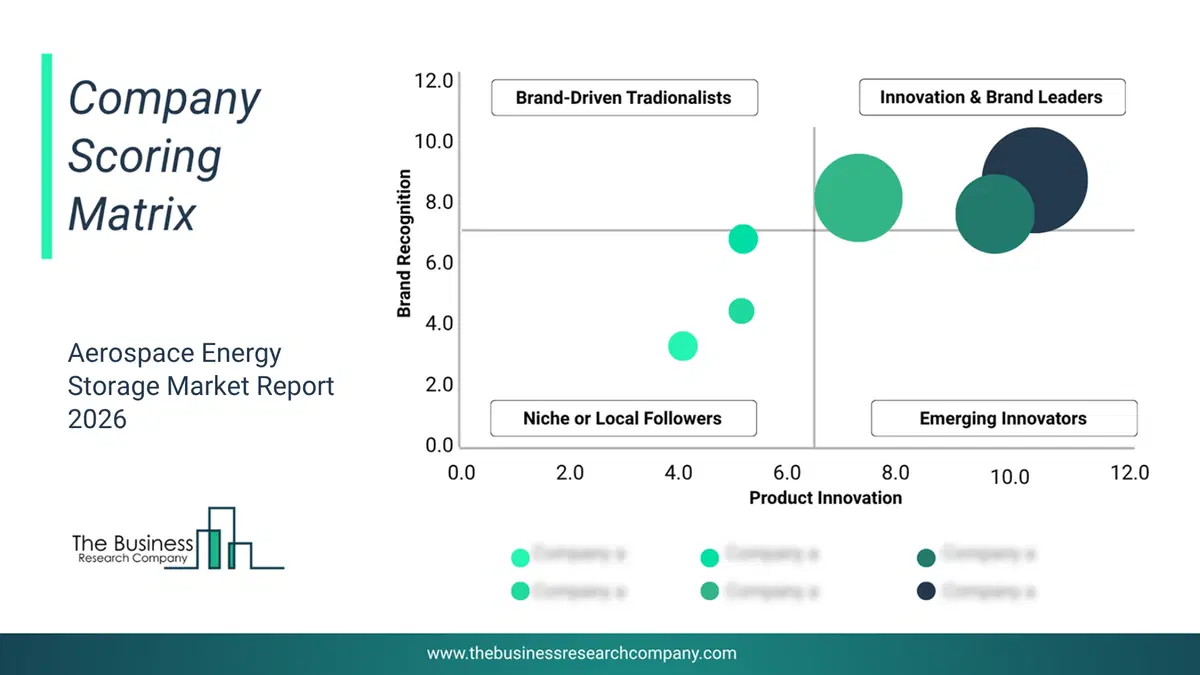
This chart maps companies by product innovation and brand strength, with bubble size indicating relative revenue, helping identify market leaders, challengers, and niche players. This is an illustrative chart; the full report provides a complete and accurate competitive analysis.
Global Aerospace Energy Storage Market Trends and Insights
Major companies operating in the aerospace energy storage market are focusing on developing innovative products such as high-energy-density batteries to extend aircraft range and improve performance. High-energy-density batteries are batteries that store a large amount of energy relative to their weight or volume, helping extend range, increase payload, and improve efficiency in electric aircraft and other transport applications. For instance, in June 2025, MAGNIX TECHNOLOGIES PTY LTD., a US-based manufacturing company, launched its next-generation Samson battery powered by a 400 Wh/kg cell. The high-energy-density battery is designed to extend the range and payload of electric aircraft, including airplanes, helicopters, and eVTOLs, while also supporting applications in defense, industry, energy storage, and marine sectors. The Samson battery offers long cycle life, advanced safety features, and easy integration, making it suitable for both commercial and military use. Its versatility also allows deployment in non-aerospace sectors such as stationary energy storage and marine propulsion, highlighting the growing trend of innovative batteries that improve performance, reduce environmental impact, and advance the future of electric mobility.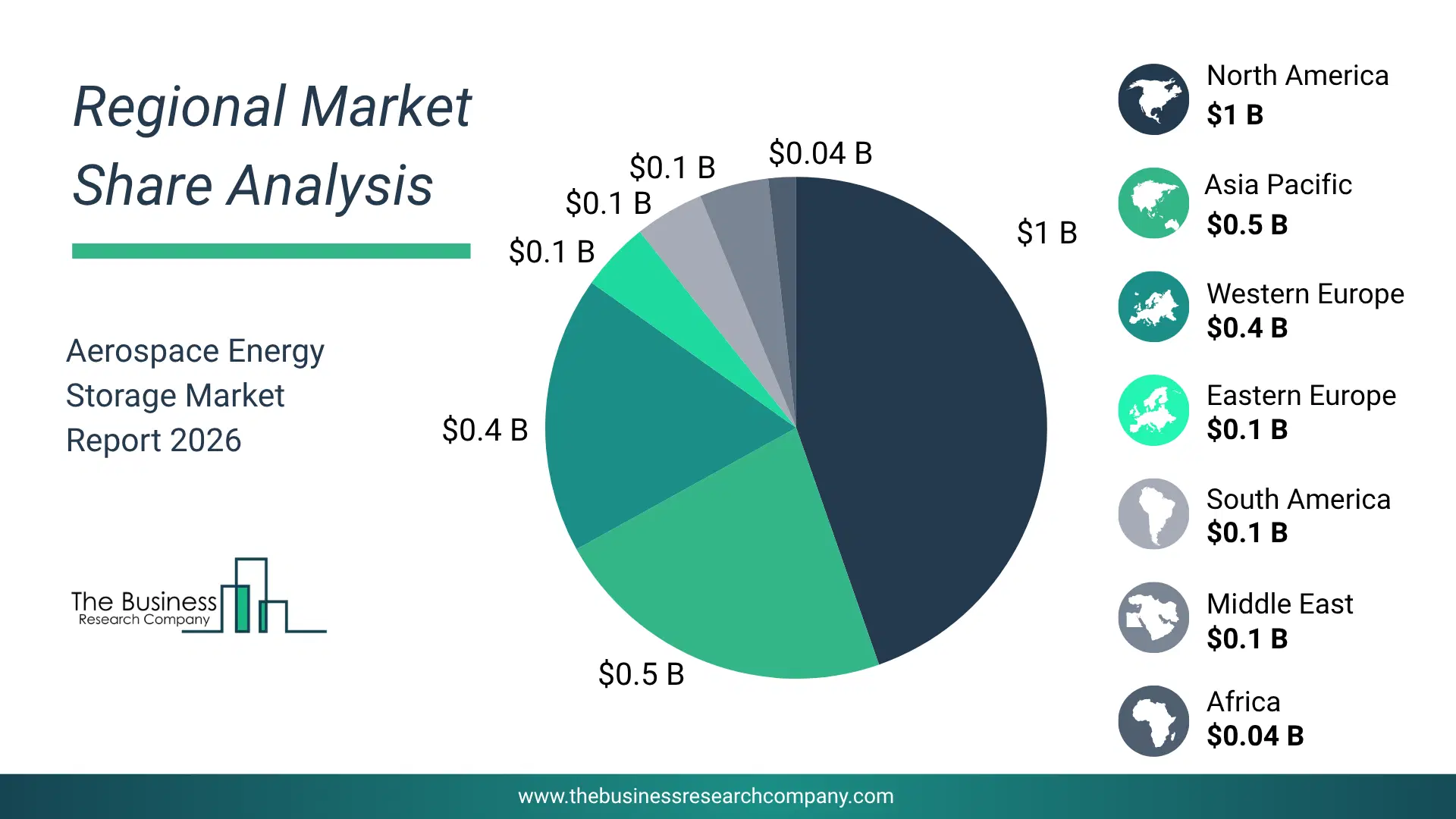
Regional Insights
Europe was the largest region in the aerospace energy storage market in 2025. Asia-Pacific is expected to be the fastest-growing region in the forecast period. The regions covered in this market report are Asia-Pacific, South East Asia, Western Europe, Eastern Europe, North America, South America, Middle East, Africa. The countries covered in this market report are Australia, Brazil, China, France, Germany, India, Indonesia, Japan, Taiwan, Russia, South Korea, UK, USA, Canada, Italy, SpainWhat Defines the Aerospace Energy Storage Market?
The aerospace energy storage market consists of sales of energy conversion systems and advanced materials-based storage. Values in this market are ‘factory gate’ values, that is the value of goods sold by the manufacturers or creators of the goods, whether to other entities (including downstream manufacturers, wholesalers, distributors, and retailers) or directly to end customers. The value of goods in this market includes related services sold by the creators of the goods.How is Market Value Defined and Measured?
The market value is defined as the revenues that enterprises gain from the sale of goods and/or services within the specified market and geography through sales, grants, or donations in terms of the currency (in USD unless otherwise specified). The revenues for a specified geography are consumption values that are revenues generated by organizations in the specified geography within the market, irrespective of where they are produced. It does not include revenues from resales along the supply chain, either further along the supply chain or as part of other products.
This chart presents market attractiveness based on a quantitative evaluation of growth, competition, strategic alignment, and risk, offering a clear view of opportunity areas for decision-making. This chart is for illustrative purposes; the full report contains the complete analysis.

This chart highlights the Total Addressable Market (TAM) by estimating the maximum revenue opportunity using an assumption-driven approach, supporting strategic planning and opportunity sizing across markets. The chart is illustrative; the full report provides a more comprehensive analysis.
What Key Data and Analysis Are Included in the Aerospace Energy Storage Market Report 2026?
The aerospace energy storage market research report is one of a series of new reports from The Business Research Company that provides market statistics, including industry global market size, regional shares, competitors with the market share, detailed market segments, market trends and opportunities, and any further data you may need to thrive in the aerospace energy storage industry. The market research report delivers a complete perspective of everything you need, with an in-depth analysis of the current and future state of the industry.Aerospace Energy Storage Market Report Forecast Analysis
| Report Attribute | Details |
|---|---|
| Market Size Value In 2026 | $2.24 billion |
| Revenue Forecast In 2030 | $3.1 billion |
| Growth Rate | CAGR of 8.6% from 2026 to 2030 |
| Base Year For Estimation | 2025 |
| Actual Estimates/Historical Data | 2020-2025 |
| Forecast Period | 2026 - 2030 |
| Market Representation | Revenue in USD Billion and CAGR from 2026 to 2030 |
| Segments Covered | Type, Technology, Application |
| Regional Scope | Asia-Pacific, Western Europe, Eastern Europe, North America, South America, Middle East, Africa |
| Country Scope | The countries covered in the report are Australia, Brazil, China, France, Germany, India, Indonesia, Japan, Taiwan, Russia, South Korea, UK, USA, Canada, Italy, Spain. |
| Key Companies Profiled | Tesla Inc, GE Energy, Raytheon Technologies, The Boeing Company, Lockheed Martin, BYD Co. Ltd, Northrop Grumman, Honeywell Aerospace, Jabil Energy Storage, Siemens Energy AG, NextEra Energy Resources, Eaton Corporation plc, Rolls-Royce PLC, Parker Hannifin, Sichuan Changhong Battery Co. Ltd., GreenSmith Energy Management Systems, Sungrow Power Supply Co.Ltd, Samsung SDI, Fluence Energy Inc., Saft Batteries, LG Energy Solution Ltd, Meggitt PLC, Invenergy LLC, Enphase Energy, A123 Systems LLC, Eagle-Picher Technologies LLC, ComEd, Electric Power Systems Inc, NEC Energy Solutions, EAS Batteries GmbH, Kokam Co. Ltd, Xtreme Power, Custom Cells, EEnovate Technology, nanoFlowcell Holdings plc, Cuberg Inc., Gnanomat S.L., Electroflight Ltd., Nsure Reliable Power Solutions |
| Customization Scope | Request for Customization |
| Pricing And Purchase Options | Explore Purchase Options |