
Agricultural Biologics Market Report 2026
Global Outlook – By Type (Biopesticides, Biofertilizers, Biostimulants), By Source (Microbials, Macrobials, Biochemicals, Other Sources), By Mode of Application (Foliar Spray, Soil Treatment, Seed Treatment, Post-Harvest), By Application (Cereals And Grains, Oilseed And Pulses, Fruits And Vegetables, Turf And Ornamentals, Other Applications) – Market Size, Trends, Strategies, and Forecast to 2030
Agricultural Biologics Market Overview
• Agricultural Biologics market size has reached to $16.45 billion in 2025 • Expected to grow to $33.51 billion in 2030 at a compound annual growth rate (CAGR) of 15.2% • Growth Driver: Increasing Pest Outbreaks Drive Growth In The Agricultural Biologics Market • Market Trend: Bionema Launches Biodegradable Surfactant Soil-Jet BSP100 For Sustainable Agriculture • North America was the largest region in 2025 and Asia-Pacific is the fastest growing region.What Is Covered Under Agricultural Biologics Market?
The agricultural biologicals are used to safeguard plants against pests, improve yield and prevent diseases. Agricultural biologicals refer to microorganisms or biochemical derived from naturally occurring microorganisms, plant extracts, insects, or other organic matter. It is combined with synthetic crop protection products as an integrated management solution. Agricultural biologics aims to provide a holistic approach for growers to maximize crop yields, improve quality, and minimize pest resistance. The main types of agricultural biologicals are biopesticides, biofertilizers, and biostimulants. Biopesticides are biological pesticides that are derived from biological materials such as plants, animals, bacteria, and certain minerals. These are derived from microbials, macrobials, biochemicals, other sources and applied by foliar spray, soil treatment, seed treatment, and post-harvest mode of application. The various applications include cereals and grains, oilseed and pulses, fruits and vegetables, turf and ornamentals, and other applications.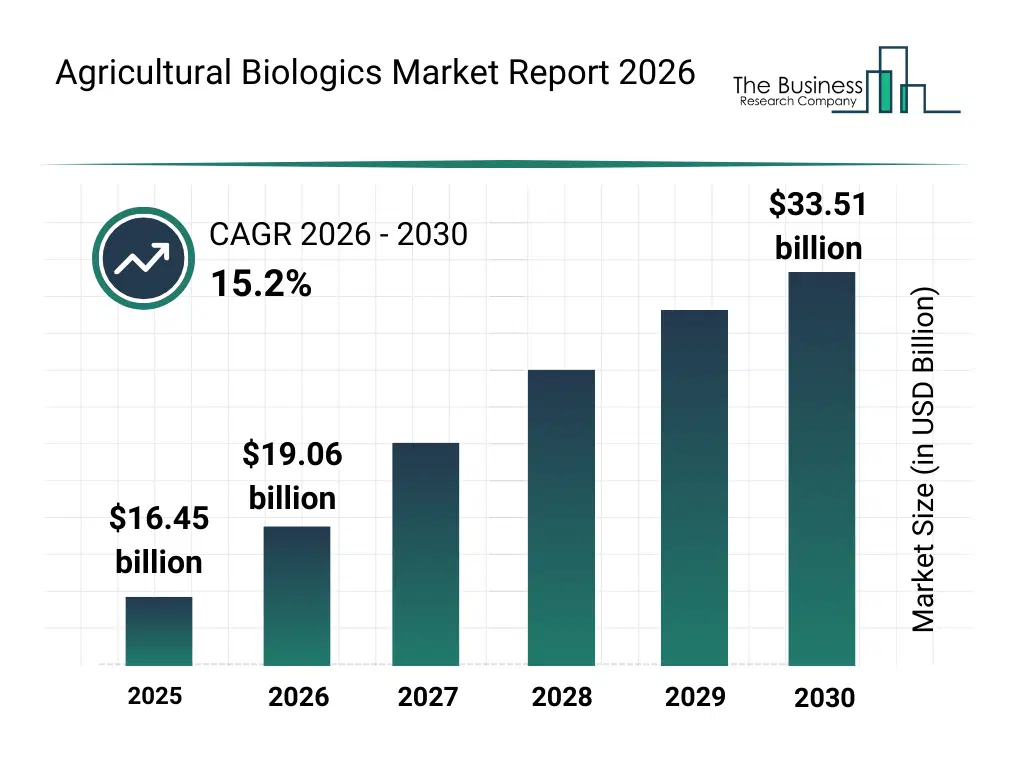
What Is The Agricultural Biologics Market Size and Share 2026?
The agricultural biologics market size has grown rapidly in recent years. It will grow from $16.45 billion in 2025 to $19.06 billion in 2026 at a compound annual growth rate (CAGR) of 15.8%. The growth in the historic period can be attributed to rising awareness of Sustainable Agriculture, increasing regulatory restrictions on chemical pesticides, growth of organic farming acreage, adoption of integrated crop management practices, availability of microbial formulations.What Is The Agricultural Biologics Market Growth Forecast?
The agricultural biologics market size is expected to see rapid growth in the next few years. It will grow to $33.51 billion in 2030 at a compound annual growth rate (CAGR) of 15.2%. The growth in the forecast period can be attributed to expansion of precision agriculture adoption, rising demand for sustainable yield enhancement solutions, increasing investment in biological R&D, growing acceptance of biological inputs among farmers, innovation in formulation technologies. Major trends in the forecast period include increasing adoption of bio-based crop protection solutions, rising demand for integrated pest management inputs, growing use of microbial-based products, expansion of residue-free farming practices, enhanced focus on soil health improvement.
Global Agricultural Biologics Market Segmentation
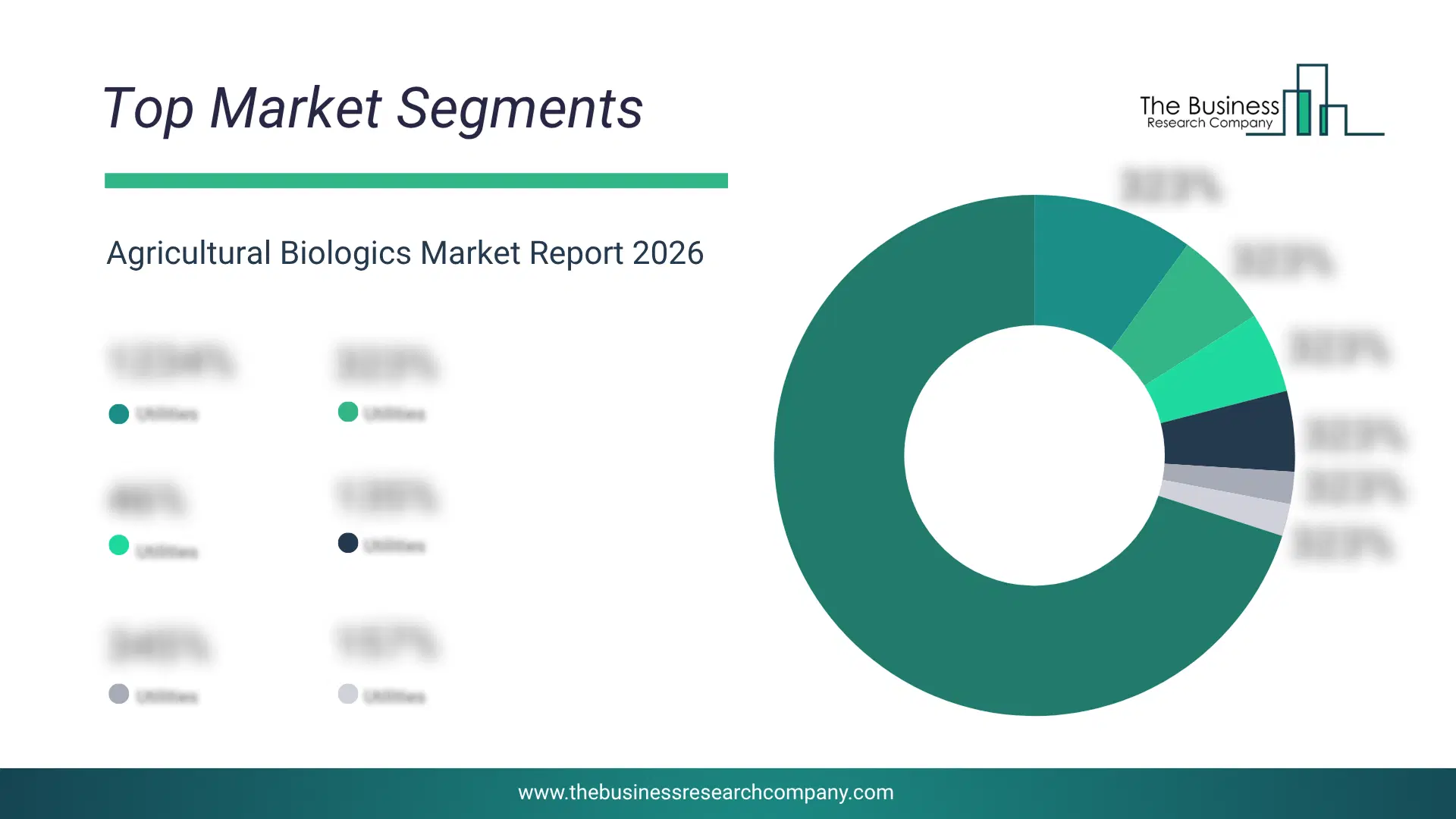
1) By Type: Biopesticides, Biofertilizers, Biostimulants 2) By Source: Microbials, Macrobials, Biochemicals, Other Sources 3) By Mode of Application: Foliar Spray, Soil Treatment, Seed Treatment, Post-Harvest 4) By Application: Cereals And Grains, Oilseed And Pulses, Fruits And Vegetables, Turf And Ornamentals, Other Applications Subsegments: 1) By Biopesticides: Microbial Biopesticides, Plant-Incorporated Protectants (PIPs), Biochemical Pesticides 2) By Biofertilizers: Nitrogen-Fixing Biofertilizers, Phosphate-Solubilizing Biofertilizers, Mycorrhizal Fungi 3) By Biostimulants: Humic Substances, Seaweed Extracts, Amino Acids, Microbial Biostimulants, Other Natural ProductsWhat Is The Driver Of The Agricultural Biologics Market?
The increasing incidences of pest outbreaks contributed to the growth of the agricultural biologics market. Pest outbreaks refer to an increasing sporadic and large population of pests that are economically harmful to crops and human beings. Due to pest outbreaks, the threats to crops cause 10–40% losses to major food crops such as corn, wheat, and rice cost to the global economy. The pests cause damage to crops and significantly impair growers' productivity and destroy cropland. For instance, in May 2023, an article published by Springer Nature Limited, a Germany-based provider of publishing services the annual crop yield loss caused by pathogens and pests alone is estimated at US$220 billion, directly impacting food security, regional economies, and other linked socio-economic aspects. Hence, increasing pest outbreaks is driving the growth of the agriculture biologics market.Key Players In The Global Agricultural Biologics Market
Major companies operating in the agricultural biologics market are Bayer AG, BASF SE, Syngenta AG, Corteva Inc., FMC Corporation, UPL Limited, Novozymes A/S, Chr. Hansen Holding A/S, Valent BioSciences LLC, Certis Biologicals, Koppert Biological Systems, Biobest Group NV, Andermatt Group AG, Marrone Bio Innovations, Isagro S.p.A., T. Stanes and Company Limited, Lallemand Plant Care, Gowan Company, Valagro S.p.A., Rizobacter Argentina S.A., Symborg S.L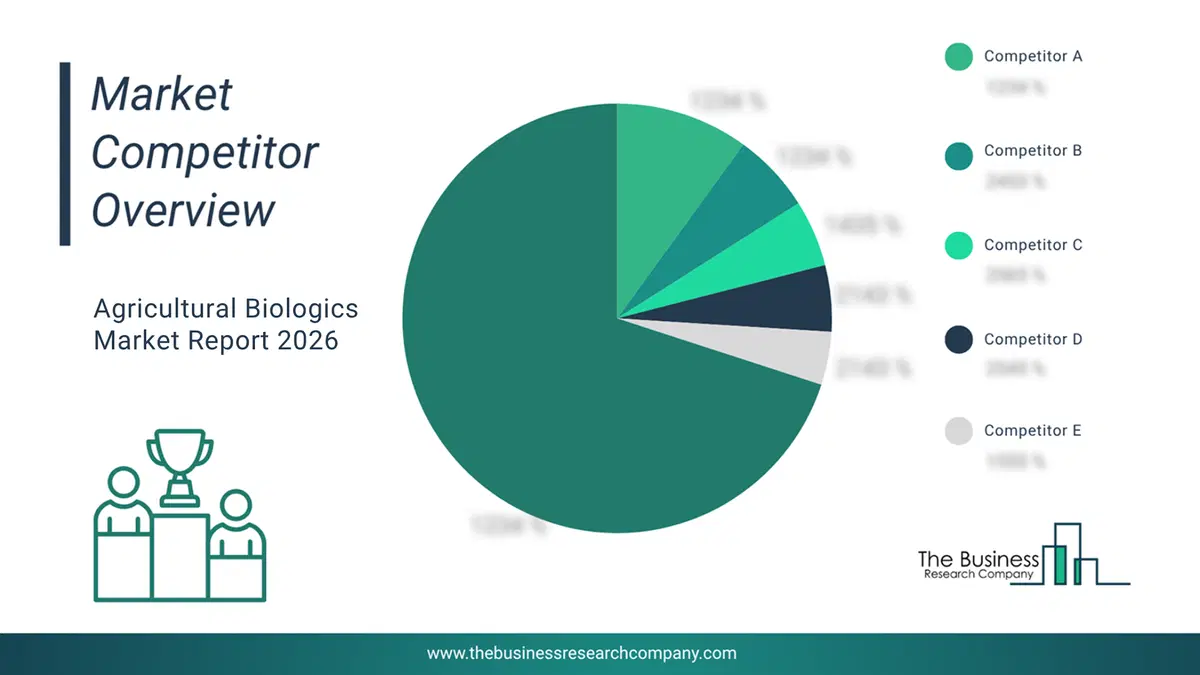
This chart is for illustrative purposes; the full report includes a detailed competitor analysis and comprehensive overview of the top 10 companies in the market.
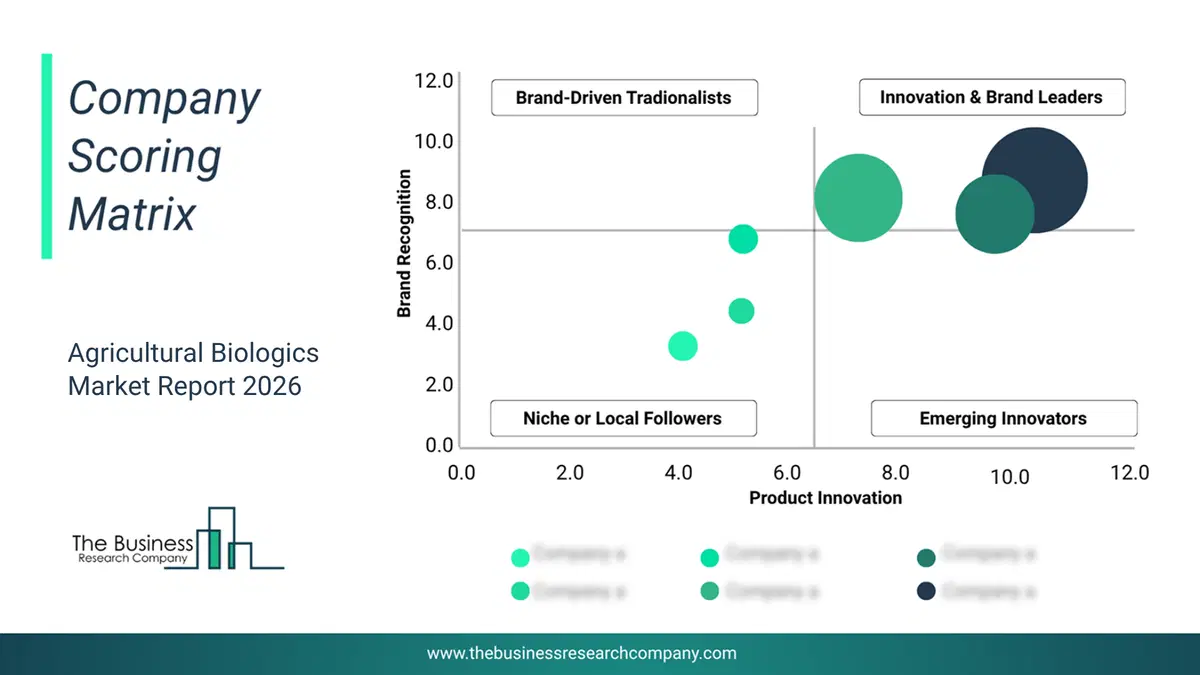
This chart maps companies by product innovation and brand strength, with bubble size indicating relative revenue, helping identify market leaders, challengers, and niche players. This is an illustrative chart; the full report provides a complete and accurate competitive analysis.
Global Agricultural Biologics Market Trends and Insights
Major companies in the agricultural biologics are introducing innovative solutions to promote sustainability. For instance, in January 2024, Bionema UK- UK-based biotechnology company launched its Soil-Jet BSP100. Soil-Jet BSP100 is a biodegradable surfactant for agricultural biologicals and agrochemicals. Soil-Jet BSP100 is designed to enhance the effectiveness of biological and chemical products while being environmentally friendly. Soil-Jet BSP100 significantly reduces soil water repellence, facilitating quicker water penetration and maintaining consistent moisture levels in the soil. The surfactant is compatible with conventional spraying equipment and can be used alongside nutrients and beneficial microorganisms, promoting sustainable agricultural practices.What Are Latest Mergers And Acquisitions In The Agricultural Biologics Market?
In September 2023, Biobest Group NV, a Belgium-based biological-based crop protection and pollination products company, acquired Biotrop for $569.4 million. With this acquisition, Biobest’s strategy is to expand to South American markets, as it aims to be a major biologicals provider offering biocontrol, biostimulants, and other sustainable crop protection products. Biotrop is a Brazil-based provider of natural and biological technology for agriculture.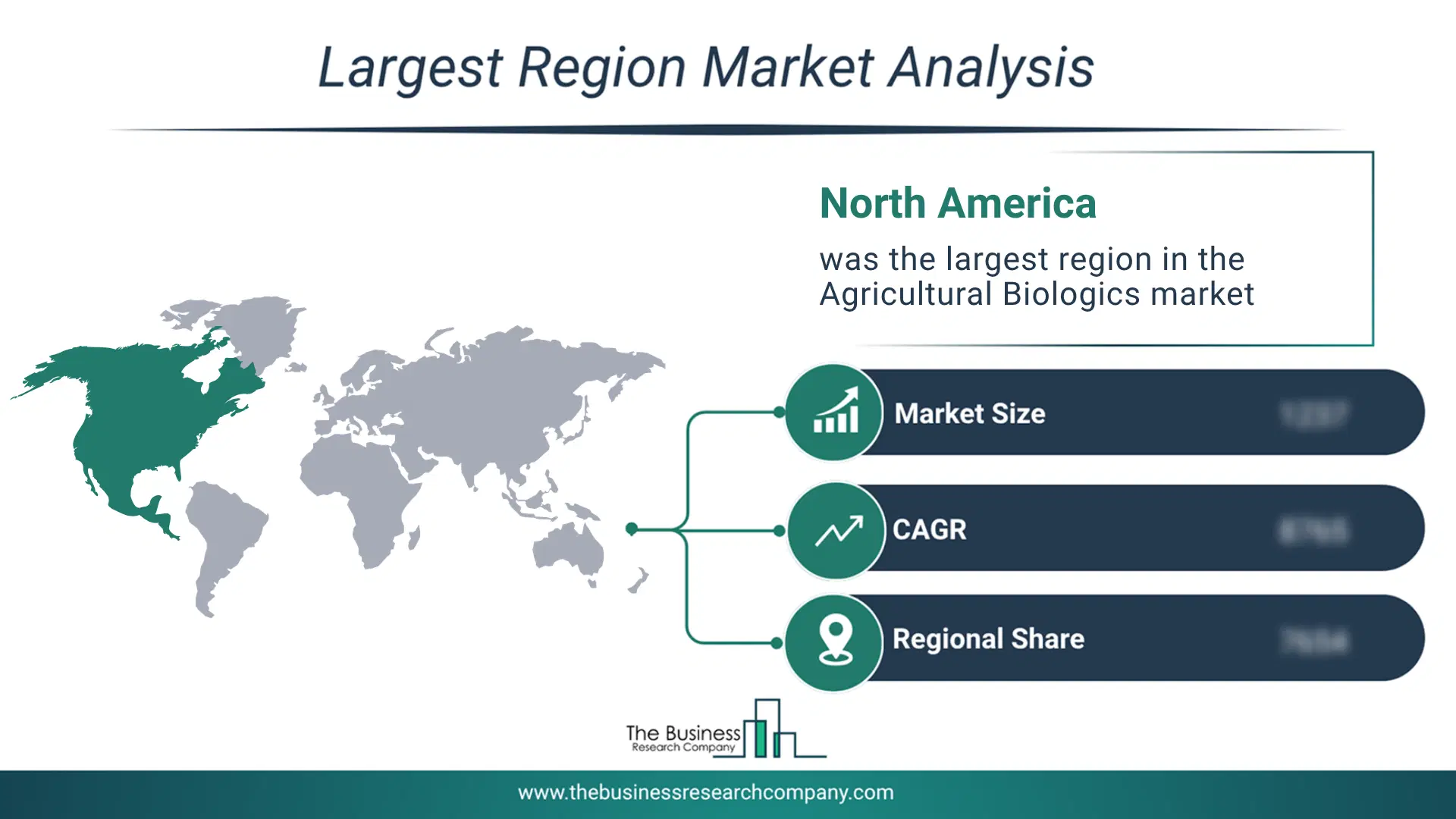
Regional Insights
North America was the largest region in the agricultural biologics market in 2025. Asia-Pacific is expected to be the fastest-growing region in the agricultural biologics market. The regions covered in this market report are Asia-Pacific, South East Asia, Western Europe, Eastern Europe, North America, South America, Middle East, Africa The countries covered in this market report are Australia, Brazil, China, France, Germany, India, Indonesia, Japan, Taiwan, Russia, South Korea, UK, USA, Canada, Italy, SpainWhat Defines the Agricultural Biologics Market?
The agricultural biologics market consists of sales of agricultural biologicals from sources such as plant extracts and minerals. Values in this market are ‘factory gate’ values, that is the value of goods sold by the manufacturers or creators of the goods, whether to other entities (including downstream manufacturers, wholesalers, distributors, and retailers) or directly to end customers. The value of goods in this market includes related services sold by the creators of the goods.How is Market Value Defined and Measured?
The market value is defined as the revenues that enterprises gain from the sale of goods and/or services within the specified market and geography through sales, grants, or donations in terms of the currency (in USD unless otherwise specified). The revenues for a specified geography are consumption values that are revenues generated by organizations in the specified geography within the market, irrespective of where they are produced. It does not include revenues from resales along the supply chain, either further along the supply chain or as part of other products.
This chart presents market attractiveness based on a quantitative evaluation of growth, competition, strategic alignment, and risk, offering a clear view of opportunity areas for decision-making. This chart is for illustrative purposes; the full report contains the complete analysis.

This chart highlights the Total Addressable Market (TAM) by estimating the maximum revenue opportunity using an assumption-driven approach, supporting strategic planning and opportunity sizing across markets. The chart is illustrative; the full report provides a more comprehensive analysis.
What Key Data and Analysis Are Included in the Agricultural Biologics Market Report 2026?
The agricultural biologics market research report is one of a series of new reports from The Business Research Company that provides market statistics, including industry global market size, regional shares, competitors with the market share, detailed market segments, market trends and opportunities, and any further data you may need to thrive in the agricultural biologics industry. The market research report delivers a complete perspective of everything you need, with an in-depth analysis of the current and future state of the industry.Agricultural Biologics Market Report Forecast Analysis
| Report Attribute | Details |
|---|---|
| Market Size Value In 2026 | $19.06 billion |
| Revenue Forecast In 2030 | $33.51 billion |
| Growth Rate | CAGR of 15.8% from 2026 to 2030 |
| Base Year For Estimation | 2025 |
| Actual Estimates/Historical Data | 2020-2025 |
| Forecast Period | 2026 - 2030 |
| Market Representation | Revenue in USD Billion and CAGR from 2026 to 2030 |
| Segments Covered | Type, Source, Mode of Application, Application |
| Regional Scope | Asia-Pacific, Western Europe, Eastern Europe, North America, South America, Middle East, Africa |
| Country Scope | The countries covered in this market report are Australia, Brazil, China, France, Germany, India, Indonesia, Japan, Taiwan, Russia, South Korea, UK, USA, Canada, Italy, Spain |
| Key Companies Profiled | Bayer AG, BASF SE, Syngenta AG, Corteva Inc., FMC Corporation, UPL Limited, Novozymes A/S, Chr. Hansen Holding A/S, Valent BioSciences LLC, Certis Biologicals, Koppert Biological Systems, Biobest Group NV, Andermatt Group AG, Marrone Bio Innovations, Isagro S.p.A., T. Stanes and Company Limited, Lallemand Plant Care, Gowan Company, Valagro S.p.A., Rizobacter Argentina S.A., Symborg S.L |
| Customization Scope | Request for Customization |
| Pricing And Purchase Options | Explore Purchase Options |