

Algae Products Market Report 2026
Global Outlook – By Type (Lipids, Carrageenan, Carotenoids, Alginate, Algal Protein), By Form (Liquid, Solid), By Source (Blue-Green Algae, Brown Algae, Green Algae, Red Algae), By Distribution Channel (Online, Offline), By Application (Food and Beverage, Nutraceutical and Diet Supplement, Animal Feed, Personal Care, Pharmaceutical, Other Applications) – Market Size, Trends, Strategies, and Forecast to 2030
Algae Products Market Overview
• Algae Products market size has reached to $6.06 billion in 2025 • Expected to grow to $8.3 billion in 2030 at a compound annual growth rate (CAGR) of 6.5% • Growth Driver: Growing Demand For Healthy Food Drive The Algae Products Market • Market Trend: Innovative Plant-Based Nutrition Solutions Drive Sustainable Ingredient Demand • North America was the largest region in 2025.Market Gains By 2030 – Top Opportunities By Segment
Market Gain identifies the most promising market opportunities by highlighting the segments or products expected to generate the highest incremental revenue growth over the next five years.
What Is Covered Under Algae Products Market?
The algae products refer to a class of photosynthetic organisms found in both marine and freshwater habitats and are used in various industries for different purposes. As these organisms have a short doubling time, they are considered among the fastest-growing creatures. Algae are oxygen-exhaling, unicellular, or multicellular microorganisms that consume carbon dioxide and store essential nutrients, minerals, and vitamins. The main types of algae products are lipids, carrageenan, carotenoids, alginate, and algal protein. Algal lipids are extensively used for the production of biofuel. The different forms include liquid, and solid and involve various sources such as blue-green algae, brown algae, green algae, and red algae. These are distributed online, and offline, and are used in food and beverage, nutraceutical and diet supplementation, animal feed, personal care, pharmaceutical, and other applications.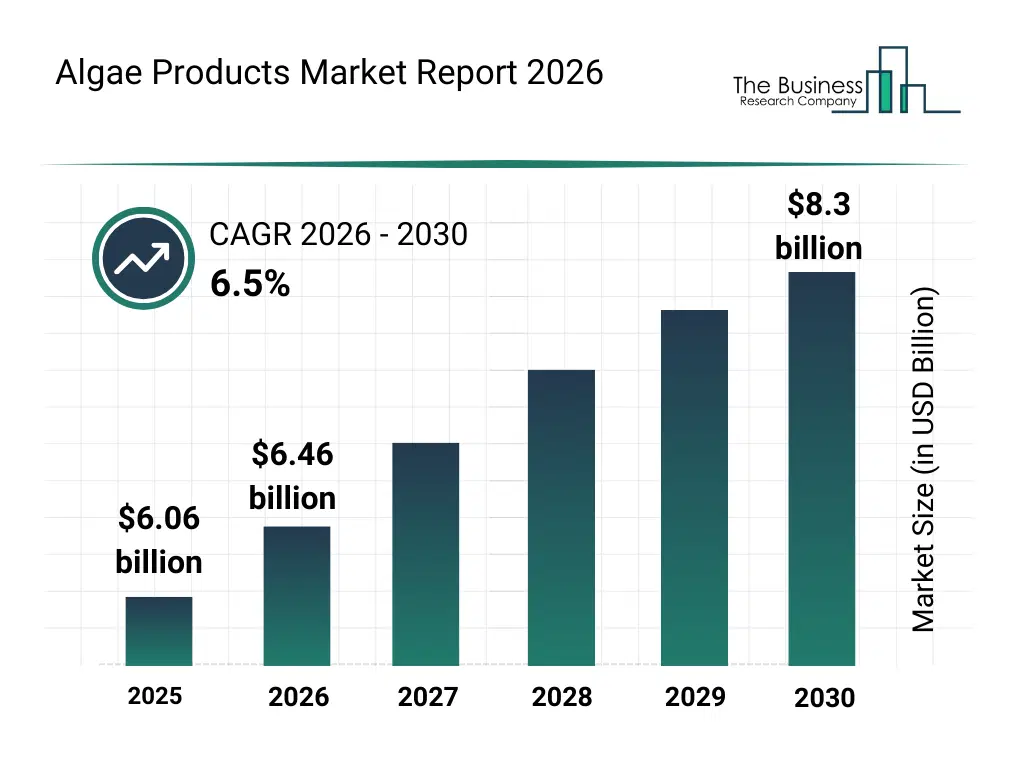
What Is The Algae Products Market Size and Share 2026?
The algae products market size has grown strongly in recent years. It will grow from $6.06 billion in 2025 to $6.46 billion in 2026 at a compound annual growth rate (CAGR) of 6.6%. The growth in the historic period can be attributed to increasing use of algae in food formulations, expansion of dietary supplement markets, growth of aquaculture feed demand, early adoption of algae-based ingredients, availability of diverse algae sources.What Is The Algae Products Market Growth Forecast?
The algae products market size is expected to see strong growth in the next few years. It will grow to $8.3 billion in 2030 at a compound annual growth rate (CAGR) of 6.5%. The growth in the forecast period can be attributed to increasing demand for sustainable protein sources, rising investments in algae biotechnology, expansion of plant-based nutrition, growing interest in carbon-negative raw materials, technological advances in algae processing. Major trends in the forecast period include increasing use of algae-based nutritional ingredients, rising demand for omega-3 and algal proteins, growing application in animal feed and aquaculture, expansion of algae-derived bio-based materials, enhanced focus on scalable algae cultivation.
Global Algae Products Market Segmentation
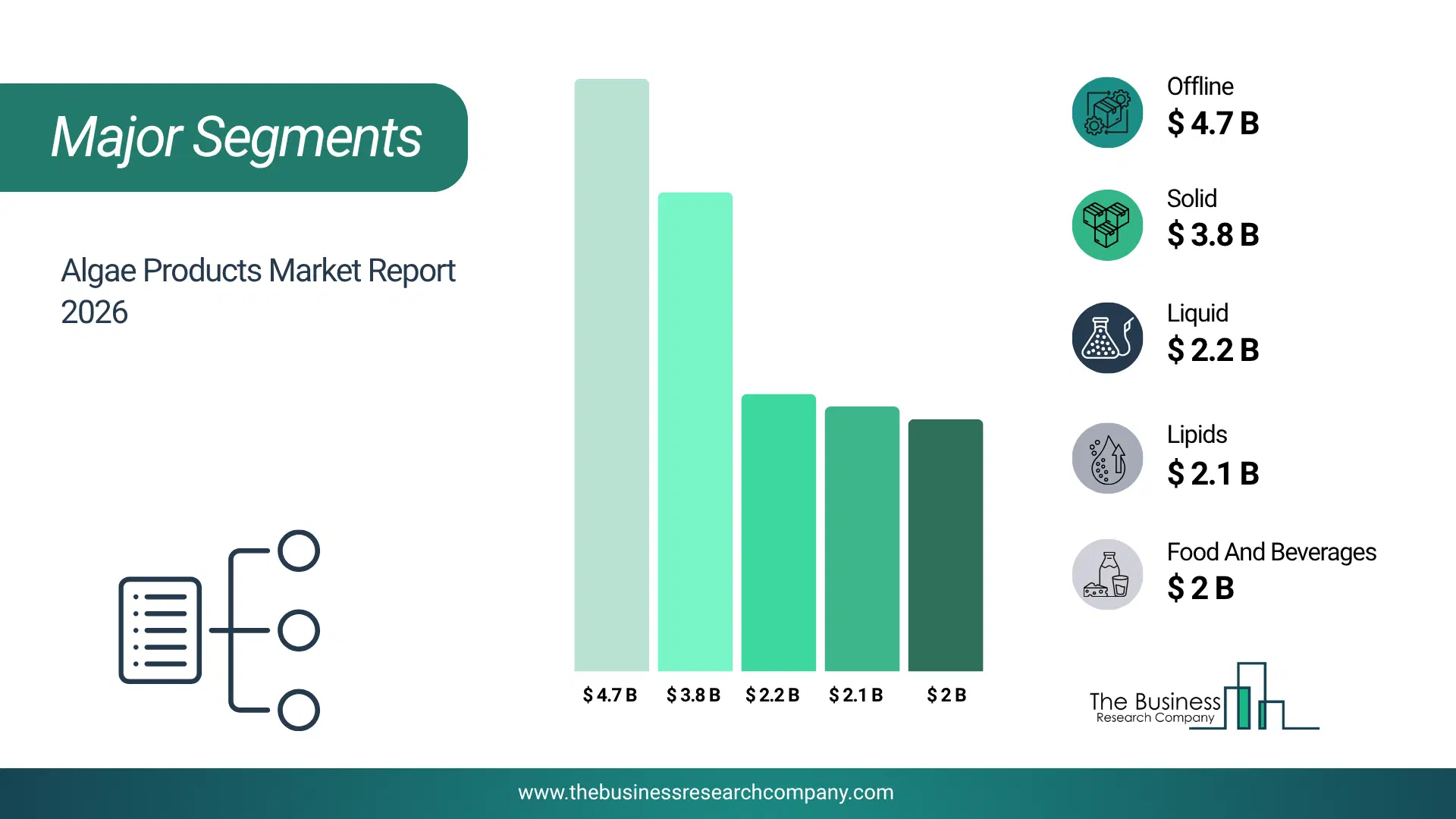
1) By Type: Lipids, Carrageenan, Carotenoids, Alginate, Algal Protein 2) By Form: Liquid, Solid 3) By Source: Blue-Green Algae, Brown Algae, Green Algae, Red Algae 4) By Distribution Channel: Online, Offline 5) By Application: Food and Beverage, Nutraceutical and Diet Supplement, Animal Feed, Personal Care, Pharmaceutical, Other Applications Subsegments: 1) By Lipids: Omega-3 Fatty Acids (EPA, DHA), Phospholipids, Triglycerides 2) By Carrageenan: Kappa Carrageenan, Iota Carrageenan, Lambda Carrageenan 3) By Carotenoids: Beta-Carotene, Astaxanthin, Lutein 4) By Alginate: Sodium Alginate, Calcium Alginate, Potassium Alginate 5) By Algal Protein: Spirulina Protein, Chlorella Protein The top segments in the algae products market will be: • Offline will reach $4791.6 Million by 2025. • Solid will reach $3835.28 Million by 2025. • Liquid will reach $2226.2 Million by 2025. • Lipids will reach $2167.21 Million by 2025. • Food And Beverages will reach $2069.15 Million by 2025.What Is The Driver Of The Algae Products Market?
The growing demand for healthy food products is expected to propel the growth of the algae products market going forward. Healthy food products are those that contain nutrients that support the body's well-being and aid in energy retention. Algae products contain a variety of beneficial elements, including carbohydrates, polyunsaturated fatty acids, essential minerals, and vitamins, which are commonly utilized in healthy foods. For instance, in June 2025, according to the TGood Food Institute (GFI) Europe, a Belgium-based international NGO helping to build a more sustainable, secure and just food system, the in 2023, the French retail market for plant-based foods experienced strong growth, rising by 8.8% to reach $625 billion in 2024, reflecting a 20.5% increase compared to 2022. Therefore, growing demand for healthy food products drives the growth of the algae products industry.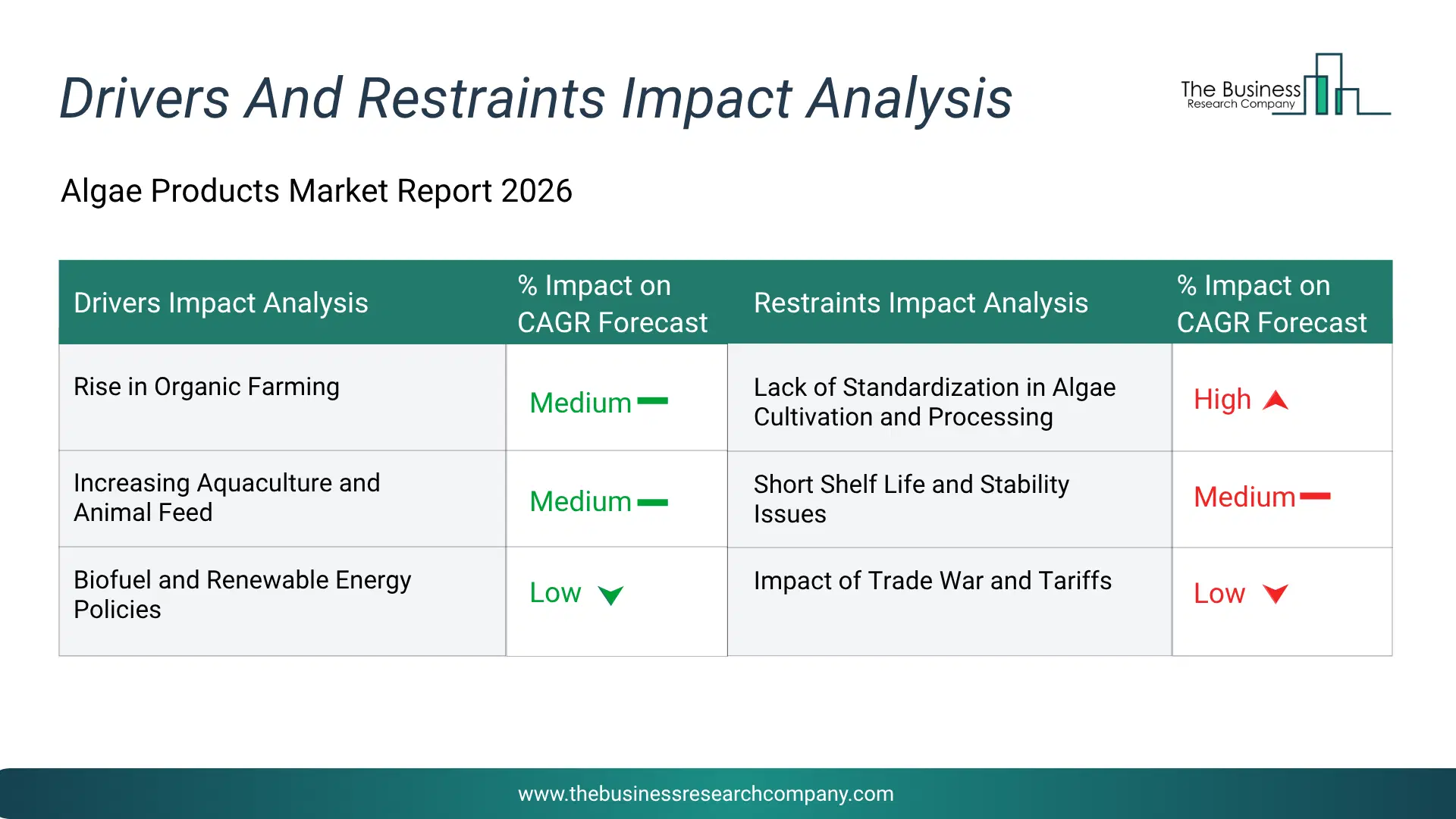
Infographic Chart Showing Key Market Drivers Analysis And Restraints For Algae Products Market
The chart presents an impact analysis of key drivers and restraints, quantifying their relative influence on the market's growth rate and helping assess the balance between growth enablers and limiting factors. This chart offers a high-level perspective; the full report contains more detailed insights.
How Will The Drivers Impact Growth In The Global Algae Products Market?
• Rise in Organic Farming (Medium) – The rise in organic farming will become a key driver of growth in the algae products market by 2030. As the adoption of organic farming expands globally, demand for algae-derived agricultural inputs is rising steadily, encouraging farmers and suppliers to invest more in algae products. As a result, the rise in organic farming is anticipated to contributing to a 1.5% annual growth in the market. • Increasing Aquaculture and Animal Feed (Medium) – The increasing aquaculture and animal feed will emerge as a major factor driving the expansion of the algae products market by 2030. Global aquaculture production surpassing capture fisheries for the first time, creating a surge in demand for sustainable feed alternatives. Algae, rich in protein, omega-3 fatty acids and pigments, is increasingly used in aquaculture and livestock feed as a substitute for fishmeal and synthetic additives. These nutritional and environmental benefits are pushing farmers and feed manufacturers to incorporate algae into feed formulations. This trend strengthens the market for algae-based products, expanding opportunities in both the aquaculture and animal husbandry sectors. Consequently, the increasing aquaculture and animal feed capabilities are projected to contributing to a 1.0% annual growth in the market. • Biofuel and Renewable Energy Policies (Low) – The biofuel and renewable energy policies will serve as a key growth catalyst for the algae products market by 2030. Governments are promoting renewable energy sources to cut carbon emissions and reduce dependence on fossil fuels and algae-based biofuels are receiving renewed attention. Algae can produce large quantities of lipids for biodiesel and bio jet fuel without competing with food crops or arable land. Recent innovations, such as improved cultivation techniques and oil-yield enhancement, are making algae biofuels more feasible. Policy incentives and investment in green energy further encourage commercial projects, positioning algae as a key feedstock in the future of sustainable energy. Therefore, this biofuel and renewable energy policies is projected to supporting to a 0.8% annual growth in the market. • Expanding Use in Cosmetics and Personal Care (Low) – The expanding use in cosmetics and personal care industry will become a significant driver contributing to the algae products growth of the market by 2030 growing consumer demand for natural, cruelty-free and vegan products helps cosmetics industry. Algae extracts, known for their antioxidant, moisturizing and anti-aging properties, are increasingly used in skincare and haircare formulations. Their ability to provide natural pigments, vitamins and bioactive compounds makes them attractive to beauty brands aiming to replace synthetic ingredients. As global cosmetics markets expand, particularly in Asia-pacific and Europe, the incorporation of algae-based ingredients is set to grow, driving sustained demand for algae products. Consequently, the expanding use in cosmetics and personal care industry is projected to contributing to a 0.5% annual growth in the market.How Will The Restraints Impact Growth In The Global Algae Products Market?
• Lack of Standardization in Algae Cultivation and Processing (Medium) – Lack of Standardization in Algae Cultivation and Processing will restrict the growth of the Algae Products market during the forecast period. Algae cultivation and processing methods vary widely across producers, resulting in inconsistent product quality, purity, and safety characteristics. The absence of standardized cultivation protocols, harvesting methods, and processing techniques creates challenges for large-scale commercial adoption. This lack of uniformity affects product consistency for industrial applications and limits market acceptance. • Short Shelf Life and Stability Issues (Medium) – Short Shelf Life and Stability Issues will restrict the growth of the Algae Products market during the forecast period. Many algae-derived products, particularly nutritional supplements and functional food ingredients, suffer from limited shelf life and stability challenges. Exposure to light, oxygen, and temperature variations can degrade beneficial compounds, reducing product efficacy and quality. These stability issues complicate storage, transportation, and inventory management, increasing costs and limiting distribution reach. • Impact of Trade War and Tariffs (Low) – Impact of Trade War and Tariffs will restrict the growth of the Algae Products market during the forecast period. Algae products trade across international markets, making them vulnerable to tariff changes and trade restrictions. Tariffs on algae-derived food supplements, biofuels, and cosmetic ingredients can make products less competitive in foreign markets. Trade barriers also affect the import of cultivation and processing equipment needed to scale production.Key Players In The Global Algae Products Market
Major companies operating in the algae products market are Cellana Inc., BlueBioTech International GmbH, Corbion NV, Earthrise Nutritionals LLC, Cyanotech Corporation, AlgaeCan Biotech Ltd., Bioprocess Algae LLC, Euglena Co. Ltd., DIC Corporation, CP Kelco ApS, Algae Systems LLC, Acadian Seaplants Limited, Wild Irish Seaweeds Ltd., Beijing Leili Marine Bioindustry Inc., ACCEL Carrageenan Corporation, Algae Bio-Tech India (P) Ltd., Algaen Corp, Algaeventure Systems (AVS), Algaetech International, Algarithm Ingredients Inc., Algix LLC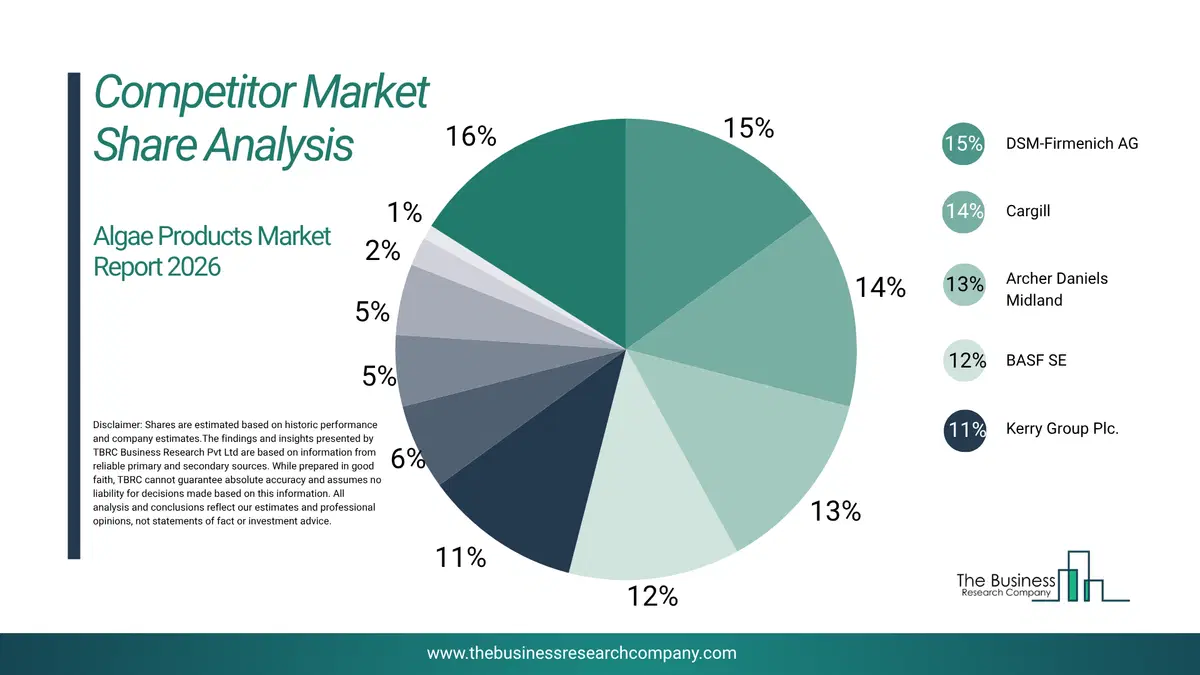
This chart is for illustrative purposes; the full report includes a detailed competitor analysis and comprehensive overview of the top 10 companies in the market.
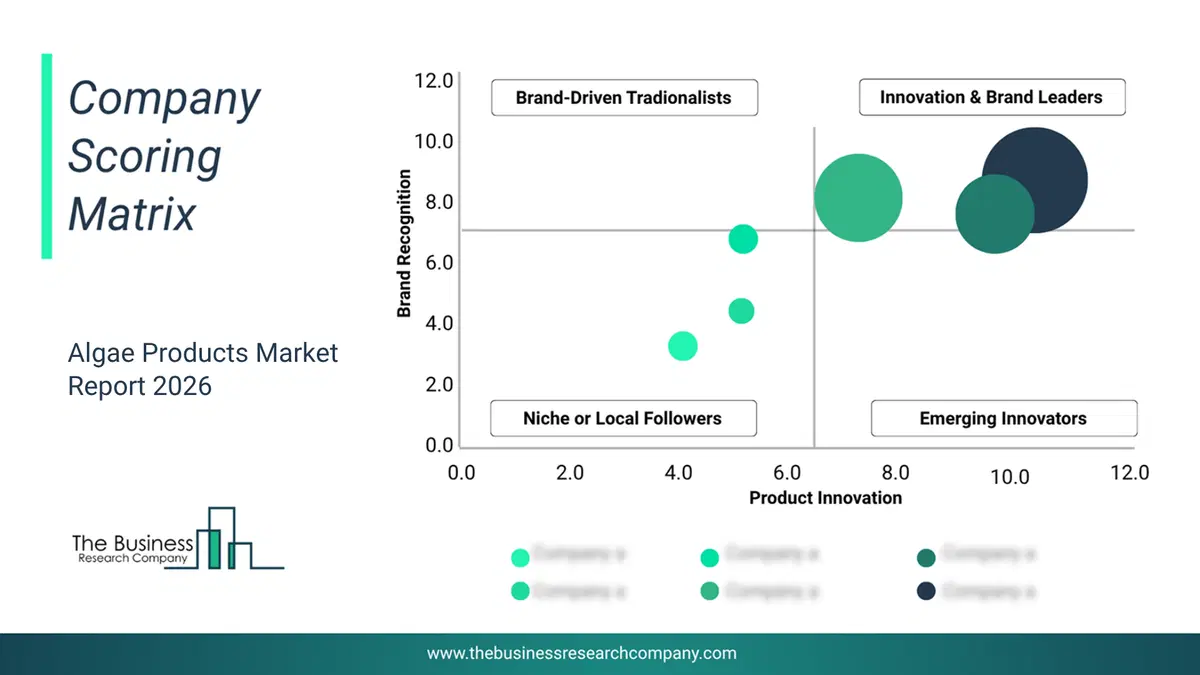
This chart maps companies by product innovation and brand strength, with bubble size indicating relative revenue, helping identify market leaders, challengers, and niche players. This is an illustrative chart; the full report provides a complete and accurate competitive analysis.
Global Algae Products Market Trends and Insights
Major companies operating in the algae products market are focusing on developing innovative solutions such as protein-rich algal powders to meet rising demand for sustainable and plant-based ingredients. Protein-rich algal powders are nutrient-dense ingredients made from dried algae that provide high levels of plant-based protein and are used in food, beverage, and nutritional applications to enhance protein content. For instance, in February 2025, GC Rieber VivoMega AS, a Norway-based manufacturing company, launched Algae 1060 TG Premium, an algal-derived omega-3 ingredient that contains both EPA and DHA. The product is designed to offer a high-purity, vegan, and sustainable alternative to fish-based omega-3 oils for use in dietary supplements and functional foods. This launch reflects the company’s focus on expanding its premium algae-based omega-3 portfolio to meet the growing demand for plant-based nutritional ingredients.What Are Latest Mergers And Acquisitions In The Algae Products Market?
In March 2023, JRS Group, a Germany-based manufacturer of functional ingredients from plant-based raw materials, acquired Algaia SA for an undisclosed amount. Through this acquisition, JRS Group aims to enhance its seaweed-based product offerings by integrating Algaia’s expertise in sustainably-produced seaweed extracts and hydrocolloids, and by expanding its capacity to supply natural, renewable, and biodegradable solutions across multiple industries. Algaia SA is a France-based company specializing in seaweed extracts, hydrocolloids, and algae-derived functional ingredients for food, feed, pharmaceuticals, personal care, and industrial applications.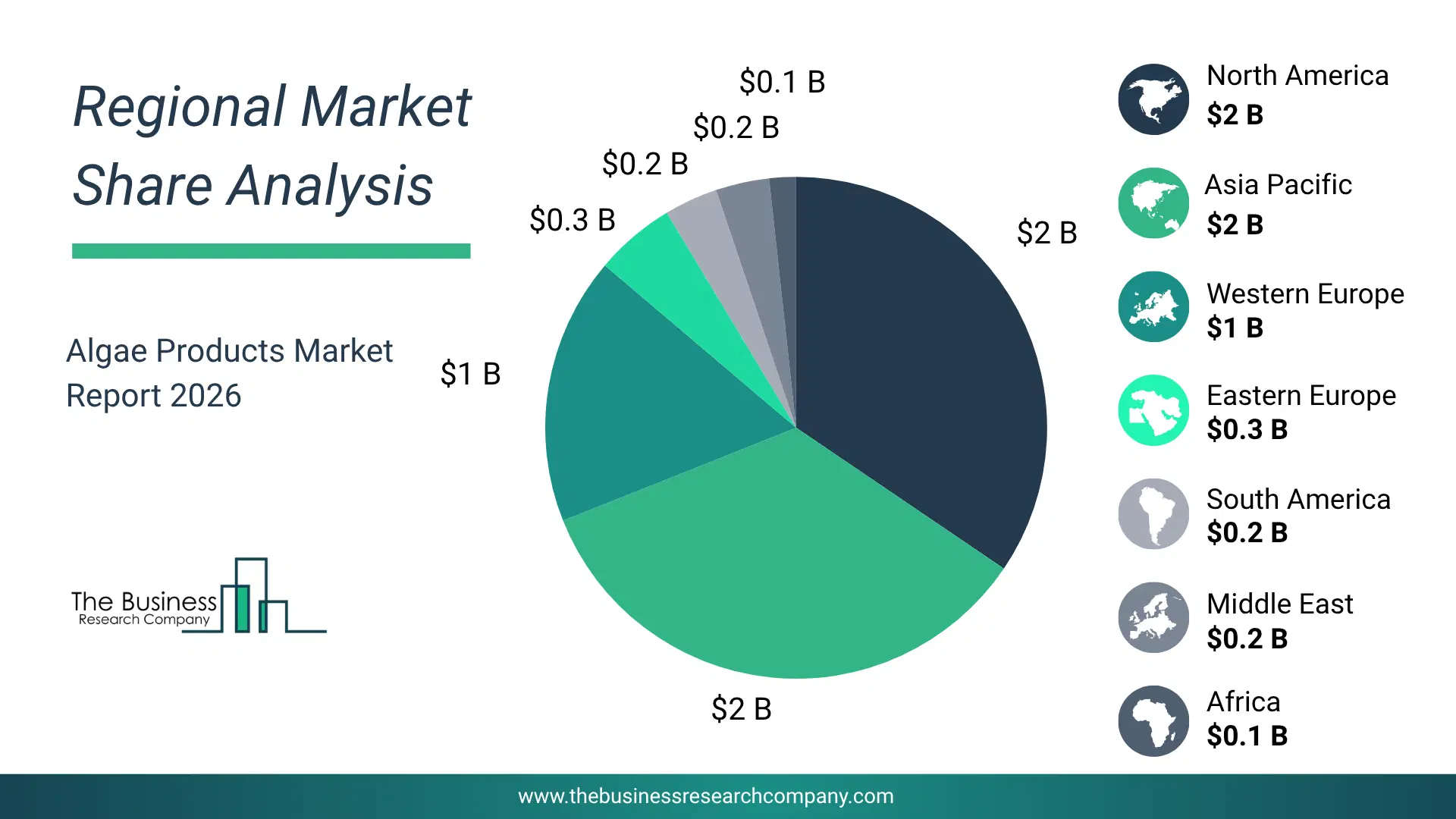
Regional Outlook
North America was the largest region in the algae products market in 2025. The regions covered in this market report are Asia-Pacific, South East Asia, Western Europe, Eastern Europe, North America, South America, Middle East and Africa. The countries covered in this market report are Australia, Brazil, China, France, Germany, India, Indonesia, Japan, Taiwan, Russia, South Korea, UK, USA, Italy, Spain, CanadaWhat Defines the Algae Products Market?
The algae products market consists of sales of bioplastics, industrial lubricants, green chemicals, cosmetics. Values in this market are ‘factory gate’ values, that is the value of goods sold by the manufacturers or creators of the goods, whether to other entities (including downstream manufacturers, wholesalers, distributors and retailers) or directly to end customers. The value of goods in this market includes related services sold by the creators of the goods.How is Market Value Defined and Measured?
The market value is defined as the revenues that enterprises gain from the sale of goods and/or services within the specified market and geography through sales, grants, or donations in terms of the currency (in USD unless otherwise specified). The revenues for a specified geography are consumption values that are revenues generated by organizations in the specified geography within the market, irrespective of where they are produced. It does not include revenues from resales along the supply chain, either further along the supply chain or as part of other products.
This chart presents market attractiveness based on a quantitative evaluation of growth, competition, strategic alignment, and risk, offering a clear view of opportunity areas for decision-making. This chart is for illustrative purposes; the full report contains the complete analysis.

This chart highlights the Total Addressable Market (TAM) by estimating the maximum revenue opportunity using an assumption-driven approach, supporting strategic planning and opportunity sizing across markets. The chart is illustrative; the full report provides a more comprehensive analysis.
What Key Data and Analysis Are Included in the Algae Products Market Report 2026?
The algae products market research report is one of a series of new reports from The Business Research Company that provides market statistics, including industry global market size, regional shares, competitors with the market share, detailed market segments, market trends and opportunities, and any further data you may need to thrive in the algae products industry. The market research report delivers a complete perspective of everything you need, with an in-depth analysis of the current and future state of the industry.Algae Products Market Report Forecast Analysis
| Report Attribute | Details |
|---|---|
| Market Size Value In 2026 | $6.46 billion |
| Revenue Forecast In 2030 | $8.3 billion |
| Growth Rate | CAGR of 6.6% from 2026 to 2030 |
| Base Year For Estimation | 2025 |
| Actual Estimates/Historical Data | 2020-2025 |
| Forecast Period | 2026 - 2030 |
| Market Representation | Revenue in USD Billion and CAGR from 2026 to 2030 |
| Segments Covered | Type, Form, Source, Distribution Channel, Application |
| Regional Scope | Asia-Pacific, Western Europe, Eastern Europe, North America, South America, Middle East, Africa |
| Country Scope | The countries covered in the report are Australia, Brazil, China, France, Germany, India, Indonesia, Japan, Taiwan, Russia, South Korea, UK, USA, Canada, Italy, Spain. |
| Key Companies Profiled | Cellana Inc., BlueBioTech International GmbH, Corbion NV, Earthrise Nutritionals LLC, Cyanotech Corporation, AlgaeCan Biotech Ltd., Bioprocess Algae LLC, Euglena Co. Ltd., DIC Corporation, CP Kelco ApS, Algae Systems LLC, Acadian Seaplants Limited, Wild Irish Seaweeds Ltd., Beijing Leili Marine Bioindustry Inc., ACCEL Carrageenan Corporation, Algae Bio-Tech India (P) Ltd., Algaen Corp, Algaeventure Systems (AVS), Algaetech International, Algarithm Ingredients Inc., Algix LLC |
| Customization Scope | Request for Customization |
| Pricing And Purchase Options | Explore Purchase Options |