
Antibacterial Orthopedic Implant Market Report 2026
Global Outlook – By Implant Type (Antibacterial Bone Cement, Antibacterial Bone Screws, Antibacterial Bone Plates, Antibacterial Joint Implants, Antibacterial Spinal Implants), By Antibacterial Agent (Silver, Chlorhexidine, Triclosan, Iodine, Vancomycin), By Material Type (Metallic Implants, Polymeric Implants, Ceramic Implants, Composites), By Application (Joint Replacement, Trauma, Spine, Other Applications), By End User (Hospitals, Ambulatory Surgical Centers, Clinics, Academic And Research Institutes, Defense And Military) – Market Size, Trends, Strategies, and Forecast to 2030
Antibacterial Orthopedic Implant Market Overview
• Antibacterial Orthopedic Implant market size has reached to $4.33 billion in 2025 • Expected to grow to $6.81 billion in 2030 at a compound annual growth rate (CAGR) of 9.4% • Growth Driver: Increasing Prevalence Of Orthopedic Disorders Is Fueling The Market Growth Due To Rising Incidence Among Aging Populations • Market Trend: Revolutionizing Orthopedic Care With Antibacterial Coated Implants To Combat Infections • North America was the largest region in 2025 and Asia-Pacific is the fastest growing region.What Is Covered Under Antibacterial Orthopedic Implant Market?
An antibacterial orthopedic implant is a medical device used in orthopedic surgeries that incorporates antibacterial properties to reduce the risk of infections post-surgery. The mechanism of action typically involves the gradual release of antimicrobial agents from the implant's surface, which either disrupts bacterial cell walls or inhibits bacterial enzyme activity, preventing bacterial colonization. This process helps reduce the risk of infections by maintaining a sterile environment around the implant, promoting faster healing and reducing complications for patients. The main types of antibacterial orthopedic implants include antibacterial bone cement, antibacterial bone screws, antibacterial bone plates, antibacterial joint implants, and antibacterial spinal implants. Antibacterial bone cement is a material used to secure implants to bone, infused with antibacterial agents to prevent infections at the implant site during healing. Common antibacterial agents include silver, chlorhexidine, triclosan, iodine, and vancomycin. These implants are made from various materials, such as metallic, polymeric, ceramic, and composite materials. They are used in applications such as joint replacement, trauma, spine procedures, and other orthopedic treatments. The end users of these implants include hospitals, ambulatory surgical centers, clinics, academic and research institutes, and defense and military sectors.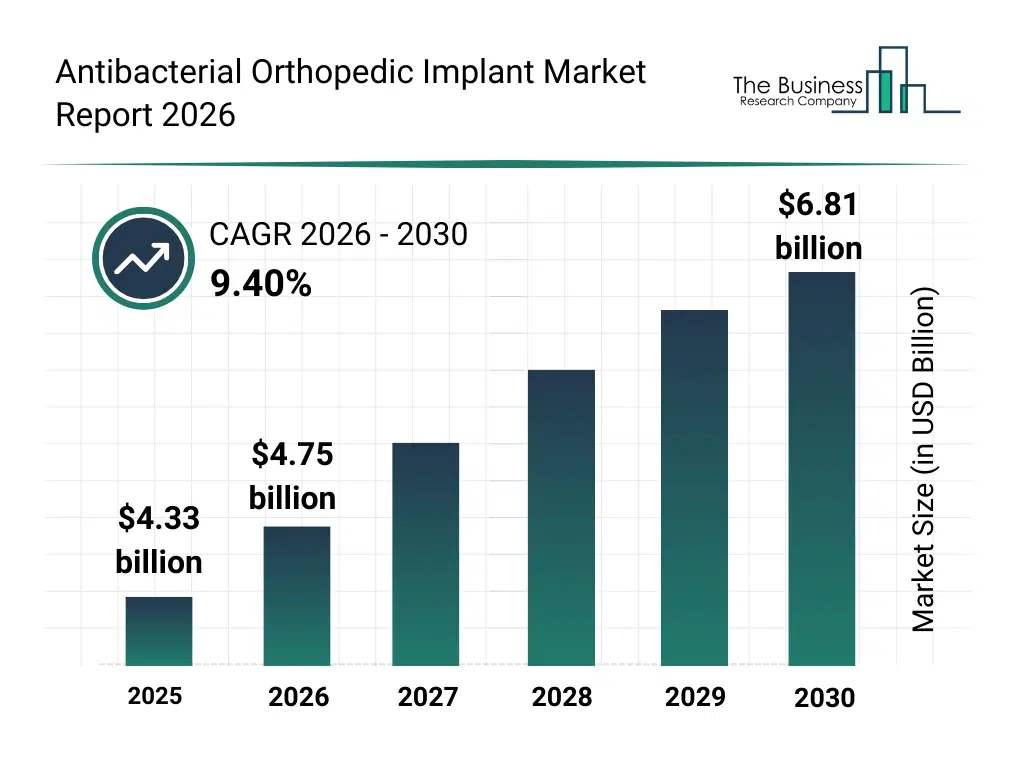
What Is The Antibacterial Orthopedic Implant Market Size and Share 2026?
The antibacterial orthopedic implant market size has grown strongly in recent years. It will grow from $4.33 billion in 2025 to $4.75 billion in 2026 at a compound annual growth rate (CAGR) of 9.7%. The growth in the historic period can be attributed to high incidence of post-surgical infections, limited availability of antibacterial implants, growing orthopedic surgical procedures, reliance on metallic implants, lack of standardized antimicrobial protocols.What Is The Antibacterial Orthopedic Implant Market Growth Forecast?
The antibacterial orthopedic implant market size is expected to see strong growth in the next few years. It will grow to $6.81 billion in 2030 at a compound annual growth rate (CAGR) of 9.4%. The growth in the forecast period can be attributed to development of advanced antibacterial bone cements and coatings, rising geriatric population and orthopedic disorders, increasing adoption of joint replacement and spinal implants, technological advancements in polymeric and composite implants, expansion of hospitals and ambulatory surgical centers. Major trends in the forecast period include rising adoption of antibacterial coatings in orthopedic implants, increasing use of silver and other antimicrobial agents, growth in joint replacement and spine surgeries, rising demand for biodegradable and polymeric implants, focus on reducing post-surgical infection rates.
Global Antibacterial Orthopedic Implant Market Segmentation
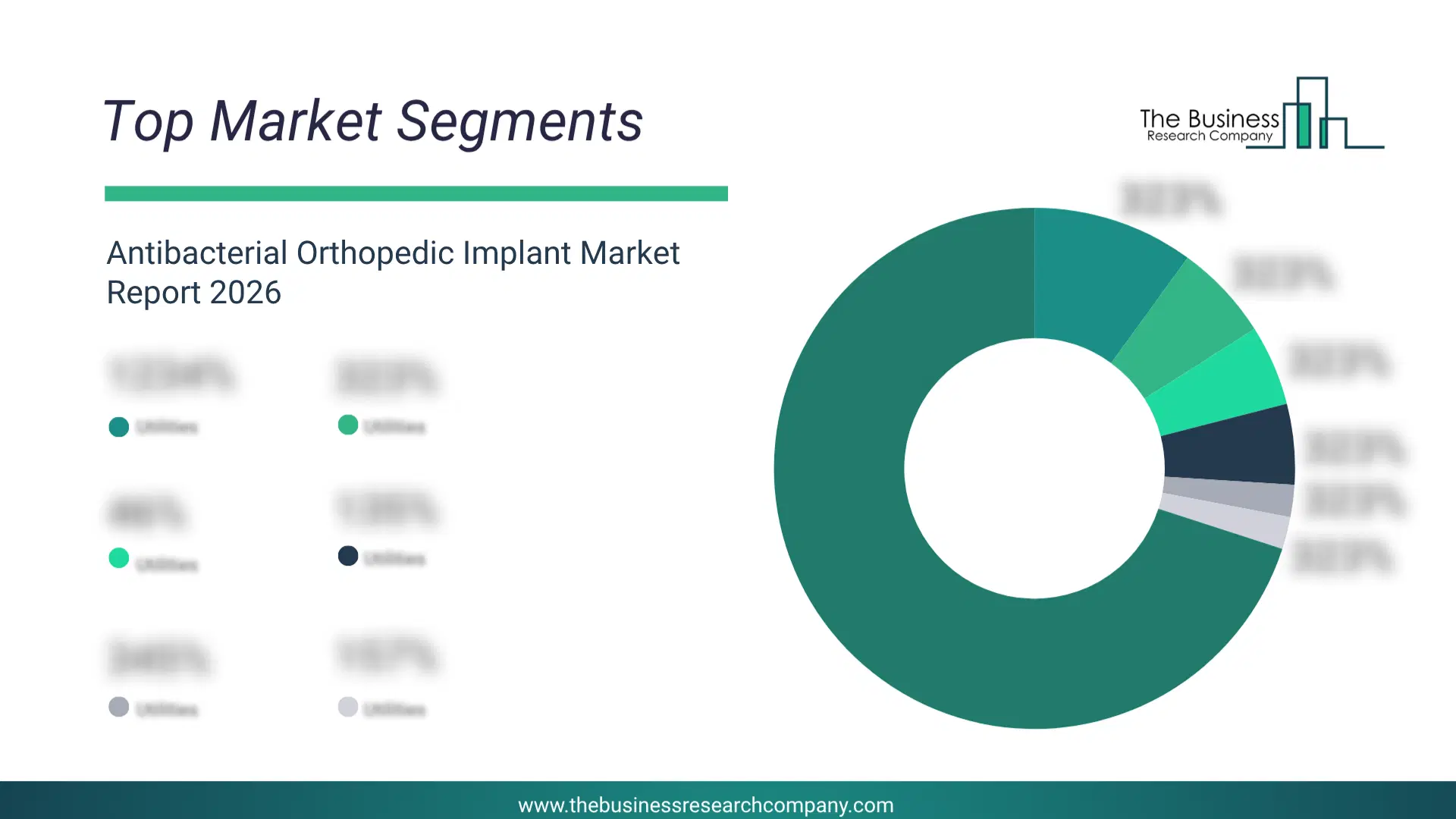
1) By Implant Type: Antibacterial Bone Cement, Antibacterial Bone Screws, Antibacterial Bone Plates, Antibacterial Joint Implants, Antibacterial Spinal Implants 2) By Antibacterial Agent: Silver, Chlorhexidine, Triclosan, Iodine, Vancomycin 3) By Material Type: Metallic Implants, Polymeric Implants, Ceramic Implants, Composites 4) By Application: Joint Replacement, Trauma, Spine, Other Applications 5) By End User: Hospitals, Ambulatory Surgical Centers, Clinics, Academic And Research Institutes, Defense And Military Subsegments: 1) By Antibacterial Bone Cement: High-Viscosity Bone Cement, Low-Viscosity Bone Cement, Medium-Viscosity Bone Cement 2) By Antibacterial Bone Screws: Titanium-Based Bone Screws, Stainless Steel-Based Bone Screws, Biodegradable Bone Screws 3) By Antibacterial Bone Plates: Locking Compression Plates (LCP), Dynamic Compression Plates (DCP), Reconstruction Plates, Bone Fixation Plates 4) By Antibacterial Joint Implants: Antibacterial Hip Implants, Antibacterial Knee Implants, Antibacterial Shoulder Implants, Antibacterial Elbow Implants 5) By Antibacterial Spinal Implants: Spinal Fusion Implants, Spinal Rods And Screws, Intervertebral Discs, Spinal Spacer ImplantsWhat Is The Driver Of The Antibacterial Orthopedic Implant Market?
The increasing prevalence of orthopedic disorders is expected to propel the growth of the antibacterial orthopedic implant market going forward. Orthopedic disorders refer to medical conditions that affect the musculoskeletal system, including bones, joints, muscles, tendons, and ligaments. The increasing prevalence of orthopedic disorders is primarily due to the aging population, as older adults are more prone to conditions such as osteoarthritis, osteoporosis, and joint degeneration due to the natural wear and tear of bones and joints over time. An antibacterial orthopedic implant helps orthopedic disorders by preventing post-surgical infections, promoting faster recovery, and improving the long-term success of implant procedures. For instance, in January 2024, according to the UK Parliament, research from the UK-based governmental body Versus Arthritis found that more than 20 million people, approximately one-third of the UK population, are living with a musculoskeletal (MSK) condition. Therefore, the increasing prevalence of orthopedic disorders is driving the growth of the antibacterial orthopedic implant industry.Key Players In The Global Antibacterial Orthopedic Implant Market
Major companies operating in the antibacterial orthopedic implant market are Stryker Corporation, Zimmer Biomet Holdings Inc, Smith and Nephew plc, DePuy Synthes Inc, Exactech Inc, MicroPort Orthopedics Inc, Implantcast GmbH, aap Implantate AG, Accentus Medical Ltd, Onkos Surgical Inc, BONESUPPORT AB, Heraeus Medical GmbH, Promimic AB, Silver Bullet Therapeutics Inc, TEKNIMED SAS, BioMedtrix LLC, BioGate AG, Tecres SpA, Kyocera Medical Technologies Inc, Orthofix Medical Inc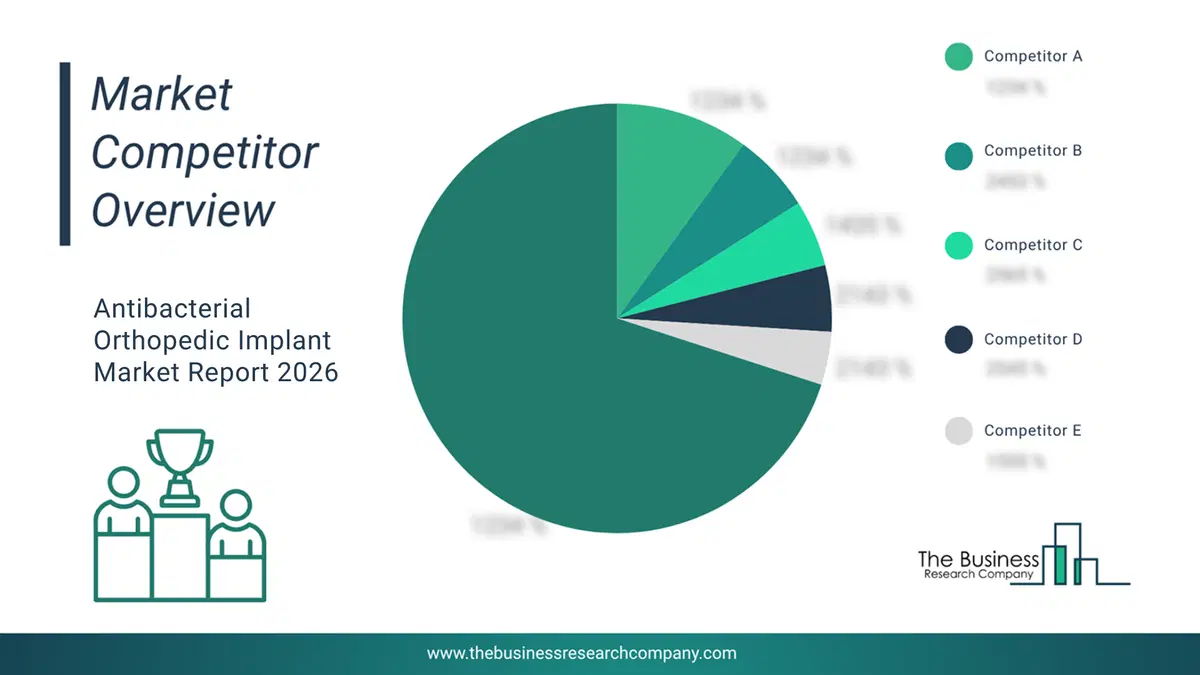
This chart is for illustrative purposes; the full report includes a detailed competitor analysis and comprehensive overview of the top 10 companies in the market.
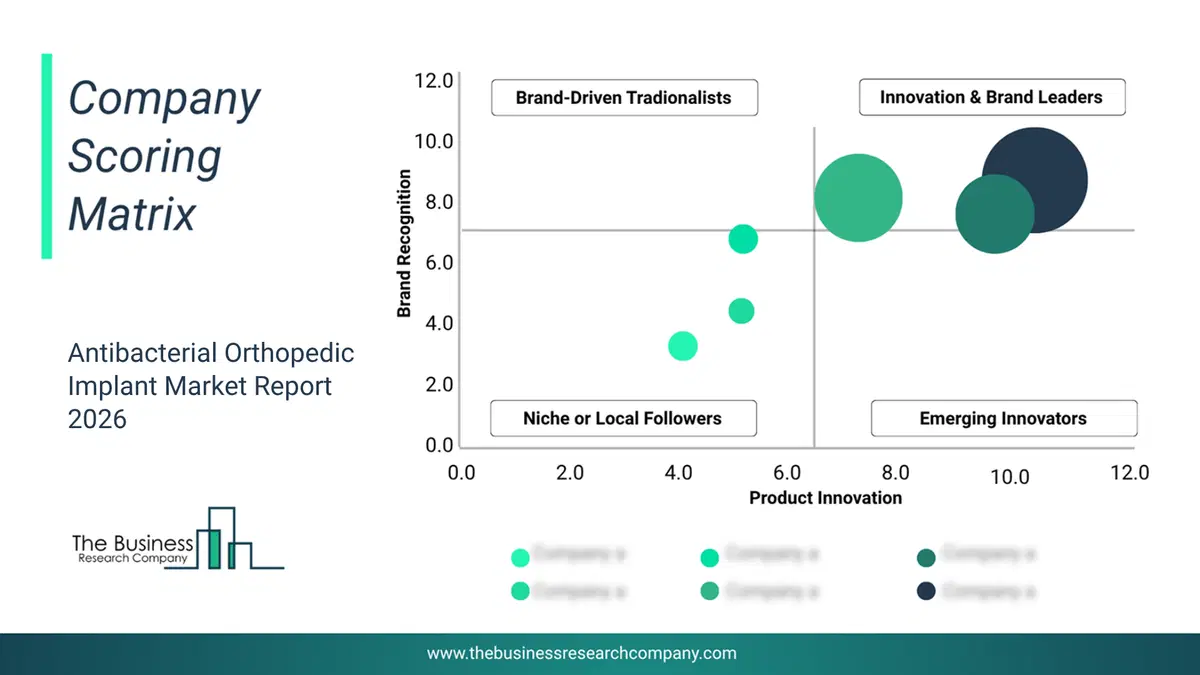
This chart maps companies by product innovation and brand strength, with bubble size indicating relative revenue, helping identify market leaders, challengers, and niche players. This is an illustrative chart; the full report provides a complete and accurate competitive analysis.
Global Antibacterial Orthopedic Implant Market Trends and Insights
Major companies operating in the antibacterial orthopedic implant market are focusing on developing innovative products such as antibacterial coated implants to reduce the risk of infections and improve patient outcomes. Antibacterial coated implants are medical implants covered with a layer of antibacterial material, which helps prevent bacterial growth and reduces the risk of infections, improving healing and long-term success. For instance, in April 2024, Onkos Surgical Inc., a US-based medical equipment manufacturing company, received U.S. Food & Drug Administration (FDA) approval for its Onkos Surgical antibacterial coated implants, marking a significant milestone for the company. This approval allows Onkos to market a technology designed to address the growing challenge of bacterial contamination in orthopedic implants, particularly in high-risk areas such as tumor and revision surgeries. The proprietary coating has been proven to be bactericidal, achieving a 99.999% kill rate in in-vitro testing, providing a potential solution for preventing devastating complications such as implant failure, infection, and amputation.What Are Latest Mergers And Acquisitions In The Antibacterial Orthopedic Implant Market?
In May 2023, Zimmer Biomet Holdings, Inc., a US-based medical device company, acquired OSSIS for an undisclosed amount. With this acquisition, Zimmer Biomet aims to strengthen its hip reconstruction product portfolio by integrating OSSIS’s expertise in personalized 3D-printed implants and complex hip replacements, thereby advancing innovation and improving patient outcomes. OSSIS Corporation is a New Zealand-based medical device company specializing in personalized 3D-printed antibacterial orthopedic implants.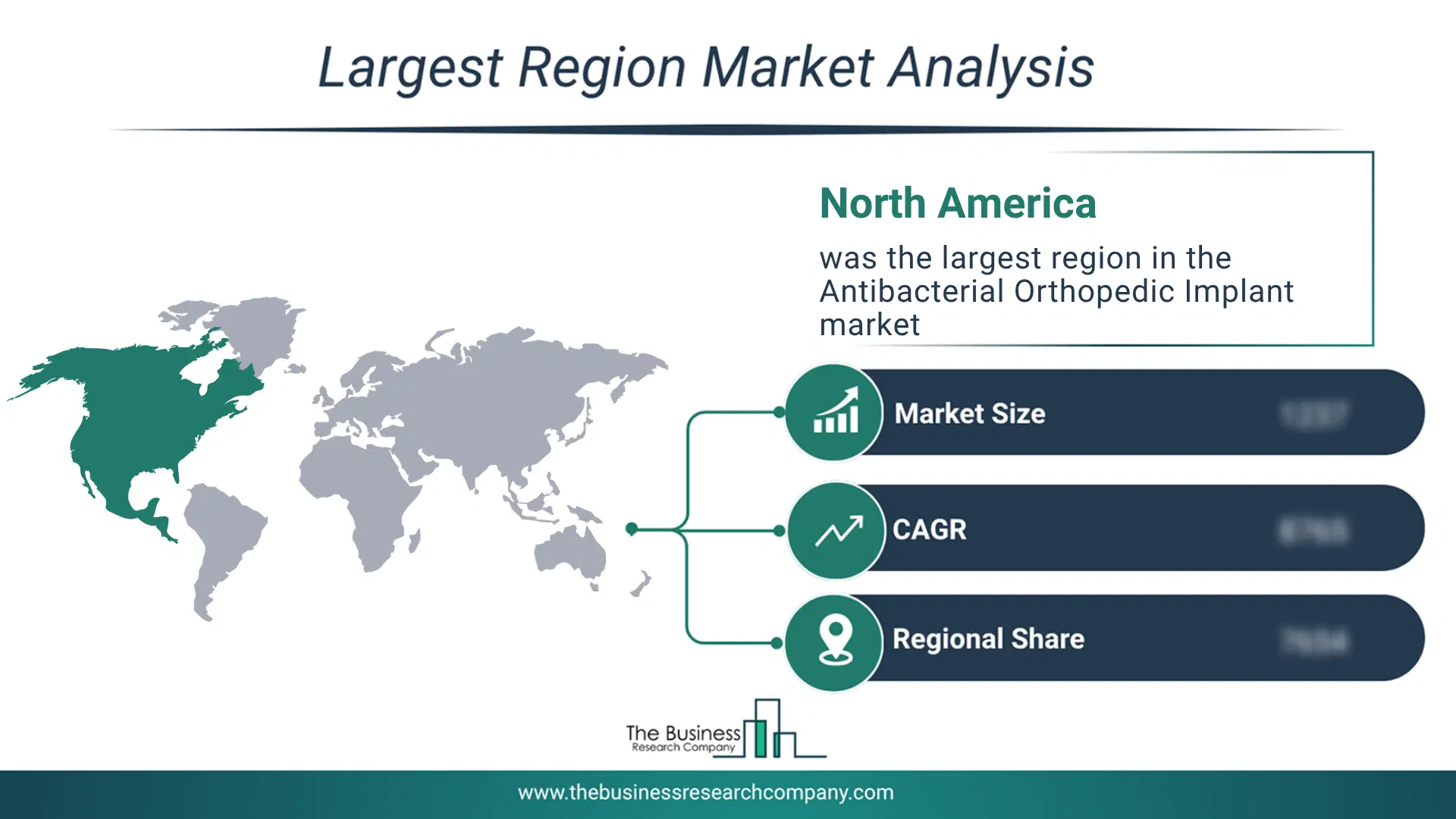
Regional Outlook
North America was the largest region in the antibacterial orthopedic implant market in 2025. Asia-Pacific is expected to be the fastest-growing region in the forecast period. The regions covered in this market report are Asia-Pacific, South East Asia, Western Europe, Eastern Europe, North America, South America, Middle East, Africa. The countries covered in this market report are Australia, Brazil, China, France, Germany, India, Indonesia, Japan, Taiwan, Russia, South Korea, UK, USA, Canada, Italy, SpainWhat Defines the Antibacterial Orthopedic Implant Market?
The antibacterial orthopedic implant market consists of sales of shoulder prosthesis, antibacterial prosthetic implants, antibacterial trauma implants, antibacterial bone grafts, antibacterial biodegradable implants, and antibacterial arthroplasty implants. Values in this market are ‘factory gate’ values, that is the value of goods sold by the manufacturers or creators of the goods, whether to other entities (including downstream manufacturers, wholesalers, distributors and retailers) or directly to end customers. The value of goods in this market includes related services sold by the creators of the goods.How is Market Value Defined and Measured?
The market value is defined as the revenues that enterprises gain from the sale of goods and/or services within the specified market and geography through sales, grants, or donations in terms of the currency (in USD unless otherwise specified). The revenues for a specified geography are consumption values that are revenues generated by organizations in the specified geography within the market, irrespective of where they are produced. It does not include revenues from resales along the supply chain, either further along the supply chain or as part of other products.
This chart presents market attractiveness based on a quantitative evaluation of growth, competition, strategic alignment, and risk, offering a clear view of opportunity areas for decision-making. This chart is for illustrative purposes; the full report contains the complete analysis.

This chart highlights the Total Addressable Market (TAM) by estimating the maximum revenue opportunity using an assumption-driven approach, supporting strategic planning and opportunity sizing across markets. The chart is illustrative; the full report provides a more comprehensive analysis.
What Key Data and Analysis Are Included in the Antibacterial Orthopedic Implant Market Report 2026?
The antibacterial orthopedic implant market research report is one of a series of new reports from The Business Research Company that provides market statistics, including industry global market size, regional shares, competitors with the market share, detailed market segments, market trends and opportunities, and any further data you may need to thrive in the antibacterial orthopedic implant industry. The market research report delivers a complete perspective of everything you need, with an in-depth analysis of the current and future state of the industry.Antibacterial Orthopedic Implant Market Report Forecast Analysis
| Report Attribute | Details |
|---|---|
| Market Size Value In 2026 | $4.75 billion |
| Revenue Forecast In 2030 | $6.81 billion |
| Growth Rate | CAGR of 9.4% from 2026 to 2030 |
| Base Year For Estimation | 2025 |
| Actual Estimates/Historical Data | 2020-2025 |
| Forecast Period | 2026 - 2030 |
| Market Representation | Revenue in USD Billion and CAGR from 2026 to 2030 |
| Segments Covered | Implant Type, Antibacterial Agent, Material Type, Application, End User |
| Regional Scope | Asia-Pacific, Western Europe, Eastern Europe, North America, South America, Middle East, Africa |
| Country Scope | The countries covered in the report are Australia, Brazil, China, France, Germany, India, Indonesia, Japan, Taiwan, Russia, South Korea, UK, USA, Canada, Italy, Spain. |
| Key Companies Profiled | Stryker Corporation, Zimmer Biomet Holdings Inc, Smith and Nephew plc, DePuy Synthes Inc, Exactech Inc, MicroPort Orthopedics Inc, Implantcast GmbH, aap Implantate AG, Accentus Medical Ltd, Onkos Surgical Inc, BONESUPPORT AB, Heraeus Medical GmbH, Promimic AB, Silver Bullet Therapeutics Inc, TEKNIMED SAS, BioMedtrix LLC, BioGate AG, Tecres SpA, Kyocera Medical Technologies Inc, Orthofix Medical Inc |
| Customization Scope | Request for Customization |
| Pricing And Purchase Options | Explore Purchase Options |