
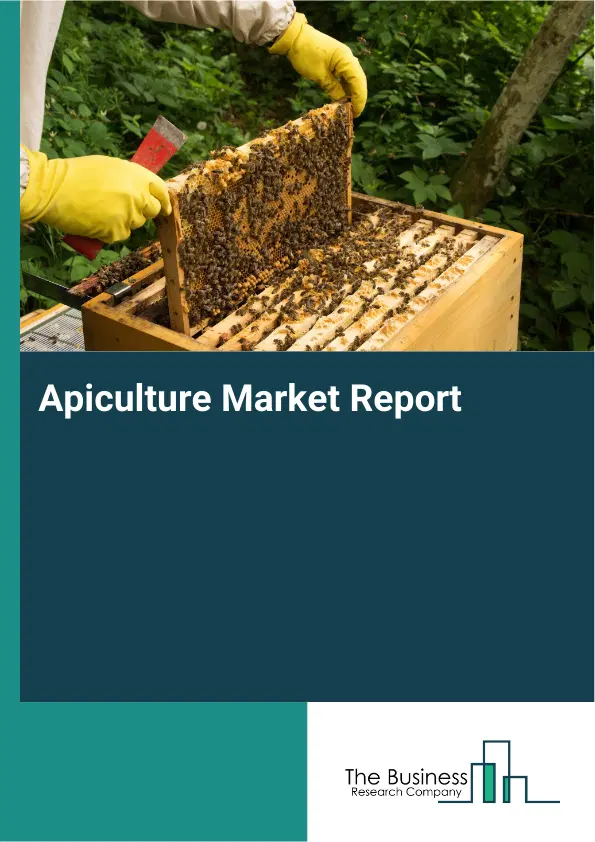
Apiculture Market Report 2026
Global Outlook – By Type (Honey, Beeswax, Live Bees, Other Types), By Method (Traditional Beekeeping, Modern Beekeeping), By Application (Food And Beverages, Medical, Cosmetics, Other Applications), By Distribution Channel (Hypermarkets, Convenience Stores, Online, Other Distribution Channels) – Market Size, Trends, Strategies, and Forecast to 2030
Apiculture Market Overview
• Apiculture market size has reached to $13.32 billion in 2025 • Expected to grow to $17.15 billion in 2030 at a compound annual growth rate (CAGR) of 5.1% • Growth Driver: Rising Consumption Of Honey To Drive Market Growth • Market Trend: Product Innovations Transforming The Apiculture Market • Asia-Pacific was the largest region in 2025 and North America is the fastest growing region.Market Gains By 2030 – Top Opportunities By Segment
Market Gain identifies the most promising market opportunities by highlighting the segments or products expected to generate the highest incremental revenue growth over the next five years.
What Is Covered Under Apiculture Market?
Apiculture refers to the practice of maintaining honey bees to obtain honey and wax from their combs or beehives. This involves processes such as choosing a location for the apiary, setting up the boxes, adding syrup to attract bees, harvesting boxes, extracting products, and selling in markets. The main types of apiculture produts are honey, beeswax, live bees, and others. Honey is a sweet, viscous substance produced by honeybees from the nectar of flowers. It is used in various applications such as food and beverages, medicals, cosmetics, and others. They are farmed through traditional beekeeping and modern beekeeping. Its products are available in hypermarkets, convenience stores, online channels, and others.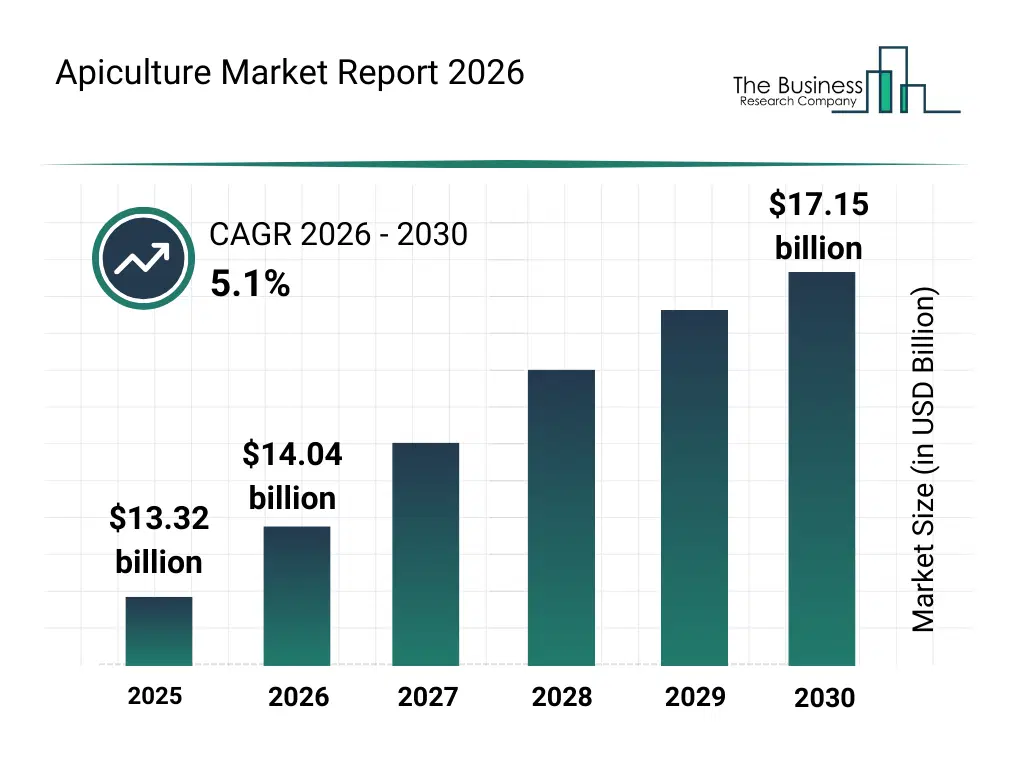
What Is The Apiculture Market Size and Share 2026?
The apiculture market size has grown strongly in recent years. It will grow from $13.32 billion in 2025 to $14.04 billion in 2026 at a compound annual growth rate (CAGR) of 5.4%. The growth in the historic period can be attributed to increasing traditional use of honey and beeswax, expansion of small-scale beekeeping communities, rising awareness of pollination benefits, growth of local markets for natural sweeteners, widespread adoption of basic hive management practices.What Is The Apiculture Market Growth Forecast?
The apiculture market size is expected to see strong growth in the next few years. It will grow to $17.15 billion in 2030 at a compound annual growth rate (CAGR) of 5.1%. The growth in the forecast period can be attributed to rising demand for organic and functional honey varieties, increasing commercialization of propolis and royal jelly, growing adoption of modern hive technologies, expansion of online distribution channels, strengthening regulations supporting sustainable apiculture. Major trends in the forecast period include expansion of organic and raw honey production, rising adoption of modern beekeeping techniques, growing commercial demand for beeswax-based products, increasing market for specialty bee products such as propolis and royal jelly, enhanced apiary management through improved field practices.
Global Apiculture Market Segmentation
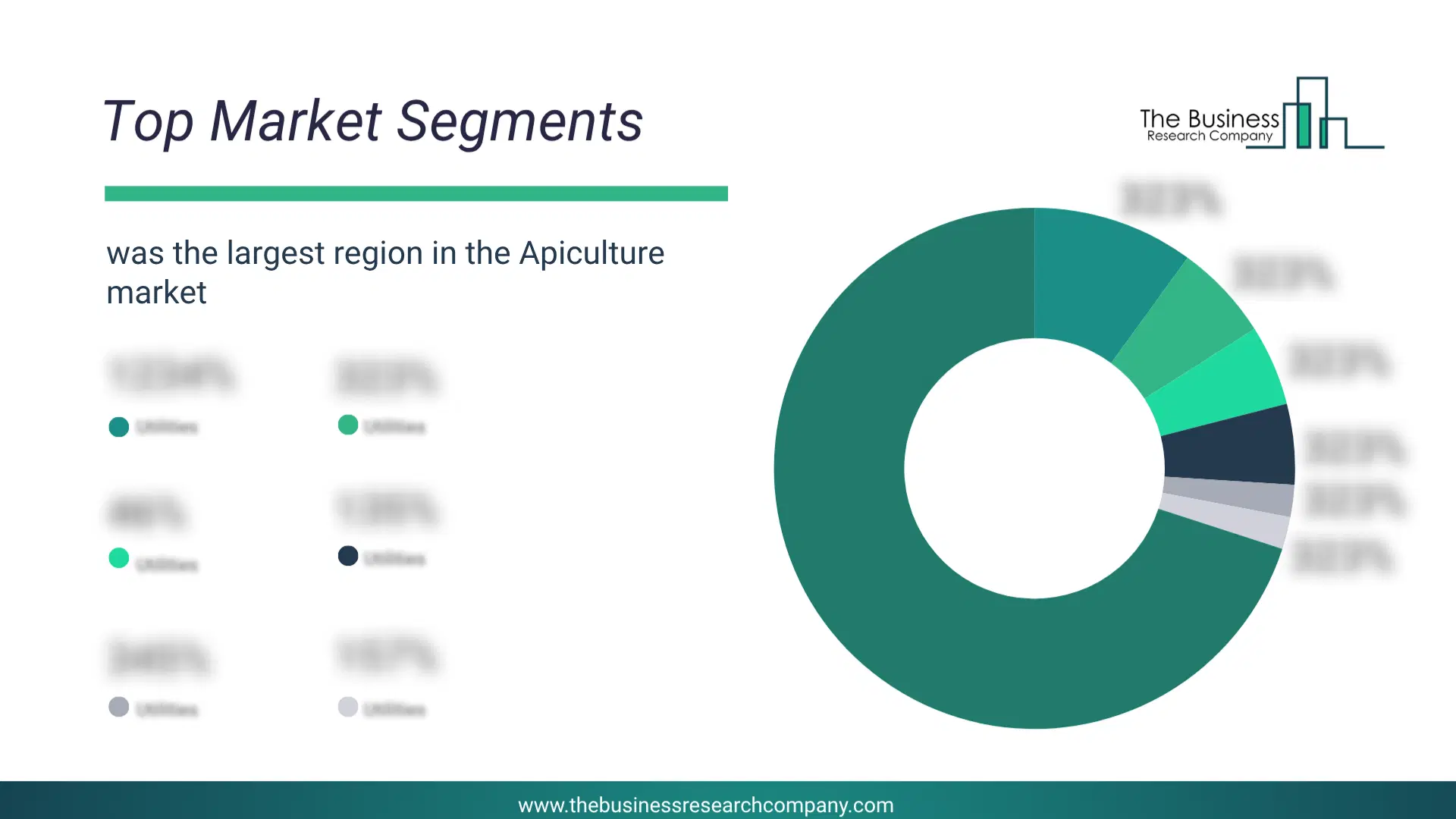
1) By Type: Honey, Beeswax, Live Bees, Other Types 2) By Method: Traditional Beekeeping, Modern Beekeeping 3) By Application: Food And Beverages, Medical, Cosmetics, Other Applications 4) By Distribution Channel: Hypermarkets, Convenience Stores, Online, Other Distribution Channels Subsegments: 1) By Honey: Raw Honey, Processed Honey, Organic Honey 2) By Beeswax: Refined Beeswax, Raw Beeswax, Beeswax Candles 3) By Live Bees: Package Bees, Nucleus Colonies, Queen Bees 4) By Other Types: Propolis, Royal Jelly, Bee Pollen The top segments in the apiculture market will be: • Honey will reach $12.42 Billion by 2030. • Beeswax will reach $1.99 Billion by 2030. • Other Types will reach $1.66 Billion by 2030. • Live Bees will reach $1.16 Billion by 2030.What Is Driver Of The Apiculture Market?
The increasing consumption of honey is expected to propel the growth of apiculture market going forward. Honey is a natural sweet substance produced by bees from the nectar of flowering plants or secretions of living parts of plants that bees collect, transform, and store in honeycombs, where it undergoes enzymatic and other changes. The consumption of honey contributes to the growth of the apiculture sector by driving demand for honeybee products, including honey, propolis, beeswax, and royal jelly, leading to increased beekeeping activities to meet consumer demand. For instance, in June 2024, according to The Observatory of Economic Complexity (OEC), a US-based online data visualization and distribution platform, from June 2023 to June 2024, honey exports from the United Kingdom rose by £114,000 (15%) ($144,780), increasing from £762,000 ($968,340) to £876,000 ($1,113,720). At the same time, imports also grew, climbing by £978,000 ($1,242,060). Therefore, the increasing consumption of honey is driving the growth of the apiculture industry.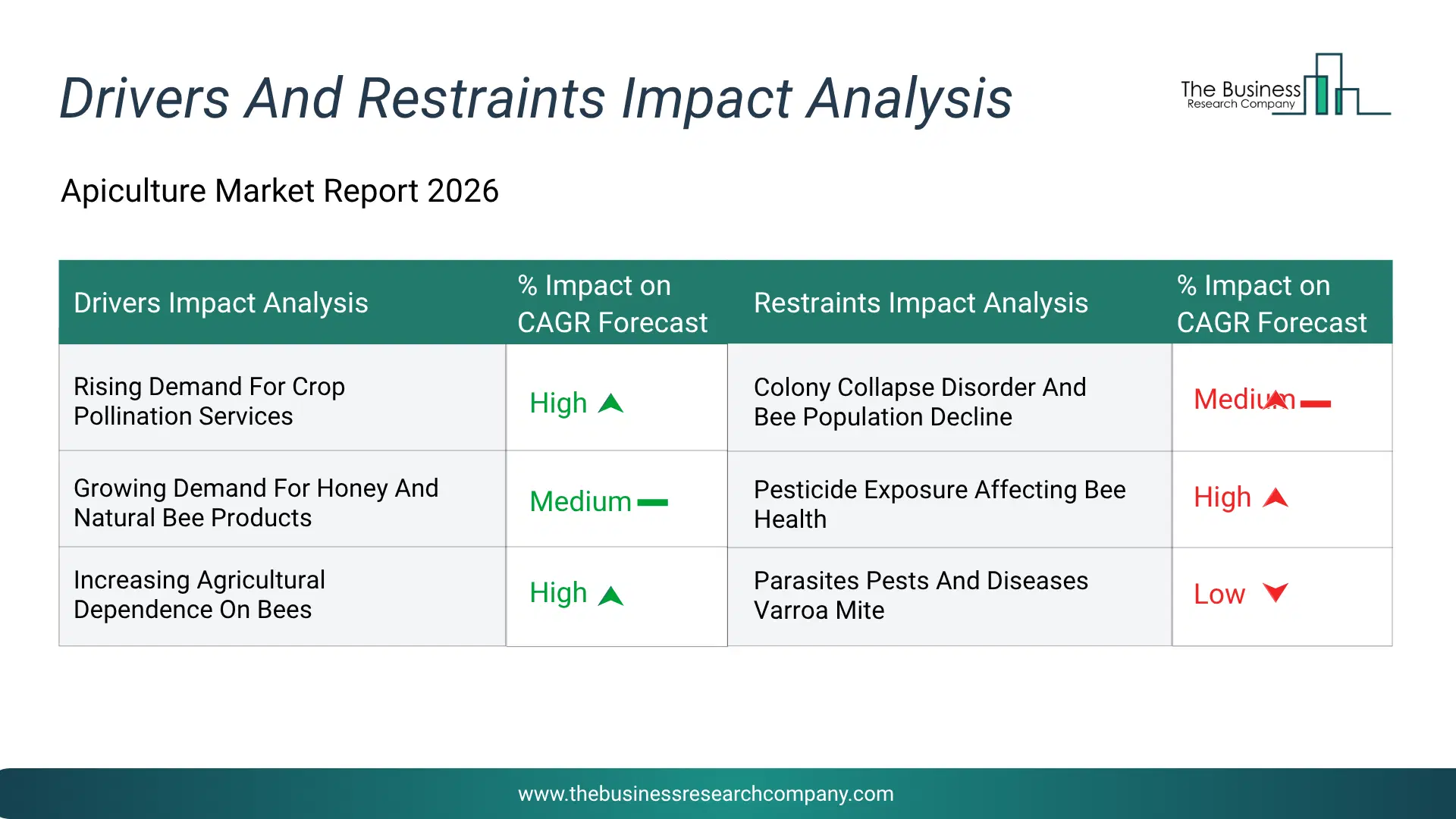
Infographic Chart Showing Key Market Drivers Analysis And Restraints For Apiculture Market
The chart presents an impact analysis of key drivers and restraints, quantifying their relative influence on the market's growth rate and helping assess the balance between growth enablers and limiting factors. This chart offers a high-level perspective; the full report contains more detailed insights.
How Will The Drivers Impact Growth In The Global Apiculture Market?
• Rising Demand For Crop Pollination Services (High) – During the forecast period, the rising demand for crop pollination services is expected to become a key growth driver for the apiculture market by 2030. Apiculture is strongly driven by the increasing dependence of agriculture on honey bee pollination. Bees contribute significantly to crop yield improvement, especially for fruits, vegetables, and nuts. Managed pollination services are now essential in commercial farming systems, and demand continues to rise due to large-scale monoculture farming. This creates a consistent revenue stream for beekeepers through renting hives to farmers. The economic value of pollination services is also increasing globally due to its direct impact on food production and agricultural productivity. • Growing Demand For Honey And Natural Bee Products (Medium) – During the forecast period, the growing demand for honey and natural bee products is expected to emerge as a major factor driving the expansion of the apiculture market by 2030. Honey, beeswax, and other bee-derived products are increasingly consumed due to rising preference for natural and organic food ingredients. Honey is widely used in food, pharmaceuticals, and cosmetic industries because of its antimicrobial and nutritional properties. Consumers are shifting away from refined sugar, boosting honey demand globally. Bee products are also used in wellness and healthcare formulations, further strengthening market value. This rising consumption directly increases apiculture production and commercial beekeeping activities worldwide. • Increasing Agricultural Dependence On Bees (High) – During the forecast period, the increasing agricultural dependence on bees is expected to act as a key growth catalyst for the apiculture market by 2030. The global agricultural sector depends heavily on honey bees for pollination of more than 90 commercial crops. Without bees, many crops would experience reduced yield and quality, making managed beekeeping a critical part of modern agriculture. The economic contribution of honey bees to agriculture is estimated in billions of dollars annually. This dependence ensures steady demand for apiary services across farming regions. As food demand rises globally, apiculture becomes increasingly essential for maintaining agricultural productivity.How Will The Restraints Impact Growth In The Global Apiculture Market?
• Colony Collapse Disorder And Bee Population Decline (High) – During the forecast period, the colony Collapse Disorder (CCD) leads to sudden disappearance of worker bees, leaving colonies unable to survive. This phenomenon has significantly impacted beekeeping operations by reducing hive strength and honey production. CCD is linked to multiple stress factors such as disease, pests, and environmental stress. Although the severity of CCD has declined in recent years, overall colony losses remain a major issue. This creates uncertainty in production and affects long-term profitability in apiculture. • Pesticide Exposure Affecting Bee Health (Medium) – During the forecast period, the exposure to pesticides used in agriculture is a major restraint for apiculture, as chemicals can weaken bee immune systems and disrupt navigation and foraging behavior. This leads to reduced survival rates and lower honey production. Even sublethal exposure can negatively affect colony strength over time. Agricultural intensification increases bees’ exposure to harmful chemicals, creating continuous operational risks for beekeepers. This directly impacts productivity and sustainability of beekeeping operations. • Parasites Pests And Diseases Varroa Mite (High) – During the forecast period, the parasites like Varroa mites and diseases such as bacterial and viral infections are major threats to honey bee colonies. These biological stressors weaken bees, reduce reproduction, and increase mortality rates. They also make colonies more vulnerable to other environmental and chemical stress factors. Managing these threats requires continuous intervention, increasing operational costs for beekeepers. High infestation levels can lead to large-scale colony losses, significantly restraining apiculture productivity.Key Players In The Global Apiculture Market
Major companies operating in the apiculture market are Dabur India Ltd., Miller's Honey Company, Betterbee, Barkman Honey LLC, Beehive Botanicals Inc., Arnold Honeybee Services, Clearskys, Little Bee Impex, Beeyond the Hive, Capilano Honey Ltd., Dutch Gold Honey Inc., Rowse Honey Ltd., Oha Honey LP, Heavenly Organics, Lamex Food Group Limited, United Natural Foods Inc. (Distributor of honey products), BeeswaxFromBeekeepers, Burleson's Honey, Bee Maid Honey Limited, Comvita Limited, GloryBee, Wholesome Sweeteners Inc., Thomas Apiculture, Georgia Honey Farm, Blue Ridge Honey Co., Honeyville Inc., Mann Lake Ltd., Honey Solutions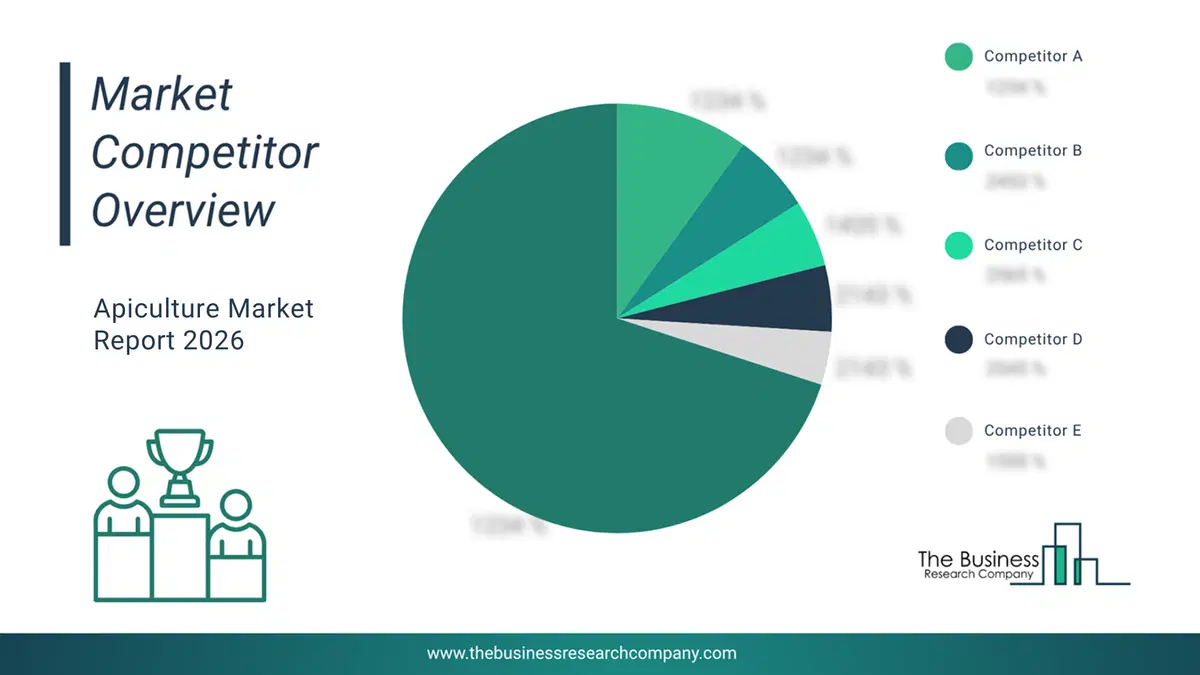
This chart is for illustrative purposes; the full report includes a detailed competitor analysis and comprehensive overview of the top 10 companies in the market.
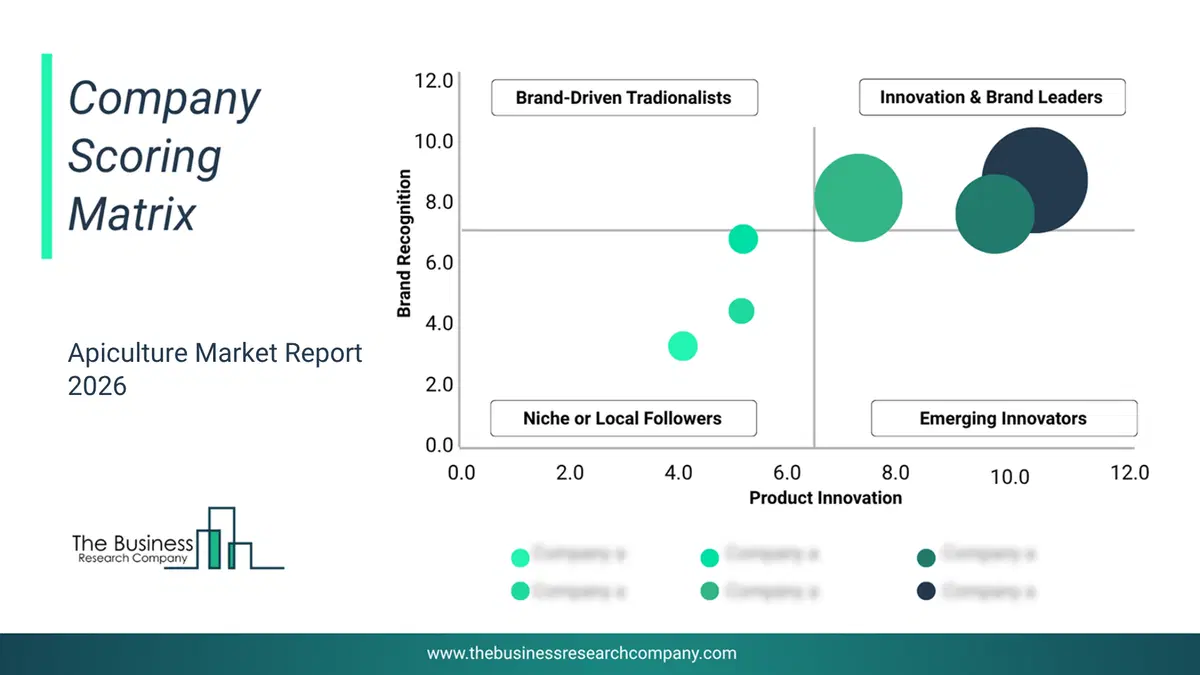
This chart maps companies by product innovation and brand strength, with bubble size indicating relative revenue, helping identify market leaders, challengers, and niche players. This is an illustrative chart; the full report provides a complete and accurate competitive analysis.
Global Apiculture Market Trends and Insights
Major companies operating in the apiculture market are developing new products such as organic honey to gain a competitive edge in the market. Organic honey refers to the honey that is produced using organic and sustainable beekeeping practices, following strict guidelines and standards set by organic certification bodies. For instance, in March 2023, Bagrrys India Limited, an India-based food processing company, launched Bagrry’s Organic Wild Honey. Bagrry’s emphasizes the purity of its product, ensuring it is free from adulteration, added sugar, or preservatives. The honey is sourced through ethical and sustainable harvesting practices, adhering to Good Beekeeping Practices (GBP). It is obtained from organic farms without harmful chemicals or pesticides, backed by proper organic certification from regulatory bodies. Bagrry’s Organic Wild Honey offers a unique taste and flavor due to its multifloral origin, containing natural pollen grains with nutritional enzymes that aid digestion and strengthen the immune system. Unprocessed, unfiltered, and unpasteurized, the honey retains its natural probiotic properties, rich taste, and dark color.What Are Latest Mergers And Acquisitions In The Apiculture Market? Sweet Harvest Foods Holdings Acquires Sweet River Honey To Expand Natural Sweetener Portfolio
In February 2023, Sweet Harvest Foods Holdings (SHFH), a US-based natural sweetener production company, acquired Sweet River Honey LLC for an undisclosed amount. The acquisition will bring hives and beekeeping skills to SHFH’s portfolio, allowing it to achieve its aim of being the world’s most trusted natural sweetener firm. Sweet River Honey LLC is a US-based company that provides honey products, sustainable beekeeping practices, and transparent pollination services.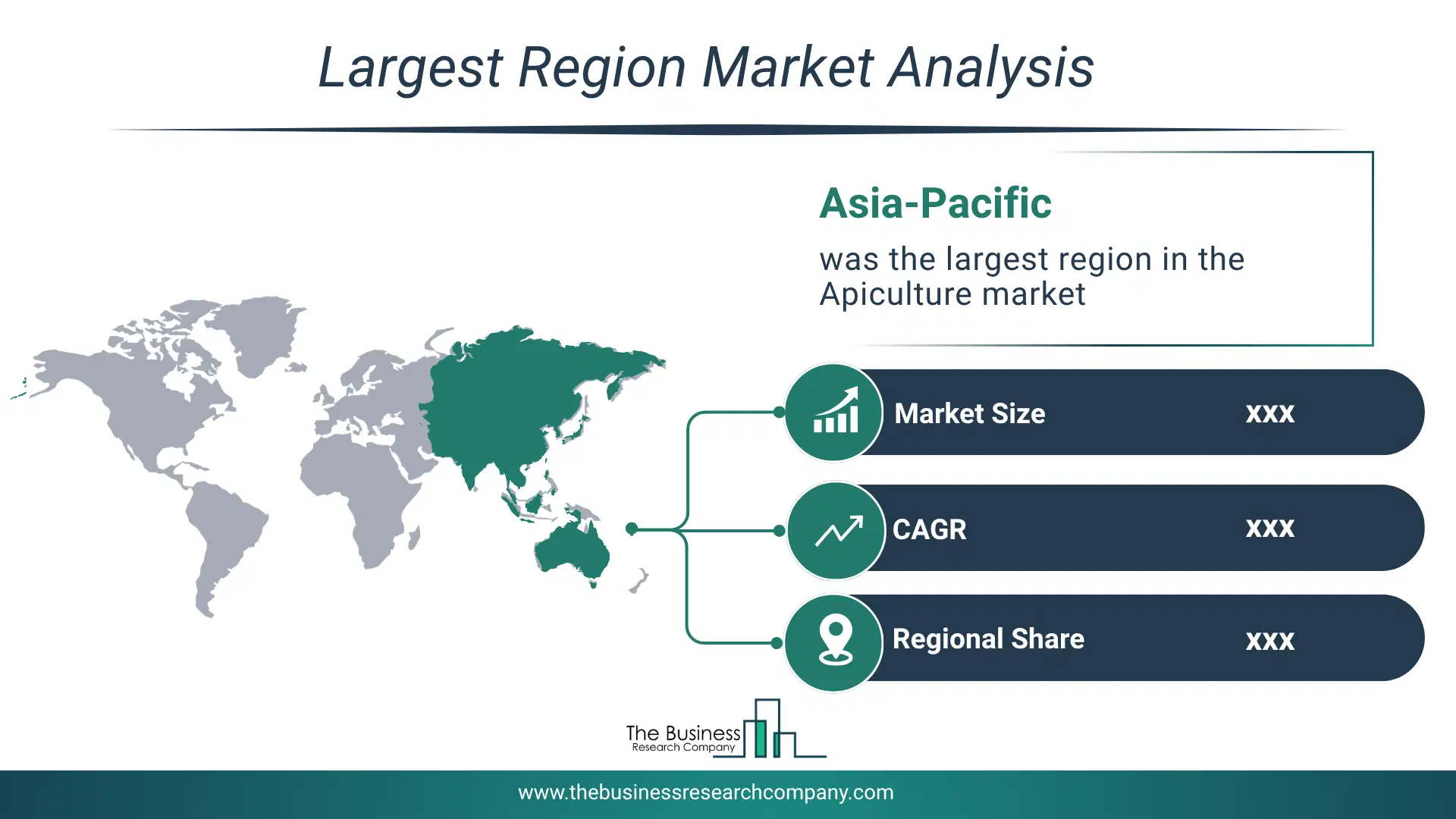
Regional Outlook
Asia-Pacific was the largest region in the apiculture market in 2025. North America is expected to be the fastest-growing region in the global apiculture market during the forecast period. The regions covered in this market report are Asia-Pacific, South East Asia, Western Europe, Eastern Europe, North America, South America, Middle East, Africa. The countries covered in this market report are Australia, Brazil, China, France, Germany, India, Indonesia, Japan, Taiwan, Russia, South Korea, UK, USA, Canada, Italy, SpainWhat Defines the Apiculture Market?
The apiculture market includes revenues earned by entities through services such as pollination services, apiary management, and beekeeping training services. The market value includes the value of related goods sold by the service provider or included within the service offering. Only goods and services traded between entities or sold to end consumers are included. The apiculture market consists of sales of bee products including beeswax, honey, and bee pollen. Values in this market are ‘factory gate’ values, that is, the value of goods sold by the manufacturers or creators of the goods, whether to other entities (including downstream manufacturers, wholesalers, distributors, and retailers) or directly to end customers. The value of goods in this market includes related services sold by the creators of the goods.How is Market Value Defined and Measured?
The market value is defined as the revenues that enterprises gain from the sale of goods and/or services within the specified market and geography through sales, grants, or donations in terms of the currency (in USD unless otherwise specified). The revenues for a specified geography are consumption values that are revenues generated by organizations in the specified geography within the market, irrespective of where they are produced. It does not include revenues from resales along the supply chain, either further along the supply chain or as part of other products.
This chart presents market attractiveness based on a quantitative evaluation of growth, competition, strategic alignment, and risk, offering a clear view of opportunity areas for decision-making. This chart is for illustrative purposes; the full report contains the complete analysis.

This chart highlights the Total Addressable Market (TAM) by estimating the maximum revenue opportunity using an assumption-driven approach, supporting strategic planning and opportunity sizing across markets. The chart is illustrative; the full report provides a more comprehensive analysis.
What Key Data and Analysis Are Included in the Apiculture Market Report 2026?
The apiculture market research report is one of a series of new reports from The Business Research Company that provides market statistics, including industry global market size, regional shares, competitors with the market share, detailed market segments, market trends and opportunities, and any further data you may need to thrive in the apiculture industry. The market research report delivers a complete perspective of everything you need, with an in-depth analysis of the current and future state of the industry.Apiculture Market Report Forecast Analysis
| Report Attribute | Details |
|---|---|
| Market Size Value In 2026 | $14.04 billion |
| Revenue Forecast In 2030 | $5.72 billion |
| Growth Rate | CAGR of 5.4% from 2026 to 2030 |
| Base Year For Estimation | 2025 |
| Actual Estimates/Historical Data | 2020-2025 |
| Forecast Period | 2026 - 2030 |
| Market Representation | Revenue in USD Billion and CAGR from 2026 to 2030 |
| Segments Covered | Type, Method, Application, Distribution Channel |
| Regional Scope | Asia-Pacific, Western Europe, Eastern Europe, North America, South America, Middle East, Africa |
| Country Scope | The countries covered in the report are Australia, Brazil, China, France, Germany, India, Indonesia, Japan, Taiwan, Russia, South Korea, UK, USA, Canada, Italy, Spain. |
| Key Companies Profiled | Dabur India Ltd., Miller's Honey Company, Betterbee, Barkman Honey LLC, Beehive Botanicals Inc., Arnold Honeybee Services, Clearskys, Little Bee Impex, Beeyond the Hive, Capilano Honey Ltd., Dutch Gold Honey Inc., Rowse Honey Ltd., Oha Honey LP, Heavenly Organics, Lamex Food Group Limited, United Natural Foods Inc. (Distributor of honey products), BeeswaxFromBeekeepers, Burleson's Honey, Bee Maid Honey Limited, Comvita Limited, GloryBee, Wholesome Sweeteners Inc., Thomas Apiculture, Georgia Honey Farm, Blue Ridge Honey Co., Honeyville Inc., Mann Lake Ltd., Honey Solutions |
| Customization Scope | Request for Customization |
| Pricing And Purchase Options | Explore Purchase Options |