
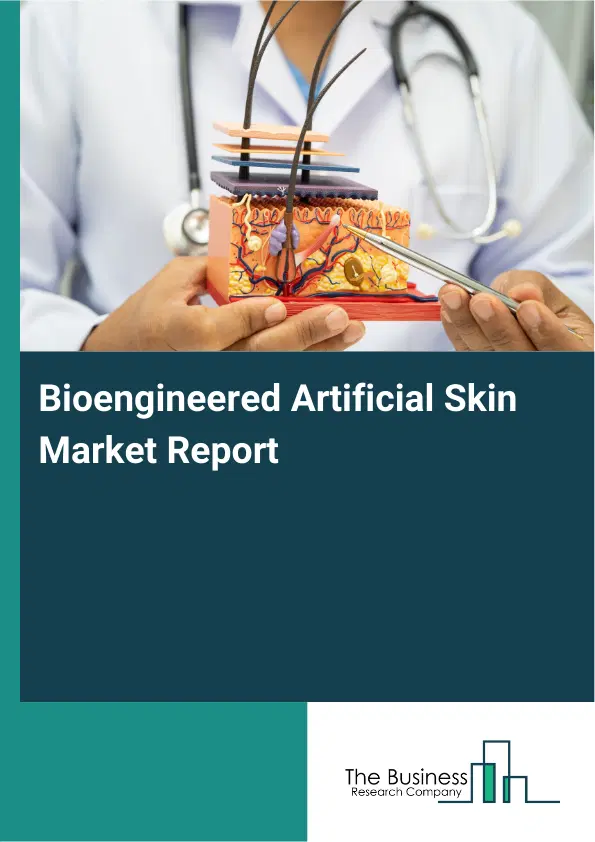
Bioengineered Artificial Skin Market Report 2026
Global Outlook – By Product Type (Acellular Dermal Matrices, Cell-Based Skin Substitutes, Skin Grafts, 3D Bioprinted Skin), By Material Type (Collagen-Based, Hyaluronic Acid-Based, Silicone-Based, Polyurethane-Based), By Technology (Bioprinting, Electrospinning, Self-Assembly, Microfabrication), By Application (Burn Treatment, Chronic Wound Care, Surgical Reconstruction, Other Applications), By End-User (Hospitals, Dermatology Clinics, Ambulatory Surgical Centers, Research Institutions) – Market Size, Trends, Strategies, and Forecast to 2030
Bioengineered Artificial Skin Market Overview
• Bioengineered Artificial Skin market size has reached to $2.73 billion in 2025 • Expected to grow to $4.88 billion in 2030 at a compound annual growth rate (CAGR) of 12.3% • Growth Driver: Growing Demand For Cosmetic And Reconstructive Surgery Due To Rising Awareness And Medical Restoration Needs • Market Trend: Technological Innovations In Bioengineered Skin For Enhanced Wound Healing • North America was the largest region in 2025 and Asia-Pacific is the fastest growing region.What Is Covered Under Bioengineered Artificial Skin Market?
Bioengineered artificial skin is a laboratory-created substitute designed to mimic the structure and function of natural human skin. It is developed using living cells and synthetic or natural materials to replicate the skin’s layers, primarily the epidermis and dermis. This artificial skin is used for wound healing, burn treatment, skin grafts, and testing pharmaceuticals or cosmetics. By promoting cell growth and tissue regeneration, it offers a valuable solution when natural skin regeneration is insufficient or unavailable. The main product types of bioengineered artificial skin include acellular dermal matrices, cell-based skin substitutes, skin grafts, and 3D bioprinted skin. Acellular dermal matrices (ADMs) are biological scaffolds derived from human or animal skin that have had all cellular components removed, leaving behind the structural matrix of proteins like collagen and elastin. The various material types include collagen-based, hyaluronic acid-based, silicone-based, and polyurethane-based, and the various technologies involved are bioprinting, electrospinning, self-assembly, and microfabrication. The various applications involved are burn treatment, chronic wound care, surgical reconstruction, and others, and they are used by several end users, such as hospitals, dermatology clinics, ambulatory surgical centers, and research institutions.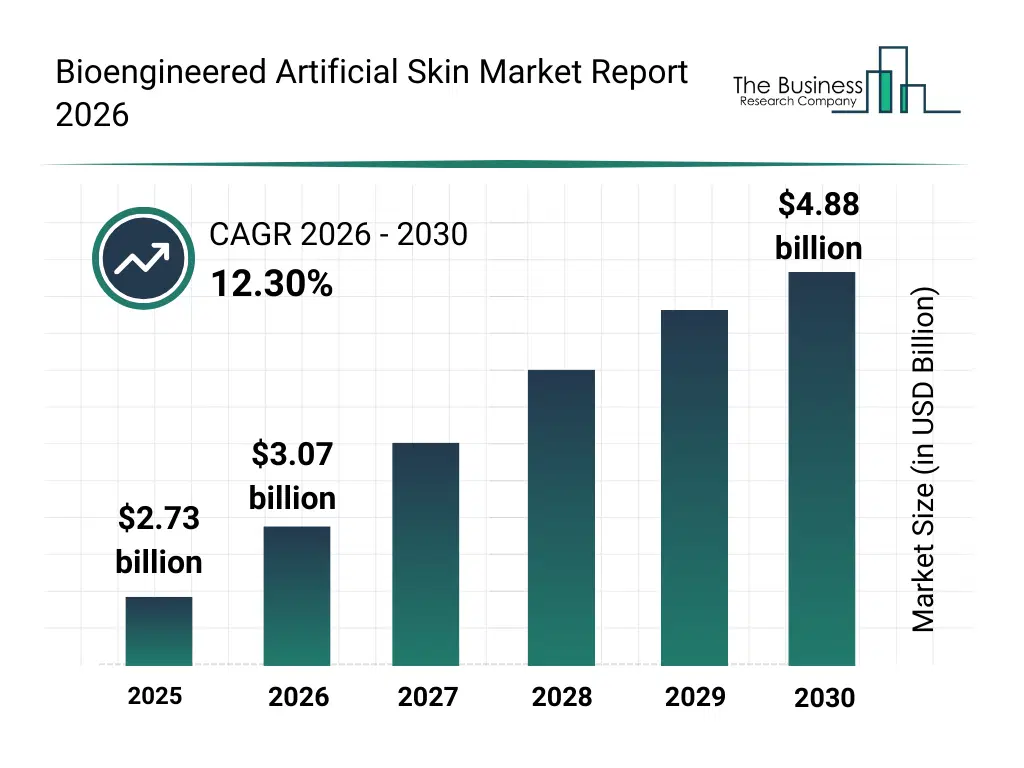
What Is The Bioengineered Artificial Skin Market Size and Share 2026?
The bioengineered artificial skin market size has grown rapidly in recent years. It will grow from $2.73 billion in 2025 to $3.07 billion in 2026 at a compound annual growth rate (CAGR) of 12.4%. The growth in the historic period can be attributed to increasing incidence of burn injuries, rising prevalence of chronic wounds, expansion of reconstructive surgical procedures, advances in tissue engineering research, growing availability of biomaterial technologies.What Is The Bioengineered Artificial Skin Market Growth Forecast?
The bioengineered artificial skin market size is expected to see rapid growth in the next few years. It will grow to $4.88 billion in 2030 at a compound annual growth rate (CAGR) of 12.3%. The growth in the forecast period can be attributed to increasing adoption of regenerative medicine therapies, rising demand for advanced wound care solutions, expansion of stem cell-based skin treatments, growing investments in bioprinting technologies, increasing focus on personalized regenerative healthcare. Major trends in the forecast period include increasing development of cell-based skin substitutes, rising adoption of 3D bioprinted skin constructs, growing use of biomimetic scaffold materials, expansion of regenerative wound healing applications, enhanced focus on personalized skin regeneration.
Global Bioengineered Artificial Skin Market Segmentation
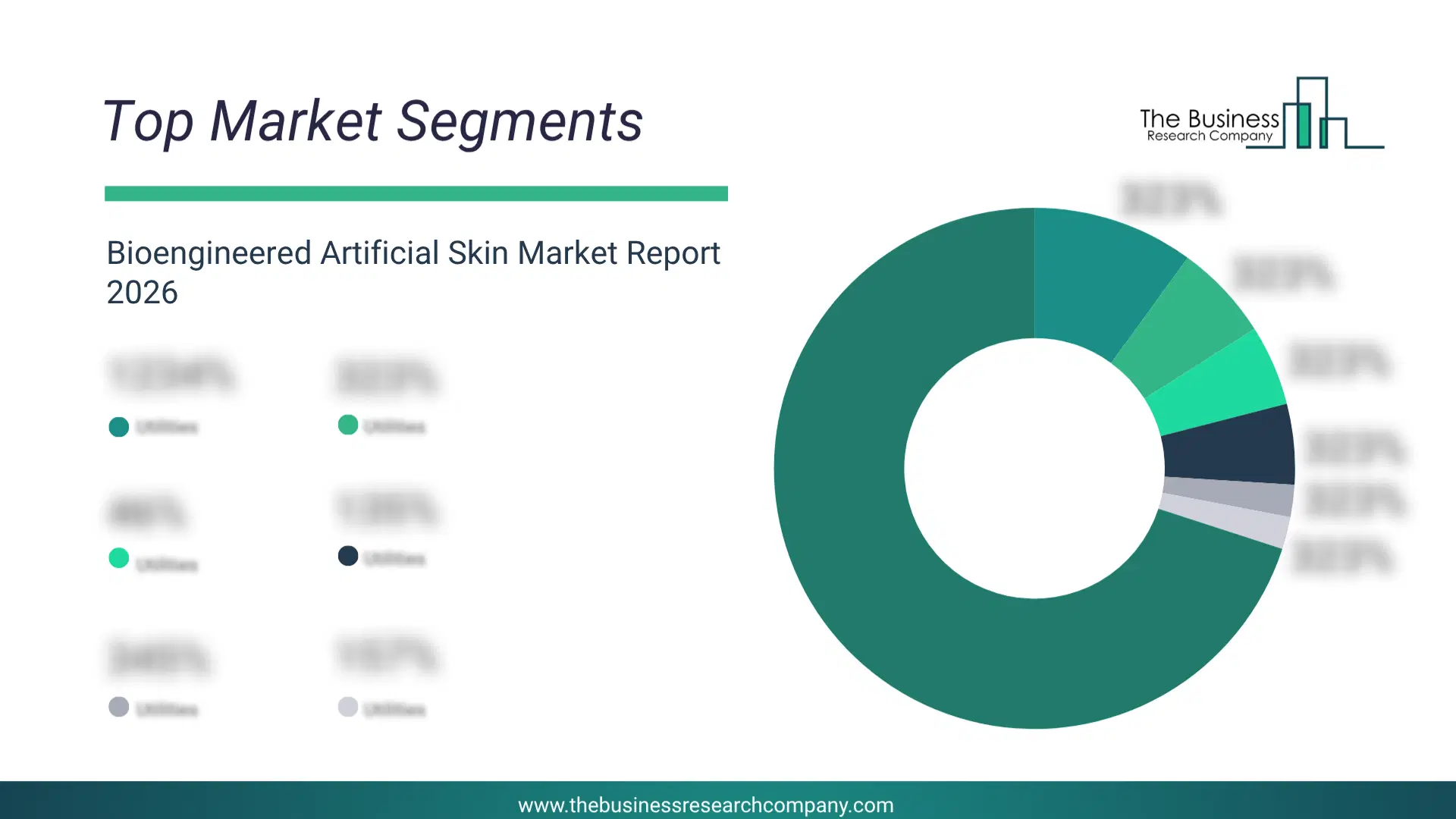
1) By Product Type: Acellular Dermal Matrices, Cell-Based Skin Substitutes, Skin Grafts, 3D Bioprinted Skin 2) By Material Type: Collagen-Based, Hyaluronic Acid-Based, Silicone-Based, Polyurethane-Based 3) By Technology: Bioprinting, Electrospinning, Self-Assembly, Microfabrication 4) By Application: Burn Treatment, Chronic Wound Care, Surgical Reconstruction, Other Applications 5) By End-User: Hospitals, Dermatology Clinics, Ambulatory Surgical Centers, Research Institutions Subsegments: 1) By Acellular Dermal Matrices: Biologically Derived Acellular Dermal Matrices, Synthetic Acellular Dermal Matrices, Hydrogel-Based Acellular Dermal Matrices, Collagen-Based Acellular Dermal Matrices 2) By Cell-Based Skin Substitutes: Autologous Skin Substitutes, Allogeneic Skin Substitutes, Stem Cell-Based Skin Substitutes, Fetal and Neonatal Cell-Based Substitutes 3) By Skin Grafts: Split-Thickness Skin Grafts, Full-Thickness Skin Grafts, Cultured Skin Grafts, Synthetic Skin Grafts 4) By 3D Bioprinted Skin: Human Skin Bioprinting, In Vitro Bioprinted Skin Models, Bioink-Based Bioprinted Skin, Multi-Layered Bioprinted SkinWhat Is The Driver Of The Bioengineered Artificial Skin Market?
The growing demand for cosmetic and reconstructive surgery is expected to propel the growth of the bioengineered artificial skin market going forward. Cosmetic and reconstructive surgery refers to medical procedures performed to enhance physical appearance or to restore the form and function of body parts affected by congenital conditions, trauma, or disease. The growing demand for cosmetic and reconstructive surgery is due to rising consumer awareness of aesthetic enhancement options and the increasing need for medical restoration following trauma, congenital conditions, or illness-related deformities. Bioengineered artificial skin is useful for cosmetic and reconstructive surgery by supporting tissue regeneration, reducing scarring, and improving aesthetic outcomes in procedures that restore or enhance damaged or missing skin. For instance, in January 2023, the International Society of Aesthetic Plastic Surgery, a US-based professional organization dedicated to the advancement of aesthetic (cosmetic) plastic surgery, over 12.8 million surgical and 17.5 million non-surgical operations were conducted globally, representing a 19.3% rise in total procedures from the previous reporting period. Additionally, more than 14.9 million surgical and 18.8 million non-surgical operations will be carried out globally by plastic surgeons in 2022, representing an 11.2% rise in total procedures performed. Therefore, growing demand for cosmetic and reconstructive surgery is driving growth in the bioengineered artificial skin industry.Key Players In The Global Bioengineered Artificial Skin Market
Major companies operating in the bioengineered artificial skin market are Stryker Corporation, Smith & Nephew plc, Mölnlycke Health Care AB, Integra LifeSciences Holdings Corporation, Organogenesis Inc., MiMedx Group Inc., Vericel Corporation, AlloSource Inc., Kerecis Inc., PolyNovo Limited, Avita Medical Inc., Cook Biotech Incorporated, Tissue Regenix Group plc, Episkin SA, TissUse GmbH, RenovaCare Inc., PolarityTE Inc., Mallinckrodt Pharmaceuticals (Skin Substitutes), Medtronic plc (Regenerative Therapies), 3D Bioprinting Solutions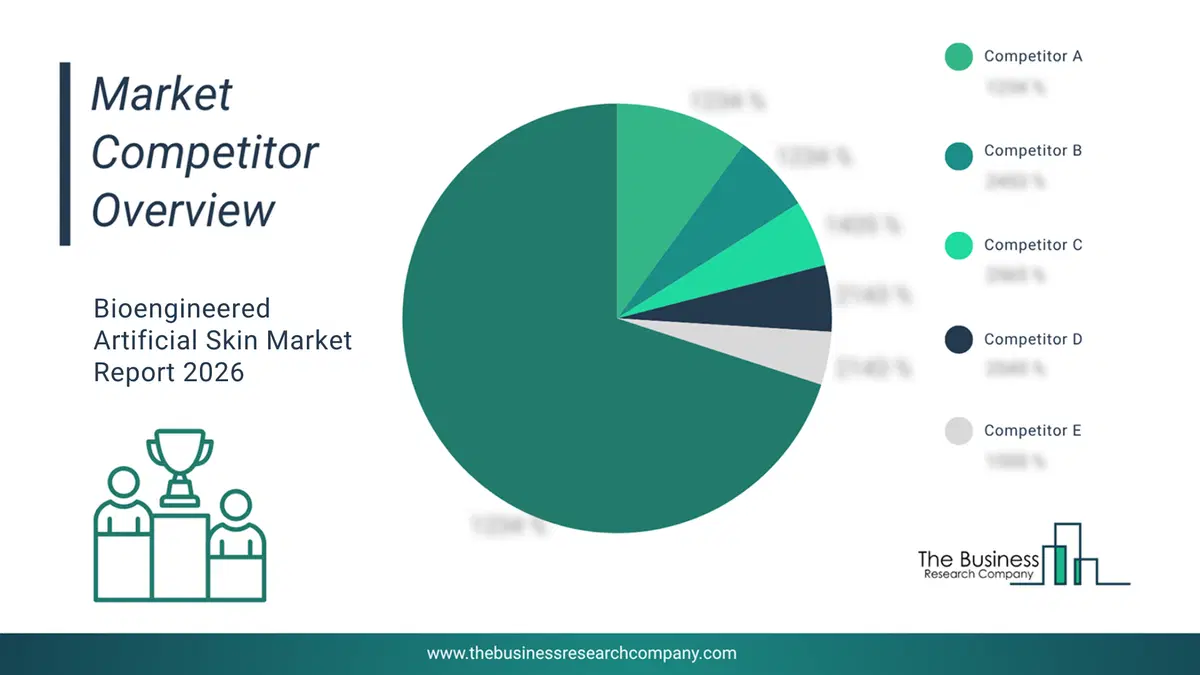
This chart is for illustrative purposes; the full report includes a detailed competitor analysis and comprehensive overview of the top 10 companies in the market.
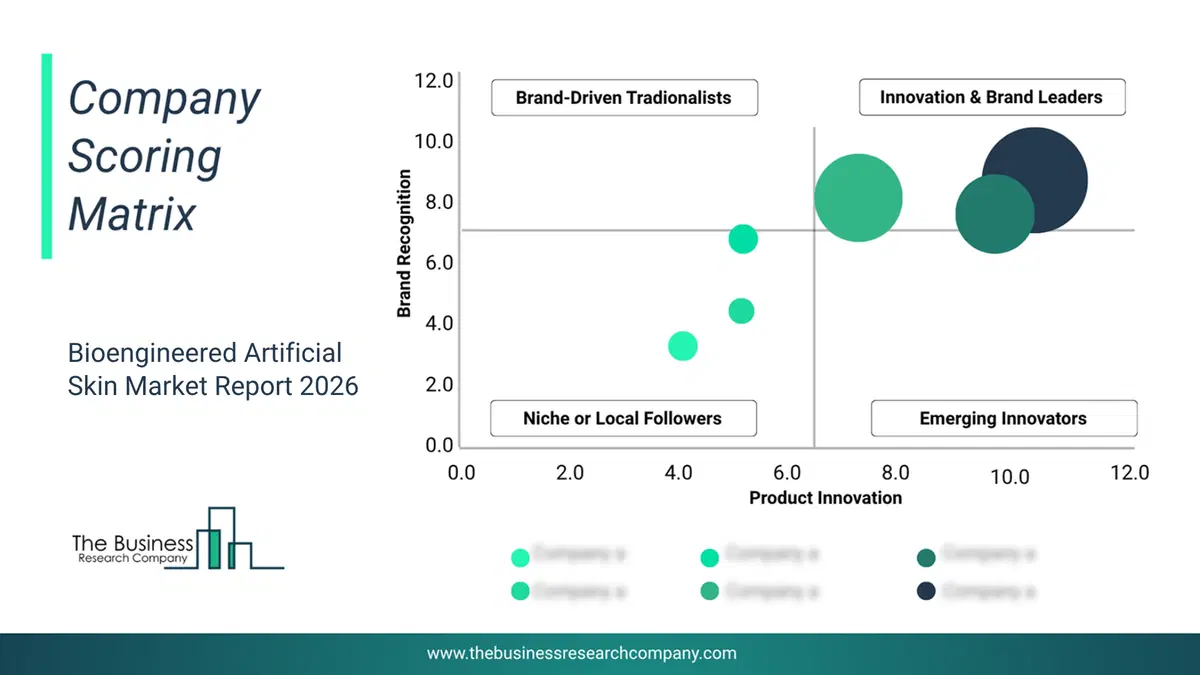
This chart maps companies by product innovation and brand strength, with bubble size indicating relative revenue, helping identify market leaders, challengers, and niche players. This is an illustrative chart; the full report provides a complete and accurate competitive analysis.
Global Bioengineered Artificial Skin Market Trends and Insights
Major companies operating in the bioengineered artificial skin market are focusing on technological innovations, such as advanced tissue engineering techniques, to develop highly effective skin substitutes that enhance wound healing, improve patient outcomes, and support the growing demand for regenerative medicine in treating severe burns and chronic wounds. Advanced tissue engineering is a multidisciplinary field that combines biology, materials science, and engineering to create synthetic or biologically derived tissues and organs that can replicate the structure and function of natural tissues for medical applications. For instance, in January 2023, Urgo Group, a France-based healthcare company, launched the Genesis research laboratory focused on developing artificial skin to aid in the effective treatment of severe wounds. The initiative aims to support healthcare professionals by creating advanced bioengineered skin solutions to accelerate patient recovery and improve wound-healing outcomes.What Are Latest Mergers And Acquisitions In The Bioengineered Artificial Skin Market?
In August 2023, Coloplast A/S, a Denmark-based healthcare company, acquired Kerecis for an undisclosed amount. With this acquisition, Coloplast aims to expand its presence in the advanced wound care market by leveraging Kerecis' innovative fish-skin-based regenerative technology, strengthening its position in biological wound care solutions, and addressing the growing global demand for effective wound healing therapies. Kerecis Limited is a US-based company that manufactures bioengineered artificial skin substitutes derived from fish skin, specifically for use in wound healing and tissue regeneration.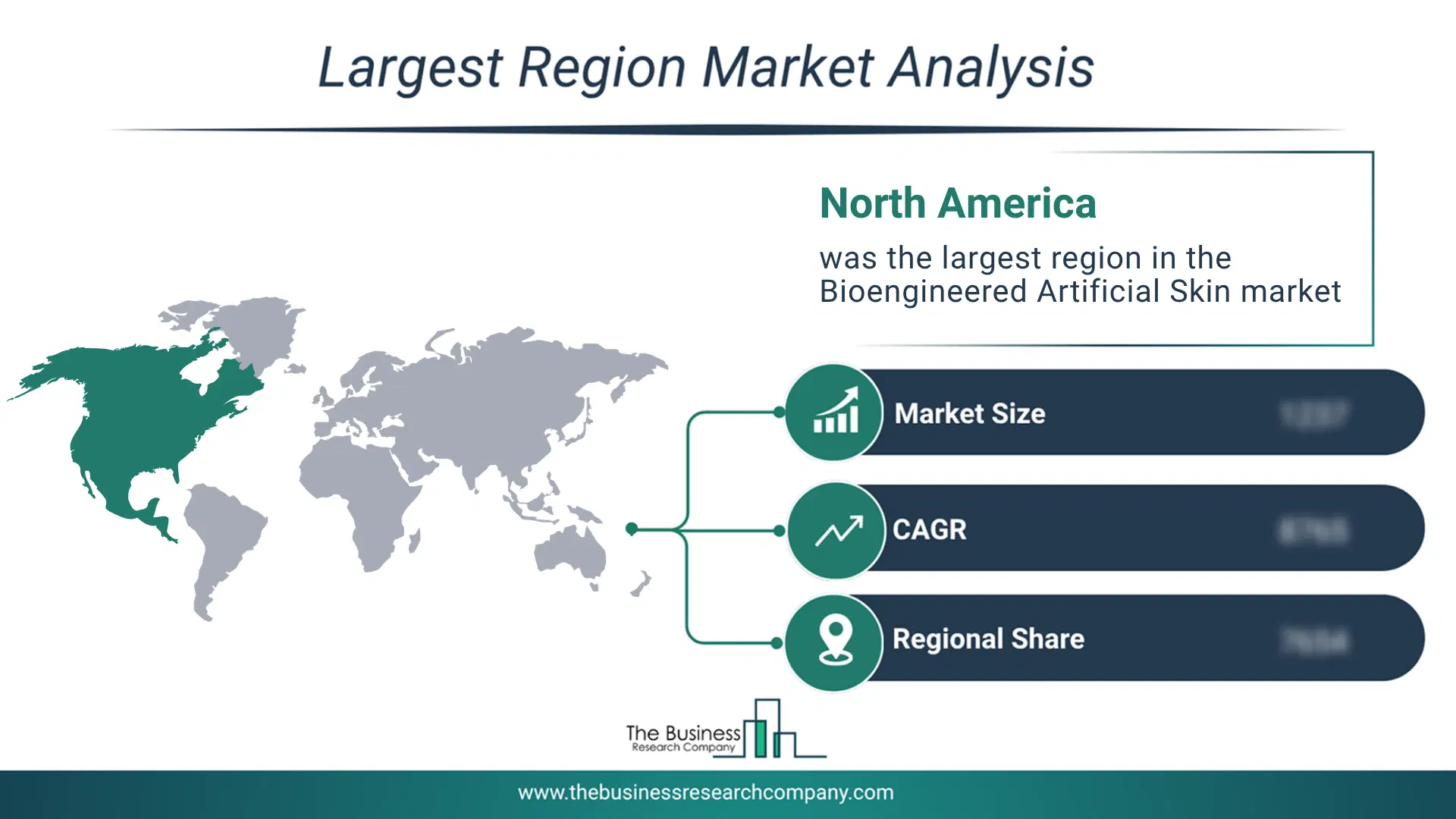
Regional Outlook
North America was the largest region in the bioengineered artificial skin market in 2025. Asia-Pacific is expected to be the fastest-growing region in the forecast period. The regions covered in this market report are Asia-Pacific, South East Asia, Western Europe, Eastern Europe, North America, South America, Middle East, Africa. The countries covered in this market report are Australia, Brazil, China, France, Germany, India, Indonesia, Japan, Taiwan, Russia, South Korea, UK, USA, Canada, Italy, SpainWhat Defines the Bioengineered Artificial Skin Market?
The bioengineered artificial skin market consists of revenues earned by entities by providing services such as customization and design services, clinical trial and regulatory support services, and post-implantation monitoring. The market value includes the value of related goods sold by the service provider or included within the service offering. The bioengineered artificial skin market also includes sales of integra dermal regeneration template, primatrix, pico system, and advanced wound care products. Values in this market are ‘factory gate’ values, that is the value of goods sold by the manufacturers or creators of the goods, whether to other entities (including downstream manufacturers, wholesalers, distributors and retailers) or directly to end customers. The value of goods in this market includes related services sold by the creators of the goods.How is Market Value Defined and Measured?
The market value is defined as the revenues that enterprises gain from the sale of goods and/or services within the specified market and geography through sales, grants, or donations in terms of the currency (in USD unless otherwise specified). The revenues for a specified geography are consumption values that are revenues generated by organizations in the specified geography within the market, irrespective of where they are produced. It does not include revenues from resales along the supply chain, either further along the supply chain or as part of other products.
This chart presents market attractiveness based on a quantitative evaluation of growth, competition, strategic alignment, and risk, offering a clear view of opportunity areas for decision-making. This chart is for illustrative purposes; the full report contains the complete analysis.

This chart highlights the Total Addressable Market (TAM) by estimating the maximum revenue opportunity using an assumption-driven approach, supporting strategic planning and opportunity sizing across markets. The chart is illustrative; the full report provides a more comprehensive analysis.
What Key Data and Analysis Are Included in the Bioengineered Artificial Skin Market Report 2026?
The bioengineered artificial skin market research report is one of a series of new reports from The Business Research Company that provides market statistics, including industry global market size, regional shares, competitors with the market share, detailed market segments, market trends and opportunities, and any further data you may need to thrive in the bioengineered artificial skin industry. The market research report delivers a complete perspective of everything you need, with an in-depth analysis of the current and future state of the industry.Bioengineered Artificial Skin Market Report Forecast Analysis
| Report Attribute | Details |
|---|---|
| Market Size Value In 2026 | $3.07 billion |
| Revenue Forecast In 2030 | $4.88 billion |
| Growth Rate | CAGR of 12.3% from 2026 to 2030 |
| Base Year For Estimation | 2025 |
| Actual Estimates/Historical Data | 2020-2025 |
| Forecast Period | 2026 - 2030 |
| Market Representation | Revenue in USD Billion and CAGR from 2026 to 2030 |
| Segments Covered | Product Type, Material Type, Technology, Application, End-User |
| Regional Scope | Asia-Pacific, Western Europe, Eastern Europe, North America, South America, Middle East, Africa |
| Country Scope | The countries covered in the report are Australia, Brazil, China, France, Germany, India, Indonesia, Japan, Taiwan, Russia, South Korea, UK, USA, Canada, Italy, Spain. |
| Key Companies Profiled | Stryker Corporation, Smith & Nephew plc, Mölnlycke Health Care AB, Integra LifeSciences Holdings Corporation, Organogenesis Inc., MiMedx Group Inc., Vericel Corporation, AlloSource Inc., Kerecis Inc., PolyNovo Limited, Avita Medical Inc., Cook Biotech Incorporated, Tissue Regenix Group plc, Episkin SA, TissUse GmbH, RenovaCare Inc., PolarityTE Inc., Mallinckrodt Pharmaceuticals (Skin Substitutes), Medtronic plc (Regenerative Therapies), 3D Bioprinting Solutions |
| Customization Scope | Request for Customization |
| Pricing And Purchase Options | Explore Purchase Options |