
Organic Skincare Market Report 2026
Global Outlook – By Type (Facial Care, Body Care, Other Types ), By Gender (Male, Female ), By Distribution Channel (Supermarkets or Hypermarket, Convenience Stores, Specialist Stores, Online Retail Stores, Other Distribution Channels) – Market Size, Trends, Strategies, and Forecast to 2030
Organic Skincare Market Overview
• Organic Skincare market size has reached to $13.32 billion in 2025 • Expected to grow to $22.7 billion in 2030 at a compound annual growth rate (CAGR) of 11.3% • Growth Driver: Rising Incidence Of Skin Issues Propels Surge In The Organic Skincare Market • Market Trend: Focus On Certified Organic Formulations And Sustainable Packaging To Meet Consumer Demand • North America was the largest region in 2025 and Asia-Pacific is the fastest growing region.Market Gains By 2030 – Top Opportunities By Segment
Market Gain identifies the most promising market opportunities by highlighting the segments or products expected to generate the highest incremental revenue growth over the next five years.
What Is Covered Under Organic Skincare Market?
Organic skincare refers to skin care products that are made from organically farmed ingredients and do not use laboratory-made substances. These are less harmful to the environment and consist of plant-derived ingredients. Organic skincare help to protect from the harmful effects of chemicals and gives glowing, radiant, and beautiful skin. The main types of organic skincare are facial care, body care, and others. Facial care refers to a beauty treatment that cleans and improves skin tone and texture. These are used by both males and females. These are distributed through various distribution channels such as supermarkets or hypermarkets, convenience stores, specialist stores, online retail stores, and other distribution channels.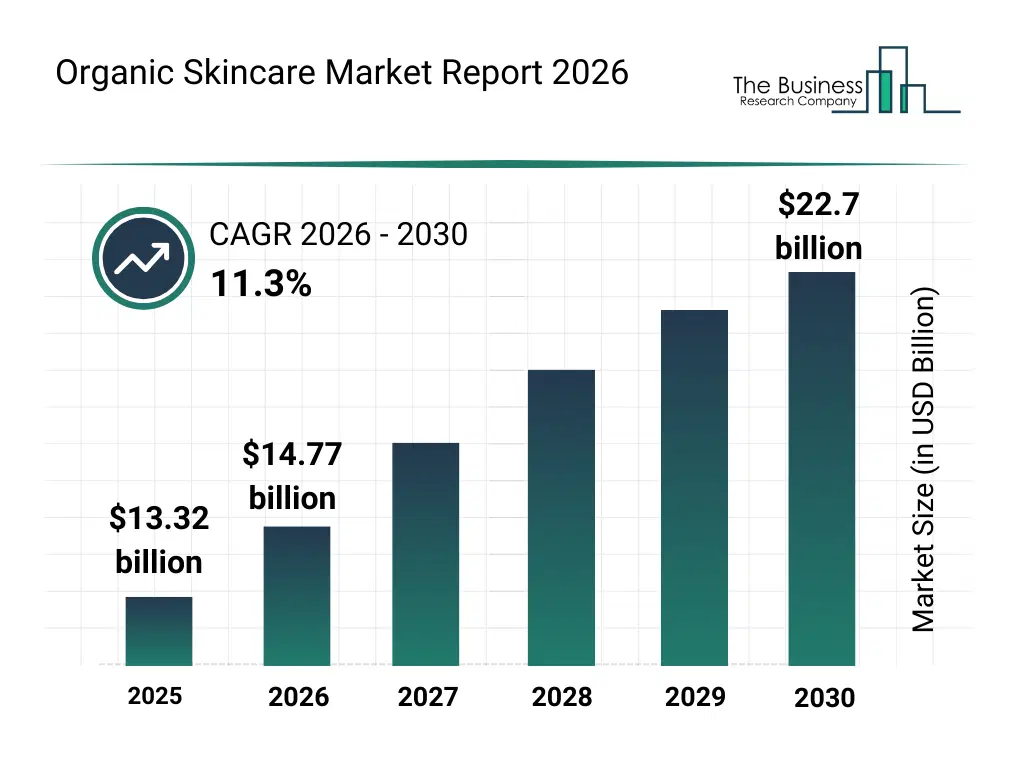
What Is The Organic Skincare Market Size and Share 2026?
The organic skincare market size has grown rapidly in recent years. It will grow from $13.32 billion in 2025 to $14.77 billion in 2026 at a compound annual growth rate (CAGR) of 10.9%. The growth in the historic period can be attributed to rising awareness of chemical side effects, increasing demand for natural beauty products, growth in premium skincare consumption, rising consumer focus on personal wellness, expansion of organic product availability.What Is The Organic Skincare Market Growth Forecast?
The organic skincare market size is expected to see rapid growth in the next few years. It will grow to $22.7 billion in 2030 at a compound annual growth rate (CAGR) of 11.3%. The growth in the forecast period can be attributed to increasing consumer preference for eco friendly skincare, rising inclination toward safe dermatological products, growing demand for toxin free cosmetics, expansion of certified organic beauty brands, increasing awareness of sustainable beauty practices. Major trends in the forecast period include increasing preference for chemical free skincare products, growing demand for plant based beauty formulations, rising interest in environmentally friendly beauty solutions, increasing shift toward natural ingredient based cosmetics, growing consumer focus on safe and gentle skin care products.
Global Organic Skincare Market Segmentation
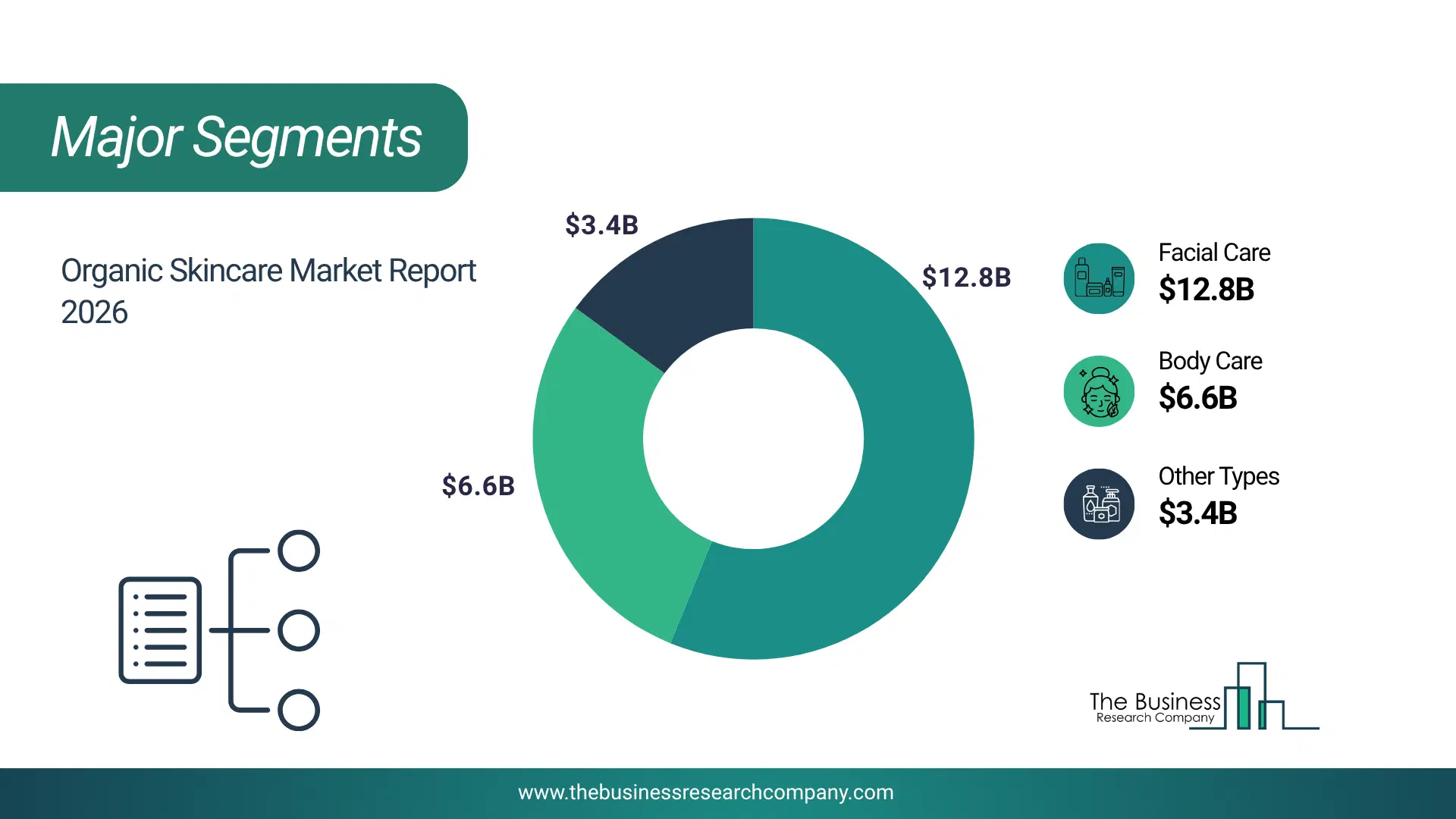
1) By Type: Facial Care, Body Care, Other Types 2) By Gender: Male, Female 3) By Distribution Channel: Supermarkets or Hypermarket, Convenience Stores, Specialist Stores, Online Retail Stores, Other Distribution Channels Subsegments: 1) By Facial Care: Organic Cleansers and Face Wash, Organic Moisturizers and Creams, Organic Facial Serums and Oils, Organic Face Masks and Exfoliants, Organic Toners 2) By Body Care: Organic Body Lotions and Creams, Organic Body Wash and Soaps, Organic Body Oils, Organic Body Scrubs and Exfoliants 3) By Other Types: Organic Lip Balms and Lip Care, Organic Hand and Foot Care Products, Organic Sun Care, Organic Eye Creams and Treatments The top segments in the organic skincare market will be: • Facial Care will reach $12.78 billion by 2030. • Body Care will reach $6.59 billion by 2030. • Other Types will reach $3.33 billion by 2030.What Is The Driver Of The Organic Skincare Market?
The increasing prevalence of skin issues is expected to propel the growth of the organic skincare market going forward. Skin issues or diseases are conditions that affect the skin and may cause rashes, inflammation, itchiness, or other skin changes. Organic skin care products are helpful to minimize skin issues as they are natural products and are suitable for all types of skin. For instance, in January 2025, according to Pierre Fabre Laboratories, a France-based dermatological care organization, about 20.5 % of the global population is affected by acne, with adolescents showing up to 28.3 % prevalence, compared to lower rates in older cohorts, indicating a significant base of affected individuals seeking skincare solutions. Therefore, the increasing prevalence of skin issues is driving the organic skincare industry.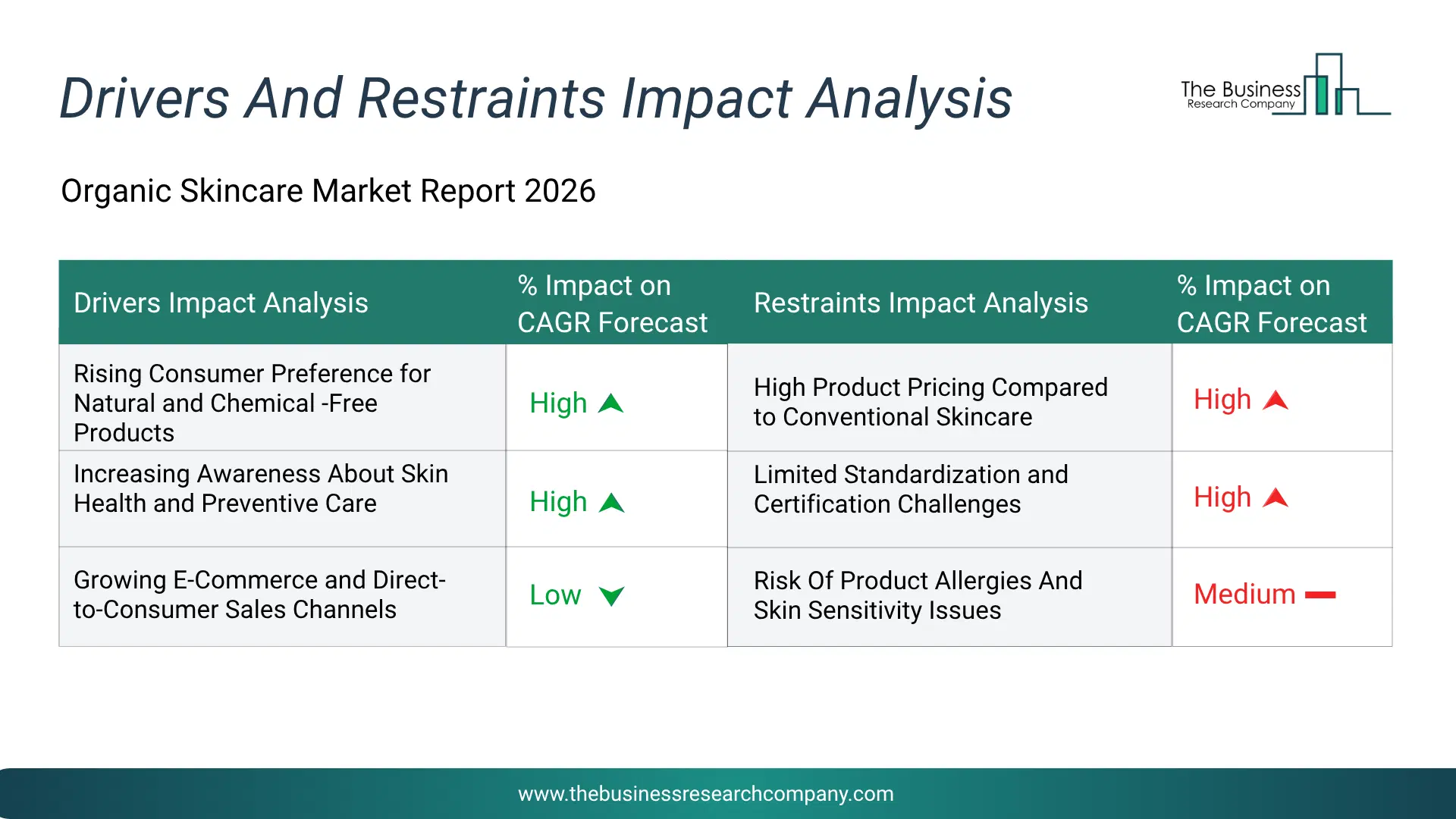
Infographic Chart Showing Key Market Drivers Analysis And Restraints For Organic Skincare Market
The chart presents an impact analysis of key drivers and restraints, quantifying their relative influence on the market's growth rate and helping assess the balance between growth enablers and limiting factors. This chart offers a high-level perspective; the full report contains more detailed insights.
How Will The Drivers Impact Growth In The Global Organic Skincare Market?
• Rising Consumer Preference for Natural and Chemical -Free Products (High) – During the forecast period, the rising consumer preference for natural and chemical -free products is expected to become a key growth driver for the organic skincare market by 2030. Consumers worldwide are increasingly prioritizing skincare products made from natural, organic, and chemical -free ingredients due to health, safety, and environmental concerns. Awareness about potential side effects of synthetic chemicals, preservatives, and artificial fragrances has led to greater adoption of organic skincare formulations. Brands offering certified organic ingredients and sustainable sourcing practices are experiencing higher demand, as consumers associate these products with safer, healthier, and eco -friendly alternatives. This growing preference for natural skincare continues to drive the market globally. • Increasing Awareness About Skin Health and Preventive Care (High) – During the forecast period, the increasing awareness about skin health and preventive care is expected to emerge as a major factor driving the expansion of the organic skincare market by 2030. Awareness about skin health, anti-aging, and preventive skincare measures is rising globally. Consumers are seeking products that not only address cosmetic concerns but also nourish, protect, and maintain overall skin wellness. Organic skincare products, rich in botanical extracts, antioxidants, and vitamins, are perceived to deliver long-term benefits without adverse effects. Educational campaigns, social media influence, and dermatology endorsements have further strengthened consumer confidence in organic skincare products, driving adoption and market growth. • Growing E-Commerce and Direct-to-Consumer Sales Channels (Low) – During the forecast period, the growing e-commerce and direct-to-consumer sales channels is expected to act as a key growth catalyst for the organic skincare market by 2030. The expansion of online retail and direct-to-consumer channels has significantly enhanced the accessibility of organic skincare products. E-commerce platforms, subscription services, and mobile apps allow consumers to explore, compare, and purchase certified organic products with ease. Additionally, digital marketing campaigns, influencer partnerships, and educational content are helping brands reach younger, health-conscious consumers. The convenience, broader product variety, and brand transparency offered by online channels are key drivers for increased organic skincare adoption.How Will The Restraints Impact Growth In The Global Organic Skincare Market?
• High Product Pricing Compared to Conventional Skincare (High) – During the forecast period, the organic skincare products generally carry higher price points due to premium ingredients, certification processes, and smaller-scale manufacturing. Price sensitivity among certain consumer segments, particularly in emerging markets, can limit adoption. While awareness is growing, affordability remains a challenge, especially for middle-income consumers. This high cost acts as a significant restraint on market growth, slowing widespread penetration in price-sensitive regions. • Limited Standardization and Certification Challenges (High) – During the forecast period, the lack of globally consistent standards and certification for organic skincare products can create consumer confusion and trust issues. Variations in labeling, ingredient sourcing, and certification protocols make it challenging for consumers to verify authenticity. This can discourage purchases and slow adoption, particularly in regions where regulatory oversight is limited. Companies must invest in credible certifications and transparent supply chains to mitigate these concerns. • Risk Of Product Allergies And Skin Sensitivity Issues (Medium) – During the forecast period, the risk of product allergies and skin sensitivity issues act as a restraint for the organic skincare market by limiting adoption among consumers with reactive or sensitive skin types. Even though products are marketed as natural, certain botanical extracts and essential oils can still trigger irritation or allergic reactions. This increases consumer hesitation and reduces repeat purchases. Concerns over skin compatibility also make buyers cautious when switching from conventional to organic formulations. Overall, these factors restrict broader market expansion and consumer confidence.Key Players In The Global Organic Skincare Market
Major companies operating in the organic skincare market report are Weleda AG, Burt’s Bees Inc., Dr. Bronner’s Bros., Eminence Organic Skincare Inc., Andalou Naturals Inc., True Botanicals Inc., Annmarie Gianni Skin Care, Alaffia Brands LLC, Badger Balm Company, Cattier Paris, Caudalie, Biossance, Beautycounter LLC, Arbonne International LLC, Aesop Group, Purity Cosmetics Inc., Benevolent Beauty, Tata Harper Skincare, Juice Beauty Inc., Josh Rosebrook Skincare, RMS Beauty, OSEA Malibu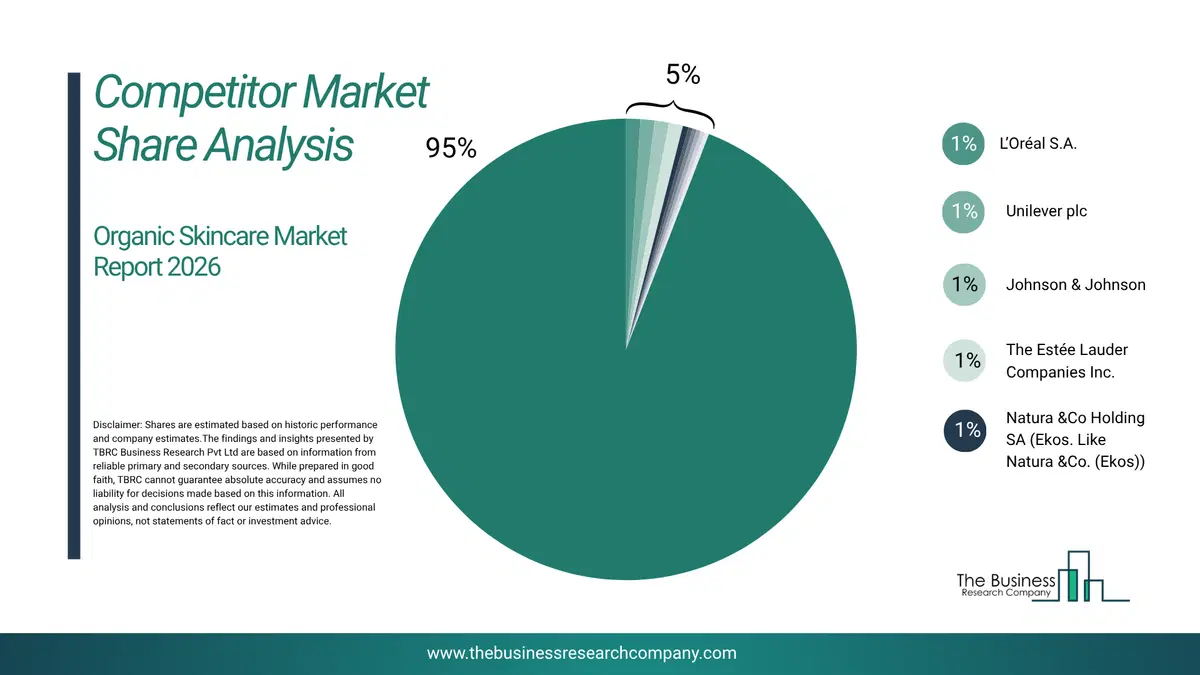
This chart is for illustrative purposes; the full report includes a detailed competitor analysis and comprehensive overview of the top 10 companies in the market.
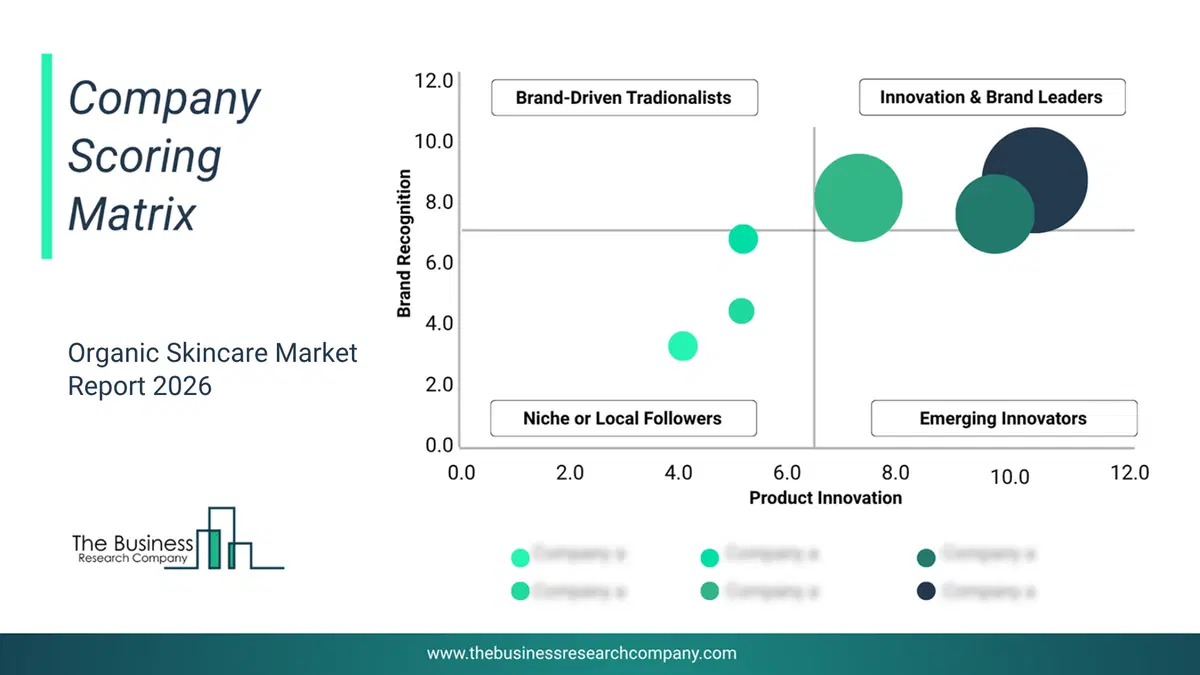
This chart maps companies by product innovation and brand strength, with bubble size indicating relative revenue, helping identify market leaders, challengers, and niche players. This is an illustrative chart; the full report provides a complete and accurate competitive analysis.
Global Organic Skincare Market Trends and Insights
Major companies operating in the organic skincare market are focusing on developing innovative products such as certified organic formulations and sustainable packaging to gain a competitive advantage. Certified organic formulations use plant-based ingredients grown without synthetic pesticides or fertilizers and are designed to meet stringent regulatory standards for purity and environmental responsibility. For instance, in July 2025, Sky Organics LLC, a US-based clean beauty company, launched a USDA-certified organic facial skincare line featuring an Organic Aloe Vera Glow Cleanser, Organic Orange Blossom Light Glow Toner, Organic Tamanu Deep Glow Serum, and Organic Marula Radiant Glow Oil formulated with botanical actives to hydrate, balance, and illuminate skin. The products are packaged in recyclable bottles and cartons to support sustainability, are cruelty-free, free from harmful chemicals, sulfates, and parabens, and reflect growing consumer demand for transparency and eco-responsible products in organic skincare.What Are Latest Mergers And Acquisitions In The Organic Skincare Market?
In July 2024, American Exchange Group Inc., a US-based fashion accessories and brand management company, acquired Indie Lee LLC for an undisclosed amount. With this acquisition, American Exchange Group aims to expand its presence in the beauty and personal care industry by leveraging its operational expertise to grow Indie Lee’s direct-to-consumer business, broaden its product offerings, and enhance its retailer distribution both in-house and via licensing opportunities. Indie Lee LLC is a US-based clean beauty skincare brand that specializes in producing clean, high-performance skincare products formulated with natural, naturally-derived, and organic ingredients and distributed across more than 2, 000 retail locations.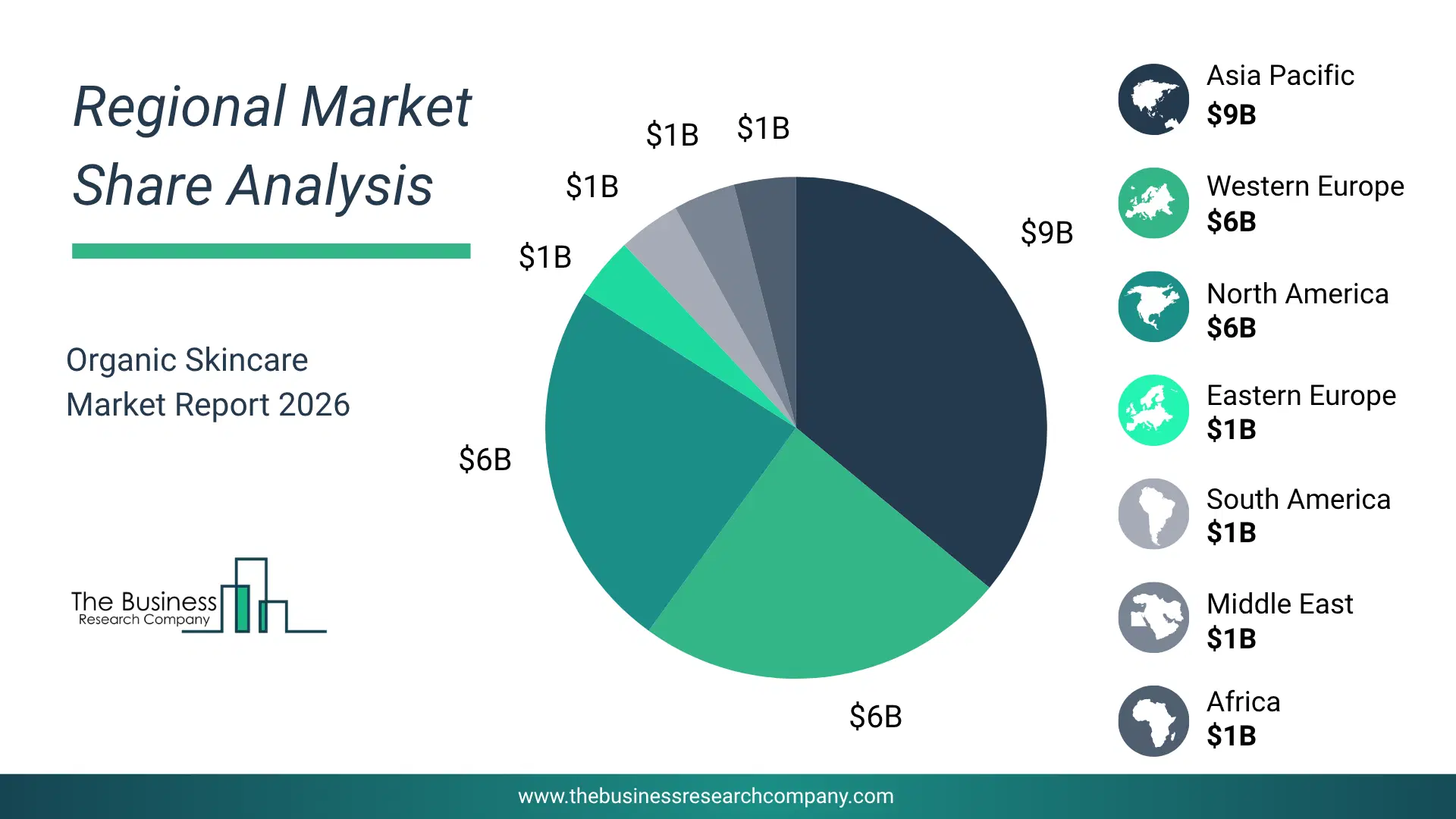
Regional Outlook
North America will be the largest region in the organic skincare market in 2025. Asia-Pacific is expected to be the fastest-growing region in the forecast period. The regions covered in this market report are Asia-Pacific, South East Asia, Western Europe, Eastern Europe, North America, South America, Middle East, Africa. The countries covered in this market report are Australia, Brazil, China, France, Germany, India, Indonesia, Japan, Taiwan, Russia, South Korea, UK, USA, Canada, Italy, SpainWhat Defines the Organic Skincare Market?
The organic skincare market consists of revenues earned by entities by providing skin care services such as nail care, hair care. The market value includes the value of related goods sold by the service provider or included within the service offering. The organic skincare market also includes sales of serums, moisturizers, exfoliators, body lotions, and eye creams, which are used in providing skincare services. Values in this market are ‘factory gate’ values, that is the value of goods sold by the manufacturers or creators of the goods, whether to other entities (including downstream manufacturers, wholesalers, distributors and retailers) or directly to end customers. The value of goods in this market includes related services sold by the creators of the goods.How is Market Value Defined and Measured?
The market value is defined as the revenues that enterprises gain from the sale of goods and/or services within the specified market and geography through sales, grants, or donations in terms of the currency (in USD unless otherwise specified). The revenues for a specified geography are consumption values that are revenues generated by organizations in the specified geography within the market, irrespective of where they are produced. It does not include revenues from resales along the supply chain, either further along the supply chain or as part of other products.
This chart presents market attractiveness based on a quantitative evaluation of growth, competition, strategic alignment, and risk, offering a clear view of opportunity areas for decision-making. This chart is for illustrative purposes; the full report contains the complete analysis.

This chart highlights the Total Addressable Market (TAM) by estimating the maximum revenue opportunity using an assumption-driven approach, supporting strategic planning and opportunity sizing across markets. The chart is illustrative; the full report provides a more comprehensive analysis.
What Key Data and Analysis Are Included in the Organic Skincare Market Report 2026?
The organic skincare market research report is one of a series of new reports from The Business Research Company that provides market statistics, including industry global market size, regional shares, competitors with the market share, detailed market segments, market trends and opportunities, and any further data you may need to thrive in the organic skincare industry. The market research report delivers a complete perspective of everything you need, with an in-depth analysis of the current and future state of the industry.Organic Skincare Market Report Forecast Analysis
| Report Attribute | Details |
|---|---|
| Market Size Value In 2026 | $14.77 billion |
| Revenue Forecast In 2030 | $22.7 billion |
| Growth Rate | CAGR of 11.3% from 2026 to 2030 |
| Base Year For Estimation | 2025 |
| Actual Estimates/Historical Data | 2020-2025 |
| Forecast Period | 2026 - 2030 |
| Market Representation | Revenue in USD Billion and CAGR from 2026 to 2030 |
| Segments Covered | Type, Gender, Distribution Channel |
| Regional Scope | Asia-Pacific, Western Europe, Eastern Europe, North America, South America, Middle East, Africa |
| Country Scope | The countries covered in the report are Australia, Brazil, China, France, Germany, India, ... |
| Key Companies Profiled | Weleda AG, Burt’s Bees Inc., Dr. Bronner’s Bros., Eminence Organic Skincare Inc., Andalou Naturals Inc., True Botanicals Inc., Annmarie Gianni Skin Care, Alaffia Brands LLC, Badger Balm Company, Cattier Paris, Caudalie, Biossance, Beautycounter LLC, Arbonne International LLC, Aesop Group, Purity Cosmetics Inc., Benevolent Beauty, Tata Harper Skincare, Juice Beauty Inc., Josh Rosebrook Skincare, RMS Beauty, OSEA Malibu |
| Customization Scope | Request for Customization |
| Pricing And Purchase Options | Explore Purchase Options |