

Bio-Lubricants Market Report 2026
Global Outlook – By Base Oil (Vegetable Oil, Animal Fat, Other Base Oils), By Application (Hydraulic Oil, Metalworking Fluids, Chainsaw Oil, Mold release agents, Two-cycle engine Oils, Gear Oils, Greases, Other Applications), By End-User (Industrial, Commercial Transport, Consumer Automobile, Other End Users) – Market Size, Trends, Strategies, and Forecast to 2030
Bio-Lubricants Market Overview
• Bio-Lubricants market size has reached to $3.21 billion in 2025 • Expected to grow to $4.34 billion in 2030 at a compound annual growth rate (CAGR) of 6.2% • Growth Driver: Growing Environmental Awareness Drives Bio-Lubricants Market Growth • Market Trend: Innovative Product Developments Drive Bio-Lubricants Market Growth • North America was the largest region in 2025 and Asia-Pacific is the fastest growing region.What Is Covered Under Bio-Lubricants Market?
The bio-lubricants are used as an alternative lubricant for industrial and maintenance applications because of their superior inherent qualities. These are functional fluids made from vegetable oils and downstream esters. They are produced by using raw materials including rapeseed oil, sunflower oil, palm oil, coconut oil, and animal fats and offer several advantages over conventionally used petroleum-based products. They are non-toxic, renewable, carbon-neutral, and environmentally friendly. They are also known as bio-lubes. The main types of base oils in bio-lubricants are vegetable oil, animal fat, and others. Vegetable oil has lubricating properties similar to those of mineral oil-based lubricants and is used for various purposes. The different applications include hydraulic oil, metalworking fluids, chainsaw oil, mold release agents, two-cycle engine oils, gear oils, greases, and others and are employed in industrial, commercial transport, consumer automobiles, and other end users.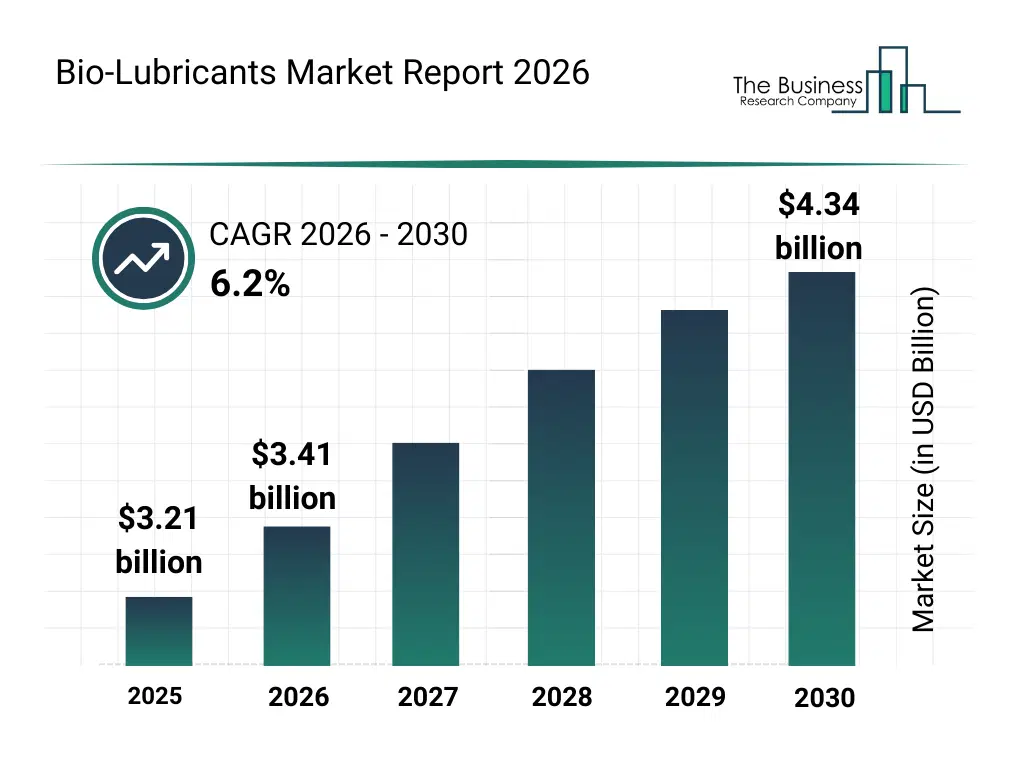
What Is The Bio-Lubricants Market Size and Share 2026?
The bio-lubricants market size has grown strongly in recent years. It will grow from $3.21 billion in 2025 to $3.41 billion in 2026 at a compound annual growth rate (CAGR) of 6.0%. The growth in the historic period can be attributed to rising environmental regulations on petroleum lubricants, increasing use of vegetable oil derivatives, expansion of industrial machinery usage, growing awareness of eco-friendly lubricants, availability of renewable feedstocks.What Is The Bio-Lubricants Market Growth Forecast?
The bio-lubricants market size is expected to see strong growth in the next few years. It will grow to $4.34 billion in 2030 at a compound annual growth rate (CAGR) of 6.2%. The growth in the forecast period can be attributed to increasing adoption of bio-lubricants in electric vehicles, rising focus on carbon-neutral industrial operations, expansion of sustainable manufacturing practices, growing investments in bio-refining technologies, increasing demand for high-performance green lubricants. Major trends in the forecast period include increasing adoption of bio-based industrial lubricants, rising demand for environmentally friendly hydraulic oils, growing use of ester-based lubricants, expansion of bio-lubricants in automotive applications, enhanced focus on biodegradability and toxicity reduction.
Global Bio-Lubricants Market Segmentation
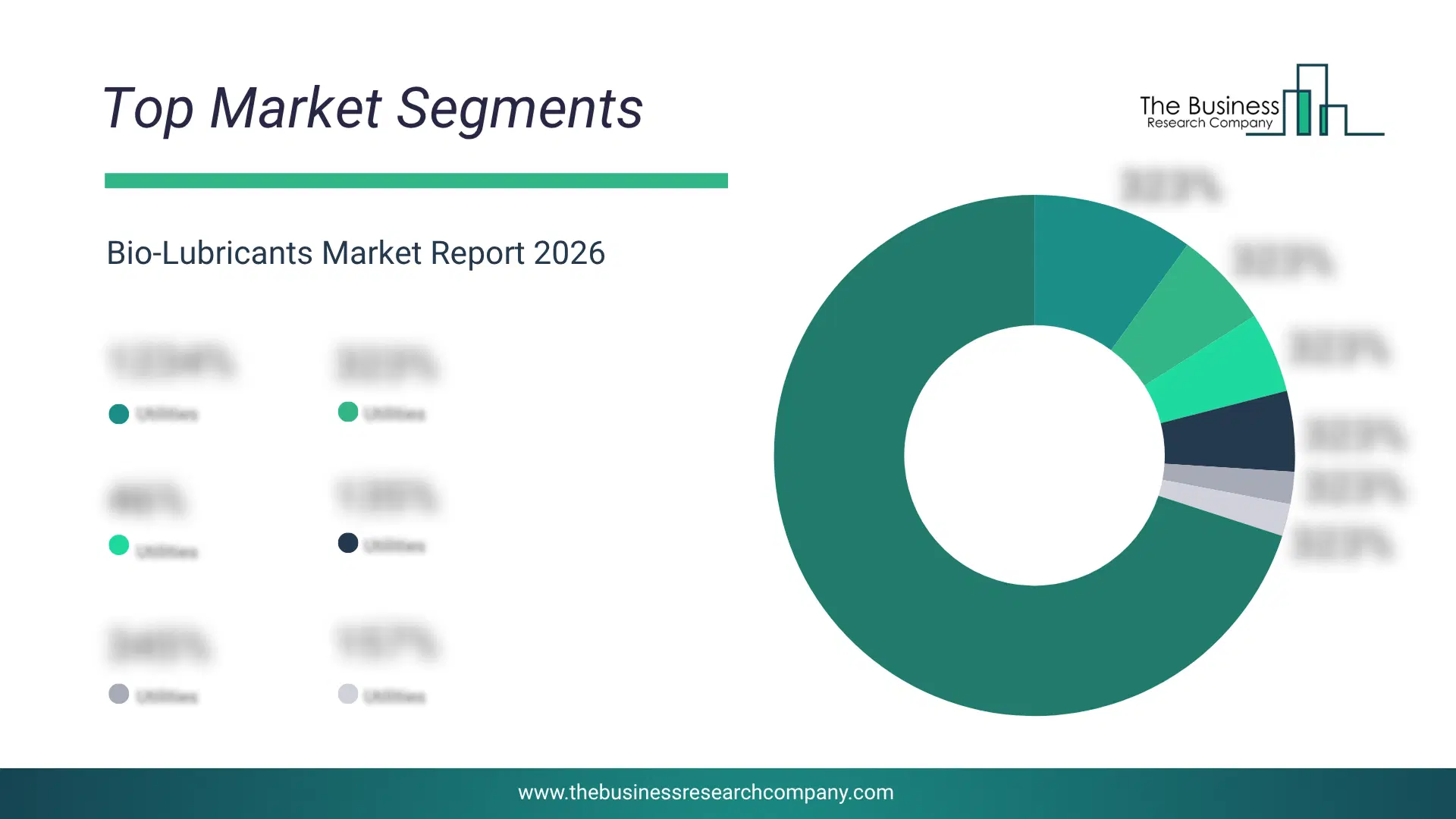
1) By Base Oil: Vegetable Oil, Animal Fat, Other Base Oils 2) By Application: Hydraulic Oil, Metalworking Fluids, Chainsaw Oil, Mold release agents, Two-cycle engine Oils, Gear Oils, Greases, Other Applications 3) By End-User: Industrial, Commercial Transport, Consumer Automobile, Other End Users Subsegments: 1) By Vegetable Oil: Soybean Oil, Sunflower Oil, Rapeseed Oil, Palm Oil 2) By Animal Fat: Tallow, Lard, Fish Oil 3) By Other Base Oils: Synthetic Ester Oils, Bio-Based ParaffinsWhat Is The Driver Of The Bio-Lubricants Market?
Increasing environmental awareness is expected to propel the growth of the bio lubricants market going forward. Environmental awareness refers to awareness of the natural environment and the choices that either promote its well-being or cause it more harm. Environmental awareness is helpful in increasing the bio-lubricant market because of its high viscosity indexes and flashpoints, good resistance to shear, and high biodegradability. For instance, in April 2024, according to the Department for Environment, Food, and Rural Affairs, a UK-based government department responsible for improving and protecting the environment, urban background concentrations of ozone (O3) reached 66.8 µg/m3 in 2023, marking a 3% increase from 2022. Therefore, increasing environmental awareness is driving the growth of the bio-lubricants industry.Key Players In The Global Bio-Lubricants Market
Major companies operating in the bio-lubricants market are Binol Biolubricants Ltd., Cargill Corporation, Klüber Lubrication München SE & Co. KG, TotalEnergies SE, Castrol India Ltd., Millers Oils Ltd., Petronas Lubricant International, Renewable Lubricants Inc., Solution Biogen Sdn Bhd, Fuchs Petrolub AG, Panolin AG, Emery Oleochemicals, Biosynthetic Technologies LLC, RSC Bio Solutions, Green Earth Technologies LLC, BioBlend Renewable Resources LLC, Bio‑Lub Canada Inc., Bio‑Lubricants Inc., Biofriendly Corporation, BioPure Technology Ltd., Carl Bechem GmbH, Croda International plc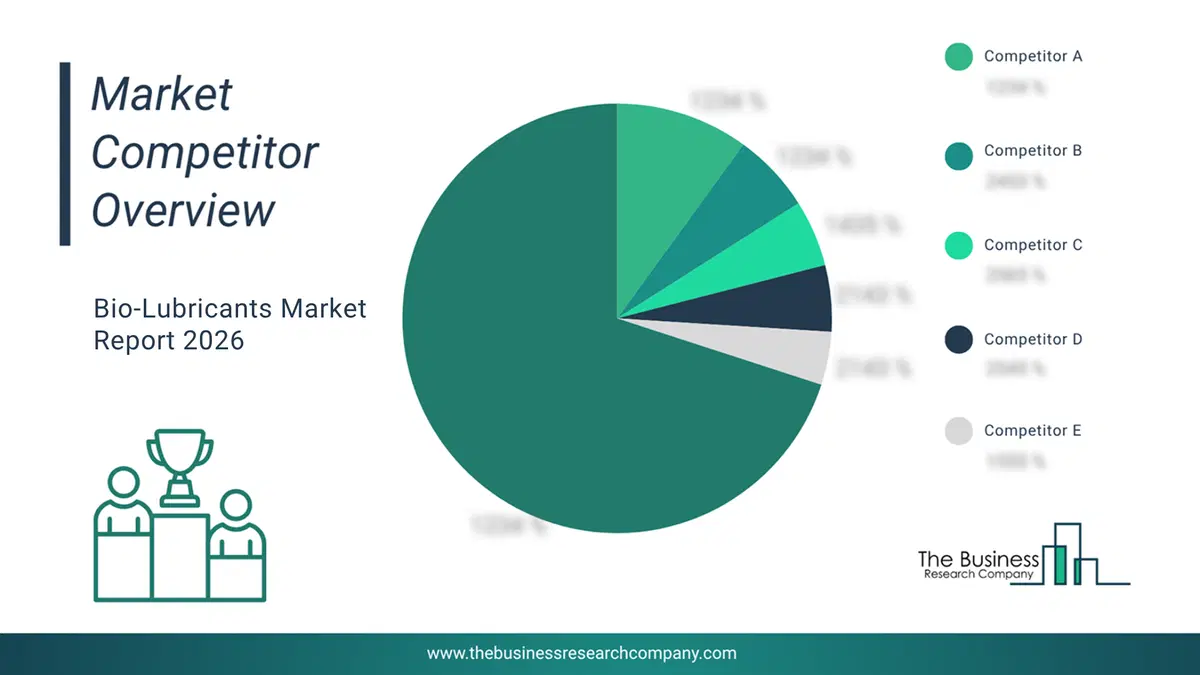
This chart is for illustrative purposes; the full report includes a detailed competitor analysis and comprehensive overview of the top 10 companies in the market.
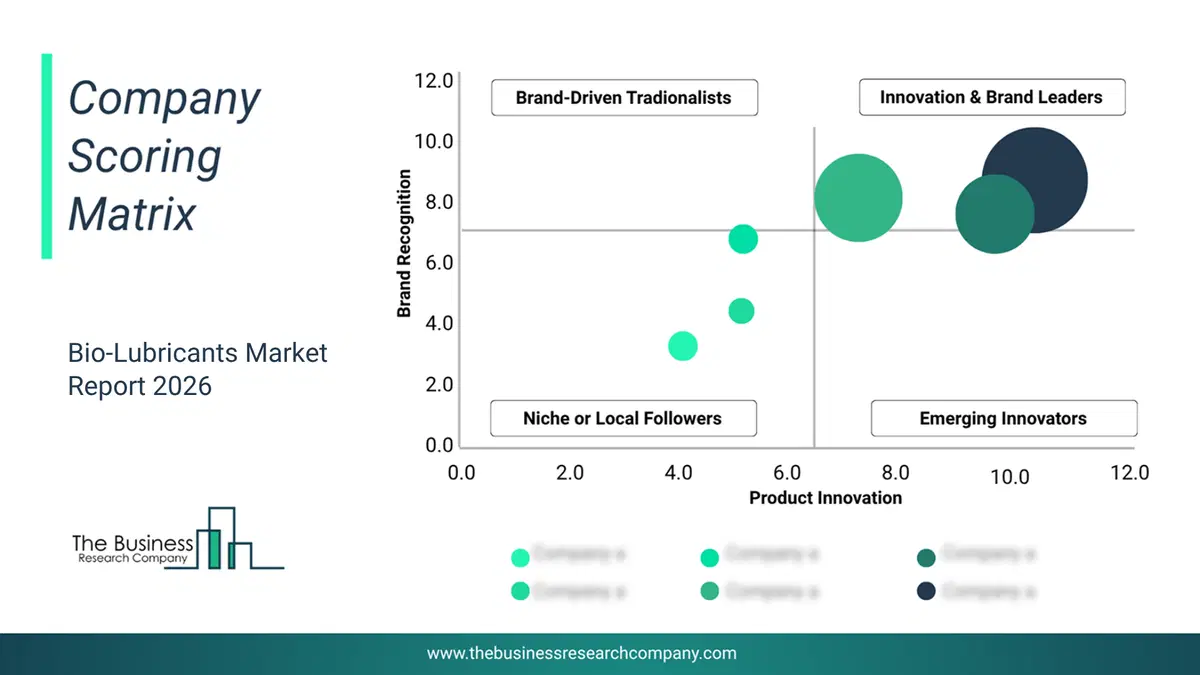
This chart maps companies by product innovation and brand strength, with bubble size indicating relative revenue, helping identify market leaders, challengers, and niche players. This is an illustrative chart; the full report provides a complete and accurate competitive analysis.
Global Bio-Lubricants Market Trends and Insights
Major companies operating in the bio-lubricants market are focusing on developing innovative solutions, such as high-performance specialty bio-lubricants, to meet the rising demand for environmentally friendly lubrication options that deliver strong performance under extreme operating conditions. Bio-lubricants formulated from renewable or biodegradable bases offer reduced environmental impact and improved safety compared with traditional petroleum-based lubricants, while providing durability and efficiency benefits for industrial applications. For instance, in January 2023, Kluber Lubrication, a US based chemical manufacturing company, launched specialty lubes for oil & gas industry, lube can withstand the harshest environmental conditions: salt water, rain, wind, and extreme temperatures. This leads to low lubricant consumption, less downtime due to maintenance and repair, and long component life.These lubricants are unique and have been developed after extensive research and development in India.What Are Latest Mergers And Acquisitions In The Bio-Lubricants Market?
In September 2024, BioBlend Renewable Resources, a US-based company, acquired Environmental Lubricant Manufacturing (ELM) for an undisclosed amount. The aim of the acquisition is to enhance BioBlend Renewable Resources manufacturing capabilities, broaden product offerings, and accelerate growth in the sustainable lubricants market. Environmental Lubricant Manufacturing (ELM) is an US-based company that specializes in manufacturing biodegradable and biobased lubricants and greases sourced from renewable resources, mainly soybean oil.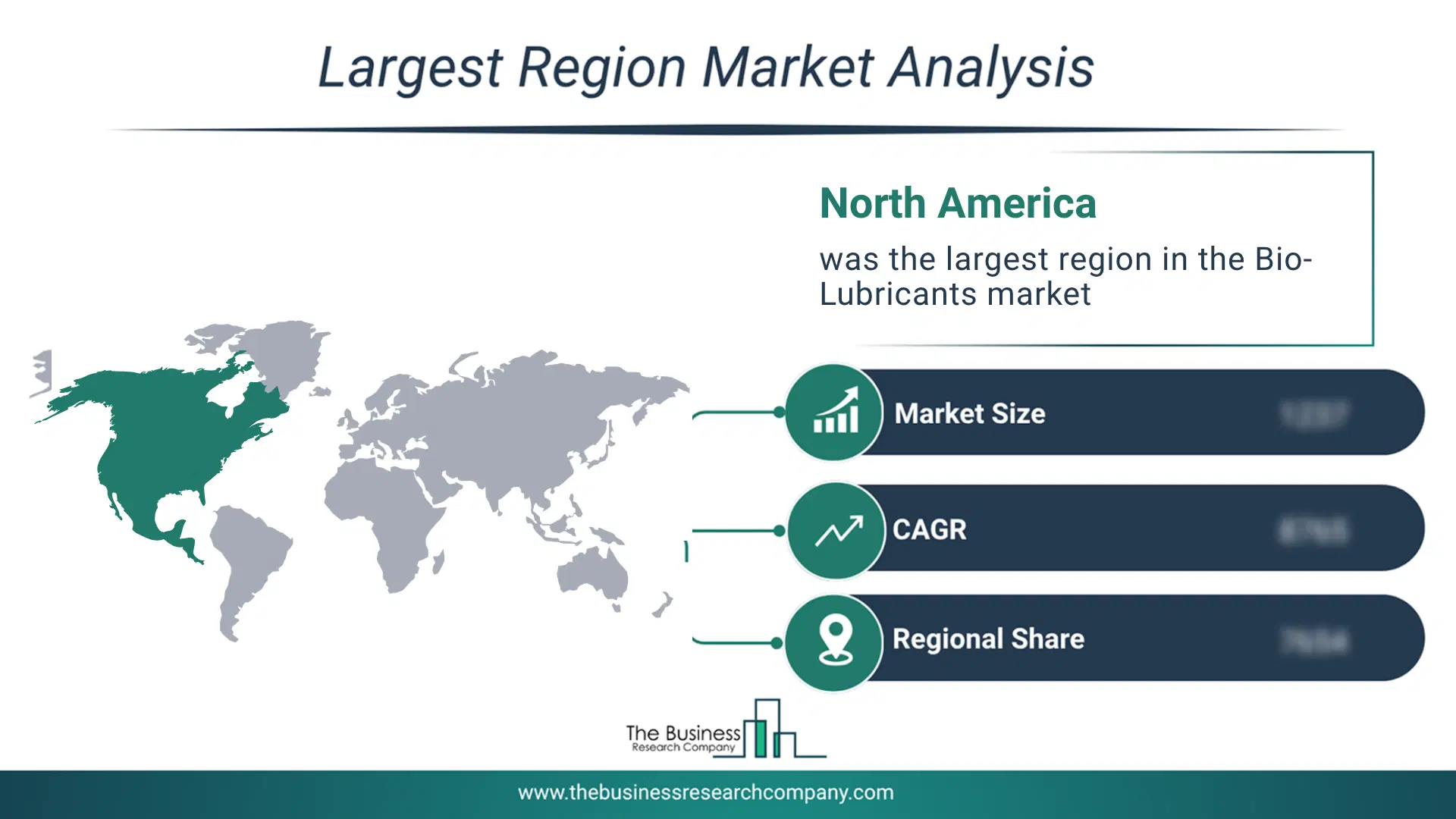
Regional Outlook
North America was the largest region in the bio-lubricants market in 2025. Asia-Pacific is expected to be the fastest-growing region in the forecast period. The regions covered in this market report are Asia-Pacific, South East Asia, Western Europe, Eastern Europe, North America, South America, Middle East and Africa. The countries covered in this market report are Australia, Brazil, China, France, Germany, India, Indonesia, Japan, Taiwan, Russia, South Korea, UK, USA, Italy, Spain, CanadaWhat Defines the Bio-Lubricants Market?
The biolubricant market consists of sales of vegetable oils, animal products, esters. Values in this market are ‘factory gate’ values, that is the value of goods sold by the manufacturers or creators of the goods, whether to other entities (including downstream manufacturers, wholesalers, distributors and retailers) or directly to end customers. The value of goods in this market includes related services sold by the creators of the goods.How is Market Value Defined and Measured?
The market value is defined as the revenues that enterprises gain from the sale of goods and/or services within the specified market and geography through sales, grants, or donations in terms of the currency (in USD unless otherwise specified). The revenues for a specified geography are consumption values that are revenues generated by organizations in the specified geography within the market, irrespective of where they are produced. It does not include revenues from resales along the supply chain, either further along the supply chain or as part of other products.
This chart presents market attractiveness based on a quantitative evaluation of growth, competition, strategic alignment, and risk, offering a clear view of opportunity areas for decision-making. This chart is for illustrative purposes; the full report contains the complete analysis.

This chart highlights the Total Addressable Market (TAM) by estimating the maximum revenue opportunity using an assumption-driven approach, supporting strategic planning and opportunity sizing across markets. The chart is illustrative; the full report provides a more comprehensive analysis.
What Key Data and Analysis Are Included in the Bio-Lubricants Market Report 2026?
The bio-lubricants market research report is one of a series of new reports from The Business Research Company that provides market statistics, including industry global market size, regional shares, competitors with the market share, detailed market segments, market trends and opportunities, and any further data you may need to thrive in the bio-lubricants industry. The market research report delivers a complete perspective of everything you need, with an in-depth analysis of the current and future state of the industry.Bio-Lubricants Market Report Forecast Analysis
| Report Attribute | Details |
|---|---|
| Market Size Value In 2026 | $3.41 billion |
| Revenue Forecast In 2030 | $4.34 billion |
| Growth Rate | CAGR of 6.0% from 2026 to 2030 |
| Base Year For Estimation | 2025 |
| Actual Estimates/Historical Data | 2020-2025 |
| Forecast Period | 2026 - 2030 |
| Market Representation | Revenue in USD Billion and CAGR from 2026 to 2030 |
| Segments Covered | Base Oil, Application, End-User |
| Regional Scope | Asia-Pacific, Western Europe, Eastern Europe, North America, South America, Middle East, Africa |
| Country Scope | The countries covered in the report are Australia, Brazil, China, France, Germany, India, Indonesia, Japan, Taiwan, Russia, South Korea, UK, USA, Canada, Italy, Spain. |
| Key Companies Profiled | Binol Biolubricants Ltd., Cargill Corporation, Klüber Lubrication München SE & Co. KG, TotalEnergies SE, Castrol India Ltd., Millers Oils Ltd., Petronas Lubricant International, Renewable Lubricants Inc., Solution Biogen Sdn Bhd, Fuchs Petrolub AG, Panolin AG, Emery Oleochemicals, Biosynthetic Technologies LLC, RSC Bio Solutions, Green Earth Technologies LLC, BioBlend Renewable Resources LLC, Bio‑Lub Canada Inc., Bio‑Lubricants Inc., Biofriendly Corporation, BioPure Technology Ltd., Carl Bechem GmbH, Croda International plc |
| Customization Scope | Request for Customization |
| Pricing And Purchase Options | Explore Purchase Options |