
Biscuits Market Report 2026
Global Outlook – By Type (Crackers And Savory Biscuits, Sweet Biscuits), By Source (Wheat, Oats, Millets), By Flavor Type (Plain, Chocolate, Sour Cream, Cheese, Spiced, Fruits And Nuts), By Distribution Channel (Supermarkets Or Hypermarkets, Convenience Stores, Specialist Retailers, Online Retail, Other Distribution Channels) – Market Size, Trends, Strategies, and Forecast to 2030
Biscuits Market Overview
• Biscuits market size has reached to $134.03 billion in 2025 • Expected to grow to $175.47 billion in 2030 at a compound annual growth rate (CAGR) of 5.6% • Growth Driver: The Biscuits Market In The Era Of Global Urbanization • Market Trend: Innovative Trends in the Biscuit Market: ITC's Strategic Launch of Sunfeast Super Egg & Milk Biscuit • Europe was the largest region in 2025 and South America is the fastest growing region.Market Gains By 2030 – Top Opportunities By Segment
Market Gain identifies the most promising market opportunities by highlighting the segments or products expected to generate the highest incremental revenue growth over the next five years.
What Is Covered Under Biscuits Market?
Biscuits refer to baked goods that are made with flour, shortening, baking powder, or soda, and other ingredients. The main types of biscuits are crackers, savory biscuits, and sweet biscuits. Crackers and savory biscuits refer to crackers that come in a variety of shapes, sizes, colors, and flavors, but they are typically three inches or less in diameter, contain one to five percent moisture, and are made from grain flours. These are prepared from various sources including wheat, oats, and millet, by adding different flavors such as plain, chocolate, sour cream, cheese, spiced, fruits, and nuts, and distributed by supermarkets, hypermarkets, specialist retailers, convenience stores, online retail, and other distribution channels.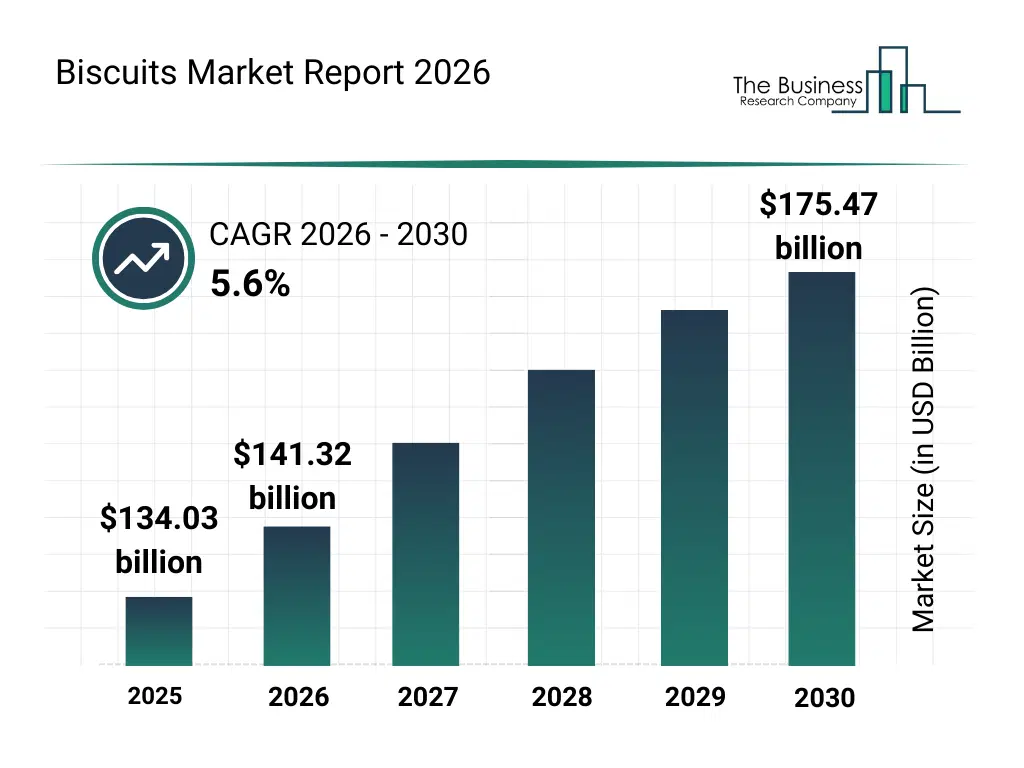
What Is The Biscuits Market Size and Share 2026?
The biscuits market size has grown strongly in recent years. It will grow from $134.03 billion in 2025 to $141.32 billion in 2026 at a compound annual growth rate (CAGR) of 5.4%. The growth in the historic period can be attributed to expansion of packaged food consumption, growth of urban lifestyles, rising demand for convenient snack foods, increasing penetration of organized retail, improved biscuit manufacturing capabilities.What Is The Biscuits Market Growth Forecast?
The biscuits market size is expected to see strong growth in the next few years. It will grow to $175.47 billion in 2030 at a compound annual growth rate (CAGR) of 5.6%. The growth in the forecast period can be attributed to growing demand for functional and fortified biscuits, rising preference for gluten-free and multigrain products, expansion of e-commerce food sales, increasing innovation in flavors and formats, growing focus on sustainable packaging. Major trends in the forecast period include increasing demand for health-oriented biscuit variants, rising adoption of automated baking and packaging lines, growing focus on clean-label ingredients, expansion of premium and specialty biscuit categories, enhanced shelf-life and texture optimization.
Global Biscuits Market Segmentation
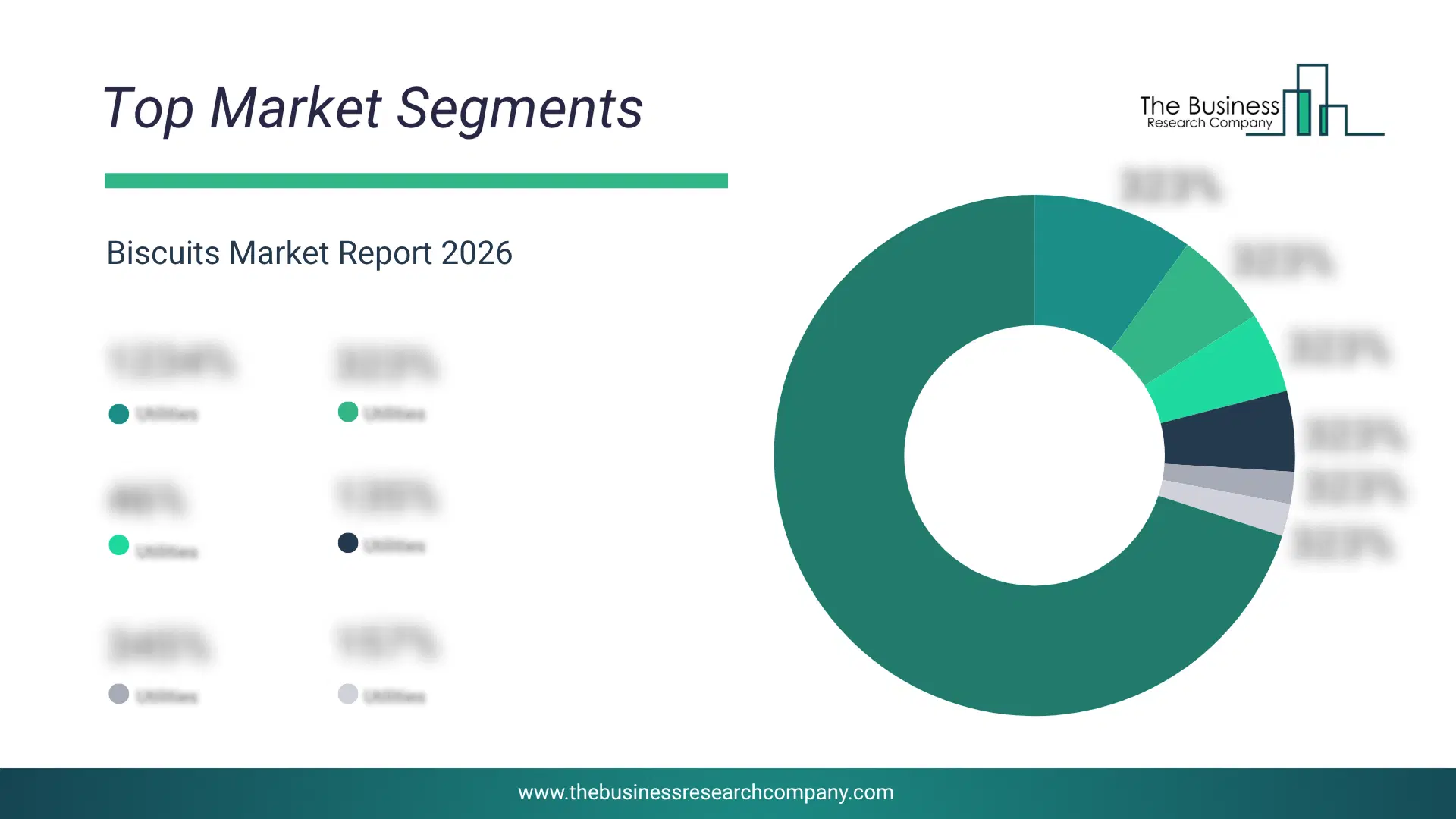
1) By Type: Crackers And Savory Biscuits, Sweet Biscuits 2) By Source: Wheat, Oats, Millets 3) By Flavor Type: Plain, Chocolate, Sour Cream, Cheese, Spiced, Fruits And Nuts 4) By Distribution Channel: Supermarkets Or Hypermarkets, Convenience Stores, Specialist Retailers, Online Retail, Other Distribution Channels Subsegments: 1) By Crackers And Savory Biscuits: Salted Crackers, Cheese Crackers, Whole Grain Crackers, Specialty Savory Biscuits 2) By Sweet Biscuits: Chocolate-Coated Biscuits, Cream-Filled Biscuits, Digestive Biscuits, Cookies The top segments in the biscuits market will be: • Crackers And Savory Biscuits will reach $108.47 Billion by 2030. • Sweet Biscuits will reach $66.22 Billion by 2030.What Is The Driver Of The Biscuits Market?
Rapid urbanization is expected to propel the growth of the biscuits market going forward. Urbanization refers to the population shift into relatively small areas, forming cities. This concentration results in land being transformed for residential, commercial, industrial, and transportation purposes. Globally, urbanization is changing food systems and helping to transform them by shaping spatial patterns of food demand and influencing consumer preferences. For instance, in December 2024, Our World In Data, a UK-based non-profit organization, reported that by 2050, the world’s population is projected to rise to approximately 9.8 billion, with nearly 7 billion people living in urban areas. Therefore, rapid urbanization is driving the growth of the biscuits industry.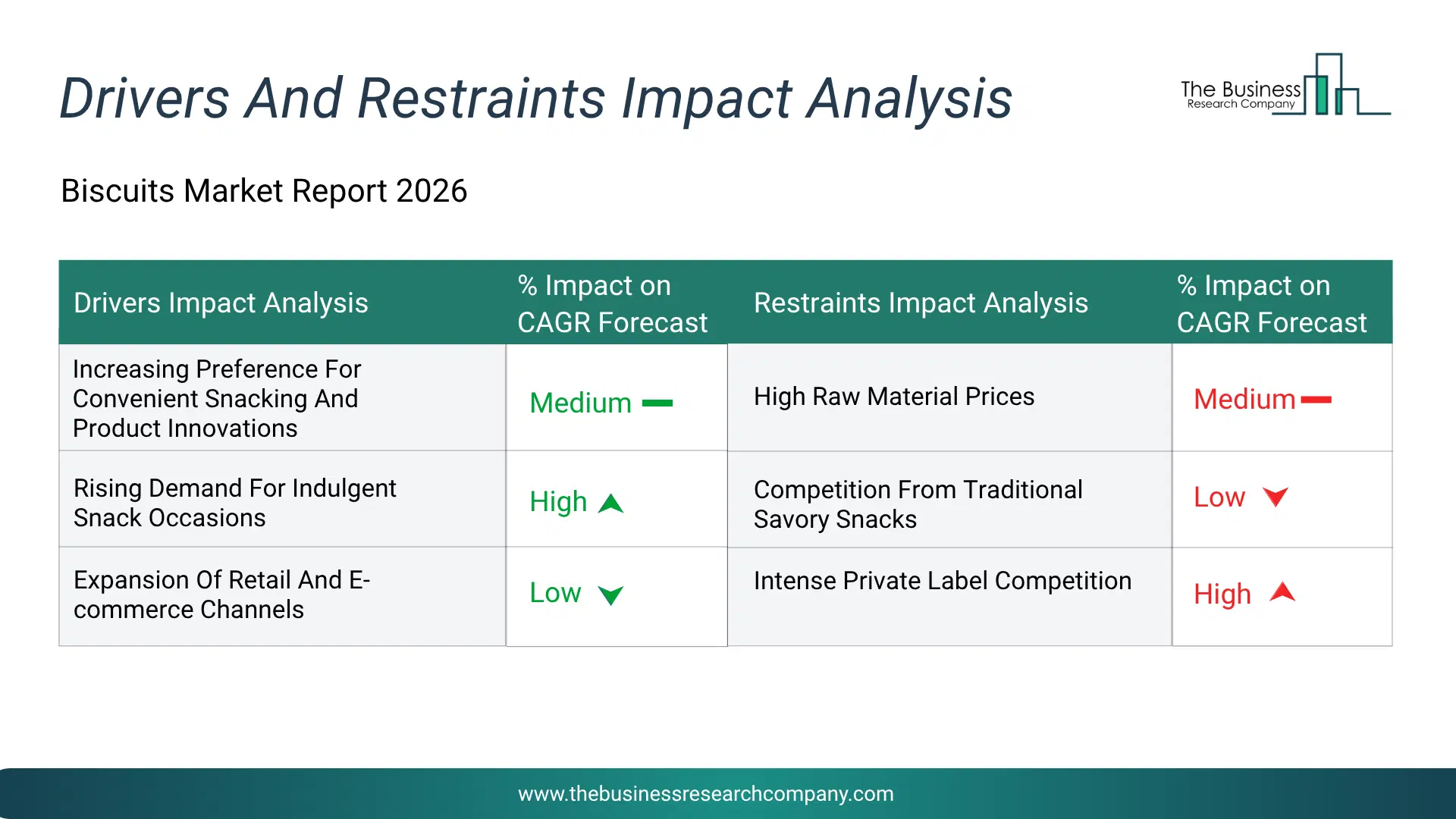
Infographic Chart Showing Key Market Drivers Analysis And Restraints For Biscuits Market
The chart presents an impact analysis of key drivers and restraints, quantifying their relative influence on the market's growth rate and helping assess the balance between growth enablers and limiting factors. This chart offers a high-level perspective; the full report contains more detailed insights.
How Will The Drivers Impact Growth In The Global Biscuits Market?
• Increasing Preference For Convenient Snacking And Product Innovations (Medium) – During the forecast period, the increasing preference for convenient snacking and product innovations is expected to become a key growth driver for the biscuits market by 2030. Modern consumers are seeking portable, ready-to-eat food products that fit busy lifestyles and support on-the-go consumption. Biscuit manufacturers are responding through the introduction of innovative formats, healthier recipes, portion-controlled packs, and premium ingredient combinations that appeal to diverse consumer groups. Continuous innovation is helping brands strengthen product differentiation and maintain consumer engagement across mature and emerging markets. • Rising Demand For Indulgent Snack Occasions (High) – During the forecast period, the rising demand for indulgent snack occasions is expected to emerge as a major factor driving the expansion of the biscuits market by 2030. Consumers are increasingly purchasing biscuits as affordable treats for enjoyment, gifting, and premium snacking experiences. This trend is encouraging manufacturers to introduce richer flavors, premium fillings, chocolate-coated variants, and limited-edition offerings that enhance product appeal. Growing consumer willingness to explore indulgent food experiences is creating new revenue opportunities across multiple biscuit categories. • Expansion Of Retail And E-commerce Channels (Low) – During the forecast period, the expansion of retail and e-commerce channels is expected to act as a key growth catalyst for the biscuits market by 2030. Wider product availability across supermarkets, convenience stores, specialty retailers, and online platforms is improving consumer access to both domestic and international biscuit brands. Digital commerce is enabling manufacturers to reach new customer segments, launch targeted promotions, and expand geographic coverage more efficiently. Enhanced distribution capabilities are strengthening market penetration and supporting sustained sales growth.How Will The Restraints Impact Growth In The Global Biscuits Market?
• High Raw Material Prices (Medium) – During the forecast period, the high raw material prices act as a major restraint for the biscuits market because ingredients such as wheat flour, sugar, butter, edible oils, cocoa, and milk products are subject to frequent price fluctuations. Rising transportation, packaging, and energy costs further increase overall production expenses for biscuit manufacturers. These higher costs reduce profit margins, especially for small and medium-sized producers with limited pricing flexibility. Companies often face challenges in maintaining product quality and affordability while dealing with increasing input costs. In highly price-sensitive markets, manufacturers may struggle to pass the entire cost burden onto consumers without affecting demand. Volatility in agricultural production caused by climate conditions and supply chain disruptions also contributes to unstable raw material availability. As a result, rising raw material prices create financial pressure on manufacturers and limit overall market growth. • Competition From Traditional Savory Snacks (High) – During the forecast period, the competition from traditional savory snacks restrains the biscuits market as consumers have a wide variety of alternative snack options available in local and regional markets. Products such as chips, namkeen, fried snacks, popcorn, and ethnic savory items often attract consumers due to their strong flavors and cultural familiarity. In many developing countries, traditional snacks are deeply rooted in daily eating habits and social consumption patterns. Consumers seeking spicy or salty taste preferences may choose savory snacks over sweet or plain biscuits. Local snack manufacturers also offer affordable pricing and diverse regional varieties, increasing competition for biscuit brands. The growing popularity of freshly prepared street snacks and quick-service food items further impacts biscuit consumption in certain markets. This intense competition from alternative snack categories limits the expansion potential of biscuit manufacturers and affects market share growth. • Intense Private Label Competition (Low) – During the forecast period, the intense private label competition acts as a restraint for the biscuits market because retailers are increasingly introducing their own low-cost biscuit brands to attract price-conscious consumers. Supermarkets and retail chains promote private label products with competitive pricing, attractive packaging, and improving product quality. These products often create pricing pressure for established biscuit manufacturers and reduce their profit margins. Consumers in many markets are becoming more willing to purchase store-brand biscuits due to affordability and comparable taste. Large retail chains also provide better shelf placement and promotional support to their private label offerings, increasing their visibility among shoppers. This rising competition makes it difficult for branded manufacturers to maintain customer loyalty and premium pricing strategies. Consequently, strong private label presence intensifies market competition and restricts revenue growth opportunities for major biscuit companies.Key Players In The Global Biscuits Market
Major companies operating in the biscuits market are Universal Robina Corporation, Nestlé S.A., Mondelez International Inc., Grupo Bimbo S.A.B. de C.V., Pladis Global, ITC Limited, Patanjali Ayurved Limited, Dali Foods Group Co. Ltd., Britannia Industries Limited, United Biscuits (UK) Limited, Lotus Bakeries NV, Pepperidge Farm Incorporated, Walkers Shortbread Ltd., Arnott's Ltd., Bahlsen GmbH & Co. KG, Cremica Food Industries Limited, Leclerc Foods USA Inc., Burton's Biscuit Company, Surya Food & Agro Ltd., Ravi Foods Pvt. Ltd., Anmol Industries Limited, Duke and Sons Pvt. Ltd., Loacker S.p.A.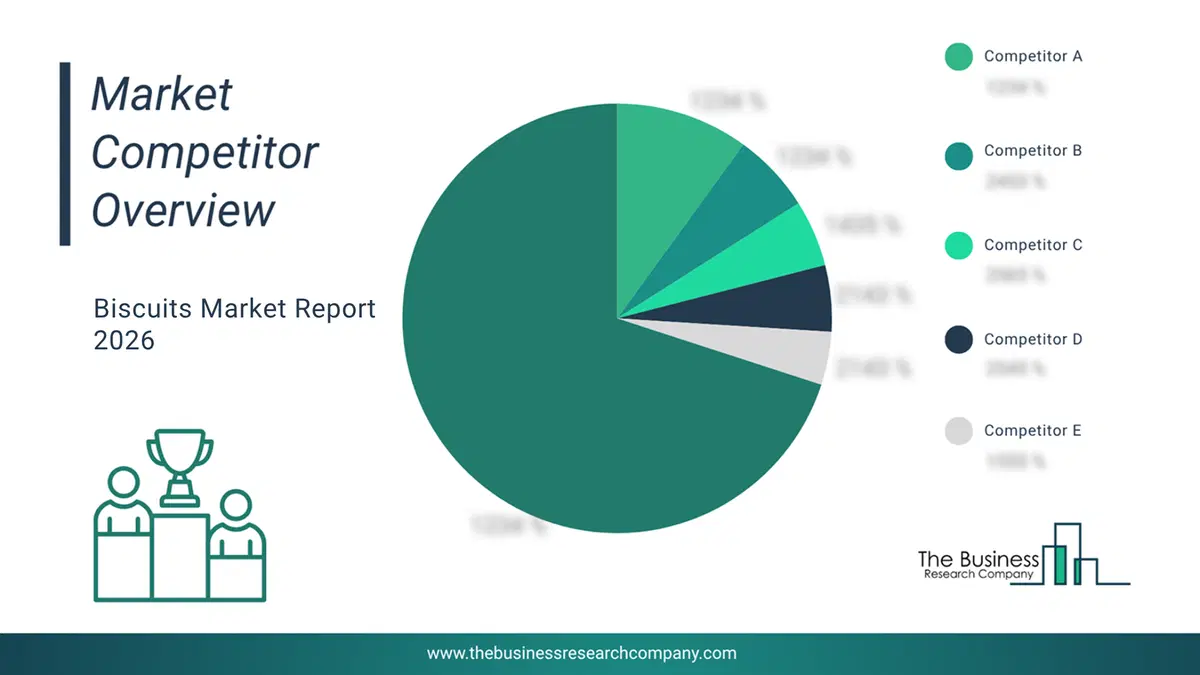
This chart is for illustrative purposes; the full report includes a detailed competitor analysis and comprehensive overview of the top 10 companies in the market.
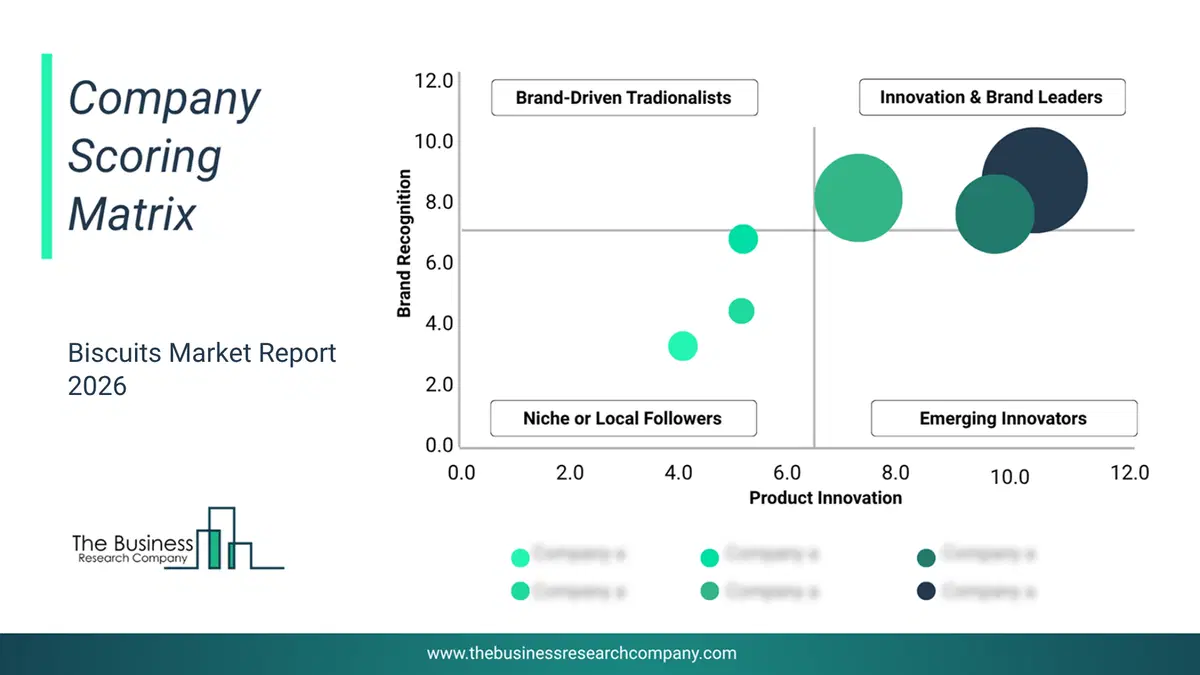
This chart maps companies by product innovation and brand strength, with bubble size indicating relative revenue, helping identify market leaders, challengers, and niche players. This is an illustrative chart; the full report provides a complete and accurate competitive analysis.
Global Biscuits Market Trends and Insights
Major companies operating in the biscuits market are focusing on developing innovative products such as gluten-free and plant-based options, added nutritional ingredients, high-protein biscuits, and low-sugar or sugar-free varieties. High nutritional value biscuits refer to biscuits that are formulated to provide essential nutrients, making them healthier compared to standard biscuits. For instance, In August 2024, ITC, an India-based Business and Information Technology company, introduced the Sunfeast Super Egg & Milk Biscuit. This new product targets children and represents a strategic move into an underrepresented area of the biscuit market. It aims to fill a gap by offering a snack that combines nutritious ingredients like eggs and milk, which are vital for child development. This launch is part of ITC's broader strategy to innovate in the food sector and respond to consumer preferences that emphasize health and convenience.What Are Latest Mergers And Acquisitions In The Biscuits Market?
In September 2024, Britannia Industries, an India-based food products company, acquired Kishlay Foods for an undisclosed amount. With this acquisition, Britannia aims to expand its presence in the regional bakery and confectionery segment, strengthen its product portfolio, and enhance its distribution network across key markets. Kishlay Foods is an India-based manufacturer specializing in baked goods and confectionery products.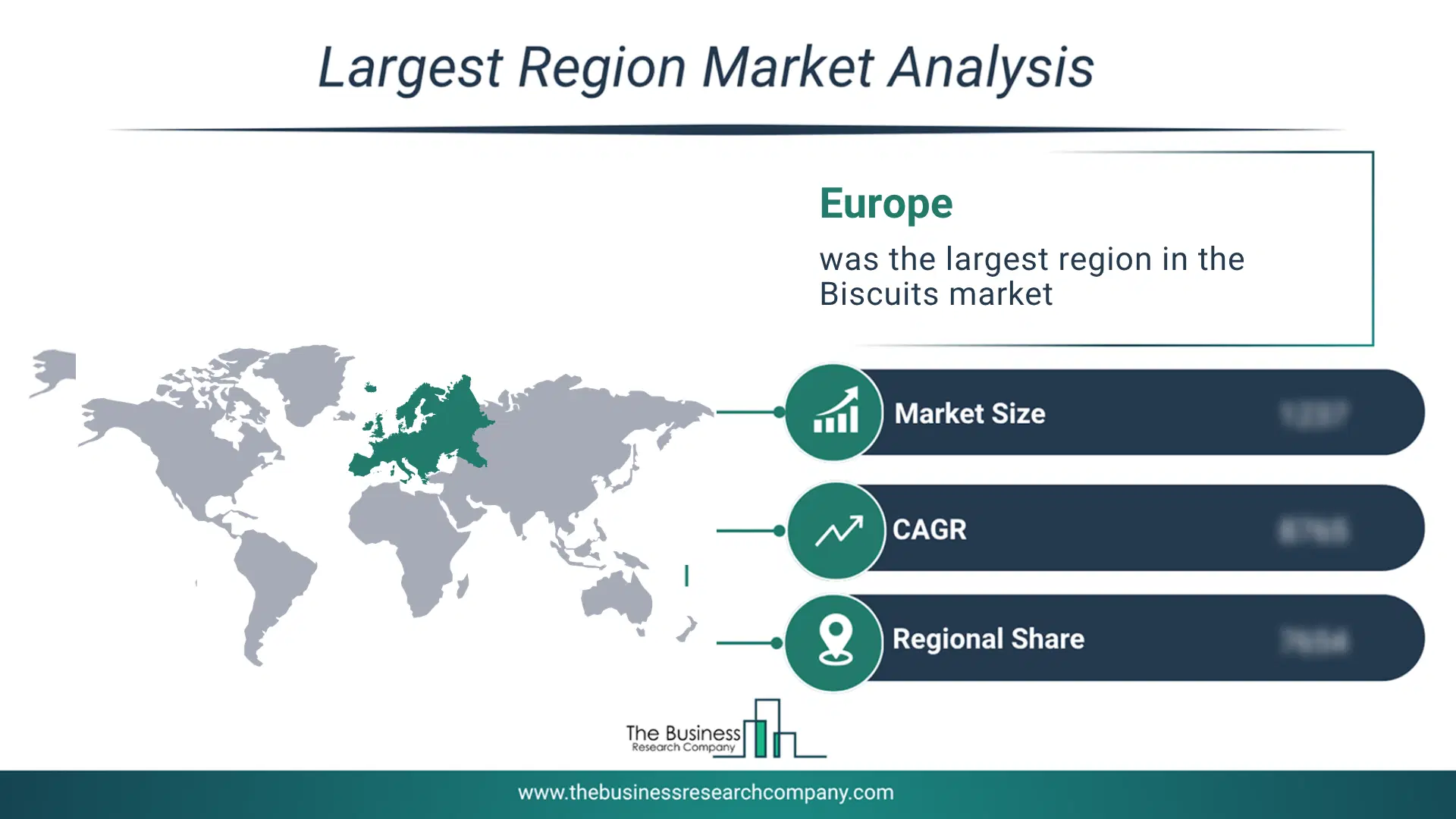
Regional Outlook
Europe was the largest region in the biscuits market in 2025. South America is expected to be the fastest-growing region in the biscuits market report during the forecast period. The regions covered in this market report are Asia-Pacific, South East Asia, Western Europe, Eastern Europe, North America, South America, Middle East and Africa. The countries covered in this market report are Australia, Brazil, China, France, Germany, India, Indonesia, Japan, Taiwan, Russia, South Korea, UK, USA, Italy, Spain, CanadaWhat Defines the Biscuits Market?
The biscuits market consists of sales of cream crackers, flavored crackers, and sandwich biscuits. Values in this market are ‘factory gate’ values, that is, the value of goods sold by the manufacturers or creators of the goods, whether to other entities (including downstream manufacturers, wholesalers, distributors, and retailers) or directly to end customers. The value of goods in this market includes related services sold by the creators of the goods.How is Market Value Defined and Measured?
The market value is defined as the revenues that enterprises gain from the sale of goods and/or services within the specified market and geography through sales, grants, or donations in terms of the currency (in USD unless otherwise specified). The revenues for a specified geography are consumption values that are revenues generated by organizations in the specified geography within the market, irrespective of where they are produced. It does not include revenues from resales along the supply chain, either further along the supply chain or as part of other products.
This chart presents market attractiveness based on a quantitative evaluation of growth, competition, strategic alignment, and risk, offering a clear view of opportunity areas for decision-making. This chart is for illustrative purposes; the full report contains the complete analysis.

This chart highlights the Total Addressable Market (TAM) by estimating the maximum revenue opportunity using an assumption-driven approach, supporting strategic planning and opportunity sizing across markets. The chart is illustrative; the full report provides a more comprehensive analysis.
What Key Data and Analysis Are Included in the Biscuits Market Report 2026?
The biscuits market research report is one of a series of new reports from The Business Research Company that provides market statistics, including industry global market size, regional shares, competitors with the market share, detailed market segments, market trends and opportunities, and any further data you may need to thrive in the biscuits industry. The market research report delivers a complete perspective of everything you need, with an in-depth analysis of the current and future state of the industry.Biscuits Market Report Forecast Analysis
| Report Attribute | Details |
|---|---|
| Market Size Value In 2026 | $141.32 billion |
| Revenue Forecast In 2030 | $175.47 billion |
| Growth Rate | CAGR of 5.4% from 2026 to 2030 |
| Base Year For Estimation | 2025 |
| Actual Estimates/Historical Data | 2020-2025 |
| Forecast Period | 2026 - 2030 |
| Market Representation | Revenue in USD Billion and CAGR from 2026 to 2030 |
| Segments Covered | Type, Source, Flavor Type, Distribution Channel |
| Regional Scope | Asia-Pacific, Western Europe, Eastern Europe, North America, South America, Middle East, Africa |
| Country Scope | The countries covered in the report are Australia, Brazil, China, France, Germany, India, Indonesia, Japan, Taiwan, Russia, South Korea, UK, USA, Canada, Italy, Spain. |
| Key Companies Profiled | Universal Robina Corporation, Nestlé S.A., Mondelez International Inc., Grupo Bimbo S.A.B. de C.V., Pladis Global, ITC Limited, Patanjali Ayurved Limited, Dali Foods Group Co. Ltd., Britannia Industries Limited, United Biscuits (UK) Limited, Lotus Bakeries NV, Pepperidge Farm Incorporated, Walkers Shortbread Ltd., Arnott's Ltd., Bahlsen GmbH & Co. KG, Cremica Food Industries Limited, Leclerc Foods USA Inc., Burton's Biscuit Company, Surya Food & Agro Ltd., Ravi Foods Pvt. Ltd., Anmol Industries Limited, Duke and Sons Pvt. Ltd., Loacker S.p.A. |
| Customization Scope | Request for Customization |
| Pricing And Purchase Options | Explore Purchase Options |