
Blood Culture Tests Market Report 2026
Global Outlook – By Method (Conventional/Manual Methods, Automated Methods), By Product (Consumables, Instruments, Software and Services), By Technology (Culture-Based Technology, Molecular Technologies, Microarrays, PCR (Polymerase Chain Reaction), PNA-FiSH (Peptide Nucleic Acid – Fluorescent in Situ Hybridization), Proteomics Technology), By Application (Bacteremia, Fungemia, Mycobacterial Detection), By End User (Hospital Laboratories, Reference Laboratories, Academic Research Laboratories, Other Laboratories) – Market Size, Trends, Strategies, and Forecast to 2030
Blood Culture Tests Market Overview
• Blood Culture Tests market size has reached to $7.51 billion in 2025 • Expected to grow to $14.77 billion in 2030 at a compound annual growth rate (CAGR) of 14.5% • Growth Driver: The Impact Of Infectious Diseases On Global Health And The Healthcare Industry • Market Trend: Advancements in Clinical Chemistry for Blood Culture Testing • North America was the largest region in 2025.What Is Covered Under Blood Culture Tests Market?
Blood culture tests refer to blood tests used to detect and identify disease-causing microorganisms in the bloodstream. A blood culture test checks for infections caused by microorganisms like bacteria, yeast, and other foreign invaders in a blood sample. The main method of blood culture tests are conventional/manual methods and automated methods. The conventional or manual method of blood culture test is used for detection of invaders like bacteria, yeast, and other microorganisms from a blood specimen. Manual testing is performed by testers who use and test the result in a manual maaner. The blood culture product are consumables, instruments and software and services that uses technology such as culture-based technology, molecular technologies, microarrays, PCR (polymerase chain reaction); PNA-FISH (peptide nucleic acid – fluroscent in situ hybridization) and proteomics technology that are applied in bacteremia, fungemia and mycobacterial detection, used by hospital laboratories, reference laboratories, academic research laboratories, and other laboratories.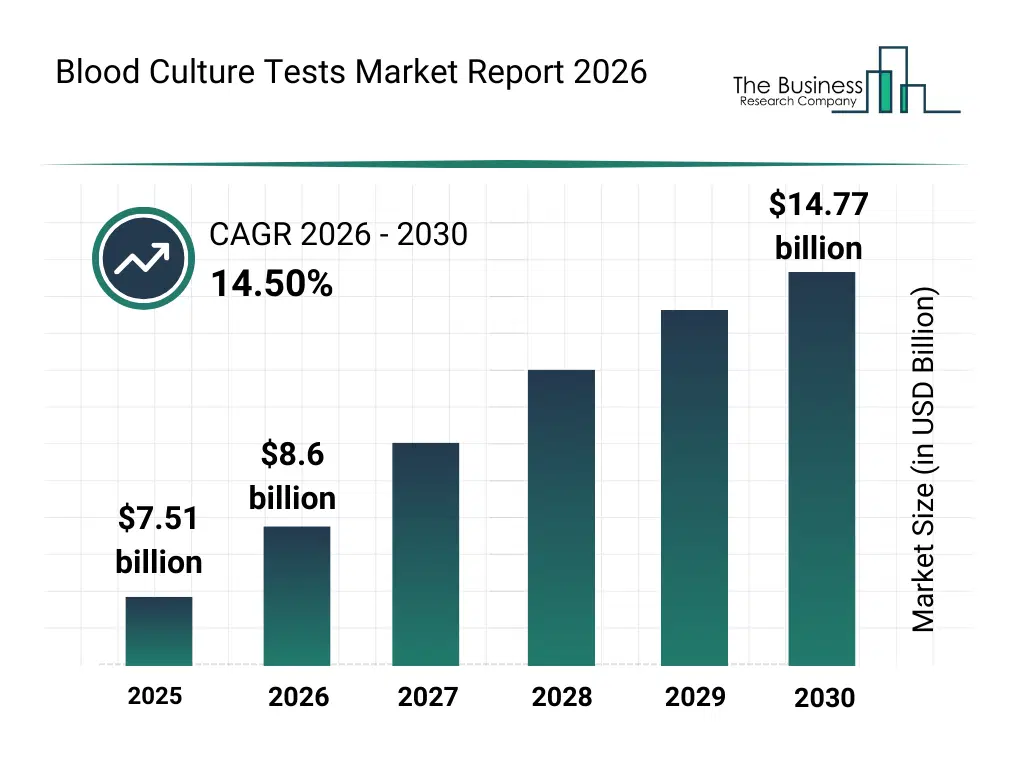
What Is The Blood Culture Tests Market Size and Share 2026?
The blood culture tests market size has grown rapidly in recent years. It will grow from $7.51 billion in 2025 to $8.6 billion in 2026 at a compound annual growth rate (CAGR) of 14.5%. The growth in the historic period can be attributed to rising incidence of bloodstream infections, expansion of hospital laboratory infrastructure, increased adoption of culture-based diagnostics, growing antimicrobial resistance concerns, availability of automated laboratory instruments.What Is The Blood Culture Tests Market Growth Forecast?
The blood culture tests market size is expected to see rapid growth in the next few years. It will grow to $14.77 billion in 2030 at a compound annual growth rate (CAGR) of 14.5%. The growth in the forecast period can be attributed to increasing demand for rapid diagnostic results, rising adoption of AI-assisted laboratory workflows, expansion of molecular testing capabilities, growing focus on infection control programs, technological advancements in blood culture analytics. Major trends in the forecast period include increasing adoption of automated blood culture systems, rising use of molecular diagnostic technologies, growing integration of rapid pathogen identification tools, expansion of continuous monitoring blood culture platforms, enhanced focus on early sepsis detection.
Global Blood Culture Tests Market Segmentation
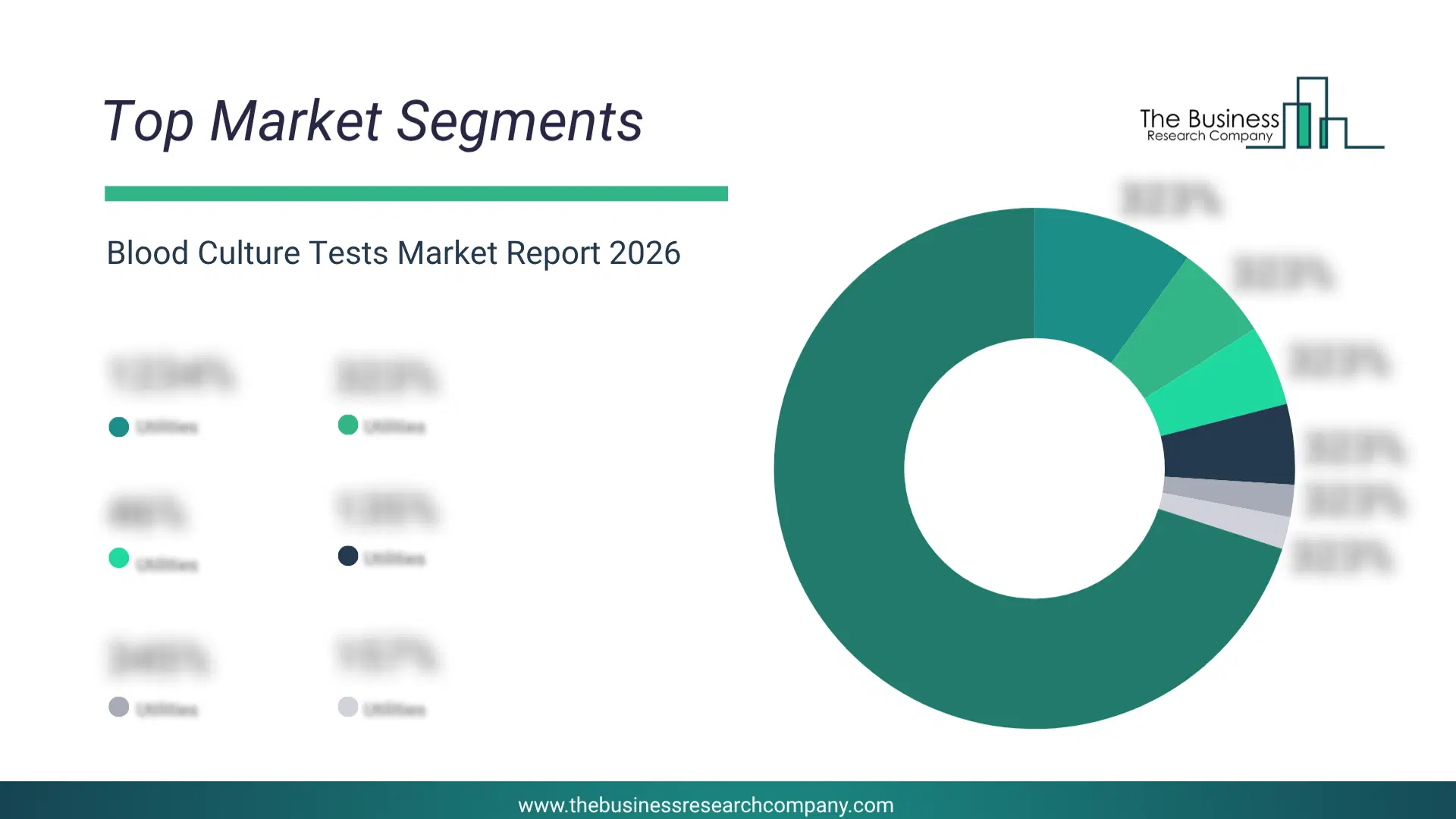
1) By Method: Conventional/Manual Methods, Automated Methods 2) By Product: Consumables, Instruments, Software and Services 3) By Technology: Culture-Based Technology, Molecular Technologies, Microarrays, PCR (Polymerase Chain Reaction), PNA-FiSH (Peptide Nucleic Acid – Fluorescent in Situ Hybridization), Proteomics Technology 4) By Application: Bacteremia, Fungemia, Mycobacterial Detection 5) By End User: Hospital Laboratories, Reference Laboratories, Academic Research Laboratories, Other Laboratories Subsegments: 1) By Conventional/Manual Methods: Blood Culture Bottles (Aerobic and Anaerobic), Culture Media Preparation, Manual Observation and Identification 2) By Automated Methods: Automated Blood Culture Systems, Continuous Monitoring Systems, Integrated Identification and Sensitivity Testing SystemsWhat Is The Driver Of The Blood Culture Tests Market?
The increase in incidence of infectious diseases is expected to propel the growth of the blood culture test market. Infectious diseases are illnesses caused by pathogens, including viruses, bacteria, fungi, and parasites. These diseases have dangerous microorganisms or pathogens that enter an individual's body from the outside or from an infected person. These infectious diseases, such as COVID-19, tuberculosis, flu, measles, HIV, strep throat, and so on, have the potential to cause momentary pain, significant tissue damage, or even death. The World Health Organization ranks infectious diseases as the second biggest cause of death globally. These increases in the incidence of infectious diseases have led to an increase in the demand for blood culture tests to assist in determining whether a patient has bacteremia/septicemia, a potentially fatal condition, or not. For instance, in February 2024, according to the UK Health Security Agency, a UK-based government agency, tuberculosis (a contagious bacterial infection that primarily affects the lungs) cases in England rose to 4,850 in 2023, an increase of 10.7% from 4,380 cases in 2022. Therefore, the increasing incidence of infectious diseases is driving the growth of the blood culture test industry.Key Players In The Global Blood Culture Tests Market
Major companies operating in the blood culture tests market are Becton Dickinson and Company, BioMerieux SA, Thermo Fisher Scientific Inc., Luminex Corporation, Danaher Corporation, F. Hoffmann-La Roche AG, Biobase Biotech Co. Ltd., Scenker Biological Technology Co. Ltd., Anaerobe Systems Inc., Himedia Laboratories Pvt. Ltd., Autobio Diagnostics Co. Ltd., Roche Diagnostics, Mikroscan Technologies Inc., Hardy Diagnostics, Siemens Healthineers, Abbott Laboratories, Cepheid, T2 Biosystems Inc., Beckman Coulter Inc., Accelerate Diagnostics, Bio-Rad Laboratories Inc., Copan Diagnostics Inc., Greiner Bio-One International GmbH, GenMark Diagnostics, Meridian Bioscience Inc.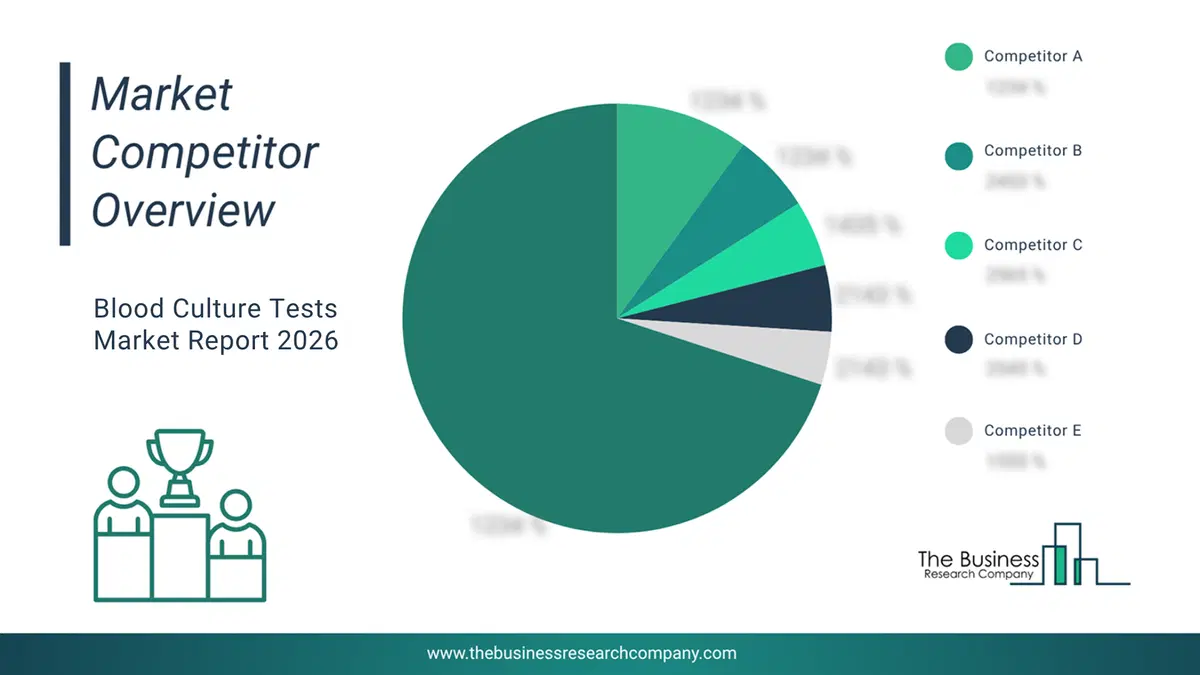
This chart is for illustrative purposes; the full report includes a detailed competitor analysis and comprehensive overview of the top 10 companies in the market.
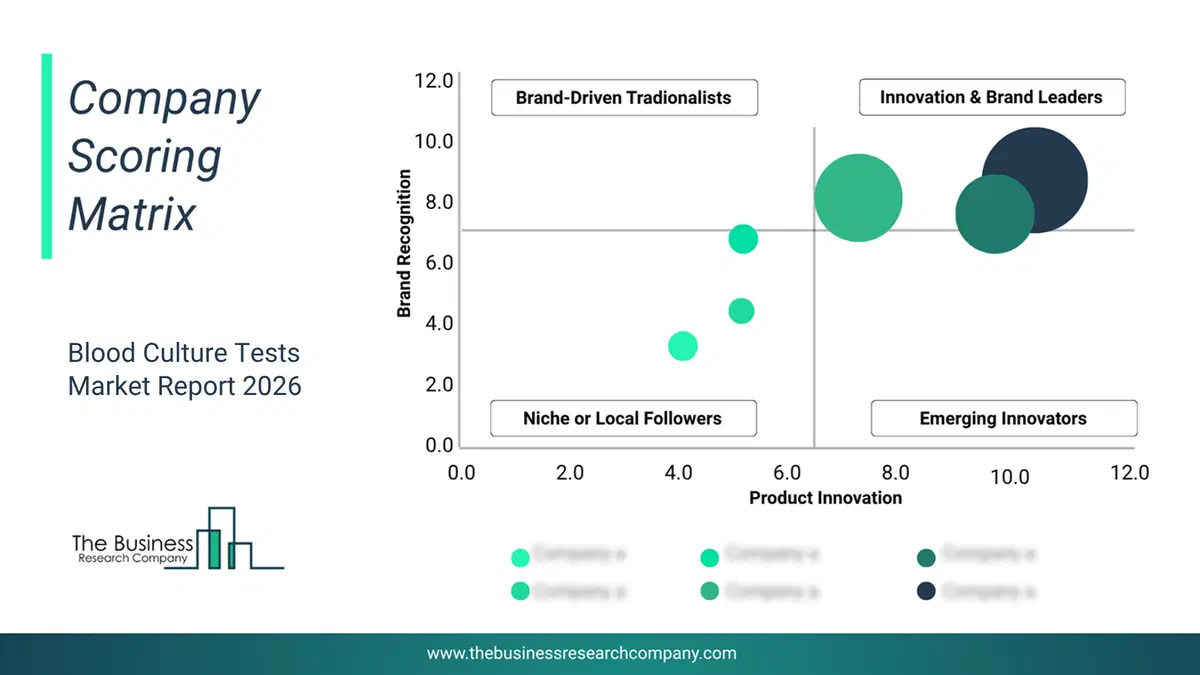
This chart maps companies by product innovation and brand strength, with bubble size indicating relative revenue, helping identify market leaders, challengers, and niche players. This is an illustrative chart; the full report provides a complete and accurate competitive analysis.
Global Blood Culture Tests Market Trends and Insights
Major companies operating in the organic blood culture tests market are developing advanced technologies such as clinical chemistry technologies to enhance diagnostic accuracy, reduce turnaround times, and improve patient management through integrated testing solutions that provide comprehensive insights into infections and related health conditions. Clinical chemistry technologies are diagnostic methods and instruments used to analyze bodily fluids, primarily blood, to measure chemical components and assess health conditions. For instance, in April 2024, Mindray Medical International Limited, a China-based medical device company, launched mid-volume laboratories. These innovations reflect Mindray's commitment to supporting mid-volume laboratories by providing simple yet efficient solutions that enhance diagnostic capabilities while addressing the increasing demands of healthcare providers.What Are Latest Mergers And Acquisitions In The Blood Culture Tests Market?
In February 2024, Bruker Corporation, a US-based provider of scientific instruments and life-science diagnostics, acquired ELITechGroup for $1,008.9 million (€870 million). Through this acquisition, Bruker aims to enhance its blood culture testing capabilities by integrating ELITechGroup’s molecular diagnostic assays for blood-borne pathogens and expanding its portfolio of automated microbiology systems and consumables. ELITechGroup is an Italy-based provider of sample-to-answer molecular diagnostic platforms, infectious disease PCR assays, automated microbiology instruments, and consumables.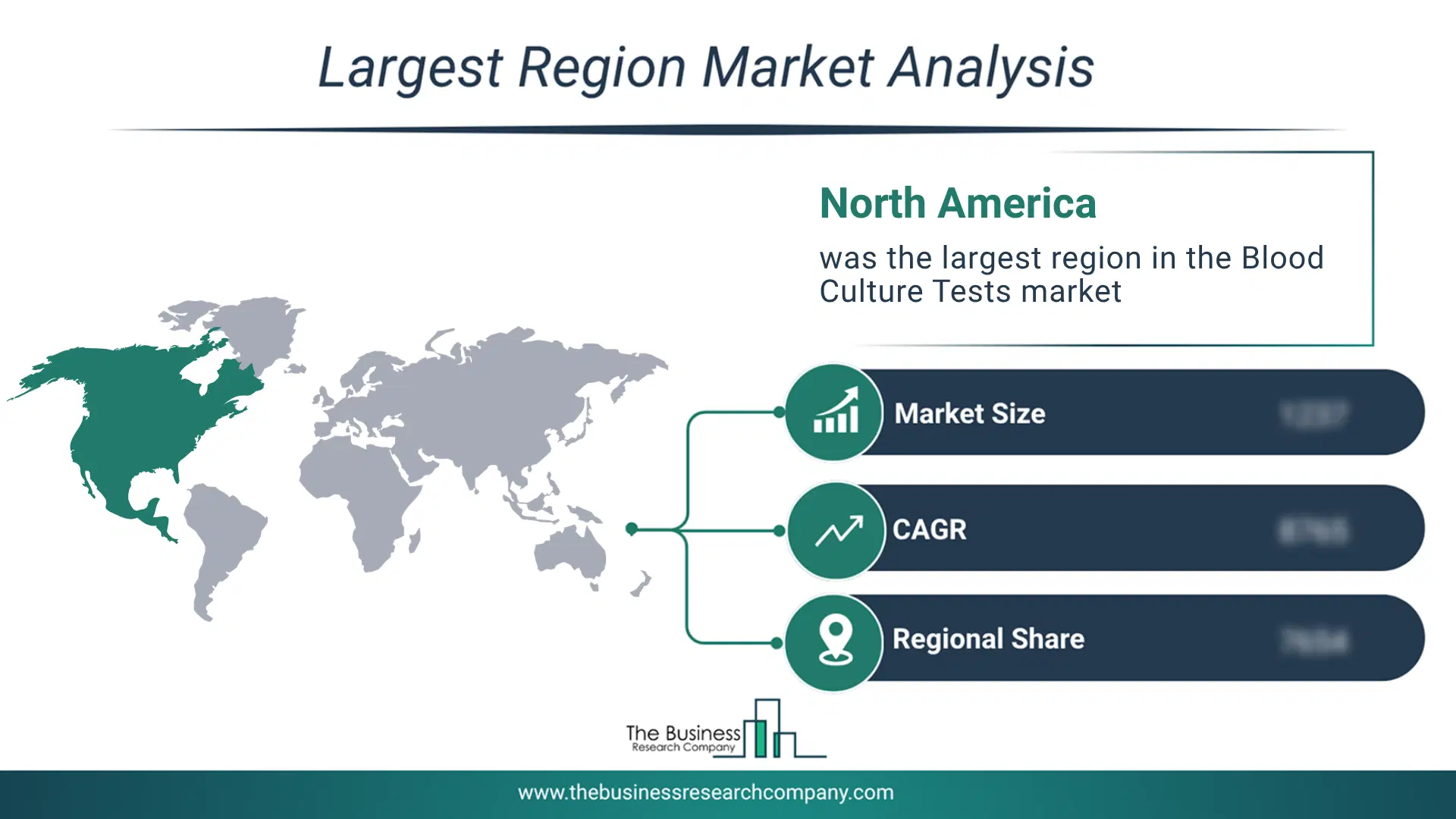
Regional Outlook
North America was the largest region in the blood culture tests market in 2025. The regions covered in this market report are Asia-Pacific, South East Asia, Western Europe, Eastern Europe, North America, South America, Middle East, Africa. The countries covered in this market report are Australia, Brazil, China, France, Germany, India, Indonesia, Japan, Taiwan, Russia, South Korea, UK, USA, Canada, Italy, SpainWhat Defines the Blood Culture Tests Market?
The blood culture tests include revenues earned by entities by micro sampling technology and blood chemistry analyzer. The market value includes the value of related goods sold by the service provider or included within the service offering. Only goods and services traded between entities or sold to end consumers are included.How is Market Value Defined and Measured?
The market value is defined as the revenues that enterprises gain from the sale of goods and/or services within the specified market and geography through sales, grants, or donations in terms of the currency (in USD unless otherwise specified). The revenues for a specified geography are consumption values that are revenues generated by organizations in the specified geography within the market, irrespective of where they are produced. It does not include revenues from resales along the supply chain, either further along the supply chain or as part of other products.
This chart presents market attractiveness based on a quantitative evaluation of growth, competition, strategic alignment, and risk, offering a clear view of opportunity areas for decision-making. This chart is for illustrative purposes; the full report contains the complete analysis.

This chart highlights the Total Addressable Market (TAM) by estimating the maximum revenue opportunity using an assumption-driven approach, supporting strategic planning and opportunity sizing across markets. The chart is illustrative; the full report provides a more comprehensive analysis.
What Key Data and Analysis Are Included in the Blood Culture Tests Market Report 2026?
The blood culture tests market research report is one of a series of new reports from The Business Research Company that provides market statistics, including industry global market size, regional shares, competitors with the market share, detailed market segments, market trends and opportunities, and any further data you may need to thrive in the blood culture tests industry. The market research report delivers a complete perspective of everything you need, with an in-depth analysis of the current and future state of the industry.Blood Culture Tests Market Report Forecast Analysis
| Report Attribute | Details |
|---|---|
| Market Size Value In 2026 | $8.6 billion |
| Revenue Forecast In 2030 | $14.77 billion |
| Growth Rate | CAGR of 14.5% from 2026 to 2030 |
| Base Year For Estimation | 2025 |
| Actual Estimates/Historical Data | 2020-2025 |
| Forecast Period | 2026 - 2030 |
| Market Representation | Revenue in USD Billion and CAGR from 2026 to 2030 |
| Segments Covered | Method, Product, Technology, Application, End User |
| Regional Scope | Asia-Pacific, Western Europe, Eastern Europe, North America, South America, Middle East, Africa |
| Country Scope | The countries covered in the report are Australia, Brazil, China, France, Germany, India, Indonesia, Japan, Taiwan, Russia, South Korea, UK, USA, Canada, Italy, Spain. |
| Key Companies Profiled | Becton Dickinson and Company, BioMerieux SA, Thermo Fisher Scientific Inc., Luminex Corporation, Danaher Corporation, F. Hoffmann-La Roche AG, Biobase Biotech Co. Ltd., Scenker Biological Technology Co. Ltd., Anaerobe Systems Inc., Himedia Laboratories Pvt. Ltd., Autobio Diagnostics Co. Ltd., Roche Diagnostics, Mikroscan Technologies Inc., Hardy Diagnostics, Siemens Healthineers, Abbott Laboratories, Cepheid, T2 Biosystems Inc., Beckman Coulter Inc., Accelerate Diagnostics, Bio-Rad Laboratories Inc., Copan Diagnostics Inc., Greiner Bio-One International GmbH, GenMark Diagnostics, Meridian Bioscience Inc. |
| Customization Scope | Request for Customization |
| Pricing And Purchase Options | Explore Purchase Options |