
Canned Lamb Market Report 2026
Global Outlook – By Type (Canned Lamb Chunks, Canned Lamb Stew, Canned Lamb Mince), By Application (Ready Meals, Restaurants, Catering, Emergency Food Supply), By Distribution Channel (Supermarkets And Hypermarkets, Convenience Stores, Independent Retailers, Online), By End-User (Human, Animal) – Market Size, Trends, Strategies, and Forecast to 2030
Canned Lamb Market Overview
• Canned Lamb market size has reached to $1.62 billion in 2025 • Expected to grow to $2 billion in 2030 at a compound annual growth rate (CAGR) of 4.3% • Growth Driver: Rising Meat Consumption Drives Growth In The Canned Lamb Market • North America was the largest region in 2025 and Asia-Pacific is the fastest growing region.What Is Covered Under Canned Lamb Market?
Canned lamb is lamb meat that has been cooked, processed, and sealed in a can for preservation and a long shelf life. It is commonly used in various culinary applications, such as stews and soups, offering convenience and ease of storage. The canning process ensures the meat remains safe to eat and retains its flavor and nutrients over time. The main types of canned lamb are fresh and frozen. Fresh canned lamb refers to lamb meat that is cooked, preserved, and packaged in cans shortly after slaughter to maintain its freshness and quality. The applications include ready meals, restaurants, catering, and emergency food supplies, they are distributed through supermarkets and hypermarkets, convenience stores, independent retailers, and online. The end users include humans and animals.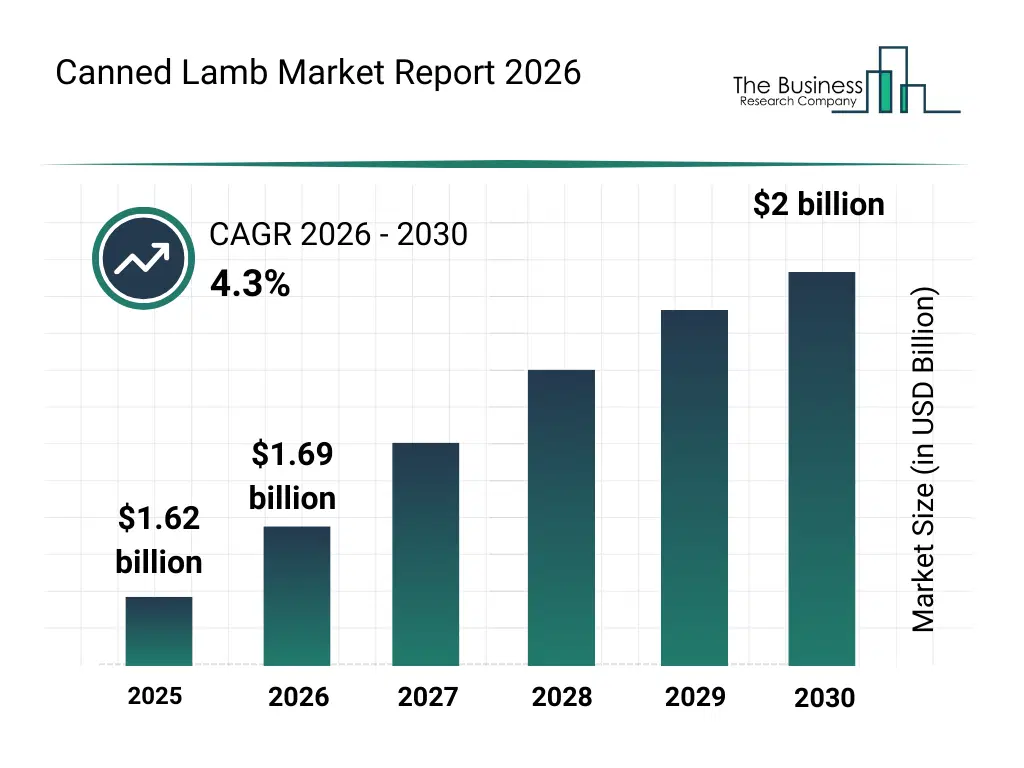
What Is The Canned Lamb Market Size and Share 2026?
The canned lamb market size has grown steadily in recent years. It will grow from $1.62 billion in 2025 to $1.69 billion in 2026 at a compound annual growth rate (CAGR) of 4.7%. The growth in the historic period can be attributed to expansion of canned food consumption, growth of military and emergency food demand, increasing urbanization and convenience eating, advancements in food canning technologies, rising meat processing capacity.What Is The Canned Lamb Market Growth Forecast?
The canned lamb market size is expected to see steady growth in the next few years. It will grow to $2 billion in 2030 at a compound annual growth rate (CAGR) of 4.3%. The growth in the forecast period can be attributed to increasing demand from disaster preparedness programs, growth of ready-to-eat meal segments, expanding food aid initiatives, rising focus on long shelf life proteins, increasing adoption in remote and offshore catering. Major trends in the forecast period include rising demand for shelf-stable meat products, growing use in emergency and ready meals, expansion of institutional food supply, increasing focus on protein-rich convenience foods, enhanced emphasis on food safety and preservation.
Global Canned Lamb Market Segmentation
1) By Type: Canned Lamb Chunks, Canned Lamb Stew, Canned Lamb Mince 2) By Application: Ready Meals, Restaurants, Catering, Emergency Food Supply 3) By Distribution Channel: Supermarkets And Hypermarkets, Convenience Stores, Independent Retailers, Online 4) By End-User: Human, Animal Subsegments: 1) By Canned Lamb Chunks: Plain Lamb Chunks, Seasoned Lamb Chunks, Spiced Lamb Chunks, Low-Sodium Lamb Chunks, Premium/Luxury Lamb Chunks 2) By Canned Lamb Stew: Classic Lamb Stew, Vegetable Lamb Stew, Spiced/Herbed Lamb Stew, Ready-to-Eat Lamb Stew, Gourmet/Traditional Recipe Lamb Stew 3) By Canned Lamb Mince: Plain Lamb Mince, Seasoned Lamb Mince, Spiced Lamb Mince, Ready-to-Cook Lamb Mince, Low-Fat/Lean Lamb MinceWhat Are The Drivers Of The Canned Lamb Market?
The rising consumption of meat is expected to propel the growth of the canned lamb market going forward. Meat is the edible animal flesh that people cook and eat as a source of protein and nutrients. The increasing consumption of meat is linked to rising incomes, urbanization, and changing dietary preferences globally. Canned lamb is contributing to the rising consumption of meat by offering a convenient, long-lasting option for consumers, thereby increasing accessibility and availability. For instance, in June 2024, according to the Food and Agriculture Organization (FAO), a UN‑based agency for food and agriculture, global meat production increased from 364.7 million tonnes (cwe) in 2022 to 370.0 million tonnes (cwe) in 2023. Therefore, the rising consumption of meat will drive the growth of the canned lamb industry. The rising pet ownership worldwide is expected to propel the growth of the canned lamb market going forward. Pet ownership is the responsibility of caring for and providing a home, food, and attention to an animal kept for companionship. Pet ownership is increasing due to factors such as rising disposable incomes, the humanization of pets, emotional companionship needs, and growing acceptance of pets in households. Canned lamb, known for its high nutritional value, longer shelf life, and suitability for pets with sensitive digestion or food allergies, is increasingly preferred by pet owners seeking high-quality dietary options for their pets. For instance, in March 2025, according to the American Pet Products Association (APPA), a US-based trade association for the pet industry, in 2024, 94 million U.S. households owned at least one pet, up from 82 million in 2023. total U.S. pet industry expenditures reaching $152 billion in 2024, $157 billion in sales is projected for 2025. Therefore, the rising pet ownership rates and increasing consumer willingness to spend on pet nutrition are driving the growth of the canned lamb industry. The growing awareness of health and nutrition among consumers is expected to propel the growth of the canned lamb market going forward. Health and nutrition awareness refers to consumers' understanding and consciousness of how dietary choices affect their physical well-being, including knowledge of nutritional content, food quality, and the relationship between diet and health outcomes. The rising awareness of health and nutrition is driven by increased access to digital health information and social media content, as consumers are exposed to more educational resources about dietary guidelines, nutritional benefits, and healthy eating patterns through online platforms and mobile applications. Growing health and nutrition awareness directly supports increased demand for protein-rich, convenient food options like canned lamb that offer essential nutrients, high-quality protein, and long shelf life while meeting consumers' desire for nutritious meal solutions. For instance, in Jun 2024, according to the International Food Information Council (IFIC), a US based non-profit organization, the proportion of Americans following a specific diet or eating pattern over the past year remains high at 54%. Most people are looking to increase their protein intake, with interest climbing from 59% in 2022 to 67% in 2023, and reaching 71% in 2024. Additionally, roughly half of consumers aim to eat more fresh foods, which are widely considered the healthiest options. Therefore, rising health and nutrition awareness among consumers is driving the growth of the canned lamb industry.Key Players In The Global Canned Lamb Market
Major companies operating in the canned lamb market are Tyson Foods Inc., Hormel Foods Corp., Perdue Farms Inc., Alliance Group Limited, AFFCO Holdings Limited, Stahly Quality Foods Ltd., Treats Unleashed Inc., Evanger's Dog And Cat Food Co., Tuffy's Pet Foods Inc., Muhubrands.com, New Zealand Lamb Company, AlexMeat & Provision Inc., Calibra Inc., Hound & Gatos Company, Wellness Pet Company Inc., Perfect Companion Group (PCG), Fortan GmbH & Co. KG., SmartHeart Pro, Caledonian Kitchen Limited, Leos Pet Her Hakk Sakldr
This chart is for illustrative purposes; the full report includes a detailed competitor analysis and comprehensive overview of the top 10 companies in the market.
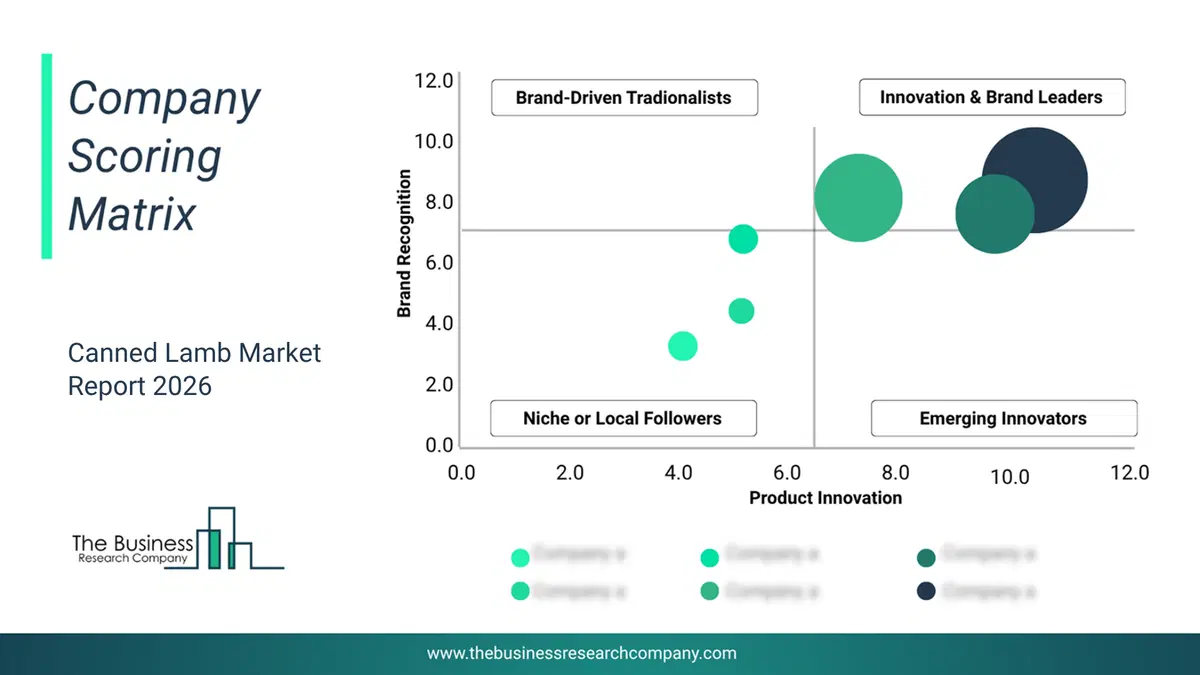
This chart maps companies by product innovation and brand strength, with bubble size indicating relative revenue, helping identify market leaders, challengers, and niche players. This is an illustrative chart; the full report provides a complete and accurate competitive analysis.
Regional Outlook
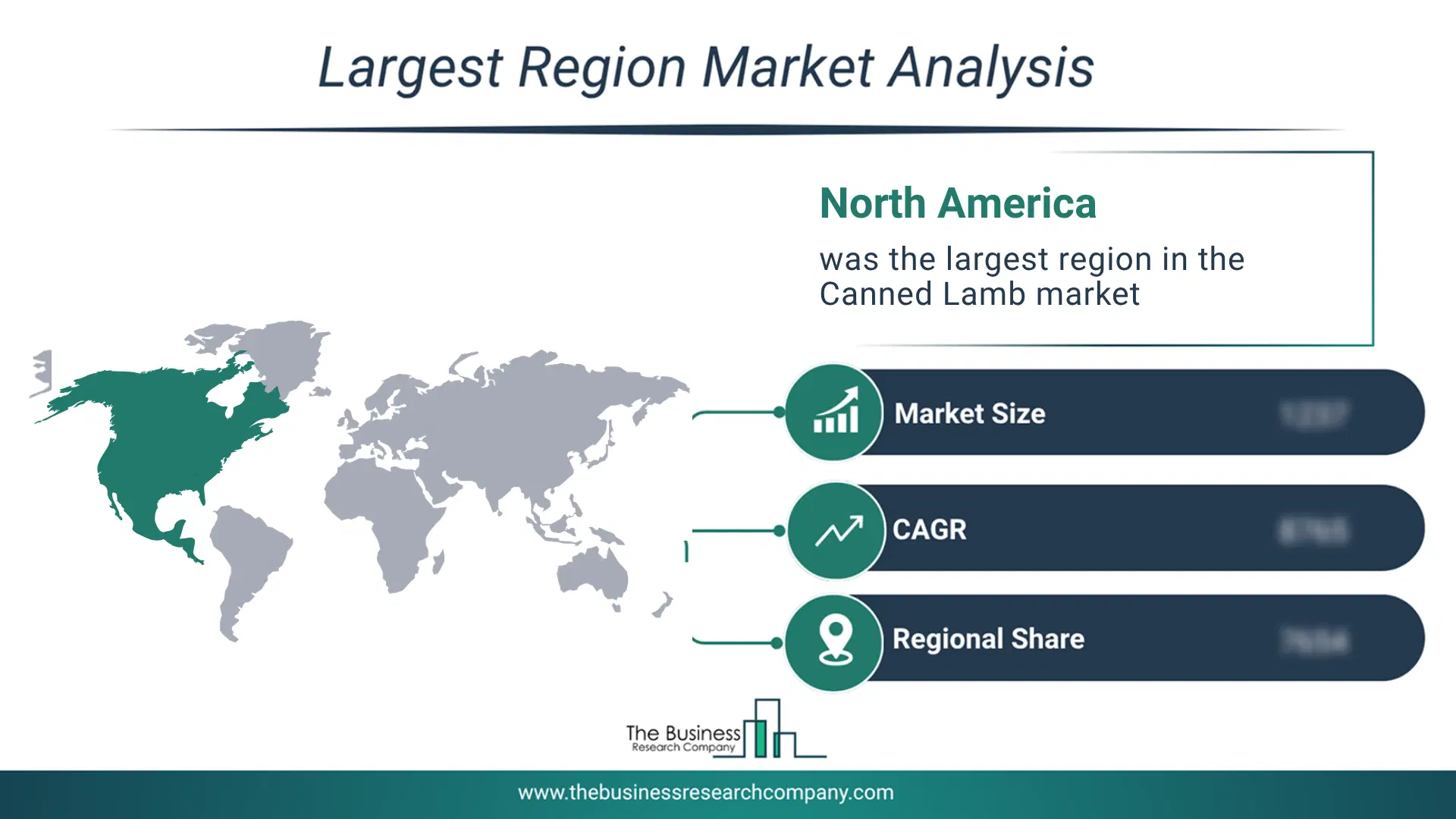
North America was the largest region in the canned lamb market in 2025. Asia-Pacific is expected to be the fastest-growing region in the forecast period. The regions covered in this market report are Asia-Pacific, South East Asia, Western Europe, Eastern Europe, North America, South America, Middle East and Africa. The countries covered in this market report are Australia, Brazil, China, France, Germany, India, Indonesia, Japan, Taiwan, Russia, South Korea, UK, USA, Italy, Spain, CanadaWhat Defines the Canned Lamb Market?
The canned lamb market consists of sales of chunks, slices, shredded lamb, and stew. Values in this market are ‘factory gate’ values, that is the value of goods sold by the manufacturers or creators of the goods, whether to other entities (including downstream manufacturers, wholesalers, distributors, and retailers) or directly to end customers. The value of goods in this market includes related services sold by the creators of the goods.How is Market Value Defined and Measured?
The market value is defined as the revenues that enterprises gain from the sale of goods and/or services within the specified market and geography through sales, grants, or donations in terms of the currency (in USD unless otherwise specified). The revenues for a specified geography are consumption values that are revenues generated by organizations in the specified geography within the market, irrespective of where they are produced. It does not include revenues from resales along the supply chain, either further along the supply chain or as part of other products.
This chart presents market attractiveness based on a quantitative evaluation of growth, competition, strategic alignment, and risk, offering a clear view of opportunity areas for decision-making. This chart is for illustrative purposes; the full report contains the complete analysis.

This chart highlights the Total Addressable Market (TAM) by estimating the maximum revenue opportunity using an assumption-driven approach, supporting strategic planning and opportunity sizing across markets. The chart is illustrative; the full report provides a more comprehensive analysis.
What Key Data and Analysis Are Included in the Canned Lamb Market Report 2026?
The canned lamb market research report is one of a series of new reports from The Business Research Company that provides market statistics, including industry global market size, regional shares, competitors with the market share, detailed market segments, market trends and opportunities, and any further data you may need to thrive in the canned lamb industry. The market research report delivers a complete perspective of everything you need, with an in-depth analysis of the current and future state of the industry.Canned Lamb Market Report Forecast Analysis
| Report Attribute | Details |
|---|---|
| Market Size Value In 2026 | $1.69 billion |
| Revenue Forecast In 2030 | $2 billion |
| Growth Rate | CAGR of 4.7% from 2026 to 2030 |
| Base Year For Estimation | 2025 |
| Actual Estimates/Historical Data | 2020-2025 |
| Forecast Period | 2026 - 2030 |
| Market Representation | Revenue in USD Billion and CAGR from 2026 to 2030 |
| Segments Covered | Type, Application, Distribution Channel, End-User |
| Regional Scope | Asia-Pacific, Western Europe, Eastern Europe, North America, South America, Middle East, Africa |
| Country Scope | The countries covered in the report are Australia, Brazil, China, France, Germany, India, Indonesia, Japan, Taiwan, Russia, South Korea, UK, USA, Canada, Italy, Spain. |
| Key Companies Profiled | Tyson Foods Inc., Hormel Foods Corp., Perdue Farms Inc., Alliance Group Limited, AFFCO Holdings Limited, Stahly Quality Foods Ltd., Treats Unleashed Inc., Evanger's Dog And Cat Food Co., Tuffy's Pet Foods Inc., Muhubrands.com, New Zealand Lamb Company, AlexMeat & Provision Inc., Calibra Inc., Hound & Gatos Company, Wellness Pet Company Inc., Perfect Companion Group (PCG), Fortan GmbH & Co. KG., SmartHeart Pro, Caledonian Kitchen Limited, Leos Pet Her Hakk Sakldr |
| Customization Scope | Request for Customization |
| Pricing And Purchase Options | Explore Purchase Options |