
Canned Meat Market Report 2026
Global Outlook – By Product Type (Seafood Meats, Poultry Meats, Red Meat, Other Products), By Application (Private Use, Commercial and Industrial Use ), By Distribution Channel (Supermarket and Hypermarket, Specialty Store, Online, Other Distribution Channels) – Market Size, Trends, Strategies, and Forecast to 2030
Canned Meat Market Overview
• Canned Meat market size has reached to $18.09 billion in 2025 • Expected to grow to $26.04 billion in 2030 at a compound annual growth rate (CAGR) of 7.7% • Growth Driver: Ready-To-Eat Food Demand Fueling Growth In The Canned Meat Market • Market Trend: Adoption Of Plant-Based Canned Meat Products To Meet Sustainable Protein Demand • North America was the largest region in 2025 and Asia-pacific is the fastest growing region.Market Gains By 2030 – Top Opportunities By Segment
Market Gain identifies the most promising market opportunities by highlighting the segments or products expected to generate the highest incremental revenue growth over the next five years.
What Is Covered Under Canned Meat Market?
The canned meat refers to the fresh and ready-to-eat meat preserved in cold storage. Canned meat contains proteins, omega-3 fatty acids, fibers, and other nutrients that are essential for a balanced diet. People choose canned meat because it can be stored for longer and is easier to preserve. The main types of products in canned meat are seafood meats, poultry meats, red meats, and other products. Poultry meat refers to canned meat of chicken, goose, duck, turkey, game birds, and rabbit that involves freezing the meat in time at specific temperatures. It is distributed through supermarkets and hypermarkets, specialty stores, online, and other distribution channels and is employed in several applications, such as private use, commercial use, and industrial use.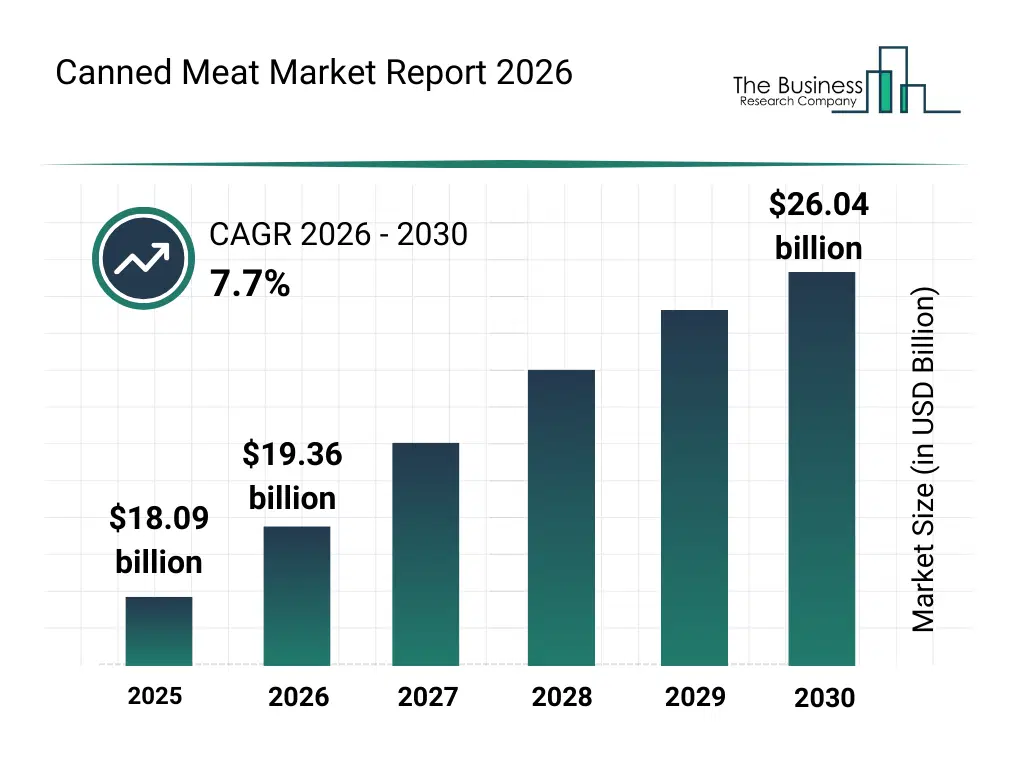
What Is The Canned Meat Market Size and Share 2026?
The canned meat market size has grown strongly in recent years. It will grow from $18.09 billion in 2025 to $19.36 billion in 2026 at a compound annual growth rate (CAGR) of 7.1%. The growth in the historic period can be attributed to growth in urban lifestyles and convenience food demand, expansion of food preservation technologies, increased military and emergency food usage, rising global meat consumption, development of cold-chain alternatives.What Is The Canned Meat Market Growth Forecast?
The canned meat market size is expected to see strong growth in the next few years. It will grow to $26.04 billion in 2030 at a compound annual growth rate (CAGR) of 7.7%. The growth in the forecast period can be attributed to increasing demand for high-protein convenience foods, rising focus on sustainable meat sourcing, expansion of online meat retailing, growing innovation in canning technologies, increasing emphasis on food safety regulations. Major trends in the forecast period include increasing demand for long-shelf-life protein products, rising consumption of ready-to-eat meat, growing focus on nutrient-retaining preservation methods, expansion of premium canned meat offerings, enhanced emphasis on packaging safety and traceability.
Global Canned Meat Market Segmentation
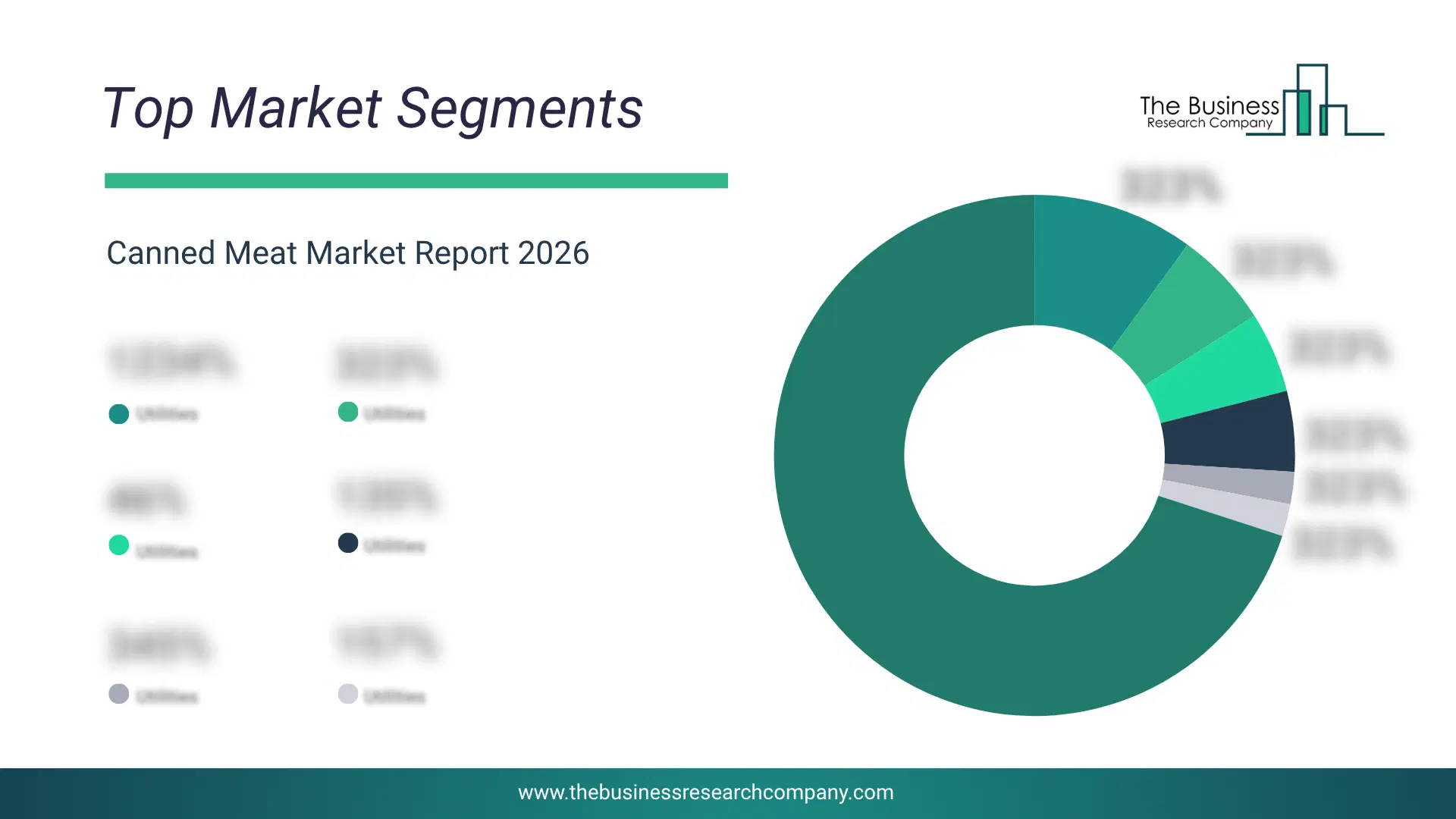
1) By Product Type: Seafood Meats, Poultry Meats, Red Meat, Other Products 2) By Application: Private Use, Commercial and Industrial Use 3) By Distribution Channel: Supermarket and Hypermarket, Specialty Store, Online, Other Distribution Channels Subsegments: 1) By Seafood Meats: Canned Tuna, Canned Salmon, Canned Sardines, Canned Shellfish 2) By Poultry Meats: Canned Chicken, Canned Turkey, Canned Duck 3) By Red Meat: Canned Beef, Canned Pork, Canned Lamb 4) By Other Products: Canned Mixed Meats, Canned Game Meats The top segments in the luxury furniture market will be: • Safas And Lounges will reach $7.63 Billion by 2030. • Kitchen will reach $7.29 Billion by 2030. • Chairs will reach $6.92 Billion by 2030. • Tables will reach $6.01 Billion by 2030. • Beds will reach $5.33 Billion by 2030. The top segments in the canned meat market will be: • Seafood Meats will reach $9.35 Billion by 2030. • Red Meat will reach $7.53 Billion by 2030. • Poultry Meats will reach $7.46 Billion by 2030. • Other Products will reach $2.34 Billion by 2030.What Is The Driver Of The Canned Meat Market?
Growing demand for ready-to-eat food products is expected to propel the growth of the canned meat market going forward. Ready-to-eat food is food that will not be cooked or reheated before serving. Canned meat includes the ready to eat meat products. For instance, in August 2023, according to a survey conducted by Itochu Corporation, a Japan-based trading company, approximately 45% of the 9,461 respondents reported consuming bento boxes, also referred to as ready-to-eat (RTE) lunch boxes, available at convenience stores. Over 10% of those who purchase these boxes enjoy them more than once a week. Therefore, the growing demand for ready-to-eat food products drives the canned meat industry growth.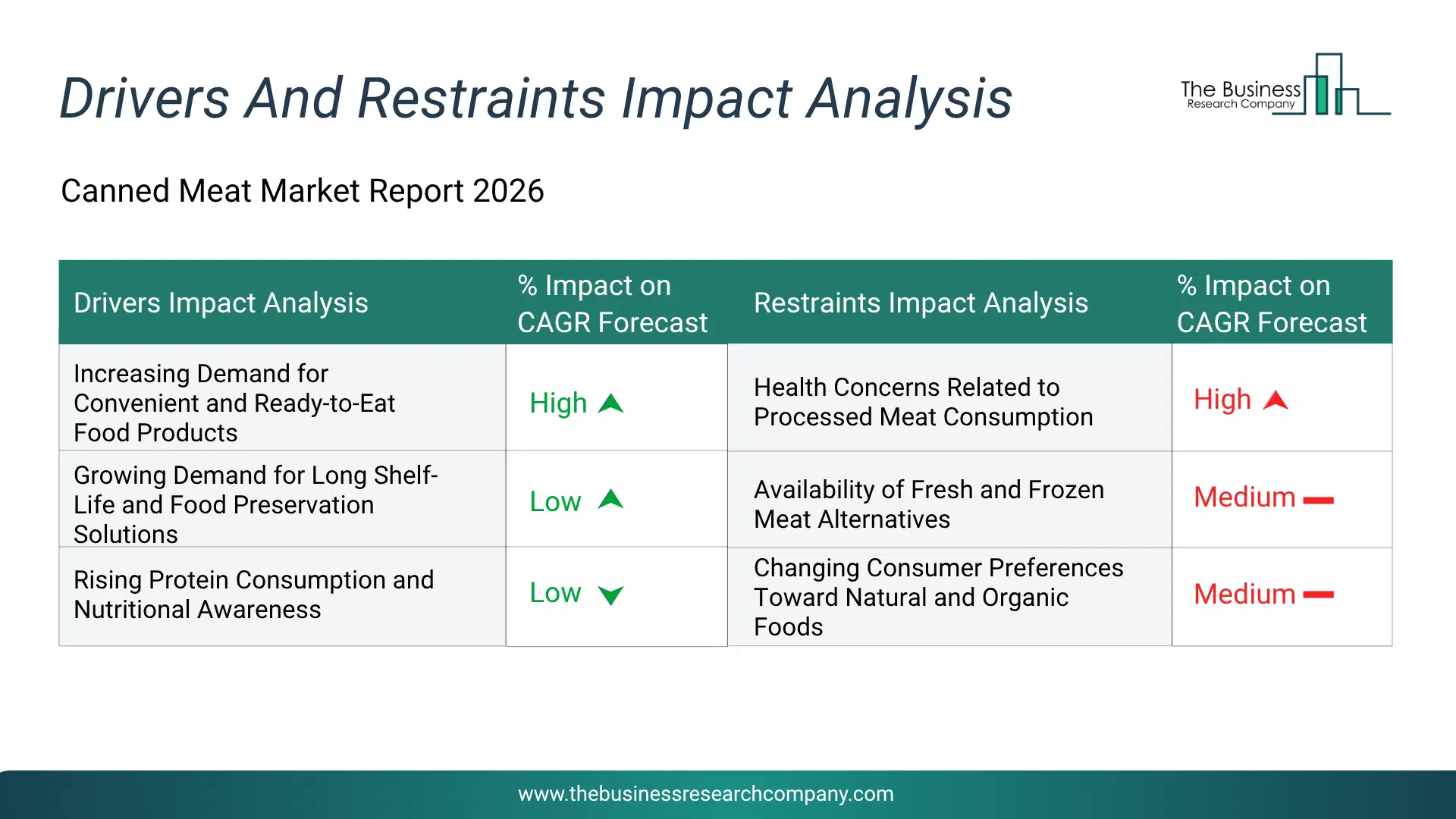
Infographic Chart Showing Key Market Drivers Analysis And Restraints For Canned Meat Market
The chart presents an impact analysis of key drivers and restraints, quantifying their relative influence on the market's growth rate and helping assess the balance between growth enablers and limiting factors. This chart offers a high-level perspective; the full report contains more detailed insights.
How Will The Drivers Impact Growth In The Global Canned Meat Market?
• Increasing Demand for Convenient and Ready-to-Eat Food Products (High) – During the forecast period, the increasing demand for convenient and ready-to-eat food products is expected to become a key growth driver for the canned meat market by 2030. Changing consumer lifestyles and busy work schedules are increasing the preference for packaged foods that require minimal preparation time. Consumers are increasingly choosing canned meat products due to their convenience, portability, and ease of storage, making them suitable for both household and on-the-go consumption. This trend is encouraging manufacturers to expand product offerings with enhanced flavors, premium ingredients, and single-serve packaging formats. Additionally, the growing penetration of modern retail and online grocery platforms is improving product accessibility across urban and semi-urban markets. Collectively, these factors support steady market growth by directly linking convenience-oriented consumption with increased canned meat demand. • Growing Demand for Long Shelf-Life and Food Preservation Solutions (Low) – During the forecast period, the growing demand for long shelf-life and food preservation solutions is expected to emerge as a major factor driving the expansion of the canned meat market by 2030. Increasing consumer preference for durable food products that can be stored for extended periods without refrigeration is strengthening demand for canned meat products globally. Advancements in food preservation and packaging technologies are improving product safety, freshness, and nutritional retention, making canned meat more attractive to both consumers and retailers. Such demand is further supported by rising concerns regarding food waste reduction and the need for emergency food storage solutions. Higher adoption across institutional buyers, travel sectors, and military food supply programs is also contributing to market expansion. • Rising Protein Consumption and Nutritional Awareness (Low) – During the forecast period, the rising protein consumption and nutritional awareness is expected to act as a key growth catalyst for the canned meat market by 2030. Growing awareness regarding the importance of protein-rich diets is accelerating demand for canned meat products among health-conscious consumers. Consumers are increasingly incorporating seafood, poultry, and red meat products into their diets to support balanced nutrition and active lifestyles. This rising nutritional focus is encouraging manufacturers to introduce low-sodium, preservative-free, and fortified canned meat variants that align with evolving dietary preferences. Furthermore, increasing urbanization and rising disposable incomes are supporting higher spending on convenient protein-based packaged foods across developing and developed economies. Consequently, the growing demand for nutritious and protein-enriched food products directly supports the adoption of canned meat products worldwide.How Will The Restraints Impact Growth In The Global Canned Meat Market?
• Health Concerns Related to Processed Meat Consumption (High) – During the forecast period, the health concerns associated with processed and preserved meat products act as a major restraint for the canned meat market. Consumers are increasingly aware of the risks linked to high sodium content, preservatives, and additives commonly found in canned meat. Studies connecting processed meat consumption with chronic diseases such as heart conditions and certain cancers further discourage frequent consumption. This shift in consumer perception is driving demand toward fresh and organic alternatives. As a result, market growth is limited due to declining preference among health-conscious consumers. • Availability of Fresh and Frozen Meat Alternatives (Low) – During the forecast period, the the widespread availability of fresh and frozen meat products poses a significant restraint on the canned meat market. Advancements in cold chain logistics and refrigeration have made fresh meat more accessible and affordable to consumers globally. Many consumers perceive fresh meat as more nutritious and better in taste compared to canned options. Additionally, frozen meat offers longer shelf life without the need for preservatives, making it a preferred alternative. This growing preference reduces demand for canned meat products, thereby hindering market expansion. • Changing Consumer Preferences Toward Natural and Organic Foods (Low) – During the forecast period, the the increasing shift toward natural, organic, and minimally processed food products is restraining the canned meat market. Modern consumers are prioritizing clean-label products with fewer artificial ingredients and preservatives. Canned meat, often perceived as highly processed, does not align with this trend. Rising vegan and plant-based dietary preferences further reduce reliance on meat-based preserved foods. This transformation in dietary habits is particularly strong among younger populations. Consequently, the demand for canned meat is negatively impacted, slowing overall market growth.Key Players In The Global Canned Meat Market
Major companies operating in the canned meat market are Xiamen Gulong Canned Food Co. Ltd., Tyson Foods Inc., Wild Planet Foods Inc., JBS S.A., Crown Prince Inc., Bar Harbor Foods Inc., Zishan Group Co. Ltd., Libby's Brand Holding Inc., Dalian Lixiang Food Co. Ltd., Hormel Foods Corporation, American Tuna Inc., Bumble Bee Seafoods LLC, Maruha Nichiro Corporation, Vion Food Group NV, Conagra Brands Inc., Thai Union Group, Trident Seafoods Corporation, Bolton Group Ltd., Princes Group Ltd., Cargill Meat Solutions Corp., Keystone Foods LLC, Pinnacle Foods Inc., BRF S.A.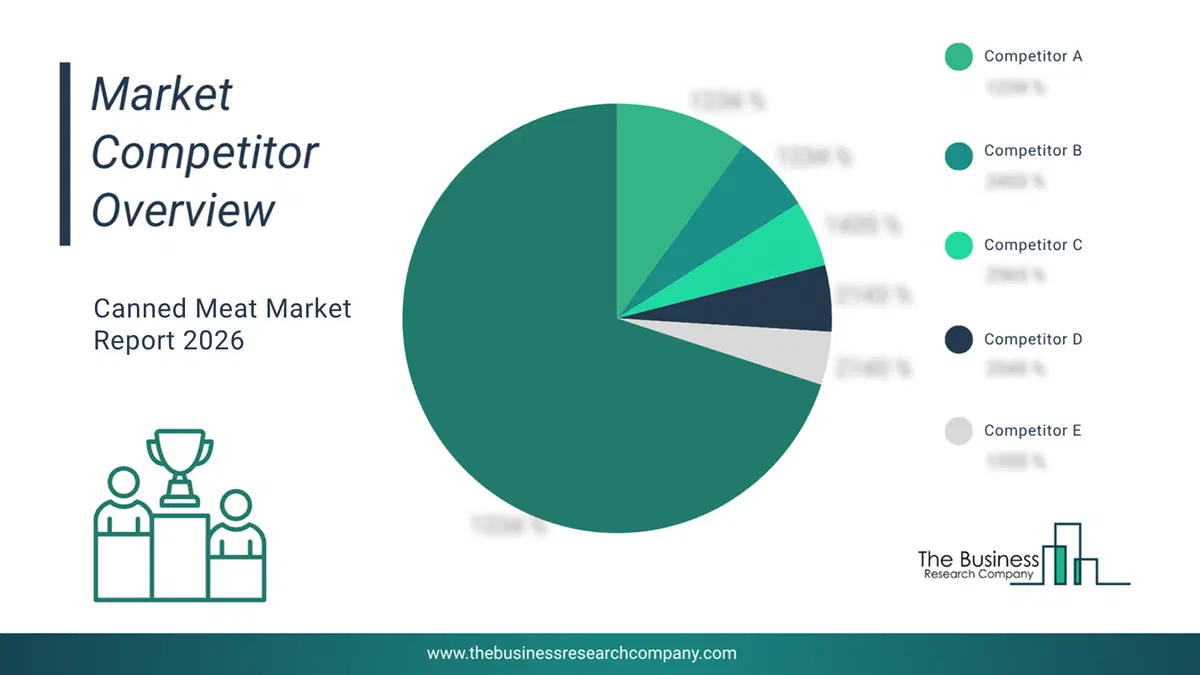
This chart is for illustrative purposes; the full report includes a detailed competitor analysis and comprehensive overview of the top 10 companies in the market.
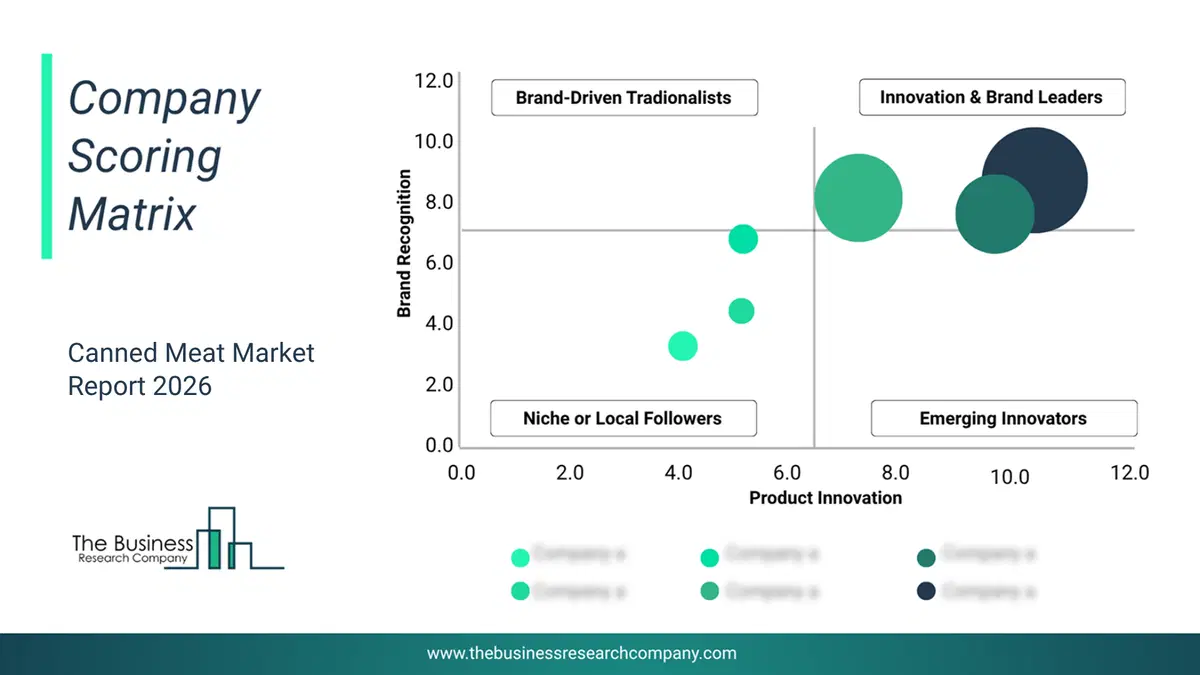
This chart maps companies by product innovation and brand strength, with bubble size indicating relative revenue, helping identify market leaders, challengers, and niche players. This is an illustrative chart; the full report provides a complete and accurate competitive analysis.
Global Canned Meat Market Trends and Insights
Major companies operating in the canned meat market are focusing on developing innovative solutions such as plant-based canned meat to meet the rising demand for sustainable, health-conscious, and ready-to-eat protein sources. Plant-based canned meat is a food product made entirely from vegetable-derived ingredients designed to replicate the taste, texture, and convenience of traditional canned meats, without animal-based components, cholesterol, or high saturated fat. For instance, in August 2023, Dongwon F&B, a South Korea–based food manufacturer, launched “My Plant Original”, a 100% plant-based canned ham-style product. The product is created from textured vegetable protein, wheat, soy protein, vegetable juice, and Eucheuma seaweed, providing a savory taste with over 40% fewer calories than conventional canned ham. It is shelf-stable at room temperature, offering the same convenience and long shelf-life as traditional canned meat, while also catering to vegan, vegetarian, and flexitarian consumers.What Are Latest Mergers And Acquisitions In The Canned Meat Market?
In August 2024, Conagra Brands, Inc., a US-based food company, acquired Sweetwood Smoke & Co. for an undisclosed amount. This acquisition aims to enhance its portfolio in the snacking category, focusing on meat snacks. This strategic move aims to leverage Sweetwood's expertise in smoked meats and strengthen Conagra's position in the growing market for protein-rich snacks. Sweetwood Smoke & Co. is a US-based wholesale food and beverage company.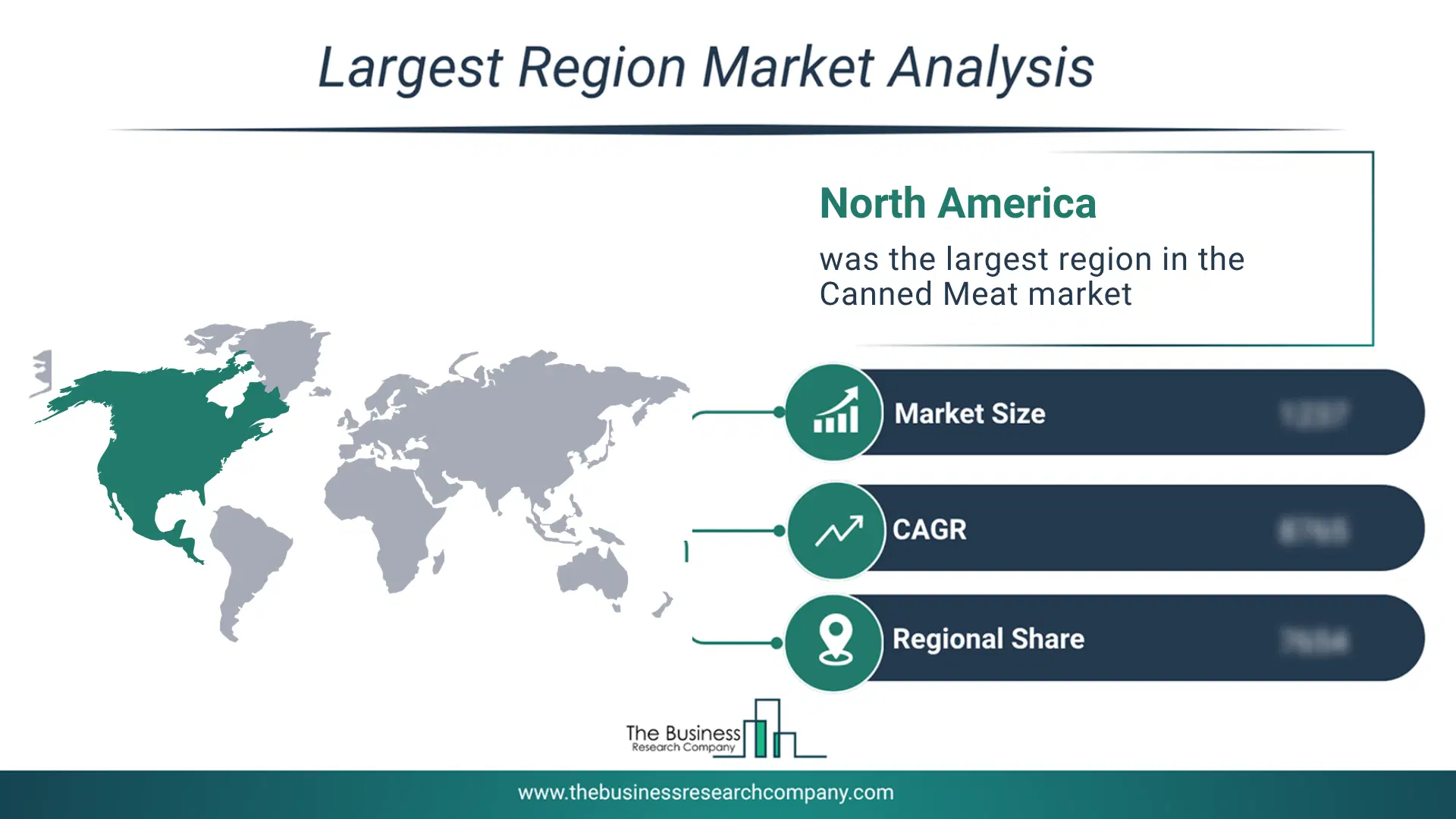
Regional Outlook
North America was the largest region in the canned meat market in 2025. Asia-pacific is expected to be the fastest-growing region in the forecast period. The regions covered in this market report are Asia-Pacific, South East Asia, Western Europe, Eastern Europe, North America, South America, Middle East and Africa. The countries covered in this market report are Australia, Brazil, China, France, Germany, India, Indonesia, Japan, Taiwan, Russia, South Korea, UK, USA, Italy, Spain, CanadaWhat Defines the Canned Meat Market?
The canned meat market consists of sales of whole muscles, meat stews, luncheon meat, sausages, sauces with meat pieces, and paste products. Values in this market are ‘factory gate’ values, that is the value of goods sold by the manufacturers or creators of the goods, whether to other entities (including downstream manufacturers, wholesalers, distributors and retailers) or directly to end customers. The value of goods in this market includes related services sold by the creators of the goods.How is Market Value Defined and Measured?
The market value is defined as the revenues that enterprises gain from the sale of goods and/or services within the specified market and geography through sales, grants, or donations in terms of the currency (in USD unless otherwise specified). The revenues for a specified geography are consumption values that are revenues generated by organizations in the specified geography within the market, irrespective of where they are produced. It does not include revenues from resales along the supply chain, either further along the supply chain or as part of other products.
This chart presents market attractiveness based on a quantitative evaluation of growth, competition, strategic alignment, and risk, offering a clear view of opportunity areas for decision-making. This chart is for illustrative purposes; the full report contains the complete analysis.

This chart highlights the Total Addressable Market (TAM) by estimating the maximum revenue opportunity using an assumption-driven approach, supporting strategic planning and opportunity sizing across markets. The chart is illustrative; the full report provides a more comprehensive analysis.
What Key Data and Analysis Are Included in the Canned Meat Market Report 2026?
The canned meat market research report is one of a series of new reports from The Business Research Company that provides market statistics, including industry global market size, regional shares, competitors with the market share, detailed market segments, market trends and opportunities, and any further data you may need to thrive in the canned meat industry. The market research report delivers a complete perspective of everything you need, with an in-depth analysis of the current and future state of the industry.Canned Meat Market Report Forecast Analysis
| Report Attribute | Details |
|---|---|
| Market Size Value In 2026 | $19.36 billion |
| Revenue Forecast In 2030 | $26.04 billion |
| Growth Rate | CAGR of 7.1% from 2026 to 2030 |
| Base Year For Estimation | 2025 |
| Actual Estimates/Historical Data | 2020-2025 |
| Forecast Period | 2026 - 2030 |
| Market Representation | Revenue in USD Billion and CAGR from 2026 to 2030 |
| Segments Covered | Product Type, Application, Distribution Channel |
| Regional Scope | Asia-Pacific, Western Europe, Eastern Europe, North America, South America, Middle East, Africa |
| Country Scope | The countries covered in the report are Australia, Brazil, China, France, Germany, India, Indonesia, Japan, Taiwan, Russia, South Korea, UK, USA, Canada, Italy, Spain. |
| Key Companies Profiled | Xiamen Gulong Canned Food Co. Ltd., Tyson Foods Inc., Wild Planet Foods Inc., JBS S.A., Crown Prince Inc., Bar Harbor Foods Inc., Zishan Group Co. Ltd., Libby's Brand Holding Inc., Dalian Lixiang Food Co. Ltd., Hormel Foods Corporation, American Tuna Inc., Bumble Bee Seafoods LLC, Maruha Nichiro Corporation, Vion Food Group NV, Conagra Brands Inc., Thai Union Group, Trident Seafoods Corporation, Bolton Group Ltd., Princes Group Ltd., Cargill Meat Solutions Corp., Keystone Foods LLC, Pinnacle Foods Inc., BRF S.A. |
| Customization Scope | Request for Customization |
| Pricing And Purchase Options | Explore Purchase Options |