
Cloud Spending By Small And Medium-Sized Businesses (SMBs) Market Report 2026
Global Outlook – By Type (Software As A Service (SaaS), Infrastructure As A Service (IaaS), Platform As A Service (PaaS)), By Deployment Type (Public Cloud, Private Cloud, Hybrid Cloud), By Organization Size (Small Enterprises, Medium Enterprises), By Application (Information Technology (IT), Enterprise, Cloud-Based Information Governance, Other Applications), By Industry Vertical (Retail And E-commerce, Healthcare And Life Sciences, Banking, Financial Services, And Insurance (BFSI), Manufacturing, Information Technology (IT) And Telecommunications, Education, Media And Entertainment, Government And Public Sector, Other Industry Verticals) – Market Size, Trends, Strategies, and Forecast to 2030
Cloud Spending By Small And Medium-Sized Businesses (SMBs) Market Overview
• Cloud Spending By Small And Medium-Sized Businesses (SMBs) market size has reached to $190.35 billion in 2025 • Expected to grow to $540.49 billion in 2030 at a compound annual growth rate (CAGR) of 23.2% • Growth Driver: Growing Awareness Of Cybersecurity Threats Driving The Market Growth Due To Increasing Cybercrime Complaints • North America was the largest region in 2025 and Asia-Pacific is the fastest growing region.Market Gains By 2030 – Top Opportunities By Segment
Market Gain identifies the most promising market opportunities by highlighting the segments or products expected to generate the highest incremental revenue growth over the next five years.
What Is Covered Under Cloud Spending By Small And Medium-Sized Businesses (SMBs) Market?
Cloud spending by small and medium-sized businesses (SMBs) is the total investment these businesses make in cloud computing services, including infrastructure, software, storage, and platform solutions delivered over the internet. It reflects the adoption of cloud technology to support business processes, streamline operations, and reduce reliance on traditional on-premises systems. Investments in cloud services enable SMBs to enhance operational efficiency, scale resources dynamically, and respond rapidly to evolving business needs and market conditions. The main types of cloud spending by small and medium-sized businesses (SMBs) are software as a service (SaaS), infrastructure as a service (IaaS), and platform as a service (PaaS). Software as a service (SaaS) is a cloud-based model where users access applications over the internet, managed by a provider, without installation or maintenance. They are deployed through various deployment types such as public cloud, private cloud, and hybrid cloud, and are used by organizations of different sizes, including small enterprises and medium enterprises. They are applied for various applications including information technology (IT), enterprise operations, cloud-based information governance, and other applications, and are utilized by industry verticals including retail and e-commerce, healthcare and life sciences, banking, financial services, and insurance (BFSI), manufacturing, information technology (IT) and telecommunications, education, media and entertainment, government and public sector, and other industry verticals.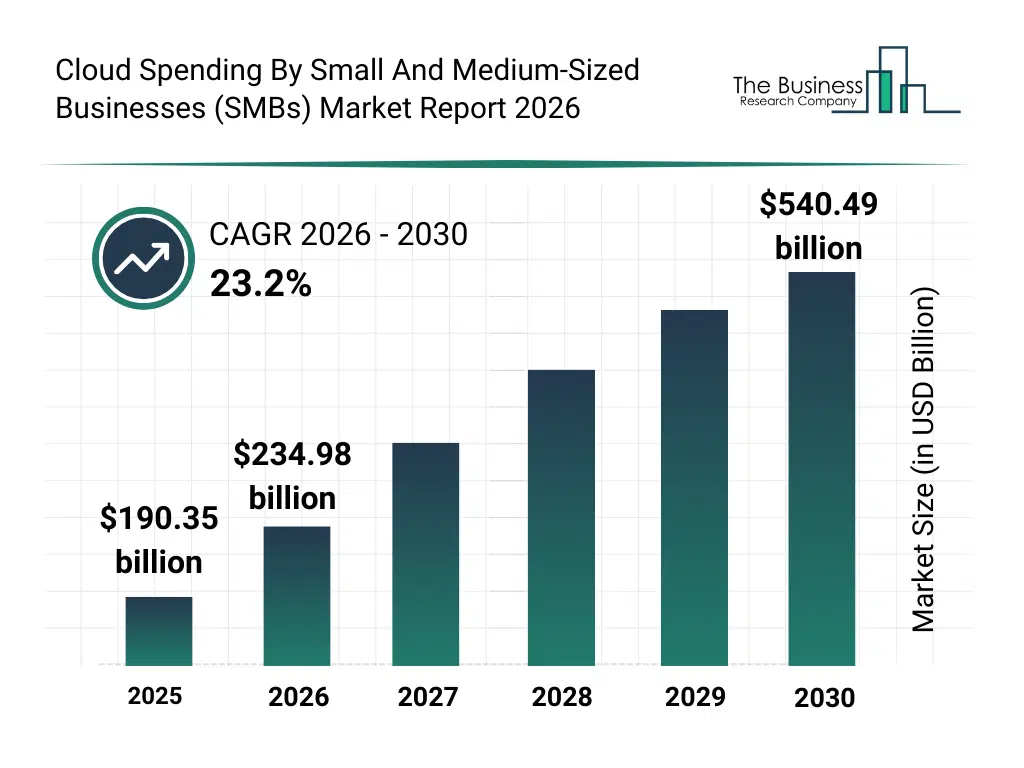
What Is The Cloud Spending By Small And Medium-Sized Businesses (SMBs) Market Size and Share 2026?
The cloud spending by small and medium-sized businesses (smbs) market size has grown exponentially in recent years. It will grow from $190.35 billion in 2025 to $234.98 billion in 2026 at a compound annual growth rate (CAGR) of 23.4%. The growth in the historic period can be attributed to increasing affordability of cloud services for SMBs, need to reduce on-premises IT maintenance costs, growth of e-commerce and digital customer engagement, rise of remote work and online collaboration tools, increasing availability of subscription-based software.What Is The Cloud Spending By Small And Medium-Sized Businesses (SMBs) Market Growth Forecast?
The cloud spending by small and medium-sized businesses (smbs) market size is expected to see exponential growth in the next few years. It will grow to $540.49 billion in 2030 at a compound annual growth rate (CAGR) of 23.2%. The growth in the forecast period can be attributed to greater adoption of AI-enabled SaaS tools by SMBs, higher investment in cloud security and compliance, expansion of industry-specific cloud solutions for SMBs, growth of cloud-based backup and disaster recovery, increased demand for scalable infrastructure as SMBs grow. Major trends in the forecast period include smb migration to saas productivity suites, cost-optimized cloud adoption and finops for smbs, managed cloud services for resource-constrained teams, cybersecurity spend growth in smb cloud budgets, adoption of cloud-based analytics and automation.
Global Cloud Spending By Small And Medium-Sized Businesses (SMBs) Market Segmentation
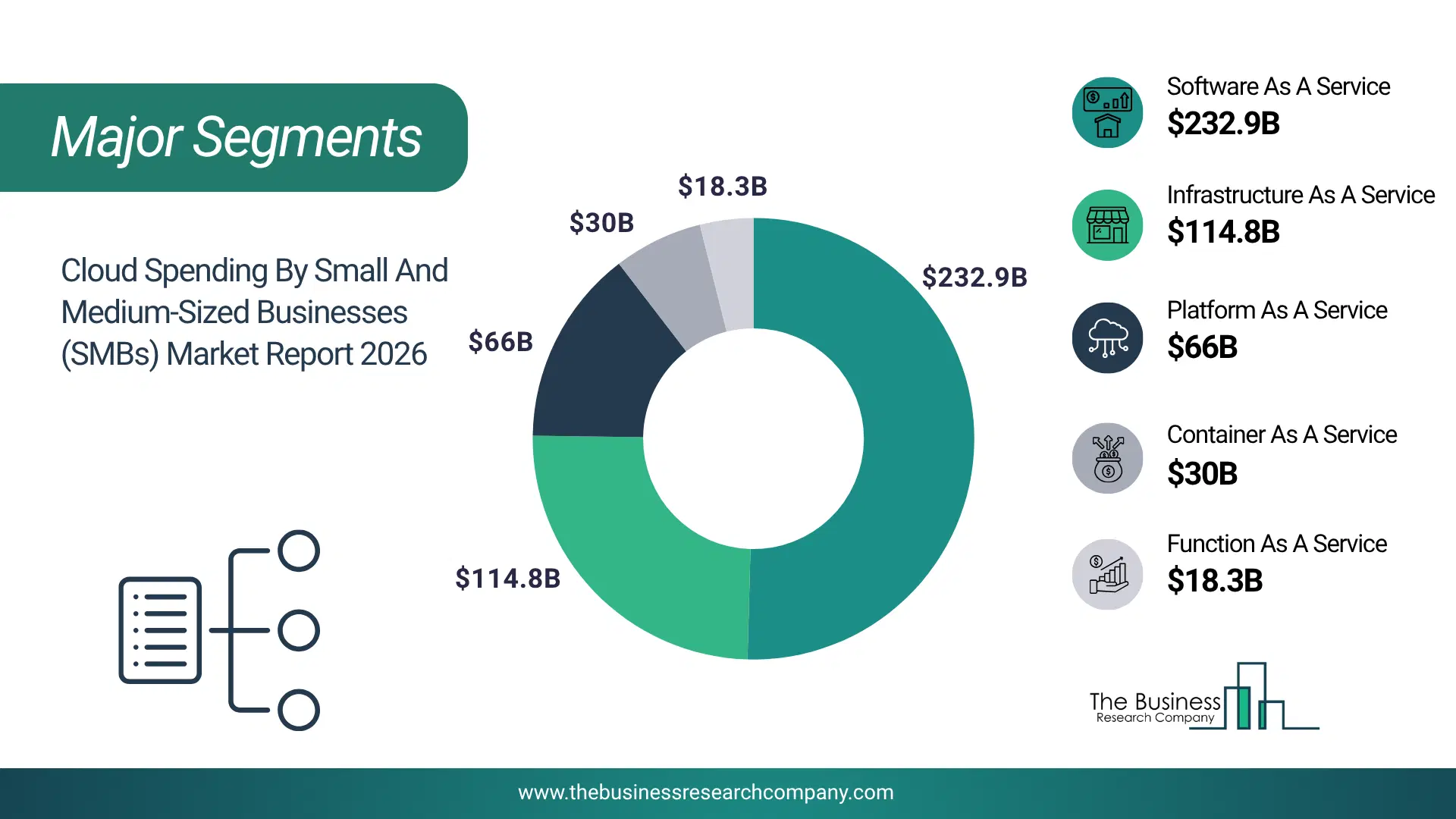
1) By Type: Software As A Service (SaaS), Infrastructure As A Service (IaaS), Platform As A Service (PaaS) 2) By Deployment Type: Public Cloud, Private Cloud, Hybrid Cloud 3) By Organization Size: Small Enterprises, Medium Enterprises 4) By Application: Information Technology (IT), Enterprise, Cloud-Based Information Governance, Other Applications 5) By Industry Vertical: Retail And E-commerce, Healthcare And Life Sciences, Banking, Financial Services, And Insurance (BFSI), Manufacturing, Information Technology (IT) And Telecommunications, Education, Media And Entertainment, Government And Public Sector, Other Industry Verticals Subsegments: 1) By Software As A Service (SaaS): Customer Relationship Management (CRM) Software, Enterprise Resource Planning (ERP) Software, Collaboration And Communication Software, Content Management Software 2) By Infrastructure As A Service (IaaS): Compute Hosting, Storage Hosting, Networking Hosting, Backup And Recovery Hosting 3) By Platform As A Service (PaaS): Application Development Platforms, Database Management Platforms, Integration Platforms, Analytics Platforms The top segments in the cloud spending by small and medium-sized businesses (smbs) market will be: • Software As A Service will reach $232.86 billion by 2030. • Infrastructure As A Service will reach $114.77 billion by 2030. • Platform As A Service will reach $65.95 billion by 2030. • Container As A Service will reach $30 billion by 2030. • Function As A Service will reach $18.25 billion by 2030.What Are The Drivers Of The Cloud Spending By Small And Medium-Sized Businesses (SMBs) Market?
The growing awareness of cybersecurity threats is expected to propel the growth of cloud spending by small and medium-sized businesses (SMBs) market going forward. Cybersecurity threats are malicious attacks targeting digital systems, networks, and data that can compromise organizational operations and sensitive information. Awareness of cybersecurity threats is rising due to the increasing frequency of attacks and their growing financial impact, pushing organizations to adopt stronger security measures. Cloud spending by small and medium-sized businesses (SMBs) supports cybersecurity threat mitigation by enabling access to advanced, scalable security tools and managed services that would otherwise be cost-prohibitive, thereby strengthening data protection, compliance, and resilience against evolving cyber risks. For instance, in November 2023, according to the Australian Signals Directorate, an Australian-based government agency, Australia experienced a significant surge in cyber threats during 2022–23, with nearly 94,000 cybercrime reports submitted, marking a 23% increase from the previous year, while the cost of cybercrime to businesses rose by 14% compared to the previous financial year. Therefore, the growing awareness of cybersecurity threats is driving the growth of the cloud spending by small and medium-sized businesses (SMBs) industry. The growth in remote and hybrid work is expected to propel the growth of the cloud spending by small and medium-sized businesses (SMBs) market going forward. Remote and hybrid work refers to flexible working models where employees perform their job duties either entirely outside a traditional office (remote) or split their time between working remotely and on-site (hybrid). Remote and hybrid work refer to modern work arrangements where employees perform their jobs outside a traditional office, with remote work done entirely from another location (like home) and hybrid work combining both in-office and remote work. Remote and hybrid work support increased cloud spending by small and medium-sized businesses (SMBs) as they rely on scalable, flexible, and secure digital solutions to enable collaboration, data access, and business continuity from anywhere. For instance, in February 2023, according to the Office for National Statistics, a UK-based government department, between September 2022 and January 2023, 16% of employed adults worked entirely from home, while 28% split their time between remote work and commuting. Overall, 44% of adults worked from home either fully or in a hybrid arrangement, whereas 56% worked exclusively at their workplace during this period. Therefore, the growth in remote and hybrid work is driving the growth of the cloud spending by small and medium-sized businesses (SMBs) industry.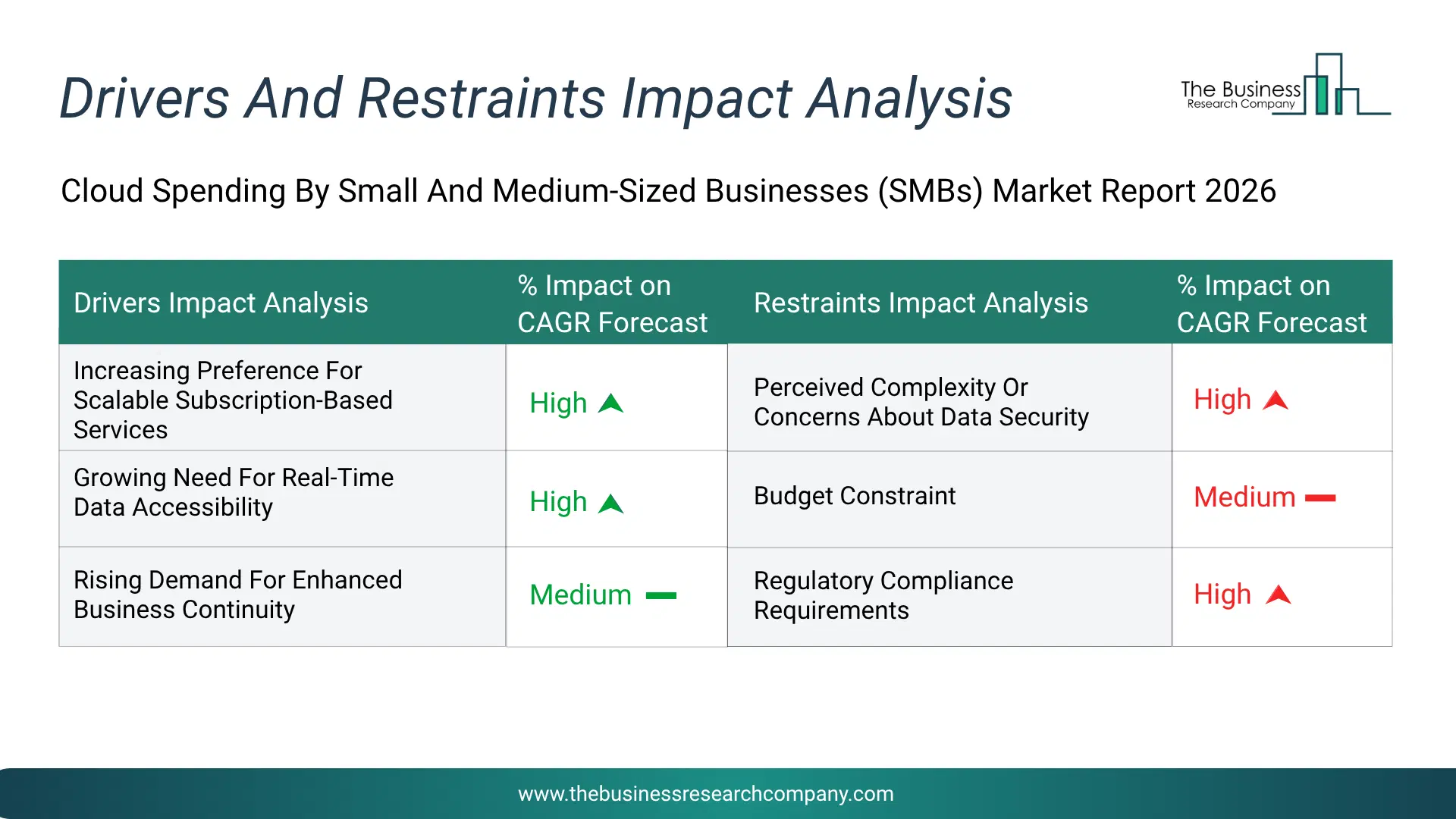
Infographic Chart Showing Key Market Drivers Analysis And Restraints For Cloud Spending By Small And Medium-Sized Businesses (Smbs) Market
The chart presents an impact analysis of key drivers and restraints, quantifying their relative influence on the market's growth rate and helping assess the balance between growth enablers and limiting factors. This chart offers a high-level perspective; the full report contains more detailed insights.
How Will The Drivers Impact Growth In The Global Cloud Spending By Small And Medium-Sized Businesses (SMBs) Market?
• Increasing Preference For Scalable Subscription-Based Services (High) – During the forecast period, the increasing preference for scalable subscription-based services is expected to become a key growth driver for the cloud spending by small and medium-sized businesses (smbs) market by 2030. The growing demand for scalable, subscription-based solutions is accelerating cloud spending among small and medium-sized businesses (smbs), as it enables access to advanced technologies without significant upfront capital expenditure. These models offer the flexibility to adjust resources according to changing business needs, ensuring cost efficiency and operational agility. Additionally, subscription pricing supports predictable monthly budgeting while minimizing reliance on extensive in-house it infrastructure and maintenance. • Growing Need For Real-Time Data Accessibility (High) – During the forecast period, the growing need for real-time data accessibility is expected to emerge as a major factor driving the expansion of the cloud spending by small and medium-sized businesses (smbs) market by 2030. The increasing demand for real-time data access is a major driver of the market, as it supports quicker decision-making and greater operational flexibility. Cloud platforms enable smbs to retrieve, modify, and share business information instantly from any location, facilitating remote work and seamless collaboration. This immediate visibility improves inventory management, customer engagement, and resource planning. Additionally, cloud solutions allow smooth integration of data across multiple applications, boosting overall efficiency and productivity. As competitive pressures intensify, the need for timely, data-driven insights continues to encourage smbs to invest in scalable cloud technologies. • Rising Demand For Enhanced Business Continuity (Medium) – During the forecast period, the rising demand for enhanced business continuity is expected to act as a key growth catalyst for the cloud spending by small and medium-sized businesses (smbs) market by 2030. The increasing focus on stronger business continuity is accelerating cloud spending among small and medium-sized businesses (smbs), as they aim to maintain uninterrupted operations during events such as system outages, cyber incidents, or natural disasters. Cloud platforms provide automated backups, disaster recovery capabilities, and remote access to critical systems, significantly reducing downtime and data loss risks. Their scalable infrastructure and flexible storage options help smbs sustain productivity during disruptions. Moreover, cloud-based collaboration tools support distributed teams, further strengthening operational resilience.How Will The Restraints Impact Growth In The Global Cloud Spending By Small And Medium-Sized Businesses (SMBs) Market?
• Perceived Complexity Or Concerns About Data Security (High) – During the forecast period, the perceived complexity and concerns about data security restrain cloud spending by small and medium-sized businesses (smbs) as many lack the technical expertise to manage cloud environments effectively. They often fear data breaches, unauthorized access, or loss of sensitive information stored on third-party servers. Compliance with data protection regulations can also seem complicated and costly. Additionally, uncertainty about vendor reliability and data ownership discourages adoption. These factors make smbs hesitant to fully migrate to or expand their cloud infrastructure investments. • Budget Constraint (Medium) – During the forecast period, the budget constraints act as a major restraining factor for cloud spending by small and medium-sized businesses (smbs) because these firms often operate with limited financial resources. The recurring costs of cloud subscriptions, data storage, and advanced analytics tools can strain their budgets. Many smbs prioritize short-term operational expenses over long-term digital investments. Additionally, unexpected costs related to data migration, cybersecurity, and scalability can discourage cloud adoption. As a result, financial limitations often delay or restrict the extent of cloud implementation among smbs. • Regulatory Compliance Requirements (High) – During the forecast period, the regulatory compliance requirements act as a restraint for the cloud spending by small and medium-sized businesses (smbs) market because they increase complexity and cost in adopting cloud solutions. Many smbs struggle to meet strict data protection, privacy, and industry-specific regulations such as gdpr or hipaa, which demand additional investments in secure infrastructure and compliance management. These regulations can delay cloud migration and limit the use of certain global cloud providers. Compliance audits and documentation further strain limited smb resources. As a result, regulatory burdens often discourage smaller firms from fully embracing cloud technologies.Key Players In The Global Cloud Spending By Small And Medium-Sized Businesses (SMBs) Market
Major companies operating in the cloud spending by small and medium-sized businesses (smbs) market are Amazon.com Inc., Alphabet Inc., Microsoft Corporation, Alibaba Group Holding Limited, AT&T Inc., Tencent Holdings Limited, International Business Machines Corporation, Oracle Corporation, Salesforce Inc., SAP SE, Hewlett Packard Enterprise Company, Adobe Inc., Workday Inc., Atlassian Corporation Plc, AkamAI Technologies Inc., Zoho Corporation Pvt. Ltd., Dropbox Inc., DigitalOcean Inc., Vultr Holdings LLC, Hetzner Online GmbH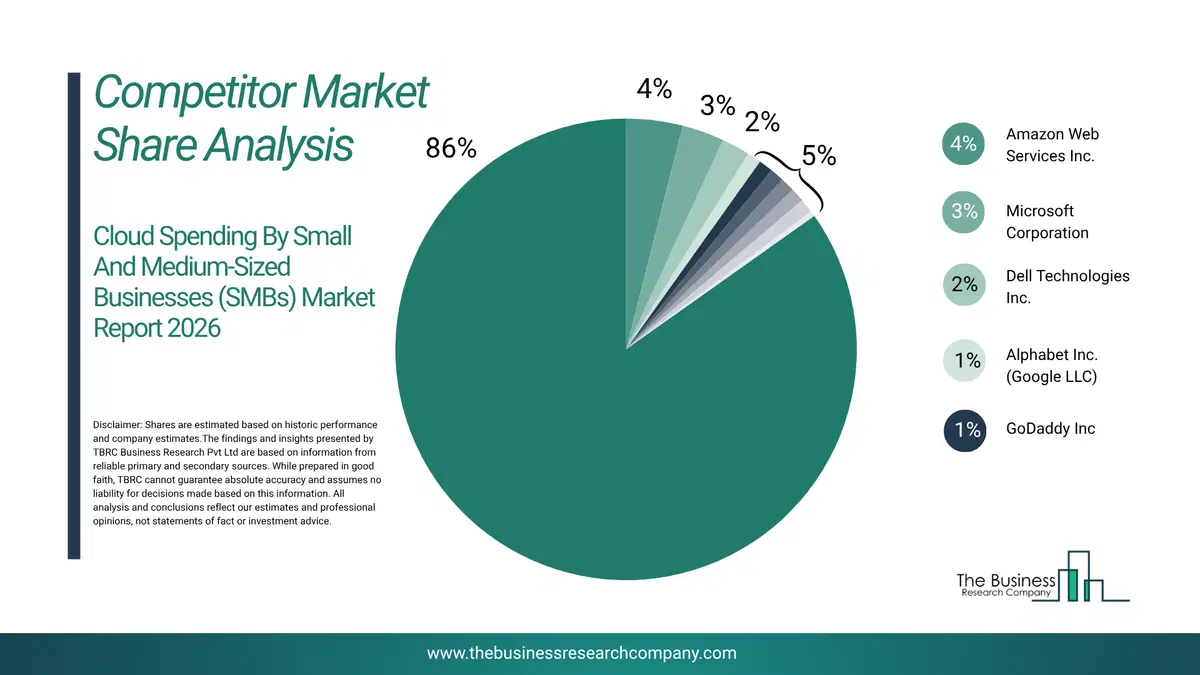
This chart is for illustrative purposes; the full report includes a detailed competitor analysis and comprehensive overview of the top 10 companies in the market.
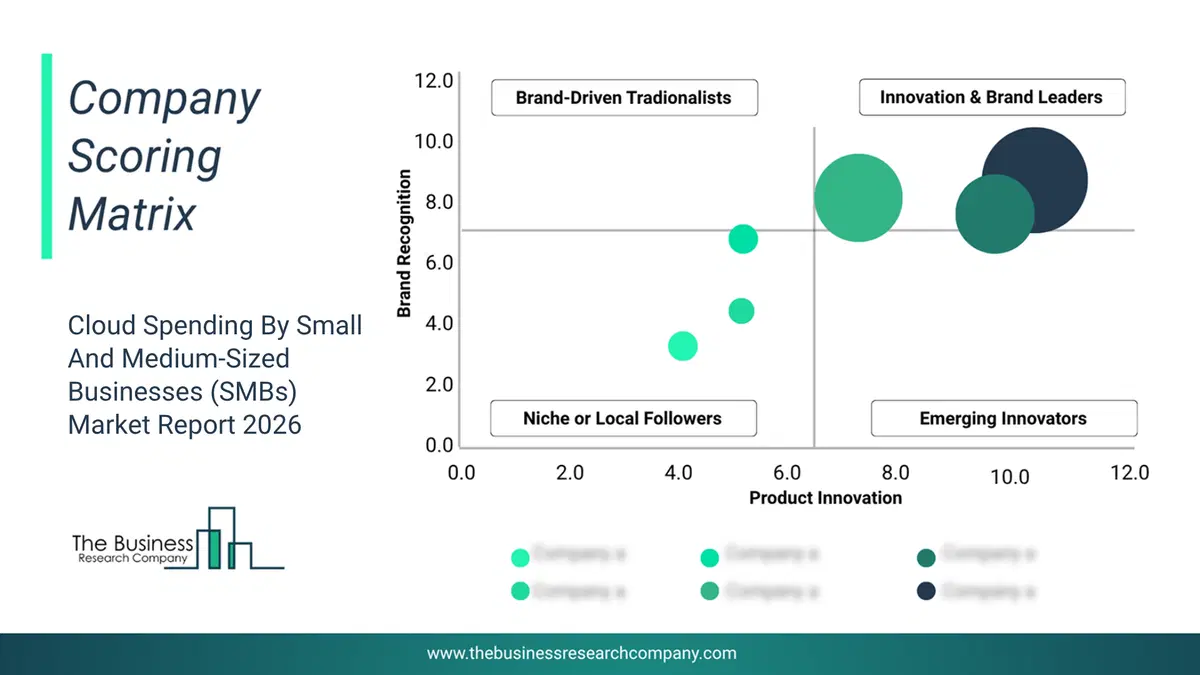
This chart maps companies by product innovation and brand strength, with bubble size indicating relative revenue, helping identify market leaders, challengers, and niche players. This is an illustrative chart; the full report provides a complete and accurate competitive analysis.
What Are Latest Mergers And Acquisitions In The Cloud Spending By Small And Medium-Sized Businesses (SMBs) Market?
In June 2024, DataStrike, a US-based company that offers database management acquired MiCORE for an undisclosed amount. With this acquisition, DataStrike aimed to expand its managed data infrastructure and cloud services capabilities, strengthening its position as a database and cloud solutions for small- and mid-sized businesses (SMBs). MiCORE is a US-based company that offers cloud spending for small- and mid-sized businesses (SMBs).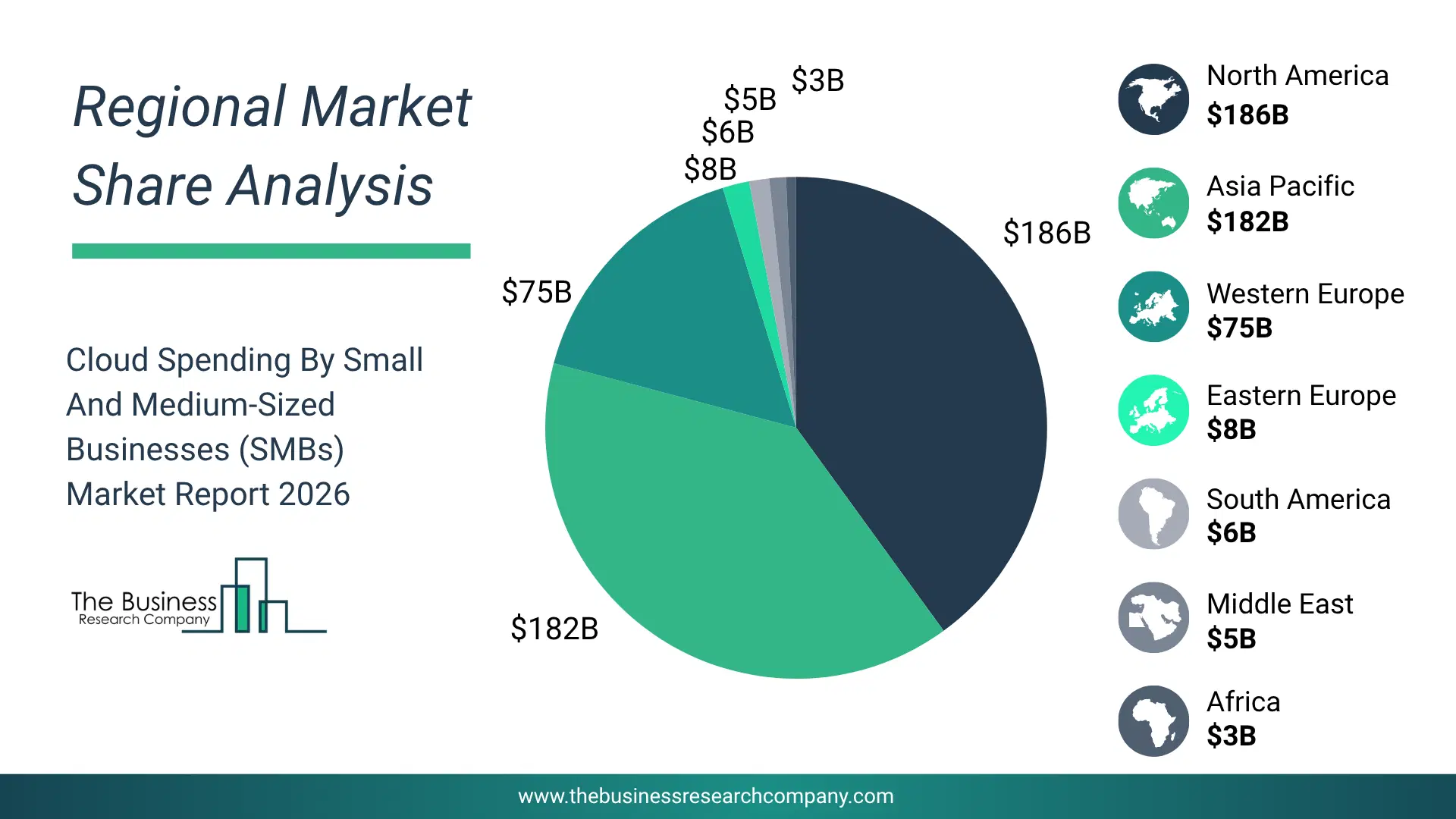
Regional Insights
North America was the largest region in the cloud spending by small and medium-sized businesses (SMBs) market in 2025. Asia-Pacific is expected to be the fastest-growing region in the forecast period. The regions covered in this market report are Asia-Pacific, South East Asia, Western Europe, Eastern Europe, North America, South America, Middle East, Africa. The countries covered in this market report are Australia, Brazil, China, France, Germany, India, Indonesia, Japan, Taiwan, Russia, South Korea, UK, USA, Canada, Italy, Spain.What Defines the Cloud Spending By Small And Medium-Sized Businesses (SMBs) Market?
The cloud spending by small and medium-sized businesses (SMBs) market consists of revenues earned by entities by providing services such as cloud migration, cloud security services, cloud backup and recovery, cloud monitoring, cloud optimization, disaster recovery as a service (draas), and desktop as a service (daas). The market value includes the value of related goods sold by the service provider or included within the service offering. The cloud spending by small and medium-sized businesses (SMBs) market also includes sales of cloud storage, virtual machines, container platforms, cloud databases, productivity software, cloud analytics tools, and cloud networking equipment. Values in this market are ‘factory gate’ values, that is the value of goods sold by the manufacturers or creators of the goods, whether to other entities (including downstream manufacturers, wholesalers, distributors and retailers) or directly to end customers. The value of goods in this market includes related services sold by the creators of the goods.How is Market Value Defined and Measured?
The market value is defined as the revenues that enterprises gain from the sale of goods and/or services within the specified market and geography through sales, grants, or donations in terms of the currency (in USD unless otherwise specified). The revenues for a specified geography are consumption values that are revenues generated by organizations in the specified geography within the market, irrespective of where they are produced. It does not include revenues from resales along the supply chain, either further along the supply chain or as part of other products.
This chart presents market attractiveness based on a quantitative evaluation of growth, competition, strategic alignment, and risk, offering a clear view of opportunity areas for decision-making. This chart is for illustrative purposes; the full report contains the complete analysis.

This chart highlights the Total Addressable Market (TAM) by estimating the maximum revenue opportunity using an assumption-driven approach, supporting strategic planning and opportunity sizing across markets. The chart is illustrative; the full report provides a more comprehensive analysis.
What Key Data and Analysis Are Included in the Cloud Spending By Small And Medium-Sized Businesses (SMBs) Market Report 2026?
The cloud spending by small and medium-sized businesses (smbs) market research report is one of a series of new reports from The Business Research Company that provides market statistics, including industry global market size, regional shares, competitors with the market share, detailed market segments, market trends and opportunities, and any further data you may need to thrive in the cloud spending by small and medium-sized businesses (smbs) industry. The market research report delivers a complete perspective of everything you need, with an in-depth analysis of the current and future state of the industry.Cloud Spending By Small And Medium-Sized Businesses (SMBs) Market Report Forecast Analysis
| Report Attribute | Details |
|---|---|
| Market Size Value In 2026 | $234.98 billion |
| Revenue Forecast In 2030 | $540.49 billion |
| Growth Rate | CAGR of 23.2% from 2026 to 2030 |
| Base Year For Estimation | 2025 |
| Actual Estimates/Historical Data | 2020-2025 |
| Forecast Period | 2026 - 2030 |
| Market Representation | Revenue in USD Billion and CAGR from 2026 to 2030 |
| Segments Covered | Type, Deployment Type, Organization Size, Application, Industry Vertical |
| Regional Scope | Asia-Pacific, Western Europe, Eastern Europe, North America, South America, Middle East, Africa |
| Country Scope | The countries covered in the report are Australia, Brazil, China, France, Germany, India, ... |
| Key Companies Profiled | Amazon.com Inc., Alphabet Inc., Microsoft Corporation, Alibaba Group Holding Limited, AT&T Inc., Tencent Holdings Limited, International Business Machines Corporation, Oracle Corporation, Salesforce Inc., SAP SE, Hewlett Packard Enterprise Company, Adobe Inc., Workday Inc., Atlassian Corporation Plc, AkamAI Technologies Inc., Zoho Corporation Pvt. Ltd., Dropbox Inc., DigitalOcean Inc., Vultr Holdings LLC, Hetzner Online GmbH |
| Customization Scope | Request for Customization |
| Pricing And Purchase Options | Explore Purchase Options |