
Coffee Shops Market Report 2026
Global Outlook – By Type (Franchise, Independent, Other Types), By City Size (Metropolitan, Urban, Rural), By Application (Beverage Sales, Food Sales, Other Applications) – Market Size, Trends, Strategies, and Forecast to 2030
Coffee Shops Market Overview
• Coffee Shops market size has reached to $89.17 billion in 2025 • Expected to grow to $123.43 billion in 2030 at a compound annual growth rate (CAGR) of 6.7% • Growth Driver: The Rise Of Coffee Consumption Is Fueling The Growth Of The Market Due To Its Increasing Role In Daily Wellness And Lifestyle Habits • Market Trend: Development In European-Style Coffee Shops Elevate Customer Experience In Modern Café Culture • North America was the largest region in 2025 and Asia-Pacific is the fastest growing region.Market Gains By 2030 – Top Opportunities By Segment
Market Gain identifies the most promising market opportunities by highlighting the segments or products expected to generate the highest incremental revenue growth over the next five years.
What Is Covered Under Coffee Shops Market?
A coffee shop is a casual dining establishment that primarily serves coffee, other beverages, light snacks, pastries, and sometimes simple meals. It is typically a relaxed and informal space where people can sit, socialize, work, or read, often offering comfortable seating and free Wi-Fi. Coffee shops vary in style from large commercial chains to small independent cafés and are commonly found in urban areas, business districts, shopping centers, and near educational institutions. The main types of coffee shops are franchise, independent, and others. Franchise coffee shops operate under a unified brand and model, offering consistency, brand recognition, and support to individual owners through a proven business system. It operates in various city sizes, such as metropolitan, urban, and rural, for several applications, including beverage sales, food sales, and others.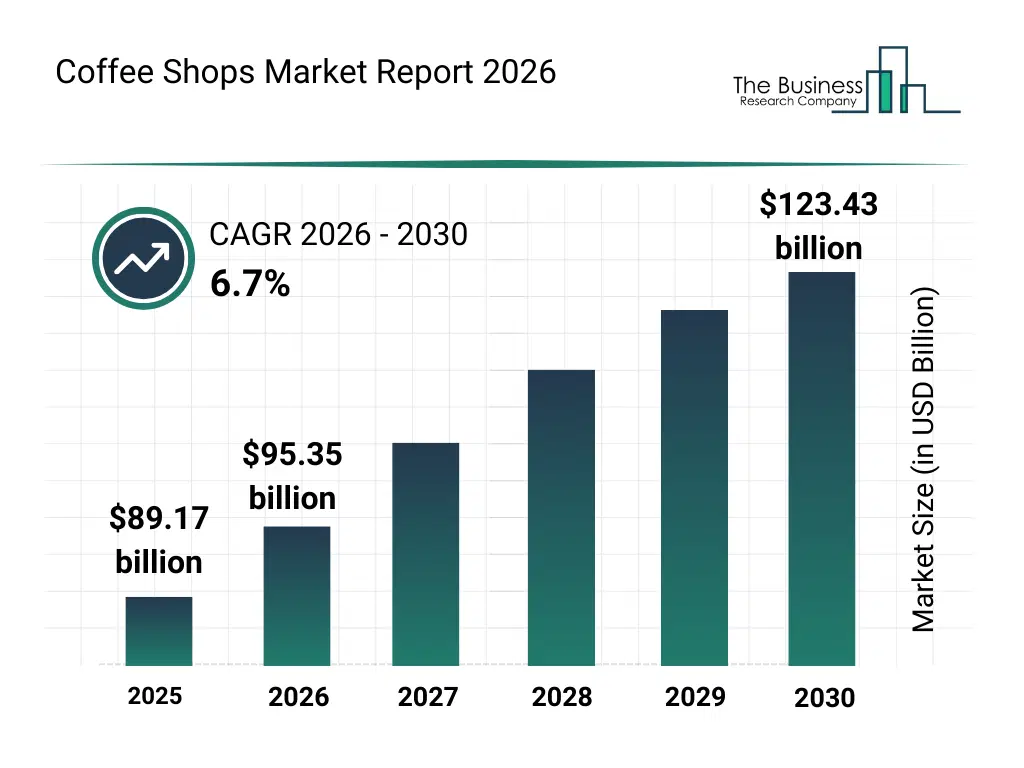
What Is The Coffee Shops Market Size and Share 2026?
The coffee shops market size has grown strongly in recent years. It will grow from $89.17 billion in 2025 to $95.35 billion in 2026 at a compound annual growth rate (CAGR) of 6.9%. The growth in the historic period can be attributed to urban lifestyle expansion, growth of coffee consumption culture, rise in café based socializing, expansion of international coffee chains, increasing disposable income.What Is The Coffee Shops Market Growth Forecast?
The coffee shops market size is expected to see strong growth in the next few years. It will grow to $123.43 billion in 2030 at a compound annual growth rate (CAGR) of 6.7%. The growth in the forecast period can be attributed to growth of premium coffee demand, expansion of remote working culture, rising demand for sustainable products, digital loyalty programs adoption, growth in metropolitan populations. Major trends in the forecast period include expansion of specialty beverage menus, growth of café as work and social spaces, rising adoption of digital ordering and payments, increased focus on sustainable coffee sourcing, growth of franchise and chain coffee shops.
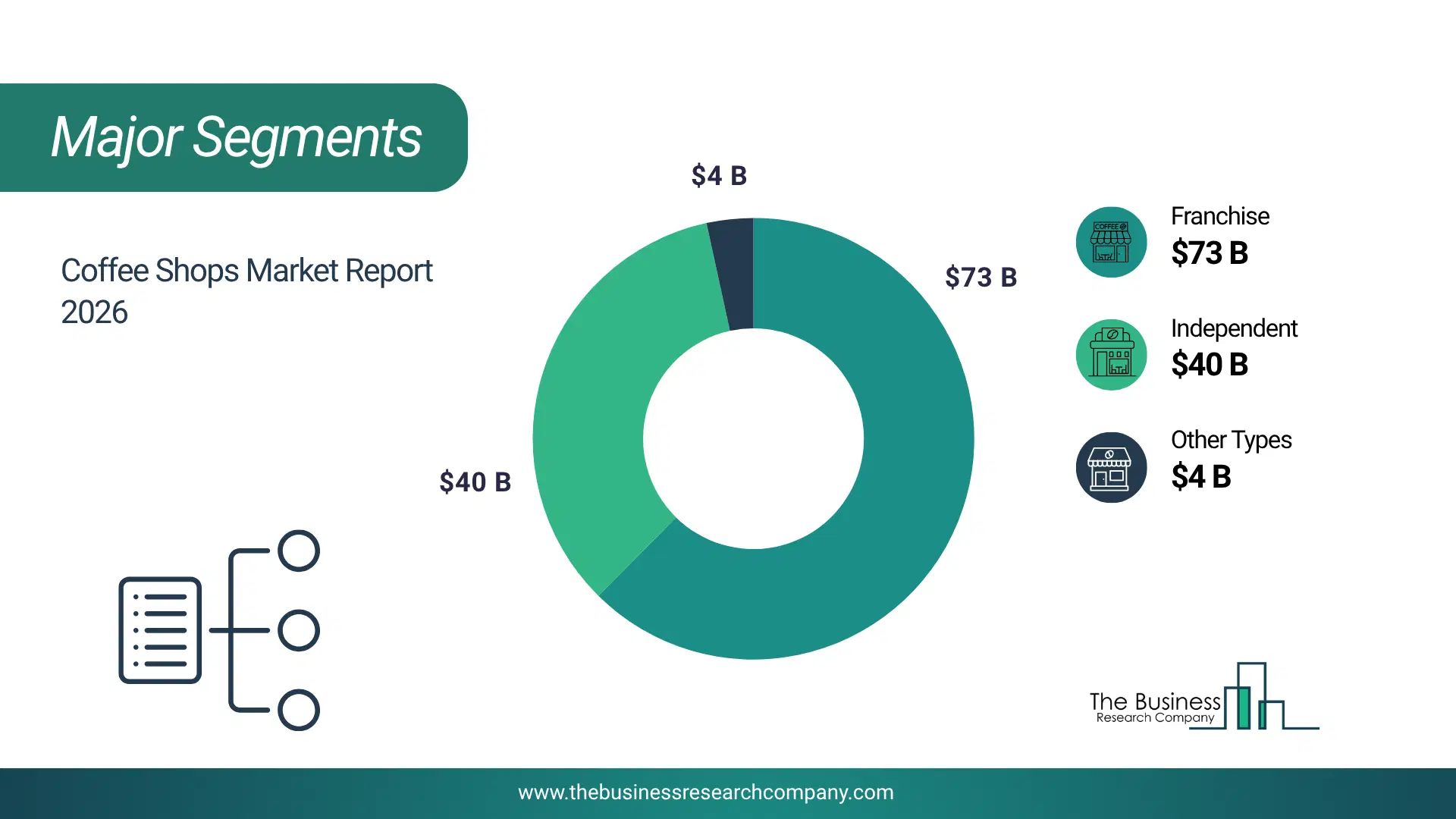
Global Coffee Shops Market Segmentation
1) By Type: Franchise, Independent, Other Types 2) By City Size: Metropolitan, Urban, Rural 3) By Application: Beverage Sales, Food Sales, Other Applications Subsegments: 1) By Franchise: International Chains, Domestic Chains, Drive-Thru Coffee Shops 2) By Independent: Artisan Coffee Shops, Themed Or Concept Cafes, Pop-Up Or Mobile Coffee Units 3) By Other Types: Coffee Kiosks, Co-Working Cafes, Bookstore Or Library Cafes The top segments in the software development tools market will be: • Integrated Development Environments (IDEs) will reach $5.81 Billion by 2030. • Testing Tools will reach $3.65 Billion by 2030. • Project Management Tools will reach $2.39 Billion by 2030. • Debugging Tools will reach $2.28 Billion by 2030. • Version Control Systems (VCS) will reach $1.93 Billion by 2030. The top segments in the coffee shops market will be: • Franchise will reach $72.93 Billion by 2030. • Independent will reach $40.29 Billion by 2030. • Other Types will reach $4.29 Billion by 2030.What Is The Driver Of The Coffee Shops Market?
The rise in coffee consumption is expected to propel the growth of the coffee shop market going forward. Coffee consumption refers to the increasing intake and cultural integration of coffee beverages among people of various ages, lifestyles, and regions worldwide. The rising coffee consumption is driven by its growing appeal as a functional beverage that supports energy and wellness in daily routines. Increased coffee consumption boosts coffee shops by driving higher demand, attracting more customers, and growing sales of both coffee and related products. It also promotes a strong coffee culture, making coffee shops popular social and work-friendly spaces, which supports their growth and long-term success. For instance, in June 2024, according to Tridge Co., Ltd., a South Korea-based agri-food intelligence and global trade solutions company, between October 2023 and September 2024, global coffee demand reached 177 million 60 kg bags, reflecting a 2.2% increase compared to the previous period. Therefore, the rising coffee consumption is driving the growth of the coffee shop industry.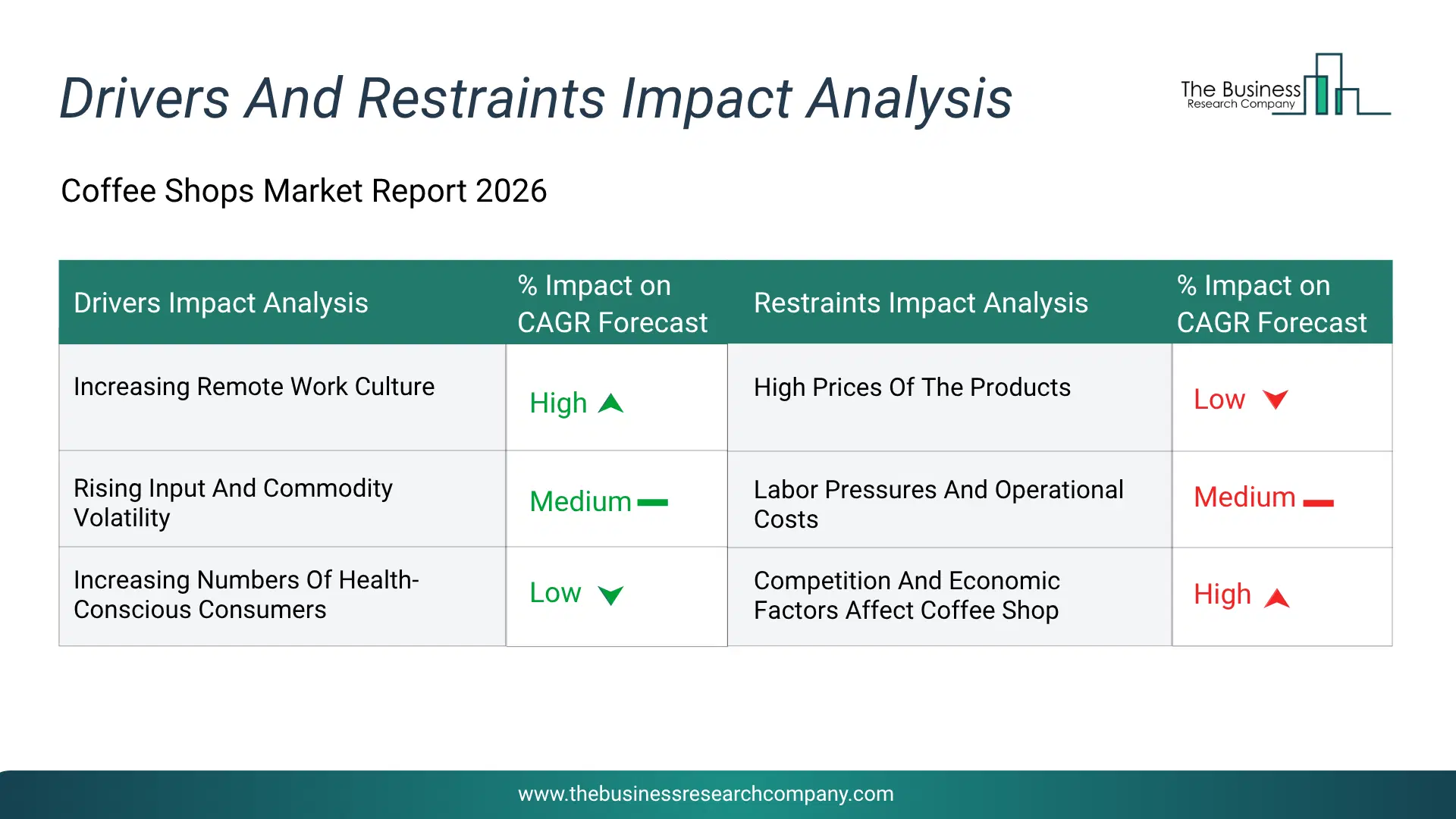
Infographic Chart Showing Key Market Drivers Analysis And Restraints For Coffee Shops Market
The chart presents an impact analysis of key drivers and restraints, quantifying their relative influence on the market's growth rate and helping assess the balance between growth enablers and limiting factors. This chart offers a high-level perspective; the full report contains more detailed insights.
How Will The Drivers Impact Growth In The Global Coffee Shops Market?
• Increasing Remote Work Culture (High) – During the forecast period, the increasing remote work culture is expected to become a key growth driver for the coffee shops market by 2030. With more professionals working remotely or in hybrid models, coffee shops become preferred locations due to their comfortable seating, ambient environment, and availability of Wi-Fi. This increases customer dwell time, leading to higher spending on beverages and snacks. Coffee shops also benefit from repeat visits as remote workers seek consistent and flexible work environments. The demand for premium coffee, quick meals, and digital ordering further rises in such settings. • Rising Input And Commodity Volatility (Medium) – During the forecast period, the rising input and commodity volatility is expected to emerge as a major factor driving the expansion of the coffee shops market by 2030. Rising input and commodity volatility encourages coffee shops to innovate pricing strategies and diversify offerings. Fluctuations in coffee bean prices, dairy, and other ingredients push businesses to introduce premium products and alternative menu items with better margins. This leads to the growth of specialty beverages, plant-based options, and value-added products that attract different consumer segments. Coffee shops also strengthen supplier networks and explore local sourcing, enhancing brand positioning and sustainability appeal. Additionally, dynamic pricing and bundled offerings help maintain revenue stability despite cost pressures. Such adaptations improve operational efficiency and competitiveness in the market. • Increasing Numbers Of Health-Conscious Consumers (Low) – During the forecast period, the increasing numbers of health-conscious consumers is expected to act as a key growth catalyst for the coffee shops market by 2030. Health-conscious consumers shift demand toward healthier beverage and food options. Customers increasingly prefer low-sugar, organic, plant-based, and functional drinks, encouraging coffee shops to expand their menus. This includes offerings such as oat milk coffees, sugar-free alternatives, and nutrient-enriched snacks. The trend supports premium pricing, as consumers are willing to pay more for perceived health benefits. Coffee shops also leverage this demand through transparent ingredient sourcing and clean-label products, enhancing customer trust. The inclusion of healthier options broadens the customer base, attracting fitness-focused and lifestyle-oriented consumers.How Will The Restraints Impact Growth In The Global Coffee Shops Market?
• High Prices Of The Products (High) – During the forecast period, the high prices of the products act as a restraint for the coffee shops market by limiting affordability for price-sensitive consumers. As coffee shops increasingly offer premium beverages and specialty items, the average ticket size rises, which can reduce frequent visits among middle- and lower-income groups. This directly impacts overall sales volume, especially in highly competitive urban markets. Consumers may shift toward cheaper alternatives such as home-brewed coffee or low-cost local vendors. High pricing also makes it difficult for coffee shops to retain customers during periods of economic uncertainty. Additionally, price perception can affect brand accessibility and reduce footfall. As a result, revenue growth may slow despite the availability of premium offerings. • Labor Pressures And Operational Costs (Medium) – During the forecast period, the labor pressures and operational costs act as a restraint by increasing the overall expense of running coffee shop businesses. Rising wages, employee shortages, and the need for skilled baristas significantly raise operating costs. In addition, expenses related to rent, utilities, and equipment maintenance further strain profit margins. These cost pressures often force businesses to increase product prices, which can negatively impact demand. Smaller and independent coffee shops are particularly vulnerable, as they lack the scale advantages of large chains. High operational costs also limit expansion and investment in new locations or technologies. Consequently, profitability and long-term sustainability of coffee shops are affected. • Competition And Economic Factors Affect Coffee Shop (Low) – During the forecast period, the competition and economic factors act as a restraint by intensifying market pressure and reducing profit margins for coffee shops. The presence of numerous franchises, independent cafés, and alternative beverage providers leads to market saturation in many regions. This forces businesses to compete on pricing, quality, and customer experience, often increasing marketing and operational expenses. Economic downturns further reduce discretionary spending, causing consumers to cut back on non-essential purchases like café visits. Fluctuations in consumer confidence and income levels directly impact footfall and sales. Additionally, new entrants continuously increase competitive intensity, making customer retention more challenging. As a result, sustained revenue growth becomes difficult in a highly competitive and economically sensitive environment.Key Players In The Global Coffee Shops Market
Major companies operating in the coffee shops market are Starbucks Corporation, Luckin Coffee Inc., Dunkin' Donuts, Pret A Manger, The Coffee Bean & Tea Leaf, Blue Bottle Coffee, Tim Hortons, Caffè Nero, Zus Coffee, Intelligentsia Coffee, Scooter’s Coffee, Caffenio, % Arabica, PJ’s Coffee of New Orleans, Fore Coffee, Mercury’s Coffee Co., Aroma Espresso Bar, 321 Coffee, Te & Kaffi, 5 to go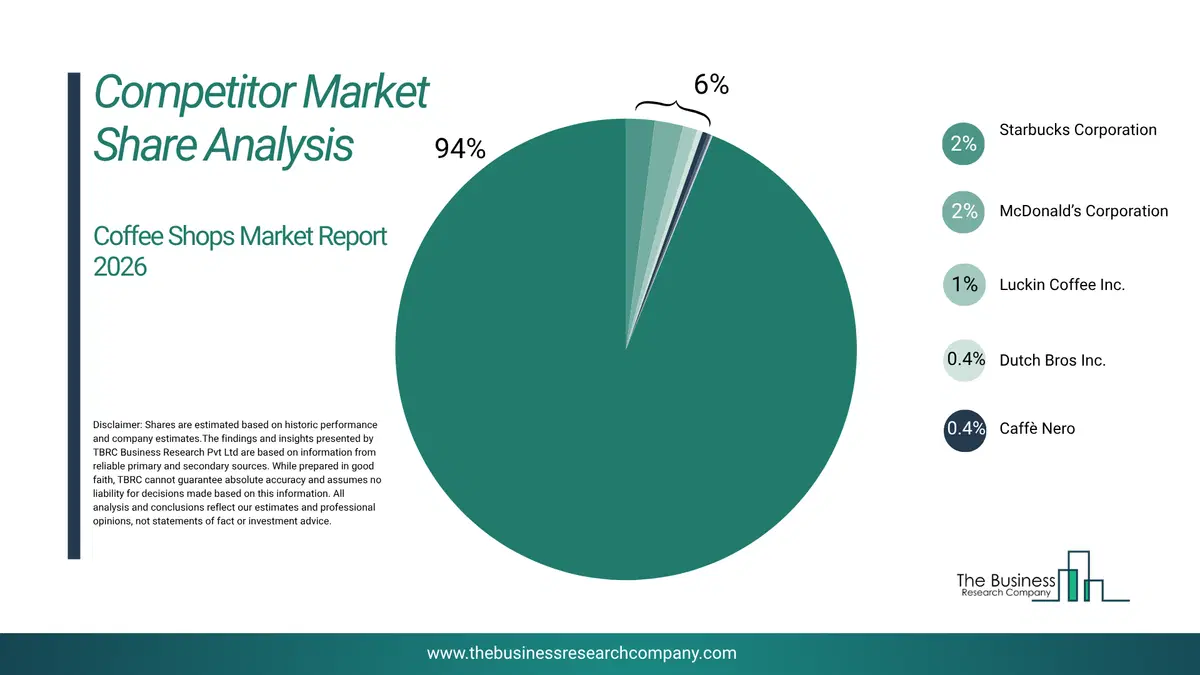
This chart is for illustrative purposes; the full report includes a detailed competitor analysis and comprehensive overview of the top 10 companies in the market.
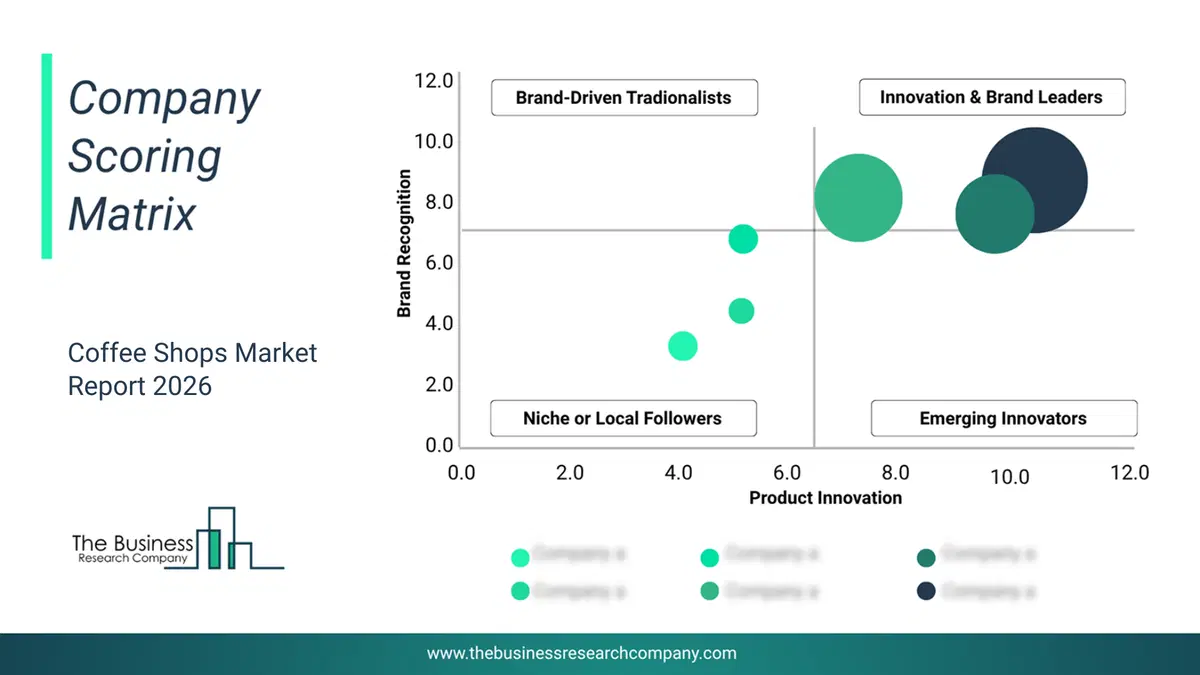
This chart maps companies by product innovation and brand strength, with bubble size indicating relative revenue, helping identify market leaders, challengers, and niche players. This is an illustrative chart; the full report provides a complete and accurate competitive analysis.
Global Coffee Shops Market Trends and Insights
Major companies operating in the coffee shop market are focusing on developing advanced services, such as European-style coffee shops, to enhance customer experience and attract a more diverse and sophisticated clientele. A European-style coffee shop reflects classic European café culture, offering a refined ambiance, high-quality coffee, and a leisurely experience. It emphasizes comfort, encouraging guests to relax, socialize, or enjoy light meals at their own pace. For instance, in April 2024, Edinburgh Airport, a UK-based international airport, unveiled a new Caffè Nero coffee shop. It offers passengers a European-style coffee house experience both before and after security, with locations including just before security and at various gates airside. The new outlet provides high-quality espresso-based coffee and Italian food in a warm, inviting atmosphere, catering to travelers at all hours.What Are Latest Mergers And Acquisitions In The Coffee Shops Market?
In July 2024, Jollibee Foods Corporation, a Philippines-based food service company, acquired Compose Coffee Co., Ltd. for approximately $340 million. With this acquisition, Jollibee aims to accelerate its global expansion by integrating Compose Coffee’s fast-growing, capital-light franchise model and extensive South Korean footprint, strengthening its position in the value coffee segment and enhancing its international revenue contribution. Compose Coffee Co., Ltd. is a South Korea-based coffee shop chain company.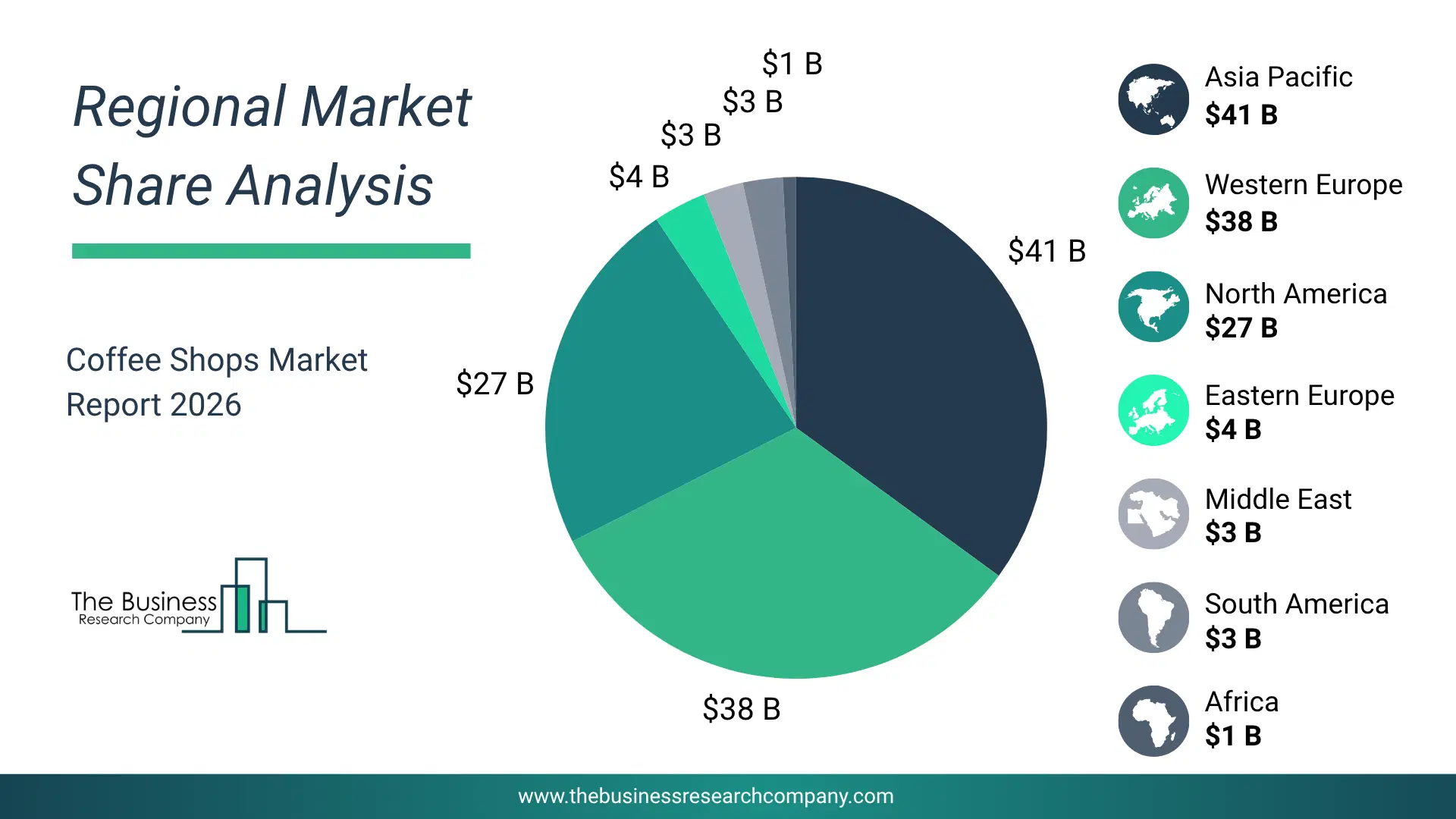
Regional Outlook
North America was the largest region in the coffee shop market in 2025. Asia-Pacific is expected to be the fastest-growing region in the forecast period. The regions covered in this market report are Asia-Pacific, South East Asia, Western Europe, Eastern Europe, North America, South America, Middle East, Africa. The countries covered in this market report are Australia, Brazil, China, France, Germany, India, Indonesia, Japan, Taiwan, Russia, South Korea, UK, USA, Canada, Italy, SpainWhat Defines the Coffee Shops Market?
The coffee shops market consists of revenues earned by entities through beverage preparation and serving, food services, dine-in experience, online ordering and delivery, and mobile app services. The market value includes the value of related goods sold by the service provider or included within the service offering. Only goods and services traded between entities or sold to end consumers are included.How is Market Value Defined and Measured?
The market value is defined as the revenues that enterprises gain from the sale of goods and/or services within the specified market and geography through sales, grants, or donations in terms of the currency (in USD unless otherwise specified). The revenues for a specified geography are consumption values that are revenues generated by organizations in the specified geography within the market, irrespective of where they are produced. It does not include revenues from resales along the supply chain, either further along the supply chain or as part of other products.
This chart presents market attractiveness based on a quantitative evaluation of growth, competition, strategic alignment, and risk, offering a clear view of opportunity areas for decision-making. This chart is for illustrative purposes; the full report contains the complete analysis.

This chart highlights the Total Addressable Market (TAM) by estimating the maximum revenue opportunity using an assumption-driven approach, supporting strategic planning and opportunity sizing across markets. The chart is illustrative; the full report provides a more comprehensive analysis.
What Key Data and Analysis Are Included in the Coffee Shops Market Report 2026?
The coffee shops market research report is one of a series of new reports from The Business Research Company that provides market statistics, including industry global market size, regional shares, competitors with the market share, detailed market segments, market trends and opportunities, and any further data you may need to thrive in the coffee shops industry. The market research report delivers a complete perspective of everything you need, with an in-depth analysis of the current and future state of the industry.Coffee Shops Market Report Forecast Analysis
| Report Attribute | Details |
|---|---|
| Market Size Value In 2026 | $95.35 billion |
| Revenue Forecast In 2030 | $123.43 billion |
| Growth Rate | CAGR of 6.7% from 2026 to 2030 |
| Base Year For Estimation | 2025 |
| Actual Estimates/Historical Data | 2020-2025 |
| Forecast Period | 2026 - 2030 |
| Market Representation | Revenue in USD Billion and CAGR from 2026 to 2030 |
| Segments Covered | Type, City Size, Application |
| Regional Scope | Asia-Pacific, Western Europe, Eastern Europe, North America, South America, Middle East, Africa |
| Country Scope | The countries covered in the report are Australia, Brazil, China, France, Germany, India, Indonesia, Japan, Taiwan, Russia, South Korea, UK, USA, Canada, Italy, Spain. |
| Key Companies Profiled | Starbucks Corporation, Luckin Coffee Inc., Dunkin' Donuts, Pret A Manger, The Coffee Bean & Tea Leaf, Blue Bottle Coffee, Tim Hortons, Caffè Nero, Zus Coffee, Intelligentsia Coffee, Scooter’s Coffee, Caffenio, % Arabica, PJ’s Coffee of New Orleans, Fore Coffee, Mercury’s Coffee Co., Aroma Espresso Bar, 321 Coffee, Te & Kaffi, 5 to go |
| Customization Scope | Request for Customization |
| Pricing And Purchase Options | Explore Purchase Options |